


Your product team just shipped a feature customers have been requesting for months. Sales is excited and marketing has campaigns ready to go. But three weeks later, adoption is flat and feedback is mixed. The disconnect isn’t about what you built — it’s about how you positioned, messaged, and launched it to market.
Product marketing strategy bridges this gap by connecting what you create with how customers perceive, adopt, and advocate for your solutions. It’s the systematic approach that transforms technical capabilities into compelling customer value through coordinated positioning, targeted messaging, and strategic go-to-market execution. Unlike general marketing that builds broad brand awareness, product marketing focuses on specific product success within defined market segments.
This helpful article walks you through a comprehensive seven-step framework for building product marketing strategy that drives measurable results. You will discover how to conduct market research that reveals positioning opportunities, craft messaging that resonates with target personas, design go-to-market approaches that accelerate adoption, and establish the cross-functional workflows that turn strategy into sustainable competitive advantage.
Key takeaways
- Build strategy on customer needs, not product features: start with systematic market research and validated personas to understand what customers actually value, then position your product around those specific outcomes.
- Coordinate cross-functional teams through shared workflows: align product, sales, and marketing teams with consistent messaging and clear processes so everyone executes against the same strategic priorities.
- Focus on differentiation that matters to customers: position your product based on unique value you deliver, not feature comparisons — customers buy outcomes, not capabilities.
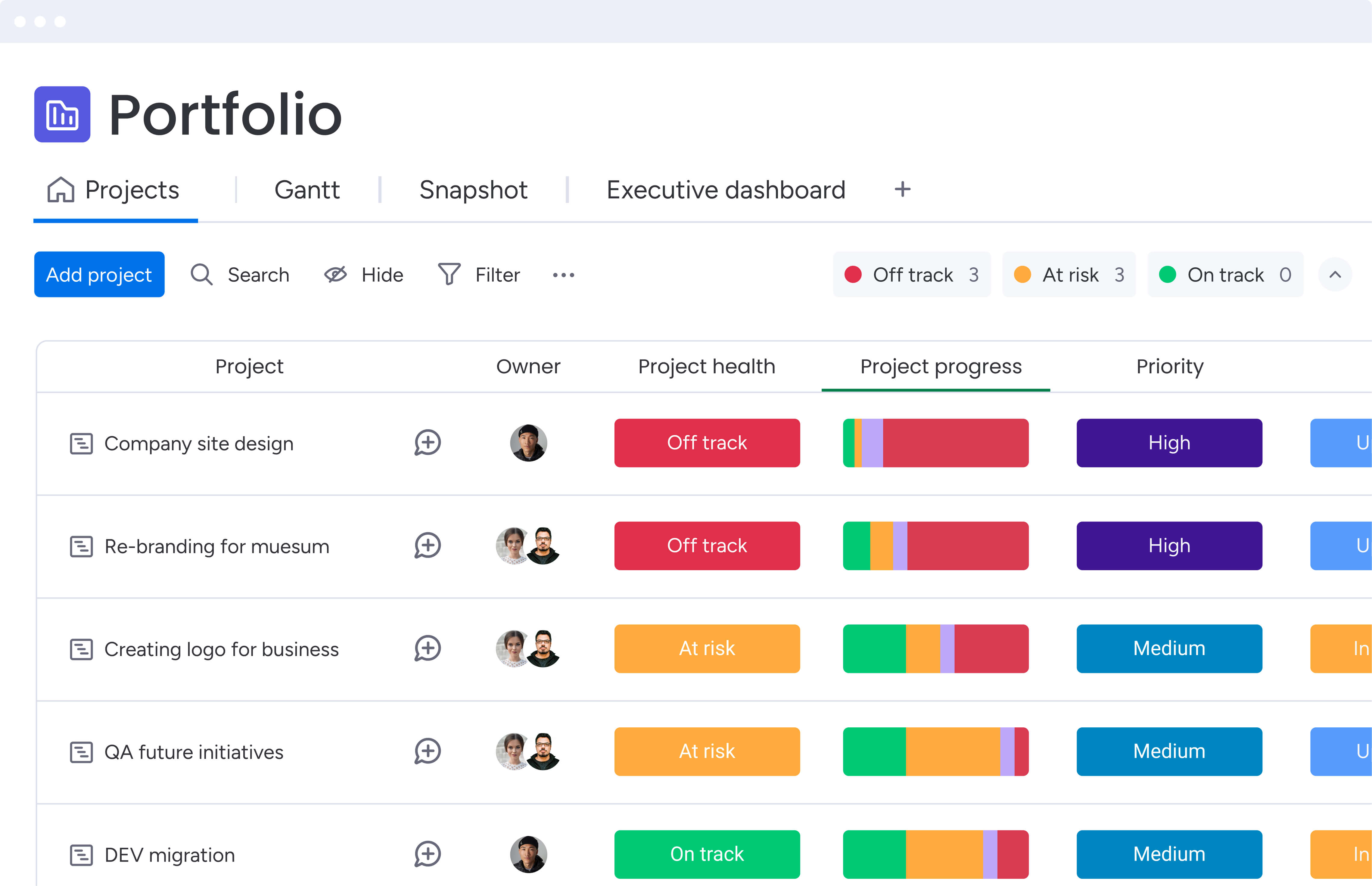
- Execute launches through visual project management within monday work management: use timeline views, automated workflows, and real-time dashboards to coordinate complex go-to-market activities across teams and stakeholders.
- Measure leading indicators, not just results: track product adoption rates, time to value, and feature usage to identify optimization opportunities before they become critical issues.
What is product marketing strategy?
Product marketing strategy is the systematic approach to positioning, launching, and scaling products in your target market, building on broader marketing strategy principles. It connects product development with customer needs through coordinated messaging, go-to-market execution, and continuous optimization based on market feedback.
While general marketing builds your brand’s reputation, product marketing zeroes in on driving adoption and revenue for specific products. You’re not just promoting — you’re translating technical capabilities into customer value while coordinating the cross-functional activities that drive adoption.
When teams grasp these key components, they stop running disjointed campaigns and start executing with precision. Each element builds on the others to create a cohesive approach:
- Market positioning: how customers perceive your product relative to alternatives, based on differentiated value rather than feature comparisons through strategic product positioning.
- Customer targeting: the systematic identification and prioritization of customer segments most likely to adopt based on need intensity and buying power.
- Go-to-market execution: the coordinated activities, channels, and resources that bring products to target customers through launch campaigns and sales enablement.
Effective product marketing starts with customer needs and backs every decision with solid data. Every decision starts with customer needs rather than product features.
For example, when Slack transformed from an internal communication platform to a market-leading one, they positioned as “where work happens” rather than “enterprise messaging.” This positioning expanded their addressable market and differentiated from feature-focused competitors through coordinated execution across product development, sales enablement, and marketing campaigns.
Product marketing strategy vs general marketing strategy
Product marketing strategy and general marketing strategy serve complementary but distinct purposes. Understanding their differences helps teams allocate resources effectively and coordinate activities for maximum impact.
General marketing focuses on building brand awareness and generating demand across all products. Product marketing focuses on specific product success through targeted positioning and adoption acceleration within defined segments.
| Dimension | Product marketing strategy | General marketing strategy |
|---|---|---|
| Primary focus | Specific product adoption and revenue growth | Brand awareness and demand generation |
| Target audience | Product-specific customer segments | Broad market awareness |
| Timeline | Product lifecycle-driven | Ongoing brand building |
| Success metrics | Adoption rate, feature usage, customer lifetime value | Brand awareness, website traffic, leads |
| Team collaboration | Product, sales, marketing alignment | Marketing and creative teams |
Both strategies work in harmony when organizations recognize their distinct roles. General marketing creates the foundation that makes product marketing more effective. Product marketing delivers the specific positioning that converts awareness into adoption.
Why every business needs a product marketing strategy
In today’s crowded markets where buyers research extensively before talking to sales, solid product marketing strategy isn’t a nice-to-have — it’s survival. Get your product marketing strategy right, and you’ll see three game-changing business outcomes that completely reshape how you win in the market.
Team alignment
When your teams align, you can invest your budget with confidence, knowing every message is consistent. Product marketing strategy creates shared understanding between product, sales, and marketing teams about target customers and value propositions.
Without this alignment, product teams build features customers don’t value while sales teams struggle to articulate differentiation. Strategic product marketing establishes the shared language that keeps all teams working toward market success.
Accelerated market adoption reduces time-to-revenue
Strategic positioning and messaging help customers quickly understand product value and differentiation. Products launched with coordinated go-to-market execution achieve faster adoption because target customers immediately grasp how the product solves their specific problems. This acceleration compounds as early adopters become advocates who drive organic growth.
Sustainable competitive advantage
This is achieve through strategic differentiation. Product marketing strategy helps companies differentiate through positioning rather than feature competition. When every competitor claims to be “faster” or “easier,” strategic product marketing identifies the specific customer outcomes where your product delivers unique value.
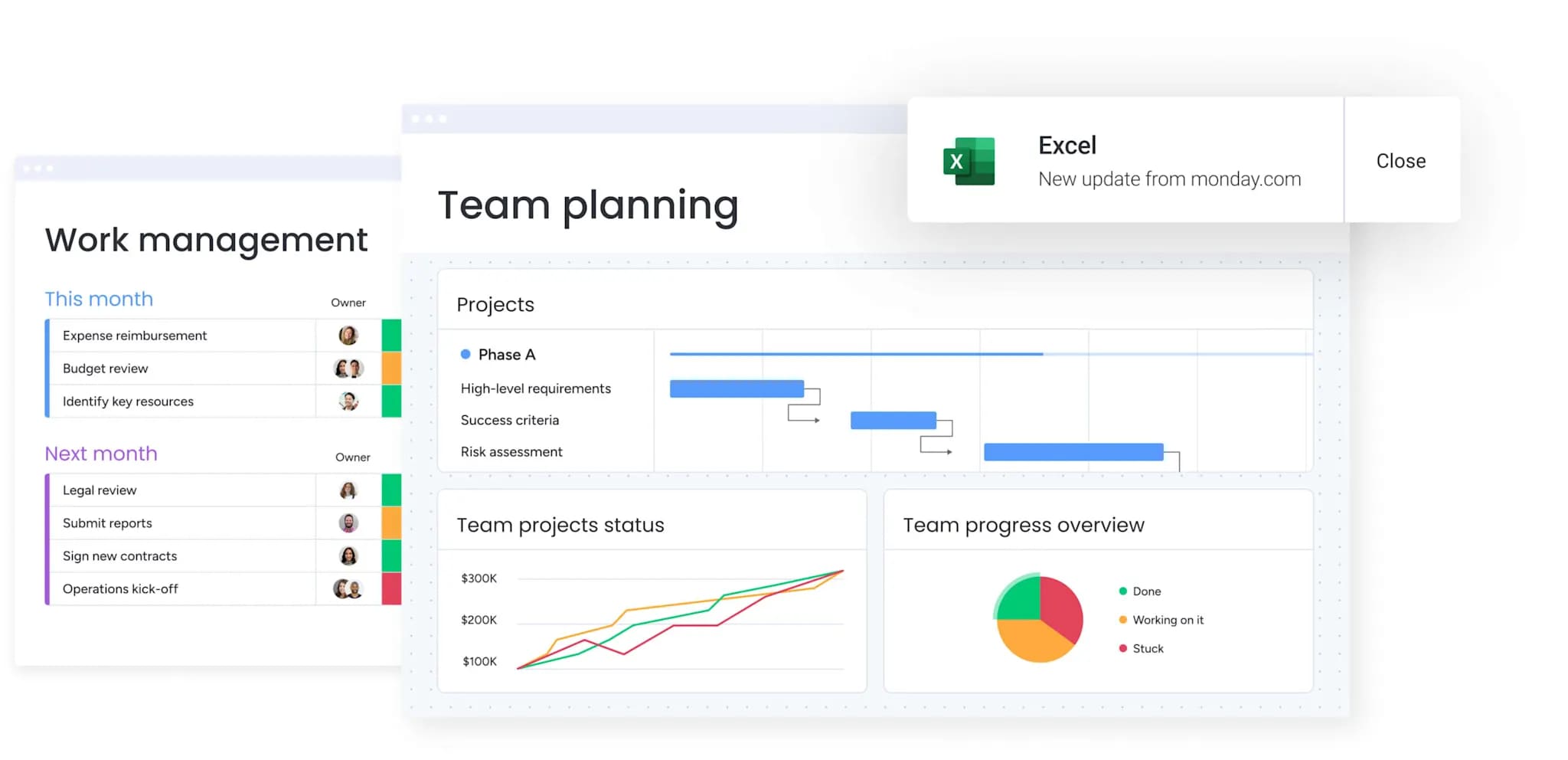
Coordinated organizations use shared workflows to keep everyone executing against the same positioning as markets evolve.
Try monday work management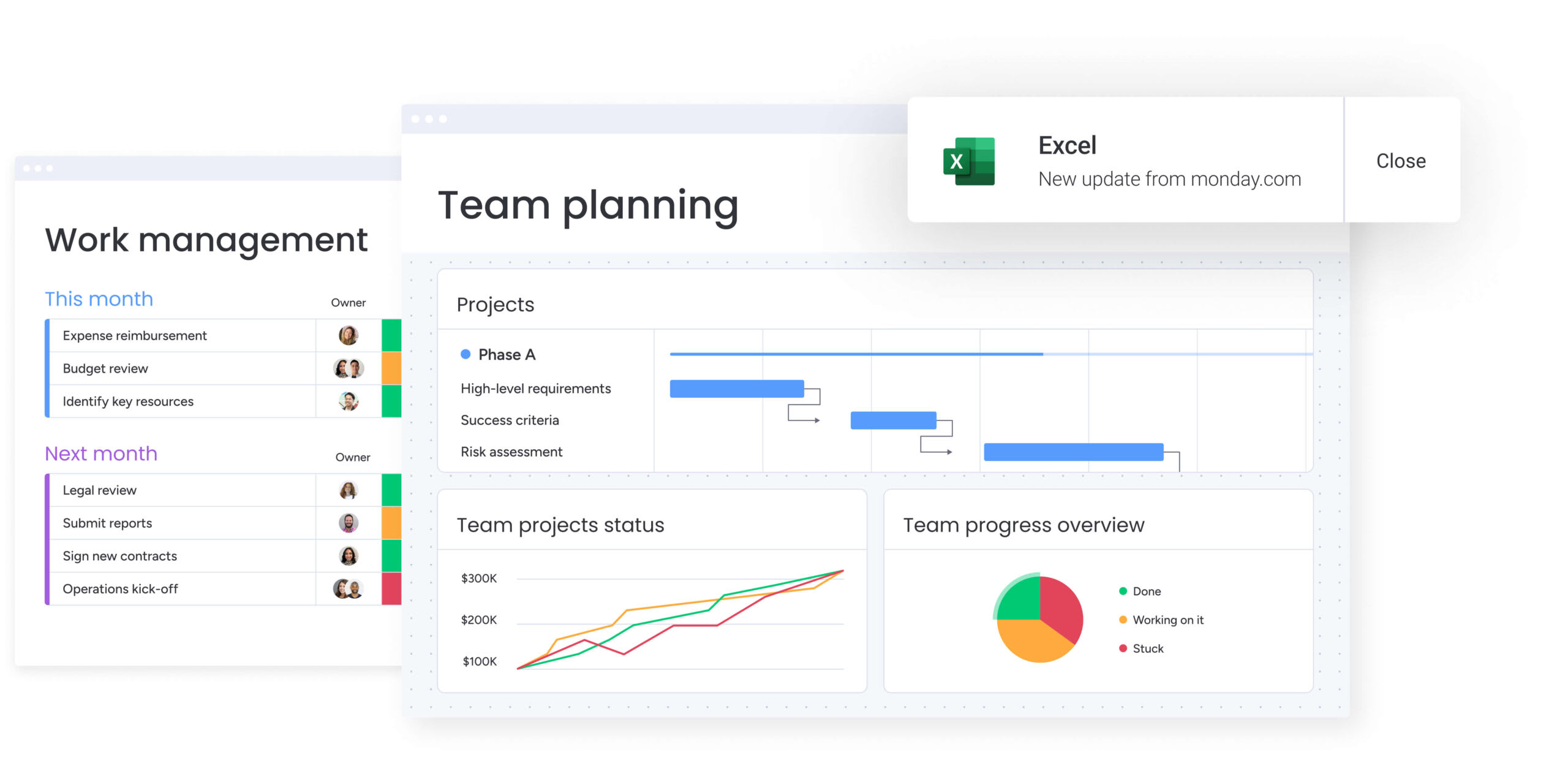
5 core components of any product marketing strategy
Every effective product marketing strategy builds on five foundational components that work together to drive market success. These components create the infrastructure for coordinated execution and consistent value delivery across your organization.
1. Deep market intelligence and customer insights
Every solid product marketing strategy starts with knowing your market cold — understanding what frustrates customers and where competitors fall short. This intelligence comes from customer interviews, win-loss analysis, and sales feedback. Teams that invest in continuous market intelligence can anticipate shifts in customer needs and adapt positioning before competitors recognize the same patterns.
2. Strategic product positioning and differentiation
Positioning defines how you want customers to perceive your product relative to alternatives. Effective positioning focuses on being different in ways that matter to target customers. A project management platform might position as “the platform for enterprise-scale execution” rather than “easier project management,” creating differentiation based on scale and complexity.
3. Compelling value proposition and messaging
Value propositions translate product features into customer benefits through consistent messaging frameworks. The strongest value propositions connect capabilities to specific customer outcomes. Messaging frameworks organize these propositions into hierarchies that adapt to different personas while maintaining consistent core positioning.
4. Comprehensive go-to-market planning
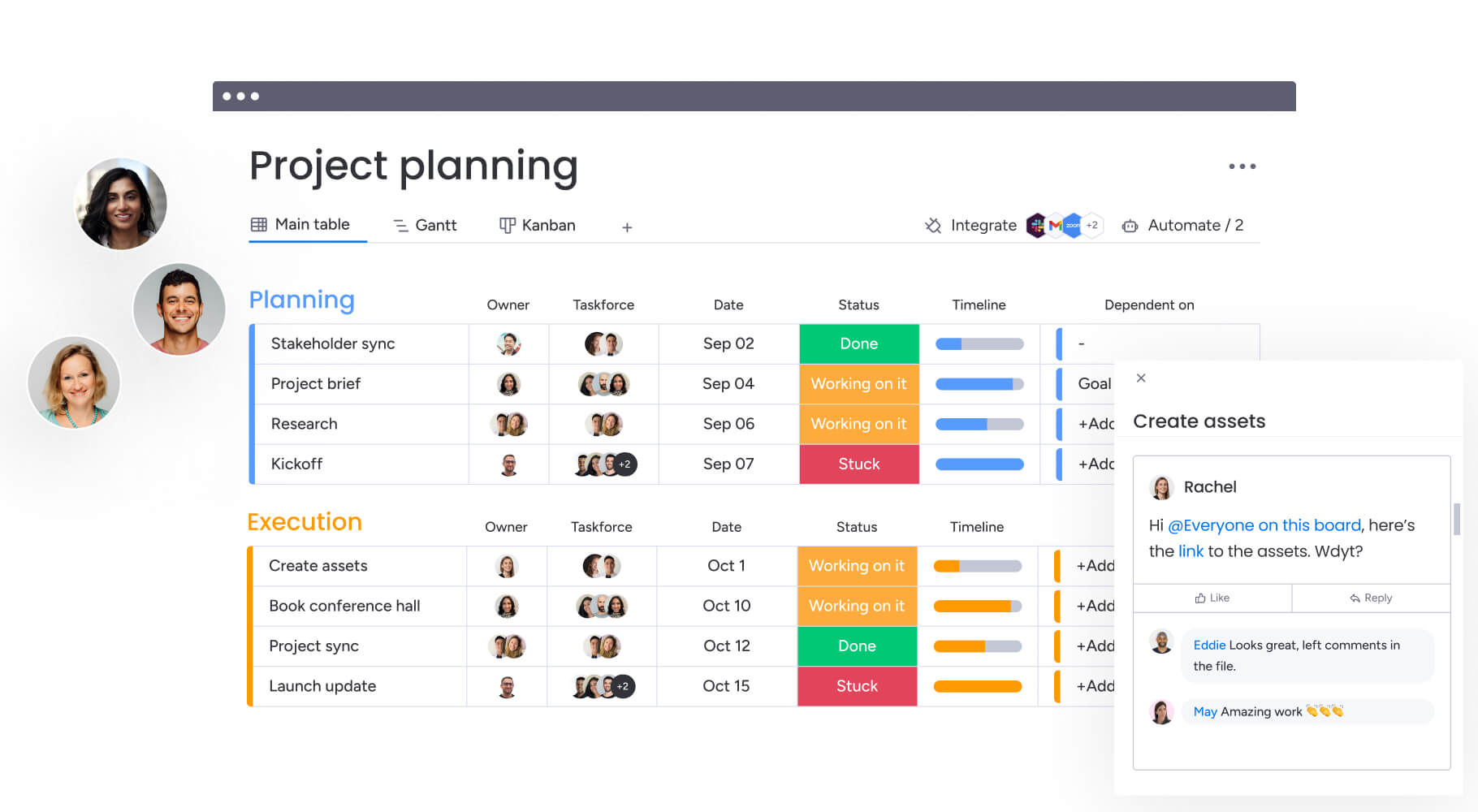
Go-to-market planning translates strategy into coordinated action across launch timelines, channel selection, and pricing strategy. Strategic plans identify the optimal sequence for market entry and which customer segments to target first. Teams coordinate these complex processes through visual project boards that map every aspect of execution.
5. Continuous performance measurement
Product marketing strategy requires ongoing measurement of adoption metrics, customer feedback, and campaign performance. Key metrics include product adoption rate, time to value, and customer acquisition cost. Teams that establish systematic measurement can identify what’s working and adjust strategies accordingly.
Build your product marketing strategy framework in 7 steps
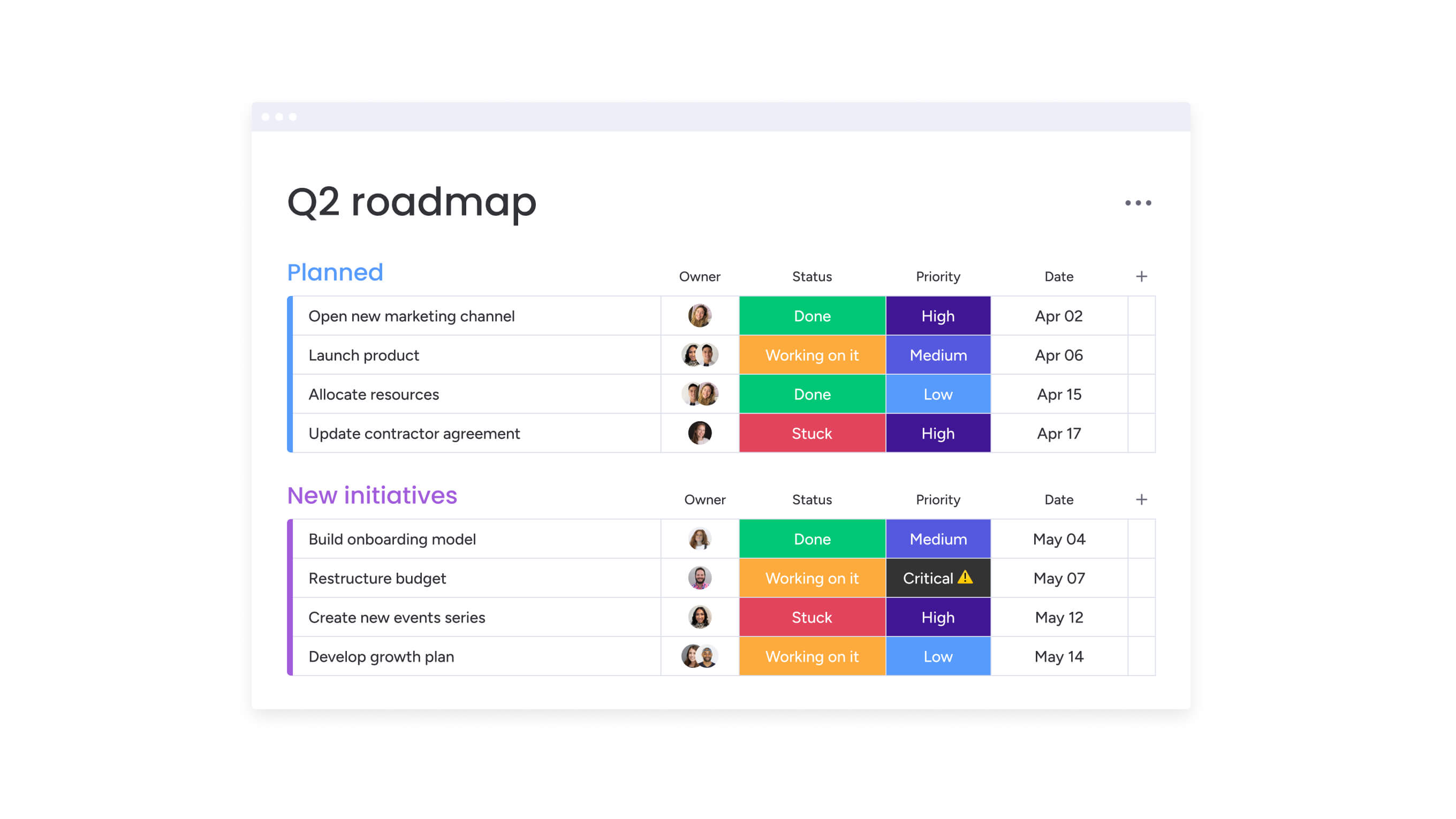
Product marketing strategy transforms from abstract concept to operational reality through seven sequential steps. Each step produces specific deliverables that inform subsequent decisions and create the foundation for coordinated execution across your organization.
Step 1: conduct comprehensive market research
Market research establishes the factual foundation for strategic decisions. This research quantifies market size, identifies customer segments, and reveals market trends.
Mix hard numbers from surveys with real conversations from customer interviews to get the full picture. The deliverable is a market intelligence report documenting target market size and competitive positioning gaps.
Step 2: define and validate target personas
Target personas transform market segments into specific customer profiles that guide positioning decisions. For each persona, document their primary pain points, goals, and decision-making process.
Validation ensures personas reflect real customers through interviews with customers who match each profile.
Step 3: analyze competitive positioning opportunities
Competitive analysis reveals where your product can differentiate in meaningful ways. Create a positioning map that plots competitors along two dimensions that matter most to customers.
Define your unique positioning by identifying the specific needs you’ll prioritize and differentiators you’ll emphasize.
Step 4: craft your product story and messaging
Product messaging translates positioning into the specific language that teams use to communicate value. Develop your core value proposition first, then create a messaging hierarchy with primary and secondary levels.
Test messaging effectiveness with target audiences before full rollout.
Step 5: design your go-to-market approach
Your go-to-market plan turns big ideas into practical steps — which channels you’ll use, how you’ll price, and exactly how you’ll introduce your product to the world. Select optimal channels based on where customers seek information.
Define pricing strategy that reflects customer value perception. Plan launch sequence by identifying critical activities and coordination points.
Step 6: establish cross-functional workflows
Cross-functional workflows transform launch plans into operational reality by defining how teams coordinate and communicate. Define roles across teams, create communication protocols, and establish review meetings.
Document processes for consistent execution so teams can replicate successful approaches.
Step 7: launch, learn, and scale
Launch execution brings strategy to market through coordinated activities. Monitor metrics daily during launch week, weekly during the first month.
Collect qualitative feedback through customer interviews. Iterate based on market response and scale successful approaches across the portfolio.
Measure what matters in product marketing
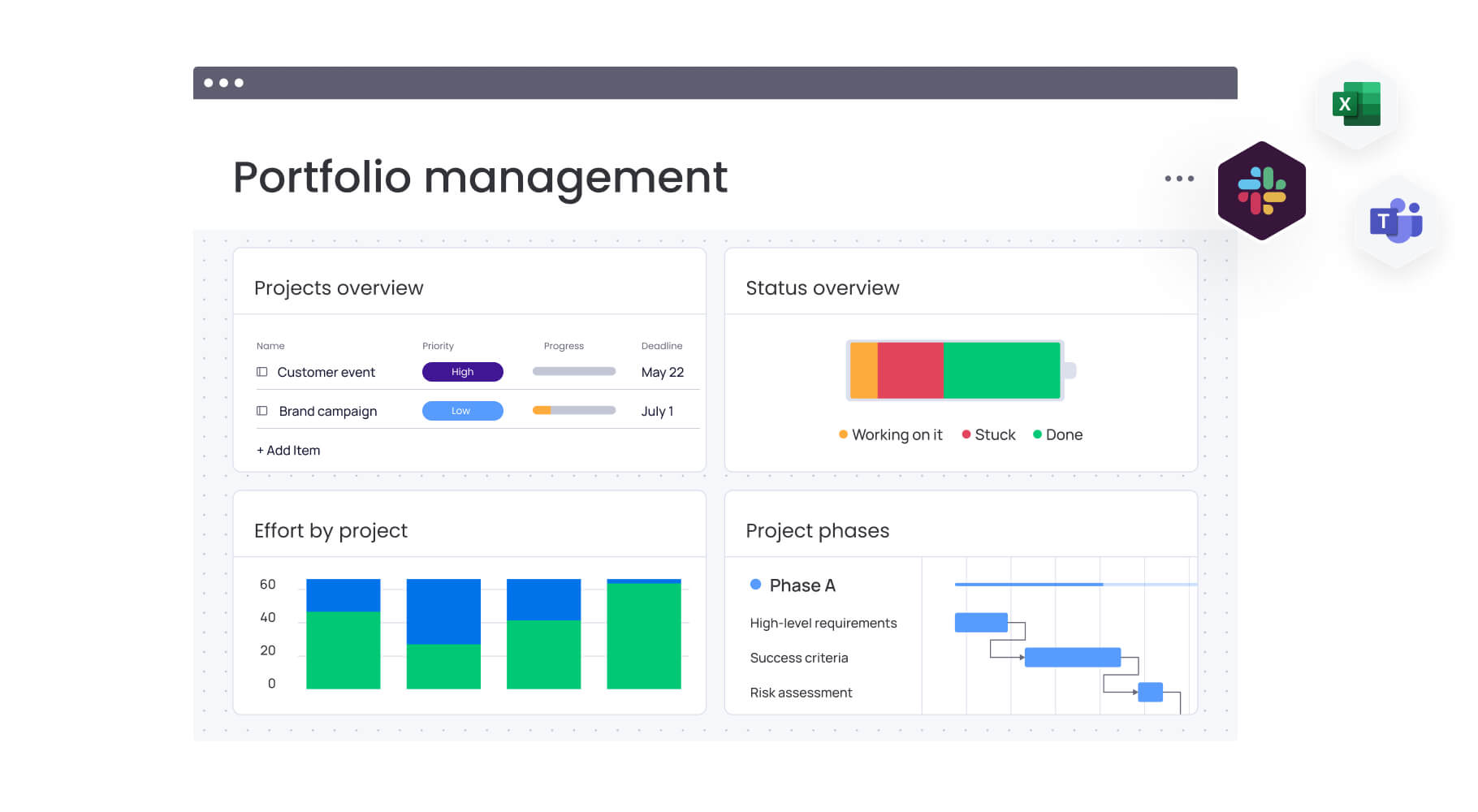
Measuring product marketing isn’t complicated — track the numbers that show whether your strategy is actually driving business results. Don’t just look in the rear-view mirror at what happened. Track signals that tell you what’s about to happen next.
Understanding which metrics to track helps teams identify optimization opportunities before they become critical issues. These metrics provide comprehensive visibility into product marketing effectiveness:
- Product adoption rate: the percentage of target market actively using your product indicates positioning and go-to-market effectiveness.
- Time to value: duration between sign-up and first meaningful outcome shows how quickly customers realize benefits.
- Customer acquisition cost: total sales and marketing expenses per new customer reveals efficiency improvements.
- Product-qualified leads: leads generated through product engagement typically convert at higher rates.
- Feature adoption: usage rates across the customer base reveal which features drive value.
- Customer lifetime value: total revenue per customer indicates successful expansion and retention.
Centralized dashboards transform raw metrics into actionable insights by visualizing trends and highlighting anomalies. Effective dashboards show current performance against targets with drill-down capabilities that reveal underlying drivers. Product marketing teams using monday work management access real-time dashboards that eliminate the lag between market response and strategic adjustment.
Measurement creates feedback loops between market performance and strategic adjustments. Systematic analysis reveals which positioning resonates with customer segments and which channels drive highest-quality leads. This analysis should happen weekly for active campaigns, monthly for steady-state execution, and quarterly for strategic positioning reviews.
Try monday work managementTop product marketing strategies that deliver results
Effective product marketing combines strategic frameworks with proven tactical approaches. These strategies support the seven-step framework while addressing specific execution challenges that teams face when bringing products to market.
Content and messaging strategies
- Develop product-led content marketing: create content that helps customers solve problems using your product, building trust while showcasing capabilities.
- Create continuous customer feedback systems: establish ongoing channels for customer input through surveys, advisory boards, and win-loss interviews.
- Leverage customer success stories at scale: build systematic processes to identify successful customers and package stories for different audiences.
Launch and campaign strategies
- Orchestrate multi-channel launch campaigns: coordinate messaging across email, social media, and sales teams so all touchpoints reinforce each other.
- Run strategic beta and early access programs: give select customers early access in exchange for input and advocacy.
- Create industry-specific marketing strategies: tailor messaging and go-to-market approach for different markets with distinct needs.
Sales and partnership strategies
- Build comprehensive sales enablement programs: equip sales teams with training, battlecards, demo scripts, and ROI calculators.
- Activate strategic partner channels: leverage partner relationships through resellers and co-marketing arrangements.
- Implement automated referral programs: encourage customer referrals through automated workflows that track referral-sourced revenue.
Community and experience strategies
- Foster product community development: create spaces where customers share best practices and solve problems collaboratively.
- Build interactive product experiences: enable prospects to experience value through demos and sandbox environments.
- Create agile campaign frameworks: standardize workflows so teams can launch campaigns in days rather than weeks.
Intelligence and optimization strategies
- Design competitive intelligence systems: establish systematic processes for tracking competitive landscape changes.
- Use AI for market intelligence: analyze trends and customer behavior to identify patterns in large datasets.
- Develop portfolio marketing approaches: coordinate strategies across multiple products to create synergies.
AI-powered product marketing for 2026 and beyond
AI has graduated from a cool experiment to a must-have capability for product marketers who want to stay competitive. Smart teams use AI in three key ways: to enhance strategic thinking, automate tedious tasks, and free up time for creative work.
AI-powered market analysis
AI is adept at identifying trends and customer behavior patterns before they become obvious through traditional research. Machine learning models analyze customer interactions and market signals to predict which segments are most likely to adopt. Product marketing teams might analyze support tickets and sales transcripts to predict churn risk, enabling proactive outreach before dissatisfaction becomes cancellation.
AI enables dynamic customization
Content personalization and customized recommendations can now be achieved at scale with intelligent AI. For example, healthcare prospects may see case studies from similar organizations with compliance-focused messaging, while technology prospects could see tech company examples with integration-focused messaging.
This happens automatically based on firmographic and behavioral data.
AI-powered digital workers
These intelligent helpers handle routine work like data analysis and campaign optimization. They analyze performance data, identify underperforming segments, and draft optimization recommendations.
Teams using monday work management can even integrate AI capabilities directly into workflows through AI Blocks that categorize customer feedback, summarize research documents, and extract insights from any document.
Execute your product marketing strategy with monday work management
Product marketing execution breaks down when teams lose visibility and coordination. Successful launches depend on clear ownership, shared timelines, and tools that keep everyone aligned as work moves fast.
Turn complex launches into clear workflows
monday work management uses visual project views to make execution easier across teams.
- Project boards map every launch activity in one place.
- Gantt and timeline views show dependencies and milestones.
- Kanban boards keep campaign work moving forward.
- Workload views balance team capacity across initiatives.
Remove manual coordination with automation
Built-in automations reduce the overhead that slows product marketing teams.
- Automatic notifications keep teams aligned as work progresses.
- Approval workflows route deliverables to the right stakeholders.
- Status updates sync across teams in real time.
- Integrations connect marketing tools and CRM data.
Track progress and performance in real time
Dashboards give leaders and teams instant visibility without extra reporting.
- Live views of launch progress and campaign performance.
- Portfolio-level insights across multiple initiatives.
- Scheduled reports delivered automatically to stakeholders.
Standardize execution without slowing teams down
Consistent processes improve launch quality while staying flexible.
- Templates ensure repeatable launch workflows.
- Resource management supports planning across product portfolios.
- Dependency tracking connects related initiatives.
- Permissions and audit trails maintain governance.
Accelerate insight and execution with AI
AI tools are embedded directly into daily workflows.
- Automatically categorize customer feedback.
- Summarize research and performance reports.
- Extract insights from briefs and presentations.
- Detect sentiment trends across feedback at scale.
With everything connected in one system, product marketing teams spend less time coordinating and more time executing launches that stay on track and deliver impact.
Turn product marketing strategy into sustainable growth now
Product marketing strategy separates successful products from those that struggle to find market traction. The systematic approach outlined here transforms market insights into coordinated execution that drives measurable business outcomes.
Teams that implement comprehensive product marketing strategies achieve alignment because everyone works from shared customer insights and strategic priorities. Market adoption accelerates because customers immediately understand product value and differentiation.
The seven-step framework provides the foundation for success: comprehensive research, validated personas, strategic positioning, compelling messaging, coordinated go-to-market, cross-functional workflows, and continuous optimization.
When combined with the right execution infrastructure, these elements create the systematic discipline that connects what you build with how customers perceive, adopt, and advocate for your solutions.
The content in this article is provided for informational purposes only and, to the best of monday.com’s knowledge, the information provided in this article is accurate and up-to-date at the time of publication. That said, monday.com encourages readers to verify all information directly.
Frequently asked questions
What is the best product marketing strategy framework?
The most effective product marketing strategy framework combines systematic market research, strategic positioning based on customer needs, and coordinated execution across teams. Success depends on consistent application rather than framework complexity.
How do you build a product marketing plan?
Building a product marketing plan starts with defining your target market and understanding their needs through research. Analyze competitive positioning, develop messaging that resonates, plan your go-to-market approach, and establish success metrics.
What's the difference between product strategy and product marketing strategy?
Product strategy focuses on what to build and why, defining product vision and roadmap priorities. Product marketing strategy focuses on how to position, message, and launch products to achieve market success.
How do successful companies approach product marketing?
Successful companies treat product marketing as a cross-functional discipline that bridges product development, sales, and marketing through systematic processes and shared accountability.
What are examples of product marketing strategies?
Freemium models enable software adoption by letting customers experience value before purchase. Vertical-specific positioning tailors messaging for different industries. Community-driven launches build anticipation through early adopter engagement.
How does monday work management support product marketing strategy execution?
monday work management enables cross-functional coordination through visual workflows, automated notifications, real-time dashboards, and AI-powered capabilities that accelerate market intelligence and content creation.

 Get started