

It’s the conversation every manager dreads: an employee isn’t meeting expectations, and informal coaching hasn’t moved the needle. When you sit down to write a formal improvement plan, you often find yourself flying blind without a clear starting point. Without a solid framework, you risk creating a plan that is either too vague to drive change or so rigid it guarantees failure.
A performance improvement plan (PIP) template provides that essential blueprint for turning difficult conversations into development opportunities. This standardized structure helps you document specific gaps, set measurable targets, and outline the exact support needed for a turnaround. Using a template ensures consistency across your leadership team while protecting the organization from legal risks and manager bias.
This guide walks you through building PIP templates that drive real results for your team. It covers the seven essential components every plan needs and shows you how to set timelines that balance urgency with fairness. You’ll also discover how the right digital platform can transform static documents into collaborative, real-time growth workflows.
Key takeaways
- Build PIPs that develop, not punish: Focus on future skills and specific goals rather than past mistakes to create genuine improvement opportunities for your team members.
- Use templates for consistency and fairness: Standardized frameworks ensure every employee receives equal treatment while protecting your organization from legal risks and manager bias.
- Set SMART goals with clear deadlines: Transform vague feedback like “be more proactive” into measurable actions with specific timelines that employees can actually achieve.
- Replace static documents with dynamic workflows: monday work management turns PIPs into collaborative workspaces with real-time progress tracking, automated reminders, and centralized communication.
- Time your interventions strategically: Launch PIPs after informal feedback fails but before termination becomes inevitable, giving employees a genuine chance to succeed.
What is a performance improvement plan template?

A performance improvement plan template documents performance gaps, sets specific goals, and defines the support employees need to succeed. It serves as a blueprint for the improvement process and provides every employee with the same structure and opportunities, regardless of who manages them.
These templates function as specialized project plans where the ‘project’ is the employee’s professional growth. By standardizing the format, organizations reduce the risk of manager bias and keep the focus on objective behavioral changes rather than personality conflicts. This standardized approach is particularly crucial given that 26% of employees received no performance feedback in the past year, according to McKinsey’s HR Monitor 2025.
A solid template is more than just a form; it’s a strategic asset for people managers. It provides a consistent, fair, and legally sound structure for every performance conversation. This framework gives you three key advantages:
- Consistency: Every PIP follows the same logic and legal standards, protecting the organization from claims of unfair treatment.
- Defined expectations: Managers must articulate exactly what “good” looks like, removing ambiguity from performance standards.
- Development focus: The conversation shifts from past failures to future capabilities, outlining the specific resources and coaching the employee will receive.
Understanding performance improvement plans today
PIPs have shifted from punishment to collaboration. Modern plans assume that clear expectations and real support can fix most performance issues.
Instead of listing grievances, these documents map out skill-building exercises and behavioral adjustments. They focus on specific, observable actions, such as “improving code review turnaround time to 24 hours,” rather than subjective traits like “showing more initiative.”
This approach forces managers to diagnose the real issue: Is this a skill gap, a motivation problem, or a resource constraint?
Why templates create consistency across teams
Templates prevent inconsistency between managers. Without a template, one manager writes two vague sentences while another creates a 10-page novel. That inconsistency opens you up to legal trouble and kills morale.
However, standardized templates ensure that every plan includes the necessary components for compliance and fair treatment. For new managers, a template also builds confidence. It helps them stick to facts instead of getting tangled in emotions or subjective arguments.
Development-focused vs corrective approaches
The difference between correction and development comes down to execution and tone. A table below shows how these two approaches differ across key dimensions:
| Feature | Traditional corrective pip | Development-focused PIP |
|---|---|---|
| Primary tone | Disciplinary and warning-based | Supportive and coaching-based |
| Focus | Past mistakes and failures | Future potential and skill acquisition |
| Manager role | Enforcer of rules | Coach and resource provider |
| Timeline | Rigid countdown to termination | Flexible milestones based on progress |
| Success metric | Absence of errors | Achievement of specific growth goals |
A solid template is more than just a form; it’s a strategic asset for people managers. It provides a consistent, fair, and legally sound structure for every performance conversation.
When to use a PIP template for maximum impact
Timing a PIP matters more than most managers realize. It’s not your opening move, and it shouldn’t be a formality you check off before termination. Launch a PIP after informal feedback hasn’t moved the needle, but before the situation becomes irreversible—when the employee still demonstrates genuine willingness to improve.
A well-timed PIP bridges the gap between casual coaching and formal employment action. A well-timed PIP bridges the gap between casual coaching and formal employment action, but how do you know it’s the right time? This decision framework helps you assess the situation objectively before launching a formal plan:
- Identify the gap: Confirm that the issue is a persistent pattern, not a one-off event.
- Verify resources: Ensure the employee has had the proper tools and training to succeed.
- Check previous feedback: Confirm that the employee has been told, and it has been documented, that performance is lagging.
- Assess willingness: Determine if the employee is receptive to feedback or defensive.
- Launch PIP: If the gap persists despite defined expectations and resources, formalize the process.
Recognizing performance gaps early
Waiting until quarterly reviews to address performance? That’s on you as a manager as you’ll see warning signs in data and behavior long before they hurt your bottom line.
These indicators include:
- Productivity shifts: A sudden drop in core output metrics or quality.
- Timeline slippage: Missed micro-deadlines that stall larger project phases.
- Team withdrawal: Decreased participation in collaboration or communication channels.
Feedback patterns from peers, such as repeated requests for clarification or complaints about bottlenecks, also signal a need for intervention. Documenting these early signs allows for objective measurement, moving the conversation from “I feel you are disengaged” to “I noticed three missed deadlines this month.”
Choosing between PIPs and coaching plans
Not every performance dip requires a formal PIP. Informal coaching plans are often more effective for addressing minor issues or supporting newer employees through onboarding gaps.
Determining which approach to use depends on the severity of the issue and the employee’s history. The following comparison outlines the appropriate use cases for each intervention:
| Factor | Informal coaching plan | Formal pip |
|---|---|---|
| Severity of issue | Minor errors, soft skill gaps | Critical deliverables missed, policy violations |
| Employee tenure | New hires (onboarding gaps) | Established employees (regression) |
| Previous interventions | First time addressing the issue | Recurring issue despite feedback |
| Documentation | Personal manager notes | Formal HR file documentation |
| Legal implication | Low risk | Precursor to potential termination |
Optimal timing for performance interventions
Bad timing makes a PIP feel unfair and kills its effectiveness. Therefore, don’t launch a PIP during crunch time or right after someone’s personal crisis. That’s setting them up to fail. But waiting too long makes bad habits become permanent.
Launch during a normal business cycle when the employee actually has a shot at hitting their goals. If external factors like a market shift or internal reorganization are heavily influencing performance, it’s often wise to delay the PIP until stability returns to ensure the assessment is based on individual effort, not environmental chaos.
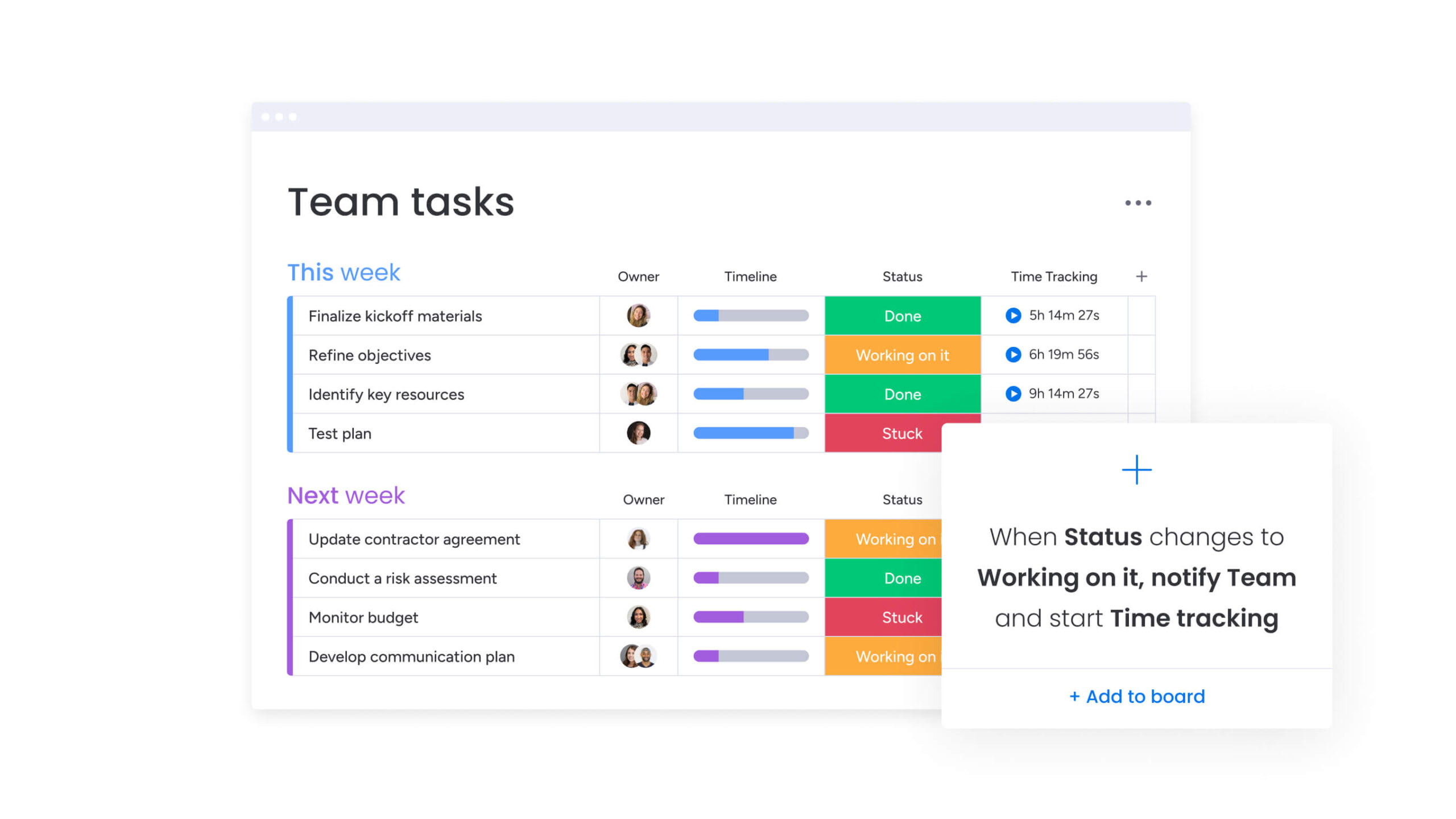
7 essential components every effective PIP template needs
One weak section can sink your entire PIP. Therefore, skipping any of these seven components makes your plan non-functional. Each element creates accountability, defines expectations, and provides support.
1. Role expectations and context
This section re-anchors the employee in their job description. It explicitly states the standard for the role and how the individual’s current performance impacts the wider team and organizational goals.
It removes the “I didn’t know that was my job” defense by documenting responsibilities.
2. Specific performance gaps to address
This section spells out exactly where performance isn’t cutting it. However, use objective data like missed quotas or error rates, not your gut feelings.
If the issue is behavioral, it cites specific examples of the behavior and its impact.
3. Measurable success objectives
Improvement requires trackable metrics to be successful. This section defines exactly what “improved” looks like using benchmarks that both parties can monitor.
Setting goals that are challenging yet attainable keeps the employee focused on realistic progress.
4. Required actions with deadlines
Break the improvement process into clear, actionable steps. This includes specific tasks the employee must complete to demonstrate growth:
- Reporting consistency: “Submit weekly pipeline reports”.
- Skill development: “Complete advanced Excel training”.
Each action has a deadline, creating a timeline of accountability.
5. Manager support and resources
Performance improvement is a two-way street. This section outlines the specific tools the organization will provide to help the employee succeed:
- Direct guidance: Dedicated mentorship hours scheduled weekly.
- Professional development: Funding for external training and certification.
- Resource management: Redistributed workload to allow focus on critical skill building.
6. Review schedule and check-ins
You cannot manage what you do not measure. Establish a firm schedule for progress reviews, typically weekly or bi-weekly, to discuss milestones. This defines the format of these meetings and how the resulting data will be documented.
7. Outcomes and future pathways
Be transparent about what’s at stake. This section outlines the potential results of the PIP: successful completion leading to role retention, or failure to improve leading to role modification or termination.
Frame these as natural outcomes, not threats. It keeps things professional.
How to write performance expectations that drive results
Vague expectations kill performance improvement. Therefore, to drive results, turn feedback into specific standards that can’t be misunderstood. Effective performance expectations are specific, measurable, relevant, and time-bound.
Converting vague feedback into actionable goals
General feedback confuses people, while specific goals get them moving. Managers must translate sentiments into instructions. Here’s how this transformation works:
- Vague: “You need to be more proactive.”
Actionable: “Identify and present two potential process improvements during the monthly team meeting.” - Vague: “Improve your communication.”
Actionable: “Send a status update email to all stakeholders every Friday by 3:00 p.m. summarizing project progress and blockers.”
Aligning individual improvements with team success
An effective PIP shows how the employee’s role fits into the team. It explains that when an individual misses a deadline, the engineering team cannot deploy, or when a sales rep misses a quota, the region misses its target.
Link individual metrics to team KPIs so employees feel responsible to their teammates. That connection creates a more powerful sense of accountability than any top-down mandate.
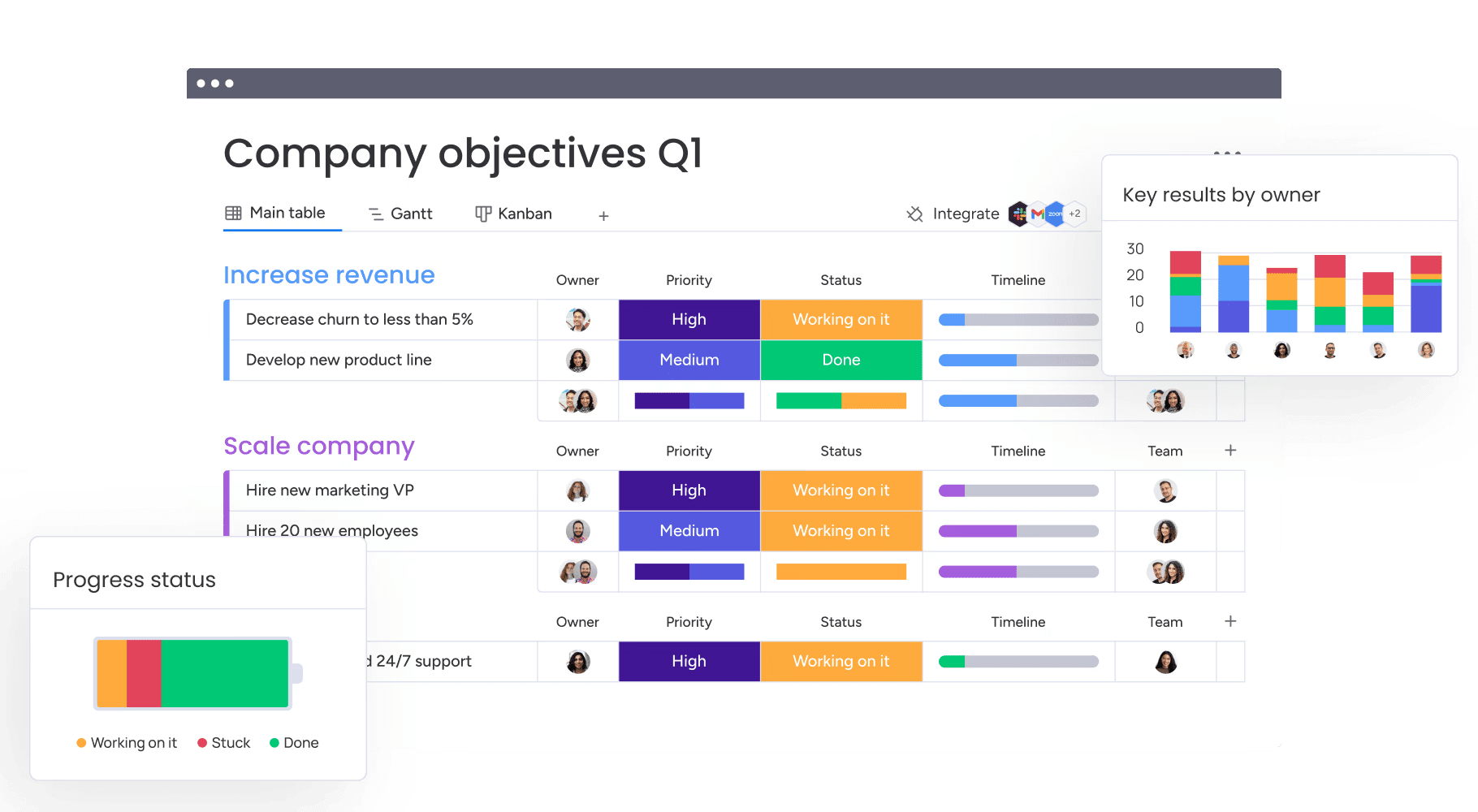
For example, organizations using monday work management can visualize these connections through dashboards that display how individual contributions ladder up to team and organizational goals.
Examples of effective performance standards
Role-specific standards make expectations concrete and measurable. The following examples demonstrate how to write standards that leave no room for ambiguity:
- Sales role: “Maintain an average of 40 outbound calls per day and generate a minimum of five qualified leads per week for the duration of the 60-day period”.
- Developer role: “Reduce code rejection rate from 15% to under 5% by implementing a self-review checklist before submission”.
- Project manager role: “Ensure 100% of project documentation is uploaded to the central repository within 24 hours of milestone completion”.
General feedback confuses people, while specific goals get them moving. Managers must translate sentiments into instructions.
Setting SMART goals for performance success
The SMART framework (Specific, Measurable, Achievable, Relevant, Time-bound) is the standard for goal setting, and it’s critical in a PIP context where ambiguity leads to legal and operational risk. How do you ensure your goals meet all five criteria?
Building specific and measurable targets
Make your PIP goals concrete. “Try harder” is not a goal, while “Increase customer satisfaction score to 4.5” is. Every goal needs a baseline so you can track improvement.
Consider these categories:
- Numerical metrics: Sales figures, tickets closed, error rates.
- Behavioral metrics: Documented instances of specific behaviors, such as arriving on time or using a specific software correctly.
- Baselines: Every goal must have a starting point to track improvement.
Balancing quantitative and qualitative metrics
Numbers are easy to track, but don’t ignore soft skills. Make qualitative metrics objective by setting specific criteria.
Instead of “improve attitude,” a goal might be “demonstrate constructive participation in meetings by contributing at least one idea per session and refraining from interrupting colleagues.” This turns a gut feeling into something you can verify.
Teams using monday work management can track both quantitative and qualitative metrics on the same board, creating a unified view of progress.
Creating milestone checkpoints
Ninety days feels like forever when you’re on a PIP. Breaking the PIP into shorter milestones maintains momentum and allows for course correction. If an employee is failing at day 30, the plan can be adjusted or ended early, saving time for both parties.
- Days 1-30: Focus on immediate behavioral correction and training completion.
- Days 31-60: Focus on consistent application of new skills.
- Days 61-90: Focus on sustained performance and autonomy.
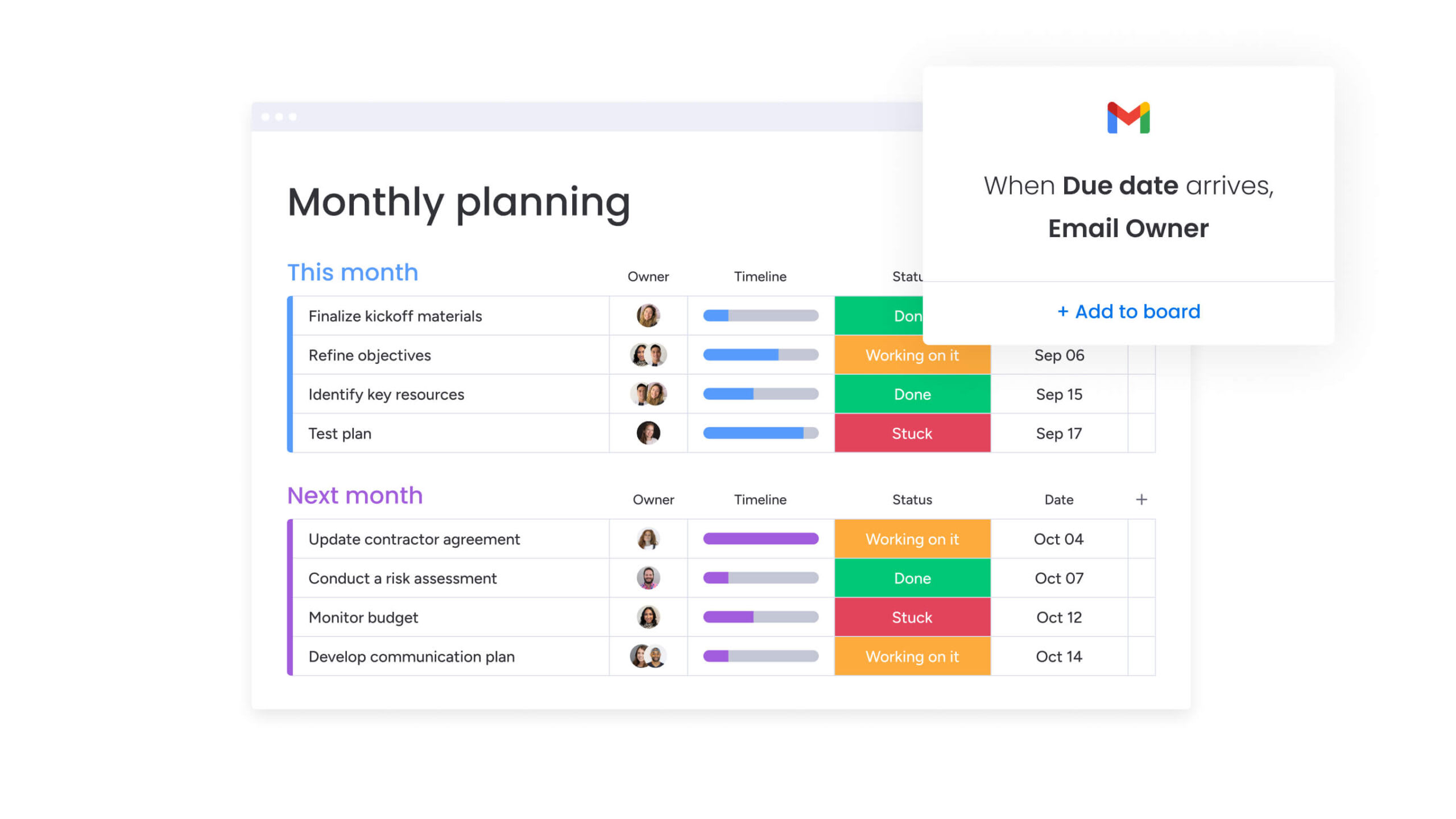
Designing your performance improvement timeline
How long a PIP should last depends on the role’s complexity and the performance gap. The guide below can help you select the appropriate timeline:
| Timeline | Best used for | Focus area |
|---|---|---|
| 30 days | Attendance, conduct, simple process adherence | Immediate correction |
| 60 days | Moderate skill gaps, sales performance | Skill building and practice |
| 90 days | Leadership roles, complex technical skills | Sustained behavioral change |
30-day plans for quick corrections
Use short-term plans for issues the employee controls directly, like showing up on time or following submission rules. These plans are intensive, often involving daily check-ins.
Thirty days tells the employee this is urgent. If an employee cannot fix a simple attendance issue in a month, a longer plan is unlikely to help.
60-day plans for skill development
Most performance issues need 60 days. It gives employees time to train, practice, fail safely, and prove they’ve got it.
It typically involves a “learning phase” in the first month and an “execution phase” in the second.
90-day plans for complex changes
Save longer timelines for senior roles or complex issues where results take time, like closing enterprise deals or shifting team culture.
Build in major milestones at 30 and 60 days to keep employees engaged and on track.
Adapting timelines based on progress
PIPs aren’t set in stone. Therefore, if an employee makes rapid progress, a manager can shorten the timeline to graduate them early. Conversely, if an external blocker prevents the employee from hitting a goal (e.g., a software outage), the timeline should be extended to ensure fairness.
Document why you changed the timeline, as you’ll need it for compliance.
Performance improvement plan template examples
Generic PIPs fail because they ignore what actually drives performance in different roles. Your template needs to bend without breaking — flexible enough for a sales rep’s pipeline metrics and a developer’s code quality, but rigid enough to maintain legal consistency. The trick is customizing the goals and metrics while keeping the seven essential components locked in place.
Sales team PIP template sample
This template focuses on high-velocity metrics and activity levels. It addresses an Account Executive missing quarterly revenue targets.
- Goal: $50k in new pipeline generation.
- Activity metrics: 50 calls/day, ten demos/week.
- Support: Weekly pipeline review with Sales Director; shadowing top performer for three demos.
- Review: Weekly data review every Friday morning.
Customer service excellence plan
This template addresses quality of interaction and efficiency for a CS Agent with low CSAT scores and slow resolution times.
- Goal: Maintain CSAT > 4.8; reduce average handle time to < five minutes.
- Behavioral gap: Tone in email communication described as “abrupt”.
- Action: Complete “Empathy in Support” module; use approved response templates.
- Support: QA lead to review five random tickets weekly with feedback.
Operations performance template
This template targets process adherence and accuracy for a Logistics Coordinator with high error rate in shipping manifests.
- Goal: Achieve 99.5% accuracy on shipping documentation.
- Process gap: Skipping final verification step.
- Action: Utilize the digital checklist for every shipment; log all exceptions.
- Support: Retraining on ERP system inventory module.
From static documents to living performance workflows

Traditional PIPs often fail because they’re static Word docs collecting dust on someone’s hard drive. They only get reviewed in formal meetings, creating a disconnect from daily work. What if the PIP lived where work actually happens?
Moving beyond Word doc limitations
Static documents create version control nightmares, as managers and HR might be looking at different drafts. They also lack interactivity, meaning a completed item in a Word doc doesn’t notify the manager. This friction makes the PIP feel like “extra paperwork” rather than a core operational process.
Creating continuous improvement cycles
In contrast, digital platforms let you give feedback continuously. Instead of waiting for a Friday meeting to say “good job,” a manager can acknowledge improvement instantly when they see a behavior change.
That instant feedback reinforces good behavior right away. Continuous tracking prevents the “recency bias” where a manager only remembers the last two days of performance during a review.
Enabling real-time progress visibility
Dashboards show everyone the same picture. Both the employee and manager can check progress against goals anytime.
Automated progress bars and status indicators remove the ambiguity of “how am I doing?” This transparency calms employee anxiety and cuts manager admin work.
Building manager-employee collaboration
When organizations manage PIPs on monday work management, the plan becomes a collaborative workspace. Employees can update their own status, upload evidence of their success, and ask questions directly within the relevant items.
This shifts the dynamic from a manager “monitoring” a subordinate to a partnership where both parties work within the same digital environment to achieve a shared outcome.
Transform performance management with monday work management

You can bring performance improvement directly into your daily workflow with monday work management. When you integrate PIPs into the platform where work happens, strategy, execution, and development connect naturally. It enhances traditional PIPs by providing complete visibility, unified communication, and automated administrative workflows.
Build customizable templates that HR can deploy instantly. Every plan includes the required legal components but stays flexible for different roles. Automated workflows handle the admin rhythm.
Check-in reminders, self-assessment prompts, and deadline alerts trigger automatically so busy schedules don’t derail the process.
The following table compares traditional approaches with the capabilities of monday work management:
| Feature | Traditional pip approach | monday work management approach |
|---|---|---|
| Documentation | Static files stored in local folders or email | Centralized, accessible boards with version history |
| Collaboration | Limited to scheduled meetings | Asynchronous, in-context communication on specific items |
| Progress tracking | Manual updates before review meetings | Real-time status updates and visual progress bars |
| Resource allocation | Disconnected from the plan | Resources and training links embedded directly |
| Outcome measurement | Subjective assessment at end of term | Data-backed validation based on tracked metrics |
Dashboards give executives and HR leaders a bird’s-eye view of all active PIPs, making it easy to spot trends in performance or management effectiveness. Pull performance data from other systems directly into the PIP board for objective, real-time support during performance discussions.

“monday.com has been a life-changer. It gives us transparency, accountability, and a centralized place to manage projects across the globe".
Kendra Seier | Project Manager
“monday.com is the link that holds our business together — connecting our support office and stores with the visibility to move fast, stay consistent, and understand the impact on revenue.”
Duncan McHugh | Chief Operations OfficerBuilding a performance culture that works
PIPs succeed when they are built into a culture of development rather than used as a precursor to termination. The best organizations invest in their people before performance tanks by building systems that support continuous growth and catch issues early. This proactive approach ensures that every employee understands their role and has the tools to succeed.
You can make this development-focused culture a reality by linking individual growth directly to team goals using monday work management. When performance conversations happen within the same platform where work actually gets done, improvement feels like a natural partnership instead of an intimidating formality. This transparency helps shift the focus from monitoring progress to achieving shared outcomes.
The future of performance management belongs to organizations that make professional development visible and collaborative. By moving away from static documents and embracing dynamic workflows, you can increase employee engagement and reduce turnover. Use monday work management to transform your PIP process into a strategic engine for long-term team success.
The content in this article is provided for informational purposes only and, to the best of monday.com‘s knowledge, the information provided in this article is accurate and up-to-date at the time of publication. That said, monday.com encourages readers to verify all information directly.
Frequently asked questions
How do you handle an employee who disagrees with their PIP?
When an employee disagrees with their PIP, managers should document the objection formally but proceed with the plan if objective data supports the performance gaps. Focus on specific examples rather than the employee's emotional reaction.
Can you implement a PIP during probation periods?
While legally possible, PIPs are rarely used during probation since this period is specifically designed to assess suitability. A simplified version can be used to define expectations if the employee shows high potential but lacks specific direction.
Should PIPs be used for attendance issues?
PIPs are generally reserved for performance and skill gaps. Attendance issues are typically conduct violations that follow a separate progressive disciplinary track unless the attendance is directly tied to a performance metric.
How many PIPs can an employee receive?
There is no legal limit, but repeated PIPs for the same issue suggest a fundamental mismatch for the role. If performance improves and then regresses shortly after, the next step is usually escalation rather than a second identical plan.
What's the difference between a PIP and a performance review?
A performance review is a retrospective assessment of overall contributions over a long period (usually a year), whereas a PIP is a forward-looking, short-term intervention focused on correcting specific, critical deficiencies.
How does monday work management improve PIP template management?
To improve PIP template management, monday work management replaces static documents with dynamic boards that automate reminders, visualize progress in real-time, and centralize communication. This ensures the process is transparent, consistent, and easier to manage for both HR and team leaders.

 Get started