


Marketing teams rarely struggle with activity. Campaigns launch. Content goes live. Paid ads generate clicks. Webinars fill up. On paper, it all looks productive.
But activity alone doesn’t guarantee impact. When initiatives run independently, messaging overlaps, priorities compete, and budgets stretch without building real momentum. Teams stay busy, yet the overall effect feels fragmented.
That’s where marketing program management changes the equation. Instead of treating campaigns as isolated projects, it aligns related efforts under a shared strategy, clear ownership, and coordinated execution. Each initiative reinforces the others. Resources are allocated intentionally. Results build on each other rather than competing for attention.
In the sections that follow, you’ll see how marketing program management works in practice, how it differs from campaign-by-campaign execution, and how to create a structure that turns consistent activity into measurable, sustained growth.
Key takeaways
- Coordinate multiple campaigns as unified programs: Connect related marketing initiatives with shared objectives and synchronized timelines to create compound effects that individual campaigns can’t achieve alone.
- Focus on portfolio-level business outcomes over campaign metrics: Track program success through revenue impact, customer acquisition costs, and strategic alignment rather than isolated metrics like open rates or clicks.
- Break down silos between marketing, sales, and customer success teams: Establish cross-functional workflows with shared accountability to ensure consistent messaging and coordinated touchpoints throughout the customer journey.
- Leverage monday work management’s visual portfolio dashboards: Gain real-time visibility across all marketing programs, identify resource conflicts, and optimize allocation with AI-powered insights and automated risk detection.
- Build adaptive program structures that respond to performance data: Create modular program components that can scale, pivot, or reallocate resources based on market changes and real-time results.
What is marketing program management?
Marketing program management means connecting the dots between your various marketing efforts so they work as a unified force driving real business results. Unlike managing individual campaigns that operate independently, program management treats related marketing activities as components of a unified system.
For a real-world example, imagine a customer acquisition program for a B2B software company. Rather than running separate email campaigns, content marketing efforts, paid advertising, and sales outreach as disconnected projects, program management orchestrates these elements as synchronized components.
In this example, the content marketing team creates educational resources that paid advertising promotes, which generates leads that email nurturing qualifies, which sales outreach converts.
When your teams sync up this way, you don’t just add results — you multiply them in ways isolated campaigns simply can’t match.
Marketing programs vs individual campaigns
Programs and campaigns differ fundamentally in scope, structure, and strategic purpose. By understanding what sets them apart, marketing leaders can determine when to apply each approach and how to structure their teams accordingly.
Dimension Individual campaign Marketing program
Scope Single initiative with specific deliverables Multiple coordinated initiatives working toward strategic objective
Timeline Fixed start and end dates (weeks to months) Ongoing or extended duration with adaptive milestones (quarters to years)
Resource coordination Dedicated team focused on campaign deliverables Cross-functional teams sharing resources across multiple initiatives
Measurement Campaign-specific metrics (open rates, click-through rates) Portfolio-level business outcomes (customer acquisition cost, lifetime value)
Strategic alignment Contributes to broader goals but measured independently Directly mapped to business objectives with shared accountability
Elaborating a little bit more, a single webinar represents a campaign — it has defined preparation, execution, and follow-up phases with specific attendance and engagement metrics, similar to how project management focuses on discrete deliverables.
On the other hand, a demand generation program encompasses multiple webinars, content assets, paid campaigns, and sales activities coordinated across quarters to achieve pipeline and revenue targets.
Strategic value of program management
Program management shifts how executives see your marketing team — from the department that spends money to the team that consistently generates revenue. These advantages compound over time as organizations mature their program management capabilities.
Adopting a program management mindset delivers strategic advantages that compound over time. These benefits transform marketing from a cost center into a predictable revenue engine, giving leaders the insights they need to invest with confidence.
Here’s where you’ll see the biggest wins:
- Portfolio-level insights: Rather than evaluating marketing success through disconnected campaign reports, program management provides unified visibility into how marketing investments collectively drive business outcomes.
- Resource optimization across initiatives: Program management identifies opportunities to share assets, coordinate timelines, and eliminate redundant efforts across related campaigns.
- Accelerated time-to-market: Coordinated programs reduce setup friction and duplicated work because foundational elements are already in place.
- Strategic agility: Program management enables faster response to market changes because resources and workflows are already coordinated.
Key components of effective programs
Successful marketing programs share foundational elements that distinguish them from loosely connected campaign collections. Each component requires intentional design and ongoing attention to maintain program effectiveness.
Successful marketing programs are also built on a set of foundational elements that ensure alignment, efficiency, and strategic impact. Each component requires intentional design and ongoing attention to maintain program effectiveness and drive business outcomes. The essential components include:
- Program strategy and objectives: Clear articulation of business outcomes the program will achieve, success metrics that measure progress, and strategic rationale for why coordinated execution matters.
- Cross-functional team structure: Defined roles and responsibilities spanning marketing, sales, product, customer success, and other functions involved in program execution.
- Integrated workflow design: Connected processes that show how work flows between teams and initiatives within the program, including handoff points and approval sequences.
- Shared measurement frameworks: Unified analytics that track program-level performance alongside individual campaign metrics.
- Governance protocols: Decision-making structures, review cadences, and escalation paths that ensure program alignment and resolve conflicts.
Marketing program management vs marketing project management
The difference between program and project management often confuses marketing teams because both involve coordinating work toward defined outcomes. It’s essential to understand when each approach applies so teams can determine whether to optimize individual deliverables or portfolio performance.
Understanding scope differences
Project management focuses on discrete deliverables with defined start and end points. Program management orchestrates multiple interconnected initiatives toward strategic outcomes that extend beyond any single deliverable.
Dimension Project management Program management
Scope Single deliverable or initiative Multiple interconnected initiatives
Duration Fixed timeline with defined end date Extended or ongoing with adaptive milestones
Complexity Defined dependencies within one project Dynamic relationships across multiple projects
Stakeholder involvement Focused team with specific expertise Cross-functional teams with shared accountability
Success criteria Deliverable completion on time and budget Strategic business outcomes and portfolio performance
As discussed above, a single webinar is a great example of project management — the team coordinates speaker preparation, registration setup, promotional activities, technical logistics, and post-event follow-up within a fixed timeline.
On the other hand, managing a quarterly demand generation program exemplifies program management — the team coordinates multiple webinars, content campaigns, paid advertising, sales enablement activities, and nurture sequences that work together to achieve pipeline and revenue targets.
Strategic vs tactical execution
Project management optimizes individual deliverables through efficient completion, resource allocation, and timeline management. The focus is tactical: ensuring specific campaigns launch successfully, assets meet quality standards, and activities complete on schedule.
Program management optimizes portfolio performance through strategic coordination, cross-initiative collaboration, and adaptive resource allocation. The focus is strategic: ensuring marketing investments collectively drive business objectives, initiatives reinforce rather than compete with each other, and resources flow to highest-impact opportunities.
Just pause and remember that a project manager asks: “How do we execute this campaign most efficiently?” A program manager asks: “How do we orchestrate multiple campaigns to maximize collective business impact?”
Resource and timeline considerations
Project management allocates resources to specific deliverables with fixed timelines. A campaign project receives dedicated budget, assigned team members, and defined completion dates. Resources are optimized for project success, and timeline management focuses on meeting established deadlines.
Program management balances resources across multiple initiatives for optimal portfolio performance. Resources flow between program components based on strategic priorities, performance data, and market conditions. This flexibility enables program management to capitalize on unexpected opportunities — when a piece of content unexpectedly resonates, program structures allow rapid resource reallocation to amplify success across related initiatives.
How marketing program management drives revenue growth
Program management drives growth in a way isolated campaigns simply cannot. By coordinating initiatives under one strategic framework, it creates momentum that builds over time rather than resetting with every new launch.
This approach delivers compound returns through four connected growth drivers that reshape how marketing contributes to revenue and long-term business performance.
Unified cross-team execution
Program management breaks down organizational silos that fragment customer experiences and slow revenue generation. When marketing teams, sales, customer success, and product teams work from shared program objectives with coordinated touchpoints and unified accountability, the revenue impact accelerates measurably.
Key benefits include:
- Aligned messaging: Customers encounter consistent value propositions across all touchpoints, from initial awareness through purchase and expansion.
- Coordinated touchpoints: Each interaction builds on previous ones rather than operating in isolation.
- Shared accountability: Teams optimize for business outcomes rather than departmental metrics.
Consider enterprise customer acquisition — unified execution means marketing generates qualified leads that sales receives with complete context, customer success onboards with insights from the sales process, and product teams receive feedback that informs roadmap priorities.
Maximized resource ROI
With program management, you’ll put your resources where they’ll deliver the biggest bang — not just spread them evenly or follow last year’s playbook. Portfolio-level visibility reveals which program combinations generate highest returns, enabling data-driven marketing investment decisions.
Shared asset utilization also reduces waste. A single research report can fuel blog content, social campaigns, sales presentations, customer education, and partner enablement when teams coordinate through program structures.
Teams using intelligent platforms like monday work management can even enable this coordination through connected boards where they can see how assets flow across program components.
Accelerated campaign velocity
Program management creates operational efficiencies that speed campaign execution without sacrificing quality. Template and marketing management process standardization at the program level eliminates repetitive setup work for individual campaigns. Cross-program learning application means successful approaches from one initiative rapidly propagate to others.
Time-to-market acceleration compounds over time. Each program cycle becomes faster as teams refine workflows, build reusable assets, and eliminate friction points.
Enhanced performance visibility
When you zoom out to program-level analytics, you’ll spot patterns invisible in your campaign reports — like which channel combinations actually drive conversions versus just looking good on paper.
Portfolio performance tracking shows how marketing investments collectively drive business outcomes rather than presenting disconnected campaign reports. Cross-initiative attribution reveals which program combinations generate highest returns and where synergies create compound effects.
What would change if your leadership team could assess marketing performance at the program level?
Essential responsibilities in marketing program management
Marketing program management roles encompass strategic and operational responsibilities that differ hugely from campaign management or marketing management positions.
These responsibilities span four important areas that determine program success, including:
Portfolio strategy and planning
Program managers develop and maintain strategic frameworks that guide marketing portfolio decisions. This includes evaluating potential programs against business objectives, resource availability, and strategic fit to determine which initiatives receive investment and executive support.
Core responsibilities include:
- Resource allocation planning: Determining optimal distribution of budget, team capacity, and executive attention across the program portfolio.
- Cross-program dependency mapping: Identifying relationships between programs where success in one initiative enables or constrains others.
- Performance target setting: Establishing program-level success metrics that connect marketing activities to business outcomes.
Resource orchestration
Program managers coordinate resources across multiple initiatives and functional teams. This essentially involves facilitating collaboration between marketing, sales, product, customer success, and other functions involved in program execution.
Budget allocation and tracking requires distributing financial resources across program components and monitoring spend against targets. Timeline synchronization coordinates schedules across multiple initiatives to ensure proper sequencing and avoid resource conflicts.
Stakeholder alignment
Program managers also maintain communication and alignment across diverse stakeholder groups. Executive reporting provides program performance updates, strategic recommendations, and resource requests to senior leadership. Cross-team coordination facilitates collaboration between departments with different priorities, processes, and success metrics.
Performance optimization
Finally, program managers continuously improve program effectiveness through analysis and optimization. This includes tracking metrics that indicate program health, identifying performance trends, and detecting issues before they impact outcomes.
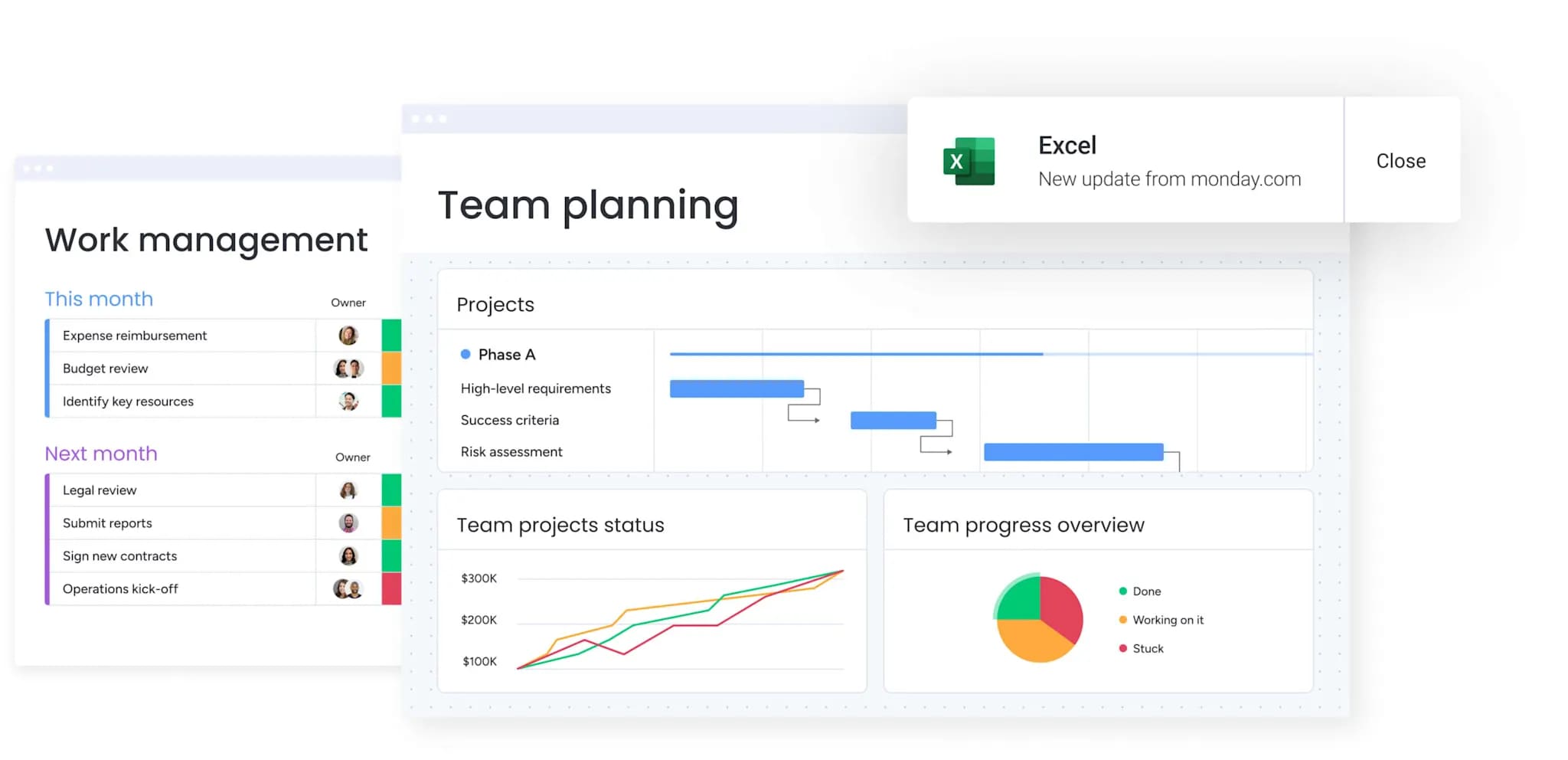
Teams using monday work management can achieve performance optimization through dashboards that automatically display live high-level project data for insights on budget, goals, schedules, resources, and more. They can also customize dashboards based on their needs with drag-and-drop widgets and view data the way they need to make sharper, faster decisions.
5 steps to implement marketing program management
Ready to bring program management to your team? Start with these five steps that build your capabilities one layer at a time. This tried and tested approach ensures teams develop the foundational capabilities needed for program success while avoiding common implementation pitfalls.
Step 1: Assess marketing maturity
Marketing program management requires foundational capabilities that many organizations must develop before implementing full program structures. Assessment identifies readiness gaps and prioritizes improvement areas.
Key evaluation areas include:
- Team structure evaluation: Current marketing organizations reveal readiness through reporting relationships, role definitions, and cross-functional collaboration patterns.
- Process documentation review: Organizations with documented workflows, standardized templates, and defined approval processes can implement program management faster.
- Technology stack integration analysis: Disconnected platforms that don’t share data or enable cross-team visibility create program management obstacles.
- Performance measurement capabilities: Organizations that already track cross-channel attribution and connect marketing activities to business outcomes have stronger foundations.
Step 2: Set program objectives
Program objectives that align with business outcomes provide the strategic foundation for coordinated execution. Keep in mind that effective program objectives follow SMART criteria while connecting directly to business outcomes rather than activity metrics.
A demand generation program objective might target “$5M in qualified pipeline generated by Qfour” rather than “increase lead volume by 20%.” The business outcome focus ensures program success translates to revenue impact.
Establishing success metrics also requires cross-functional agreement on measurement methodology and data sources. Program objectives require buy-in from marketing leadership, sales, product, customer success, and executive teams who share accountability for outcomes.
Step 3: Design workflow architecture
Integrated workflows connect multiple marketing initiatives into coordinated program execution. Visual documentation of how work flows through program components reveals dependencies, handoff points, and coordination requirements.
Essential design elements include:
- Dependency identification: Understanding which program components must complete before others can begin prevents bottlenecks and resource conflicts.
- Handoff point definition: Specifications for what deliverables transfer between teams, what information must accompany the handoff, and who owns work at each stage.
- Approval process design: Streamlined approval workflows that balance quality control with execution speed.
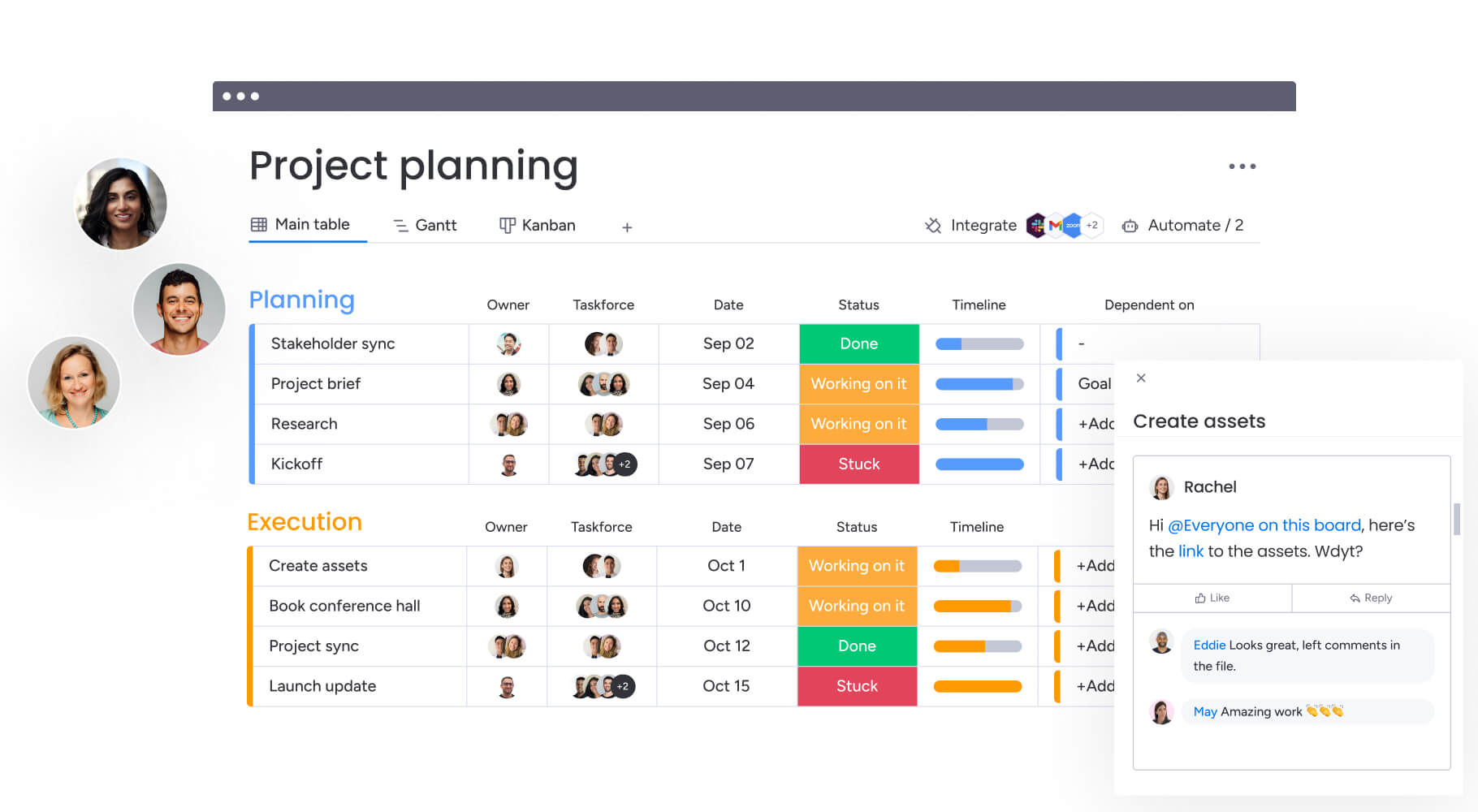
Teams using monday work management can build any workflow for any work process using powerful building blocks such as automations and dashboards. They can also map processes with visual boards and integrate coordination across organizational workflows.
Step 4: Deploy management platforms
Tech platforms that support program management provide visibility, coordination, and performance tracking capabilities. Effective platforms provide portfolio-level visibility across multiple programs, enable cross-functional collaboration without forcing teams into rigid processes, and integrate with existing marketing technology stacks.
Integration requirements matter significantly. Program management platforms must connect with marketing automation, CRM, analytics, content management, and other systems where marketing work happens.
Intelligent solutions like monday work management connect with over 200 apps including Microsoft Teams, Gmail, Slack, Jira, and Salesforce, enabling teams to run powerful projects without switching tabs.
Step 5: Establish governance
Governance structures ensure program success through decision-making protocols, regular performance review, and continuous improvement. Program governance requires representation from marketing leadership, key functional areas, and executive sponsors who can resolve resource conflicts and strategic questions.
Critical governance components include:
- Decision-making protocols: Specifications for what decisions require governance committee approval versus program manager authority.
- Performance review processes: Regular program reviews that assess progress against objectives, identify issues requiring intervention, and make strategic adjustments.
- Continuous improvement mechanisms: Retrospective reviews that capture lessons from completed programs and process improvement initiatives that address systemic issues.
Get it now: Marketing roadmap template
How does AI transform program marketing success?
AI is a game-changer for program managers — it spots resource conflicts before they derail your timeline, recommends the best team assignments, and flags performance issues you might miss.
AI also transforms program management by automating routine tasks, providing predictive insights, and optimizing resource allocation across complex program portfolios.
Predictive risk management
AI identifies potential program risks before they impact performance by analyzing patterns across historical program data, current execution metrics, and external signals. Predictive analytics for resource conflicts flag when multiple programs compete for the same team capacity or budget, preventing bottlenecks before they delay execution.
Teams leveraging monday work management’s Portfolio Risk Insights can scan all project boards to quickly flag potential risks by severity. They can spot critical issues at a glance, allowing them to focus on strategic analysis instead of manual data review.
With just a click, the platform notifies the right person about an emerging risk and generates a summary with links to relevant work.
Intelligent resource allocation
AI optimizes resource distribution across program initiatives by considering multiple variables simultaneously. Machine learning approaches to capacity planning analyze historical productivity data, skill requirements, and workload patterns to recommend optimal team assignments.
Organizations using monday work management can also assign the right people to the right projects with AI, taking into account effort, level, availability, and skills. This capability helps marketing leaders make the most of their resources while balancing team capacity.
Automated performance insights
AI generates actionable insights from program performance data through automated reporting, anomaly detection, and performance pattern recognition. Automated reporting synthesizes data from multiple sources into program health assessments without requiring manual data compilation.
AI Blocks on monday work management let teams categorize data at scale, summarize complex topics into actionable insights, and extract key information from documents automatically. These capabilities save time and improve accuracy across program management activities.
AI-powered workflow optimization
AI improves program workflow efficiency through process optimization and automation recommendations. Intelligent routing assigns work to optimal team members based on capacity, skills, and historical performance. Workflow bottleneck identification analyzes execution patterns to reveal where work consistently stalls.
The Digital Workforce capabilities on monday work management include specialized digital workers that handle real work continuously, learning from human interactions and proactively solving problems. The Campaign Manager digital worker assists with campaign coordination within broader marketing programs.
7 critical metrics for marketing program excellence
To truly nail program management, you’ll need to track more than just campaign metrics — you need indicators that show how your entire marketing portfolio performs together. These metrics provide comprehensive visibility into program health, resource efficiency, and strategic impact across the marketing portfolio.
1. Portfolio health score
Portfolio health score is a composite metric that indicates overall program portfolio performance by combining multiple performance indicators into a single health indicator. Calculation methodology aggregates metrics across four dimensions: strategic alignment, execution health, resource efficiency, and performance trajectory.
Score interpretation typically uses a 0-100 scale where:
- 80-100: Healthy portfolio with strong performance across all dimensions.
- 60-79: Adequate performance with some areas requiring attention.
- 40-59: Significant issues requiring intervention.
2. Resource utilization rate
Resource utilization rate measures how efficiently resources are deployed across programs, calculated by dividing productive program work hours by total available hours. Optimal utilization ranges typically fall between 70-85% for team capacity.
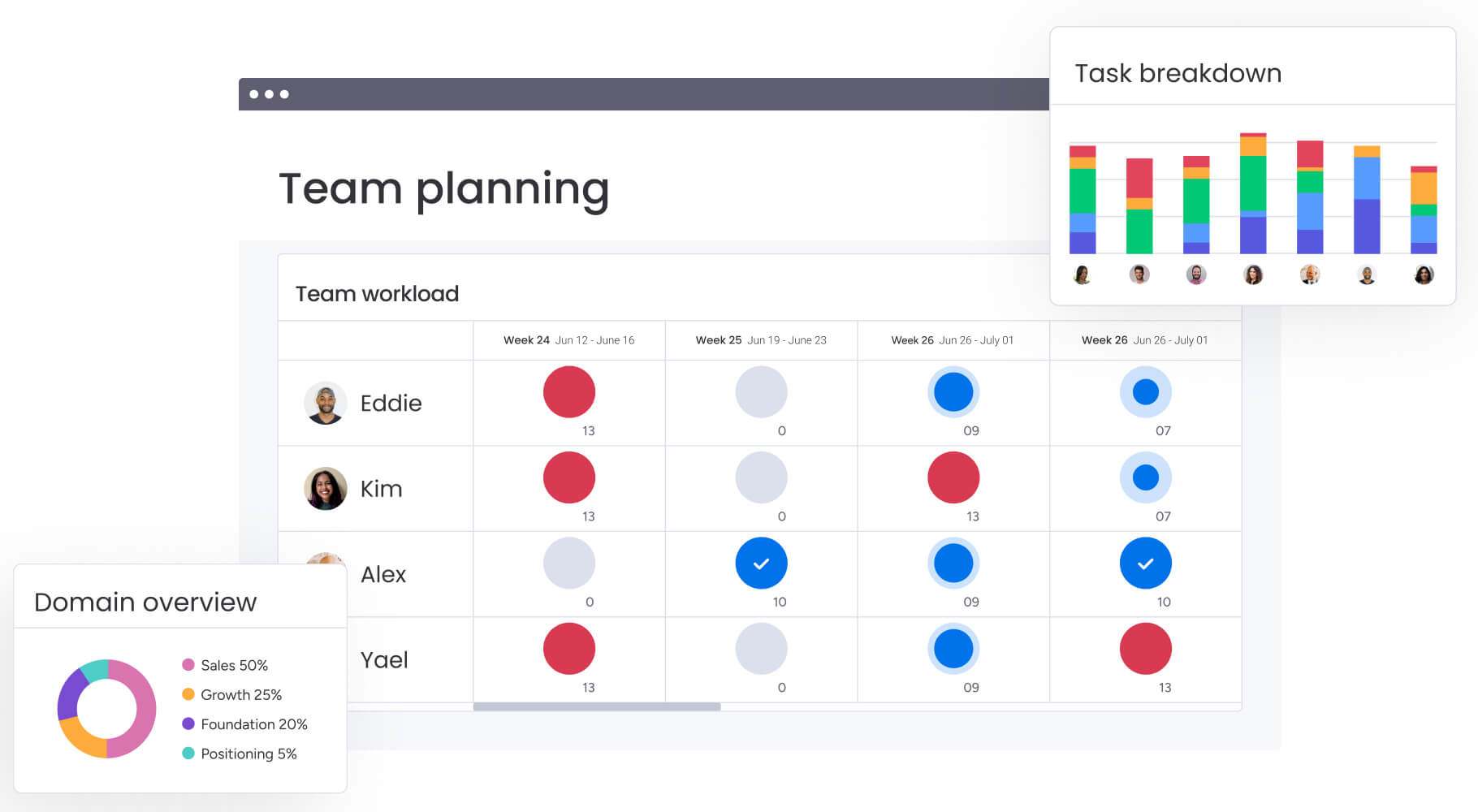
Teams using monday work management’s Workload View can balance resources and quickly adapt to changing priorities. Leaders can see over-utilized and under-utilized resources at a glance to maximize overall work efficiency.
3. Cross-functional efficiency
Cross-functional efficiency metrics measure collaboration effectiveness between teams involved in program execution. Key measurements include:
- Handoff efficiency: Tracks how smoothly work transfers between teams.
- Communication effectiveness: Assesses whether teams maintain alignment.
- Shared goal achievement: Evaluates whether cross-functional teams deliver on collective objectives.
4. Campaign velocity
Campaign velocity measures program execution speed and efficiency through time-to-market measurements, execution cycle times, and velocity trend analysis. Time-to-market tracks duration from program approval to first campaign launch. Execution cycle time measures how long individual campaign components take from initiation to completion.
5. Program ROI
Program ROI measures portfolio-level return on investment through attribution methodologies that account for multi-initiative programs. Attribution methodologies for multi-initiative programs differ from single-campaign attribution by accounting for touchpoint interactions across program components.
6. Stakeholder satisfaction
Stakeholder satisfaction measures how effectively program management meets stakeholder needs through internal stakeholder feedback, external partner satisfaction, and customer experience impact. Regular stakeholder satisfaction assessment reveals whether program management structures enable or hinder effective work.
7. Risk mitigation index
Risk mitigation index measures program risk management effectiveness through risk identification rates, mitigation success rates, and impact minimization measurements. High identification rates indicate mature risk management practices.
How to build adaptive marketing programs for competitive advantage
The winners in today’s fast-changing markets build flexible programs that can pivot when the data suggests a new direction — not rigid campaigns locked in months in advance. These flexible frameworks enable organizations to capitalize on opportunities while minimizing risks through responsive program management approaches.
Dynamic program frameworks
Dynamic program frameworks flex with changing market conditions and business priorities rather than following fixed plans regardless of circumstances. Modular program design creates components that can be reconfigured, scaled, or replaced without disrupting the entire program structure.
A demand generation program with modular components can shift resources from underperforming paid advertising to high-performing content marketing without rebuilding the entire program structure. Scalable resource models enable programs to expand or contract based on performance and opportunity.
Real-time performance adjustment
Responsive program management systems adjust based on performance data rather than following predetermined plans. Automated optimization triggers enable programs to self-adjust when performance crosses defined thresholds.
Teams leveraging monday work management’s automations can save valuable time by automating crucial elements of work, including creating templated project boards, sending approval notifications and reminders, and triggering actions based on performance conditions.
Data-driven decision automation
Automated decision-making processes optimize program performance through decision tree frameworks, automated optimization rules, and performance-based resource reallocation. Decision trees codify program management logic, enabling consistent, fast decisions without requiring manual analysis for routine optimization choices.
Continuous innovation cycles
Embedding innovation and learning into program management processes creates sustainable competitive advantages through experimentation frameworks, learning capture mechanisms, and innovation diffusion processes. Experimentation frameworks establish structured approaches to testing new tactics, channels, or program architectures.
Revamp your marketing operations with monday work management
Intelligent solutions like monday work management provide comprehensive capabilities that address marketing program management challenges through visual portfolio management, AI-powered insights, seamless cross-team workflows, and customizable dashboards.
These integrated capabilities enable marketing teams to coordinate complex programs while maintaining visibility and control across all initiatives.
Visual portfolio management at scale
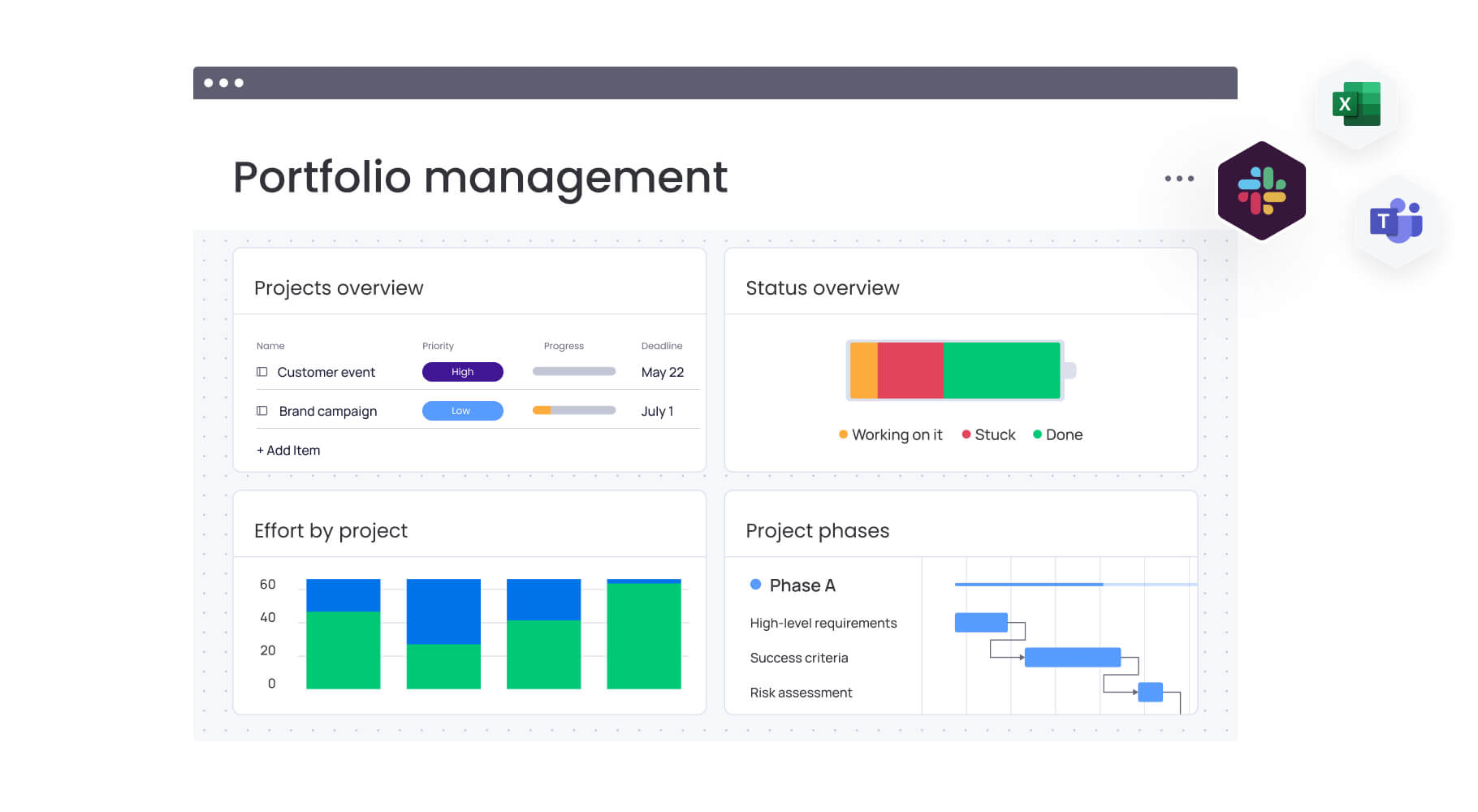
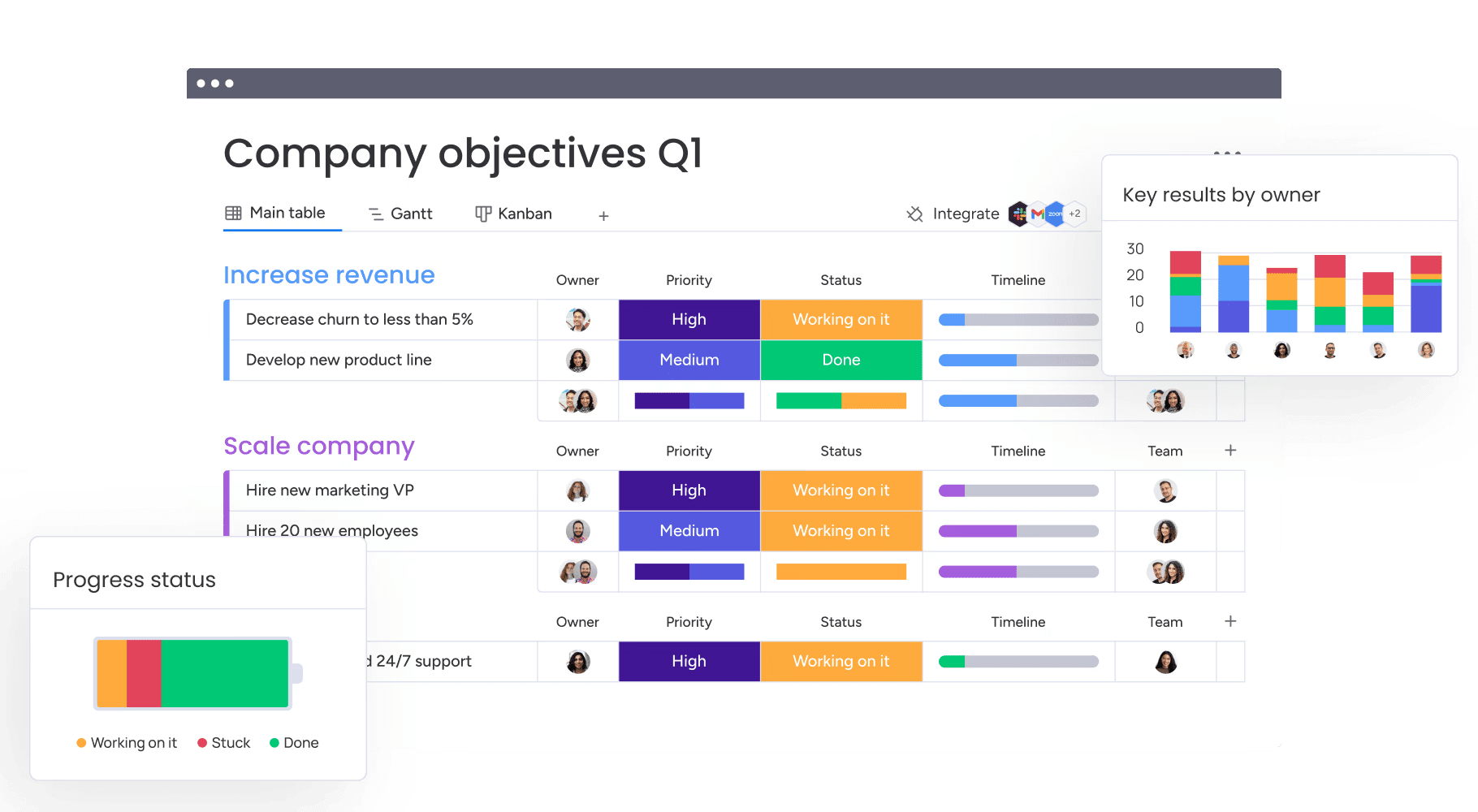
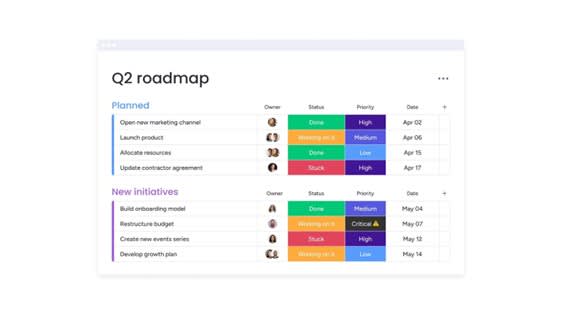
monday work management delivers portfolio visibility that transforms how marketing teams coordinate multiple programs. Dashboard capabilities provide real-time views of program health across the entire marketing portfolio, showing which programs are on track, which face risks, and where resources are allocated.
Cross-program dependency tracking reveals how programs relate to each other — shared resources, sequential dependencies, and coordination requirements that impact execution. Visual dependency maps show which programs must coordinate timing, which share team capacity, and where resource conflicts exist.
AI-powered program insights
monday work management’s AI capabilities enhance marketing program management through Portfolio Risk Insights, AI Blocks, and Digital Workers. Portfolio Risk Insights identify programs at risk of missing objectives by analyzing execution patterns, resource utilization, and performance trends across the portfolio.
AI Blocks automate routine program management activities that consume significant time without requiring strategic judgment:
- Automated status updates: Compile program health information from multiple sources, eliminating manual status report creation.
- Performance summaries: Synthesize complex program data into executive-level insights.
Seamless cross-team workflows
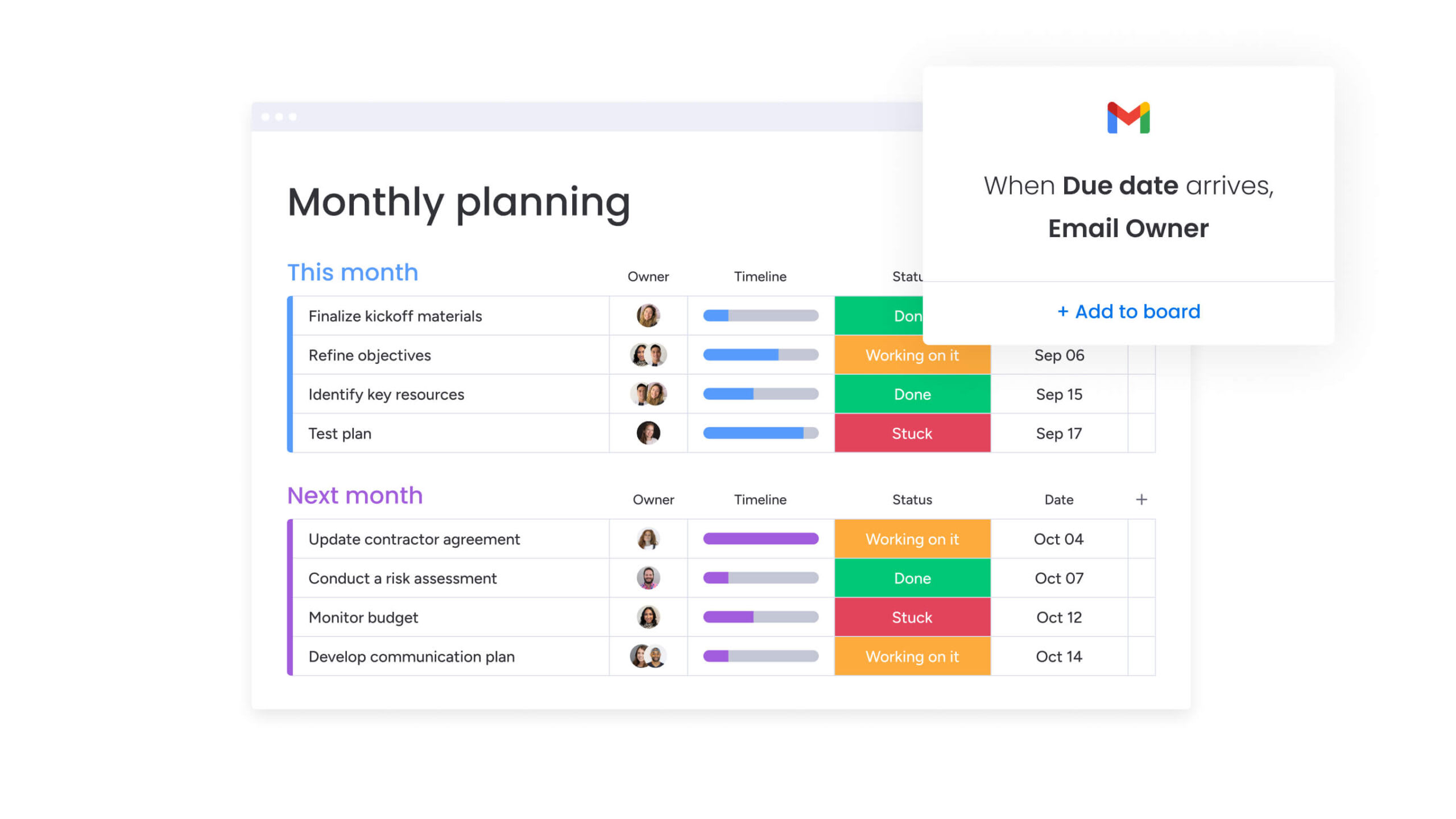
monday work management facilitates collaboration between marketing, sales, product, customer success, and other teams involved in marketing programs. Workflow automation reduces manual coordination — when marketing completes a campaign component, sales automatically receives notification with complete context about what was delivered and what actions they should take.
monday workdocs further enable teams to execute workflows seamlessly from brainstorming through reporting. Teams can collaborate in real-time and move projects forward with live boards, dashboards, videos, and more embedded directly into workdocs.
Customizable marketing dashboards
Dashboard capabilities within the intuitive platform provide tailored program management insights through customizable widgets, real-time performance tracking, stakeholder-specific views, and automated reporting features. Customizable widgets further enable program managers to create dashboards that show exactly the information they need.
Capability Spreadsheets Basic project management Marketing automation monday work management
Portfolio visibility Manual compilation required Limited to individual projects Campaign-level only Visual portfolio dashboards with real-time updates
Cross-team collaboration Email attachments with version issues Basic assignment Marketing team only Seamless collaboration with context and integrations
Customization flexibility Flexible but requires manual maintenance Template-based with limited options Fixed to marketing workflows Intuitive customization without technical skills
AI capabilities None None Campaign optimization only Portfolio Risk Insights, AI Blocks, Digital Workforce
Integration options Manual data export/import Limited API Marketing stack only 200+ integrations with marketing, sales, and business platforms
Scale marketing impact through strategic program coordination
Adopting program management means stepping away from isolated campaigns and thinking in coordinated systems. Instead of initiatives competing for budget and attention, programs align around shared objectives and reinforce one another.
That alignment drives real advantage. Resources are allocated with intention. Teams operate from a single strategic view. Performance is measured across the full portfolio, not in disconnected snapshots.
Making this shift requires structure. Clear ownership, defined workflows, governance standards, and the right platform to connect planning with execution all matter.
monday work management gives marketing teams the visibility and control to run complex programs with confidence. With portfolio-level dashboards, cross-team workflows, and AI-powered insights, teams stay aligned while remaining flexible enough to adapt as priorities change.
Frequently asked questions
What salary can marketing program managers expect?
The salary a marketing program manager can expect typically ranges from $75,000 to $150,000 annually, depending on experience, company size, and geographic location. Senior program managers at enterprise organizations often earn $120,000 to $180,000, while those with specialized skills in AI-powered program management or portfolio optimization may command premium compensation.
How long does it take to implement marketing program management?
Most organizations can establish basic marketing program management processes within three-six months, though full maturity typically takes 12-18 months. The timeline depends on existing team capabilities, technology infrastructure, and organizational readiness for cross-functional collaboration.
What's the difference between marketing operations and program management?
Marketing operations focuses on the infrastructure, processes, and technology that enable marketing execution, while program management coordinates multiple marketing initiatives toward strategic business outcomes using that infrastructure. Marketing operations builds the foundation; program management orchestrates the portfolio.
Which certifications benefit marketing program managers?
Valuable certifications include Project Management Professional (PMP) for program management fundamentals and Certified Marketing Program Manager (CMPM) for marketing-specific program management. Additional certifications in marketing automation platforms, analytics, and AI-powered marketing tools enhance career prospects.
Can small teams use marketing program management?
Small marketing teams can benefit from program management principles through simplified versions focused on coordination and measurement rather than complex governance structures. The key is adapting program management concepts to team size while maintaining focus on portfolio-level outcomes.
How does monday work management support marketing program coordination?
monday work management provides visual portfolio management that shows how multiple marketing initiatives connect to strategic objectives, AI-powered insights that identify program risks and optimization opportunities, and customizable workflows that adapt to each organization's specific program management needs. The platform enables seamless collaboration across marketing, sales, and customer success teams while providing real-time visibility into program performance

 Get started