


Setting ambitious goals is powerful, but without the right structure, even the most thoughtful strategies can lose momentum. When teams struggle to connect long-term objectives with daily work, priorities blur and progress slows. Goal setting templates bring that structure back. They translate vision into action by outlining defined, measurable steps that keep everyone aligned on shared outcomes. With the right framework, teams can define priorities, assign ownership, and track progress in ways that feel both consistent and adaptable.
In this article, we’ve rounded up templates that showcase practical formats for strategic planning, team alignment, and individual development, from SMART goals and OKRs to the emerging FAST framework. You’ll also find a step-by-step guide to building your own template and a look at how monday.com’s AI Work Platform connects goal tracking directly to the work your team does every day.
Key takeaways
- Turn ideas into action: Goal setting templates transform vague objectives into structured plans with defined deadlines, metrics, and accountability.
- Select the right format: Choose templates that match your team size, update rhythm, and collaboration style. Digital versions work best for teams, while printable ones suit individual planning.
- Connect goals to execution: The platform connects goals directly to daily work, with AI automation, goal tracker agents, and real-time dashboards that surface progress without manual updates.
- Include essential elements: Effective templates feature specific goals, realistic timelines, measurable metrics, defined actions, and assigned ownership.
- Keep goals dynamic: Review and adjust on shorter 30-90 day review cycles to stay aligned with shifting priorities, and schedule regular check-ins to maintain momentum.
What are goal setting templates?
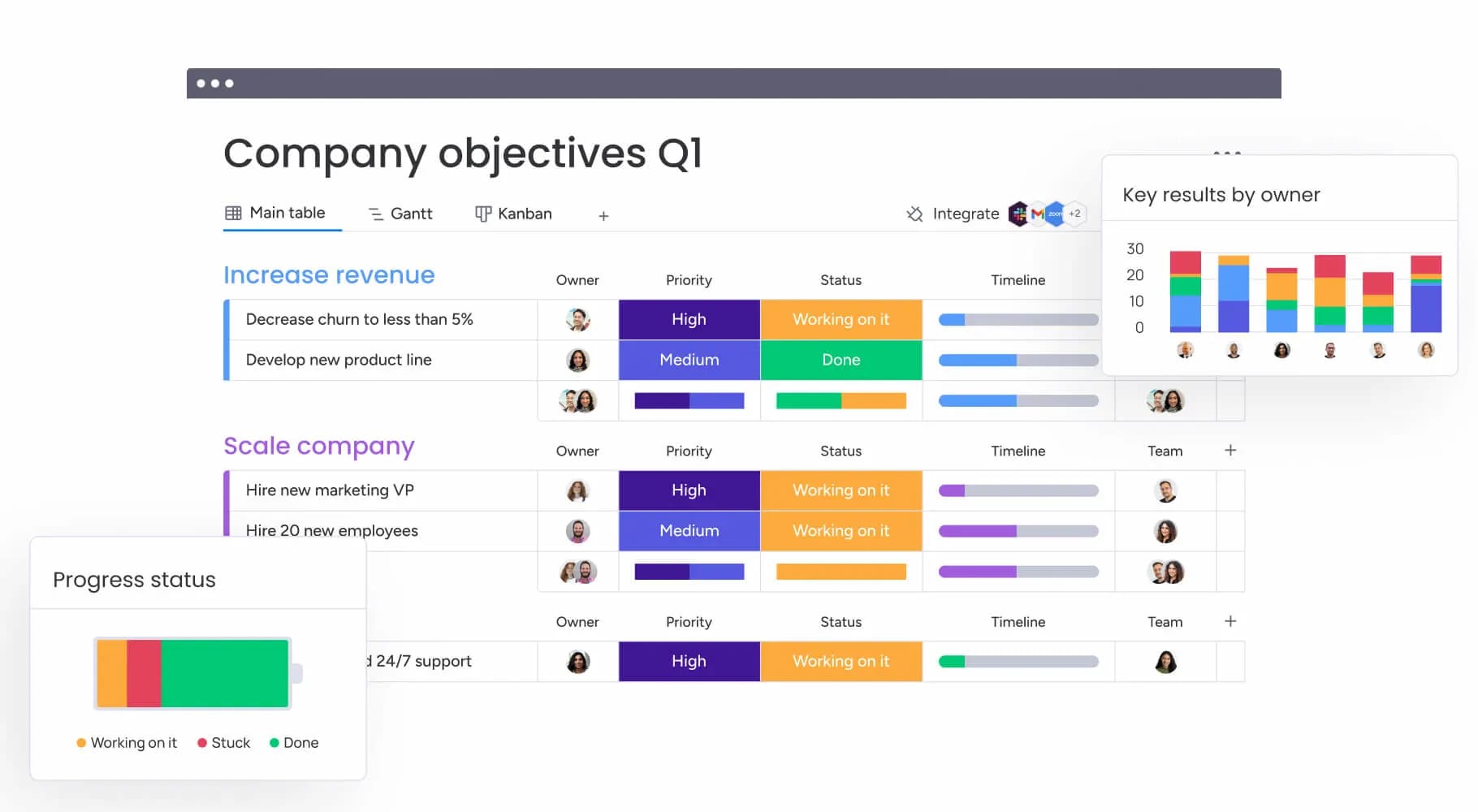
Goal setting templates provide the structure teams need to move from intention to execution. They bring focus to the planning process by capturing goals, timelines, action steps, and success metrics in one organized space.
Research shows that people who document their goals are 42% more likely to achieve them, and templates make that process simple and repeatable. Instead of starting from scratch each time, a well-designed goals template or goal sheet template offers a framework that turns big ideas into measurable progress.
Every effective goal-setting template includes the following core components:
- Goal statement: The specific outcome you aim to achieve.
- Timeline: Start and end dates, along with key milestones.
- Success metrics: Measurable indicators that track progress.
- Action steps: The workflows required to reach your goal.
- Accountability: Defined ownership for each part of the plan.
Why you should use goal setting templates for your planning
Goal setting templates bring structure to planning, turning ambitious objectives into measurable outcomes. With a consistent framework, teams stay aligned, meet deadlines, and maintain ownership over their results.
Consistency is what makes these templates powerful. When every goal follows the same format, progress becomes easier to track and success easier to replicate. As organizations grow, this alignment matters even more. According to only 46% of U.S. employees know what’s expected of them at work, a gap that structured goal planning directly addresses.
Research compiled by Synergita shows employees with strong alignment between personal and business goals are 35% more efficient and productive. And research spanning 500+ studies shows specific, ambitious goals move average team performance to the 80th percentile.
Structured goal planning helps close that gap by ensuring everyone works toward shared priorities. It delivers:
- Standardized processes: A unified approach to setting and tracking business goals templates.
- Time savings: Less time spent recreating planning documents from scratch.
- Progress visibility: Direct insight into milestones and performance at every level.
- Scalability: Consistent methods that expand easily across teams and departments.
Solutions like monday.com’s AI Work Platform take this a step further by turning static templates into dynamic systems that update automatically, send reminders, and surface insights to sharpen future planning.
16 essential goal setting templates for every business
Every organization approaches goal setting differently, but the most successful teams rely on structure to keep priorities sharp and progress measurable. Goal setting templates provide that structure by helping teams define objectives, assign ownership, and track results consistently.
The templates below cover a range of planning needs, from company-wide strategy to individual development. Each one is designed to support specific goals while keeping teams aligned on what matters most.
1. SMART goals worksheet template
Best suited for: Anyone new to structured goal setting or teams establishing their first planning process.
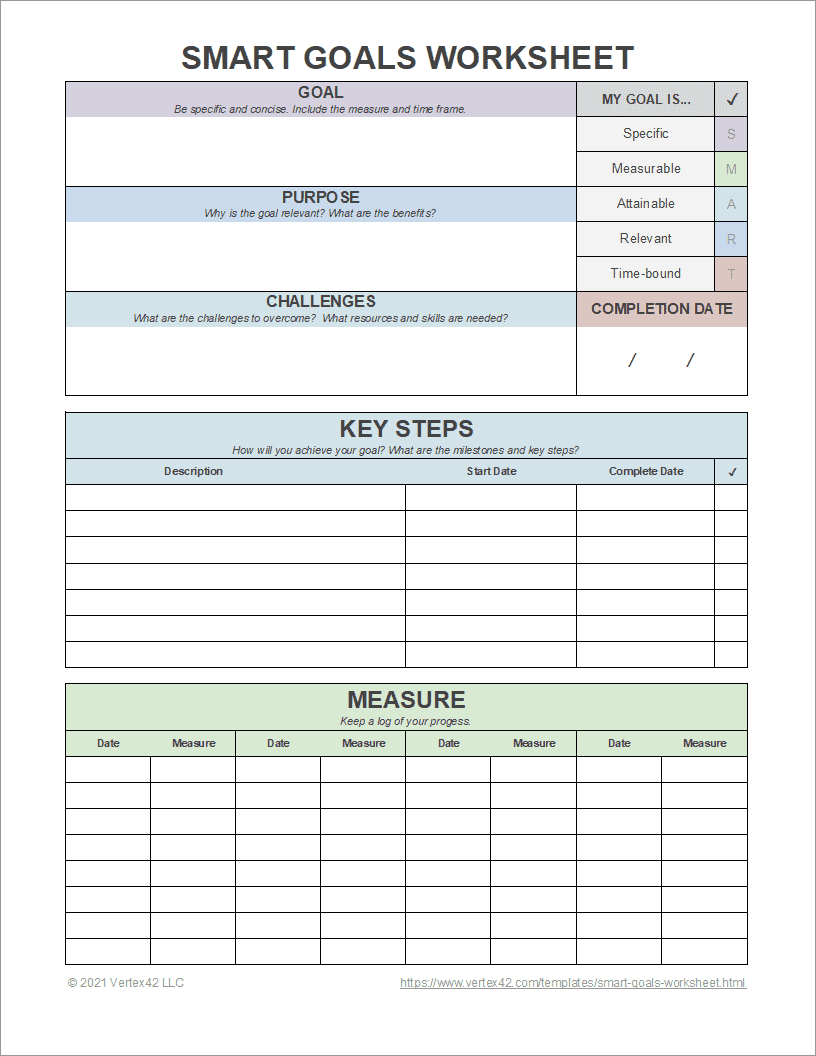
The SMART framework (Specific, Measurable, Achievable, Relevant, and Time-bound) gives every goal a solid structure before work begins. This template walks you through each criterion with prompts and examples to guide your thinking. A SMART goals template structures each objective so the criteria are defined before work begins, turning vague intentions into a trackable goal sheet template. Explore SMART goal management frameworks alongside the SMART goals framework to build goals that are ambitious and achievable in equal measure.
2. OKR planning template
Best suited for: Fast-growing companies and teams focused on ambitious multi-level alignment.
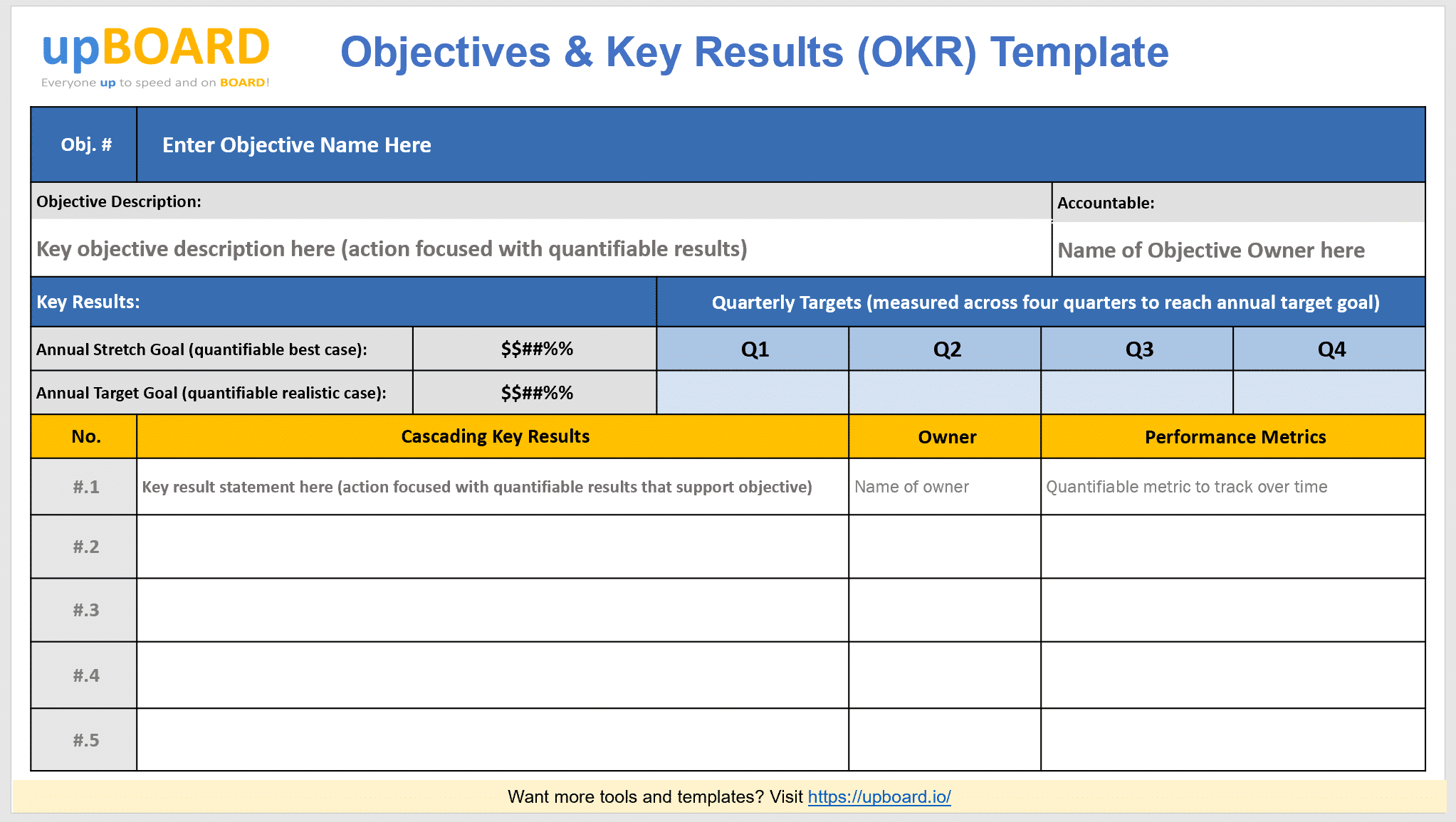
An OKR template separates the Objective (the ambitious, qualitative goal) from Key Results (3-5 measurable outcomes that define success). OKRs balance ambitious objectives with concrete key results, helping you aim high while defining exactly how you’ll measure success. OKRs work at company, department, and individual levels, making this one of the most versatile goal tracking templates in enterprise settings. See how OKRs in project management bring this framework to life across teams.
3. Annual business goals and milestones template
Best suited for: Executive teams and department heads planning strategic initiatives.
This goal planner template maps company-wide objectives across four quarters, assigns ownership to departments, and sets specific milestone checkpoints. It functions as both a business goals template for executive planning and a work goals template for departmental alignment, covering the full scope of what a company goals and milestones template needs to do. Connect your long-term vision to quarterly milestones, keeping teams aligned on priorities throughout the year.
4. Quarterly goal tracker template
Best suited for: Teams in dynamic environments where priorities shift regularly.
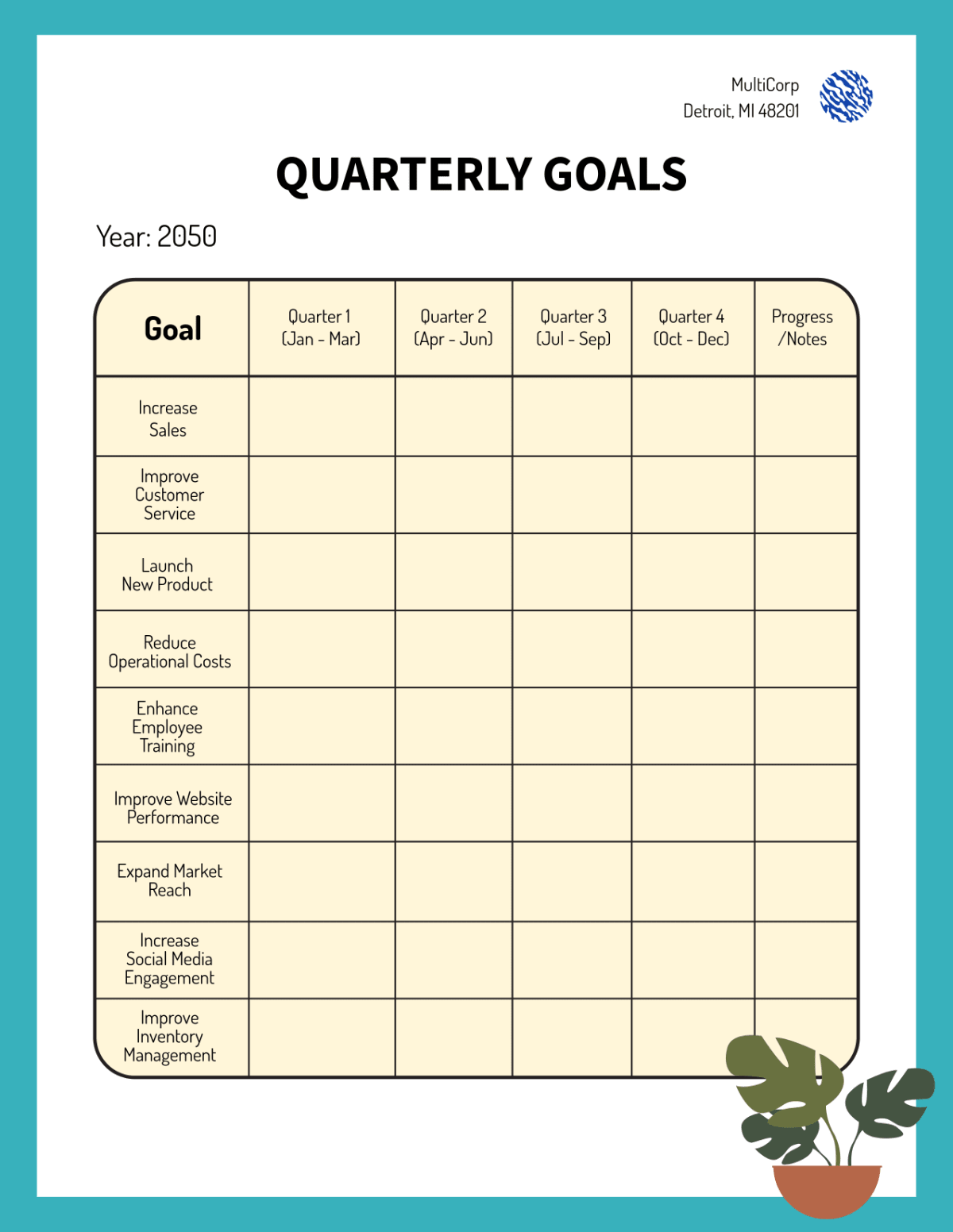
A quarterly goal tracker template is designed for teams operating in fast-moving environments where shorter review cycles (typically 30-90 days) keep goals relevant and progress visible. Use a goal tracker to break big annual goals into manageable chunks and adjust course before small issues become major problems.
5. Team goal alignment worksheet
Best suited for: Cross-functional teams working on connected projects.
This goal planning template maps team dependencies and highlights where collaboration is needed, ensuring individual efforts support team objectives. It makes cross-functional coordination visible from the start rather than discovered mid-project.
6. Project goals dashboard template
Best suited for: Project managers overseeing multiple initiatives.
A project goals dashboard template consolidates individual project metrics into a single view, showing how each initiative connects to broader business objectives. Real-time tracking reveals which projects are driving the most value, where resources are allocated, and which timelines need attention. This visibility helps project managers prioritize efforts, communicate progress to stakeholders, and make data-driven decisions about where to focus next. When every project’s contribution to company goals is visible at a glance, strategic alignment becomes easier to maintain across the portfolio.
7. Employee goal development template
Best suited for: mManagers conducting performance reviews and career planning.

Structure performance conversations around growth objectives. Sections for skills, career planning, and measurable outcomes guide productive discussions. Pair this template with a list of professional goals for inspiration to make development conversations more concrete.
8. Personal goal planning worksheet
Best suited for: Individual contributors focused on career growth.
Plan your own professional development plan with sections for reflection, skill building, and goal planning. This goal planning worksheet helps individual contributors stay intentional about their growth, with space for both short-term actions and longer-term ambitions.
9. Department goals and objectives template
Best suited for: Department managers translating strategy into operations.
A department goals and objectives template cascades organizational priorities down to functional teams, ensuring every department’s work connects to the broader company direction. It maintains alignment while preserving departmental autonomy, giving teams the freedom to define how they’ll achieve their part of the strategy. This balance between top-down clarity and bottom-up ownership helps departments stay accountable without losing the flexibility to adapt their approach as conditions change.
10. Strategic planning goals template
Best suited for: C-suite executives and senior leadership teams.
Define strategic goals with sections for market analysis, competitive positioning, and resource allocation. This template helps leadership translate high-level vision into actionable strategic initiatives, with built-in space for scenario planning and risk assessment. Use alongside strategic plan templates to build a complete picture from vision to execution, ensuring every strategic priority has a clear owner and measurable outcome.
11. Weekly goal planner template
Best suited for: Individuals and small teams who benefit from frequent check-ins.
Set and track short-term goals that connect to larger goals. Weekly reviews keep momentum strongand create the habit of regular goal visibility, making it easier to spot blockers early and celebrate small wins. This format works especially well for fast-moving teams where priorities shift often and staying aligned requires constant communication.
Learn more: Weekly goals
12. Goal progress tracking template
Best suited for: Anyone responsible for ensuring goals stay on schedule.
Monitor advancement with visual indicators and early warning systems for at-risk objectives, using a success plan template to stay on track. This template centralizes status updates, completion percentages, and milestone health in one view, so you can intervene before delays compound. It’s designed to surface what needs attention now, not just report on what already happened.
13. Client project goals sheet
Best suited for: Agencies, consultants, and client-facing teams.
A client-facing goal sheet template documents agreed-upon outcomes, success criteria, and milestone dates, keeping expectations aligned from kickoff to delivery. Transparent success criteria keep everyone satisfiedand accountability shared, reducing scope creep and last-minute surprises. This template also serves as a single source of truth during client reviews, making it easier to demonstrate progress and justify decisions.
14. Resource planning goals template
Best suited for: Operations managers balancing multiple resource demands.
Match goals to available budget, people, and processes. Capacity planning prevents overcommitmentand surfaces resourcing gaps before they affect delivery, giving you time to reallocate or adjust timelines proactively. This template helps you see where teams are stretched thin and where you have capacity to take on more, turning resource planning from reactive firefighting into strategic forecasting.
15. FAST goals template

Best suited for: Organizations shifting from annual to continuous performance management, or teams adopting OKRs at company level while using FAST at team level.
The FAST framework (Frequently discussed, Ambitious, Specific, and Transparent) is gaining significant traction as an alternative to SMART, particularly in organizations seeking greater cross-team alignment. A FAST goals template builds in review cadence (regular check-ins rather than annual set-and-forget), encourages stretch targets, and requires goals to be publicly visible rather than private.
According to MIT Sloan Management Review, less than 25% of middle managers understand their company’s strategic priorities under traditional goal systems, a gap that FAST’s transparency principle directly addresses. Analysis of 600,000+ goals showed that in large organizations, employees view colleagues’ goals on other teams more than twice weekly, demonstrating a natural demand for goal visibility.
16. AI-enhanced goal generator template
Best suited for: Data-driven organizations looking to sharpen their planning process with AI-assisted goal design.
An AI-enhanced goal generator template uses artificial intelligence to turn past results into future direction. This kind of intelligence is increasingly bundled directly into AI performance management software rather than sold as a separate goal-setting add-on. Today’s AI goal generation goes beyond trend analysis. Platforms can now draft SMART objectives based on role and historical performance, flag at-risk goals in real time, and surface completion data during review cycles. According to the Betterworks 2026 State of Performance Enablement Report, when AI is used in the performance process, 89% of managers and employees report high satisfaction versus only 40% without AI.
In monday.com’s AI Work Platform, this kind of intelligence is built directly into goal workflows, from automated progress tracking to the goal tracker agent that surfaces metrics without manual updates.
How to choose the right goal template format
The format you choose for goal setting affects how effectively teams plan, collaborate, and track results. A good fit keeps goals visible, updates easy, and accountability built in from the start.
When evaluating your options, consider:
- Team size: Small teams can use simpler setups; larger ones need shared access and version control.
- Update frequency: Fast-moving projects benefit from real-time editing and automated status changes.
- Integration needs: Templates should connect smoothly with your existing systems.
- Reporting requirements: Detailed analysis requires built-in calculation or visualization features.
These factors will help you decide whether a digital or printable template works best, and whether your team needs a collaborative or individual format.
Digital vs printable goal sheets
Digital templates excel at collaboration and automation. Multiple people can update progress simultaneously, calculations happen automatically, and integrations keep data flowing between systems. Spreadsheet-based formats like a goal setting template Excel file give teams a portable, customizable option that connects with existing reporting workflows.
Printable versions still serve important purposes. Use them for:
- Workshop sessions: When teams need to brainstorm without screens.
- Personal reflection: For individual planning and thinking time.
- Offline environments: Where technology access is limited.
The most effective approach often combines both. Start planning on paper, then move to digital systems for tracking and collaboration.
Platform-based goal templates
Dedicated work management platforms offer a third path that combines the accessibility of digital templates with real-time automation, dashboard roll-ups, and cross-team visibility. Rather than a static file you update manually, a platform-based template becomes a living workspace, where goal progress updates as work gets done and every stakeholder sees the same data. For teams managing goals at scale, this removes the maintenance overhead that often causes goal tracking to quietly fade after the first month.
Collaborative vs individual goal templates
Team templates need features that individual ones don’t. Shared access, commenting, and version control become essential when multiple people contribute.
Individual templates can stay simpler. Focus on personal reflection and progress tracking without the overhead of multi-user coordination.
Even individual goals benefit from occasional sharing. Build in checkpoints for manager feedback or peer accountability.
5 steps to creating your own goal setting template
Building an effective goal setting template starts with focus and structure. The process involves defining what to track, how to measure success, and who is responsible for keeping progress on course.
Follow these five steps to design a template that keeps your goals focused, measurable, and connected to daily execution.
Step 1: Define your goal categories
Start by listing the types of goals your organization sets most often. Common categories include:
- Financial: Revenue targets, cost reduction, profit margins.
- Operational: Pocess improvements, efficiency gains, quality metrics.
- Strategic: Market expansion, product launches, competitive positioning.
- Development: Skill building, leadership growth, team capabilities.
Each category needs different tracking approaches. Financial goals require quantitative metrics. Development goals might use qualitative assessments alongside numbers.
Step 2: Select measurable success metrics
Choose indicators that actually show progress. Vague metrics lead to vague results, and can harm morale.
Good metrics share these qualities:
- Specific: consider metrics like “increase customer satisfaction score to 4.5” not “improve satisfaction.”
- Accessible: be sure you can actually measure them with current systems.
- Relevant: ensure they matter to stakeholders and connect to business outcomes.
- Timely: updates are available when you need them.
Also include both leading and lagging indicators. Leading indicators predict future success while lagging indicators confirm past performance.
Step 3: Map timeline and key milestones
Divide large goals into defined phases, each with its own deadline and success criteria. Include buffer time for changes in priorities, dependencies, or resource availability that could affect delivery.
Work management platforms make timelines easier to manage by visualizing dependencies, highlighting potential delays, and showing how shifts in one area affect the overall plan.
Step 4: Design progress tracking systems
Effective tracking keeps goals visible and accountability built in. Your system should make progress easy to understand for everyone involved. Whether you’re building a goal action plan template from scratch or adapting a standard goals template, the most important design rule is to make progress visible at a glance. Dashboards, color-coded statuses, and automated data pulls all serve this purpose.
To create a reliable tracking setup:
- Use visual cues: Progress bars, color statuses, and dashboards help teams see updates instantly.
- Automate data updates: cConnect existing systems to reduce manual work and improve accuracy.
- Adapt to different audiences: Executives need high-level summaries, while team members rely on detailed views.
Step 5: Build accountability checkpoints
Schedule regular reviews throughout the goal timeline. Weekly team check-ins, monthly progress reports, and quarterly strategy sessions each serve different purposes.
Assign specific ownership for every element. Defined ownership ensures every element has a dedicated accountable owner who keeps it on track. Create escalation paths for when things go off track, teams need to know when and how to ask for help.
Best practices for effective goal setting templates
Success requires more than well-designed templates. You also need consistent processes that keep goals active in daily work. The templates that actually drive results are the ones built with review cycles, collaborative input, and strengths-based design from day one. Understanding goal management best practices helps ensure your templates support those habits rather than replace them.
A 2025 APQC survey found that 66% of employees indicated their goals could have changed if business conditions shifted, underscoring why review cycles must be built into every goal planner template from the start. Set a review rhythm that matches your business:
- Weekly: For fast-moving teams and short-term objectives.
- Monthly: For departmental goals and ongoing initiatives.
- Quarterly: For strategic objectives and long-term projects.
Stakeholder involvement prevents surprises. Include relevant people from the start to surface concerns early and build ownership. How do you know when goals need adjustment? Watch for these signals:
- Consistent missed milestones: The timeline was too aggressive.
- Changed business priorities: The goal no longer serves its original purpose.
- Resource constraints: The team doesn’t have what it needs to succeed.
- New opportunities: A stronger path to the outcome has emerged.
How is AI transforming goal setting?
The data reveals a troubling gap. According to a Betterworks study, 90% of HR leaders say AI has fundamentally redefined what high performance means, yet only 42% of organizations have updated their goal-setting or review criteria to reflect this shift. Executives are 6x more likely than employees to believe performance reviews have kept pace with AI-driven work.
So what does AI actually do in a goal setting context? The three primary applications that are changing how teams plan and track goals are:
- AI goal drafting: AI suggests SMART objectives based on role, past performance, and company priorities, so goal-writing starts from an informed baseline rather than a blank page.
- At-risk detection: Intelligent alerts reach managers when goals are stalling before it’s too late to intervene, replacing reactive quarterly check-ins with proactive signals.
- Review assistance: AI surfaces completion data and detects potential bias in performance ratings, giving review conversations a factual foundation.
When AI is used in the performance process, 89% of managers and employees report high satisfaction versus only 40% without it. Despite this, almost 50% of employees are not yet comfortable using AI, making it essential that AI-powered goal-setting features feel familiar, embedded, and easy to adopt from day one.
Having AI woven into the goal-setting workflow rather than bolted on as a separate step is exactly what monday.com is built to deliver.
Learn more: AI goal manager agent
Goal setting with monday.com's AI Work Platform
Traditional goal management breaks down when objectives live separately from the work being done to achieve them. monday.com’s AI Work Platform solves this by embedding goals directly into workflows, so your team is always working from the same source of truth, with AI handling the tracking, flagging, and reporting that used to consume hours of manual effort.
Goals and OKRs at every level
The AI Work Platform provides native Goals & OKRs as a core, enterprise-ready capability. Teams can set company-level objectives, connect them to strategic initiatives, assign ownership, and give executives a real-time cross-organizational view without chasing updates. The same system supports individual performance goals, department OKRs, and portfolio-level tracking from a single connected workspace.
Real-time dashboards for goal visibility

With drag-and-drop dashboard widgets for goals, budgets, timelines, and resources, teams get a live view of progress without building reports from scratch. Whether you need a portfolio rollup for the executive team or a project-level goal sheet for a department head, dashboards consolidate the data automatically. Conditional color-coding and automated status updates mean at-risk goals surface themselves, putting the right information in front of the right people automatically. In this way, the board itself becomes the goal tracking template, updated continuously as work progresses.
monday agents: Your goal tracker in action

monday agents function as autonomous AI teammates, and can automatically track metrics progress against defined goals. Whether you’re monitoring performance metrics, lead generation numbers, or project completion rates, the agent surfaces deviations from targets without waiting to be asked.
Build a custom goal dashboard with monday vibe
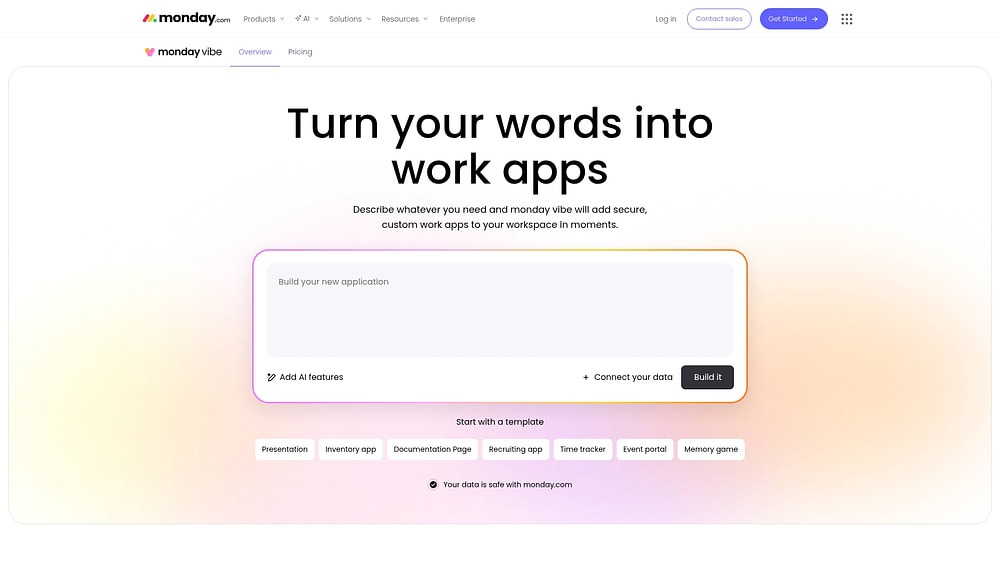
monday vibe is a AI-powered no-code app builder that turns natural language prompts into fully custom, secure business apps on the platform. A team leader can describe their ideal OKR monitoring dashboard or strategic initiative tracker in plain language, and vibe generates a working app without a single line of code. Leadership examples include executive insights dashboards, strategic initiative trackers, and OKR monitoring apps, all buildable in minutes and connected to live board data. Building and previewing vibe apps is available on standard plans; publishing is a paid add-on.
Ask AI tools to pull your goal data with monday MCP
monday MCP (Model Context Protocol) is an open standard that lets AI tools like Claude, ChatGPT, Copilot, and Cursor securely access and act on your monday.com data. It’s free on all monday.com plans and available from the monday marketplace. In practice, this means your team can ask Claude or ChatGPT to pull OKR progress, summarize goal status across teams, or surface milestone data, using natural language, without switching between platforms. That “free on all plans” accessibility is what separates monday MCP from enterprise-only AI features offered elsewhere.
7 AI automation blocks for goal workflows
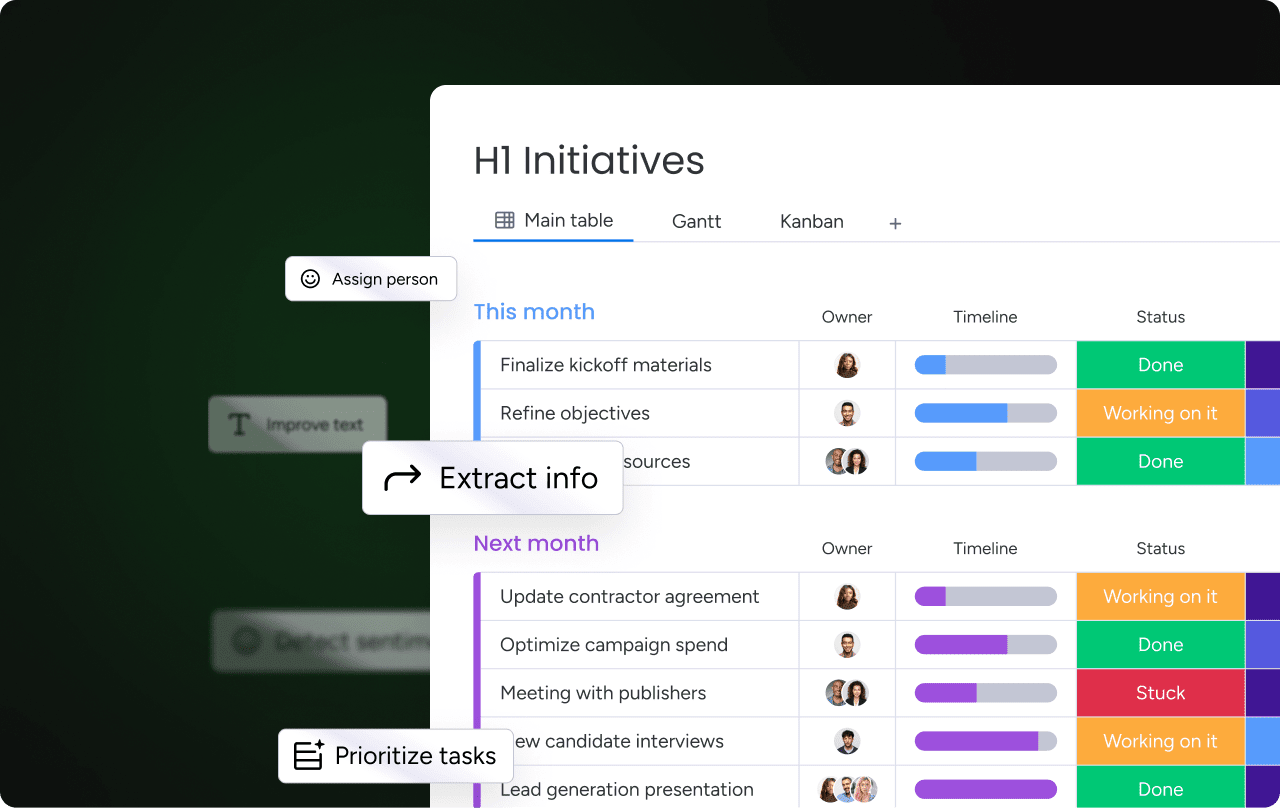
Seven AI automation block types in the AI Work Platform handle the routine work of goal management, available on Pro and Enterprise plans. Each block eliminates a specific manual step between a status change and a stakeholder update:
- Categorize: tag goals by type or priority automatically.
- Summarize: condense progress notes for executive communication.
- Translate: keep global teams aligned without manual localization.
- Detect sentiment: surface mood signals in stakeholder updates.
- Extract info: pull key data points from goal documents.
- Improve: refine goal statements for precision and measurability.
- Custom: build any AI-powered automation your workflow requires.
How the AI Work Platform compares for goal setting
When evaluating goal-setting solutions, the differences between platforms become clear once you look at what’s built in versus what requires workarounds. The comparison below shows how the AI Work Platform’s native capabilities stack up against traditional spreadsheets and generic project tools across the features that matter most for goal management at scale.
| Capability | The AI Work Platform | Spreadsheet (Excel/Sheets) | Generic project platform |
|---|---|---|---|
| Native Goals & OKRs | Yes, EPM-grade, enterprise-ready | Manual (formula-based) | Varies |
| Real-time dashboards | 10+ widgets, auto-updating | Manual refresh | Limited |
| AI goal automation | 7 AI blocks + goal tracker agent | None | Limited add-ons |
| No-code custom goal apps | monday vibe (prompt to app) | No | No |
| AI platform integration (MCP) | Free on all plans (Claude, ChatGPT, Copilot) | No | No |
| Goal cascade (company team individual) | Native hierarchy | Manual cross-sheet linking | Varies |
| Free plan available | Yes | Yes (app) | Varies |
Turn templates into results with monday.com's AI Work Platform
Goal setting templates transform ambitious objectives into achievable outcomes when they’re paired with the right system. The templates in this guide give you the structure, including SMART goals, OKRs, quarterly trackers, and more, but momentum comes from connecting those templates to the work your team does every day. monday.com’s AI Work Platform makes that connection automatic, with native Goals & OKRs, real-time dashboards, and AI agents that surface progress without manual updates.
Start with one template, connect it to the AI Work Platform, and watch how structure turns into sustained momentum. The goal setting process that works is the one your team actually uses and the platform that makes using it effortless.
FAQs
How often should I review and update my goal setting templates?
You should review your goal setting templates quarterly to ensure they match current business needs, though many teams benefit from shorter 30-90 day review cycles to stay responsive to changing priorities. This timing allows you to gather meaningful data about what's working while making adjustments before small issues compound.
Can goal setting templates work for remote teams?
Goal setting templates work well for remote teams because they create structure and visibility across locations and time zones, where async goal visibility is essential. Digital templates with collaboration features ensure everyone stays aligned regardless of where they work.
What’s the difference between goals and objectives in templates?
Goals vs objectives represent broad outcomes you want to achieve versus specific, measurable steps toward those goals. Templates should distinguish between these levels to maintain strategic alignment at every layer of the organization.
How do I align individual goals with company objectives using templates?
Aligning individual goals with company objectives works best when templates include sections that explicitly link individual contributions to organizational priorities. Start with company-level priorities, then cascade down through departments to individual roles so each person can see how their work connects to the larger direction.
Should I use different templates for short-term versus long-term goals?
You should use different templates for short-term versus long-term goals because different timeframes work best with different structures. Short-term goals need detailed action steps and frequent review checkpoints, while long-term goals need flexibility for changing conditions and goal planner templates built for shorter review cycles within a longer horizon. Using specialized templates for each timeframe keeps both types of goals appropriately managed.
What makes a goal setting template effective for beginners?
A beginner-friendly goal setting template includes detailed instructions, relevant examples, and simple frameworks like SMART goals that guide users through each step without overwhelming them with options. Starting with a structured template builds the habit of written goal-setting, which research shows significantly improves the likelihood of achieving those goals.
How does monday.com's AI Work Platform support goal setting?
The AI Work Platform supports goal setting through native Goals & OKRs for enterprise-level tracking, a goal tracker agent that automatically surfaces metrics against targets, monday vibe for building custom OKR dashboards without code, and monday MCP (free on all plans) which lets AI platforms like Claude and ChatGPT pull and report on your goal data directly.

 Get started