


A designer delivers exactly what the brief asked for, but their work still gets sent back. What gives? Usually, the problem is the brief itself. If details like the objective, audience, or success aren’t crystal clear in the brief, the designer will fill in the blanks in their own way.
A creative brief template fixes this by defining these points and decisions before any creative work begins. It’s a simple process that creates a better process for everyone, with fewer misinterpretations and iterations. This guide covers what goes into a strong brief, how to write one in 5 steps, and which templates fit different project types.
Key takeaways
- Start with clear business objectives: Anchor creative briefs in measurable outcomes to align your strategy and reduce revisions.
- Use standardized templates: Consistent structures save time, capture all the critical information, and prevent scope creep.
- Include 7 essential components: Cover objectives, audience, messaging, deliverables, timeline, budget, and success metrics for complete guidance.
- Build structured feedback and approval cycles: Define revision stages and stakeholder responsibilities to maintain quality and clarity.
- Turn briefs into living workflows: On monday AI Workspace, briefs connect strategy to real-time execution and tracking.
What is a creative brief?
A creative brief is a short document that sets the direction for a creative project before any work begins. It covers the objectives, audience, key message, deliverables, timeline, and success metrics, so everyone on the project starts from the same information. A project plan lays out who does what and when. A creative brief defines what the work needs to achieve and why.
Here’s a condensed brief for a software company launching a new reporting feature:
- Objective: Get 500 existing customers to try the new reporting dashboard within 60 days of launch.
- Audience: Operations managers at mid-size companies who build weekly reports by hand in spreadsheets.
- Key message: Your weekly report, done in minutes.
- Deliverables: Launch email, in-app announcement, two LinkedIn ads, and a 60-second demo video.
- Timeline: Concepts by May 5, final assets by May 26, launch on June 2.
- Success metric: Feature activation rate among customers who receive the launch email.
A full brief expands on each of these points. Even this short version gives a writer or designer enough to start.
Creative brief vs design brief: what sets them apart
A creative brief sets high-level strategy, messaging, and business goals for a campaign or project. A design brief details the visual execution: specifications, assets, and deliverables the designers need to produce. In short, the creative brief defines the direction, and the design brief defines the craft that brings that direction to life.
The two documents work in sequence more often than in parallel. A creative brief usually comes first and frames the problem, the audience, and the message. A design brief then translates that thinking into concrete production requirements, such as file formats, dimensions, and brand guidelines. Understanding where one ends and the other begins keeps strategy and execution from blurring together.
The table below shows how the 2 briefs differ across 4 dimensions.
| Dimension | Creative brief | Design brief |
|---|---|---|
| Focus | Strategy, messaging, and business goals | Visual execution and production specs |
| Owner | Marketing lead or strategist | Design lead or art director |
| Key inputs | Objectives, audience, single-minded message | Formats, dimensions, brand guidelines, assets |
| Best for | Campaigns and multi-channel initiatives | Logos, layouts, and specific design assets |
When a project needs both, start with the creative brief and let it feed the design brief. This makes sure that every visual decision traces back to a clear strategic reason. For a single-asset request, such as a landing page banner, a design brief alone may be enough. For a full campaign spanning email, social, and paid media, you’ll want the creative brief to set direction first, then hand a design brief to each production team so the visuals stay consistent across channels.
Key benefits of using creative brief templates
Creative projects may look different upfront, but the principles behind an effective brief don’t change. Without a consistent structure, important details slip through, expectations drift, and teams lose time clarifying what should have been defined upfront. Standardized templates solve that problem, and the benefits build quickly.
Save time with standardized templates
Templates solve the blank page problem that stalls project kickoffs. Pre-defined structures reduce brief creation time from hours to minutes, letting strategists focus on content rather than formatting. That reclaimed time compounds across every project, since the same fields, prompts, and approval steps carry from one brief to the next instead of being rebuilt each time.
- Instant project kickoffs: Pre-built sections eliminate setup delays.
- Consistent information capture: Standardized fields ensure critical details are never overlooked.
- Reduced administrative overhead: Budget limits, technical specifications, and approval chains remain visible, preventing delays.
Align stakeholders from day one
Templates get everyone speaking the same language. When marketing, design, product, and leadership teams use consistent formats, they quickly locate information relevant to their roles. According to the 2025 BetterIdeas Project, it typically takes around 5 rounds of creative development to reach a signed-off idea, and standardized templates can cut that friction.
- Early conflict detection: Budget mismatches with requested deliverables become visible before creative work starts.
- Proactive issue resolution: Teams address problems before they impact timelines.
- Cross-functional clarity: Everyone understands their roles and responsibilities from the beginning.
Maintain project focus and budget control
Templates establish boundaries that defend against scope creep. When deliverables and constraints are documented, teams have a neutral reference point for questions. When requests exceed the agreed scope, the template provides a clear basis for asking for additional budget or time.
Drive higher quality creative output
Detailed templates give creative teams the context they need to nail it the first time. Understanding audience psychographics and competitive positioning helps creatives deliver strategically sound solutions.
- Reduced revision cycles: Initial outputs are more likely to meet expectations.
- Faster delivery: Higher quality deliverables reach stakeholders on schedule.
- Strategic alignment: Creative work directly supports business objectives.

7 essential components of an effective creative brief
Every strong creative brief contains 7 core components. These elements give creative teams the clarity and context they need to deliver exceptional results.
1. Project overview and business objectives: Connect creative work to measurable business goals. Include background context, the problem you aim to solve, and objectives that focus on outcomes, such as increasing lead generation by 20%. This ensures creative teams understand exactly what success looks like.
2. Target audience and user personas: Go beyond demographics to include psychographic details, behavioral insights, and key pain points. Describe who the work serves, what they care about, and where they interact with your brand.
3. Key messages and brand voice: Define the single-minded proposition, the one thing audiences must remember. Outline the messaging hierarchy and set the tone of voice.
4. Deliverables and technical specifications: List all required outputs, including file formats, dimensions, resolution, and platform constraints.
5. Timeline and project milestones: Map the full workflow, not just final deadlines. Include concept presentations, feedback rounds, approval stages, and handoff dates.
6. Budget and resource allocation: Outline the budget and team capacity, covering production costs, media spend, external resources, and internal contributors.
7. Success metrics and performance KPIs: Define success before starting work. Include the metrics you will track, such as click-through rates, conversion numbers, or brand sentiment scores.
The AI Workspace provides the structure to keep all creative briefs, milestones, and resources in one place. Teams gain real-time visibility into projects, keeping stakeholders aligned while maintaining efficiency.

How to write a creative brief in 5 strategic steps
Writing a creative brief transforms complex business requirements into clear creative direction. By following these five steps, you can turn broad project ideas into actionable guidance grounded in data and alignment, not assumptions.
Step 1: Conduct stakeholder discovery sessions
Engage key stakeholders early to uncover hidden assumptions, conflicting priorities, and unspoken requirements. These conversations clarify the project’s real objectives and ensure alignment from the start, reducing the risk of late-stage changes.
Step 2: Define measurable project objectives
Transform general aspirations into concrete, trackable goals. Use frameworks like SMART to turn statements such as “we want a cool video” into clear objectives like “we need a 30-second explainer that increases demo sign-ups by 15%.”
Step 3: Research and document target audiences
Replace assumptions with data-driven insights. Collect information from customer research, analytics, and sales records to accurately define primary and secondary audiences.
Step 4: Map creative requirements and deliverables
Turn project scope into a definitive inventory. Document all assets needed, from primary campaign visuals to social media variations and other cross-channel formats.
Step 5: Establish timeline, budget, and success criteria
Set clear constraints by defining realistic timelines, budgets, and success metrics. Build schedules backward from launch dates, accounting for dependencies, reviews, and approval cycles.
Get it now: Brand brief template
6 types of creative brief templates for every project need
Not every creative project asks the same questions. A video production brief needs different inputs than a website redesign or a paid ad campaign.
| Template type | Primary focus | Key sections |
|---|---|---|
| Marketing campaign brief | Channel strategy, customer journey | Campaign phasing, touchpoint mapping, messaging consistency |
| Graphic design brief | Visual execution, aesthetics | Mood boards, color palettes, usage rights, file formats |
| Video production brief | Narrative, logistics | Script requirements, casting, location, post-production specs |
| Advertising creative brief | Persuasion, response | USP, CTA, media placement, compliance requirements |
| Social media campaign brief | Engagement, platform nuances | Hashtag strategy, content calendar, influencer details |
| Website design brief | User experience, functionality | Site architecture, user flows, SEO, CMS integration |
Marketing campaign brief template
Integrated campaigns require big-picture thinking. This template focuses on channel strategy, campaign phasing, and customer touchpoints to maintain consistent messaging and visuals across email, social, and paid media.
Graphic design brief template
For projects prioritizing visuals, this template emphasizes aesthetic preferences, style guidelines, and technical formats.
Video production brief template
Video projects involve complex logistics. This template outlines narrative structure, script requirements, casting, location, and post-production needs.
Learn more: Remote video production
Advertising creative brief template
Designed to drive response, this template highlights the competitive landscape, unique selling propositions, and calls to action.
Social media campaign brief template
Engagement is the focus. This template addresses platform-specific strategies like hashtag use, community management, influencer collaborations, content calendars, and real-time engagement guidelines.
Website design brief template
User experience drives this template. It includes site architecture, user flows, functionality, SEO considerations, and CMS integration.
Format matters as much as content. A brief can live as a fillable Word or Google Docs template, a shareable PDF, or, better still, a connected Workdoc that stays linked to live project data. A static file captures the plan, while a connected document syncs the plan with the work as it moves, so your team always references the current version.
Creative brief examples that drive results
Seeing some practical examples can really help translate strategy into clear creative guidance. Each project type carries its own priorities, from buying committees to launch sequencing, so the brief shifts emphasis accordingly. The examples below show how the same core structure adapts to different contexts.
- B2B marketing brief example: Focuses on complex buying committees and long sales cycles.
- E-commerce campaign brief sample: Structured around the path to purchase.
- Product launch brief template: Coordinates multi-phase efforts, synchronizing PR, internal enablement, and external marketing.
- Agency creative brief format: Manages client-vendor relationships. Includes approval hierarchies, revision protocols, and billing milestones.
Best practices for writing creative briefs that get approved
Getting approval requires more than good ideas. Success comes from presenting strategically sound documents that are clear, concise, and visibly aligned with business goals.
Start with business objectives
Executives approve what they understand. Anchoring each creative request in measurable business outcomes demonstrates strategic maturity.
Use specific, measurable language
Ambiguity triggers revisions. Replace subjective terms with objective references to ensure alignment.
Include visual references and mood boards
Words alone often fail to capture visual nuance. Embedding visual references, competitor examples, and mood boards bridges the gap between verbal strategy and visual execution.
Build in feedback and revision cycles
Iterative processes produce stronger work. Structuring briefs with specific feedback windows acknowledges that creativity is collaborative.
Maximizing agency collaboration with creative briefs
Working with external partners requires stronger documentation and disciplined processes. A clear brief sets the terms of the relationship before work begins, so both sides share the same expectations. The bullets below outline where a brief does the most to keep agency collaboration on track.
- Setting expectations from the start: Briefs establish engagement rules.
- Defining roles and responsibilities: Ownership prevents confusion.
- Creating approval workflows: Structured approvals maintain momentum. Briefs outline the specific stages where sign-off is required: concept, draft, and final. This saves time and budget.
- Managing revisions and feedback: Constructive feedback drives quality.

How AI enhances creative brief development
Artificial intelligence shifts creative brief creation from manual administration to data-informed strategy. AI is now standard in creative work: in HubSpot’s State of Marketing 2026, 86.4% of marketing teams use AI and about two-thirds say it saves them 10 or more hours a week. This time can go back into strategy, not formatting.
Automated brief generation from past projects
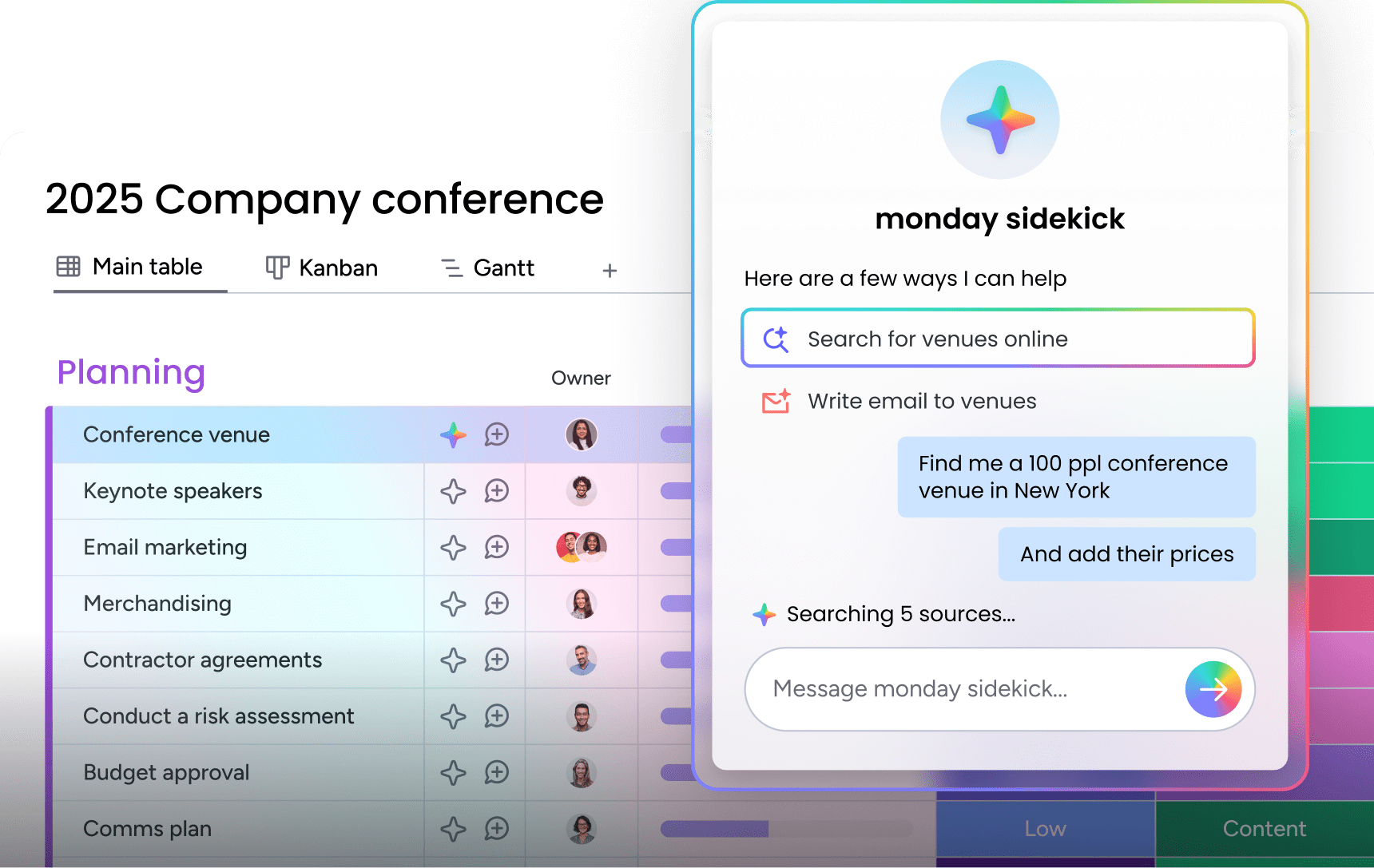
AI reviews repositories of high-performing campaigns to create draft briefs for new initiatives. A creative brief generator can draft a first version from a simple prompt or a past campaign, which a person then reviews and refines. On monday AI Workspace, monday sidekick can suggest and draft brief sections in context, so people and AI work together rather than one standing in for the other.
Smart content suggestions based on objectives
Intelligent assistants recommend brief elements based on stated goals. If you set an objective around demo sign-ups, the assistant can suggest relevant success metrics, audience segments, and messaging angles drawn from similar past projects, giving the writer a stronger starting point to shape.
Predictive analytics for timeline and budget planning
Historical project data informs future planning. By analyzing how comparable briefs played out, AI can flag timelines that look optimistic and budgets that ran short, so you set realistic constraints before work begins rather than discovering them mid-project.
Turn static briefs into living workflows with monday AI Workspace
Most briefs live in static documents, cut off from the tools teams use to deliver the work. Once production starts, the brief goes stale, and nobody checks the work against it. Delivery suffers in general, too: Wellingtone’s State of Project Management 2026 found only 36% of organizations consistently complete projects on time.
The monday AI Workspace keeps the brief connected to the work from intake to launch. Here’s how each piece supports it:
- WorkForms: Standardize brief requests with structured intake forms, so every submission arrives complete and ready to act on.
- monday vibe: Describe a brief-intake app in plain language, and vibe builds a custom, permissioned request form and tracker on your existing data.
- Workdocs: Briefs live as co-edited documents connected to board data, with comments, version history, and embedded widgets, so the brief stays current as the work moves.
- monday workflows and automations: Approving a brief can automatically create boards, tasks, owners, and deadline alerts, so no one has to copy requirements by hand.
- monday agents: The Creative Brief Agent drafts a brief from a request or past project. Once it’s approved, agents like the Content Writer Agent, Ad Creative Generator, and Brand Voice Writer produce first drafts. People direct the work, and agents handle the repetitive parts.

- Dashboards: Track brief objectives against live status, timelines, and team workload, with AI summaries and risk alerts that flag problems early.
- monday MCP and 200+ integrations: Connect AI assistants like Claude, Copilot, and ChatGPT to read and act on brief data within your permission settings.
Because everything runs on one connected data layer, agents and dashboards can see how the brief, the tasks, and the results relate to each other. The objective you write on day one is the same one leadership sees in the dashboard at launch. Teams keep their existing boards and habits, and the AI works inside the tools they already use.
Build a scalable creative briefing system today
A creative brief shouldn’t just kick off a project, it should shape how the work gets done. When briefs are clear, structured, and consistently used, they reduce ambiguity, protect scope, and connect creative output directly to business goals. That’s the difference between fewer revisions and endless back-and-forth.
Building a scalable creative brief template process starts with the fundamentals: choose the right template for the project, define measurable objectives, clarify roles and approvals, and document success criteria upfront. From there, treat briefs as living, AI-assisted workflows that link planning, collaboration, and performance in one place, so strategy and execution finally move at the same pace.
Frequently asked questions
What is the difference between a creative brief and a design brief?
A creative brief focuses on high-level strategy, messaging, and business objectives for campaigns, while a design brief details visual execution, aesthetic requirements, and technical specifications for design assets. The creative brief usually comes first and feeds the design brief, so strategy guides every visual decision.
How detailed should a creative brief be?
A creative brief should be concise enough to digest yet detailed enough to guide decisions. Aim for one to two pages covering objective, audience, core message, deliverables, and success metrics, without micromanaging the creative solution the team develops.
Who should approve the final creative brief?
The final creative brief should be approved by the primary project stakeholder who holds budget and strategic authority. Add sign-off from the creative lead responsible for execution, so the plan is both strategically sound and realistic to deliver on time.
When should you revise a creative brief during a project?
Revise a creative brief when fundamental parameters change, such as shifts in target audience, business objectives, or major scope adjustments. Avoid rewriting it for minor creative iterations, which belong in feedback rounds rather than in the brief itself.
Can one creative brief template work for all project types?
No single template fits every project. Core strategic components stay constant, but project types like video versus web design need specialized templates to capture unique technical specifications and platform requirements, so keep a base structure and adapt it per format.
How does the AI Workspace handle creative briefs?
On the AI Workspace, briefs live as collaborative Workdocs connected to board data. Approving a brief can automatically generate project boards and tasks, while dashboards track objectives against real-time progress, keeping teams aligned from concept to completion without manual handoffs.

 Get started