

A business memo template gives every internal update a repeatable structure so your announcements land clearly, get read quickly, and turn into action. When the format is consistent, your team knows exactly where to find the point, the deadline, and what to do next.
This guide walks you through the standard memo components, shows you how to write one in 7 steps, and shares a ready-to-use template you can adapt right away. You’ll also see how connecting your memos to where work happens makes announcements easier to track and follow through on.
Key takeaways
- A business memo template gives internal updates a repeatable structure so every announcement is faster to write and easier to scan.
- Strong memos front-load the point, name a clear action, and stick to a single subject to prevent misunderstandings.
- The standard components are consistent across use cases: heading, opening, context, call to action, discussion, and closing.
- You can adapt one base template into action plans, project updates, policy changes, and new hire announcements without starting over.
- The monday AI Workspace turns memos from static announcements into tracked work by connecting drafting, sharing, and follow-up in one place.
What is a business memo?
A business memo is a short, direct form of internal communication that tells a defined group of people what changed, why it matters, and what they should do about it. It’s the workhorse document for announcements, updates, policy changes, and requests inside an organization, built to deliver information quickly without the back-and-forth of email threads or the formality of external letters.
Memos work because they’re focused. Each one tackles a single subject, states the point up front, and gives readers exactly what they need to act. Unlike a casual email, a memo carries a semi-formal weight that signals importance, and unlike a meeting, it creates a written record everyone can refer back to.
The format is remarkably consistent across industries and use cases. Most memos include a header block with to, from, date, and subject fields, followed by an opening statement, supporting context, a clear call to action, and a closing. That structure makes memos fast to write and even faster to scan, which is why they’ve stayed relevant even as communication tools have multiplied.
Memo vs. email vs. letter vs. press release
Memos aren’t the only way to share information, and choosing the right format matters. A memo suits internal, structured announcements, while emails, letters, and press releases each fit different audiences and levels of formality. The table below compares them across the factors that usually decide which one to reach for.
| Factor | Memo | Letter | Press release | |
|---|---|---|---|---|
| Audience | Internal teams or departments | Individuals or small internal groups | External individuals or partners | Media, press, and the public |
| Formality | Semi-formal and structured | Casual to semi-formal | Formal | Formal and polished |
| Typical length | 1 page or less | Short to medium | 1 to 2 pages | 1 to 2 pages |
| Best use | Internal announcements and updates | Quick, direct correspondence | Official external communication | Public news and announcements |
What is a business memo template?
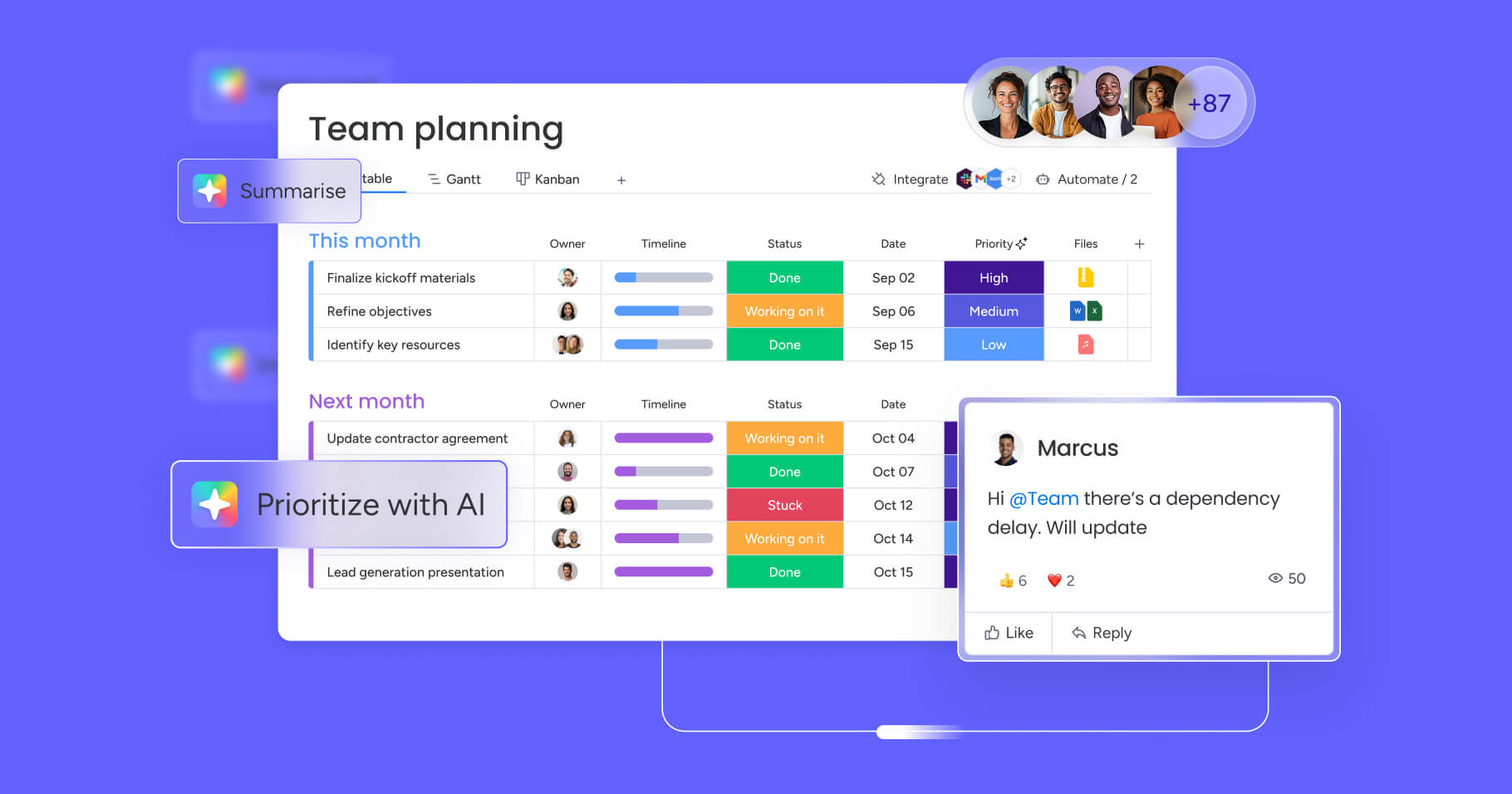
A business memo template is a reusable, pre-structured document that standardizes how you write and share those internal announcements. It gives every memo a fixed layout you fill in each time, so you’re not rebuilding the structure from scratch with every update.
The template supplies the skeleton: a header block, an opening statement, supporting context, a clear call to action, and a closing. Because those sections stay in the same order every time, readers learn where to find the information they care about. Someone scanning for the deadline knows to look at the action line, and someone who needs background knows where the context sits.
Benefits of using a business memo template
- Speeds up drafting and reduces overhead: When the structure is already decided, you write faster because you’re filling in known sections rather than inventing a layout, and memos become easier to file, search, and reference later.
- Improves comprehension and scannability: The format signals where the point lives, so readers understand the message faster, while headings and short sections guide the eye to what they need quickly.
- Boosts productivity and engagement: According to Zoom’s workplace communication research, strong communication practices are linked to measurable gains in productivity and engagement across teams.
- Strengthens employee engagement: Axios HQ’s internal communications research finds that organizations investing in clear, consistent internal communication see stronger employee engagement.
- Builds a shared vocabulary: Your team spends less time decoding what someone meant and more time acting on what they said.
Memos work even harder when they sit inside a wider plan for managing communication projects across distributed teams. If you want a head start, you can grab a ready-made Excel template and adapt it to your team’s needs.
What to include in a business memo
When people ask what a business memo format looks like, the honest answer is that it’s remarkably consistent. Nearly every effective memo follows the same set of components in the same order, and once you know them you can reproduce the format anywhere. The point of a memo is speed and clarity, so each component earns its place by doing one job well.
Here are the standard components of a business memo, with what each one contributes. Use them as a checklist when you draft, and drop any that don’t apply to a given message.
- Heading (to/from/date/subject): A compact block that names the recipients, the sender, the date, and a specific subject line so readers know instantly who and what the memo is about
- Opening statement: A one-line summary of the memo’s purpose that tells readers the main point before they read anything else
- Context: The background a reader needs to understand why this memo exists, kept to the essentials rather than a full history
- Call to action: The specific thing you want readers to do, stated plainly, with any deadline attached
- Discussion: The supporting detail, reasoning, or data that backs up the action and answers the obvious questions
- Closing: A short wrap-up that reinforces the next step and points readers to whom they can contact with questions
- Optional attachments or summary: Supporting files, a recap of key points, or links to related resources for readers who want more depth
The heading and opening carry most of the weight because busy readers often decide whether to keep reading in the first few seconds. If those 2 sections are sharp, the rest of the memo is far more likely to land. Keep the discussion tight and save any lengthy material for attachments so the core message stays fast to read.
Get Started
How to write a business memo in 7 steps
Writing a memo gets easier when you treat it as a sequence rather than a blank page. Each step builds on the last, and following them in order keeps you from burying the point or forgetting the action. The goal is a document that a reader can absorb in under a minute and act on without a follow-up email.
Here’s a repeatable 7-step process you can apply to almost any internal announcement.
- Define the purpose. Before you write a word, decide the single outcome you want. Are you announcing a change, requesting a decision, or sharing a status update? A clear purpose keeps the whole memo focused and prevents scope creep.
- Fill in the heading. Complete the to, from, date, and subject fields. Make the subject line specific enough that a reader knows the topic without opening the body, since a vague subject is where memos get ignored.
- Write a one-line opening. Lead with your main point in a single sentence. This front-loaded summary respects the reader’s time and sets expectations for everything that follows.
- Add the context. Give just enough background for the point to make sense. Resist the urge to explain everything, and include what a reader needs while linking out to the rest.
- State the action and next steps. Spell out exactly what you’re asking people to do and by when. Name owners and deadlines so no one has to infer their part.
- Add supporting discussion. Provide the reasoning, data, or detail that backs up your request. Keep it scannable with short paragraphs or bullets so the substance stays easy to follow.
- Proofread and send. Read the memo once for clarity and once for errors. If you want a second set of eyes, the monday AI Workspace writing assistant can help you tighten the wording and catch anything that reads unclear before you post it.
Once you’ve run through these steps a few times, they become second nature, and the whole process compresses into a few minutes. The structure does the heavy lifting so you can focus on making the message clear.
Business memo template
Use this free business memo template as a starting point for internal updates, announcements, requests, policy changes, and other workplace communications.
TO: [Recipient name(s) or department]
FROM: [Your name and title]
DATE: [Month Day, Year]
SUBJECT: [Specific, clear subject line]
Opening statement [One sentence that states the main point or purpose of this memo]
Context [2–3 sentences providing essential background. Keep it tight—just what readers need to understand why this memo exists and why it matters now.]
Action required [State exactly what you need readers to do, by when, and who owns it. Be specific about deadlines and next steps.]
Discussion [Supporting detail, reasoning, or data that backs up your request. Use short paragraphs or bullets to keep this scannable. Answer the obvious questions readers will have.]
Closing [Brief wrap-up that reinforces the action and points readers to where they can ask questions or find more information.]
Contact: [Your name, email, or relevant point person]
Attachments: [Optional: List any supporting documents or links]
6 types of business memos
One base template can flex into many kinds of announcements. The components stay the same, and what changes is the emphasis, the tone, and the specific action you’re driving toward. Below are 6 common memo types, each with a short description of when to use it and what to focus on.
1. Action plan memo
An action plan memo lays out a set of tasks, owners, and deadlines to move a project forward. It works best when you pair the narrative with a structured weekly to-do list so readers can see exactly who owns what. Keep the action line unmistakable and make the sequence of steps easy to follow.
2. Important update memo
Use this format when something has changed that the whole team needs to know quickly, like a shift in priorities or a new decision from leadership. Front-load the change in the opening line, then explain what it means for people’s day-to-day work. Clarity and speed matter more than polish here.
3. Project update memo
A project update memo keeps stakeholders aligned on progress, blockers, and what’s next. It’s a core tool for coordination across teams that don’t sit together, giving everyone a shared read on status. Lead with the headline (on track, at risk, or delayed) and follow with the detail behind it.
4. Schedule change memo
When a deadline, meeting, or shift moves, a schedule change memo prevents the confusion that follows a quiet calendar edit. State the old and new details side by side, name the reason briefly, and confirm what people need to adjust. Precision here saves a round of clarifying questions.
5. Policy update memo
Policy update memos communicate changes to rules, processes, or expectations that everyone must follow. Because these have compliance weight, be exact about what changed, when it takes effect, and where people can read the full policy. Keep the tone neutral and the action steps concrete.
6. New hire announcement memo
A new hire announcement introduces someone joining the team and helps them land well. Cover the person’s role, start date, and how their work connects to others, and add a warm line that makes the welcome feel genuine. It’s a small memo that shapes a first impression for the whole team.
Business memo template best practices
A solid template gets you most of the way there, but a few habits separate memos people skim from memos people act on. These tips help your writing stay clear, human, and effective no matter which memo type you’re working with.
- Add some personality: A memo can be professional and still sound like a person wrote it. A warm opening line or a plain-spoken explanation makes the message easier to read and more likely to stick. You’re talking to colleagues, not drafting a legal notice.
- Include contact information and resources: Always tell readers where to go with questions and where to find the full detail. A named contact and a link or 2 turn a one-way announcement into something people can follow up on, which cuts down on confused replies.
- Tailor the memo to your audience: A memo to the executive team reads differently from one to the engineering group. Adjust the level of detail, the vocabulary, and the framing to match what your readers already know and care about. The same news can need 2 different memos.
- Stick to one subject: Each memo should carry a single topic. When you fold 3 announcements into one document, readers remember one and miss the rest. If you have multiple unrelated updates, send multiple focused memos instead.
- Proofread before you send: A typo in the subject line or a wrong date undercuts the authority of the whole message. Read the memo aloud once, check names and dates, and confirm the action line says exactly what you mean before it goes out.
How to write and share business memos with monday AI Workspace

A great memo format solves the writing problem, but it doesn’t solve the harder one: making sure the memo reaches the right people, gets read, and turns into action. The monday AI Workspace closes that gap by connecting drafting, sharing, and follow-up to the work itself, so an announcement doesn’t disappear into an inbox.
Here’s how the platform supports each stage of the memo lifecycle, framed by what it lets your team accomplish.
- WorkDocs: Draft and co-edit memos in documents connected to live board data, so the numbers in your update stay current. Built-in AI helps you draft, rewrite, and summarize, which means you write clearer memos faster without leaving your workspace.
- Updates and mentions: Post a memo directly to the right board or team and confirm it was seen through reactions and comments. Instead of chasing email replies, you get visible acknowledgment that the message landed.
- AI automations: Apply “Improve text” and “Summarize” AI blocks to sharpen tone and tighten length, then set a custom automation to notify the right people the moment a memo is posted. The announcement reaches its audience without a manual send.
- Dashboards: Give leaders visibility into how announcements translate into completed tasks, connecting communication to outcomes. You can track follow-through in real time, and you can customize workflows so each memo type triggers the right next step. Pairing memos with a clear communication plan template keeps every announcement on schedule.
- monday vibe: Describe an internal announcements hub or an employee resource portal in plain language and generate a custom app to store and track memos. Your team gets a purpose-built home for announcements without waiting on developers.
- monday agents: The Meeting Summarizer agent turns a meeting into a ready-to-send memo complete with action items and owners, so nothing said in the room gets lost. A Translator agent adapts memos for global teams so the same message reads clearly in every language.
- monday MCP: Connect your workspace to AI tools like Claude or ChatGPT to help draft or route memos, while your permissions and governance stay enforced. You extend where memos can be written without loosening control over who sees what.
When announcements live where execution happens, the gap between telling people something and seeing it done gets a lot smaller.
Turning memos into action, not just announcements
A business memo template is a genuinely useful tool, but the format was never the whole point. The point is that the right people hear the update, understand it the same way, and know exactly what to do next. A clean structure makes a memo easy to write and read, and that’s a real head start.
The lasting gains come when your memos live where the work does. Connect drafting, sharing, and follow-up in one place, and an announcement stops being a message you hope people saw and becomes a step that visibly moves work forward. That shift, from announcing to executing, is what separates a memo that gets skimmed from one that gets done.
Get Started
Business memo template FAQs
How do you write a business memo?
Write a business memo by defining your purpose, filling in the heading, opening with your main point, adding context, and stating a clear action with deadlines. Pairing the action with structured action plan lists makes the next steps easy for readers to follow.
How long should a business memo be?
Keep a business memo to one page or less whenever possible. Memos are meant to be scanned quickly, so front-load the point and move any lengthy detail into attachments or linked resources.
What should a business memo template include?
A business memo template should include a heading block with to, from, date, and subject fields, followed by an opening statement, context, a clear call to action, supporting discussion, and a closing. These components stay consistent across memo types and make the format fast to write and easy to scan.
How is a memo different from an email?
A memo is a structured, semi-formal document for internal announcements, while an email is a more flexible tool for quick, direct correspondence. Memos follow a consistent layout that makes them faster to scan, whereas emails vary in form and formality.
How does monday AI Workspace help you send business memos?
The monday AI Workspace helps you draft memos with AI, post them where your team already works, and confirm they were read through reactions and comments. It also connects each memo to tasks and dashboards so announcements turn into tracked, completed work.

 Get started