


Marketing teams in the services industry face growing complexity. Multiple campaigns, cross-department collaboration, and tight deadlines make it challenging to maintain focus and demonstrate measurable results. Disconnected tools and manual processes often slow execution and obscure performance insights.
This guide focuses on selecting the right task management software for enterprise marketing teams. It’ll cover how to connect daily work to strategic goals, streamline workflows, optimize resources, and leverage AI to reduce manual effort.
By following this framework, marketing leaders can ensure their teams move faster, work smarter, and deliver measurable business impact without getting bogged down in fragmented tools or overly complex systems.
Key takeaways
Selecting the right task management software can transform how marketing teams operate, helping them stay aligned, optimize resources, and demonstrate measurable impact. The following takeaways highlight the essential insights from this guide:
- Strategic alignment drives impact: connect daily marketing tasks to broader company goals and OKRs to ensure every campaign contributes measurable value.
- Cross-functional visibility prevents silos: shared dashboards and integrated workflows reduce duplicated work and improve collaboration across departments.
- Resource optimization enhances efficiency: workload balancing, capacity planning, and skills-based task allocation help prevent burnout and ensure high-priority work is delivered on time.
- AI embedded in workflows accelerates operations: practical AI capabilities like risk identification, content summarization, and performance monitoring reduce manual effort and support data-driven decisions.
- Scalable platforms support growth: solutions such as monday work management provide portfolio-level visibility, automation, and no-code customization that scale with team size and organizational complexity.
What makes enterprise marketing teams choose specific task management platforms?
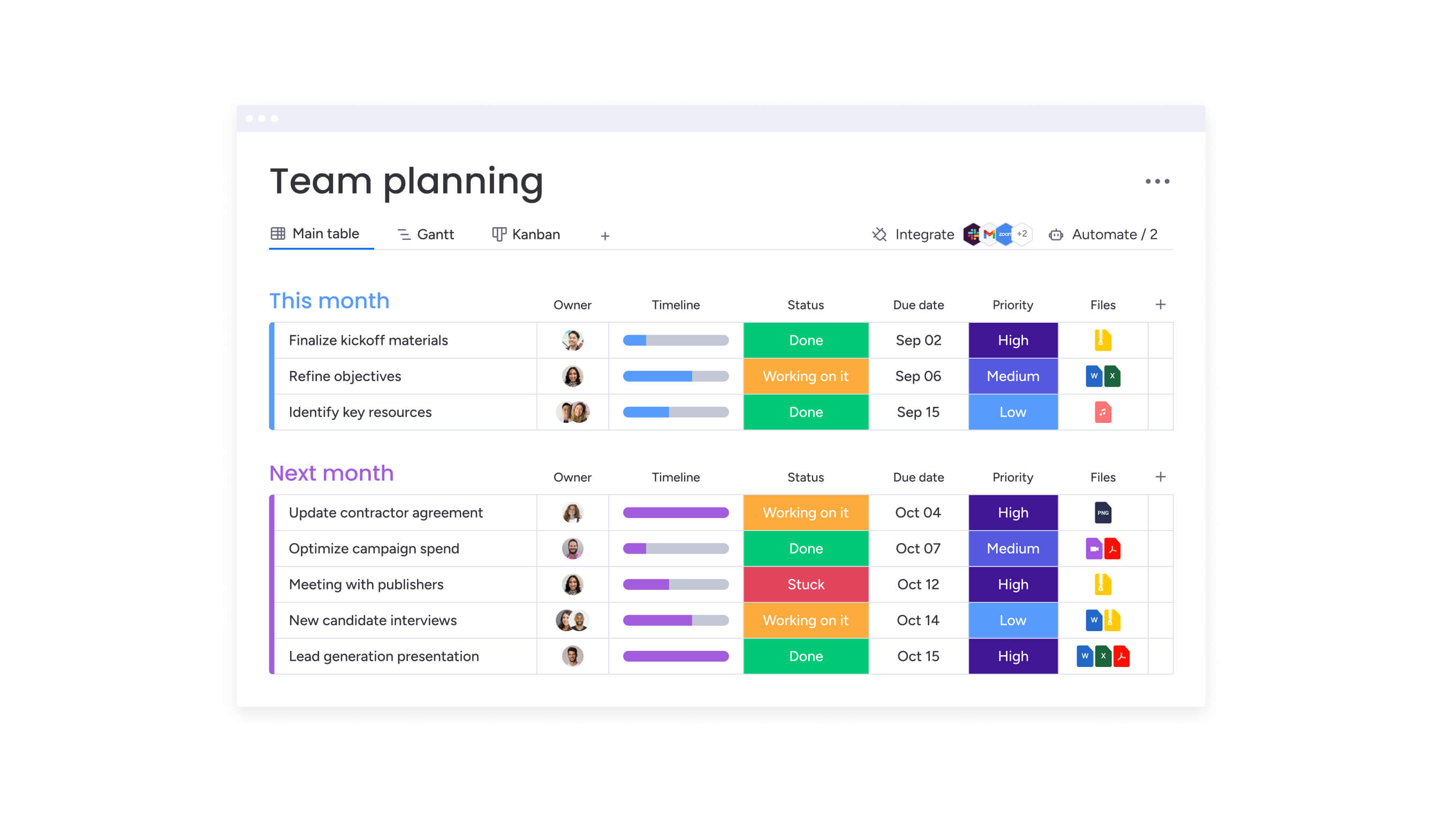 Enterprise marketing organizations face challenges that basic task management platforms cannot address. When coordinating 50–100+ team members across content, creative, acquisition, events, and operations, organizations need more than a digital checklist. They require a platform that provides centralized visibility, operational efficiency, and strategic alignment.
Marketing leaders seek solutions that solve real operational issues, the problems that fragment focus and dilute results. These obstacles not only slow execution but also make it difficult to demonstrate marketing’s impact to executive leadership.
Core challenges that drive platform selection:
- Siloed execution: teams operate in isolation with duplicated work and unclear ownership.
- Inefficient processes: no standardization means teams constantly reinvent workflows.
- Lack of visibility: real-time tracking of progress, capacity, and ROI remains elusive.
Marketing leaders in tech, media, retail, finance, and services industries need platforms that align marketing strategy with company goals through OKRs, dashboards, and roadmaps. This strategic alignment ensures effective use of budget and team resources while enabling data-driven reporting to executive leadership.
Essential features marketing teams need in task management software
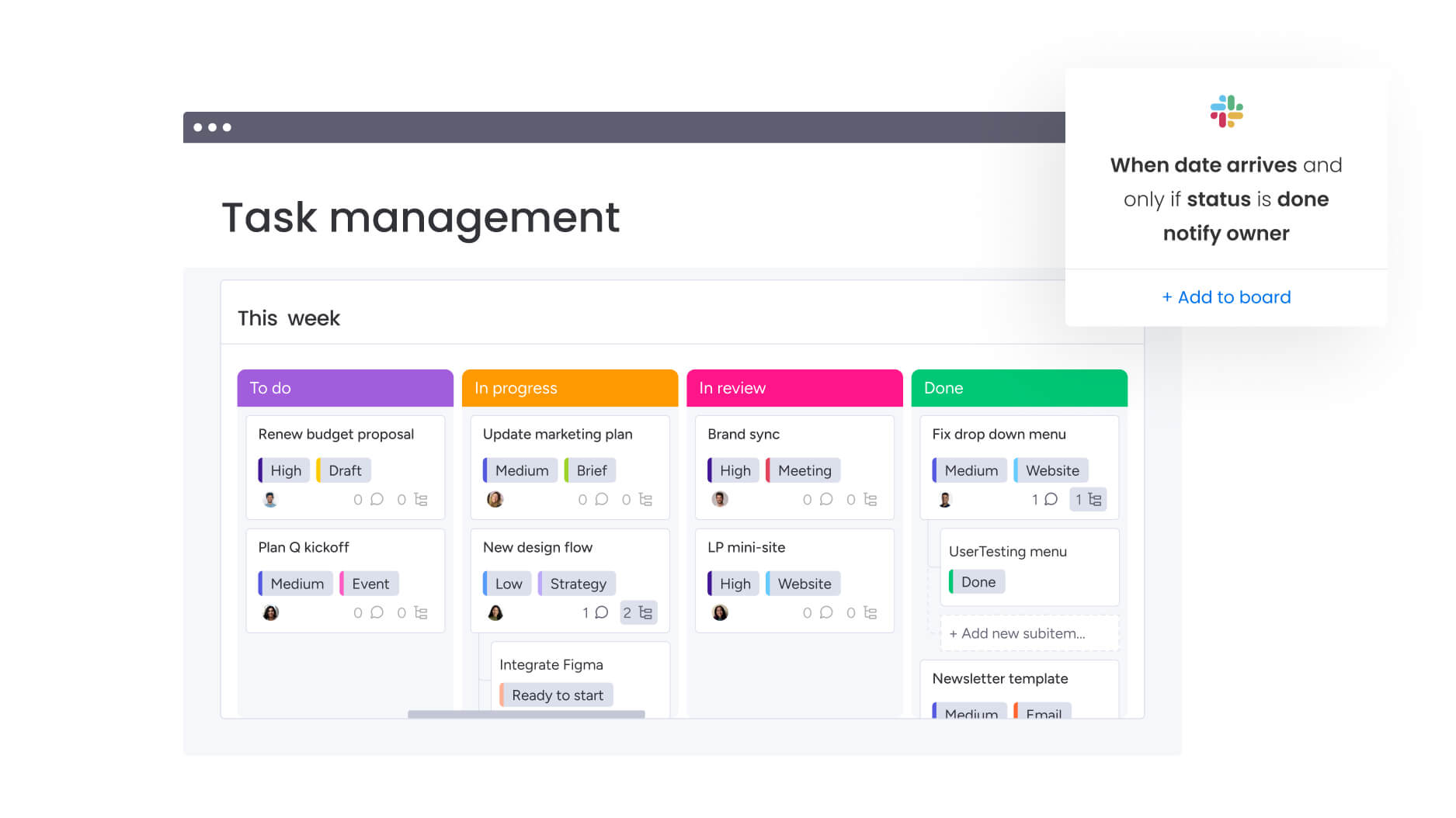 Focus on functionality that addresses operational realities. Enterprise marketing teams managing complex workflows need specific capabilities that distinguish enterprise-grade platforms from basic task tracking solutions.
Step 1: evaluate campaign management and execution capabilities
Effective campaign management transforms planning, execution, and measurement. Platforms that link campaign briefs to workflows with automated notifications and dependencies reduce missed deadlines and budget overruns.
Key capabilities to evaluate:
- Real-time dashboards: track campaign ROI, content volume, and time-to-launch metrics.
- Automated workflows: connect briefs to execution without manual handoffs.
- Performance tracking: demonstrate marketing’s contribution to business goals.
Step 2: assess resource management and workload balancing
Live visibility into bandwidth, skills, and workload prevents the poor resource utilization that leads to burnout and missed deadlines. Workload views show who has capacity and who’s overloaded, enabling you to balance assignments fairly and keep teams focused on high-impact delivery.
Essential resource management features:
- Capacity planning: see team availability across projects and timelines.
- Skills-based allocation: match work to the right people based on expertise.
- Workload visualization: prevent over-allocation before it impacts delivery.
Step 3: review creative production and approval workflows
Accelerating creative workflows requires more than email chains and spreadsheets. Automated request processes connect teams to the right information in real-time, while customizable forms and automation recipes formalize submission and approval processes.
Critical workflow capabilities:
- Intake automation: standardize how requests enter your system.
- Approval routing: ensure stakeholders review work at the right stages.
- Asset management: track creative deliverables from concept to completion.
How AI transforms task management for marketing teams
AI isn’t just a checkbox feature anymore, it’s now the engine that powers the best task management platforms. But not all AI implementations deliver equal value. The difference lies in how AI integrates into daily workflows versus existing as a separate tool to learn. Understanding these distinctions helps you identify platforms that truly accelerate marketing operations.
Step 1: distinguish between embedded AI and bolt-on solutions
Platforms with embedded AI categorize tasks, identify risks, and suggest optimizations automatically. This integration provides insights without requiring technical expertise.
Step 2: identify practical AI applications for marketing
Marketing teams using AI-powered task management report transformational impacts across several areas. These applications demonstrate how AI becomes a force multiplier that scales impact without adding headcount.
Key AI capabilities that drive results:
- Risk identification: AI analyzes project updates to flag potential delays before they impact deadlines.
- Resource optimization: intelligent allocation matches tasks to team members based on skills and capacity.
- Content summarization: automatically extract key takeaways from briefs and meeting notes.
- Sentiment analysis: categorize feedback and requests by urgency and tone.
When AI works alongside your team rather than as a separate system, it becomes a force multiplier that scales impact without adding headcount.
Step-by-step platform evaluation: what to look for beyond features
Avoid focusing solely on feature comparisons. Long-term success depends on adoption, integration, and security.
Step 1: analyze speed to value and adoption rates
Invest in platforms teams can use immediately while allowing customization as needs evolve.
Look for solutions with:
- No-code customization: teams build tailored workflows without developer resources.
- Intuitive interfaces: drive high adoption rates without extensive training.
- Rapid deployment: value realization in weeks, not quarters.
Platforms with payback periods under four months demonstrate the rapid value realization that justifies investment and maintains momentum during rollout.
Step 2: evaluate integration ecosystem and scalability
Task management platforms must connect to your existing marketing technology stack. The ability to integrate seamlessly with current tools while supporting future growth determines whether your investment scales with organizational needs.
Evaluate these integration capabilities:
- Native integrations: connect with HubSpot, Salesforce, Google Workspace, Slack, and other core tools.
- API flexibility: build custom integrations as needs evolve.
- Performance at scale: maintain speed with hundreds of projects and users.
The ability to grow from department-level pilots to organization-wide deployment without performance degradation ensures your investment scales with your needs.
Step 3: assess governance and security requirements
Enterprise marketing teams handling sensitive data need robust security and compliance capabilities. These requirements become especially critical when collaborating with external agencies and partners who need specific access without exposing internal data.
Essential security and governance features:
- Permission controls: manage access at granular levels.
- Audit trails: track changes and maintain compliance documentation.
- Data governance: meet GDPR, SOC 2, and industry-specific regulations.
Common implementation challenges and solutions
Even the most capable platforms encounter obstacles when it comes to achieving full team adoption. Understanding where other marketing teams face difficulties provides a head start in avoiding the same issues. Proactive planning around these common challenges significantly increases the likelihood of full adoption and helps organizations realize the expected ROI within target timeframes.
Challenge 1: breaking down organizational silos
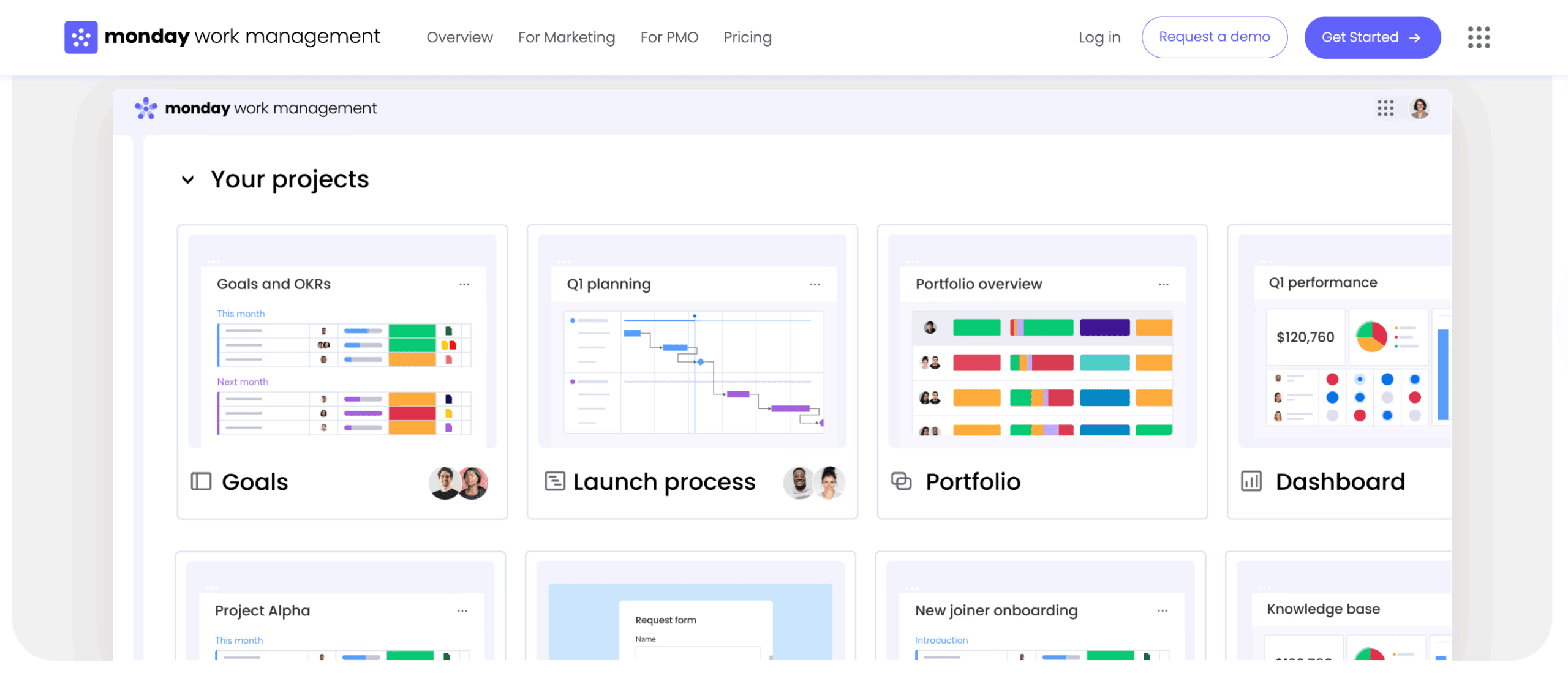
When departments plan in isolation, duplicated work and missed dependencies become inevitable. This challenge requires both technological solutions and organizational change management to address effectively.
Solutions that drive cross-functional collaboration:
- Shared dashboards: create visibility across all marketing initiatives.
- Cross-functional workflows: connect marketing with sales, product, and operations.
- Unified planning: align timelines and dependencies in one system.
Challenge 2: managing change resistance
Teams often resist new tools, especially when benefits aren’t immediately clear. Successful implementations address resistance through strategic rollout approaches that demonstrate value quickly and build momentum organically.
Address resistance through:
- Pilot programs: start with high-impact teams to demonstrate value.
- Quick wins: focus initial efforts on painful, visible problems.
- Champion networks: identify advocates who can drive adoption.
Challenge 3: ensuring data quality and consistency
Fragmented data across multiple tools creates blind spots that undermine decision-making. Maintaining data quality requires both systematic processes and ongoing governance to ensure information remains accurate and actionable.
Maintain quality through:
- Standardized templates: ensure consistent data entry across teams.
- Automated data flows: reduce manual entry and errors.
- Regular audits: monitor data quality and address gaps proactively.
How monday work management addresses enterprise marketing needs
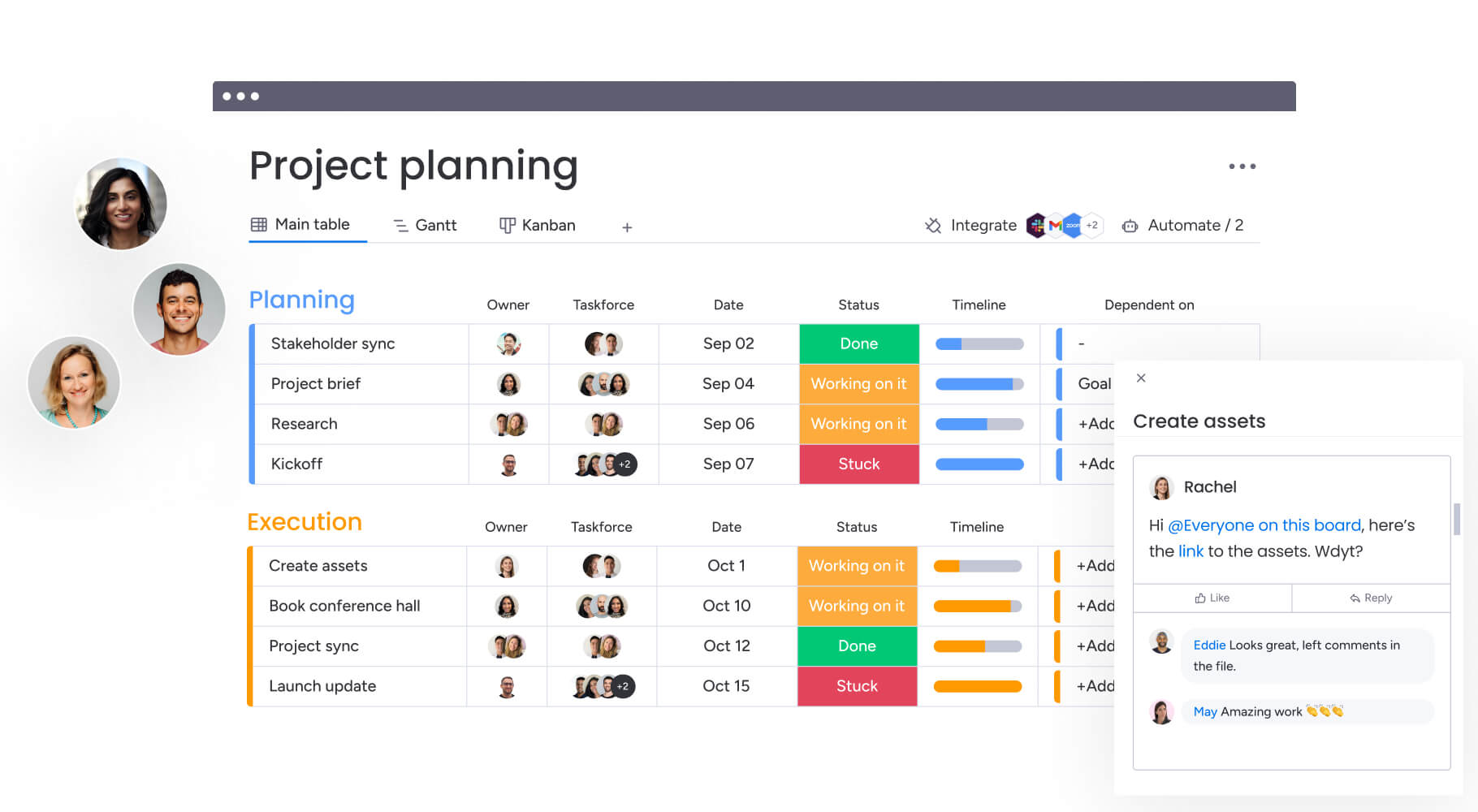
monday work management tackles what actually matters to marketing teams: handling growth without chaos, simplifying the complex, and getting everyone rowing in the same direction. The platform is built around what marketing leaders identify as essential. This integrated approach eliminates the platform fragmentation that creates operational friction and limits marketing impact.
Unified visibility from strategy to execution
The platform connects company OKRs and goals directly to tasks and projects, ensuring every action traces back to business impact. This strategic alignment eliminates the disconnect between daily execution and business objectives that often undermines marketing effectiveness.
Marketing leaders gain:
- Portfolio-level dashboards: monitor all campaigns and initiatives in real-time.
- Strategic alignment: link daily work to quarterly objectives.
- Executive reporting: generate C-suite ready insights without manual compilation.
This unified visibility means leaders make data-driven decisions about resource allocation, priorities, and strategic pivots based on live data, not last week’s reports.
AI that accelerates marketing operations
monday work management’s AI capabilities work directly within your existing workflows. AI Blocks embed intelligence into everyday tasks, while Digital Workers operate continuously in the background to monitor performance and suggest optimizations.
AI capabilities that drive results:
- Categorize requests: automatically sort and prioritize incoming work.
- Summarize content: extract key points from briefs and feedback.
- Identify risks: flag potential delays across your portfolio.
Digital Workers operate continuously in the background, monitoring campaign performance, flagging underperforming initiatives, and suggesting optimizations based on historical data.
Scalable workflows without complexity
No-code customization lets marketing teams build and adapt workflows without IT dependencies. This flexibility ensures the platform grows with your needs while maintaining the simplicity that drives adoption.
Key capabilities include:
- Managed templates: standardize processes while maintaining flexibility.
- Automation recipes: eliminate repetitive tasks across campaigns.
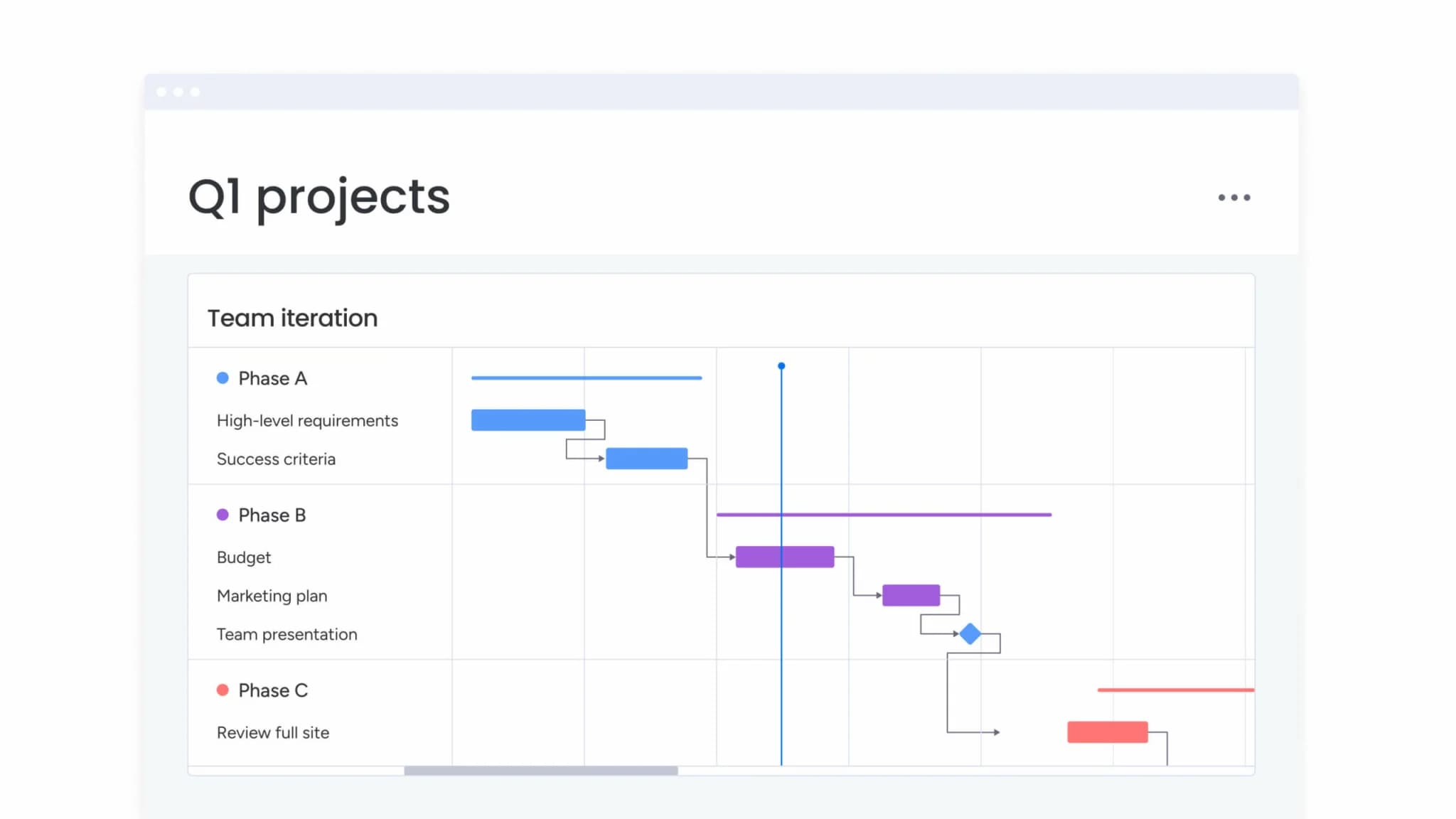
- Cross-project dependencies: visualize and manage complex campaign timelines.
Teams report implementation in two weeks to one month for full adoption, with immediate time savings from reduced email communication and improved collaboration.
Measuring success: KPIs for task management implementation
Continuous improvement depends on measuring what truly matters. Focus on metrics that reflect operational, team, and business impact rather than vanity metrics.
Step 1: track operational efficiency metrics
These metrics show how task management improves day-to-day execution and provide concrete evidence of process improvements that justify platform investment.
Key operational metrics:
- Time to market: measure campaign launch cycles before and after implementation.
- Task completion rates: track on-time delivery across projects.
- Process cycle time: monitor how long standard workflows take.
Step 2: monitor team productivity indicators
Understanding team impact helps optimize resource allocation and demonstrates how improved workflows affect team performance and satisfaction.
Essential productivity measurements:
- Utilization rates: balance workloads across team members.
- Collaboration frequency: measure cross-functional engagement.
- Meeting reduction: track time saved through a sync collaboration.
Step 3: measure business outcome improvements
Connect task management improvements to strategic goals to demonstrate clear ROI and justify continued investment in platform optimization.
Business impact metrics:
- Campaign ROI: link execution efficiency to revenue impact.
- Budget adherence: monitor project costs against allocations.
- Customer satisfaction: correlate delivery improvements with client feedback.
Regular measurement and adjustment ensure your task management platform continues delivering value as your organization evolves.
Transform your marketing operations with intelligent task management
Marketing leaders in the services industry face growing complexity: multiple campaigns, cross-department collaboration, tight deadlines, and fragmented tools make it difficult to stay aligned and demonstrate impact.
monday work management addresses these challenges by connecting daily work to broader business goals:
- Unified visibility: portfolio-level dashboards link tasks to company OKRs, ensuring every campaign contributes measurable value.
- Optimized resource allocation: workload balancing, capacity planning, and skills-based task assignment prevent burnout and maximize efficiency.
- AI-powered automation: embedded AI categorizes tasks, summarizes briefs, and flags risks, reducing manual effort and accelerating decision-making.
- Streamlined workflows: automated intake, approval routing, and creative asset tracking simplify complex campaign execution.
- Scalable and flexible: no-code customization supports growth from department pilots to enterprise-wide deployment without added complexity.
Marketing teams gain efficiency, strategic alignment, and measurable impact while eliminating operational chaos, enabling leaders to focus on growth rather than firefighting.
Frequently asked questions
What is the best software for project management?
The best task management software for enterprise marketing teams combines three essential elements: strategic alignment capabilities that connect daily work to business goals, AI-powered automation that reduces manual effort, and cross-functional visibility that breaks down silos. Platforms like monday work management excel by providing unified dashboards, embedded AI, and no-code customization that scales from 50 to 500+ users without losing performance or requiring extensive IT support.
What features should you look for in task management software?
Enterprise marketing teams should prioritize features that address scale and complexity: real-time dashboards for portfolio visibility, workload management to prevent burnout, automated approval workflows, and AI capabilities that work within existing processes. Integration capabilities with your marketing tech stack and enterprise-grade security are also essential for maintaining data governance while enabling collaboration.
What is the best project management software for marketing?
Marketing-specific project management requires platforms that handle campaign complexity, creative workflows, and resource planning simultaneously. The best solutions provide campaign calendars, creative brief automation, performance tracking, and the ability to connect marketing work to broader organizational workflows while maintaining the flexibility marketing teams need.
What software do marketing managers use?
Marketing managers typically use integrated work management platforms that centralize campaign planning, resource allocation, and performance tracking. These platforms replace fragmented tools with unified systems that provide visibility across content calendars, creative production, event management, and marketing operations while integrating with specialized marketing tools.
Which is the best software for marketing?
The best marketing software combines work management capabilities with marketing-specific features like campaign tracking, creative approvals, and resource planning. Platforms that offer customizable workflows, AI-powered insights, and seamless integration with existing marketing tools while maintaining ease of use consistently deliver the highest ROI for enterprise marketing teams.
How long does implementation take for a 100+ person marketing team?
Implementation for large marketing teams typically takes two weeks to one month for full adoption when using intuitive platforms with strong onboarding support. Success depends on starting with pilot teams, using pre-built templates, and focusing on high-impact workflows first before expanding across the entire department.

 Get started