


Service delivery teams juggle multiple client projects while trying to spot risks before they become expensive problems. When your risk data is scattered across spreadsheets, emails, and project files, you can’t spot patterns, stop cascading failures, or give stakeholders the accurate updates they need. The result? Budget overruns, missed deadlines, and damaged client relationships that could have been avoided with the right visibility.
Great risk management software eliminates this scatter by bringing risk tracking directly into your project workflow — no more jumping between systems. Instead of maintaining separate risk registers that quickly become outdated, effective platforms integrate risk management directly into your daily workflows. This unified approach helps project managers identify cross-project dependencies, automate escalation processes, and provide real-time risk status from a single source of truth.
Let’s break down what actually matters in risk management software for services teams: automated scoring that saves time, portfolio-wide visibility that prevents surprises, and mobile access that keeps field teams connected. We’ll examine how the right platforms enable unified risk and project management, walk through implementation strategies, and show you how organizations achieve measurable improvements in delivery quality and client satisfaction.
Key takeaways
When you’re managing risk across multiple service projects, fragmented data and manual tracking create blind spots that can derail delivery. Here’s what matters most for Project Managers in the services industry:
- Centralized risk tracking: eliminate scattered spreadsheets by bringing all risk data into one unified platform where it lives alongside project execution.
- Automated workflows: reduce manual reporting time by up to three hours weekly through no-code automation that scales across your portfolio.
- Real-time visibility: surface risks proactively with AI-powered insights and customizable dashboards that flag issues before they impact delivery.
- Portfolio-level insights: roll up risk data from individual projects to identify patterns and dependencies across your entire service portfolio.
What makes project managers choose monday work management for risk management?
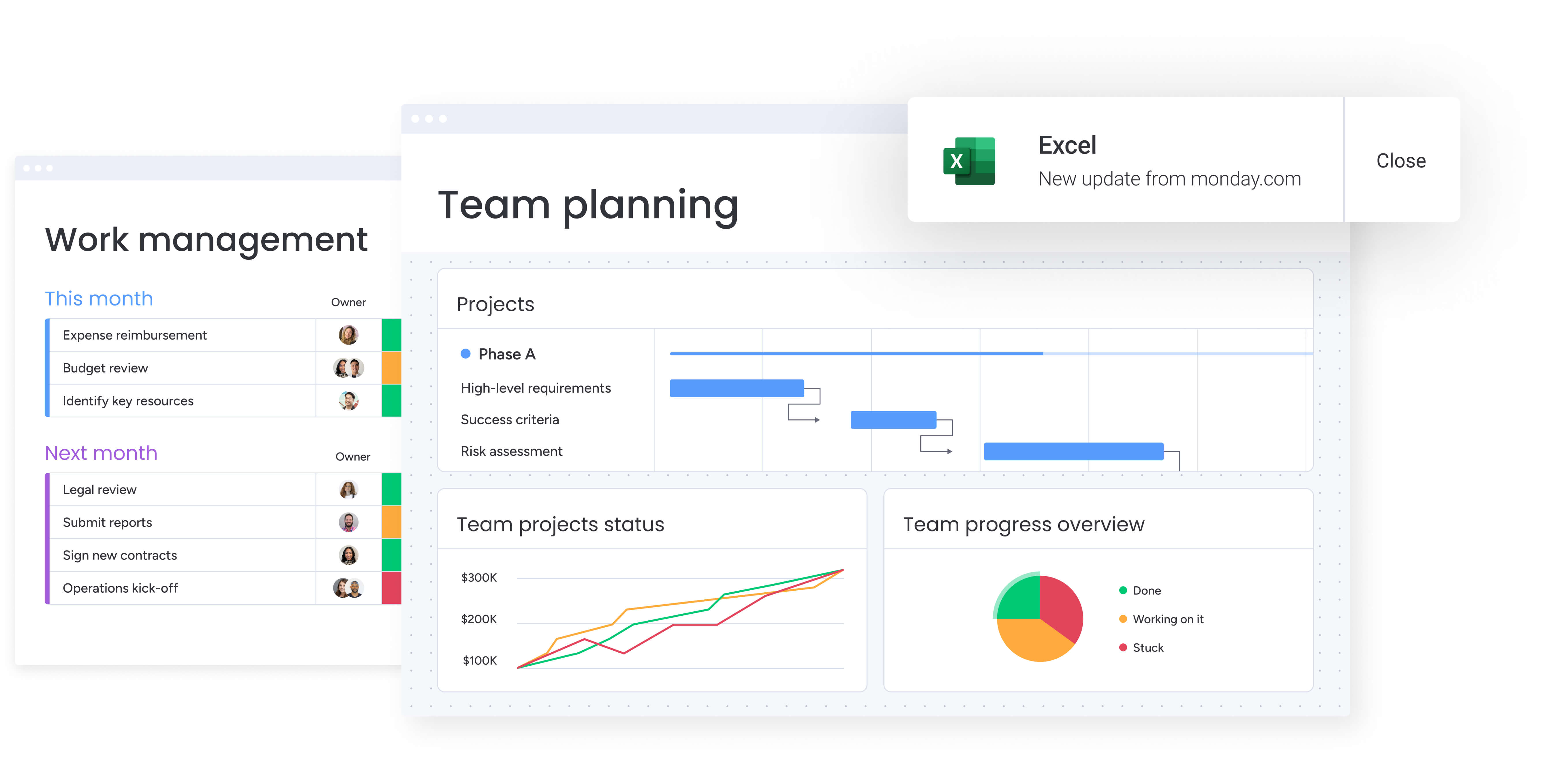
Project managers in the services industry face a unique challenge: navigating project risk management across multiple client engagements while maintaining visibility and control. When risk data lives in disconnected spreadsheets, emails, and project files, you lose the ability to spot patterns, prevent cascading failures, and provide accurate status updates to stakeholders.
Modern platforms like monday work management solve this problem head-on by putting risk tracking and project execution in the same place. Instead of maintaining separate risk registers that quickly become outdated, you track risks alongside tasks, timelines, and resources — ensuring risk mitigation becomes part of your daily workflow, not a compliance checkbox.
For PMO departments managing concurrent service engagements, this unified approach transforms how you handle risk tracking. You can identify cross-project dependencies, automate escalation workflows, and provide real-time risk status to clients without switching between systems.
Organizations like Playtech’s PMO have achieved a 26% increase in efficiency and 49% improvement in collaboration by centralizing their risk and project data on monday work management.
monday work management's top features for risk management
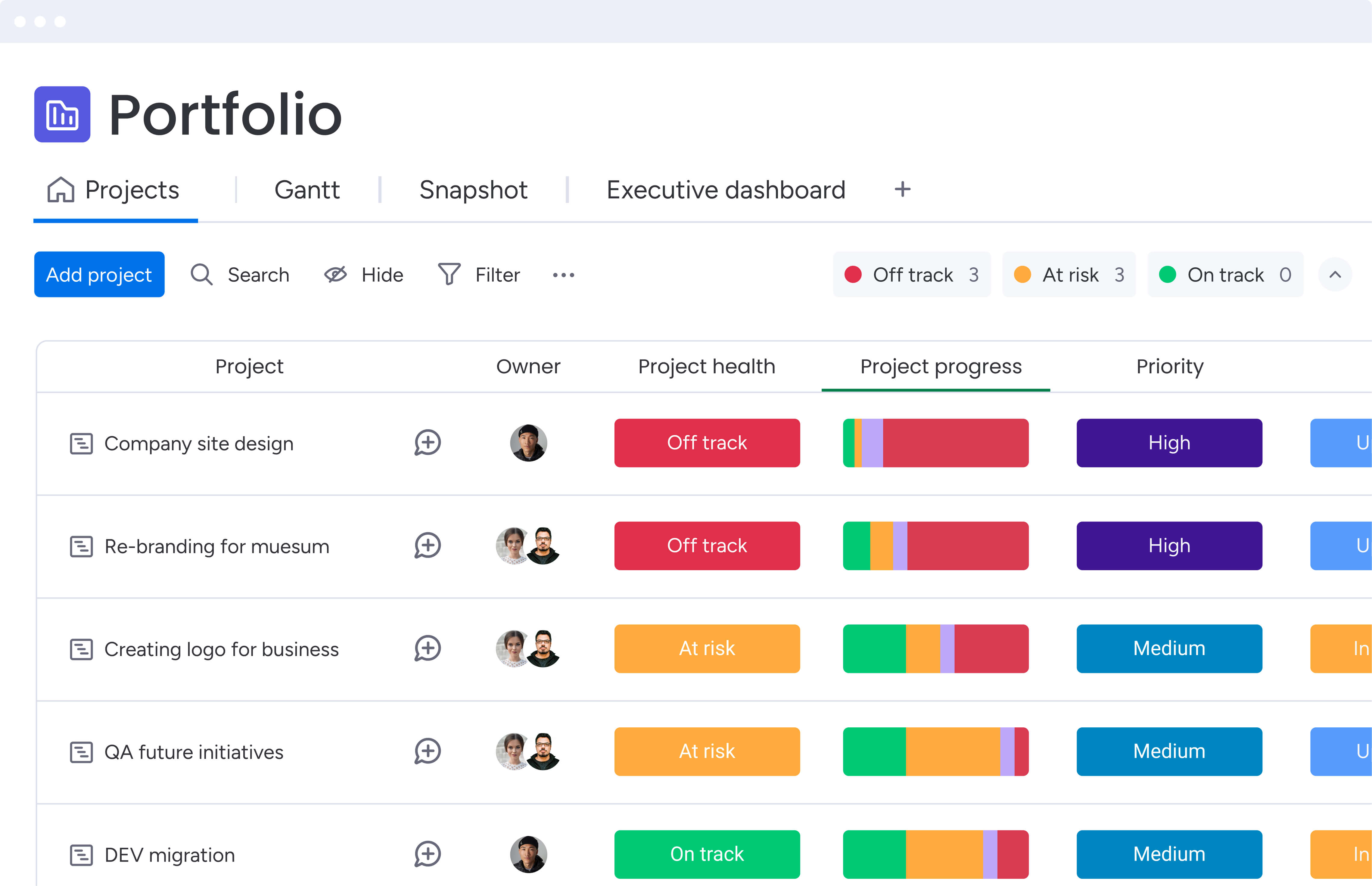
Here’s exactly how monday work management turns chaotic risk tracking into a streamlined system that works across your entire service portfolio. Each capability addresses specific pain points that highlight work management vs project management differences for project managers managing multiple client engagements simultaneously.
Unified risk and project management
Risk management works best when it’s not siloed. That’s why monday work management puts risk registers right inside your project boards — so you can document, assess, and track risks without switching contexts.
You’ll love how easy it is to build your own risk categories, set severity levels, and connect risks directly to tasks or milestones using our flexible column structure.
For project managers juggling multiple client projects, this unified approach means no more maintaining separate risk tracking spreadsheets. You can view project timelines, resource allocation, and risk status in a single dashboard, making it easier to spot dependencies and cascading risks across your service portfolio.
Portfolio-level risk aggregation
Managing risk at the project level is essential, but understanding risk across your entire portfolio drives strategic decisions, aligning with enterprise risk management best practices. monday work management’s portfolio management capabilities allow you to roll up risk data from individual projects into enterprise-level dashboards.
Key aggregation capabilities include:
- Client-based filtering: segment risks by client, project phase, severity, or custom categories to identify patterns across your services organization.
- Automated reporting: generate portfolio risk summaries showing which client engagements face the highest exposure without manual compilation.
- Real-time monitoring: spot emerging risks early through AI-powered insights that scan updates across hundreds of projects simultaneously.
This portfolio view helps PMO directors prevent project failures and protect profit margins. Real-time aggregation means you spot emerging risks early — resource constraints affecting multiple projects, compliance issues spreading across client accounts, or delivery bottlenecks that could impact your entire portfolio.
Automated risk scoring and alerts
Manual risk assessment consumes valuable time that could be spent on mitigation, but monday work management’s automation engine enables you to create no-code workflows that automatically calculate risk scores (based on probability and impact matrices).
Automation capabilities include:
- Threshold notifications: configure rules that trigger notifications when risks exceed certain thresholds, ensuring critical issues reach the right stakeholders immediately.
- Escalation workflows: set up automated escalation that notifies team leads when risks remain unaddressed for specified periods.
- Ownership reassignment: automatically reassign risk ownership when team members are unavailable.
Service delivery managers can finally stop worrying about missing critical issues — automated alerts catch problems before clients ever notice them. The platform saves project managers an average of three hours weekly on manual risk reporting by automating status updates and generating risk summaries on demand.
Customizable risk registers and categories
Every services organization faces unique risks. monday work management provides flexible risk register templates that you can customize to match your organization’s risk taxonomy and assessment methodologies, supporting a comprehensive risk management plan.
Customization options include:
- Service-specific categories: define custom risk categories specific to services projects — resource availability risks, client approval delays, scope creep.
- Standardized scoring: create standardized scoring criteria that ensure consistent risk assessment across all projects.
- Stakeholder views: create separate risk views for different stakeholder groups, showing clients only relevant risks while maintaining comprehensive internal registers.
- Response strategies: establish risk response strategies as dropdown options, ensuring consistent mitigation approaches across all client engagements.
This customization capability is crucial for services firms that need to differentiate between internal operational risks and client-facing delivery risks.
Real-time dashboards and reporting
Transform raw risk data into actionable insights with monday work management’s dashboard functionality. Create heat maps showing risk distribution across your project portfolio, trend charts tracking risk velocity over time, and status widgets highlighting overdue risk mitigation actions.
Dashboard benefits include:
- Time savings: eliminate the 3+ hours weekly that many project managers spend compiling risk reports from multiple sources.
- Stakeholder access: provide stakeholders with current risk status at any time, reducing the need for status meetings and email updates.
- Scalability: out-of-the-box portfolio dashboards provide real-time analysis across hundreds of projects, scaling to support even the largest service organizations.
- Compliance support: generate audit-ready risk reports with complete change histories, showing when risks were identified, who assessed them, and what mitigation actions were taken.
Mobile access for field teams
Service delivery often happens at client sites, making mobile access essential. The mobile-optimized interface ensures field teams and remote consultants can report and update risks from any location.
Mobile capabilities enable:
- Real-time capture: project managers capture risk information during client site visits, attach photos or documents as evidence, and immediately share updates with the broader team.
- Instant logging: risks identified in the field get logged instantly, triggering automated workflows that assign ownership and initiate mitigation planning.
- Push notifications: team members receive push notifications about critical risks and can take action from their devices, maintaining project momentum even when working remotely.
This mobile access is a game-changer for services teams spread across different client sites.
Integration capabilities with existing tools
Services organizations rely on diverse technology stacks. monday work management connects with over 200 applications commonly used in services organizations, including PSA platforms, time tracking systems, and communication platforms like Slack and Microsoft Teams.
Integration benefits include:
- Seamless data flow: risk data flows across your technology stack without manual data entry.
- Central hub functionality: monday work management serves as the central digital workspace for consolidating risk information from all sources.
- Real-time visibility: as Playtech discovered, with Jira integrated into the platform it was the first time they could easily see what the technical team was working on in real time.
- Custom connectivity: the platform’s open API enables custom integrations with proprietary systems, ensuring your risk management workflows adapt to your organization’s unique technology landscape.
How project managers in services benefit from monday work management
Centralizing your risk management on monday work management doesn’t just make operations smoother — it delivers real business results you can measure. These benefits demonstrate the platform’s impact across every aspect of service delivery and client satisfaction.
Operational improvements:
- Time savings: automated workflows and real-time dashboards reduce manual risk reporting time by 3+ hours weekly, allowing project managers to focus on strategic risk mitigation.
- Cost efficiency: early risk identification prevents budget overruns, with organizations reporting up to 26% increase in operational efficiency.
- Productivity improvements: unified risk and project data eliminates context switching, with teams reporting 49% improvement in collaboration.
Quality and compliance benefits:
- Compliance accuracy: complete audit trails with automated documentation of risk assessments and mitigation actions ensure regulatory compliance.
- Output quality: proactive risk management leads to higher-quality client deliverables, with organizations achieving 23% increase in meeting KPIs.
- Visibility improvements: real-time portfolio-level risk data enables data-driven decisions, with instant visibility into risks across all client engagements.
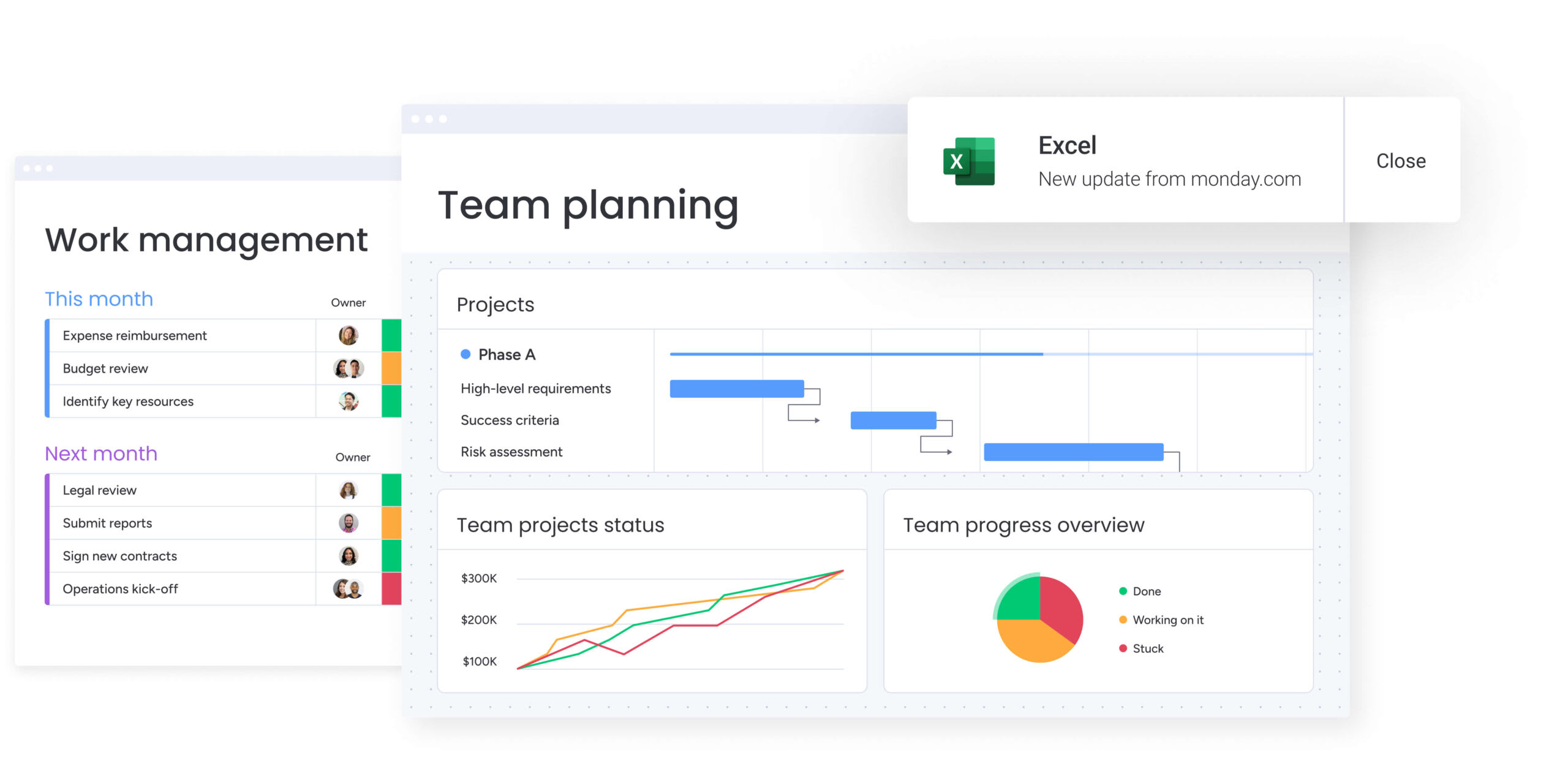
How to manage project risks with monday work management
To nail project risk management, you need both smart processes and the right tools. Here’s a six-step approach that scales across your entire service portfolio but still flexes to fit each client’s specific needs.
Step 1: set up your centralized risk register
Create a dedicated risk tracking board using monday work management’s customizable risk register template. Configure columns for risk ID, description, category, probability, impact, severity score, owner, status, and mitigation plan.
Key configuration elements:
- Custom categories: customize risk categories to reflect your services organization’s specific needs — resource availability, client dependencies, or compliance requirements.
- Standardized templates: use the platform’s managed templates to ensure consistency across your entire organization.
- Governance balance: roll out standardized risk registers that maintain governance while allowing teams to adapt workflows to their specific client needs.
Step 2: establish automated risk scoring workflows
Build no-code automations that calculate risk severity scores based on your probability and impact assessments. Set up rules that automatically assign priority levels (critical, high, medium, low) and trigger notifications to risk owners when new risks are identified or existing risks escalate beyond acceptable thresholds.
Automation setup includes:
- Scoring calculations: configure automatic calculation of risk severity based on probability and impact matrices.
- Priority assignment: set rules for automatic priority level assignment based on calculated scores.
- Notification triggers: establish notification rules that alert risk owners when thresholds are exceeded.
- AI integration: these automations integrate seamlessly with monday work management’s AI-powered capabilities, which continuously analyze project updates to identify potential risks you might miss manually.
Step 3: connect risks to project timelines and dependencies
Link risk items to specific tasks, milestones, and project phases using monday work management’s cross-project dependency features. This connection enables you to visualize how risks might impact project schedules and identify which deliverables face the greatest exposure.
Connection capabilities:
- Task linking: connect individual risks to specific tasks and milestones for granular impact assessment.
- Timeline visualization: use Gantt chart views to see risk-affected tasks in the context of your overall project timeline.
- Portfolio overview: the platform’s portfolio Gantt view with integrated risk insights provides a visual layer for tracking both progress and risk across your entire service portfolio.
Step 4: configure portfolio-level risk dashboards
Create executive dashboards that aggregate risk data across all client projects. Build widgets showing risk distribution by category, trends over time, overdue mitigation actions, and risks by client or project manager.
Dashboard configuration includes:
- Executive widgets: build widgets showing risk distribution by category, trends over time, and overdue mitigation actions.
- Filtering capabilities: configure filters allowing stakeholders to drill down into specific project risks while maintaining the big-picture view.
- AI-powered reporting: monday work management’s AI-powered portfolio reports instantly generate executive-level summaries with trends, risks, and actionable insights — eliminating hours of manual report preparation.
Step 5: implement automated escalation and reporting
Design automation recipes that escalate unresolved risks to senior management after specified timeframes. Set up recurring reports that automatically generate and distribute risk summaries to stakeholders on weekly or monthly schedules.
Escalation and reporting features:
- Time-based escalation: design workflows that escalate unresolved risks to senior management after specified timeframes.
- Recurring reports: set up automated generation and distribution of risk summaries on weekly or monthly schedules.
- Client communication: configure client-specific views showing only risks relevant to each engagement for transparent client communication.
- Resource monitoring: the platform’s capacity manager provides live visibility into resource capacity across projects, helping you identify and mitigate resource-related risks before they impact delivery.
Step 6: integrate with your existing project management tools
Connect monday work management with your PSA software, time tracking systems, and communication platforms to ensure risk data flows seamlessly across your technology stack. Use integrations to pull in project data that might indicate emerging risks — budget variances or schedule delays — and automatically create risk items for review.
Integration capabilities:
- Tool connectivity: connect with PSA software, time tracking systems, and communication platforms for seamless data flow.
- Risk detection: use integrations to pull in project data that might indicate emerging risks, such as budget variances or schedule delays.
- Resource management: the platform’s resource directory centralizes information about your team’s skills, roles, and locations, enabling smarter resource allocation that reduces capacity-related risks.
Platform comparison: monday work management vs competing solutions
When weighing up risk management solutions, consider how each platform addresses the specific needs of services organizations. The following comparison highlights key differentiators that impact your ability to manage risks effectively across multiple client engagements.
| Feature | monday work management | Wrike | Jira with Risk Plugins |
|---|---|---|---|
| Centralized risk & project management | ✓ Native integration | Separate modules | Requires plugins |
| AI-powered risk identification | ✓ Included | Limited | Not available |
| Development tool integrations | 200+ including Jira, GitHub | Limited dev tools | Native for Atlassian only |
| Visual risk dashboards | Fully customizable | Pre-built templates | Limited visualization |
| Resource risk management | Built-in Workload view | Available | Requires additional tools |
| No-code automation | ✓ Unlimited | Limited on lower tiers | Requires scripting |
| Implementation time | Less than 4 months | 3-6 months | 4-8 months |
| User adoption rate | Highest for Enterprises (G2) | Moderate | Low for non-technical users |
| Price per user/month | From $10 | From $10 | From $7.75 + plugin costs |
| G2 rating | 4.7/5 (12K+ reviews) | 4.2/5 | 4.3/5 |
How Playtech's PMO transformed their project delivery
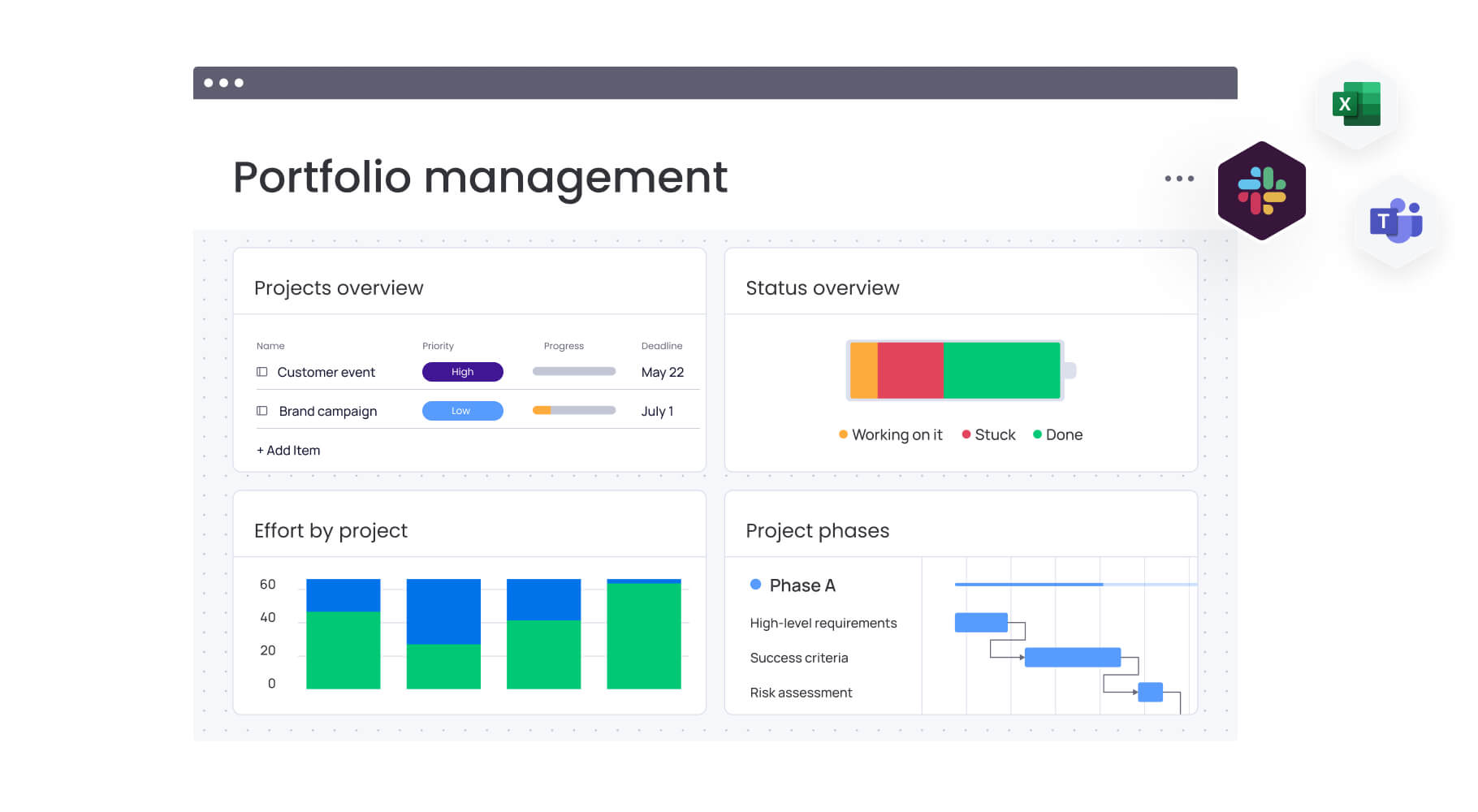
This case study demonstrates how a services organization successfully implemented monday work management to solve complex risk management challenges while achieving measurable improvements in efficiency and collaboration. Playtech’s experience illustrates the practical benefits of unifying risk tracking with project execution.
The challenge
When Yossi Shamir joined Playtech as Head of Projects, the PMO department managed countless client projects using spreadsheets, email, and notepads. The gaming software industry was undergoing digital transformation, and clients demanded more frequent updates and faster results.
Specific challenges included:
- Lost opportunities: the team was losing opportunities to reduce costs and improve efficiency due to fragmented data.
- Resource booking issues: project managers had no way to track preliminary project discussions, often booking resources for undefined projects.
- Documentation gaps: challenging situations arose with no record of how they occurred, making it difficult to prevent similar issues.
The solution
Playtech implemented monday work management as their all-in-one project management solution, bringing their established methodology to life in a single platform. The PMO created separate boards for project initiation discussions, management approvals, budget calculations, and active project portfolios.
Implementation approach:
- Custom templates: they built custom templates for each new project that could be quickly duplicated and adjusted, with the ability to add external stakeholders for seamless collaboration.
- Integration strategy: the team integrated Jira with monday work management to give project managers real-time visibility into technical development progress.
- Notification system: they set up custom notifications to alert relevant people about potential bottlenecks affecting project scope, schedule, or cost.
The results
Playtech’s transformation delivered measurable impact across their PMO, demonstrating the tangible benefits of centralizing risk and project management on a unified platform.
Quantified improvements:
- 26% increase in efficiency across the Projects department.
- 49% improvement in collaboration and transparency with all stakeholders.
- 23% increase in meeting KPIs for project delivery.
- three hours saved per person per week on project coordination and reporting.
Transform your project risk management approach
Let’s be honest: when your risk management is fragmented, you create blind spots that will derail projects and hurt client relationships. Organizations that centralize risk tracking alongside project execution achieve measurable improvements in efficiency, collaboration, and delivery quality.
monday work management provides the unified platform that transforms scattered risk data into proactive insights that protect your projects and strengthen client trust.
Stop letting scattered risk data derail your service projects. Join 245,000+ organizations who trust monday work management to centralize their workflows and deliver projects with confidence. With our free trial, you can experience unified risk and project management with no commitment.
See how monday work management eliminates your “work scattered across tools” challenge and brings all your project risks into one transparent, collaborative platform.
The content in this article is provided for informational purposes only and, to the best of monday.com’s knowledge, the information provided in this article is accurate and up-to-date at the time of publication. That said, monday.com encourages readers to verify all information directly.
Frequently asked questions
How does monday work management handle multi-client project portfolios in services firms?
monday work management allows you to create separate boards for each client engagement while maintaining portfolio-level visibility through dashboards and cross-board automations. You can use the platform's grouping and filtering capabilities to segment risks by client, view all risks for a specific client across multiple projects, or aggregate risks across your entire client portfolio. The platform's permission settings enable you to share client-specific risk views with external stakeholders while keeping internal risk data confidential.
What's the actual implementation timeline for a services PMO with 20+ ongoing projects?
Most services PMOs implement monday work management for risk management within two to four weeks. The first week typically involves platform setup, risk register configuration, and integration with existing tools. Week two focuses on team training and template creation. Weeks three to four involve migrating existing risk data and running pilot projects alongside current systems. The platform's intuitive interface means most team members become comfortable within two weeks to a month.
Can monday work management differentiate between internal operational risks and client-facing delivery risks?
Yes, you can create custom risk categories and use the platform's labeling system to distinguish between internal operational risks (resource availability, system failures) and client-facing delivery risks (scope changes, approval delays). Build separate dashboard views for internal stakeholders and clients, ensuring each audience sees only relevant risk information. This segmentation maintains transparency with clients while preserving confidentiality around internal operational challenges.
How does the platform handle resource allocation risks when team members work across multiple projects?
monday work management's Workload view provides visibility into team member workloads across all projects. You can use the platform's capacity manager to identify when individuals are over-allocated, which automatically flags resource availability as a risk factor. Set capacity limits for each team member and receive alerts when assignments exceed those limits, enabling proactive resource rebalancing before conflicts impact project delivery.
What specific integrations exist with services-industry tools like PSA software and time tracking?
monday work management integrates with popular services-industry tools including Toggl and Harvest for time tracking, Excel for importing existing project data, Basecamp for project synchronization, and Jira for development tracking. The platform offers integrations with Microsoft Teams, Slack, Zoom, Outlook, Gmail, and Google Drive for seamless communication and document management. The open API enables custom integrations with proprietary PSA systems and billing platforms specific to your organization.
How can I justify the investment to leadership when margins are already tight in services?
The ROI case for monday work management centers on time savings and risk prevention. Organizations report saving 3+ hours per person weekly on manual reporting, which translates to significant cost savings across a PMO team. Effective risk management can reduce project failure rates from 70% to below 20%. Reference the Forrester Total Economic Impact study showing less than four-month payback period and 346% ROI over three years for enterprise implementations.

 Get started