


Marketing leaders in tech operate in constant motion. They oversee dozens of teams, hundreds of campaigns, and shifting priorities, all while being held accountable for clear, measurable impact. Yet in many organizations, strategic goals live in slide decks while day-to-day work happens across scattered tools, making alignment harder than it should be.
When goals and execution aren’t connected, teams lose focus, reporting becomes manual and time-consuming, and leadership lacks real visibility into what’s driving results. Even strong campaigns can underperform simply because progress, risks, and ownership aren’t clear in real time.
The right goal tracking software closes this gap. It connects company objectives directly to campaign execution, gives marketing leaders live visibility across teams, and replaces manual reporting with automated insights. This guide breaks down what to look for in modern goal tracking tools, how to evaluate them, and how tech marketing teams can turn strategy into measurable results without adding unnecessary complexity.
Key takeaways
Choosing the right goal tracking software is less about features in isolation and more about how well strategy, execution, and visibility come together. These takeaways summarize the most important insights marketing leaders in tech should carry forward.
- Goal tracking must connect strategy to execution: platforms should link company OKRs directly to campaigns, projects, and individual work so progress reflects real outcomes, not manual updates.
- Real-time visibility replaces manual reporting: automated dashboards and roll-up reporting give leaders instant insight into performance, risks, and progress without hours of spreadsheet work.
- Resource visibility is essential at enterprise scale: workload and capacity tracking help prevent burnout, surface bottlenecks early, and ensure teams focus on the highest-impact priorities.
- Modern platforms embed intelligence into workflows: AI-driven insights such as risk detection, prioritization, and progress analysis help teams stay proactive rather than reactive.
- Enterprise marketing teams benefit from unified work management platforms: solutions like monday work management support complex goal hierarchies, cross-team alignment, and scalable workflows that grow with organizational complexity.
What is goal tracking software?
.jpg)
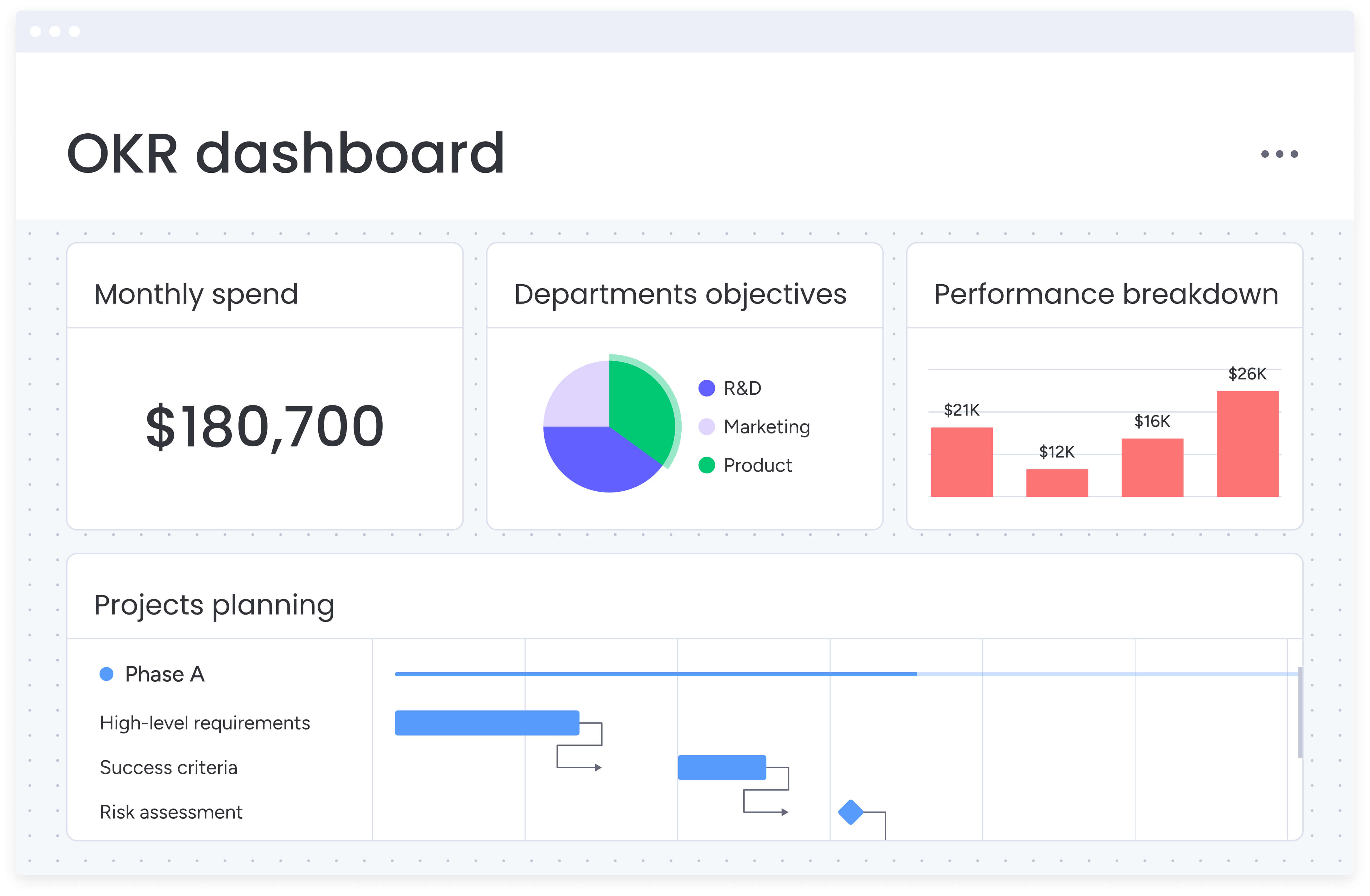
At its core, goal tracking software connects high-level strategic direction with the work teams carry out every day. It enables organizations to define clear objectives, monitor progress consistently, and reach outcomes through structured execution rather than disconnected planning. Unlike traditional project management platforms that focus on individual workflows, goal tracking platforms provide visibility into how initiatives contribute to broader business results.
For enterprise marketing teams, this means quarterly OKRs move beyond static presentations and become active drivers of daily decisions. Progress updates automatically as work advances, performance trends surface early, and leaders gain clarity without relying on delayed reports. Strategy and execution remain aligned across departments instead of operating in silos.
Modern goal trackers go beyond simple progress bars. They integrate with your existing tech stack, automate routine reporting, and use AI to surface insights that would otherwise remain buried in spreadsheets. When marketing leaders can see exactly how campaign performance connects to revenue goals, they make faster decisions, allocate resources more effectively, and demonstrate clear value to executive leadership.
Why marketing teams need specialized goal tracking
Marketing teams don’t work like everyone else. You’re juggling campaigns that never seem to end, wrangling creative, content, acquisition, and ops teams who speak completely different languages, and pivoting strategies whenever the performance data throws you a curveball. Generic project management tools weren’t built for this complexity.
Without a dedicated goal tracking system, marketing teams often face common challenges that a specialized platform can solve:
- Alignment gaps: strategic goals exist in one place while daily work happens in another.
- Visibility black holes: no single source of truth for campaign performance and team capacity.
- Manual reporting burden: hours spent compiling data from multiple tools for executive updates.
- Resource inefficiency: some teams burn out while others have excess capacity.
The result is a unified system where strategy and execution live together, making it easier to integrate time tracking software to measure resource allocation, and prove marketing’s impact on business growth.
Essential features for enterprise marketing goal tracking
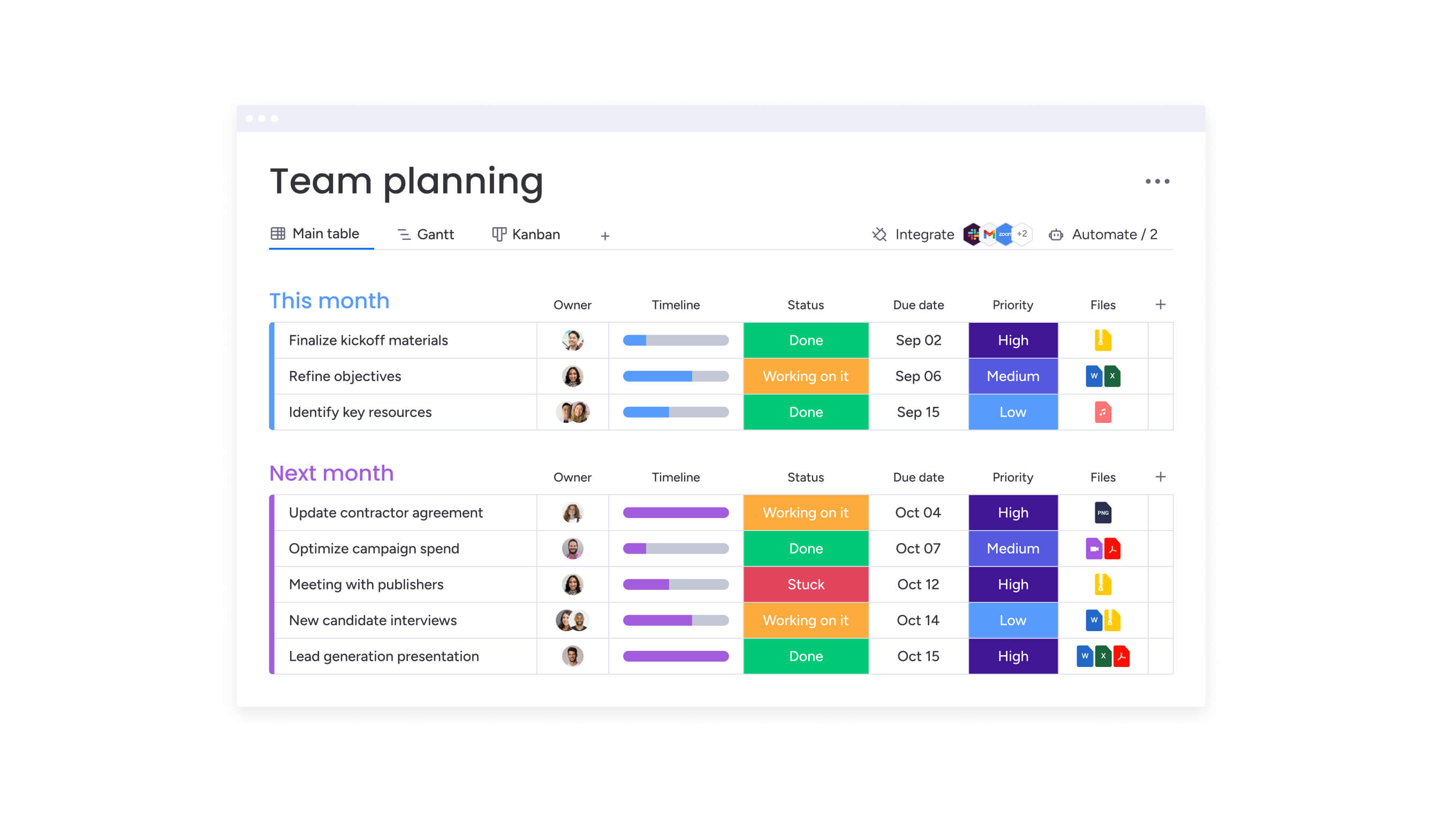 When evaluating tracking software for large marketing teams, certain capabilities separate adequate solutions from transformational ones. These features address the specific needs of organizations managing complex, cross-functional marketing operations at scale. Understanding what to prioritize helps marketing leaders choose platforms that deliver measurable value rather than just additional complexity.
Goal hierarchy and cascading
At enterprise scale, alignment between company objectives, department priorities, and individual execution is essential. Effective platforms support:
- Unlimited goal levels: link company OKRs to department objectives to campaign targets.
- Visual goal mapping: see how every task contributes to strategic priorities.
- Weighted metrics: reflect the relative importance of different goals.
- Automatic progress rollup: updates flow from tasks to projects to goals without manual input.
This hierarchical structure ensures that when a content marketer completes a blog post, it automatically updates the content production goal, which feeds into the demand generation objective, which connects to the company’s revenue target.
Real-time dashboards and reporting
Automated reporting frees up valuable team time and accelerates decision-making. Modern goal tracking platforms provide:
- Customizable dashboards: build views specific to different stakeholders.
- Automated data aggregation: pull metrics from multiple sources automatically.
- Drill-down capabilities: move from high-level metrics to specific campaign details.
- Scheduled reports: deliver updates to executives without manual compilation.
Marketing leaders using monday work management save hours weekly by eliminating manual report creation while giving stakeholders instant access to current performance data.
Resource management and capacity planning
Balancing workloads across teams prevents burnout and ensures timely delivery. Key capabilities include:
- Workload visualization: see who’s overloaded and who has capacity.
- Skills-based allocation: match tasks to team members based on expertise.
- Capacity forecasting: predict resource needs for upcoming campaigns.
- Cross-team coordination: manage dependencies between departments.
These features help marketing operations leaders optimize team productivity while maintaining sustainable workloads across all functions.
Automation and AI capabilities
Automation transforms goal tracking from a manual burden to an intelligent system. Effective platforms provide:
- Automated status updates: progress updates based on task completion.
- Smart notifications: alerts when goals go off track or deadlines approach.
- AI-powered insights: surface risks and opportunities from your data.
- Workflow automation: trigger actions based on goal progress.
The AI capabilities in monday work management can automatically categorize campaign requests, flag at-risk projects, and suggest resource reallocations based on current capacity and priorities.
Step 1: assess your organization's readiness
Selecting the right goal tracking software begins with understanding organizational readiness. Evaluating current processes ensures smoother adoption and prevents implementation challenges. This assessment helps clarify which capabilities are immediately valuable and which can be introduced over time.
Evaluate your team’s current state
Before comparing platforms, assess the following areas:
- Goal-setting maturity: whether structured OKRs already exist.
- Organizational complexity: number of teams, locations, and reporting layers.
- Technology ecosystem: systems that require integration.
- Change capacity: ability to adopt new processes efficiently.
Organizations with established goal-setting practices can implement more sophisticated features immediately, while teams new to structured goal tracking can benefit from a goal setting template and expand over time.
Step 2: define your platform evaluation criteria
Clear evaluation criteria help focus decision-making on outcomes rather than feature volume. This approach ensures the selected platform directly supports marketing objectives.
Strategic alignment features:
- Ability to connect goals across organizational levels.
- Support for different goal frameworks (OKRs, KPIs, SMART goals).
- Flexibility to adjust goals as priorities shift.
Collaboration capabilities:
- Cross-functional visibility and communication tools.
- External stakeholder access for agencies and partners.
- Mobile access for distributed teams.
Technical requirements:
- Integration depth with existing martech stack.
- API availability for custom connections.
- Security and compliance certifications.
Scalability factors:
- Performance with hundreds of concurrent users.
- Ability to handle thousands of projects and goals.
- Multi-account or multi-brand support.
Step 3: consider implementation complexity and time to value
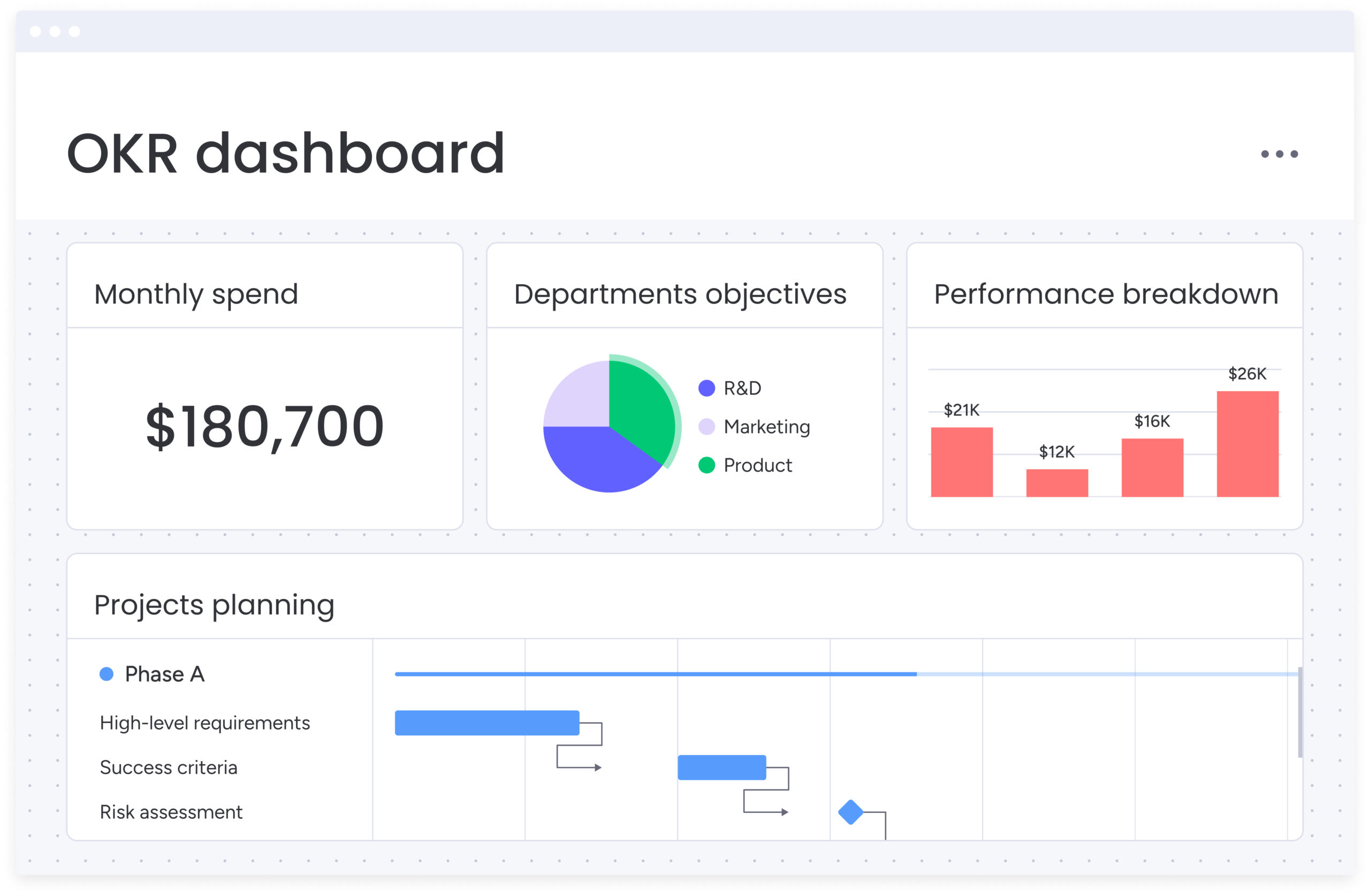
Long-term success depends on balancing capability depth with adoption speed. Even advanced platforms deliver limited value if implementation is overly complex. Early wins build confidence and encourage consistent usage across teams.
Modern platforms such as monday work management enable teams to realize value quickly through intuitive design and prebuilt structures, while still supporting long-term growth. Evaluating both immediate usability and future scalability ensures the platform remains effective as marketing operations evolve.
Best goal tracking software for marketing teams
The market offers numerous goal management software solutions, but only a few truly serve the needs of enterprise marketing organizations. Here’s how the leading platforms compare for teams managing complex, multi-channel marketing operations. Understanding the strengths and limitations of each option helps marketing leaders make informed decisions based on their specific requirements.
monday work management
monday work management stands out for marketing teams through its combination of visual workflows, enterprise-scale capabilities, and marketing-specific features. The platform connects strategic planning to daily execution through customizable dashboards that adapt to how your team actually works.
Key strengths for marketing:
- Visual campaign planning with Timeline and Gantt views.
- Automated reporting that pulls data from multiple campaigns.
- Resource management tools that prevent team burnout.
- 200+ integrations including HubSpot, Salesforce, and Google Analytics.
Marketing teams using monday work management report significant improvements in cross-team collaboration and campaign delivery speed. The platform’s AI-powered risk insights help identify potential delays before they impact launch dates, while managed templates ensure consistent processes across all marketing functions.
Asana
Asana offers strong project management capabilities with goal tracking features added through their Goals product. The platform works well for teams already using Asana for task management who want to add strategic alignment.
Marketing considerations:
- Limited to three levels of goal hierarchy.
- Goals feature requires Business tier or higher.
- Strong integration with creative tools like Adobe Creative Cloud.
- Timeline view helps with campaign planning.
ClickUp
ClickUp provides extensive customization options and includes goal tracking as part of its all-in-one platform approach. Marketing teams appreciate the flexibility but may find the learning curve steep.
Marketing considerations:
- Highly customizable but requires significant setup time.
- Goals feature available in Business tier.
- Can become complex for large teams to navigate.
- Offers good value for smaller marketing departments.
Platform comparison overview
| Feature | monday work management | Asana | ClickUp |
|---|---|---|---|
| Goal hierarchy levels | Unlimited | 3 levels | Unlimited |
| Marketing templates | 200+ pre-built | 50+ | 100+ |
| Automation capabilities | 250,000+ actions/month | Limited by tier | Limited by tier |
| Resource management | Built-in Workload view | Business tier only | Business tier only |
| AI-powered insights | Included | Limited | Limited |
| Implementation time | one to two weeks is typical | two to four weeks | two to six weeks |
| Enterprise support | 24/seven dedicated support | Business hours | Business hours |
Step 1: establish your foundation
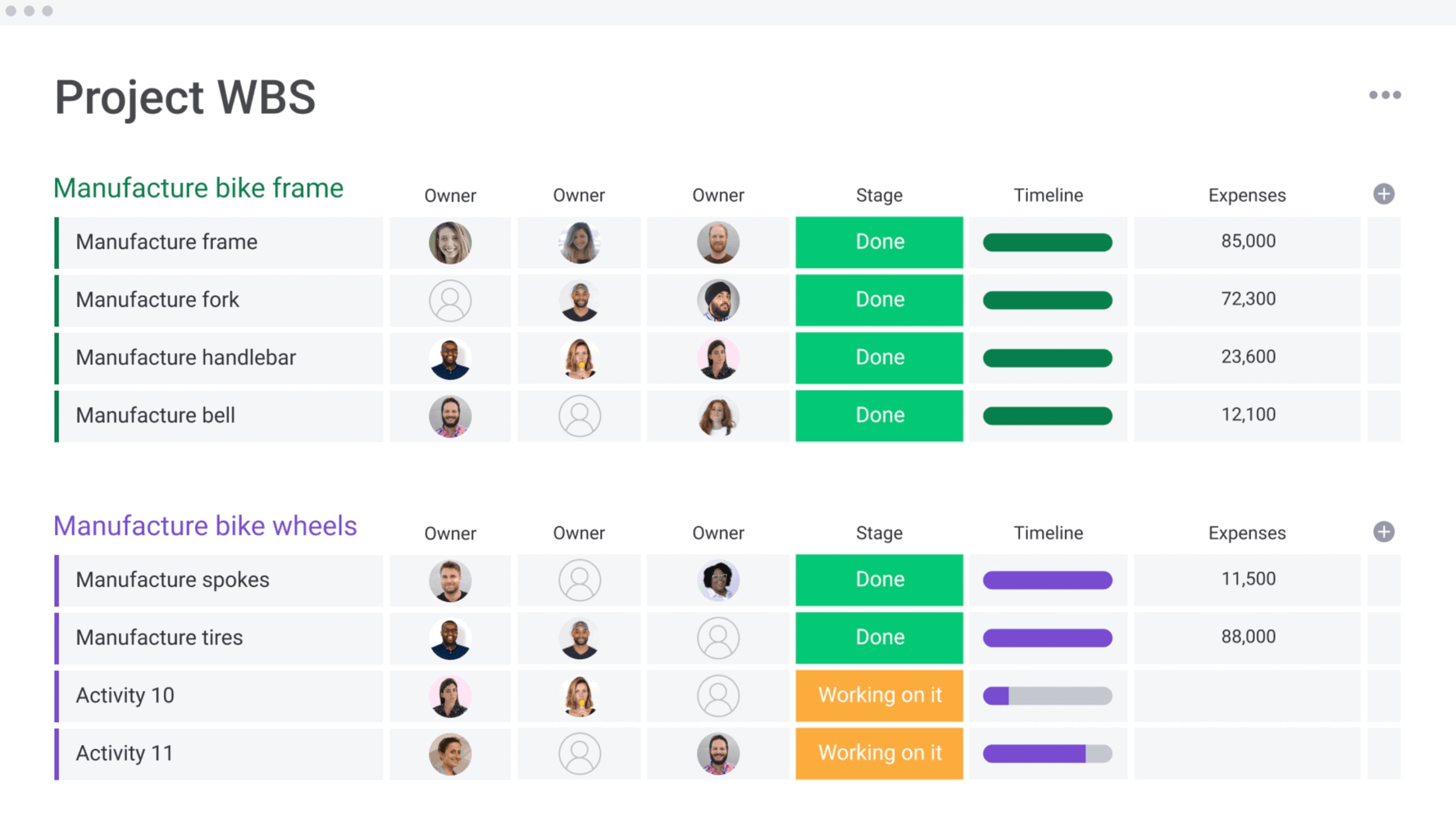
Selecting the right platform is only the first step. Successful adoption depends on structured implementation, where many marketing teams face challenges. Leaders who follow a phased approach build momentum early while minimizing disruption, creating a path toward long-term adoption.
During this initial phase, focus on leadership alignment and goal structure. This typically spans one to two weeks and includes:
- Define your goal hierarchy: map company objectives to marketing OKRs to team-level goals.
- Identify key metrics: determine which KPIs will measure success.
- Assign ownership: clarify who owns each goal and who contributes.
- Set review cadences: establish weekly, monthly, and quarterly check-ins.
Begin with one pilot team or campaign type to prove value before expanding. This controlled approach helps identify potential issues and build internal champions who can support broader rollout.
Step 2: configure your platform
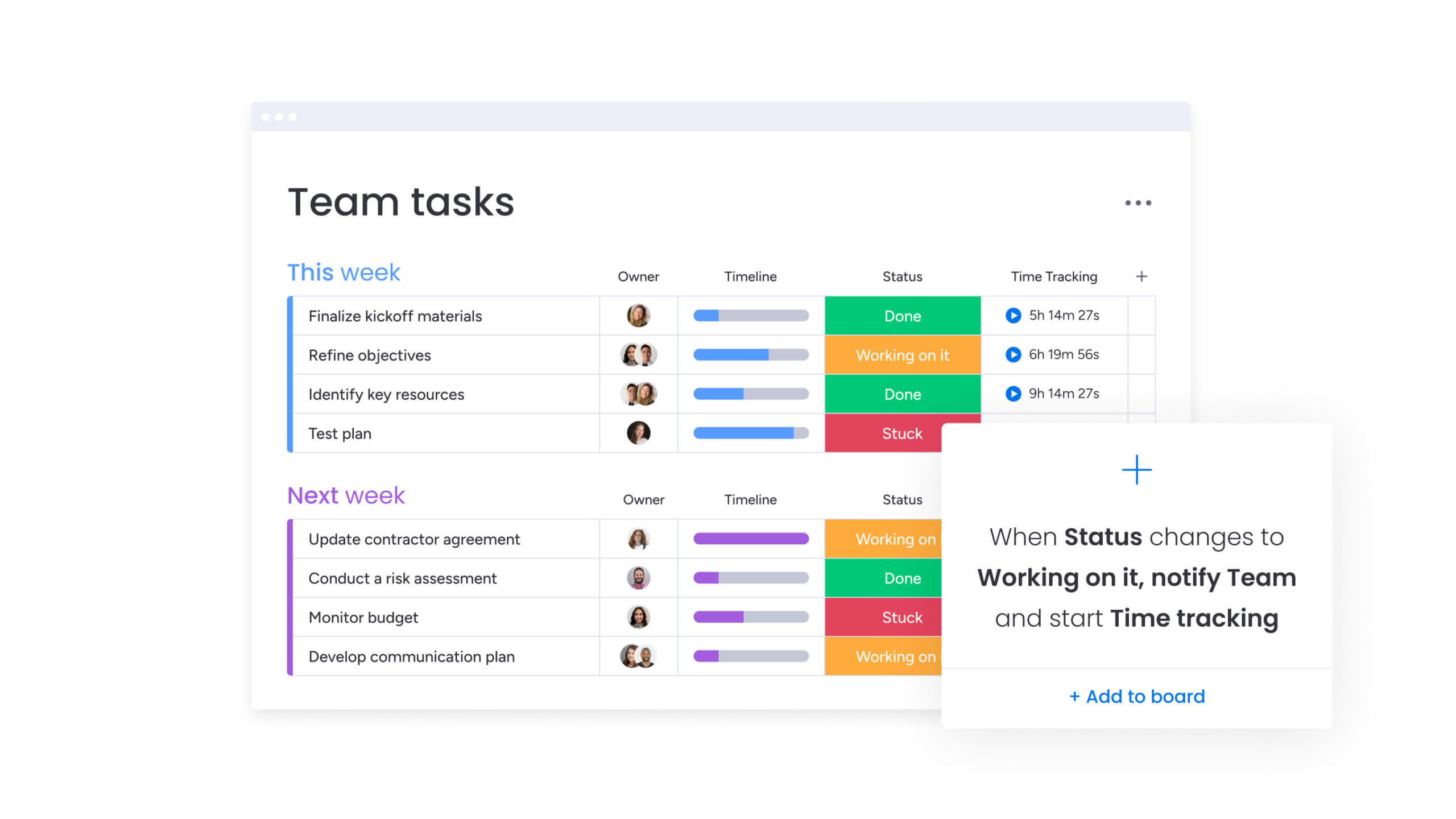
Configuration should reflect how marketing teams already work. Platforms such as monday work management accelerate this phase through intuitive setup and prebuilt marketing frameworks.
- Create goal boards: set up your OKR structure with connected boards.
- Build dashboards: design views for different stakeholder groups.
- Configure automations: set up progress tracking and notifications.
- Connect integrations: link your CRM, analytics, and other tools.
Focus on getting the basics right before adding advanced features. Teams that try to implement everything at once often struggle with adoption.
Step 3: drive team onboarding and adoption
Successful adoption requires thoughtful change management. Marketing teams see higher engagement when they follow proven strategies that make the platform feel valuable rather than burdensome.
Marketing teams see higher engagement when they:
- Start with early adopters: let enthusiastic team members lead by example.
- Provide role-specific training: show each team how the platform helps their specific work.
- Celebrate quick wins: share early successes to build momentum.
- Iterate based on feedback: adjust workflows based on team input.
The platform’s Portfolio Risk Insights feature helps marketing leaders identify adoption gaps by showing which teams actively update their goals versus those falling behind.
Step 4: optimize and scale your implementation
After initial implementation, focus on expanding usage and improving processes:
- Add advanced features: implement AI insights and complex automations.
- Expand to new teams: roll out to additional marketing functions.
- Refine workflows: optimize based on lessons learned.
- Measure impact: track improvements in delivery speed and goal achievement.
Marketing organizations using monday work management typically achieve full adoption within 60 days, with measurable improvements in campaign delivery and cross-team collaboration visible within the first month.
Measuring success and ROI
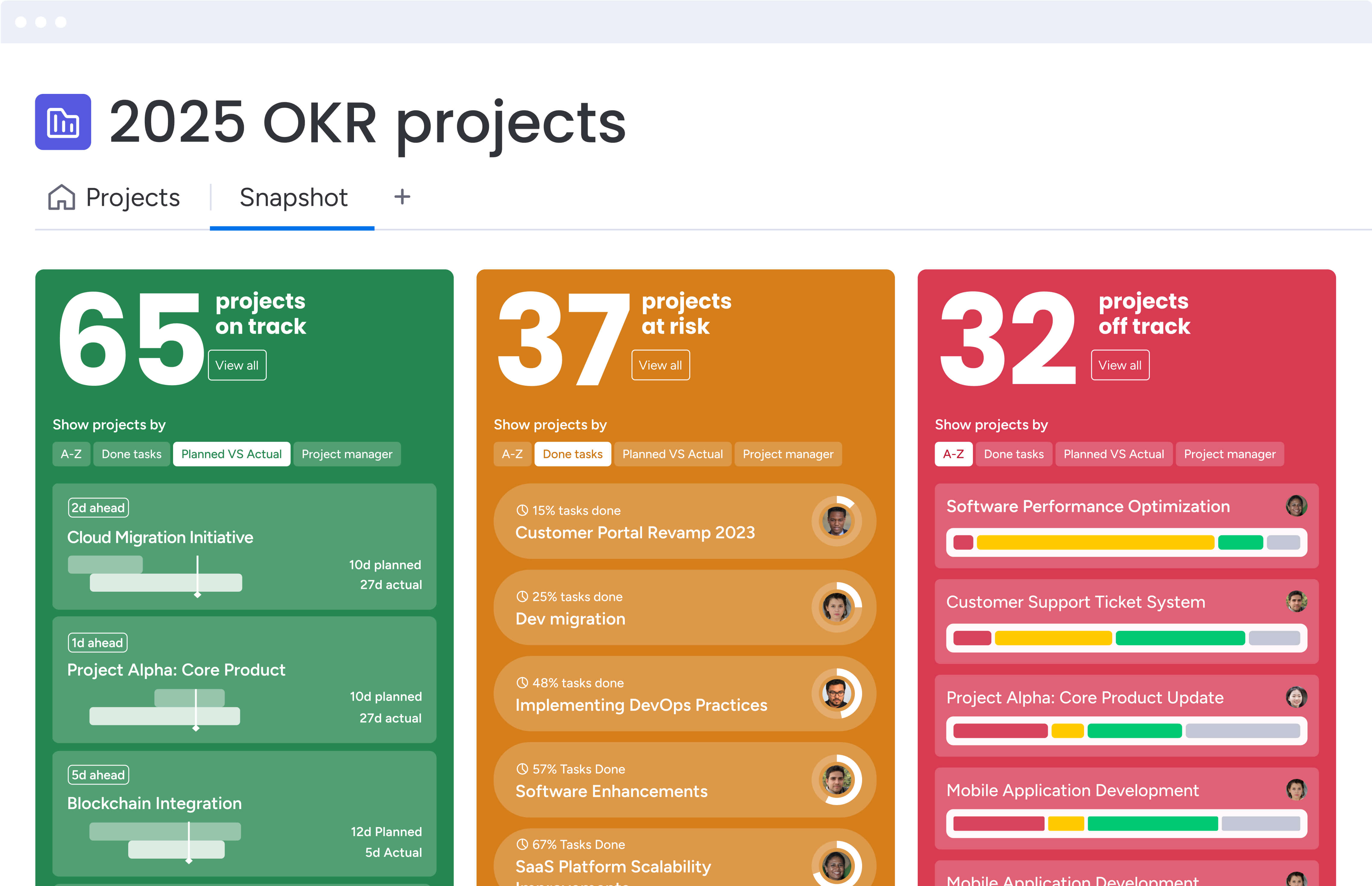
Demonstrating value requires tracking both performance data and team feedback. Clear measurement supports optimization and validates continued investment.
Track quantitative metrics that matter
Focus on metrics that directly connect to business value:
Efficiency gains:
- Hours saved on manual reporting (typically ten-20 hours per week).
- Reduction in status meetings (often 40-50% fewer meetings).
- Faster campaign delivery (20-30% improvement is common).
- Decreased time to insight (from days to minutes).
Performance improvements:
- Goal achievement rate increase.
- Campaign ROI improvement.
- Resource utilization optimization.
- Reduction in missed deadlines.
Cost savings:
- Eliminated tool redundancy (consolidating three to five tools).
- Reduced agency or contractor spend through better capacity planning.
- Lower employee turnover from improved work-life balance.
Calculate your return on investment
A typical enterprise marketing team of 75 people might see:
Costs:
- Software investment: $17,100 annually (75 users × $19/month).
- Implementation time: 40 hours of team time.
- Training and onboarding: two hours per person.
Returns:
- Time savings: 15 hours/week × 52 weeks × $75/hour = $58,500.
- Tool consolidation: $40,000 annually from eliminating redundant platforms.
- Productivity gains: 20% improvement in campaign output.
- Reduced turnover: saving one senior hire = $50,000+ in recruitment costs.
This delivers a first-year ROI exceeding 300%, with returns increasing as teams optimize their usage and expand adoption across the organization.
Transform your marketing goals into measurable results
Heads of marketing in tech juggle shifting priorities, multiple teams, and constant pressure to prove impact. When goals live in slide decks and execution happens across disconnected tools, alignment slips, reporting becomes manual, and leaders lose real-time visibility into what’s actually driving results.
monday work management connects strategy to execution by bringing goals, campaigns, and daily work into one unified platform. Marketing leaders can track progress as it happens, identify risks early, and keep teams aligned without slowing them down.
With monday work management, tech marketing teams benefit from:
- Connected goal hierarchies that link company objectives to campaigns, projects, and individual work
- Real-time dashboards and automated reporting that eliminate manual status updates and spreadsheets
- Workload and capacity views that surface bottlenecks and prevent team burnout
- Automation and AI-powered insights that flag risks, prioritize work, and keep goals on track
- Scalable workflows and integrations that adapt as teams, tools, and priorities grow
The result is less time spent chasing updates and more time delivering measurable outcomes. monday work management helps tech marketing teams stay aligned, move faster, and turn strategic goals into real business impact, without adding unnecessary complexity.
Frequently asked questions
How does goal tracking software differ from project management platforms?
Goal tracking software differs from project management tools by focusing on strategic alignment rather than task completion. While project management tools excel at managing individual projects with tasks, timelines, and deliverables, goal tracking platforms connect those projects to broader business objectives, showing how daily work contributes to company OKRs and providing visibility into organizational progress toward strategic targets.
What's the typical implementation timeline for enterprise marketing teams?
The typical implementation timeline for enterprise marketing teams ranges from 30 to 60 days for full deployment. Week one usually involves setting up the goal hierarchy and pilot team, weeks two through four focus on expanding to additional teams and configuring integrations, and the remaining time addresses optimization, training, and organization-wide rollout.
Can goal tracking software integrate with existing marketing tools?
Yes, modern goal tracking software integrates extensively with existing marketing tools. Platforms like monday work management offer native integrations with HubSpot, Salesforce, Google Analytics, Marketo, and 200+ other applications, plus open APIs that enable custom connections to proprietary or specialized marketing systems.
How do you ensure team adoption of goal tracking software?
Ensuring team adoption requires starting with a pilot group of enthusiastic early adopters, providing role-specific training that shows clear value for each team member's daily work, and celebrating quick wins while continuously gathering and acting on feedback. Success also depends on executive sponsorship and making the platform part of regular workflows rather than an additional task.
What security features should marketing teams prioritize?
Marketing teams should prioritize enterprise-grade security features including SOC two Type II certification for data protection, GDPR compliance for handling customer data, single sign-on (SSO) for secure access management, and granular permissions to control sensitive campaign information. Advanced features like IP restrictions and audit logs provide additional protection for strategic marketing data.
How do AI features enhance goal tracking for marketing teams?
AI features enhance goal tracking by automatically categorizing and prioritizing incoming campaign requests, predicting which goals are at risk based on current progress patterns, and suggesting optimal resource allocation based on team capacity and skills. These capabilities transform goal tracking from reactive reporting to proactive optimization, helping marketing leaders prevent issues before they impact results.

 Get started