


Retail marketing teams operate in a fast-paced, multi-channel environment where campaigns span physical stores, e-commerce, and seasonal promotions. Tracking progress across dozens of initiatives while proving ROI is a constant challenge for marketing leaders managing 50–100+ people. Without a unified system, teams risk misaligned priorities, missed deadlines, and wasted resources.
This guide explores how enterprise goal tracking software helps retail marketing leaders connect strategy to daily execution. It covers essential features like cascading OKRs, automated dashboards, resource optimization, and AI-powered insights. You’ll also discover practical strategies for rolling out goal tracking across large teams, ensuring alignment, efficiency, and measurable business outcomes at scale.
Key takeaways
Retail marketing leaders can transform team performance and campaign outcomes by implementing enterprise goal tracking software. The following insights summarize how these tools improve alignment, efficiency, and strategic impact across large, multi-channel marketing organizations:
- Connect strategy to execution: cascading OKRs and goal hierarchies ensure every campaign and project directly contributes to broader business objectives.
- Gain real-time visibility: dashboards and automated reporting provide instant insights into campaign progress, budget performance, and team capacity.
- Optimize resources and prevent burnout: workload monitoring and capacity planning allow managers to balance team assignments and maintain sustainable execution.
- Standardize workflows across teams: reusable templates and automated processes improve consistency and efficiency across regions and departments.
- Leverage integrated enterprise solutions: platforms like monday work management combine goal tracking, automation, and resource management in a single system, providing a unified view of marketing performance.
Understanding goal tracking software for enterprise teams
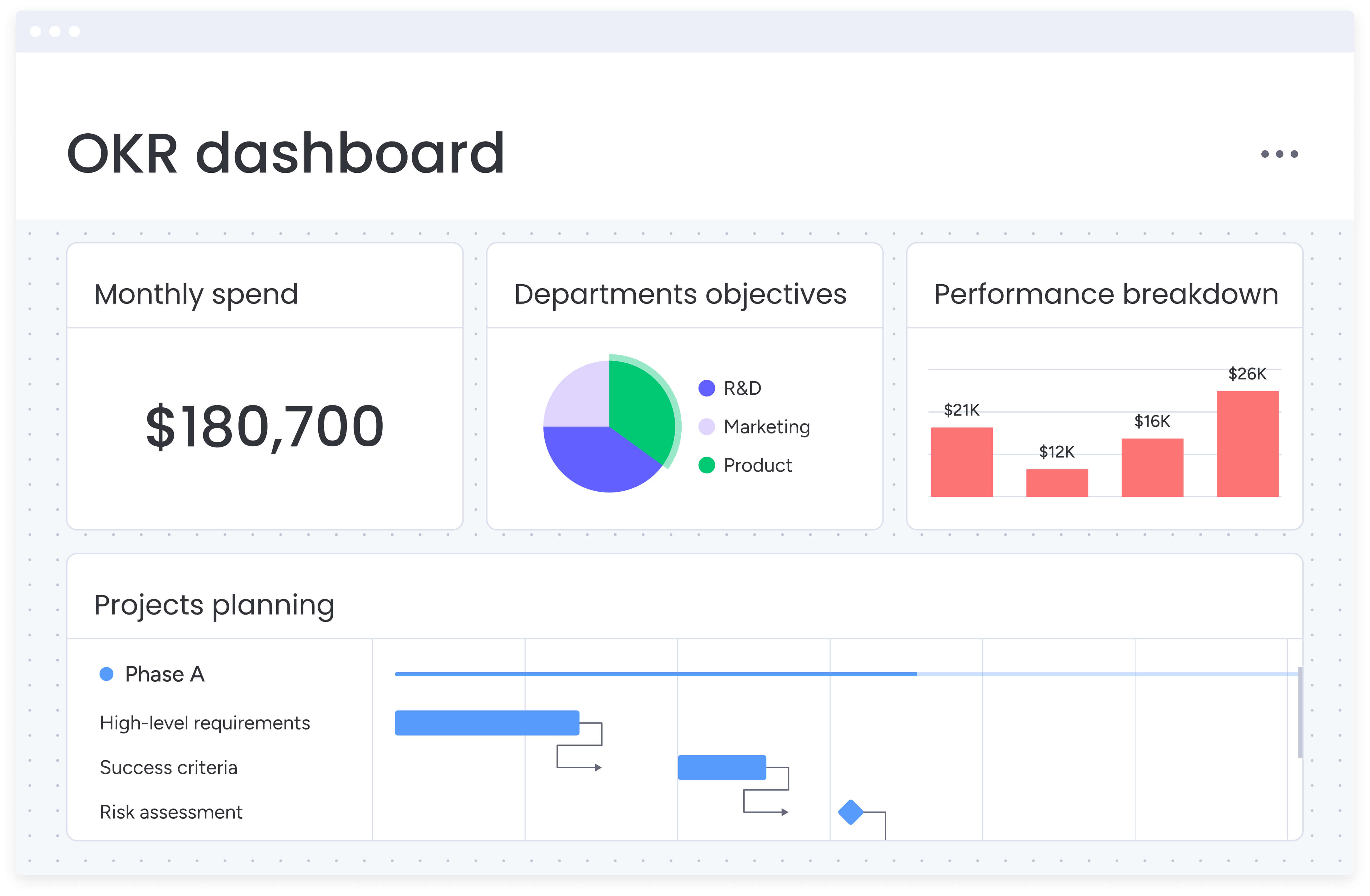.jpg) At its core, goal tracking software connects organizational strategy to daily execution. It provides real-time visibility into progress while consolidating dispersed workflows into a cohesive system. For simpler tracking, goal trackers may also be considered as a lighter alternative.
At its core, goal tracking software connects organizational strategy to daily execution. It provides real-time visibility into progress while consolidating dispersed workflows into a cohesive system. For simpler tracking, goal trackers may also be considered as a lighter alternative.
When managing 50–100+ team members, a platform must accommodate the scale and pace of your operations. Goal tracking software acts as a single source of truth, cascading OKRs from leadership to individual contributors. This ensures every marketing initiative, campaign, and project directly contributes to measurable business outcomes.
An effective platform solves three make-or-break challenges for marketing teams:
- Strategic alignment: links company objectives to departmental goals and individual work.
- Real-time visibility: shows progress, risks, and blockers as they happen.
- Automated workflows: eliminates manual reporting and status updates.
Why retail marketing leaders need specialized goal tracking
Retail marketing introduces complexity that generic project management platforms are not built to handle. Teams manage multi-channel strategies across physical stores and e-commerce, coordinating with legal, product, and finance departments. Seasonal campaigns, regional variations, and tight deadlines require more than basic tracking.
When overseeing content, creative, acquisition, events, and operations teams, the gap between execution and strategy can create challenges:
- Budget accountability: marketing spend lacks clear ROI measurement.
- Team silos: departments work without understanding shared priorities.
- Administrative burden: manual reporting consumes hours that could drive creative strategy.
Platforms like monday work management address these challenges through three enterprise pillars. Leadership visibility gives instant insight into campaign performance and team capacity. Standardization enables consistent execution across regions using managed templates. Resource optimization identifies workload imbalances before deadlines slip.
AI-powered risk insights highlight campaigns at risk, while automated dashboards eliminate weekly report preparation. This approach connects every marketing activity to measurable business outcomes.
Essential features for enterprise goal tracking
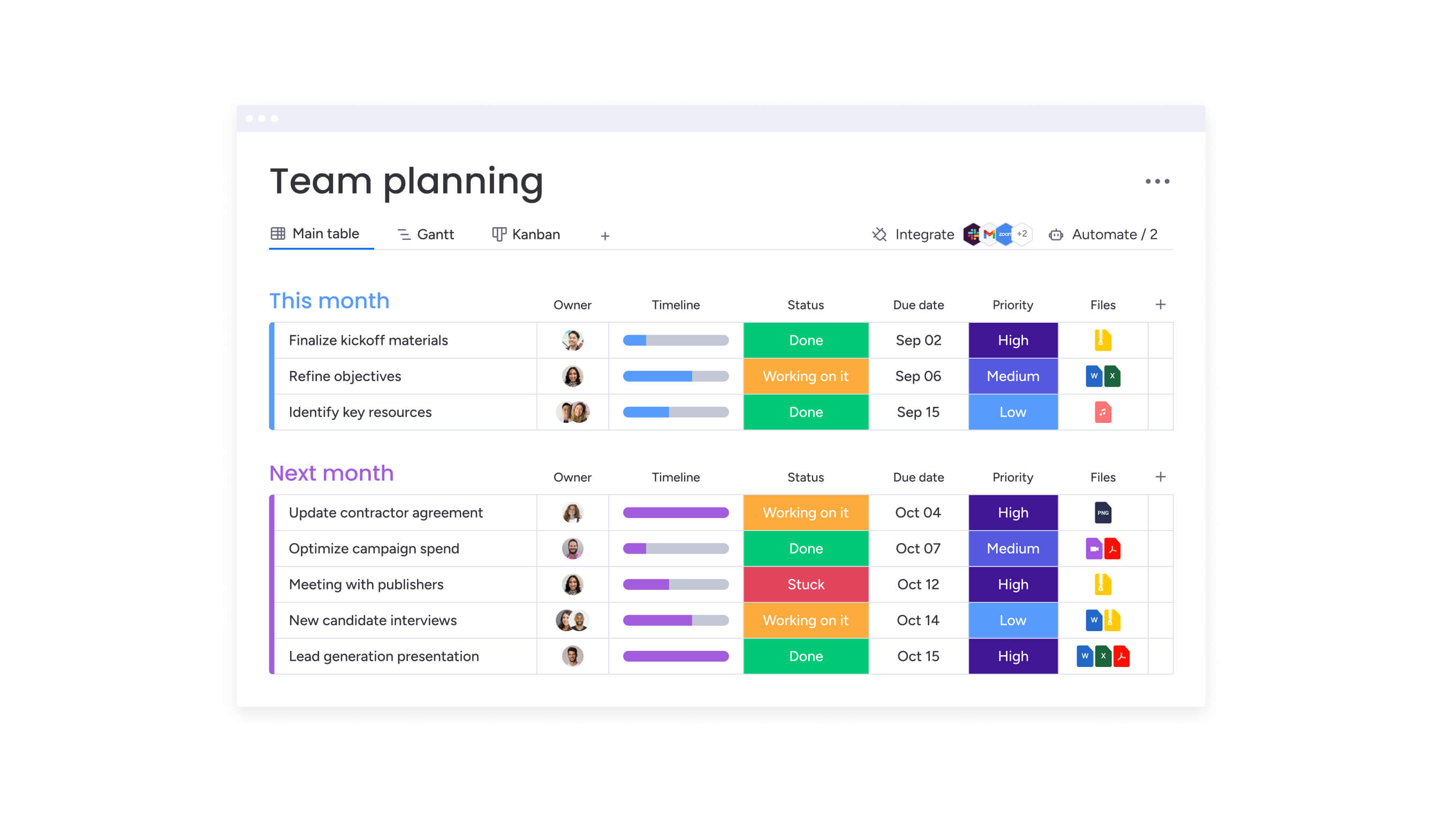
When evaluating goal tracking platforms, consider specialized goal management software with robust capabilities to drive enterprise success. These capabilities don’t just coexist, they form an integrated system that handles your marketing complexity today and adapts as your team grows.
Goals and OKRs framework
Success starts with a clear goal hierarchy that flows from company vision all the way to individual campaigns. The Goals & OKRs feature in monday work management lets you define company-level objectives, attach measurable key results, and automatically track progress as teams complete work.
For retail marketing leaders, this solves the alignment problem by creating a clear hierarchy. This structure ensures every campaign directly contributes to top-level business goals, as shown in this example:
- Company objective: increase retail revenue by 20%.
- Marketing key result: drive 500,000 qualified store visits.
- Campaign target: generate 50,000 leads from Q4 holiday campaign.
Each level maintains ownership and accountability while rolling up to unified dashboards for executive visibility. The platform’s goal hierarchy accommodates different methodologies across departments, marketing uses OKRs while operations tracks KPIs, yet leadership sees everything in one view.
Real-time dashboards and reporting
Visibility enables proactive decision-making, rather than reviewing results after the fact. Customizable dashboards aggregate data from marketing operations into visual, real-time reports that track campaign performance, team productivity, and goal progress.
Capabilities include:
- 30+ widget types for tracking metrics like budget adherence, completion rates, and milestone achievement.
- Flexible filtering by team, campaign, or time period.
- Stakeholder sharing with specific views for those who need visibility without full access.
- AI-powered portfolio reports that generate executive summaries instantly.
For retail marketing leaders tracking campaign ROI, CAC, and content performance across regions, this centralized visibility eliminates the need to compile reports from multiple systems.
Automation capabilities
Manual processes for small teams break down at scale. monday work management’s automation builder supports sophisticated workflows with conditional logic and multi-step sequences, enabling up to 250,000 automations per month on enterprise plans.
Consider how this transforms marketing operations:
- Status updates trigger automatically when milestones are reached.
- Approval routing follows predefined paths based on campaign type.
- Deadline reminders send without manual intervention
- Resource assignments adjust when priorities shift.
These automations ensure work moves forward consistently. When creative assets need approval, the system routes them to brand reviewers automatically. When campaigns hit specific milestones, stakeholders receive updates instantly. This operational efficiency lets your team focus on strategy rather than administration.
Resource management and capacity planning
Knowing exactly who’s maxed out and who has bandwidth helps you prevent the burnout that can tank your most important campaigns. When juggling multiple campaigns, time tracking software helps teams identify where hours are spent most effectively. monday work management’s resource management capabilities provide visibility into workload distribution and skill availability across your marketing organization.
The comprehensive resource suite includes:
- Workload view: displays each team member’s assigned items and time allocation in real-time.
- Resource directory: centralizes information about roles, departments, and expertise.
- Capacity manager: helps with intake and prioritization decisions.
- Resource planner: enables project-level planning with smart assignments based on skills and availability.
This visibility is crucial when managing multiple campaigns with seasonal peaks. Teams can make data-driven decisions instead of relying on estimates.
Comparing enterprise goal tracking platforms
Evaluating platforms for large marketing teams requires understanding core capabilities:
| Feature | monday work management | Asana | ClickUp | Smartsheet |
|---|---|---|---|---|
| Native goal tracking | Built-in Goals & OKRs with automatic progress updates | Advanced plan required ($24.99/user) | Available on all paid plans | Limited goal features |
| Enterprise automation | 250,000/month included | Limited on lower tiers | Varies by plan | Basic automation only |
| Resource management | Integrated workload view and capacity planning | Business plan required ($30.49/user) | Included on Unlimited ($7/user) | Separate add-on required |
| AI capabilities | AI Blocks, Digital Workers, risk insights included | Limited AI features | Basic AI on higher tiers | No native AI |
| Dashboard customization | Unlimited custom dashboards with 30+ widgets | Reporting on advanced plan only | Business plan required | Limited customization |
| Cross-project dependencies | Native with visualization and conflict resolution | Available but limited | Basic dependencies only | Manual linking required |
| Implementation time | Under four months to full value | two to six weeks typical | Varies widely | three to six months average |
monday work management offers a unique combination of comprehensive enterprise capabilities, including native goal tracking and advanced automations, at competitive pricing. While ClickUp offers lower entry costs, its goal features lack the depth needed for complex organizations. Asana requires expensive upgrades for basic goal tracking, making it costly for large teams.
How to implement goal tracking across marketing departments
Getting goal tracking right in marketing requires a practical rollout plan that delivers quick wins while addressing the realities of how creative teams actually work. This five-step process ensures your team achieves full value from the platform while maintaining operational continuity.
Step 1: define your marketing OKR hierarchy
Start by establishing company-level objectives in monday work management’s Goals feature. Create a structure that cascades from company OKRs to departmental objectives to campaign targets.
For retail marketing, this hierarchy might include:
- Company objective: increase retail revenue by 20%.
- Marketing key result: drive 500,000 qualified store visits.
- Campaign target: generate 50,000 leads from Q4 holiday campaign.
Assign ownership at each level to ensure accountability. For an efficient start, teams can also utilize a goal setting template. The platform’s goal alignment features show how every campaign contributes to higher-level objectives, addressing the disconnection between daily work and strategic priorities.
Step 2: standardize campaign workflows
Create reusable templates using monday work management’s managed templates capability. Build automation recipes that route briefs for approval, assign work based on campaign type, and send deadline reminders at critical milestones.
These standardized workflows deliver immediate benefits:
- Eliminate inefficiency from teams constantly reinventing processes.
- Ensure consistent execution across regional campaigns.
- Handle routine coordination through automated workflows.
- Maintain alignment as processes evolve through cascading template changes.
Step 3: configure real-time tracking dashboards
Set up custom dashboards that aggregate goal progress, campaign performance, and team capacity metrics. Design your dashboard layout to display the most critical information at a glance.
Essential widgets to include:
- Goal completion percentages with drill-down capability.
- Budget adherence across all active campaigns.
- Resource utilization by team and individual.
- Risk indicators flagged by AI analysis.
Schedule automated reports for executive stakeholders. The platform’s AI-powered portfolio reports generate summaries with charts, trends, and recommendations, eliminating hours of manual compilation while providing deeper insights.
Step 4: optimize resource allocation processes
Use Workload View and Capacity Manager on the monday work management platform to visualize team bandwidth before assigning new campaigns. The Resource Directory enables matching projects to team members based on skills and expertise, not just availability.
Regular capacity reviews help identify patterns in team performance. For instance, creative teams may consistently experience high demand during campaign launches while strategy teams have excess capacity. With this visibility, managers can rebalance workloads proactively, ensuring sustainable execution and consistent quality across campaigns.
By aligning resources with both skills and availability, organizations reduce strain on overextended teams and increase the likelihood of delivering projects on time. This approach helps maintain morale while keeping campaigns running smoothly.
Step 5: establish continuous improvement cycles
Schedule quarterly reviews using the platform’s AI-powered analytics to evaluate goal achievement, campaign performance, and team productivity. Document lessons learned directly in monday work management and update templates to incorporate improvements.
The platform’s Digital Workers can monitor patterns and suggest optimizations. For example, the Project Analyzer might identify that campaigns with certain characteristics consistently miss deadlines, prompting process adjustments before the next quarter begins.
Measuring success with goal tracking metrics
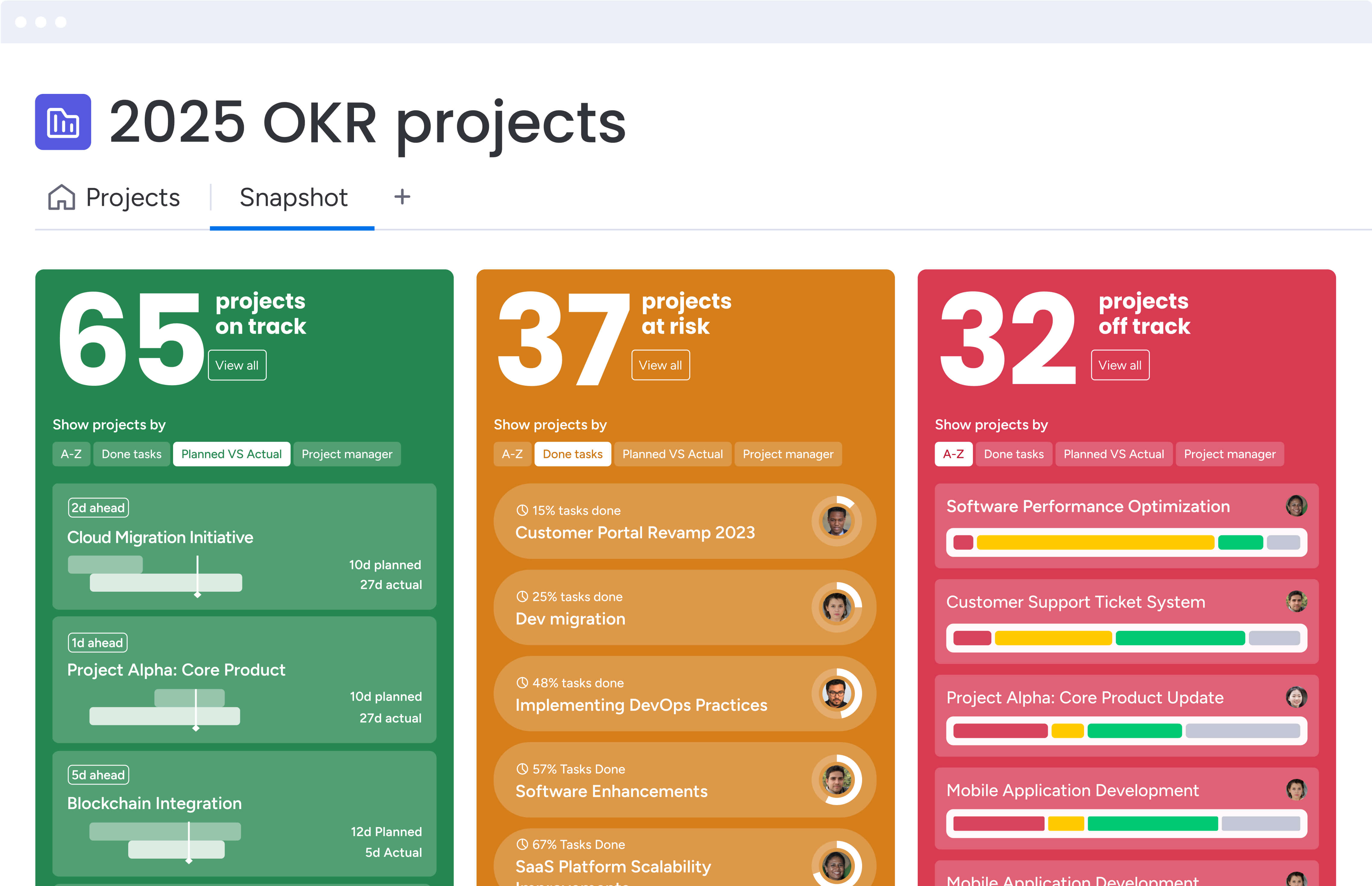
To confirm your goal tracking system is effective, focus on metrics that capture both immediate operational efficiency and long-term strategic impact. For retail marketing leaders, these metrics link daily work to business objectives and justify investment in a unified platform.
Operational efficiency metrics
Track how goal tracking software improves your team’s execution capabilities:
- Time saved on reporting: hours reclaimed from manual status updates.
- First-time approval rate: percentage of deliverables accepted without revision.
- Automation impact: tasks completed without manual intervention.
- Cycle time reduction: days saved in campaign delivery.
monday work management’s dashboards visualize these metrics in real-time, showing exactly where efficiency gains occur. For example, in a customer story, VML shared that after implementing the platform, they saved 7,000 hours per account monthly through streamlined workflows and automated reporting.
Strategic alignment indicators
Measure how well your marketing activities support business objectives:
- Goal achievement rate: percentage of OKRs completed on schedule.
- Initiative alignment score: how many projects directly support strategic goals.
- Cross-functional collaboration: shared goals completed across departments.
- Resource allocation accuracy: time spent on high-priority versus low-priority work.
The platform’s Goals & OKRs feature automatically calculates these metrics as work progresses, providing instant visibility into strategic alignment without manual tracking.
Team performance and wellbeing
Monitor how goal tracking impacts your people and organizational health:
- Workload balance: distribution of effort across team members.
- Capacity utilization: percentage of available time on productive work.
- Burnout risk indicators: team members consistently over capacity.
- Engagement scores: platform adoption and active usage rates.
Resource optimization features in monday work management help maintain sustainable workloads. The Capacity Manager shows when teams approach overload, enabling proactive adjustments that protect both delivery and morale.
Transform retail marketing execution with monday work management
Retail marketing leaders face the challenge of managing fast-paced, multi-channel campaigns across large teams while maintaining alignment, proving ROI, and preventing burnout. Disconnected tools, manual reporting, and siloed workflows make it difficult to link daily work to strategic objectives.
monday work management addresses these challenges by:
- Connecting strategy to execution: cascading OKRs and goal hierarchies ensure every campaign and project directly supports top-level business goals.
- Providing real-time visibility: dashboards and automated reporting give instant insights into campaign performance, resource allocation, and potential risks.
- Optimizing resources and preventing burnout: workload monitoring and capacity planning help managers assign the right work to the right people at the right time.
- Standardizing workflows across teams: managed templates and automation ensure consistency, reduce administrative burden, and maintain high-quality execution.
- Leveraging AI for smarter decision-making: risk insights and automated portfolio reports allow proactive adjustments before issues escalate.
By unifying goal tracking, project management, and resource optimization in a single platform, monday work management enables retail marketing teams to operate efficiently, stay aligned, and deliver measurable business outcomes, all without adding complexity to daily workflows.
Frequently asked questions
What features should enterprise goal tracking software include?
Enterprise goal tracking software should include cascading OKR frameworks, real-time dashboards, automation capabilities, resource management tools, and cross-functional collaboration features. The platform needs to handle complex organizational structures with multiple departments, support various goal methodologies simultaneously, and provide executive-level visibility while maintaining team-level flexibility.
How does goal tracking software improve cross-team alignment?
Goal tracking software improves cross-team alignment by creating transparent goal hierarchies where everyone sees how their work contributes to company objectives. Shared dashboards provide visibility into dependencies and progress across departments, while automated updates keep stakeholders informed without manual coordination.
Can goal tracking software handle both OKRs and KPIs?
Yes, comprehensive goal tracking platforms like monday work management support multiple goal frameworks simultaneously. Marketing teams can use OKRs while operations tracks KPIs, with leadership viewing unified progress across all methodologies in consolidated dashboards.
What's the typical ROI for enterprise goal tracking software?
Organizations implementing goal tracking software typically see significant returns through time savings and improved execution. FARFETCH achieved 6x ROI with $118,000 monthly savings, while VML saved 7,000 hours per account monthly through automated workflows and streamlined reporting.
How long does it take to implement goal tracking software?
Implementation timelines vary by organization size and complexity. Most enterprise teams achieve initial deployment in two to four weeks, pilot testing in four to six weeks, and full organizational adoption within two to four months. Platforms with intuitive interfaces and strong support accelerate this timeline.
How does AI enhance goal tracking capabilities?
AI transforms goal tracking from reactive reporting to proactive management. Features like risk detection analyze patterns to flag at-risk goals early, while automated insights suggest resource reallocations and process improvements. AI-powered reporting generates executive summaries instantly, eliminating manual compilation.

 Get started