


Retail marketing teams juggle complex campaigns across dozens of channels, hundreds of locations, and tight seasonal deadlines. Coordinating product launches, promotional calendars, and creative assets while managing large teams creates a visibility challenge that can derail even the most carefully planned initiatives. The right Gantt chart software transforms scattered timelines into coordinated execution, giving marketing leaders the oversight needed to deliver campaigns on time and on budget.
Gantt charts provide what spreadsheets can’t: a visual map showing how tasks connect, who’s responsible for what, and which milestones keep campaigns on track. For retail marketing operations, this means seeing how in-store promotions align with digital campaigns, tracking creative asset dependencies across multiple initiatives, and managing seasonal planning cycles with confidence. The best Gantt chart software goes beyond basic scheduling to offer resource management, real-time collaboration, and integration with existing marketing stacks.
This guide brings you the Gantt chart platforms that actually work for retail marketing teams, with a focus on what matters: campaign coordination, team resource management, and breaking down departmental silos. Discover exactly how top retail brands use these tools to launch campaigns across channels, keep their teams engaged and productive, and track every promotion to ensure timely delivery.
Key takeaways
Managing retail marketing operations at scale requires more than spreadsheets and status meetings. Heads of marketing need centralized visibility, operational efficiency, and strategic alignment to drive growth across 50-100+ team members. These capabilities are delivered through monday work management:
- Unified campaign visibility: track all marketing campaigns, budgets, performance metrics, and team workloads in one workspace, freeing up time for strategic work.
- Standardized workflows that scale: deploy templates and automation that reduce manual work by thousands of hours monthly while maintaining quality across teams.
- Real-time insights that demonstrate impact: monitor campaign ROI, resource utilization, and project health through live dashboards that connect marketing execution to business goals.
- Cross-functional collaboration: break down silos between marketing, merchandising, and operations so everyone works from the same source of truth instead of conflicting information.
- Multi-location campaign coordination: use Gantt charts with dependencies to manage complex seasonal campaigns and coordinate in-store promotions, digital campaigns, and creative assets across 100+ locations simultaneously.
What makes heads of marketing choose the right platform for retail marketing operations?
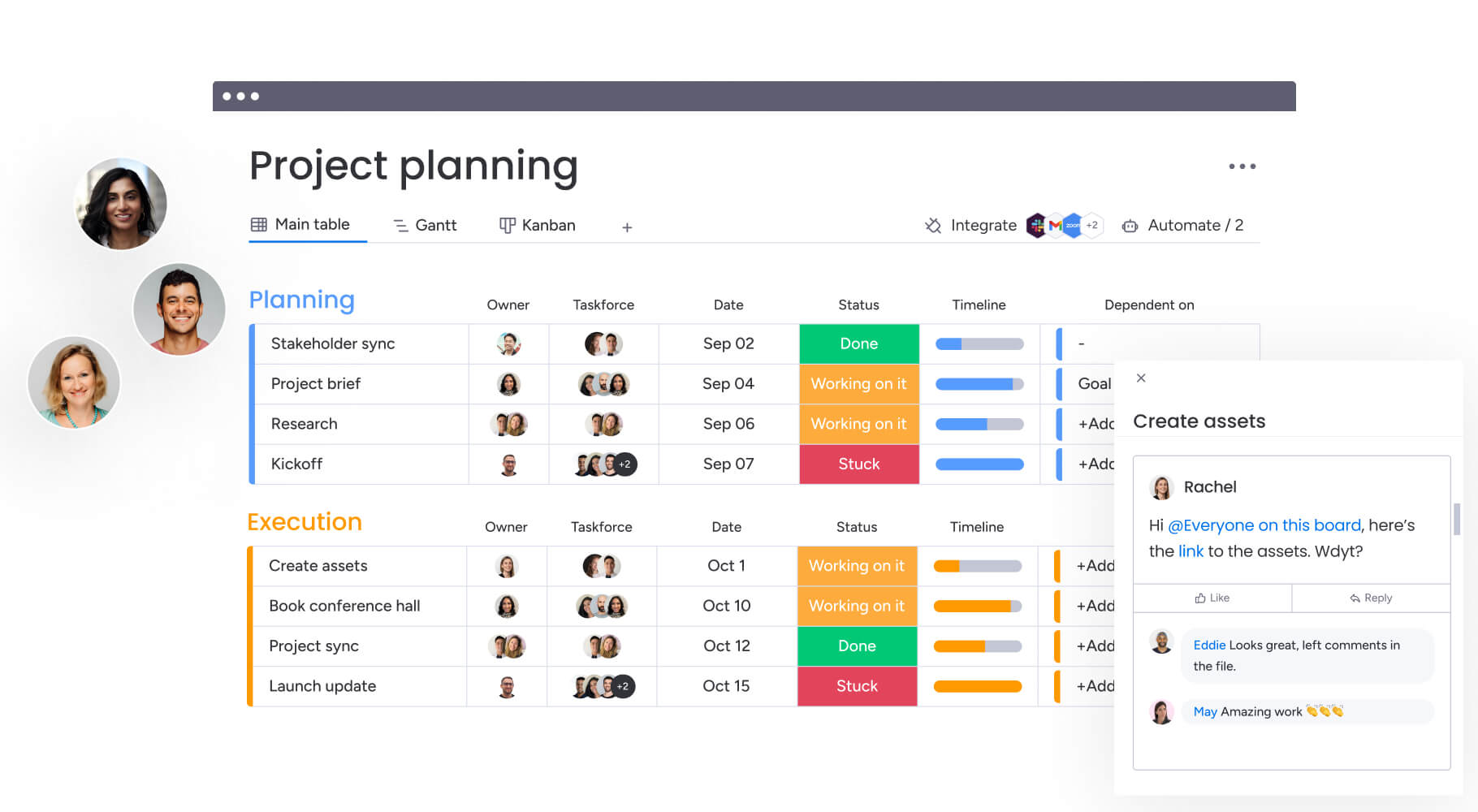
Retail marketing leaders managing large teams across content, creative, acquisition, events, and operations face a unique challenge. They need to oversee complex, multi-channel campaigns while maintaining visibility into budgets, resources, and performance while reporting impact to executive leadership. With 71% of consumers expecting personalized interactions from retailers, the stakes for coordinated, effective marketing operations have never been higher.
These challenges find their solution in a unified workspace that connects campaign planning, execution, and performance tracking. By using monday work management, teams eliminate the silos and duplicative processes that scatter marketing impact, gaining the strategic alignment necessary to drive growth and brand awareness.
Leading platforms recognized in the 2024 Gartner® Magic Quadrant™ for Marketing Work Management have helped marketing teams achieve significant operational improvements. VML saved 7,000 hours per account monthly while delivering 2x faster. Canva achieved 3x creative output through standardized workflows and capacity planning — results made possible through monday work management’s comprehensive approach.
monday work management top features for retail marketing operations
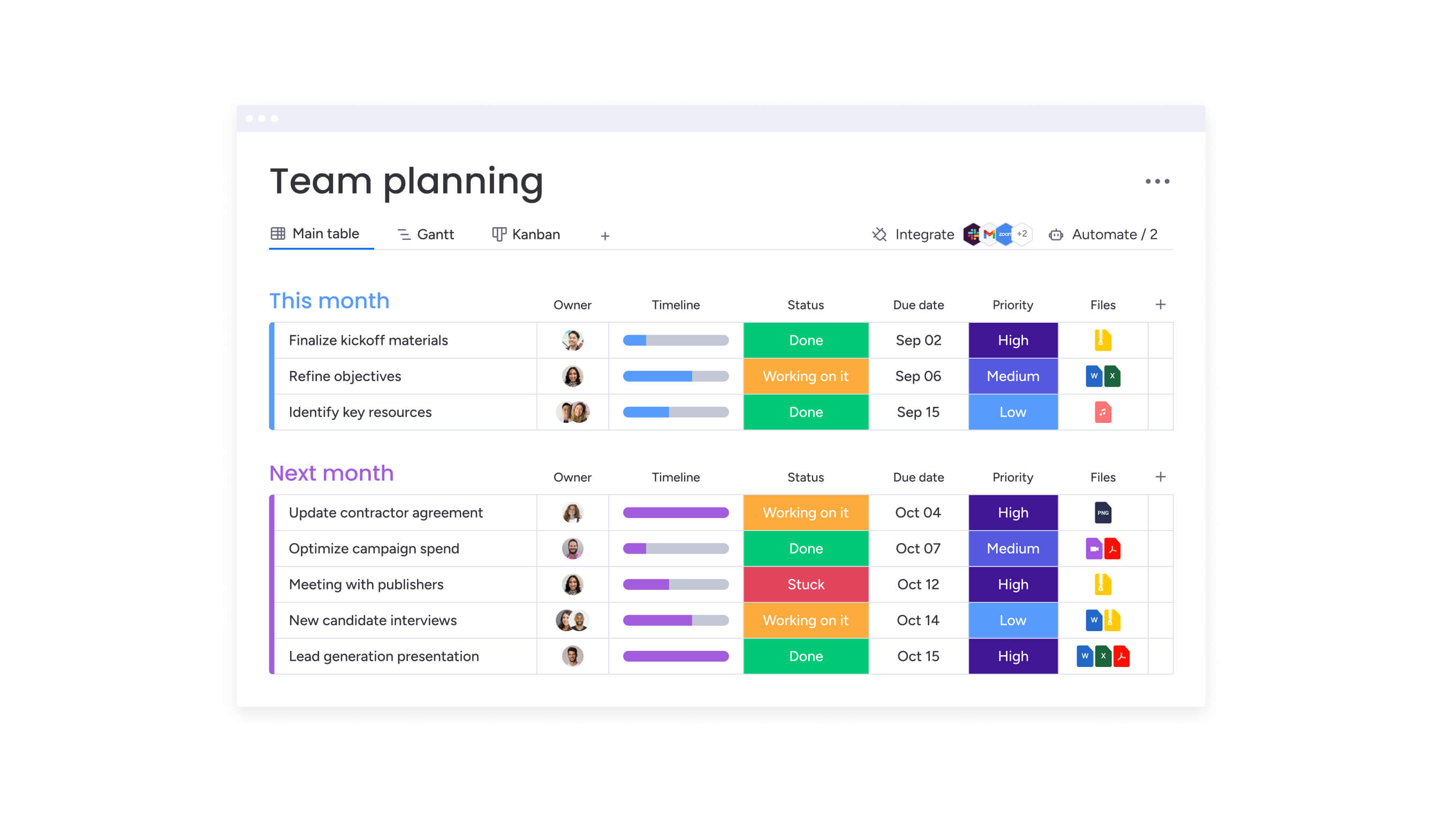
What actually matters in a Gantt chart platform when you’re juggling dozens of campaigns across hundreds of locations: each feature addresses a specific operational challenge retail marketing leaders encounter daily, from coordinating creative dependencies and managing cross-functional teams to tracking budgets and maintaining visibility across simultaneous product launches, seasonal promotions, and regional rollouts.
Gantt charts with dependencies
Visual project management becomes essential when coordinating seasonal campaigns, product launches, and omnichannel initiatives simultaneously. Gantt chart software provides an at-a-glance understanding of project status and details, with drag-and-drop functionality that makes timeline adjustments simple.
For heads of marketing in retail, this means:
- Campaign coordination: track how in-store promotions align with digital campaigns.
- Creative dependencies: manage asset dependencies across multiple marketing campaigns.
- Seasonal planning: visualize marketing cycles and promotional calendars.
- Multi-location management: maintain visibility across 100+ concurrent campaigns across store locations.
The automated dependency tracking ensures that when one project item shifts, all related items update accordingly, which is further discussed in this guide about Gantt charts. This prevents the cascade of delays that often derail complex retail campaigns.
At Officeworks, this capability transformed planogram management processes from chaos to a structured approach, delivering full visibility across the business about product updates through synchronized planograms and detailed Gantt charts.
Campaign management and content calendars
The campaign management capabilities in monday work management enable marketing leaders to plan, launch, and optimize integrated campaigns using calendars, timelines, and performance insights. The platform’s content calendar functionality houses all key dates and milestones in one centralized location.
This feature helps your team overcome key challenges by:
- Disconnected execution: unifies creative, digital, and in-store marketing teams.
- Scattered tracking: replaces spreadsheets with 100+ tabs with a unified view.
- Performance visibility: tracks campaign ROI, budget adherence, and time-to-launch metrics.
- Multi-location complexity: manages both online and in-store promotional calendars with different timelines.
For FARFETCH, the content calendar represented the highest priority given its scale and complexity. Centralizing this information in a single workspace enabled better cross-team collaboration and coordination across their global marketing operations.
Resource management and workload views
When you’re balancing creative teams, agencies, and in-store marketing staff across dozens of locations, you need to know who’s maxed out and who can take on more. The resource management capabilities show you exactly that in real time.
The Workload view enables marketing leaders to:
- Track capacity: monitor workloads across in-house teams, agencies, and freelancers.
- Allocate strategically: assign the right people to the right priorities at the right time.
- Prevent burnout: balance team workloads to maintain morale and productivity.
- Optimize utilization: ensure resources focus on high-impact delivery.
The Workload view provides visibility into each team’s workload and ensures timely delivery of marketing plans without overworking or overcommitting resources. This capability helps marketing leaders balance capacity across teams while maintaining realistic delivery timelines that protect team morale and productivity.
Dashboards and real-time reporting
The dashboards in monday work management connect data from multiple projects with pre-built or custom visualizations. Marketing leaders gain insights into portfolio performance, including budget tracking and workload analysis, enabling data-driven decisions.
Key reporting capabilities include:
- Campaign metrics: track ROI, CAC, MQL-to-Customer rate.
- Performance monitoring: volume and performance of content/campaigns.
- Stakeholder reporting: automated executive dashboards.
- Real-time alerts: instant notifications for critical changes.
Previously, team leaders had to dig through updates manually to find project statuses. Now, with visual dashboards, real-time data, and automated notifications, leadership teams can see what they need at a glance, transforming how Officeworks manages visibility across their operations.
Automations and workflow templates
Stop reinventing the wheel with every campaign. Templates, automations, and integrations provided by monday work management cut thousands of hours of manual work while ensuring every project follows your proven process.
Automation capabilities address common inefficiencies:
- Template deployment: create standardized project boards for retail marketing campaigns.
- Approval workflows: set up automated approval processes for marketing materials.
- Reminder notifications: automate alerts to keep everyone on track.
- Process consistency: ensure consistent delivery across marketing functions.
Oscar Health’s implementation demonstrates the tangible impact of automation at scale: their team saves approximately 1,850 hours of staff time monthly, translating to roughly $50,000 in operational cost savings each month through streamlined workflows and reduced manual coordination.
Creative request management and approval workflows
The creative request features in monday work management streamline project intake, allowing anyone to submit requests with relevant details while stakeholders manage approvals and prioritize effectively.
This capability transforms creative production workflows by:
- Centralizing requests: creating a unified queue with automated notifications.
- Improving visibility: providing transparency into request status and turnaround times.
- Setting expectations: allowing realistic timeline communication with stakeholders.
- Tracking dependencies: managing creative asset dependencies across campaigns.
The creative request features enable teams to formalize campaign brief submission and approval processes through structured forms. This workflow capability provides campaign managers with an additional layer of visibility into request status, priorities, and turnaround times across all creative production activities.
Cross-functional collaboration tools
Breaking down silos between marketing, merchandising, store operations, legal, product, and finance teams requires robust collaboration capabilities. Teams and departments come together in one workspace with monday work management to achieve shared goals.
Cross-functional benefits include:
- Unified workspace: all teams work from the same source of truth.
- Agency coordination: manage vendor timelines alongside internal teams.
- Event planning: coordinate both in-person and virtual events.
- Information access: eliminate endless email chains and status meetings.
The platform consolidates all essential information in one accessible location, eliminating the need to switch between multiple channels to view documents, send messages, and access reports. This unified approach streamlines workflows and reduces the friction that comes from scattered information across different systems.
Goals and OKR tracking
Aligning marketing strategy with company goals requires clear visibility into how campaigns contribute to broader objectives. The Goals and OKRs feature in monday work management allows marketing leaders to set, track, and connect objectives to ensure strategic alignment.
This feature enables:
- Strategic translation: convert marketing plans into execution with OKRs and dashboards.
- Progress tracking: monitor advancement toward strategic objectives.
- Initiative alignment: ensure all tasks support high-level objectives.
- Impact measurement: track how campaigns contribute to growth and brand awareness.
Genpact recently implemented a high-level GTM calendar that displays marketing programs, campaigns, and activations across the entire team. This centralized view delivers an additional layer of visibility into how initiatives align and progress, enabling better coordination and strategic oversight for marketing leadership.
Integration ecosystem
With 200+ app integrations, monday work management allows marketing teams to connect their existing stack or build tailored integrations using the open API. This ensures workflow continuity while leveraging best-in-class tools for specific functions.
To create a truly unified workspace, your platform must connect with the systems your team already uses. This prevents data silos and manual work, ensuring information flows seamlessly across your marketing stack. Essential integrations for retail marketing include:
- CRM systems: Salesforce, HubSpot for customer data.
- Creative tools: Adobe Creative Cloud, Canva for asset creation.
- Analytics platforms: Google Analytics for performance tracking.
- Communication tools: Slack, Microsoft Teams for collaboration.
- Email marketing: Mailchimp, Marketo for campaign execution.
For FARFETCH’s growing organization, monday work management has become the global centralizing platform. The platform allowed them to shift all workflows over to one system while encouraging the team to challenge existing ways of working that no longer served their operational needs.
Try monday work managementHow a head of marketing in retail benefits from monday work management
When you move from spreadsheet chaos to a single source of truth, the results are immediate and tangible: time saved, quality improved, and visibility gained. These improvements directly support your ability to drive growth and brand awareness while maintaining team morale and budget efficiency. Here’s how retail marketing leaders experience tangible benefits across three key areas.
Time and cost savings
Retail marketing teams using monday work management report significant efficiency gains that translate directly into capacity for strategic work rather than administrative overhead:
- VML: 7,000 hours saved per account monthly.
- FARFETCH: 3,500 hours saved per month through automated workflows.
- Genpact: 25% decrease in email exchanges.
- VML: $250K saved yearly to reinvest in strategic initiatives.
Quality and productivity improvements
Standardized processes and clear visibility enable higher-quality campaign execution. Teams deliver marketing initiatives faster with clear priorities and enhanced collaboration:
- Canva: 3x creative output through streamlined workflows.
- VML: 2x faster delivery through reduced bottlenecks.
- Genpact: 40% improvement in cross-team collaboration.
- FARFETCH: 6x ROI and $118K saved per month.
Visibility and compliance benefits
Real-time dashboards and standardized templates ensure consistent execution. Marketing leaders gain the ability to make data-driven decisions while maintaining compliance with brand standards and regulatory requirements:
- Officeworks: replaced 635+ working spreadsheets with a single source of truth.
- Progress tracking: monitor campaign performance and team workloads instantly.
- Budget adherence: track spending and ROI in real-time.
- Data accuracy: eliminate inconsistent information that risks losing important details.
How to manage retail marketing campaigns with monday work management
This playbook shows you how to build a campaign management system that actually works, whether you’re managing ten marketers or 100. Each step builds on the previous one to create a unified workspace that connects strategy to execution.
Step 1: set up your marketing workspace with standardized templates
Begin by creating your marketing workspace using monday work management’s pre-built templates for campaign management, content calendars, and creative production. Customize these templates to match your retail marketing workflows, including fields for:
- Campaign type: product launch, seasonal promotion, brand awareness.
- Target audience: demographics, store locations, customer segments.
- Budget allocation: media spend, creative costs, operational expenses.
- Key performance indicators: ROI targets, engagement metrics, conversion goals.
Step 2: build your campaign timeline with Gantt charts and dependencies
Use the Gantt chart view to map out your seasonal campaigns, product launches, and promotional calendars. Set up task dependencies to visualize how creative development, asset production, merchandising coordination, and in-store execution connect. This ensures you can identify potential conflicts and adjust timelines before they impact delivery.
Step 3: configure resource allocation and workload management
Set up the Workload view to gain visibility into your team’s capacity across content, creative, acquisition, events, and operations functions. Assign tasks based on skills and availability, and use the resource management features to balance workloads across:
- In-house teams: content creators, designers, campaign managers.
- External agencies: creative partners, media buyers, event coordinators.
- Freelancers: specialized skills for specific campaigns or peak periods.
Step 4: establish approval workflows for creative assets
Create automated approval workflows using forms and automations to streamline creative brief submissions and asset approvals. Set up notification triggers so stakeholders receive alerts when materials need review, and use status columns to track items through the approval process from submission to final sign-off.
Step 5: connect your marketing stack through integrations
Integrate monday work management with your existing CRM, creative tools, analytics platforms, and communication systems. Use native integrations or the open API to ensure data flows seamlessly between systems, eliminating manual data entry and maintaining a single source of truth for campaign information.
Step 6: build dashboards for real-time performance tracking
Create custom dashboards that display the metrics most important to your role: campaign ROI, CAC, MQL-to-Customer rate, budget adherence, team productivity, and time-to-launch. Configure automated reports for executive leadership that showcase marketing impact and align campaign performance with company OKRs.
Comparison: monday work management vs competing platforms for retail marketing
Not all Gantt platforms are created equal for retail marketing teams. The following comparison shows how monday work management stacks up against competitors on the features that will make or break your campaigns, highlighting key differences across essential features for marketing teams.
| Feature | monday work management | Asana | ClickUp |
|---|---|---|---|
| Gantt charts with dependencies | ✓ Included with drag-and-drop scheduling | ✓ Timeline view (paid plans only) | ✓ Included with 60 monthly uses on free plan |
| Campaign calendar view | ✓ Multiple calendar views with filtering | ✓ Calendar view available | ✓ Calendar view available |
| Resource management | ✓ Built-in workload and capacity planning | Limited (paid plans only) | ✓ Workload view available |
| Approval workflows | ✓ Customizable with forms and automations | Limited automation on lower tiers | ✓ Automation available |
| Real-time dashboards | ✓ Customizable with 30+ widget types | Limited (paid plans only) | ✓ Dashboard available |
| Marketing templates | ✓ 200+ templates across use cases | ✓ Template library available | ✓ Template library available |
| Native integrations | 200+ integrations | 100+ integrations | 50+ integrations |
| Price per user/month | From $12 (three-user minimum) | From $13.49 (two-user minimum) | From $7 |
| Implementation time | Less than four months (Forrester study) | Varies by team size | Varies by team size |
| G2 rating | 4.7/five (12,000+ reviews) | 4.3/5 | 4.7/5 |
How FARFETCH transformed their retail marketing operations
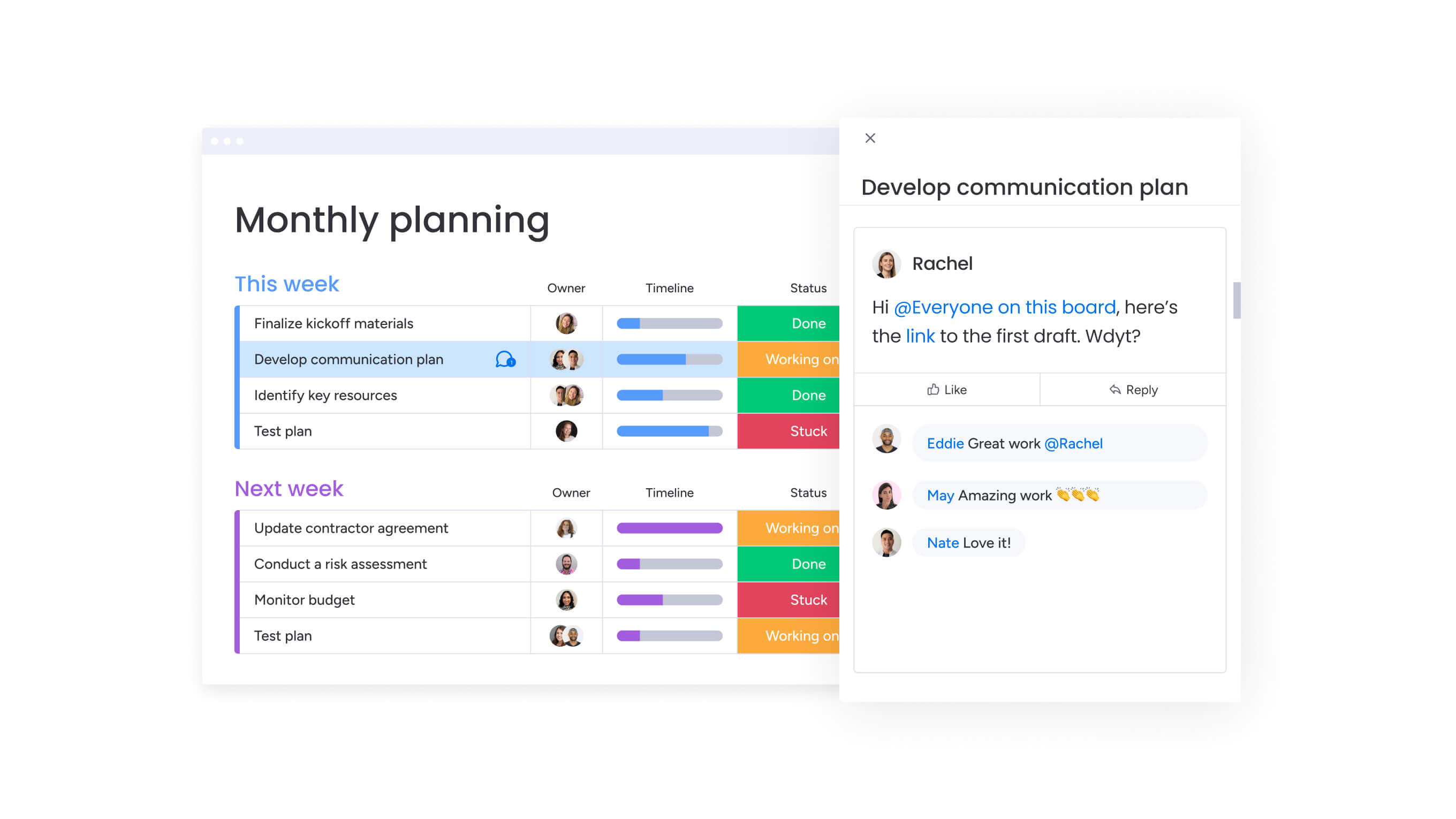
FARFETCH, the leading global retail platform for the luxury fashion industry, demonstrates how monday work management can transform complex marketing operations at scale. Their journey from scattered processes to unified execution provides a blueprint for retail marketing leaders facing similar challenges.
The challenge
FARFETCH faced severe challenges managing extensive global marketing campaigns involving 400 people from 40 different teams. Their Marketing Planning team needed to coordinate brand partnerships, customer experiences, and trade and promotional activities across departments.
The team housed everything in countless Google Docs and Google Sheets in numerous folders, spending hours chasing updates and last-minute changes. With their department size and growing number of initiatives, their existing toolset created tracking, communication, and reporting difficulties that prevented effective campaign execution.
The solution
FARFETCH implemented monday work management as their centralized platform for marketing operations. They started with their master content calendar to house all key dates and milestones, then expanded to content production processes, CRM management, and cross-team workflows.
The Marketing Planning team created a structured rollout plan, building a base structure so teams could see their work on the platform. They leveraged internal and external resources throughout the year, working with the monday.com customer success team to optimize dependencies, automations, and integrations.
The results
FARFETCH achieved remarkable improvements in their marketing operations that demonstrate the transformative impact of unified work management:
- 6x ROI through improved efficiency and reduced manual work.
- $118K saved per month from streamlined processes.
- 3,500 hours saved per month on manual coordination and status updates.
Transform your retail marketing operations with unified work management
Retail marketing leaders who implement monday work management experience measurable improvements in team efficiency, campaign quality, and strategic alignment. The platform’s comprehensive feature set addresses the unique challenges of managing large teams across multiple channels while providing the visibility and control necessary to drive growth.
This isn’t just about running smoother campaigns, but about freeing your team to focus on what actually drives growth. Teams gain the capacity to focus on high-value activities rather than administrative overhead. Leaders receive the real-time insights needed to make data-driven decisions and demonstrate marketing impact to executive leadership. In fact, retailers investing in AI-driven personalization see a 5–8% increase in revenue while reducing operational costs significantly.
Ready to transform your retail marketing operations?
Join marketing professionals who trust monday work management to centralize campaigns, optimize team capacity, and deliver measurable results. Experience Gantt charts, resource management, and real-time dashboards that transform scattered work into streamlined execution.
The content in this article is provided for informational purposes only and, to the best of monday.com‘s knowledge, the information provided in this article is accurate and up-to-date at the time of publication. That said, monday.com encourages readers to verify all information directly.
Frequently asked questions
How does monday work management handle seasonal retail campaigns?
The Gantt chart and calendar views in monday work management are specifically designed to visualize seasonal marketing cycles. You can create recurring campaign templates for seasonal promotions, set up dependencies between in-store and digital activations, and use the timeline view to see how multiple seasonal campaigns overlap throughout the year. The platform's baseline feature allows you to compare planned versus actual timelines for seasonal campaigns, helping you improve forecasting for future seasons.
Can monday work management track marketing ROI across channels?
Yes, comprehensive ROI tracking is provided through customizable dashboards and reporting features in monday work management. You can create custom fields to track campaign budgets, actual spend, and revenue generated across different channels. The dashboard widgets allow you to visualize ROI metrics, compare performance across campaigns, and generate automated reports for executive leadership showing campaign ROI, CAC, and MQL-to-customer rates.
What is the typical learning curve for marketing teams?
With an intuitive interface that teams love from the first click, monday work management is designed for high adoption. Organizations achieve value in less than four months according to a Forrester study, with many teams becoming comfortable within two weeks to one month. The platform's drag-and-drop interface, visual design, and extensive template library mean marketing teams don't need technical skills to build workflows or project plans.
How does monday work management handle multi-location retail campaigns?
Through its hierarchical project structure and filtering capabilities, monday work management excels at managing multi-location campaigns. You can create a master campaign board with sub-items for each store location, use custom fields to tag specific regions or store types, and apply filters to view campaign status by location. The platform's automation features can trigger location-specific tasks based on campaign milestones, while the Gantt view shows how rollout timelines differ across locations.
Which integrations are essential for retail marketing teams?
Essential integrations for retail marketing teams include CRM systems like Salesforce and HubSpot, creative tools like Adobe Creative Cloud and Canva, analytics platforms like Google Analytics, communication tools like Slack and Microsoft Teams, and email marketing platforms like Mailchimp and Marketo. With 200+ native integrations and an open API for custom connections, monday work management offers integration with retail-specific tools and POS systems through Zapier or custom API integrations.
How does monday work management manage agency and vendor timelines?
You can invite external collaborators as guests to specific boards in monday work management, giving agencies and vendors visibility into relevant timelines without access to your entire workspace. You can create dedicated boards for agency work with clear deliverable dates, use the Gantt view to show how agency timelines align with internal tasks, and set up automated notifications when dependencies affect vendor deliverables.

 Get started