

A brand strategy often appears well-defined on paper, with clear positioning, refined visuals, and messaging that aligns in strategic discussions. However, between planning and execution, implementation frequently breaks down. Sales materials diverge from brand standards, customer interactions lack consistency, and product launches drift from their strategic intent.
This gap typically emerges not from weak strategy, but from insufficient integration into operational workflows. The consequences are significant: misalignment delays decision-making, creates organizational confusion, and erodes growth potential.
This article examines how to bridge this gap through practical frameworks, identifying what enables brand strategy to translate into consistent execution and how teams can implement it effectively across all functions.
Key takeaways
- Brand strategy only works when embedded into daily operations: A strong strategy must move beyond static documents into workflows, templates, and decision-making processes that teams use every day.
- Clear distinctions between strategy, marketing, and identity prevent misalignment: Defining roles and boundaries ensures teams stay aligned, reduce friction, and execute with consistency across functions.
- Execution-ready components drive consistency at scale: Purpose, audience insights, positioning, messaging systems, and identity frameworks must work together as a practical operating system for teams.
- Cross-functional alignment is the foundation of brand consistency: Shared playbooks, brand champions, and collaborative workflows help eliminate silos and ensure every department delivers a unified brand experience.
- Operational platforms enable scalable execution: Centralized workflows, automated approvals, and real-time dashboards, provided by modern solutions like monday work management, help translate brand strategy into consistent, trackable execution across teams.
What is brand strategy?

Brand strategy connects your company’s vision to the work your teams handle every day. It aligns the purpose behind your business with how things actually get done across departments. As a result, customer interactions in one region reflect the same values as product decisions made elsewhere.
At its core, a strong brand strategy creates a shared direction. It shapes hiring, product development, culture, and customer communication without controlling every detail. So, whether someone discovers your brand through an ad or a support interaction, the experience feels consistent and intentional.
Moving beyond theory to practical frameworks
Many brand strategies fail because they sit in documents that teams rarely use. While the ideas may be strong, they often don’t connect to real workflows. That gap makes execution inconsistent and slows teams down.
Instead, an actionable approach focuses on embedding strategy into daily work. This means defining ownership, building clear processes, and integrating guidelines into workflows. As a result, teams can move faster without constantly seeking approvals.
This shift also changes how organizations operate. Rather than relying on strict approvals, teams are guided by frameworks that help them make decisions independently.
How does brand strategy support team execution?
Brand strategy helps turn abstract ideas into clear actions. Concepts like “customer-first” or “innovative design” become specific criteria that teams can actually use in their work. Because of this, decisions feel less subjective and more aligned.
For example, product teams can prioritize features based on the brand promise. Meanwhile, operations teams can choose partners that reflect the same standards. When expectations are clearly defined, teams spend less time guessing and more time executing with confidence.
At its core, a strong brand strategy creates a shared direction. It shapes hiring, product development, culture, and customer communication without controlling every detail. So, whether someone discovers your brand through an ad or a support interaction, the experience feels consistent and intentional.
Brand strategy vs marketing strategy and brand identity
To stay aligned, it’s important to understand how these three elements differ. While they are closely connected, each plays a distinct role in how your business operates and grows.
The table below outlines how they compare across focus, ownership, and outcomes:
| Component | Primary focus | Time horizon | Ownership | Key deliverable |
|---|---|---|---|---|
| Brand strategy | Business purpose and positioning | 5–10 years | C-suite/brand VP | Brand platform and compass |
| Marketing strategy | Reach, conversion, and revenue | 1–4 quarters | CMO/marketing leads | Campaign plan and media mix |
| Brand identity | Visual and verbal expression | 3–7 years | Creative director | Design system and voice guidelines |
Brand strategy vs brand identity
Brand identity represents what people see and hear. It includes visual elements like logos and colors, along with tone and messaging style. However, these elements are shaped by the deeper strategy behind them.
In contrast, brand strategy defines your values, personality, and promise. It provides the foundation, while identity brings it to life. This means one strategy can support multiple identities across different markets, as long as the core direction stays consistent.
Distinguishing brand strategy from marketing strategy
Brand strategy defines who you are and why you exist. On the other hand, marketing strategy focuses on how you reach customers and drive growth. While marketing tactics may change frequently, brand strategy remains steady.
For instance, a campaign might use discounts to boost short-term sales. However, brand strategy determines whether those discounts align with your positioning. When both are aligned, marketing efforts strengthen the brand instead of weakening it.
Why definitions enable cross-team alignment
When teams confuse these concepts, misalignment quickly follows. Product teams may overlook brand guidelines, while marketing teams may overstep into strategic decisions. This creates friction and slows progress.
Clear definitions solve this by setting boundaries. Teams understand their roles and how they contribute to the bigger picture. As a result, collaboration improves, and decision-making becomes faster and more consistent.
Why brand strategy drives measurable growth?
Brand strategy is not just about perception; it directly impacts business performance. When done well, it reduces confusion, improves efficiency, and strengthens customer relationships.
Building trust across digital and physical touchpoints
Customers expect consistency across all touchpoints. Whether they interact through ads, sales calls, or support channels, the experience should feel aligned. When it doesn’t, trust starts to break.
A clear brand strategy ensures consistency in tone, quality, and responsiveness. Because of this, customers feel more confident, which shortens decision cycles and improves conversion rates.
Creating sustainable competitive advantages
Products and features can be copied quickly. However, a brand built into your operations is much harder to replicate. That’s where strategy becomes a real advantage.
When your internal processes support your brand promise, competitors cannot easily match it. They would need to replicate how your organization operates, which takes time and effort. This makes your position more sustainable in the long run.
The ROI of strategic brand investment
The impact of brand strategy shows up in both revenue and efficiency. Strong brands can charge premium prices and expand into new markets more easily. At the same time, they reduce wasted spend by targeting the right audience.
Additionally, clear guidelines improve internal productivity. Teams spend less time debating decisions and more time executing. In the end, this leads to better output with fewer delays.
A clear brand strategy ensures consistency in tone, quality, and responsiveness. Because of this, customers feel more confident, which shortens decision cycles and improves conversion rates.
5 core components of an actionable brand strategy
A strong brand strategy works like an operating system for your organization. Each part connects to the others, providing clarity for marketing, product, HR, and sales teams alike. When designed this way, every decision, from hiring to product development, aligns with the brand’s core promise.
1. Purpose-driven mission statements
A mission statement should do more than inspire; it should guide real decisions. It defines what the company stands for and sets clear boundaries on what it won’t do.
- For HR, it highlights the traits and values to prioritize in new hires.
- For product teams, it determines the scope of features and projects.
- For leadership, it guides critical decisions like partnerships and acquisitions.
2. Data-informed audience mapping
Knowing your audience requires more than demographics. Behavioral insights and psychographic profiles show why customers make decisions, where they engage, and what challenges they face.
- Sales teams can tailor pitches to match documented realities.
- Support teams can create scripts that address real pain points.
- Product teams can design features that align with actual user behavior.
3. Differentiated brand positioning
Positioning defines your space in the market and highlights what makes your brand unique. It ensures your resources focus on what truly sets you apart.
- Guides investment decisions and resource allocation.
- Prevents over-investing in features that don’t strengthen the brand.
- Avoids trying to appeal to everyone, keeping the strategy focused and effective.
4. Scalable messaging systems
Messaging frameworks maintain consistency while allowing flexibility across channels. They provide core value pillars, proof points, and tone guidance that every team can use.
- Empowers departments to create content without constant approval.
- Keeps communication aligned with brand principles.
- Reduces delays by giving teams a clear starting point for all messaging.
5. Flexible visual identity frameworks
Visual identity translates strategy into design elements that work across digital, physical, and print platforms. A flexible system defines core assets while guiding adaptation to different media.
- Ensures visual and verbal consistency.
- Makes brand application straightforward for non-designers.
- Supports growth without compromising core design standards.
7 steps to create a brand strategy ready for execution

Developing a brand strategy requires moving from insight to action. The process combines discovery, definition, and operational deployment to ensure the strategy is practical and executable from day one.
Step 1: analyze your current brand performance
The process begins with a rigorous assessment of your current state. This involves gathering quantitative data on market perception alongside qualitative feedback from internal stakeholders.
Key activities include:
- Conducting surveys and customer interviews.
- Performing competitive analysis.
- Identifying gaps between internal perception and market reality.
- Assessing operational consistency across touchpoints.
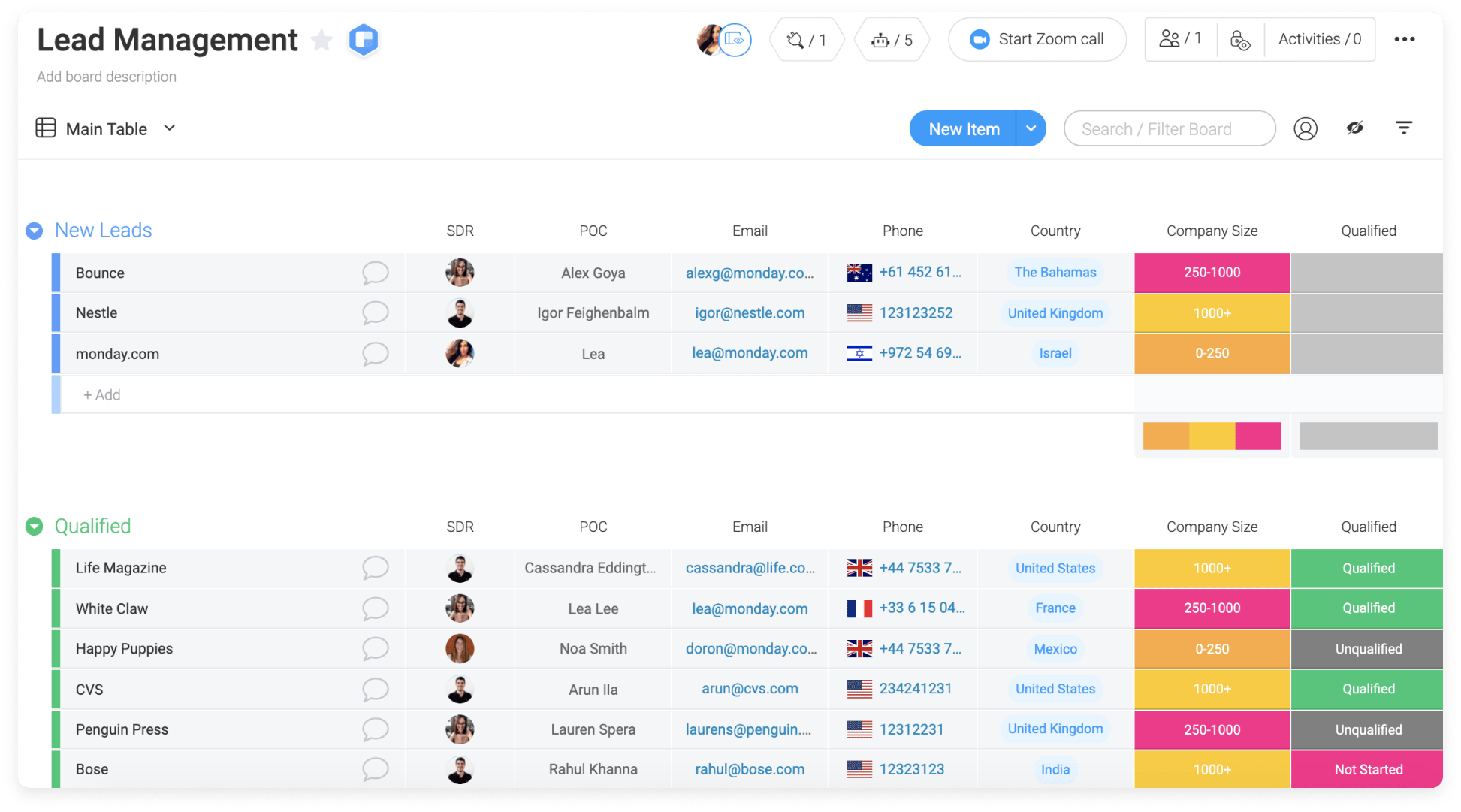
Using a centralized work platform, teams can pull data from all projects across different programs into one high-level view, making it easier to spot where brand execution breaks down.
Step 2: establish brand purpose and values
With data in hand, the leadership team defines the core purpose and values. This step moves beyond selecting generic words like “integrity” to define specific behavioral standards. Workshops with cross-functional representatives help ensure these values are actionable.
The output is a set of guiding principles that:
- Connect directly to business objectives.
- Serve as a rubric for evaluating future initiatives.
- Answer the question: what will we always do, and what will we never do?
Step 3: map target audiences with behavioral data
Teams synthesize market research and customer data to build detailed audience profiles. These profiles focus on the “jobs to be done,” the specific problems customers hire the company to solve. This step involves analyzing behavioral patterns across the customer lifecycle to understand decision triggers.
The resulting documentation serves as a shared source of truth for:
- Product development priorities.
- Marketing targeting strategies.
- Sales enablement materials.
When every team works from the same audience understanding, the customer experience becomes consistent across touchpoints.
Step 4: craft your unique brand position
The organization identifies the intersection between what its audience needs, what the company does best, and what competitors are ignoring. This “white space” becomes the brand position. This step involves testing positioning concepts against reality to ensure they are credible and achievable.
The final positioning statement:
- Directs operational priorities.
- Signals where the company must invest to defend its market territory.
- Provides specific guidance while maintaining flexibility for growth.
Step 5: build a consistent messaging architecture
The core positioning expands into a comprehensive messaging matrix. This architecture defines the primary brand narrative and breaks it down into specific messages for different audience segments and product lines.
Essential messaging components include:
- “Boilerplate” language for company descriptions.
- Elevator pitch frameworks for sales teams.
- Value proposition statements for websites.
- Segment-specific messaging variations.
Teams can embed these messaging guidelines directly into project templates, ensuring every campaign and communication starts from the same foundation.
Step 6: design adaptive brand identity systems
Next, translate strategy into visual and verbal elements. This includes logos, typography, color palettes, imagery style, voice, and sonic branding.
- Ensure identity works across mobile, web, and physical spaces.
- Make it simple for non-designers to apply correctly.
- Keep compliance effortless, not burdensome.
Step 7: plan your implementation roadmap
The final step is planning the rollout. This roadmap details how the new strategy will be introduced to the organization and the market.
Implementation planning includes:
- Timelines for updating assets.
- Training schedules for employees.
- Specific milestones for measuring adoption.
- Ownership assignments for each phase.
Using Gantt charts and timeline views, teams can track dependencies and ensure the strategy doesn’t stall after the initial launch.
6 strategic branding approaches for different goals
Brands take different approaches depending on their objectives and market position. While most organizations adopt a primary approach, they often blend elements from other strategies to meet specific goals. Choosing the right focus ensures that resources, messaging, and operations align with both business outcomes and customer expectations.
| Approach | Strategic focus | Primary objective | Key resource |
|---|---|---|---|
| Corporate | Reputation and values | Stakeholder trust | Executive leadership |
| Product | Features and benefits | Market share | Product management |
| Service | Experience and interaction | Customer loyalty | Customer success |
| Personal | Individual expertise | Industry influence | Subject matter experts |
| Employer | Culture and opportunity | Talent acquisition | HR/people ops |
| Digital-native | Online engagement | Community growth | Content and social teams |
Corporate branding for enterprise growth
Corporate branding emphasizes the reputation and values of the parent organization rather than individual products. It works best for B2B enterprises, where long-term partnerships and stability drive buying decisions.
Key areas of focus include:
- Thought leadership initiatives that establish credibility.
- Corporate social responsibility programs that reinforce values.
- Investor relations to build confidence and trust.
- Creating a “trust halo” that strengthens new product launches.
Product branding for market differentiation
Product branding highlights a specific offering to reach a distinct audience without being constrained by the broader corporate image. This strategy is common in SaaS and CPG portfolios with diverse product lines.
The approach emphasizes:
- Showcasing specific features and user benefits.
- Careful management of product portfolios.
- Avoiding brand cannibalization between offerings.
Service branding for customer experience
Service branding focuses on the human experience as the primary value. Consistency is key, so every interaction reflects the brand’s promise.
Core strategies include:
- Employee training to ensure high-quality interactions.
- Operational protocols that standardize service delivery.
- Initiatives that foster a culture of brand advocacy among staff.
Personal branding for thought leadership
Personal branding leverages the reputation of executives or experts to strengthen the company’s credibility. By positioning individuals as industry authorities, the organization gains access to networks that a faceless corporate entity might struggle to reach.
This strategy balances:
- Individual content creation and public speaking opportunities.
- Aligning personal efforts with corporate goals.
- Ensuring the personal voice reinforces, rather than conflicts with, company messaging.
Employer branding for talent attraction
Employer branding treats employees as the primary audience. It communicates the organization’s culture and opportunities to attract top talent while reducing turnover.
Key components include:
- Building and showcasing a strong corporate culture.
- Aligning internal communications with brand messaging.
- Ensuring external promises match the employee experience.
Digital-native branding for online growth
Digital-native branding prioritizes speed, community engagement, and content-driven interactions. It thrives on social channels, user-generated content, and direct-to-consumer engagement.
This approach relies on:
- Producing high-volume, relevant content consistently.
- Rapidly responding to trends and community feedback.
- Merging marketing, support, and engagement efforts for real-time connection.
Tracking brand strategy performance with live analytics
Measuring brand impact requires more than vanity metrics. The key is combining leading and lagging indicators that show how brand efforts drive real business results.
Essential brand health metrics
Tracking brand performance means looking beyond surface-level numbers. The metrics that matter fall into three categories — each revealing a different dimension of how your brand connects with customers and drives business outcomes.
Perception metrics:
These measure how people think and feel about your brand in the market:
- Brand awareness (aided and unaided).
- Net Promoter Score.
- Brand sentiment analysis.
- Share of voice measurements.
Behavioral metrics:
These track what customers actually do when they interact with your brand:
- Website engagement rates.
- Customer retention rates.
- Social media engagement.
- Content consumption patterns.
Financial metrics:
These connect brand efforts directly to revenue and growth:
- Pricing power correlation.
- Customer lifetime value.
- Revenue attribution to brand activities.
- Cost per acquisition improvements.
Employee engagement scores also serve as a vital internal metric, indicating how well the brand strategy is understood and lived by the team. When employees believe in the brand, they deliver on its promise more consistently.
Building real-time brand dashboards
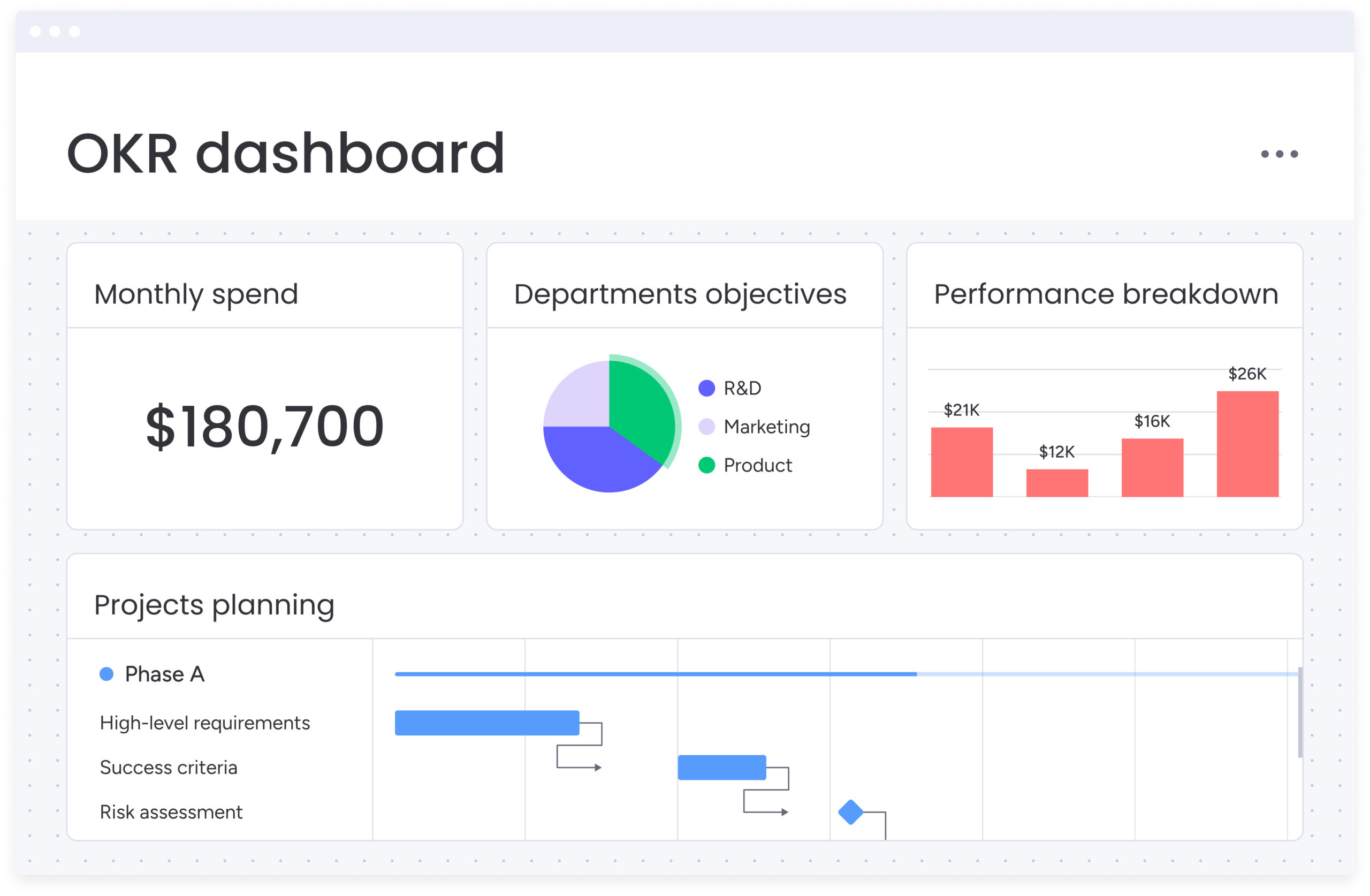
Static reports aren’t enough for modern brand management. Live dashboards consolidate data from CRM, web analytics, social listening, and employee feedback into a single view. This allows stakeholders to spot trends as they happen, like sudden dips in sentiment or spikes in search interest.
Custom dashboards with drag-and-drop widgets give executives visibility into budgets, timelines, and resource allocation. This enables faster, sharper decisions while keeping the brand strategy on track.
Monitoring multi-channel brand consistency
Consistency across channels is critical for trust. Brand audits ensure visual, tonal, and messaging alignment across sales decks, support tickets, and local marketing campaigns.
Key monitoring actions include:
- Visual compliance checks.
- Tone of voice reviews.
- Messaging alignment audits.
- Automated deviation alerts and spot checks.
The focus is on spotting systemic gaps rather than policing individual mistakes. Addressing patterns ensures long-term brand consistency.
Tracking brand performance means looking beyond surface-level numbers. The metrics that matter fall into three categories — each revealing a different dimension of how your brand connects with customers and drives business outcomes.
Aligning cross-functional teams for brand success
Fragmented teams can fracture the brand experience. Alignment requires workflows and structures that foster collaboration and shared responsibility.
Strategies include:
- Cross-departmental sprints to drive collective goals.
- Shared digital workspaces for transparency.
- Unified strategic playbooks everyone can reference.
- Real-time visibility of progress and dependencies.
With this setup, delays in one team automatically update other teams, keeping brand execution coordinated and efficient.
Developing a network of brand champions
A network of brand champions embeds strategy into every corner of the organization. These are selected individuals within each department who receive advanced training on the brand strategy.
Brand champions serve multiple functions:
- First line of defense for questions.
- Feedback providers to the central brand team.
- “On-brand” behavior models for peers.
- Strategy evangelists within their departments.
Implementing automated brand workflows
Automation ensures brand consistency while reducing bottlenecks. Workflows can route approvals, update templates, and notify teams of milestones automatically.
Benefits include:
- Rules baked directly into processes.
- Compliance becomes effortless.
- Manual oversight is minimized.
- Project initiation speeds up.
Automated workflows save time and let teams focus on execution rather than administrative tasks.
Leveraging AI to scale your branding strategy
AI enhances strategy execution by analyzing data, automating repetitive tasks, and uncovering actionable insights. It doesn’t replace humans but empowers teams to make smarter, faster decisions.
AI-driven brand intelligence
AI analyzes market data, competitor activities, and customer sentiment with a speed and depth impossible for human teams. These systems identify emerging trends, spot shifts in brand perception, and highlight gaps in the market.
Key AI intelligence capabilities include:
- Sentiment analysis across thousands of customer reviews.
- Emotional driver identification behind purchasing decisions.
- Trend emergence detection.
- Market gap highlighting.
- Competitive activity monitoring.
This analysis provides the raw material for refining positioning and messaging strategies based on real market signals.
Automated governance systems
AI-powered governance monitors content across all channels to ensure brand compliance. These systems can instantly scan images for correct logo usage, check copy for tone of voice alignment, and flag outdated assets.
Governance automation features include:
- Image scanning for logo compliance.
- Copy analysis for tone alignment.
- Outdated asset identification.
- “Governance by exception” workflows.
- Accelerated approval processes.
This allows for “governance by exception,” where human managers only need to review items flagged by the AI, significantly speeding up approval workflows.
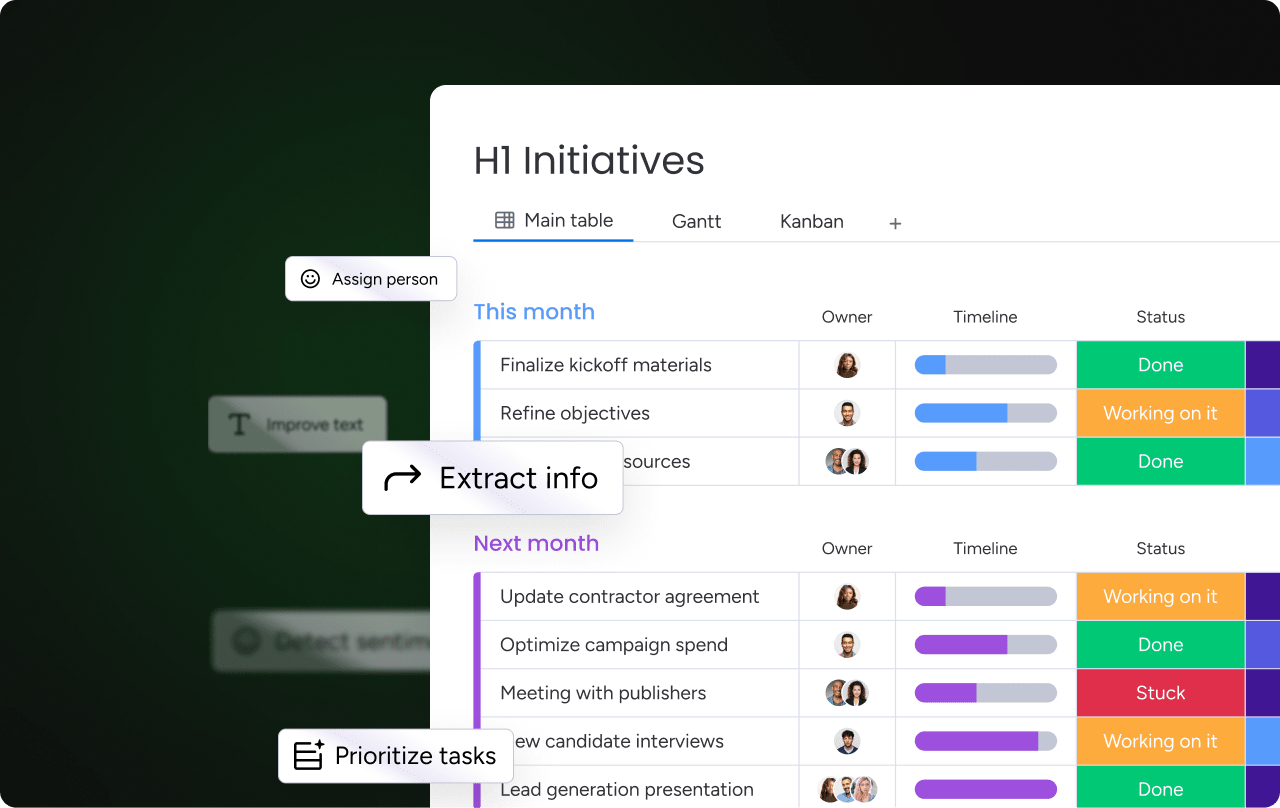
For example, AI capabilities can let teams categorize data at scale, summarize meeting notes instantly, and extract actionable insights from any document. These capabilities reduce manual work while maintaining brand consistency across high volumes of content.
Mass personalization strategies
AI enables the delivery of personalized brand experiences to millions of individuals simultaneously. By analyzing user behavior, AI can dynamically adapt messaging and imagery to match individual preferences while staying within the boundaries of the brand identity.
Personalization capabilities include:
- Dynamic messaging adaptation.
- Individual preference matching.
- Brand identity boundary maintenance.
- Relevant, personal customer experiences.
- Core brand strategy preservation.
This allows the brand to feel relevant and personal to every customer without fragmenting the core brand strategy.

“monday.com has been a life-changer. It gives us transparency, accountability, and a centralized place to manage projects across the globe".
Kendra Seier | Project Manager
“monday.com is the link that holds our business together — connecting our support office and stores with the visibility to move fast, stay consistent, and understand the impact on revenue.”
Duncan McHugh | Chief Operations OfficerExecute your brand strategy with monday work management
Turning a brand strategy into something teams actually follow every day is where most organizations struggle. The challenge isn’t clarity at the top; it’s consistency in execution across departments, deadlines, and decisions. Without the right structure, even the strongest strategy slowly fades into disconnected work.
monday work management helps close that gap by embedding brand strategy directly into how teams plan, collaborate, and deliver work. It connects high-level direction with daily execution, so alignment happens naturally instead of being enforced.
- Disconnected teams and siloed execution: Shared workspaces bring marketing, product, and operations into one view, improving visibility and coordination.
- Inconsistent brand application across assets: Built-in workflows and templates ensure every project starts with the right messaging and guidelines.
- Slow approvals and manual processes: Automated approvals and notifications reduce delays while keeping brand standards intact.
- Lack of visibility into brand performance: Real-time dashboards connect project progress with KPIs, making it easier to track impact.
- Difficulty scaling brand governance: Structured workflows and clear ownership help maintain consistency as teams and output grow.
In conclusion, the real advantage comes from making strategy part of the work itself. Teams move faster, decisions become clearer, and brand consistency stops being a challenge and starts becoming a natural outcome of how work gets done.
Frequently asked questions
What is the difference between brand strategy and brand guidelines?
The difference between brand strategy and brand guidelines is that brand strategy is the foundational framework defining business direction and positioning, whereas brand guidelines are the tactical rulebooks for applying visual and verbal elements consistently.
How quickly can you see results from a new brand strategy?
Operational improvements like faster decision-making appear immediately, while market-facing results like improved brand perception and market share typically materialize over 6–12 months.
Can one company have multiple brand strategies?
Large organizations often maintain distinct strategies for different business units or product lines, provided they all align with the overarching corporate mission to prevent market confusion.
How often should you update your brand strategy?
Core brand strategy should remain stable for 3–5 years, but tactical elements should be reviewed annually to ensure they remain relevant to shifting market conditions.
What role does employee advocacy play in brand strategy execution?
Employees are the primary channel for brand delivery; their commitment to the strategy directly determine the consistency and authenticity of the customer experience.
How do you measure brand strategy effectiveness?
Effectiveness is measured through a combination of perception metrics (NPS, awareness), behavioral data (retention, engagement), and financial outcomes (pricing power, customer lifetime value).

 Get started