


Most marketing teams don’t have a data problem. They have a timing problem. By the time a weekly report surfaces a drop in conversion rates or a spike in cost-per-acquisition, the budget has already taken the hit. A marketing campaign audit AI agent changes that equation by watching what’s happening right now across every channel, audience segment, and creative variant. It flags issues before they compound, investigates the numbers, identifies the cause, and recommends a specific fix.
Here’s what a marketing campaign audit AI agent actually is, how it’s different from the automation you’re already using, and what it can realistically do for your campaigns. We’ll break down the core capabilities, the business benefits that matter to revenue leaders, and how platforms like monday campaigns can help you get started.
Key takeaways
- AI audit agents do more than flag problems: They investigate why performance dropped, identify the root cause, and recommend a specific fix, all without waiting for your next weekly review.
- Continuous auditing beats periodic reporting every time: If you only audit monthly, you could burn 75% of your budget before catching an issue. Real-time monitoring stops waste before it compounds.
- The real value is connecting campaigns to revenue: AI agents track the full customer journey, from first click to closed deal, so you can prove what’s actually driving pipeline, not just opens and clicks.
- A connected data foundation gives audit agents the full picture: With native connections between campaign, CRM, and work management data, your agent moves beyond surface-level alerts to genuine revenue intelligence across the entire funnel.
- Your agent gets sharper the more data it has: The more sources it can access (ad platforms, CRM, engagement history), the more accurate and actionable its recommendations become over time.
What is a marketing campaign audit AI agent?

A marketing campaign audit AI agent monitors, analyzes, and evaluates campaign performance across channels, continuously and autonomously. It spots issues, anomalies, and optimization opportunities with no human babysitting required for routine analysis.
Unlike a dashboard that displays data or an alert system that flags thresholds, an audit agent actively investigates problems, determines their causes, and recommends specific solutions.
Audit agents vs. other marketing systems
The distinction between an audit agent and other systems isn’t just semantic. It changes what your team can act on and how quickly. Each type of system operates with a different level of intelligence, and understanding those layers matters when you’re deciding where to invest. Here’s how they compare:
- AI-assisted analytics helps humans analyze data faster.
- Audit agents operate with genuine autonomy. They perceive their environment, reason about what they observe, make decisions, take actions, and learn from outcomes.
The 4 components that power audit agents
Four components make these agents work, and each plays a distinct role in turning raw campaign data into actionable decisions. Understanding how they interact helps revenue leaders evaluate what genuine agentic capability looks like versus surface-level automation. Here’s what each component does:
- Perception layer: The agent connects to ad platforms, analytics systems, CRM platforms, and email platforms via APIs, ingesting data continuously to create a unified view of campaign performance.
- Reasoning engine: The agent turns raw data into insight by spotting patterns, running statistical models, and detecting anomalies against baseline performance.
- Action capability: Insights without action are worthless. Audit agents generate specific recommendations or queue changes for human approval.
- Learning loop: Every recommendation is a chance to learn. The agent tracks what you implement and uses the results to sharpen future suggestions.
What does this look like in practice? Your campaign’s cost-per-acquisition suddenly spikes 40% on Tuesday afternoon. Here’s how each system responds:
- A traditional analytics platform shows you the number.
- An alert system sends you a notification.
- An audit agent investigates by checking whether the spike is isolated to specific audiences, devices, or placements, examining whether creative performance changed, and looking for competitive bidding shifts. Within hours, you get a diagnosis and a specific fix.
How AI audit agents differ from traditional marketing automation
Many marketers hear “AI agent” and assume it’s a fancier version of existing automation. That confusion sets the wrong expectations. Understanding the real difference between rule-based systems and reasoning agents helps you figure out if this approach fits your team.
The hidden cost of manual audits
Manual audits follow the same slow, predictable cycle:
- A marketing analyst logs into multiple platforms.
- Data gets exported into spreadsheets.
- Hours are spent reconciling discrepancies.
- Pivot tables are built, trends identified, and reports created.
- Recommendations are presented — often days after the data was collected.
Weekly if you’re lucky. Monthly if you’re not. AI-powered audits work completely differently. Data flows in continuously from every source. Analysis happens automatically. The agent monitors performance 24/7.
| Dimension | Manual audits | AI-powered audits |
|---|---|---|
| Frequency | Weekly or monthly reviews | Continuous real-time monitoring |
| Scope | Typically single-channel focus | Cross-channel holistic view |
| Speed to insight | Days to weeks | Minutes to hours |
| Pattern detection | Limited to obvious trends | Complex multi-variable patterns |
| Scalability | Constrained by analyst capacity | Unlimited campaign coverage |
A manual audit tells you your Facebook campaign underperformed last month. An AI agent catches the real story: your ads perform 23% worse on Thursdays when a competitor bumps their bid. Your creative’s been shown to the same user seven times. And your landing page takes over three seconds to load on mobile.
Rule-based automation vs. reasoning agents
So how is this different from the marketing automation you already use? The real difference is how decisions get made.
- Automation executes predefined rules — if X happens, do Y. The logic is fixed, deterministic, and requires human intervention to change.
- Agentic AI reasons and adapts. Given the current situation, what’s the best course of action? The agent evaluates context, weighs multiple factors, and makes judgment calls that improve over time based on outcomes.
Consider the difference in practice:
- Automation example: “If email open rate drops below 15%, send alert to marketing manager.”
- Agent example: “Monitor email performance across all segments. Identify that open rates are declining specifically for enterprise prospects who received more than three emails in the past 14 days. Determine this indicates frequency fatigue rather than content issues. Recommend reducing email cadence for high-frequency recipients by 30%.”
Why marketing campaigns are moving to AI-powered audits
The shift toward AI-powered audits isn’t about technology enthusiasm. It’s about business pressure. Three forces are making these systems necessary — and each one hits revenue, efficiency, and accountability directly.
The shift from periodic reporting to continuous auditing
Here’s the math: if you audit monthly and catch a problem in week three, you’ve already burned 75% of that month’s budget before you can fix it.
Campaign velocity has accelerated dramatically. Consider what marketing teams are managing simultaneously:
- Dozens of campaigns across ten or more channels.
- Creative refreshes every few days to combat ad fatigue.
- Real-time audience targeting adjustments based on performance signals.
The idea that a weekly or monthly snapshot captures what’s happening? That’s outdated. Here’s what a real-world continuous auditing sequence looks like:
- Monday morning: An agent detects that a campaign’s conversion rate dropped 25% over the weekend.
- Monday afternoon: It identifies the cause: a site update increased landing page load time.
- Same day: It recommends reverting to the previous page version and, with approval, implements the fix.
- Tuesday: Conversion rates are back to normal.
Pressure to prove marketing ROI
CFOs and CEOs want attribution and ROI proof from marketing. Budgets are under scrutiny, and every dollar must be justified, a pressure compounded by the fact that, according to Gartner, marketing budgets plateaued at 7.8% of company revenue in 2026 even as AI investment within those budgets climbs. “Trust us, marketing is working” no longer satisfies finance teams that want to see the numbers.
Manual audits show channel-level performance: this campaign generated this many leads at this cost. But they can’t connect the dots across the full customer journey or prove incremental impact. Did that paid search campaign actually drive new conversions, or did it just capture demand that would have converted anyway through organic search?
AI audit agents address this directly by connecting marketing activity to revenue outcomes across the full customer journey. This gives finance and revenue leaders the traceability they need — and marketing leaders the evidence to defend their budgets. Here’s how audit agents close the attribution gap:
- Tracking customer journeys across touchpoints.
- Attributing revenue to specific campaigns and tactics.
- Identifying which combinations of activities drive conversions.
- Quantifying the incremental impact of marketing investments.
The rise of agentic AI in enterprise marketing
Marketing isn’t adopting AI agents in isolation. This is part of a bigger shift across business functions. In the US, 50% of marketing agencies now use agentic AI for marketing execution, according to Forrester’s 2026 State of AI Inside US Marketing Agencies report. Why is marketing particularly well-suited for agentic AI?
- Rich data availability: Marketing generates enormous amounts of performance data across channels, providing the fuel agents need to learn and improve.
- Defined performance metrics: Unlike some business functions where success is ambiguous, marketing has well-defined KPIs that agents can optimize against.
- Rapid feedback loops: Campaign performance data arrives quickly, enabling agents to learn from outcomes in days or weeks rather than months.
- High-volume repetitive analysis: The work of monitoring campaigns, detecting anomalies, and generating reports is exactly the kind of work AI handles well.
8 core capabilities of a marketing campaign audit AI agent
So what can these agents actually do? 8 capabilities make up a full marketing campaign audit AI agent. Each one matters on its own. But the real power? How they work together as one system.
1. Automated data ingestion and normalization
Marketing data lives in silos. Google Ads uses one set of metrics and naming conventions. Facebook uses another. Before you can analyze anything meaningful, you need to unify this data.
Agents handle this by:
- Connecting to all relevant data sources via APIs.
- Extracting campaign performance data continuously.
- Transforming everything into a consistent format for analysis.
Platforms like monday campaigns streamline this process by natively connecting campaign data with CRM and work management systems, giving audit agents the unified data foundation they need to deliver accurate insights across your entire funnel.
2. Real-time performance and pacing monitoring
Continuous monitoring is the heartbeat of an audit agent. The system watches campaign performance against goals, budgets, and pacing targets, alerting marketers to deviations before they become costly problems.
The alerting intelligence matters as much as the monitoring itself. Agents distinguish between normal variance and real problems, so your team doesn’t drown in alerts.
3. Anomaly detection and root cause analysis
Catching problems matters. Understanding why they’re happening lets you fix them effectively. When an anomaly is detected, the agent investigates potential causes by examining:
- Temporal patterns: Did this start at a specific time or day?
- Segment analysis: Is the issue isolated to a particular audience or channel?
- Cross-channel correlation: Are other campaigns showing similar signals?
- External factors: Did a competitor change their bidding strategy?
- Creative performance: Has ad fatigue set in?
This transforms “something is wrong” into “here’s exactly what’s wrong and how to fix it.”
4. Brand and compliance checks across creatives
Marketing teams produce hundreds of creative assets across channels. At scale, keeping everything consistent manually is a significant challenge, one that automation is well-suited to solve. AI audit agents automatically review creative assets to:
- Verify they meet brand guidelines before going live.
- Confirm compliance with relevant regulations.
- Continue monitoring for issues after launch.
5. Audience and segmentation validation
Marketers define target audiences based on assumptions about who’ll respond. But how do you know if you’re actually reaching the right people?
Audience validation analyzes who’s actually engaging with and converting from campaigns, compares this to intended targets, and identifies segmentation opportunities that could improve performance.
Learn more: AI AB testing
6. Cross-channel attribution and funnel diagnostics
Customer journeys in omnichannel marketing span multiple touchpoints across channels. Understanding which touchpoints drove the conversion (and where prospects drop off) is key to optimizing your marketing spend.
Cross-channel attribution tracks customer journeys and assigns credit to the touchpoints that influenced conversions, giving marketing and sales teams a shared, accurate picture of what’s working. monday campaigns delivers this cross-channel visibility in a single workspace, enabling AI agents to spot patterns and correlations that single-channel tools miss.
Try monday campaigns7. Recommendation and remediation workflows
Spotting problems is only half the job. The other half is solving them. The recommendation engine generates specific, actionable suggestions based on detected issues, historical patterns, and best practices.
Teams can choose how much autonomy to give the agent:
| Mode | Description | Human role |
|---|---|---|
| Alert-only | Agent identifies issue and notifies marketer | Full decision-making and implementation |
| Recommendation | Agent suggests specific actions with rationale | Approve, reject, or modify suggestions |
| Semi-autonomous | Agent implements pre-approved action types automatically | Define guardrails, review outcomes |
| Supervised autonomy | Agent implements actions with human review checkpoints | Spot-check decisions, handle exceptions |
8. Continuous learning from field intelligence
True AI agents learn from outcomes and improve over time. Static automation doesn’t. Continuous learning means agents:
- Track which recommendations were implemented.
- Monitor the results of those actions.
- Use this feedback to refine future suggestions and get sharper with every campaign cycle.
need to know: what’s the actual impact? Each benefit below maps directly to a pressure point that marketing and revenue leaders face today.
1. Faster time to insight and action
In traditional marketing ops, the cycle from data to insight to action takes days or weeks. AI audit agents compress this cycle to hours or even minutes. What used to take a marketing analyst two to three days per campaign now happens continuously and automatically. Your team focuses on strategy, not spreadsheets. This aligns with broader findings from Microsoft’s Work Trend Index, where 66% of AI users report that AI lets them spend more time on high-value work.
2. Reduced wasted spend and higher ROI
Multiple mechanisms contribute to reduced waste, and they compound when audit agents operate continuously across channels. For revenue leaders under pressure to justify every marketing dollar, these mechanisms translate directly into recoverable budget. Here’s where the savings come from:
- Catching underperforming campaigns faster.
- Preventing budget overruns before they happen.
- Identifying and eliminating redundancies across channels.
- Optimizing budget allocation based on real-time performance.
- Reducing fraud and invalid traffic exposure.
3. Stronger marketing and sales alignment
AI audit agents connect marketing and sales by giving both teams shared visibility into what’s actually happening. Both teams work from the same campaign performance and lead quality data:
- Marketing can see which campaigns generate leads that actually close.
- Sales sees which campaigns prospects engaged with before conversations.
This shared intelligence replaces finger-pointing with facts and makes pipeline conversations more productive.
4. Improved brand safety and compliance
Marketing campaigns can create significant brand and legal risk if they violate platform policies, regulatory requirements, or brand guidelines. AI audit agents mitigate these risks through:
- Proactive compliance checking before assets go live.
- Continuous monitoring after launch.
- Regulatory requirement tracking across markets.
- Platform policy adherence at scale.
How monday campaigns supports AI-powered campaign audits
monday campaigns gives marketing teams the connected data foundation that AI audit agents need to deliver accurate, actionable intelligence. When your campaign platform natively integrates with your CRM and work management system, your audit agent can track the complete customer journey from first touch to closed deal, not just surface-level engagement metrics.
This unified data environment means your AI agent can connect campaign performance to actual revenue outcomes, identify which tactics drive pipeline, and recommend optimizations based on what’s really working across your entire funnel. You get the full-funnel visibility that turns campaign audits from reporting exercises into revenue intelligence.
AI-powered campaign intelligence
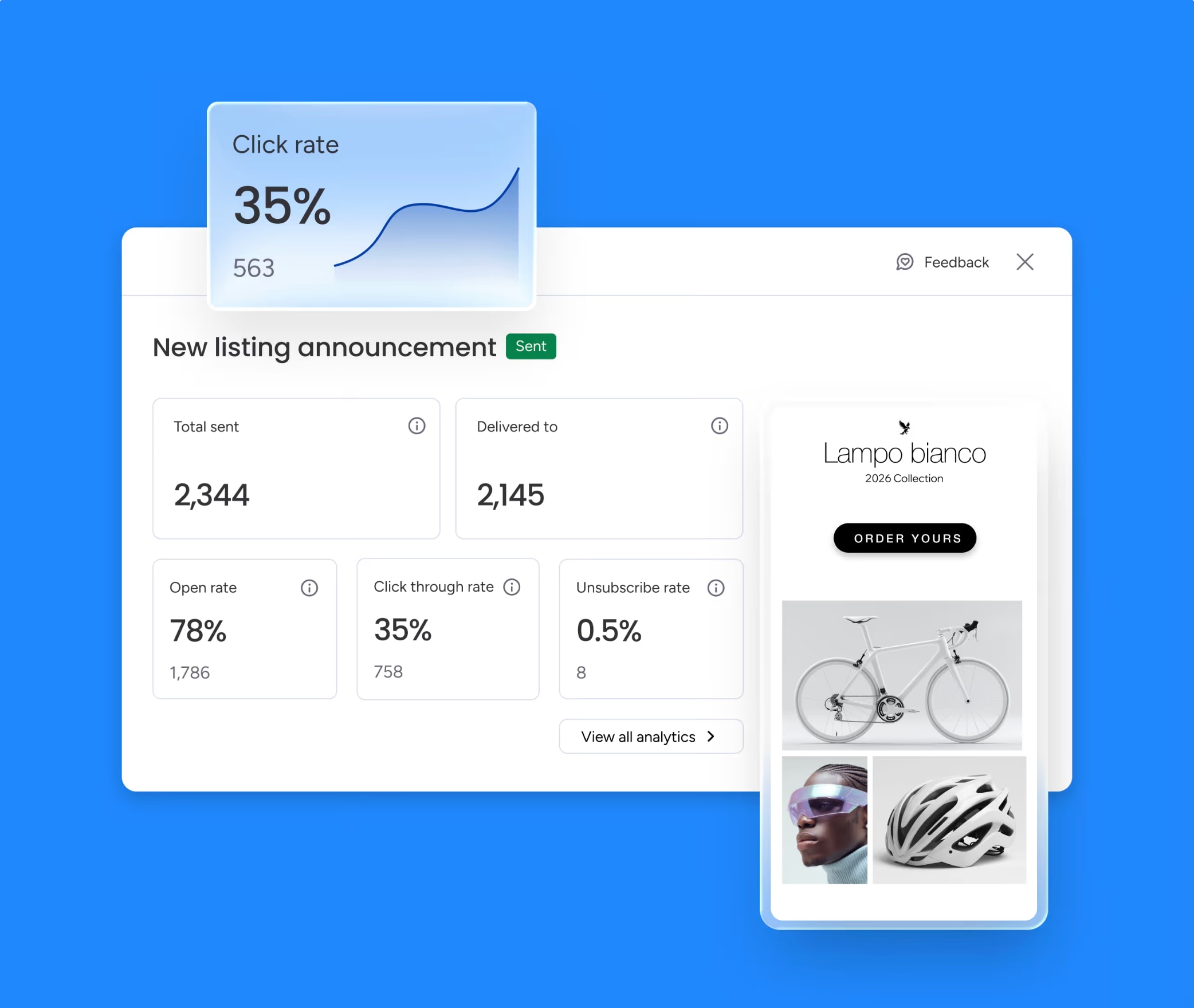
monday campaigns uses AI to analyze campaign performance patterns, detect anomalies, and surface optimization opportunities automatically. The platform continuously monitors your campaigns across channels and alerts you to issues before they impact results, giving you the speed advantage that manual audits can’t match.
Native CRM and work management integration

Because monday campaigns connects natively to monday CRM and monday work management, your audit agent has access to the full context it needs: campaign engagement data, lead lifecycle stages, deal values, sales feedback, and project timelines all in one place. This connected data foundation enables attribution that actually tracks revenue, not just clicks.
Real-time performance monitoring and alerts
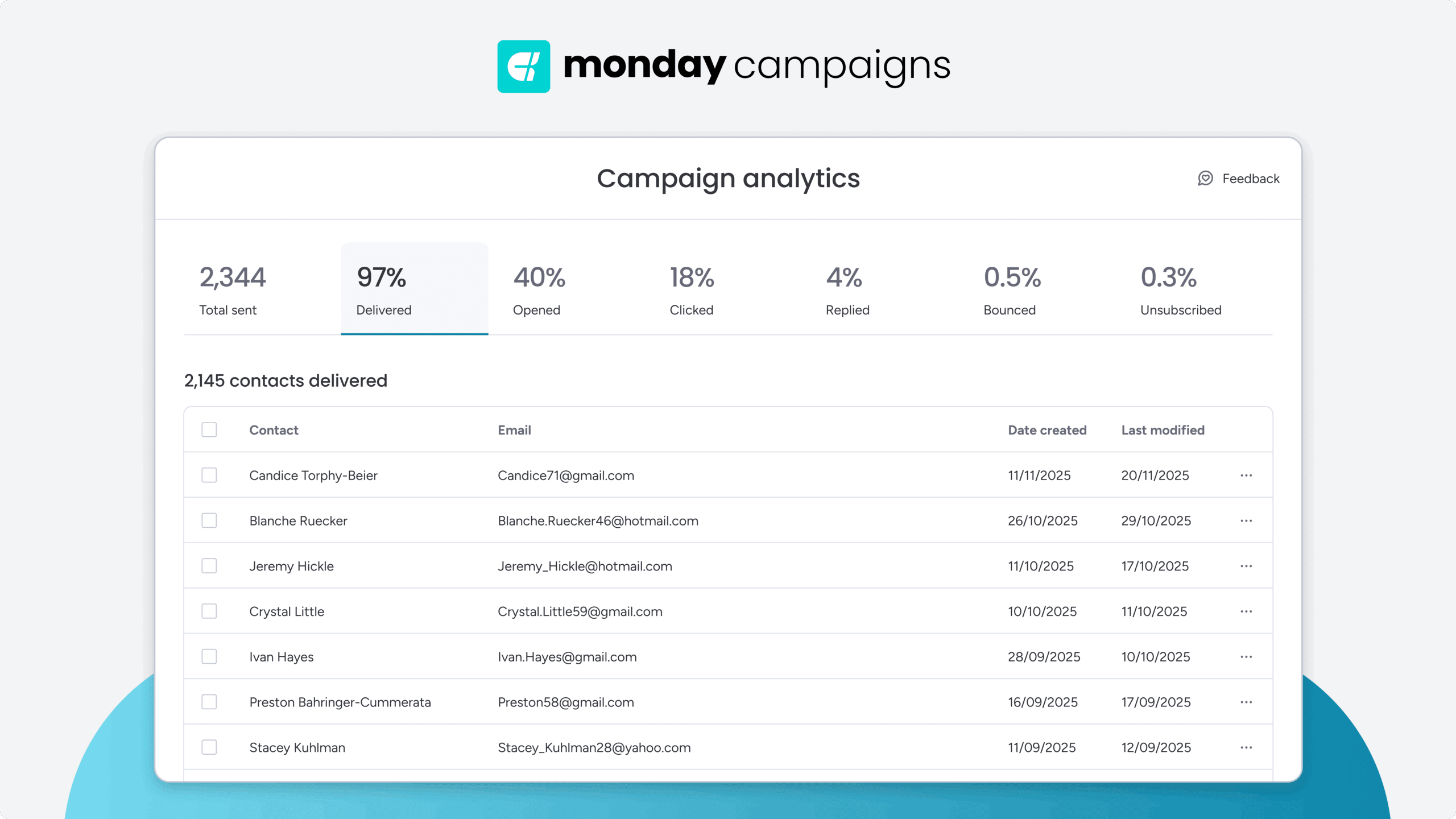
The platform monitors campaign metrics continuously and flags deviations from expected performance in real time. You get intelligent alerts that distinguish between normal variance and genuine problems, so your team can act on what matters without drowning in notifications.
Cross-channel campaign visibility
monday campaigns gives you a unified view of performance across email, social, paid media, and other channels in a single workspace. This cross-channel visibility lets AI agents spot patterns and correlations that single-channel tools miss, leading to smarter recommendations and better optimization decisions.
Getting started with AI-powered campaign audits
AI audit agents aren’t a future concept. They’re a present-day competitive advantage for marketing teams that want to move faster, spend smarter, and prove their impact. The shift from periodic reporting to continuous auditing isn’t just a workflow change. It’s a complete upgrade in how marketing operates.
If you’re evaluating where to start, focus on the data connections first. The more sources your agent can access (campaign platforms, CRM data, engagement history, sales outcomes), the more accurate and actionable its recommendations become. Platforms like monday campaigns natively connect to monday CRM and monday work management, giving audit agents the full-funnel context they need to move from surface-level alerts to genuine revenue intelligence.
Try monday campaignsFAQs
What is a marketing campaign audit AI agent, and what does it actually review?
A marketing campaign audit AI agent is an autonomous system that continuously monitors campaign performance, audience targeting, messaging effectiveness, send timing, engagement metrics, and downstream revenue impact — then diagnoses issues and recommends specific actions.
How is a marketing campaign audit AI agent different from standard marketing automation?
A marketing campaign audit AI agent differs from standard marketing automation in a key way: automation executes predefined rules (if X happens, do Y), while AI agents reason about context, diagnose root causes, learn from outcomes, and make judgment calls that improve over time.
Can a marketing campaign audit AI agent connect campaign performance to CRM data and revenue outcomes?
Yes, a marketing campaign audit AI agent can connect campaign performance to CRM data and revenue outcomes when it has access to CRM data. Platforms with native CRM integration enable tracking from campaign engagement through pipeline movement to closed-won revenue.
What data does an AI audit agent need to evaluate campaigns accurately?
To evaluate campaigns accurately, an AI audit agent needs campaign data (sends, opens, clicks), CRM data (lifecycle stage, deal value, close rate), engagement history, and ideally sales feedback like call notes and deal outcomes.
How do you measure whether a marketing campaign audit AI agent is improving results over time?
To measure whether a marketing campaign audit AI agent is improving results over time, track both operational metrics (detection speed, recommendation accuracy, implementation rate) and business metrics (engagement improvements, conversion rate increases, campaign-influenced pipeline, and revenue impact).
Can AI marketing agents run paid ads and PPC campaigns?
Can AI marketing agents run paid ads and PPC campaigns? Yes, AI marketing agents can run paid ads and PPC campaigns, though different agent types serve different channels. Email and CRM campaign audit agents focus on lifecycle marketing, while separate agents handle paid media optimization.

 Get started