


Travel agents sit on something most marketers would envy: a list of people who have already said “yes” to travel. The challenge is turning subscribers into bookings with the right message at the right moment.
This guide shows you how to build that system: growing a quality list, segmenting by travel style, and running campaigns that convert at every stage — from welcome sequences to post-trip referrals. You’ll also discover how to use AI to personalize outreach at scale and how monday campaigns can help you execute without adding hours to your workflow.
Key takeaways
- Unlike social media, your email list isn’t at the mercy of algorithms, so you reach your subscribers directly, every time.
- Match your content to where travelers are in their journey, from early inspiration all the way through to post-trip follow-up.
- Turn a generic list into a revenue engine by grouping subscribers by trip type, budget, and travel timeline so every email feels personal, not like a mass blast.
- Focus on attracting qualified subscribers with relevant lead magnets and double opt-in to keep your list healthy and your results measurable.
- With monday campaigns, your CRM data connects directly to your email campaigns so segments update automatically as contact details change and every traveler receives content that’s relevant to their interests and booking stage.
Why email marketing works for travel agents
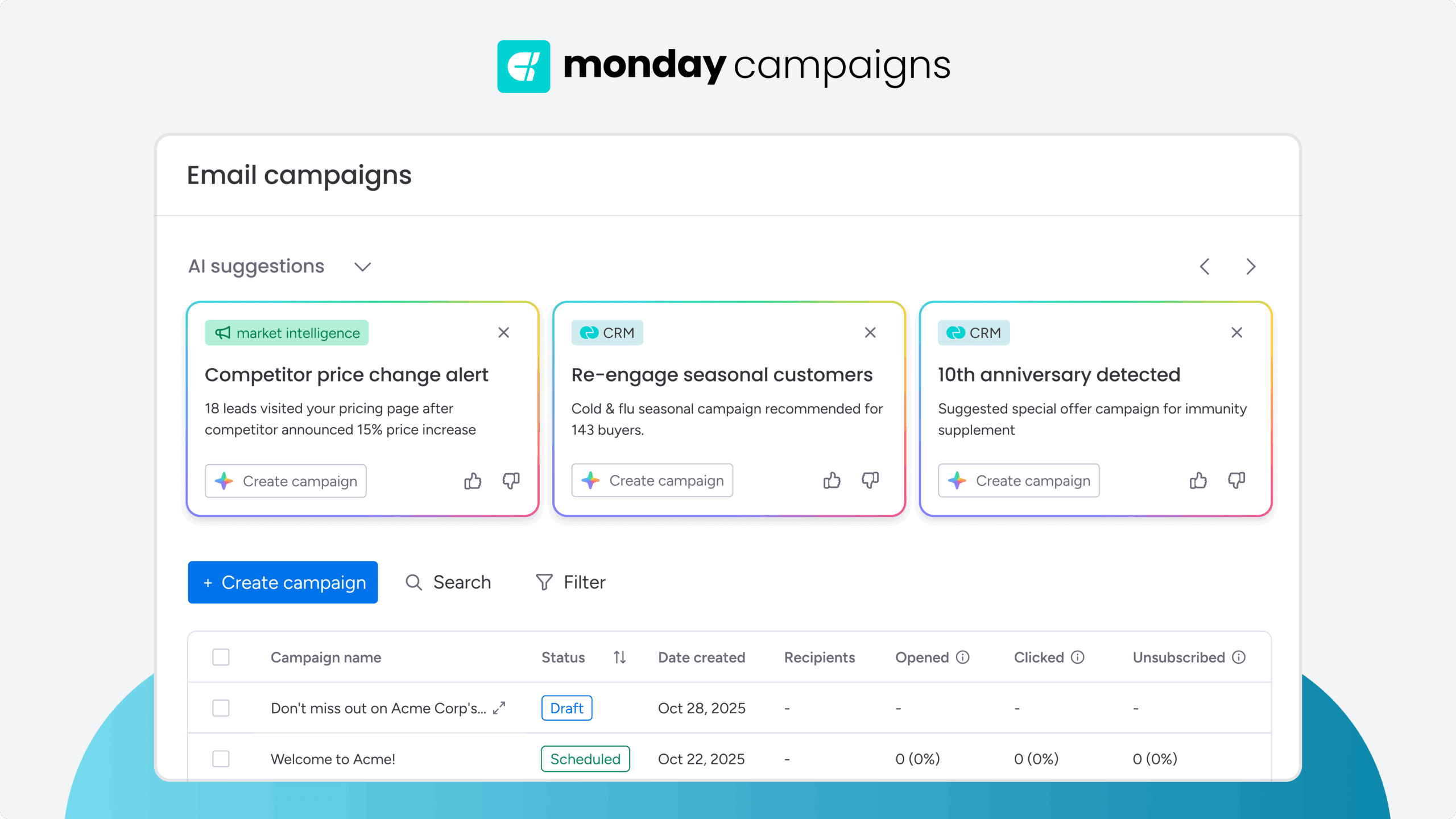
Email marketing outperforms other channels for 3 reasons: You own the list, you control the timing, and you build real relationships. Understanding why these advantages matter (and how to use them) separates agents who grow predictably from those who rely on referrals and luck.
- Ownership and control means your email list belongs to you. Unlike social media, where algorithms decide who sees your posts, email gives you direct access to your audience. A travel agent with 5,000 engaged subscribers can reach those 5,000 people reliably, regardless of what happens on Facebook or Instagram.
- Long decision cycles make email the ideal channel for travel purchases. A couple researching an African safari in January might not book until June. Email lets you deliver relevant content throughout the planning journey: inspiration when they’re dreaming, education when they’re researching, and urgency when they’re ready to book.
- High-value, relationship-driven sales require trust. Travel is personal, emotional, and often represents a significant financial investment. Email lets you build the trust that turns browsers into bookers and one-time clients into repeat customers.
81% of consumers aim to tune out ads, and 52% take active steps to block them entirely (Gartner)
7 benefits of email marketing for travel agencies
These benefits show what happens when you run email marketing the right way. Each one connects directly to revenue, client retention, or competitive advantage. Each benefit ties to measurable business outcomes.
1. Own your audience independent of social algorithms
Your email list is yours, giving you full control over access and audience reach. Your reach stays consistent regardless of algorithm changes.
- Once someone subscribes, you have direct access to their inbox.
- You get a reliable way to reach people that doesn’t depend on external platforms.
- No algorithm update can reduce your reach overnight.
2. Generate high returns on a lean marketing budget
Email marketing works on a lean budget. Email platforms charge predictably based on list size or send volume, giving leadership transparent forecasting and a scalable cost structure aligned to growth. Email outperforms other channels because it reaches people who’ve already expressed interest.
3. Nurture travelers across long booking cycles
Travel purchases take time. Email keeps people engaged through the entire journey. In fact, only 35% of U.S. travelers had fully booked their marquee summer trip as of April 2026, according to Deloitte’s 2026 Summer Travel Survey. This means the majority remain reachable for months. Relevant, timely emails keep your agency top of mind from the first moment travelers start dreaming to the final booking confirmation.
This table shows how content focus shifts across booking stages:
| Booking stage | Timeframe | Email content focus |
|---|---|---|
| Dreaming | 6+ months out | Destination inspiration, bucket list ideas, travel stories |
| Researching | 3–6 months out | Detailed itineraries, comparison guides, testimonials |
| Planning | 1–3 months out | Specific offers, availability alerts, booking incentives |
| Deciding | 0–4 weeks out | Urgency messaging, limited-time deals, final nudges |
| Booked | Pre-departure | Upsells, preparation tips, concierge content |
4. Drive upsells for tours, insurance, and upgrades
Email makes it easy to upsell and cross-sell after someone books. Once a traveler has booked, email becomes the primary channel for offering complementary services, and timing matters. Send upsell emails right after booking confirmation or during the pre-departure window. High-performing upsell opportunities include:
- Travel insurance: Offer immediately post-booking while the trip feels real and exciting.
- Airport transfers: Practical, low-friction add-ons that travelers appreciate.
- Excursions and experiences: Personalized suggestions based on destination and traveler profile.
- Room and cabin upgrades: Effective when sent 4 – 6 weeks before departure.
5. Earn repeat bookings and referrals from past travelers
Email turns one-time clients into repeat customers and people who refer their friends. Post-trip emails keep past travelers engaged, get you reviews and referrals, and set you up for the next booking.
- Travelers who’ve booked once are significantly more likely to book again. You’ve already earned their trust.
- Keeping a client costs significantly less than finding a new one.
- One referral email sent at the right moment can turn one happy traveler into 3 new leads.
6. Personalize outreach across every trip type
Email lets you segment your list and send personalized content based on what people like, what they’ve done, and where they want to go. Personalized emails feel relevant and valuable, because they show you understand what each traveler wants.
| Dimension | Segments | Content tailoring |
|---|---|---|
| Destination preference | Beach, mountain, city, adventure | Featured destinations match interests |
| Travel style | Luxury, mid-range, budget | Price points and property types align |
| Trip type | Cruises, all-inclusive, tours, independent | Format and experience types match |
| Traveler profile | Families, couples, solo, groups | Activities and accommodations fit needs |
7. Measure marketing impact on bookings and revenue
Email gives you data that connects campaigns directly to bookings and revenue. While other channels often leave attribution unclear, email platforms track opens, clicks, and conversions precisely. The metrics that matter most are bookings and revenue.
The essential travel agent email campaigns that drive bookings
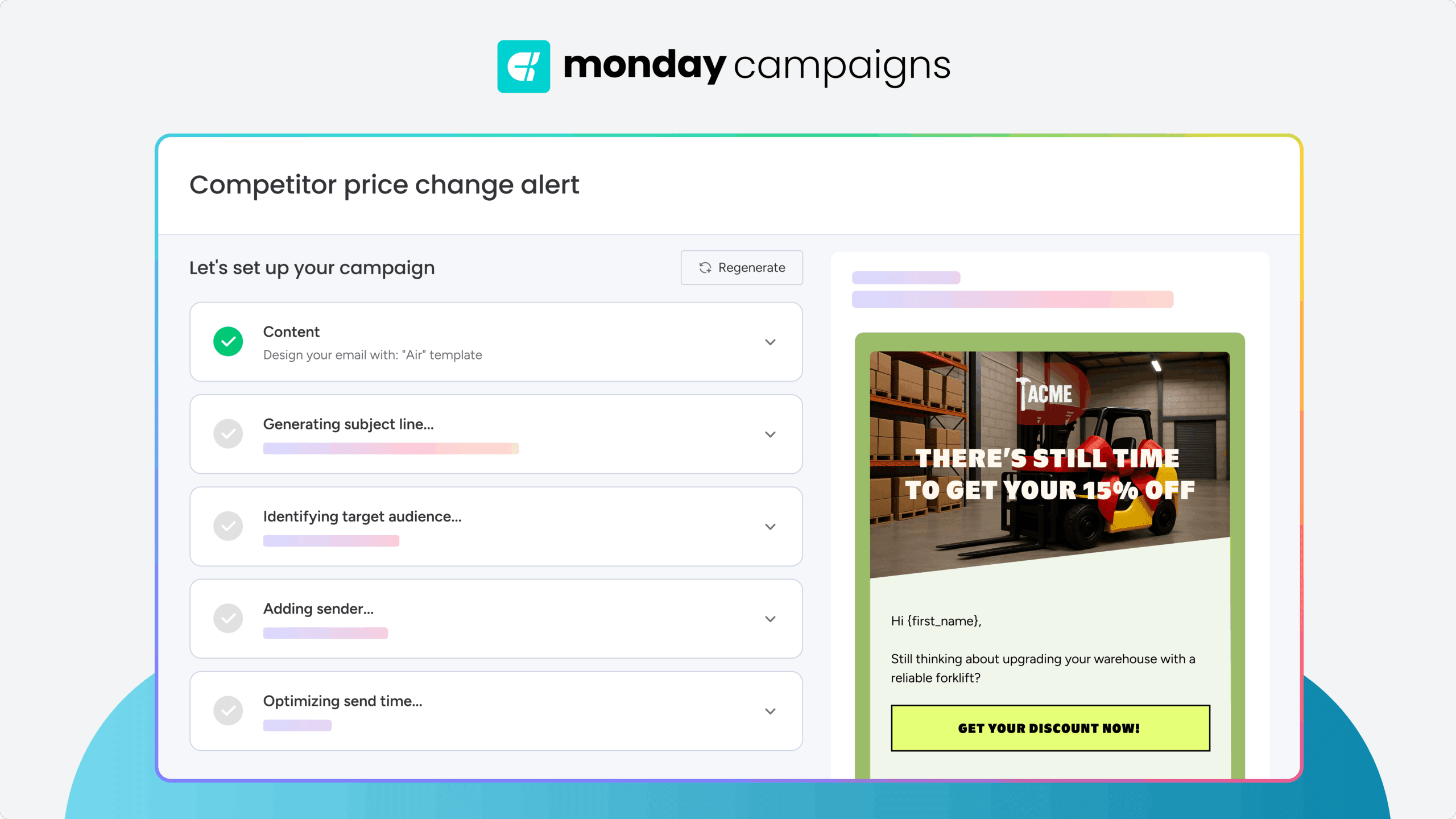
Email marketing works when you send the right campaign at the right moment. These campaigns are the foundation of an email program that converts. Each one meets travelers where they are and moves them closer to booking.
Welcome and onboarding sequence
Your welcome sequence is your first impression. It sets the tone for everything that follows. New subscribers pay the most attention right after they sign up. It’s your best chance to engage them.
| Timing | Purpose | |
|---|---|---|
| 1 | Immediate | Deliver value, set expectations, welcome message |
| 2 | 2–3 days later | Build trust and credibility with the agent's story |
| 3 | 5–7 days later | Demonstrate expertise with valuable content |
| 4 | 7–10 days later | Soft conversion invitation to book a consultation |
Destination inspiration newsletter
Regular newsletters keep subscribers engaged and thinking about their next trip. Make them content-rich, visually appealing, and focused on inspiring travel. Focus on inspiring travel rather than primarily promoting deals. A strong newsletter content mix includes:
- Featured destination spotlight: One destination explored in depth.
- Travel tips and advice: Practical guidance that builds trust and authority.
- Seasonal travel ideas: Timely suggestions tied to upcoming travel windows.
- Client testimonials: Social proof that reinforces the agent’s expertise.
- Soft promotional content: Offers presented as helpful suggestions, not hard sells. Send monthly or bi-weekly. Choose a consistent cadence and maintain it to build subscriber expectations.
Seasonal and promotional offer campaigns
Promotional campaigns create urgency with limited-time offers, seasonal deals, or exclusive packages. Tie them to Black Friday, wave season for cruises, or shoulder season deals. Effective promotional emails include:
- A compelling, specific offer (not just “great deals”)
- Urgency language tied to real deadlines
- Strong destination visuals
- A simple, prominent call-to-action
Quote follow-up sequence
Many travelers request quotes but don’t book right away. That’s where the biggest booking opportunity lies. A follow-up sequence nurtures these leads over 7–14 days. It addresses objections, answers questions, and nudges them toward booking. The sequence should:
- Confirm the quote and thank the traveler for their interest.
- Answer common questions to reduce friction and hesitation.
- Share client testimonials for social proof and reassurance.
- Create urgency with a final reminder tied to availability or pricing.
Pre-departure concierge series
The pre-departure sequence builds excitement, improves the experience, and opens the door for upsells. It positions you as a full-service concierge throughout the traveler’s journey. Emails in this series should cover:
- Booking confirmation and next steps: Reassure the traveler and set expectations.
- Packing tips and destination guides: Practical value that builds goodwill.
- Upsell opportunities: Excursions, insurance, and upgrades presented as helpful additions.
- Final reminders: Travel document checklists and pre-departure logistics.
Post-trip review and referral series
The post-trip sequence turns happy travelers into repeat customers and people who refer their friends. It asks for reviews, encourages referrals, and sets you up for the next booking. A simple, effective post-trip cadence:
- Day 1 after return: Thank-you email celebrating the trip.
- 1 week later: Referral incentive with a clear, easy-to-share offer.
- 2–3 weeks later: Destination suggestions to spark the next booking.
Win-back campaigns for inactive travelers
Win-back campaigns re-engage subscribers who haven’t interacted recently. Welcome them back with a compelling reason to reconnect, and provide a simple option to update their preferences.
How to build a high-quality travel agents mailing list
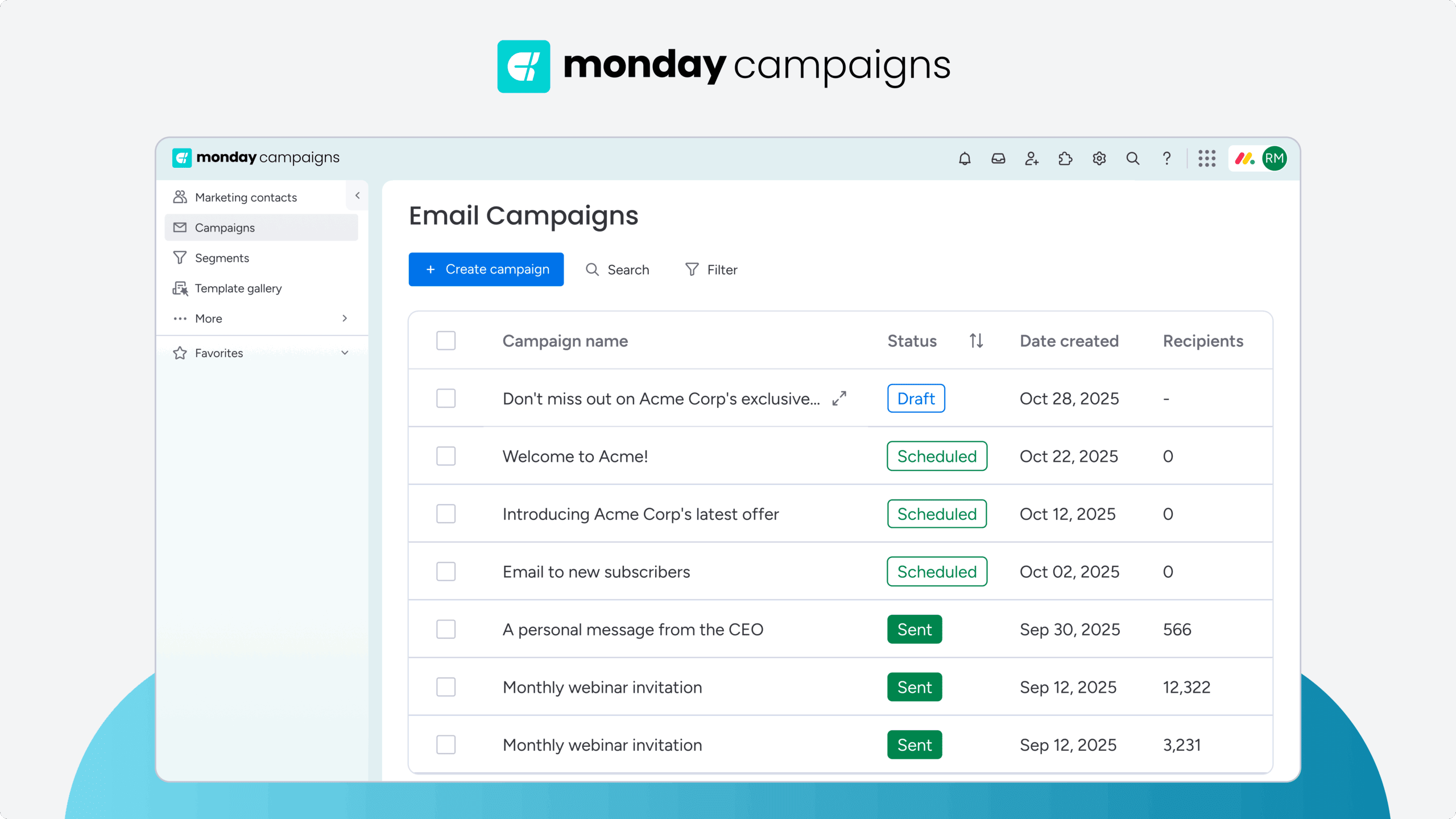
A smaller list of engaged subscribers will always outperform a large list of disengaged contacts. The strategies below help you attract the right people from the start.
Capture travel leads at high-intent moments
Capture emails when people are actively researching or planning a trip. These moments signal real interest and lead to better engagement down the line.
| Moment | Signal | Capture tactic |
|---|---|---|
| Website visits | Browsing destination pages | Pop-ups, embedded forms, content upgrades |
| Social media engagement | Commenting, asking questions | Signup links in bios, posts, stories |
| In-person interactions | Trade shows, networking events | Business card collection, tablet signup forms |
| Inquiry forms | Requesting quotes, consultations | Automatic list addition with permission |
Offer travel lead magnets that attract qualified subscribers
Lead magnets are valuable resources you offer in exchange for an email. The best lead magnets are relevant, immediately useful, and aligned with what you offer. Strong lead magnet options include:
- Destination guides: In-depth content for a specific region or trip type.
- Packing checklists: Practical, shareable resources travelers genuinely use.
- Travel planning templates: Itinerary frameworks that showcase the agent’s expertise.
- Exclusive offers: Early access to deals available only to subscribers.
- Webinars: Live or recorded sessions on popular destinations or travel topics. A travel agent specializing in European travel might create “The Ultimate 2-Week Italy Itinerary” and promote it on social media and their website to attract highly qualified subscribers.
Collect preferences with double opt-in
Double opt-in means subscribers confirm their email after signing up. It keeps your list clean, cuts spam complaints, and improves deliverability.
- The trade-off: Some subscribers won’t complete the confirmation step.
- The payoff: The quality and engagement of confirmed subscribers far outweigh the quantity of unconfirmed contacts.
How to segment your travel agency email marketing list
Segmentation splits your list into smaller groups based on what they have in common. It lets you send emails that feel personal to each group and avoid the generic blasts that get you unsubscribed.
Segment by trip type and travel style
Travelers have different preferences. Segment by trip type and travel style so every email feels relevant. Here’s how different segments respond to tailored content:
- Cruise enthusiasts receive emails about new itineraries and onboard experiences.
- Adventure travelers receive emails about hiking destinations and off-the-beaten-path experiences.
- Beach and resort seekers receive emails about tropical destinations and spa experiences.
Segment by time-to-travel window
The right message depends on where someone is in the planning process. Segment by time-to-travel so your emails match what people need right now:
- Dreamers (6+ months out) receive destination inspiration and bucket list content.
- Planners (3 – 6 months out) receive detailed itineraries and curated offers.
- Bookers (0 – 3 months out) receive urgency-driven deals and availability alerts.
Segment by budget tier and traveler profile
Travelers have different budgets and backgrounds. Acknowledging these differences ensures your emails resonate with each group. Segment by budget and profile so your offers match what each group can afford and cares about:
- Budget-conscious travelers receive emails featuring affordable destinations and value packages.
- Luxury travelers receive emails showcasing 5-star resorts and exclusive experiences.
Use dynamic segments that refresh with CRM data
Dynamic segments update automatically based on real-time CRM data. Unlike static segments you have to update manually, dynamic segments keep subscribers in the right group based on what they’re doing now. With monday campaigns, segments refresh automatically based on your CRM data. When a contact’s interest shifts from Caribbean to Europe, they automatically move to the Europe segment. No manual work.
Learn more: Travel agent CRM
How to personalize travel email marketing at scale with AI
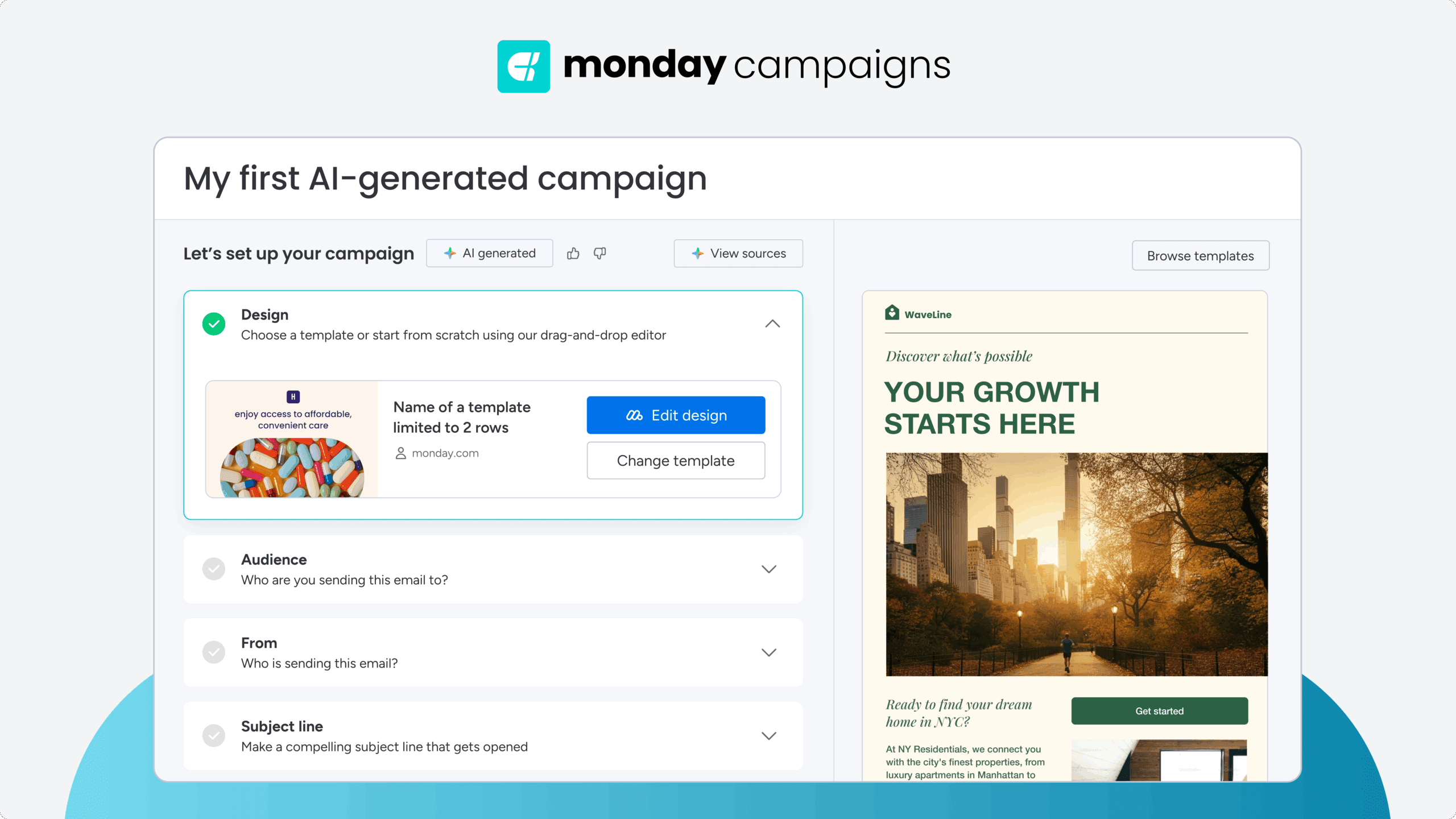
Personalization dramatically improves engagement and conversions, but doing it manually for hundreds or thousands of subscribers isn’t realistic. AI solves this challenge by automating personalization at scale — so every subscriber gets content that feels tailored, without the manual effort.
Use AI to draft on-brand copy and subject lines
AI can generate email copy and subject lines that match the agent’s brand voice while tailoring content to specific segments or individual subscribers. Here’s how it works in practice:
- Voice and style learning: AI analyzes existing content and brand guidelines to replicate tone consistently.
- Subject line optimization: AI generates subject lines designed to maximize open rates by incorporating personalization, urgency, or curiosity.
- Faster execution: With monday campaigns, AI helps travel agents quickly generate on-brand email copy and subject lines, ensuring consistency and relevance without manual effort.
Tailor offers with dynamic content blocks
Dynamic content blocks allow travel agents to create a single email template that automatically displays different content to different subscribers based on their segment, preferences, or behavior.
- One email template serves multiple segments simultaneously.
- Each subscriber sees personalized content without the agent building separate campaigns.
- A monthly newsletter can show Caribbean content to beach travelers, adventure content to hikers, and cruise content to cruise enthusiasts — all from a single send.
Front-load value for inbox AI summaries
Many email platforms and AI assistants now generate summaries of emails, displaying key information before the subscriber opens the full message. Travel agents should structure emails to ensure the most important information appears early.
- Lead with value: Place the most important information in the first few sentences.
- Be concise: Use tight, specific language that reads well in preview and summary formats.
- Include key details upfront: Dates, pricing, and destinations should appear early — not buried at the bottom.
Why travel agents use monday campaigns for email marketing
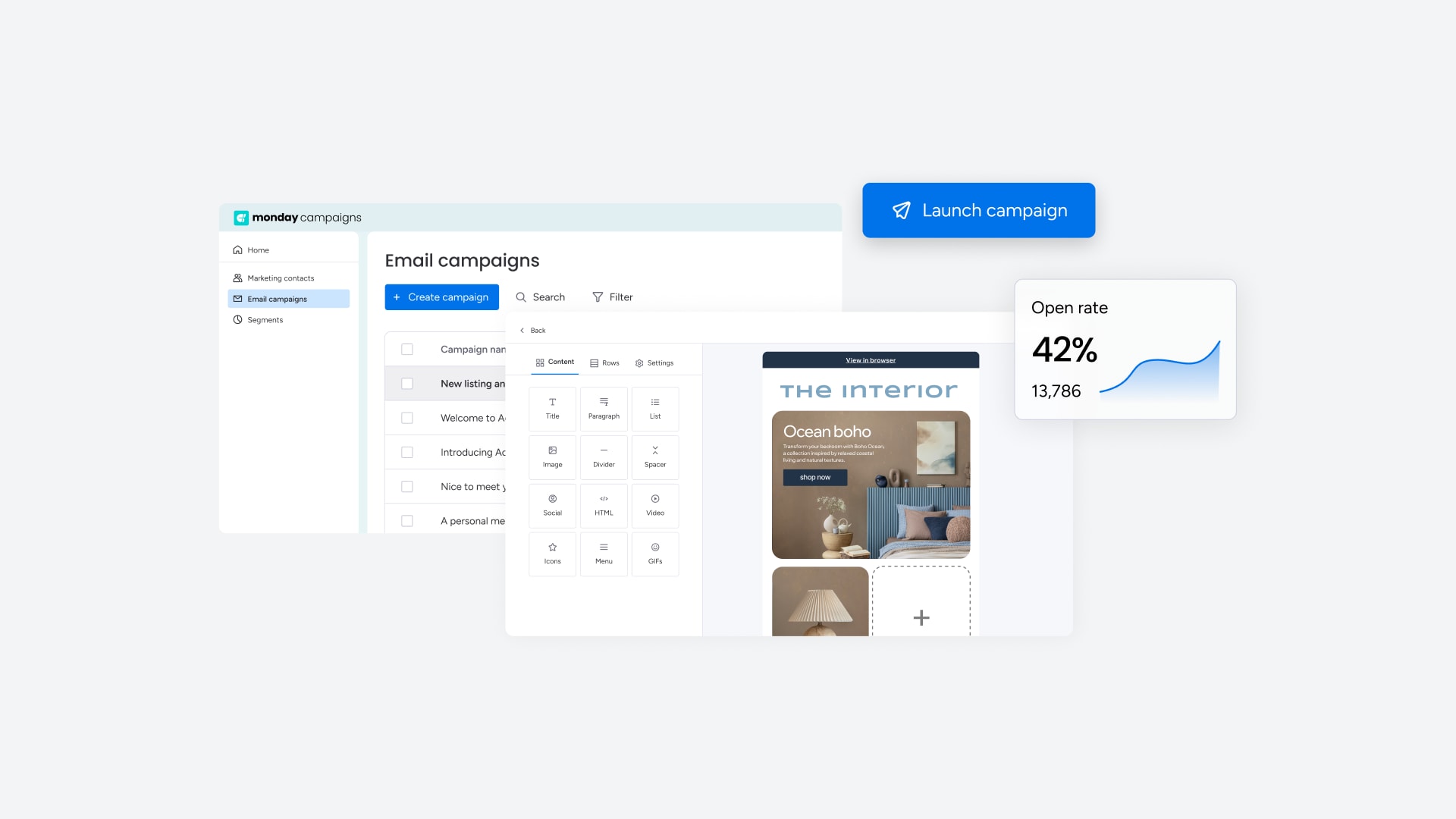
Travel agents need an email platform that connects directly to customer data, automates personalization, and executes campaigns without adding complexity. monday campaigns delivers all 3 by integrating email marketing with CRM functionality in a single platform — so you can manage the entire customer journey from first inquiry to repeat booking without switching tools or manually updating segments.
- Native CRM integration: Your contact data, booking history, and traveler preferences sync automatically with your email campaigns, eliminating manual exports and ensuring segments stay current.
- AI-powered email creation: Generate on-brand subject lines and email copy tailored to specific segments in seconds, maintaining consistency while personalizing at scale.
- Dynamic segmentation: Segments update automatically based on real-time CRM data, so travelers always receive content that matches their current interests and booking stage.
- Visual email builder: Create professional, mobile-responsive emails without coding using drag-and-drop templates designed for travel marketing.
- Automation workflows: Set up welcome sequences, quote follow-ups, and post-trip campaigns once, then let them run automatically as new contacts enter each stage.
- Performance analytics: Track opens, clicks, and conversions with clear reporting that connects email activity directly to bookings and revenue.
monday campaigns eliminates the friction between your CRM and your email marketing. When a traveler requests a quote, they automatically enter your follow-up sequence. When they book, they move to your pre-departure series. When they return, they receive your referral campaign. No manual list management, no data entry, no missed opportunities.
Turn email subscribers into consistent travel bookings
Email marketing gives travel agents a direct, owned connection to travelers who’ve already expressed interest. The strategies in this guide — building a quality list, segmenting by travel style, and automating personalization with AI — work together to create a system that generates bookings consistently by delivering relevant content throughout every stage of the travel planning journey.
monday campaigns brings together email creation, CRM data, AI-powered personalization, and campaign analytics in one platform. You’ll spend less time managing campaigns and more time growing your business.
Try monday campaignsFAQs
What is the most effective email marketing platform for travel agents?
The most effective email marketing platform for travel agents includes CRM integration, automation capabilities, segmentation features, and visual email builders. monday campaigns offers these capabilities with native CRM integration, allowing travel agents to manage the entire customer journey from lead capture through post-trip follow-up in one platform.
How often should travel agents send marketing emails?
Travel agents should send marketing emails consistently but not excessively. A monthly newsletter is the minimum to maintain engagement, while bi-weekly sends work well for agents with substantial content. Every email should provide something useful: inspiration, information, or a compelling offer.
How do travel agents build an email list from scratch?
Travel agents build email lists by offering valuable lead magnets like destination guides and packing checklists in exchange for email addresses. Capture opportunities include website forms, social media signup links, in-person events, and inquiry forms. Double opt-in ensures list quality by confirming genuine interest.
What should be included in a travel agent welcome email?
A travel agent welcome email should include a warm greeting, delivery of any promised lead magnet, expectations for future emails, a brief introduction to the agent's expertise, and an invitation to connect or ask questions. The welcome email sets the tone for the entire relationship.
How can travel agents measure email marketing success?
Travel agents measure email marketing success through open rate, click-through rate, conversion rate, and revenue per email. The ultimate measure is bookings and revenue generated. Tracking attribution from email to booking provides the most accurate picture of return on investment.
What types of emails generate the most bookings for travel agents?
Quote follow-up sequences, seasonal promotional campaigns, and pre-departure upsell emails generate the most bookings for travel agents. Welcome sequences build the foundation for future conversions, while post-trip emails drive repeat bookings and referrals.

 Get started