

Many marketing campaigns fail for a simple reason: the audience definition is too broad. Targeting labels like “marketing managers at mid-sized companies” may look specific on paper, but in practice they lump together people with very different goals, pressures, and buying behaviors. When messaging resonates with some prospects but completely misses others, it’s usually a sign that the underlying audience understanding is shallow.
Job titles alone don’t explain how people make decisions either. A marketing manager at a fast-growing startup faces different constraints than one at an established enterprise. They measure success differently, consume information through different channels, and evaluate solutions based on different priorities.
This is where marketing personas make a huge difference. A well-built marketing persona goes beyond surface-level demographics to capture motivations, challenges, research habits, and decision-making dynamics. Instead of guessing what matters to buyers, teams can align messaging, content, and product positioning with how real people actually think and buy.
This guide explains how to build a marketing persona from the ground up. It covers a step-by-step process based on real customer data, including practical examples of what strong personas include, as well as clear guidance on how to apply personas across different departments.
Key takeaways
- Effective marketing personas are built on real data: Combine customer interviews, CRM insights, analytics, and behavioral signals to avoid assumptions and reflect how buyers actually think and decide.
- Strong personas focus on five core components: Demographics, goals, pain points, behaviors, and decision-making processes together create profiles teams can act on with confidence.
- Persona validation is critical before rollout: Testing draft personas with real customers helps uncover gaps and prevents teams from scaling strategies based on internal bias.
- Personas must be shared and applied across teams: Marketing, sales, product, and customer success achieve better alignment when everyone works from the same customer understanding.
- Centralized persona management improves consistency over time: Using a work management system like monday work management helps teams keep personas current, accessible, and connected to daily workflows.

What are marketing personas and why do they matter?
Marketing personas turn broad customer segments into realistic, research-based profiles that reflect how people actually make buying decisions. They capture not only who customers are, but also what motivates them, how they evaluate options, and what ultimately drives action.
It’s helpful to imagine personas as three-dimensional customer profiles that combine demographic information with psychological insights. A demographic profile may identify a 35-year-old marketing manager at a mid-sized tech company, while a persona explains their pressure to prove ROI, preference for data-driven content, and reliance on peer recommendations instead of vendor websites during evaluation.
By combining demographic details with behavioral and psychological insights, personas create a much broader view of the customer. This perspective helps teams move beyond assumptions and design marketing that aligns with real challenges, expectations, and decision-making patterns when evaluating target audiences.
The business impact of well-developed personas
Teams that invest in clear, well-researched marketing personas often see measurable improvements across performance metrics.
For instance, campaign results improve when messaging speaks directly to persona pain points instead of broad segments. Customer acquisition costs decline as teams focus time and budget on prospects who closely match high-value persona profiles and buying intent.
Understanding this business impact also helps organizations prioritize target audience research as a strategic investment. When personas guide decisions, teams gain clarity on where to focus efforts and how to create relevance at every stage of the journey.
Strong persona development delivers several core benefits, including:
- Targeted messaging precision: Enables teams to craft messaging that aligns with specific motivations and reflects how different buyers frame their challenges.
- Product development alignment: Helps product teams prioritize features based on real workflows and user needs, reducing wasted development effort.
- Customer experience optimization: Supports experience design that matches preferred channels, formats, and engagement styles for each persona.
- Sales and marketing alignment: Creates shared definitions that keep messaging consistent from first touch through final decision.
5 core components every marketing persona needs
Strong marketing personas rely on five essential components that turn raw customer data into insights teams can actually apply. Each element serves a different purpose, but together they create a clear, actionable view of how real customers think, evaluate options, and make buying decisions.
The following table breaks down each component and shows how teams apply this information in their daily work:
| Component | What it includes | How teams use it |
|---|---|---|
| Demographics and company information | Age range, location, job title, seniority, company size, industry, revenue | Channel selection, budget authority assessment, decision timeline planning |
| Goals and success metrics | Professional objectives, personal motivations, KPIs they track | Value proposition development, case study structure, ROI messaging |
| Pain points and obstacles | Specific challenges, frustrations, barriers to success | Content strategy, product positioning, objection handling |
| Behavioral patterns and preferences | Content formats, research methods, communication channels, decision timelines | Engagement timing, content format selection, nurture sequence design |
| Decision-making process | Stakeholders involved, evaluation criteria, deal-breakers, approval workflows | Sales enablement, multi-stakeholder content, buying committee navigation |
Breaking down each component
Demographics and company information form the foundation of every persona. This layer includes age range, geographic location, job title, seniority level, company size, industry, and annual revenue. These details matter because they often correlate with communication preferences, budget ownership, and how long decisions typically take.
Goals and success metrics further define what motivates a persona at both a professional and personal level. Professional goals may include measurable outcomes such as improving pipeline performance or increasing operational efficiency, while personal motivations often center on recognition, career growth, or reducing daily pressure.
Common professional objectives include:
- Increasing marketing qualified leads by 40%: Growth-focused targets tied directly to pipeline impact.
- Reducing time spent on manual reporting by ten hours per week: Efficiency gains that free teams for strategic work.
Personal motivations might involve earning recognition as a strategic leader or minimizing stress caused by fragmented workflows and unclear data.
Pain points and obstacles highlight the specific issues that prevent personas from achieving their goals. These challenges should be concrete rather than abstract, focusing on daily frustrations and structural barriers.
Examples of common obstacles include:
- Spending 15 hours per week consolidating reports: Manual data collection across multiple systems that slows decision-making.
- Struggling to secure executive buy-in: Limited visibility into how marketing efforts connect directly to revenue.
Behavioral patterns and preferences explain how personas consume information, evaluate solutions, and prefer to engage. This component covers preferred content formats, research habits, communication channels, and decision timelines. When teams understand these behaviors, they can avoid mismatched outreach that feels intrusive or poorly timed.
Decision-making process mapping then captures the full buying journey, from early research through final approval. This includes identifying key influencers, understanding evaluation criteria, and recognizing which stakeholders must sign off before a purchase moves forward.
In many cases, the primary persona gathers information, while technical and financial leaders approve security and budget requirements.
Try monday work management
How to create marketing personas from scratch: 7 steps
Building marketing personas from scratch requires an approach that blends data analysis with firsthand research. This seven-step framework below guides teams from initial discovery through validation and organization-wide adoption.
Each step builds on the previous one, creating a reliable foundation for understanding customer needs and decision-making behavior.
Step 1: Audit your current customer data
The persona development process begins with analyzing all existing customer information across organizational touchpoints. CRM systems contain demographic data, purchase history, deal sizes, and sales cycle lengths that reveal who buys and how they buy. Website analytics show which content resonates with different visitor segments, how prospects navigate the site, and where they drop off in the conversion process.
This audit identifies patterns and gaps in your current understanding. Key findings might include:
- Industry trends: Most customers come from three specific industries.
- Job-level insights: Buyers with certain job titles have higher lifetime value than others.
- Information gaps: Critical details that require additional research.
Step 2: Interview key stakeholders
Internal stakeholders who regularly engage with customers provide qualitative insights that data alone cannot capture. Sales teams understand buyer objections, competitive concerns, and frequently asked questions during evaluation. Customer service teams know which features cause confusion, which problems customers aim to solve, and how different segments use the product.
Effective stakeholder interviews use open-ended questions that encourage detailed responses rather than yes/no answers. Schedule 30–45 minute interviews with eight to twelve stakeholders across different customer-facing roles. Focus on questions such as which concerns prospects raise most often, rather than asking whether a topic matters.
Step 3: Analyze behavioral insights
Behavioral data shows what people actually do, rather than what they say they do. Website analytics reveal which topics engage visitors and the exact paths that lead to conversions. Email metrics show which messages are opened and which content formats retain attention.
Advanced analysis examines cross-channel patterns that single-source data may miss. For example, a prospect might:
- Discover your brand: Through social media.
- Research solutions: Via organic search.
- Engage with nurture campaigns: Through email sequences.
- Convert: After attending a webinar.
Step 4: Identify common patterns
Pattern identification transforms raw data into distinct persona categories. Look for customers who share characteristics, goals, pain points, and behaviors. Effective pattern recognition balances specificity with usability.
Common categories include:
- Job function: Marketing managers versus IT directors.
- Company characteristics: Startup versus enterprise.
- Buying motivation: Cost reduction versus growth enablement.
- Decision-making authority: Individual contributor versus executive.
Most organizations identify three to five primary personas to represent the majority of their customer base. More than seven personas can dilute focus and hinder implementation.
Step 5: Build detailed persona profiles
Comprehensive persona profiles synthesize all research into structured documents for teams to reference. Each profile should be clear, scannable, and applicable to daily work.
Profiles tell a story. For example, Sarah is a marketing operations manager at a 300-person B2B SaaS company. She manages the marketing tech stack and reports to the CMO. Her goal is demonstrating marketing’s revenue impact, but she struggles with fragmented data across multiple systems.
Include realistic details that help teams visualize each persona. Create sections for different departments.
Platforms like monday work management allow teams to store persona profiles in accessible locations, maintaining consistency while letting each team access consumer insights relevant to their work.
Step 6: Validate with target audiences
Validation ensures your personas accurately represent real customers rather than internal assumptions. Share draft personas with eight to twelve customers matching each profile, asking them to rate how well the persona reflects their goals, challenges, and experiences.
Validation often uncovers gaps between perception and reality. For instance, teams may assume a persona prioritizes cost savings when customers care more about speed of implementation. Incorporate feedback immediately to update profiles before broader rollout.
Step 7: Share across your organization
Finally, keep in mind that persona adoption requires more than sharing documents. Effective implementation involves structured rollout that makes personas accessible, relevant, and actionable for all teams.
Begin with cross-functional workshops where teams learn about each persona together and discuss how insights apply to their work. Then, create reference materials tailored to different scenarios.
Modern platforms like monday work management centralize persona information, giving cross-team access while maintaining a single source of truth. When personas are updated based on new research, sales teams see changes immediately instead of using outdated profiles.
Research even shows that organizations with a customer-focused executive role experience up to 2.3× more growth, highlighting the value of organization-wide persona alignment.
Types of marketing personas for different business needs
Different teams require tailored persona approaches that highlight the information most relevant to their workflows and decisions. While all personas share a common foundation of customer understanding, the emphasis and level of detail vary based on how each team engages with customers.
Understanding how teams currently access and apply customer insights often explains why personas developed in isolation fail to deliver results across the organization. Aligning personas with team-specific needs ensures everyone benefits from the same research foundation.
Specialized persona types by function
- Buyer personas for sales alignment: Sales-focused personas highlight decision-making authority, budgets, timelines, and common objections. They clarify who approves purchases, what criteria matter, and which concerns often stall deals.
- User personas for product teams: Product-focused personas emphasize usage patterns, feature preferences, workflow needs, and experience expectations. They map how users interact with the product daily.
- Social media personas for content strategy: Content-focused personas capture platform usage, engagement habits, and community behaviors. They guide messaging, content formats, and distribution strategies.
- Negative personas to avoid: Negative personas identify poor-fit customers who bring low value, need extra support, or churn quickly. Knowing these profiles helps teams focus on high-value opportunities.
Organizations maintain consistency across persona types by ensuring all profiles rely on the same foundational research while emphasizing the aspects most relevant to each team’s decisions.
Try monday work management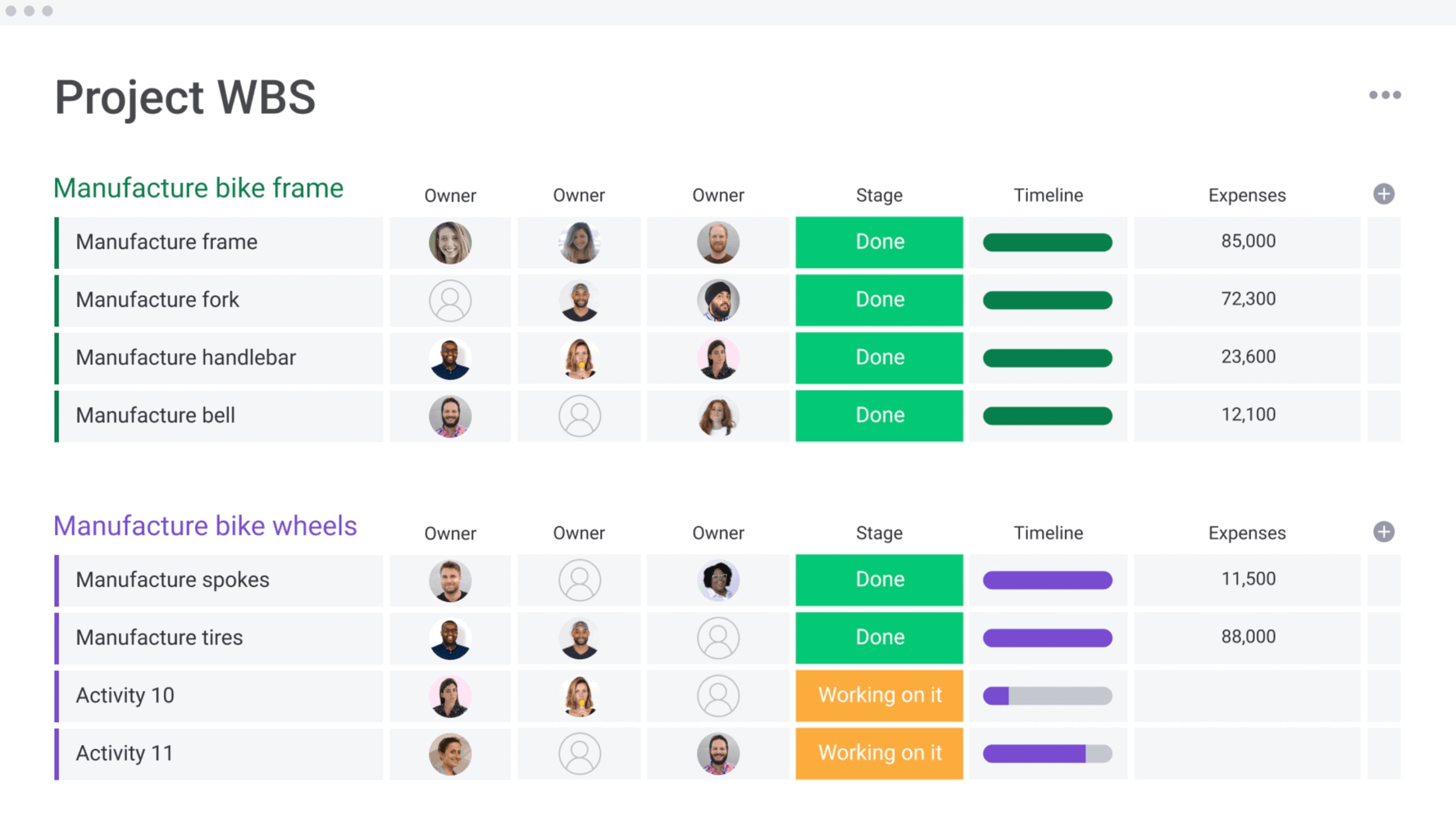
Using AI to create dynamic marketing personas
Artificial intelligence is reshaping persona development from a periodic research initiative into an ongoing, data-driven practice. Instead of relying on static snapshots, teams can continuously refresh customer insights as markets, behaviors, and expectations evolve.
With AI, organizations can process large volumes of customer data, surface patterns that manual analysis often misses, and automatically refine persona profiles as new signals appear. This shift keeps personas aligned with real customer behavior rather than outdated assumptions.
What would change if your personas updated themselves based on live customer interactions instead of annual research cycles? For many teams, it would mean faster decisions, more relevant messaging, and fewer gaps between strategy and reality.
AI-powered persona capabilities
AI introduces new depth and speed to persona analysis by connecting behavioral data across channels and time. Instead of relying on interviews alone, teams can observe how customers actually behave throughout their journey.
Behavioral analysis with AI uses machine learning to analyze interactions across websites, emails, social media, and product usage. These systems track:
- Content engagement patterns: Which topics each persona interacts with most frequently.
- Research timelines: How long prospects evaluate options before making a purchase.
- Feature adoption behavior: Which capabilities customers use first and which they ignore.
- Friction points: Where users hesitate, drop off, or request support.
Automated persona updates keep profiles relevant without constant manual effort. Traditional personas often become outdated within six to twelve months as priorities shift and markets change. AI monitors key indicators and highlights when persona attributes need revision.
Predictive persona modeling goes a step further by analyzing historical data to anticipate future behavior. These models forecast lifecycle transitions, surface emerging segments, and reveal shifts before they become obvious through traditional research.
Teams using monday work management’s AI Blocks can categorize customer feedback by persona, extract themes from interview transcripts, and summarize complex research into clear, actionable insights that support faster decision-making.
How to implement marketing personas across teams
Personas deliver value only when teams actively use them in daily work. Effective implementation requires clear adoption processes, workflow integration, and reinforcement that positions personas as practical tools rather than reference documents.
The foundation of adoption is accessibility. Personas should be easy to find, simple to apply, and embedded directly into existing workflows where decisions already happen.
Implementation strategies that drive adoption
Persona adoption starts by mapping how each team makes decisions and identifying moments where persona insights should guide those choices. For marketing teams, personas inform:
- Campaign planning: shaping messaging frameworks and value propositions.
- Content strategy: selecting topics that align with persona priorities.
- Channel selection: choosing distribution channels based on behavior patterns.
Sales teams benefit when personas are referenced before discovery calls, helping reps prepare relevant questions and anticipate objections.
Aligning sales and marketing prevents the common disconnect where personas reflect theory rather than reality. Joint workshops allow both teams to review data together, challenge assumptions, and agree on shared definitions grounded in real customer conversations.
Training programs reinforce consistent usage by showing teams how personas apply to specific scenarios. Workshops walk through each profile, then guide teams through exercises that simulate campaign planning, sales conversations, or product decisions using persona insights.
Measuring success combines adoption metrics with business outcomes. Usage indicators include:
- Campaign alignment: percentage of campaigns that clearly specify a target persona.
- Sales readiness: percentage of calls where reps identify a prospect’s persona.
When persona management is centralized on platforms like monday work management, teams can track usage patterns automatically, see which departments engage most consistently, and identify where additional enablement is needed.
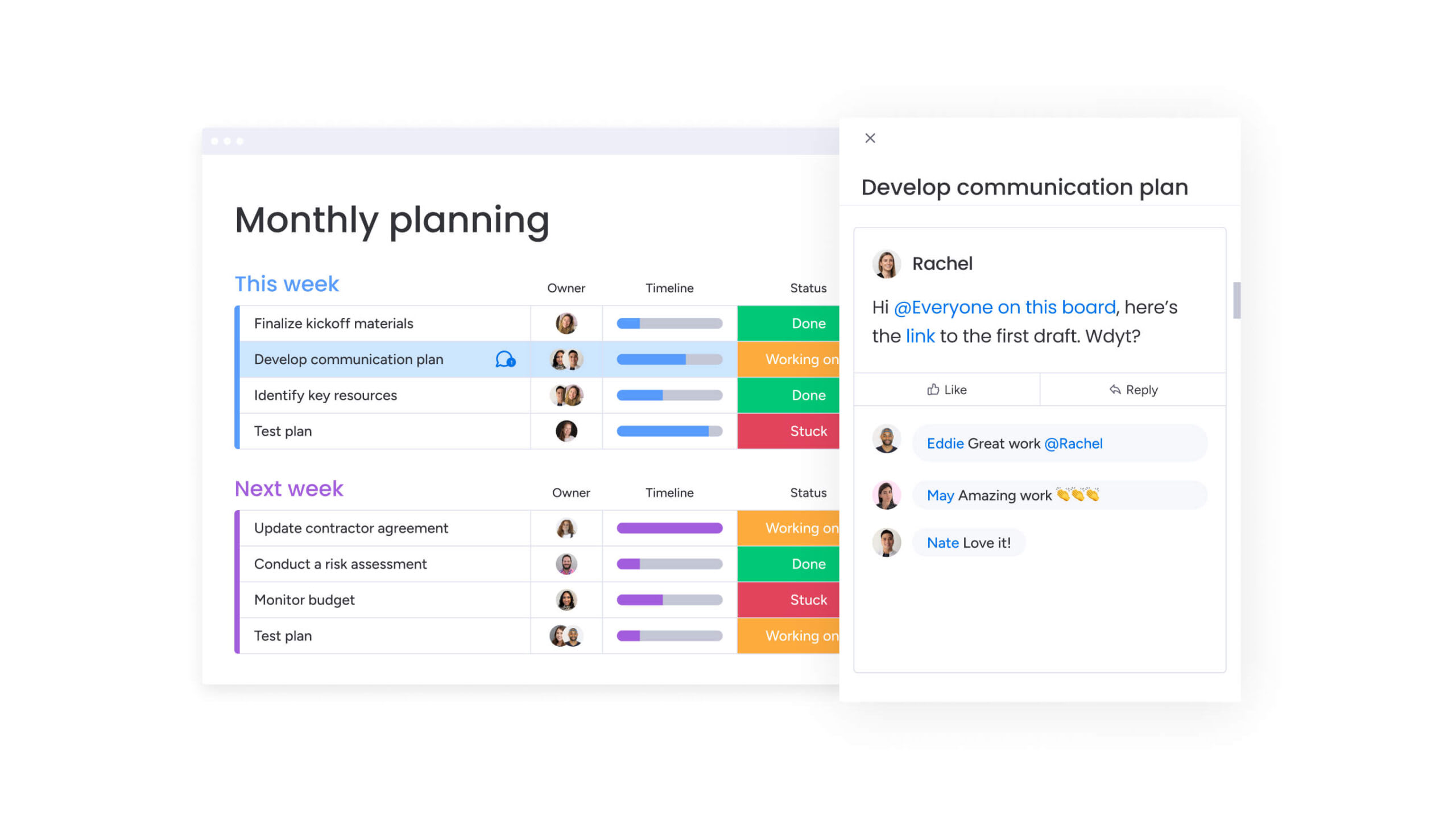
Operationalize your marketing personas with monday work management
Maintaining effective personas requires coordination across teams, centralized data, and ongoing updates. Spreadsheets often create version control issues, while static documents quickly fall out of use and out of date.
A collaborative platform like monday work management brings persona development into daily workflows. By centralizing information and enabling real-time updates, teams maintain a shared source of truth that evolves alongside customer behavior.
Platform capabilities for persona management
Centralized persona management begins with dedicated boards that house research inputs, interview notes, survey responses, and finalized profiles in one place. Custom columns track attributes such as:
- Customer context: Demographics and company information.
- Goals: Success metrics and desired outcomes.
- Challenges: Pain points and obstacles.
- Preferences: Behavioral and communication patterns.
- Decision dynamics: How buying decisions are evaluated and approved.
Cross-team collaboration ensures insights stay current. When a sales rep logs a new objection trend or a support team flags recurring issues, those updates are immediately visible to marketing and product teams.
Research workflow automation reduces manual coordination and keeps studies on track. Automated processes support:
- Interview scheduling: Calendar invites sent to participants.
- Session reminders: Notifications before interviews begin.
- Follow-up actions: Messages and next steps after completion.
AI-powered insights through AI Blocks further help teams analyze feedback at scale, summarize persona learnings, and surface trends quickly. The platform enables teams to instantly extract actionable insights from customer data, keeping personas up-to-date and aligned with real-time market shifts.
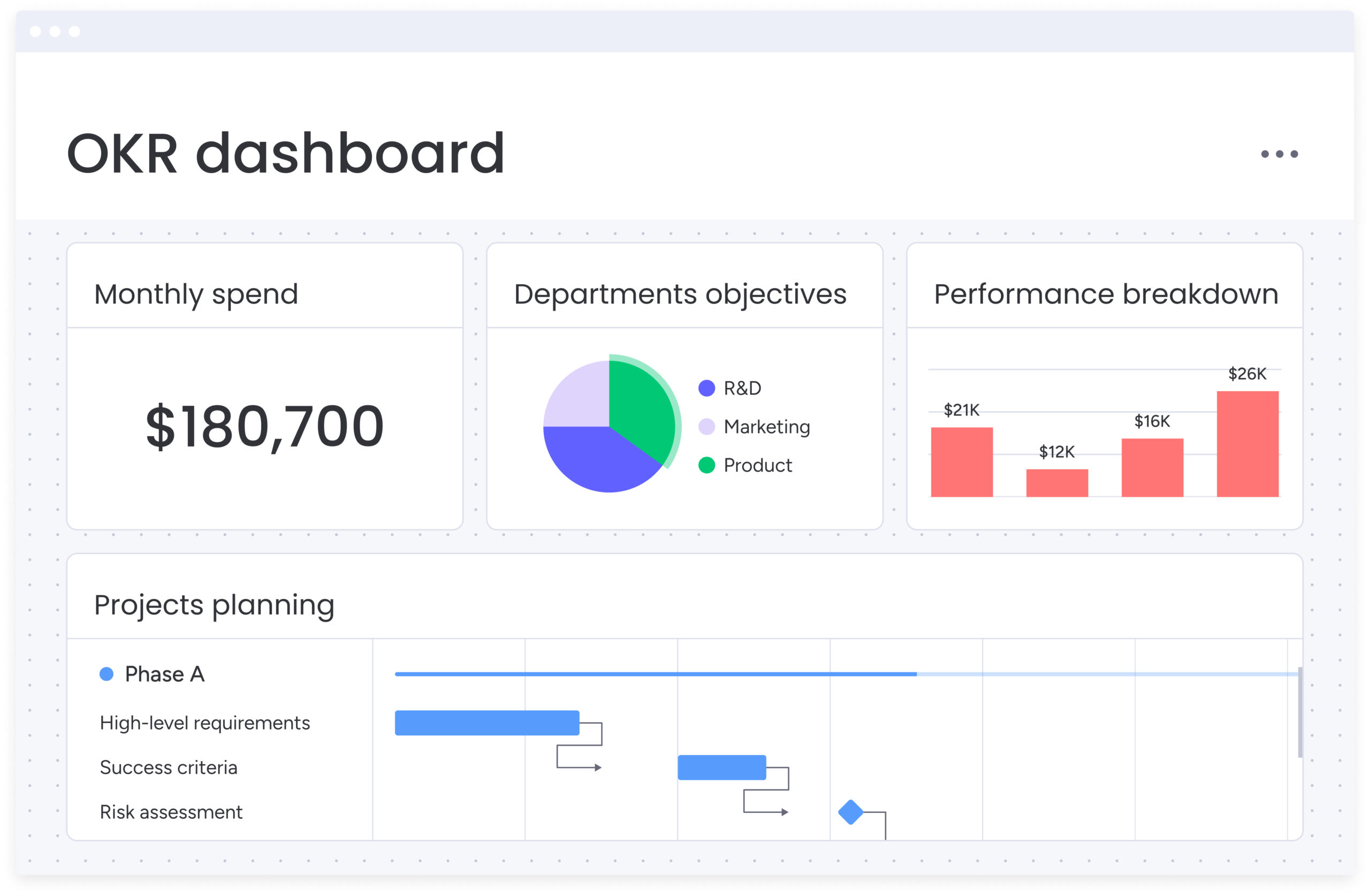
Turn persona insights into marketing results now
Personas create real impact when teams use them consistently, not just during a one-time planning session. The most effective organizations treat persona development as an ongoing conversation that evolves alongside their customers.
That consistency starts with accessibility. When personas live inside active workflows instead of static slide decks or PDFs, teams reference them naturally during planning, execution, and customer conversations. They become part of how work gets done, not background documentation.
The results are measurable. Campaigns feel more relevant. Acquisition costs decline. Sales and marketing align around a shared understanding of who they are trying to reach. When decisions reflect up-to-date persona insights, messaging resonates more deeply and customer experiences feel intuitive rather than forced.
Try monday work managementFrequently asked questions
How many marketing personas should a B2B company develop?
Most B2B organizations should aim for three to five primary personas. This range maintains focus and actionability, avoiding the pitfalls of too many personas, which dilute marketing efforts, or too few, which oversimplify diverse customer needs.
What's the difference between buyer personas and user personas in B2B contexts?
Buyer personas focus on decision-makers and emphasize evaluation criteria and purchasing priorities. User personas represent the individuals who interact with the product daily, concentrating on workflows, usability, and practical usage patterns.
How often should marketing personas be updated?
Personas should be reviewed quarterly and fully updated every 12-18 months. Regular reviews capture ongoing customer insights, while comprehensive updates ensure profiles reflect evolving market conditions.
Can small teams create effective marketing personas without extensive research budgets?
Yes. Small teams can develop meaningful personas using existing analytics, surveys, CRM records, and customer support data. While interviews add depth, solid personas can be created using the information already available.
How do you validate marketing personas are accurate?
Validation involves sharing draft customer profiles with eight to twelve customers who match each profile and asking them to rate accuracy on a scale of one to five. Follow up with any customers who rate sections below four to identify gaps between assumptions and reality.
What's the most common mistake when creating marketing personas?
The most common error is developing personas in isolation. Personas created solely by marketing often miss critical insights from sales, product, and customer success teams, who interact with customers directly every day.

 Get started