

Marketing campaigns can quickly become complex, with multiple teams, timelines, and deliverables to manage. Even with a solid creative brief and approved budget, planning the actual campaign often raises questions about priorities, responsibilities, and tracking progress. Without a clear framework, campaigns risk delays, misalignment, or missed objectives.
A marketing campaign template provides structure to streamline planning and execution. By guiding teams through every stage — from goal setting to performance analysis — templates ensure nothing is overlooked, accelerate campaign launches, and make collaboration across departments more efficient.
This practical guide explains what makes a campaign template effective, highlights the essential components that cannot be skipped, and demonstrates how to build campaigns that deliver real results. It also shines a light on different template types for various goals, shows how to customize them, and introduces ways that dynamic work platforms can transform static templates into workflows that adapt as campaigns evolve.
Key takeaways
- Marketing campaign templates provide structured frameworks: Guide teams through planning, execution, and performance measurement to turn chaotic launches into repeatable workflows.
- Templates accelerate launch times and standardize processes: Eliminate the blank page problem, capture institutional knowledge, and reduce planning phases from weeks to days.
- Dynamic templates with monday work management enhance execution: Real-time dashboards, automated approvals, and AI optimization allow campaigns to adapt as they progress.
- Different campaign goals require specialized templates: Product launches need cross-functional coordination, while lead generation focuses on conversion funnels for maximum impact.
- Align templates with business objectives for measurable ROI: Connect campaign goals to company OKRs and predefine KPIs to demonstrate results and secure leadership buy-in.
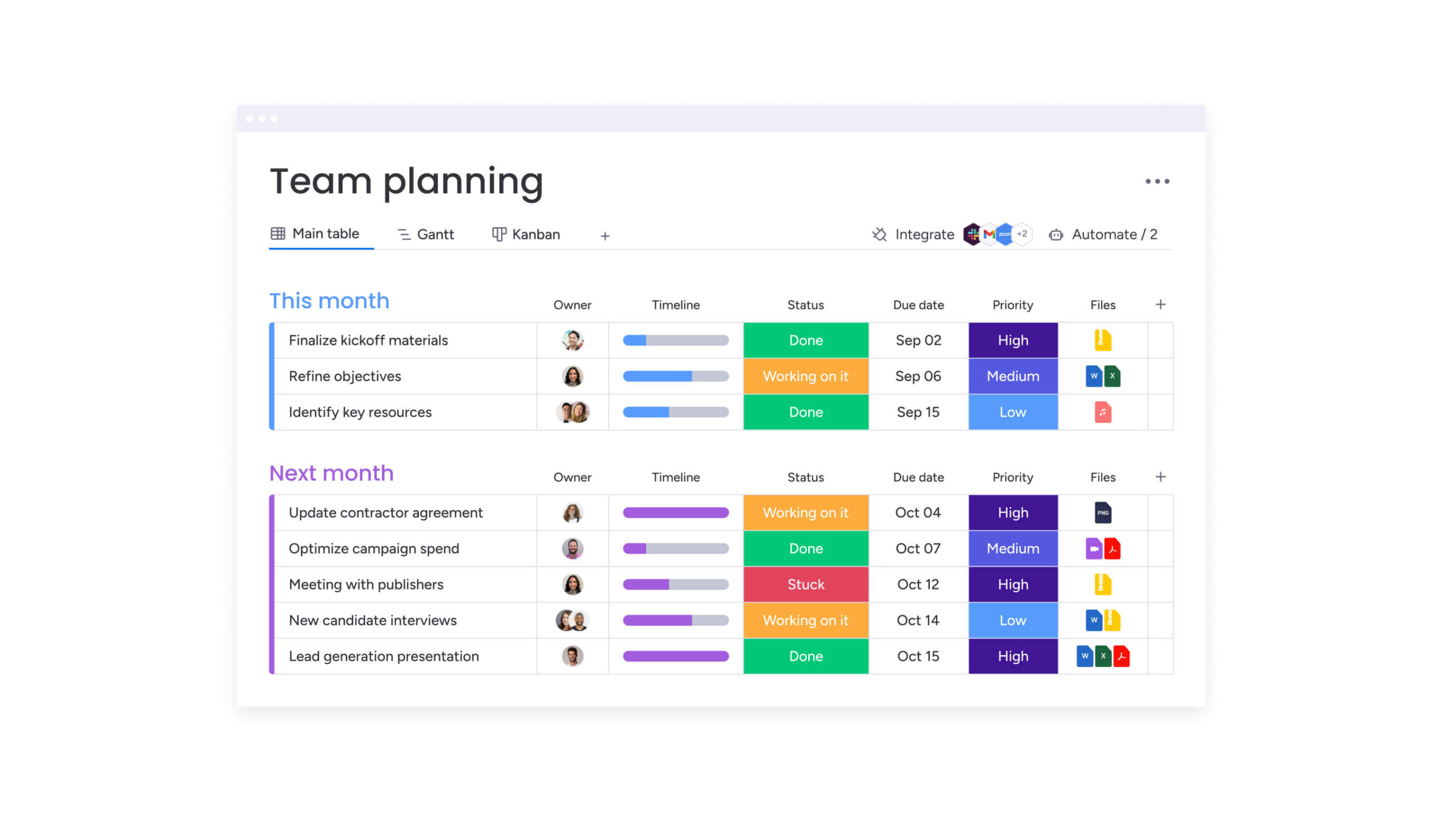
What is a marketing campaign template?
A marketing campaign template is a structured framework that guides teams through planning, executing, and measuring marketing initiatives. It includes standardized sections for campaign goals, audience targeting, budget allocation, timelines, and performance tracking, turning complex launches into repeatable workflows.
For mid-to-large organizations, templates act as the central reference where everyone — from creative designers to data analysts — stays aligned on priorities. Traditional templates are often static spreadsheets, which can quickly become outdated and cumbersome.
Modern templates function as dynamic workspaces with real-time updates, automated notifications, and integrations with the platforms your team already uses.
Marketing campaign template vs marketing plan template
Marketing campaign templates and marketing plan templates serve very different functions with different scopes and time horizons. Here’s a quick summary demonstrating how they differ in practise:
| Aspect | Marketing campaign template | Marketing plan template |
|---|---|---|
| Primary scope | Single initiative (product launch, seasonal promotion) | Department or organization strategy |
| Timeline | Weeks to months | Quarters to years |
| Detail level | Tactical execution details | Strategic positioning and budgets |
| Primary use | Coordination and delivery | Strategy formulation and alignment |
| Key stakeholders | Project managers, creatives, specialists | CMO, VP of marketing, executives |
As the table above demonstrates, campaign template focuses on specific, time-bound initiatives requiring tactical execution. On the other hand, a marketing plan template addresses broader strategic approaches over longer periods, typically covering annual goals and resource allocation.
Try monday work managementWho benefits from marketing campaign templates?
Campaign templates support different roles across a marketing organization, helping teams stay aligned while managing complex initiatives.
For campaign owners, templates provide a clear structure for coordinating cross-functional work. When timelines, deliverables, and responsibilities are defined in one place, copywriters, designers, developers, and analysts can collaborate without constant follow-ups or last-minute confusion.
Teams responsible for execution benefit from consistency. Coordinators managing multiple campaigns can move between initiatives more easily when each campaign follows the same structure. Critical steps such as legal review, stakeholder approvals, and launch preparation remain visible and are less likely to be overlooked.
At the leadership level, standardized templates improve visibility across initiatives. Directors can compare campaign performance, forecast resources, and track results across teams or regions using a consistent reporting framework.
Templates also simplify collaboration with external agencies and partners. Clear expectations, deliverables, and approval workflows reduce onboarding friction and help outside teams integrate smoothly into the campaign process.
Try monday work managementWhen timelines, deliverables, and responsibilities are defined in one place, copywriters, designers, developers, and analysts can collaborate without constant follow-ups or last-minute confusion.

7 essential elements every marketing campaign template needs
The best campaign templates include seven core elements that cover planning through execution. These components create accountability and tie every creative decision back to your goals and results.
Campaign goals and SMART objectives
Start with measurable goals using the SMART framework. Replace general intentions like “increase brand awareness” with specific objectives, such as “increase organic site traffic by 15% among target audiences by the end of Q3.” This ensures all campaign activities align with business priorities from the start.
Target audience and buyer personas
Strong templates define audiences with precision, going beyond basic demographics. Detailed profiles guide decisions about tone, ad placement, and content format. Include:
- Behavioral insights: How audiences interact with your brand.
- Pain points: Specific challenges your campaign addresses.
- Preferred channels: Where your audience consumes content.
These profiles shape messaging and tactical choices throughout campaign execution.
Budget planning and resource allocation
Break down budgets across media spend, creative production, technology costs, and human resources. Clear budget planning allows teams to:
- Project ROI upfront for leadership approval.
- Spot inefficiencies before they affect outcomes.
- Make informed decisions about resource allocation.
This transparency supports strategic spend and prevents costly overruns.
Campaign timeline and key milestones
Templates should include a detailed timeline that maps dependencies, approval gates, and key milestones. Benefits include:
- Visual timelines that help cross-functional teams understand interdependencies.
- Automated adjustments when schedules shift.
- Consistent alignment across all teams to maintain launch readiness.
A structured timeline keeps projects on track and ensures deliverables are met on time.
Marketing channels and distribution strategy
Document channel selection based on audience preferences, budget constraints, and campaign objectives. Include:
- Rationale: Why each channel was selected.
- Integration: How channels work together.
- Tactical plan: Actions for each channel within the broader campaign.
This ensures your campaign is cohesive and that every channel contributes to measurable goals.
Performance metrics and KPIs
Pre-define success metrics that align with campaign objectives. Distinguish between:
- Leading indicators: Engagement rates, click-throughs, social shares.
- Lagging indicators: Conversions, revenue impact, customer retention.
Set baseline measurements and target benchmarks before launch to establish clear success criteria and enable real-time optimization.
Team roles and accountability matrix
Assign ownership for every campaign element using a RACI framework:
- Responsible: Who executes the work.
- Accountable: Who approves and is answerable.
- Consulted: Who provides input.
- Informed: Who receives updates.
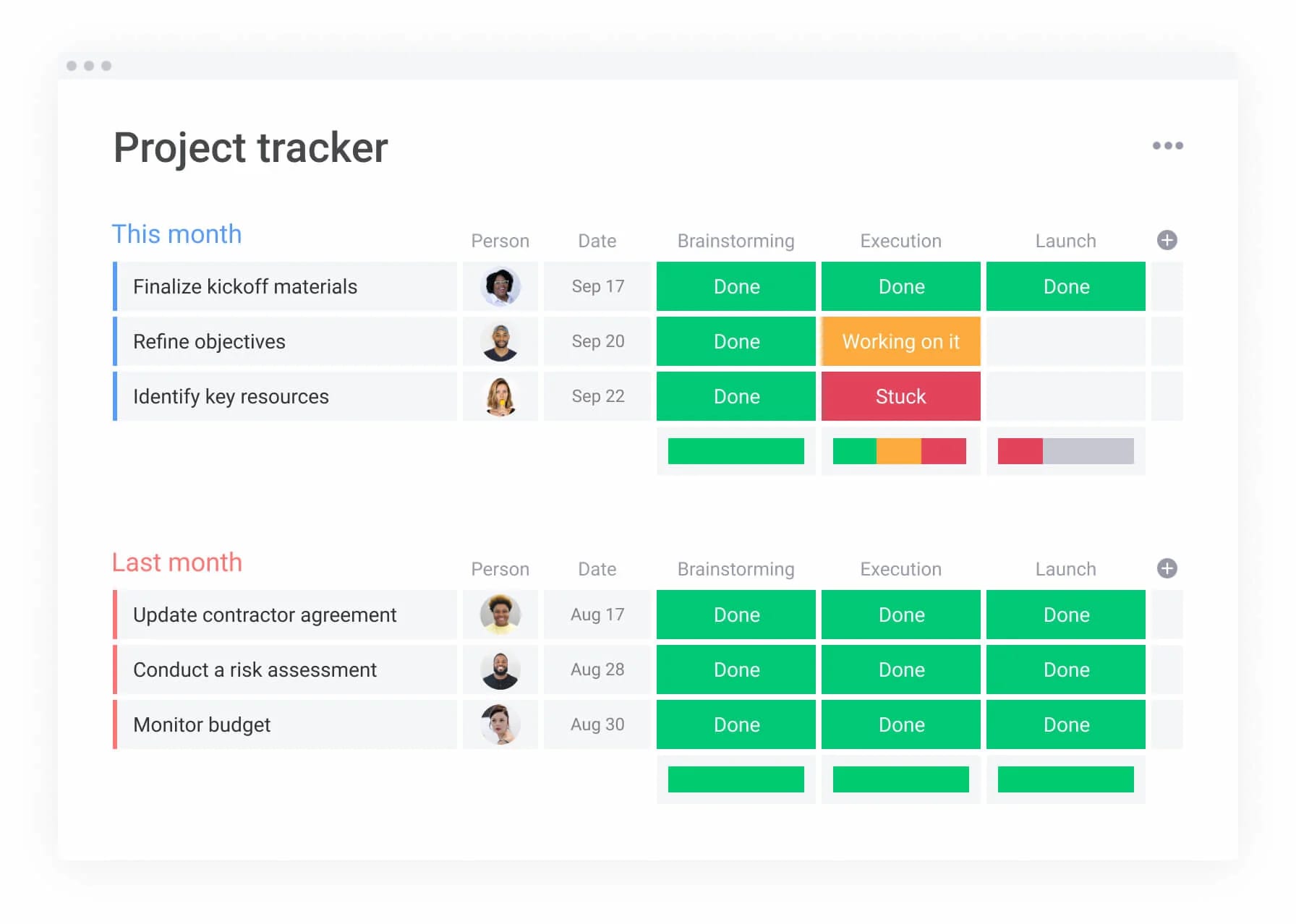
Why marketing teams choose campaign templates over starting from scratch
Templates do more than save time — they enable teams to execute with precision and speed. These frameworks create structure that guides decisions, improves consistency, and accelerates results.
- Accelerate campaign launch times: Templates provide an immediate starting point and clear structure, allowing teams to bypass administrative setup. Planning phases shrink from weeks to days because documents do not need to be built from scratch. This speed allows teams to respond quickly to market trends while focusing on creative strategy.
- Standardize winning campaign frameworks: Templates capture proven strategies, making it easy to replicate high-performing campaigns. Reusing these frameworks improves quality control, reduces oversight risks, and ensures consistent execution across initiatives.
- Enable real-time performance tracking: Structured templates support consistent data collection, enabling accurate comparison across campaigns. Using the same reporting framework allows leadership to observe trends and evaluate performance without manually compiling reports.
- Scale successful campaigns across teams: Templates simplify knowledge transfer across regions and business units. Frameworks that succeed in one market can be deployed elsewhere, maintaining brand consistency while allowing for local adjustments.
How to build your marketing campaign plan
Creating a campaign plan that drives results requires a structured approach. These seven steps connect business goals to execution, providing a clear path from concept to launch.
Step 1: Set campaign objectives
Start by translating broader business goals into specific, measurable outcomes. Use the SMART framework to define clear success criteria. For example, a campaign objective might be generating 500 marketing qualified leads at a cost per lead under $50 by December 31st.
Step 2: Define your target audience
Strong campaigns begin with a deep understanding of the audience. Use analytics data, surveys, and sales insights to develop detailed buyer personas. Document motivations, pain points, and preferred channels so messaging and creative decisions remain aligned throughout the campaign.
Step 3: Allocate your campaign budget
Distribute budget based on campaign goals and past performance data. A complete campaign budget typically includes:
- Paid media: Ad spend across platforms such as search, social, and display.
- Content production: Creative development costs for copy, design, and video.
- Software subscriptions: Marketing platforms, analytics tools, and automation software.
- External agencies: Partner fees for specialized services or campaign support.
Step 4: Select your marketing mix
Choose channels that align with campaign objectives and audience behavior. For example, B2B lead generation campaigns often prioritize LinkedIn, while brand awareness initiatives may perform better on platforms like Instagram or YouTube. Design a coordinated mix so channels reinforce each other.
Step 5: Map your campaign timeline
Outline the full campaign timeline, including milestones, dependencies, and approval stages. Visual timelines help teams understand how deliverables connect and where delays might affect launch readiness. Include buffer time for external vendors or complex review cycles.
Step 6: Assign team responsibilities
Clarify ownership for every campaign deliverable. A RACI framework helps define who executes the work, who approves decisions, and who should be informed of progress. Clear roles reduce confusion and keep collaboration moving smoothly.
Step 7: Implement tracking systems
Set up measurement systems before the campaign launches. Configure analytics platforms, tracking pixels, UTM parameters, and reporting dashboards so teams can monitor performance in real time and optimize campaigns as they run.
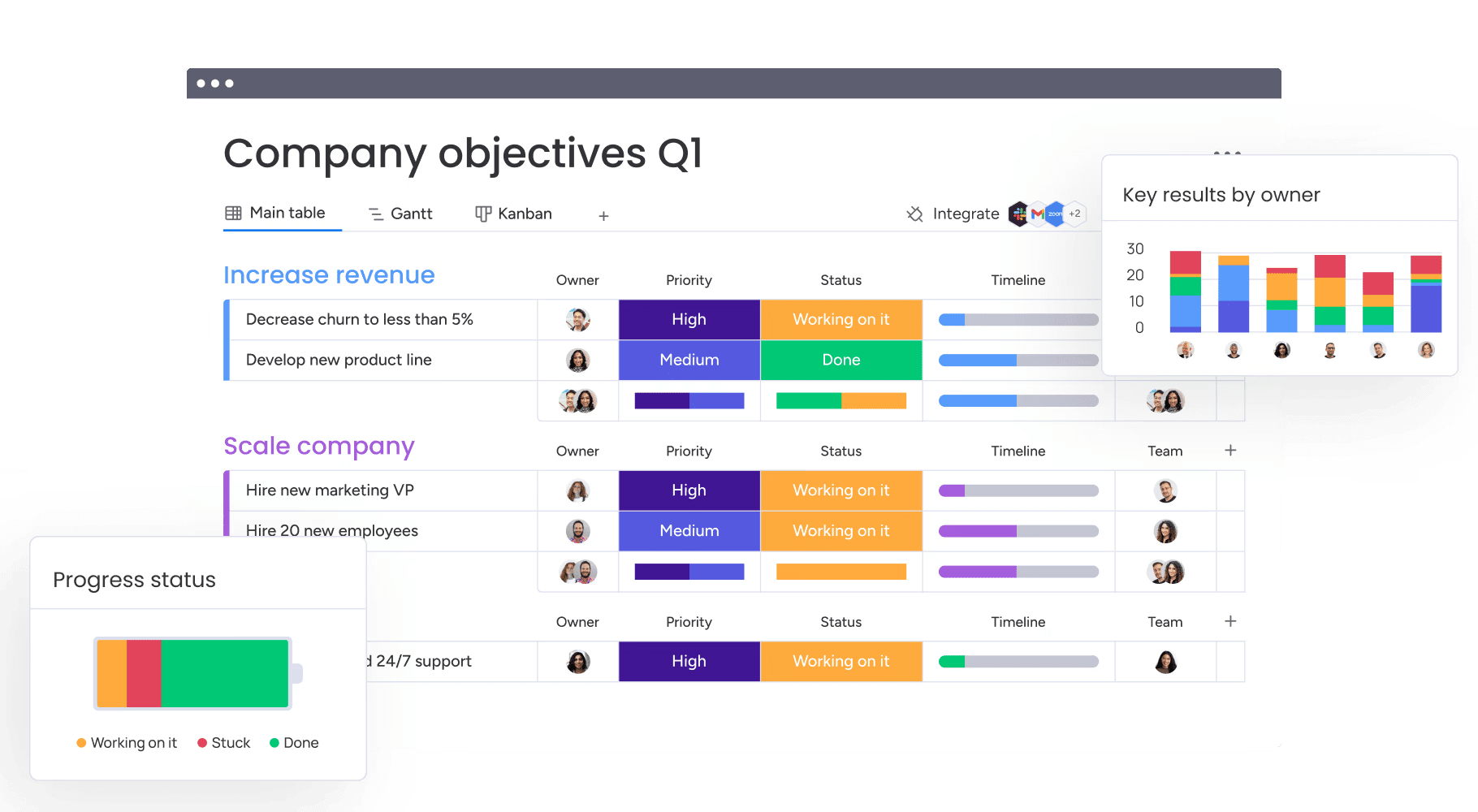
6 types of marketing campaign templates for every goal
Different campaign objectives require distinct template structures. Core elements remain the same, but workflows and sections vary according to goals.
| Template type | Primary focus | Key metrics | Unique components |
|---|---|---|---|
| Product launch | Cross-functional coordination | Launch readiness, initial sales | Beta testing, sales enablement |
| Brand awareness | Reach and perception | Impressions, sentiment | Creative brief, media planning |
| Lead generation | Conversion optimization | MQLs, cost per lead | Landing pages, nurture sequences |
| Content marketing | Audience engagement | Traffic, time on page | Editorial calendar, repurposing |
| Email marketing | List performance | Open rate, click-through | Segmentation, A/B testing |
| Digital marketing | Multi-channel attribution | ROAS, CPC | Pixel implementation, retargeting |
- Product launch templates: Cover pre-launch buzz, beta testing, launch events, and post-launch momentum. They require extensive cross-functional coordination over long timelines.
- Brand awareness templates: Track reach, frequency, and sentiment rather than immediate conversions. Consistent messaging across channels and long-term measurement are critical.
- Lead generation templates: Focus on the conversion funnel, including lead scoring, capture mechanisms, and sales handoffs. They specify landing page requirements, form design, and automated nurture sequences.
- Content marketing templates: Prioritize content creation and distribution workflows. Editorial calendars and repurposing strategies ensure maximum value from each asset.
- Email marketing templates: Organize list management, segmentation, and personalization. Automation sequences and A/B testing of subject lines and CTAs are included.
- Digital marketing templates: Unify multiple online channels while emphasizing attribution modeling and journey mapping. Technical elements like pixel implementation and retargeting are central.
Transform campaign planning with AI-powered templates
Static templates help organize campaign planning, but AI can turn them into systems that actively support decision-making. By analyzing data, automating routine work, and surfacing insights, AI-powered templates help teams plan campaigns faster and optimize them as they run.
Automate repetitive campaign activities
AI automates routine tasks like populating data fields, analyzing audience segments, and generating status reports. According to McKinsey, retail teams spend roughly 40% of their time on low-value tasks like reconciling siloed data and reporting. AI-driven templates free time for strategic and creative work.
Predict campaign success metrics
Advanced templates leverage AI to analyze historical data and forecast performance. Predictive analytics model potential outcomes based on budget and channel mix, suggesting timeline or resource adjustments before execution.
Optimize budget and resource distribution
AI algorithms evaluate real-time performance data and recommend optimal resource allocation. Machine learning identifies patterns from successful campaigns, offering actionable suggestions for team skills, channel mix, and timing.
5 best practices for customizing your marketing campaign template
Campaign templates work best when they balance structure with flexibility. Standardization keeps campaigns consistent, but thoughtful customization ensures templates still reflect how your team actually works. The practices below help teams adapt templates while maintaining the repeatability that makes them valuable.
Align templates with business OKRs
Campaign objectives should connect directly to company goals. Mapping campaign metrics to organizational OKRs makes it easier to demonstrate how marketing contributes to broader business outcomes.
Teams using monday work management can track progress toward strategic objectives in real time, helping leadership see how individual campaigns support company priorities.
Build flexibility into campaign structures
Templates should be adaptable to different campaign sizes and levels of complexity. Modular structures allow teams to add or remove sections depending on the initiative.
This flexibility keeps workspaces focused and relevant, preventing unnecessary fields or documentation from slowing down execution.
Create modular campaign components
Reusable template blocks make campaign planning far more efficient. Instead of rebuilding every section from scratch, teams can assemble campaigns using prebuilt components.
Common elements such as creative briefs, competitive analysis frameworks, and measurement plans can be developed once and reused across multiple campaigns.
Connect templates to your marketing stack
Templates become significantly more powerful when they integrate with your existing tools. Connecting templates to CRM systems, analytics platforms, and creative tools reduces manual updates and improves data visibility.
monday work management integrates with more than 200 applications, allowing campaign data to flow directly into templates and dashboards.
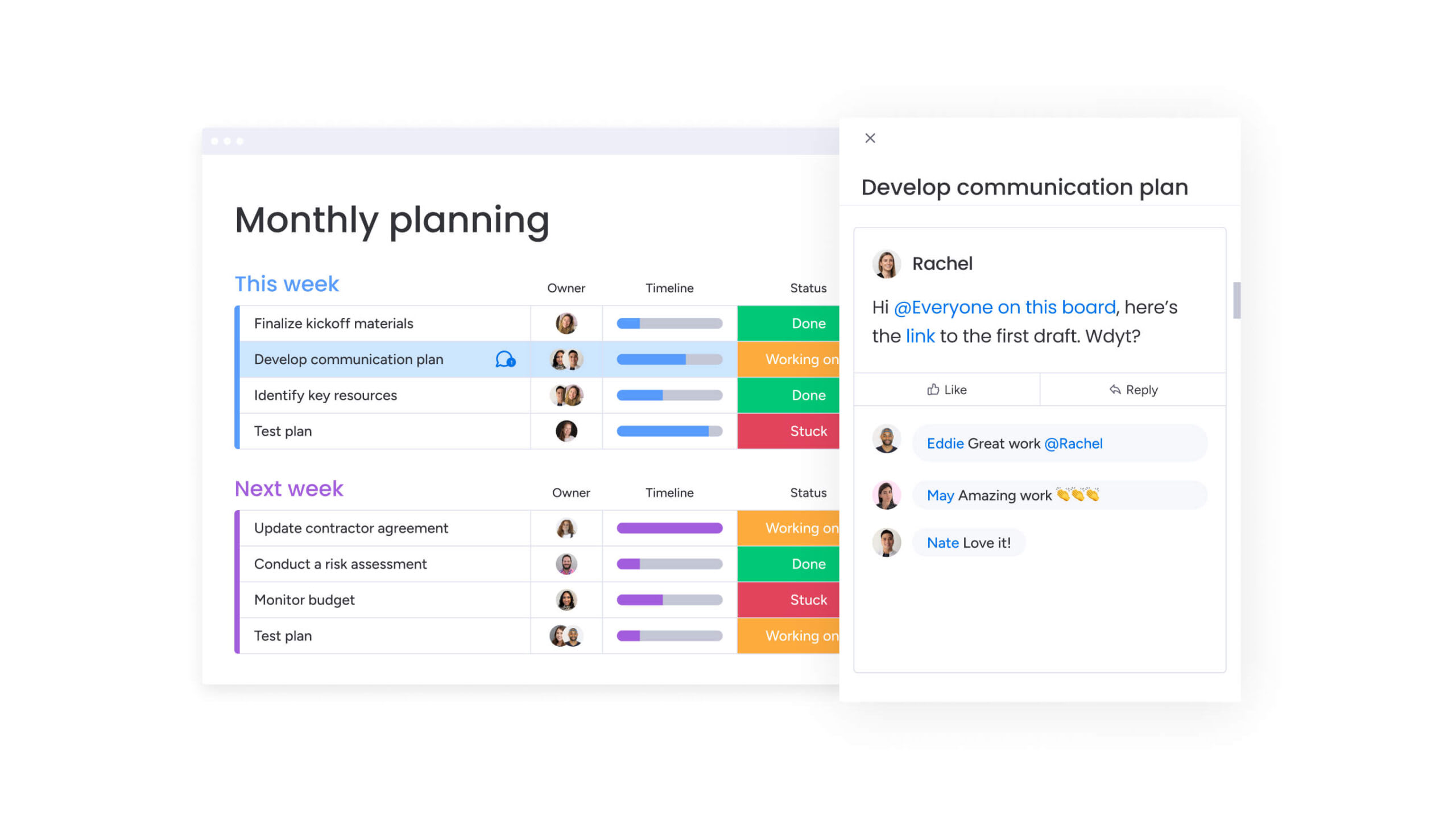
Enable cross-team collaboration
Campaign planning rarely happens within a single department. Templates should support collaboration across marketing, sales, product, and legal teams.
Shared visibility, commenting, and approval workflows help stakeholders stay aligned throughout the campaign lifecycle and prevent delays caused by fragmented communication.
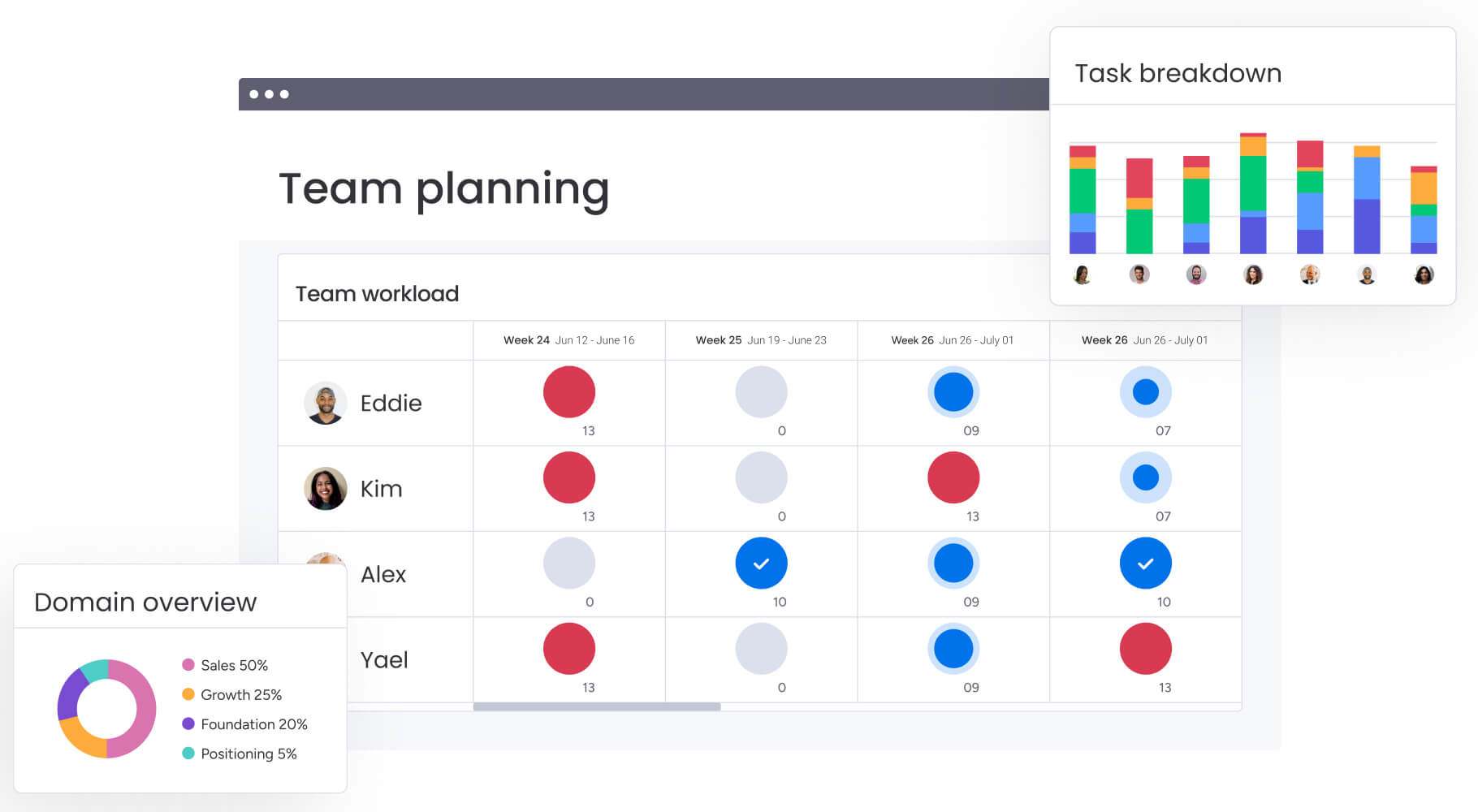
Turn your marketing campaign template into a living workflow with monday work management
Static templates help teams organize campaign plans, but they struggle to keep pace with the fast-moving nature of modern marketing. As campaigns grow more complex, teams need systems that connect planning, execution, and performance data in one place.
Advanced and intelligent platforms like monday work management transform traditional templates into collaborative workflows that adapt in real time. Instead of static documents, teams work inside shared environments where updates, approvals, and reporting happen automatically. This approach improves coordination while giving leaders clear visibility into every campaign.
Dynamic campaign dashboards that update in real time
Customizable dashboards replace static reports with live views of campaign performance, budget usage, and timeline progress. Widgets consolidate information from multiple boards so teams can track metrics such as lead volume against targets or budget burn rate.
Real-time updates remove the need for manual status reports and ensure stakeholders always have access to the latest data.
Automated campaign approval workflows
Approval processes often slow campaigns when they rely on emails and manual follow-ups. Automated workflows streamline these steps by sending notifications when creative assets need review, updating statuses after approval, and escalating items that remain pending too long.
These workflows can also align with governance requirements for different campaign types, ensuring compliance without slowing execution.
Portfolio management across multiple campaigns
Marketing teams rarely run a single campaign at a time. Portfolio-level views provide a complete picture of active initiatives, helping teams monitor resource allocation and compare performance across campaigns.
With this visibility, teams can identify timeline conflicts, balance workloads, and prioritize the initiatives delivering the greatest impact.
AI-powered campaign optimization
AI adds an intelligence layer to campaign planning and execution. AI Blocks can categorize campaign requests, summarize performance reports, and highlight insights that help teams optimize campaigns faster.
The Campaign Manager Digital Worker acts as a virtual assistant, recommending budget adjustments, identifying trends, and surfacing opportunities to improve results.
Seamless integration with 200+ marketing applications
Modern campaign workflows connect directly with the rest of your marketing technology stack. Integrations with tools such as Salesforce, HubSpot, Google Ads, and Adobe Creative Cloud eliminate data silos and reduce manual updates.
Campaign leads can automatically flow into CRM systems, while advertising spend and performance data update budget trackers in real time.

“monday.com has been a life-changer. It gives us transparency, accountability, and a centralized place to manage projects across the globe".
Kendra Seier | Project Manager
“monday.com is the link that holds our business together — connecting our support office and stores with the visibility to move fast, stay consistent, and understand the impact on revenue.”
Duncan McHugh | Chief Operations OfficerBuild campaigns that deliver consistent results today
Marketing campaign templates provide the structure teams need to plan campaigns with clarity and consistency. When that structure is supported by dynamic workflow management, templates evolve from simple planning documents into systems that guide execution from start to finish.
With shared visibility, automated coordination, and real-time performance tracking, teams can launch campaigns faster, collaborate more effectively, and adjust strategies as results emerge. This combination of structure and adaptability helps marketing organizations maintain consistency while moving quickly in competitive markets.
Try monday work managementFrequently asked questions
What format works best for a marketing campaign template?
The ideal format depends on team collaboration needs. Digital platforms offer advantages over static documents by enabling real-time updates, automated notifications, and cross-team coordination for complex campaigns.
How often should marketing teams update their campaign templates?
Templates should be updated quarterly. Conduct structural reviews after major campaign post-mortems or organizational changes, implementing immediate updates as required.
Can one template work for multiple campaign types?
A single template can support multiple campaign types if core elements like budget and timeline remain consistent. Specialized templates for distinct campaign types, however, enhance planning effectiveness.
What separates a campaign template from a campaign brief?
Templates and briefs differ in scope and purpose. Templates provide a comprehensive framework for the full campaign lifecycle, while briefs focus on defining creative direction and deliverables.
How do you track ROI using a marketing campaign template?
ROI is tracked through predefined measurement frameworks. Include baseline metrics, target benchmarks, and scheduled reporting to calculate accurate return on ad spend.
How does monday work management enhance traditional campaign templates?
Dynamic platforms like monday work management transform static templates into collaborative workspaces. Features such as real-time performance tracking, automated approval workflows, and AI-driven optimization evolve alongside campaigns, enabling teams to work efficiently while maintaining visibility and control.

 Get started