


Publishing content consistently is not the same as having a strategy. Many teams produce blogs, videos, and campaigns every week yet still struggle to explain how that content contributes to revenue.
A content marketing strategy creates that missing connection. It ties every asset to a defined business objective, whether that’s pipeline growth, customer retention, or brand authority. Instead of reacting to trends or publishing to stay visible, teams operate within a clear framework that guides what to create, where to distribute it, and how to measure performance.
This article breaks down how to build a content marketing strategy that scales in 2026. You’ll see the core components that matter, how AI strengthens execution without replacing judgment, and how to turn content into a repeatable growth engine.
Key takeaways
- Align content with business goals: Define KPIs that move beyond vanity metrics to measure leads, revenue, and customer retention.
- Understand the audience deeply: Develop personas and map content to specific pain points and stages in the customer journey.
- Organize around content pillars: Focus on three to five themes that balance audience interest with organizational expertise for consistent messaging.
- Distribute strategically across channels: Optimize content formats for owned, earned, and paid media to maximize reach and engagement.
- Scale operations with unified systems: Use workflow platforms to centralize planning, track performance in real time, and ensure consistent execution.
What is a content marketing strategy?
A content marketing strategy defines how content supports business growth. It outlines what to create, who it’s for, where it will be distributed, and how success will be measured. Instead of publishing to stay visible, content is developed with clear commercial intent.
For marketing teams, this structure becomes an operational backbone. A defined marketing strategy ensures that every blog post, video, and whitepaper is tied to a specific objective, whether that is generating qualified leads, strengthening retention, or building long-term brand authority. Content stops being a volume game and starts functioning as a measurable growth channel.
The difference between strategic execution and ad-hoc publishing comes down to direction. One follows a clear marketing strategy. The other relies on activity without alignment.
That distinction typically shows up in three ways:
- Purpose-driven execution: Every asset supports a defined business objective from the outset.
- Audience-centric focus: Topics reflect real customer needs and buying-stage questions rather than internal assumptions.
- Measurable performance: Results are tracked through defined KPIs and attribution models that connect content to revenue outcomes.
Learn more: Content management template
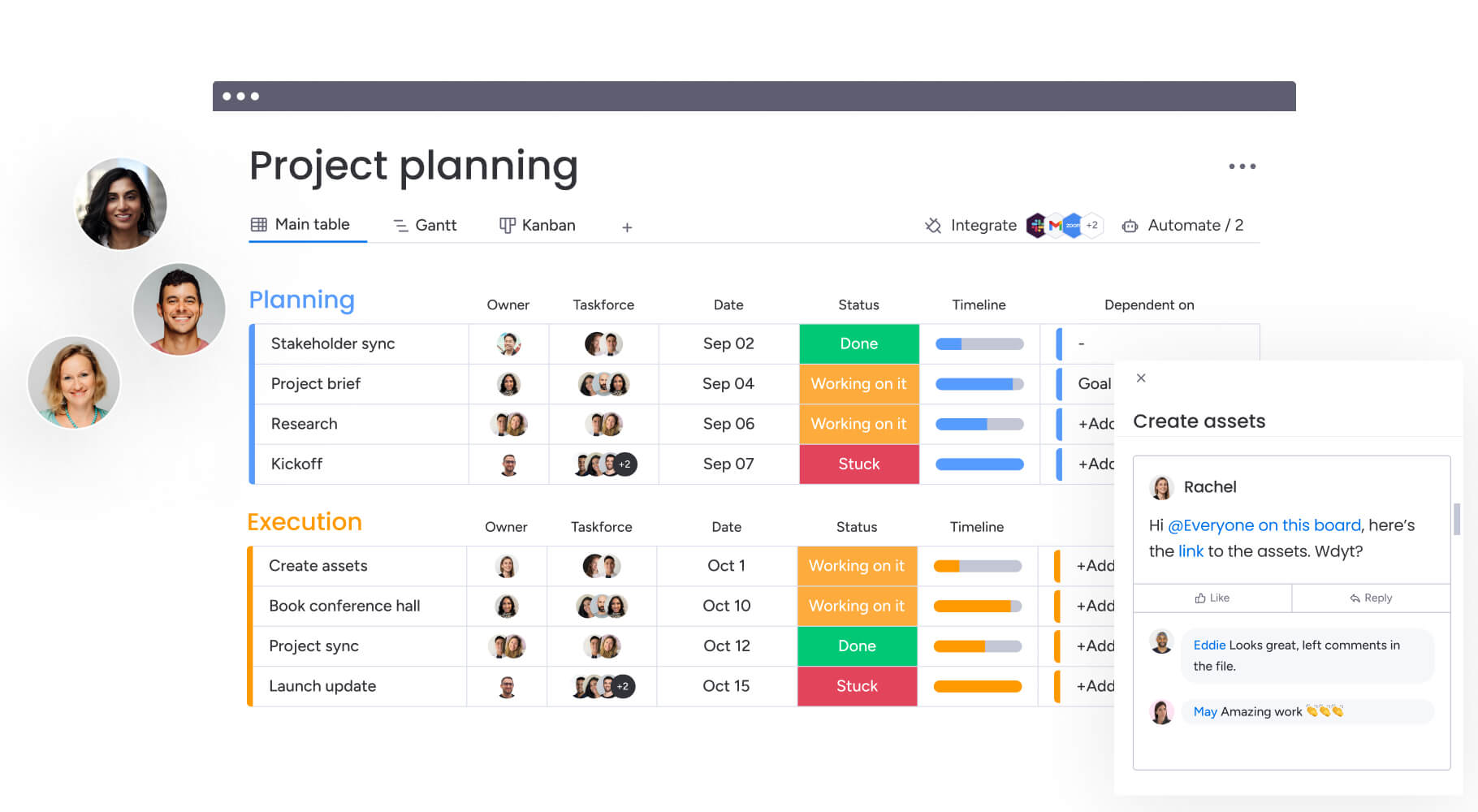
Content strategy vs content marketing plan
A marketing strategy defines the direction and purpose behind your content. It answers why you are creating it, who it is for, and what business outcome it should drive. A content marketing plan, on the other hand, focuses on execution. It outlines how content will be produced, when it will be published, and which channels will support distribution.
The table below breaks this down more clearly, comparing scope, timeline, focus, and primary outputs. Together, they show that strategy sets the foundation, while the plan brings it to life.
| Aspect | Content strategy | Content marketing plan |
|---|---|---|
| Scope | High-level direction, principles, vision | Tactical execution, production, timelines |
| Timeline | Long-term (one to three years) | Short-term (quarterly or annual) |
| Focus | Why content exists and what goals it serves | How content gets created and distributed |
| Components | Audience insights, pillars, brand voice | Editorial calendars, workflows, channel tactics |
| Primary output | Architectural blueprint | Construction schedule |
Think of content strategy as the blueprint and the marketing plan as the build schedule. Without the blueprint, even the most detailed timeline lacks context. You might stay busy, but you won’t necessarily build something that supports long-term growth.
Why your business needs a content marketing strategy
Investing in a content marketing strategy transforms content from an expense into a predictable revenue generator. It becomes a key driver of market position, delivering benefits that go way beyond marketing efficiency.
How do you know if your content actually drives results? A strategy gives you the answer by tying every asset to outcomes you can measure.
- Building lasting brand authority: Strategic content positions your organization as an industry leader by consistently tackling complex challenges with valuable insights.
- Generating quality leads at scale: A solid strategy attracts and nurtures prospects through the entire buyer journey by mapping content to each funnel stage.
- Creating measurable content ROI: Strategic approaches let you track attribution and performance, showing exactly how marketing spend turns into revenue.
- Aligning marketing with revenue goals: A strategy ensures marketing activities connect directly to business outcomes, preventing the “content for content’s sake” trap.
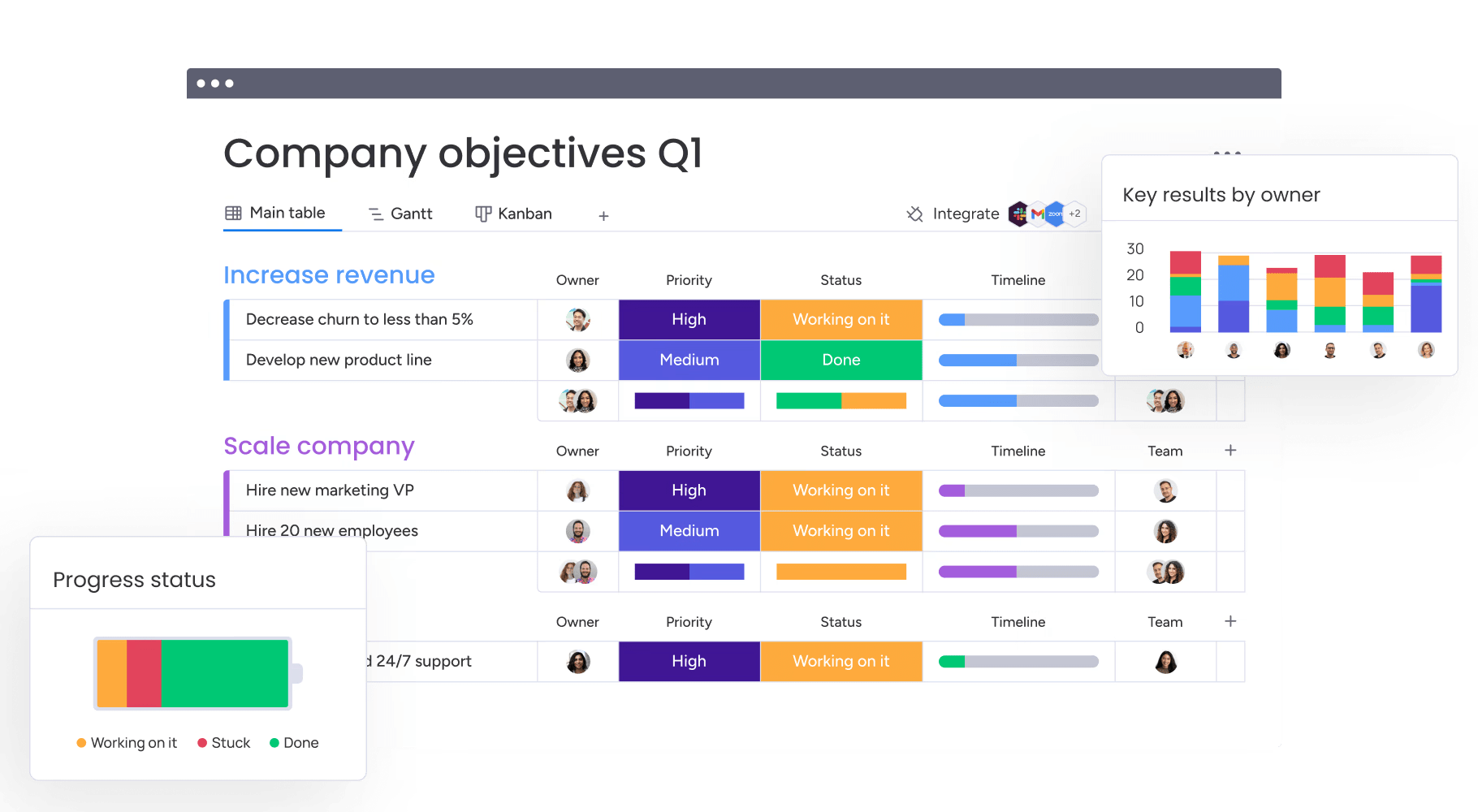
monday work management company objectives board
5 essential components of content marketing strategy
A strong content marketing strategy is not a checklist of isolated tactics. It functions as a connected system where each component reinforces the next. When one area is weak, performance suffers across the board. Distribution without measurement creates visibility but no proof of value. Measurement without clear goals produces data without direction.
The following components work together to create a strategy that is structured, measurable, and built for growth.
Business-aligned goals and KPIs
Content objectives should support broader organizational priorities. Replace vanity metrics such as likes and shares with meaningful business indicators, including lead quality, customer acquisition cost, and revenue attribution.
Applying the SMART framework: specific, measurable, achievable, relevant, and time-bound, ensures content efforts align directly with revenue.
Deep audience research and personas
Success means understanding your audience beyond basic demographics. Deep research uncovers specific pain points, preferred formats, and questions people ask at each stage of their decision.
Persona development turns this data into profiles you can actually use. These guide content teams to create assets that connect with the people most likely to buy.
Strategic content pillars
Successful content requires understanding audiences beyond demographics. Comprehensive research uncovers pain points, preferred content formats, and key questions at each buyer journey stage.
Persona development transforms this data into actionable profiles, guiding teams to create content that resonates with high-value audiences.
Multi-channel distribution strategy
Strategic distribution focuses on where your target audience actively engages. It integrates owned media (blog, email), earned media (PR, guest posts), and paid media (ads, sponsored content) into a cohesive ecosystem.
This component also accounts for content format optimization. Assets must be tailored to the specific norms and user behaviors of each channel.
Performance measurement framework
A robust measurement framework tracks content performance against business goals using attribution modeling and regular reporting cadences. This system moves beyond tracking what happened to understanding why it happened.
The framework should include both leading indicators (engagement, reach) and lagging indicators (conversions, revenue). Regular analysis helps teams identify patterns and optimize future content decisions.
Content objectives should support broader organizational priorities. Replace vanity metrics such as likes and shares with meaningful business indicators, including lead quality, customer acquisition cost, and revenue attribution.

Step-by-step guide to building a content marketing strategy
A content marketing strategy only works if it can be executed. Big ideas and high-level goals matter, but without a clear path from planning to action, they rarely translate into results. Breaking the process into defined steps makes it easier to move from intention to consistent performance.
The framework below outlines how to build a strategy that is structured, practical, and built to improve over time.
Step 1: Set strategic content goals
Align content objectives with immediate organizational priorities. Identify the primary outcome: revenue, retention, or awareness, and define measurable KPIs for success. Document how performance will be reported to stakeholders.
Step 2: Research your target audience
Audience understanding comes from rigorous research methodologies. These include customer interviews, survey data, and analytics review.
Analyze competitive landscapes to identify market gaps. Synthesize this research into actionable persona profiles that document the specific problems your product or service solves for each segment.
Step 3: Audit existing content assets
Before creating new content, systematically evaluate current assets to identify performance gaps and reusable material as part of your content marketing approach. A content audit catalogs existing pieces, assessing them against current goals and quality standards.
This process reveals what topics are already covered, what needs updating, and where critical content gaps lie. Use this data to inform future content decisions and avoid duplicating efforts.
Learn more: AI content gap agent
Step 4: Define content themes and topics
Based on audience research and business goals, develop specific content pillars. Topic ideation methods populate these pillars with a mix of evergreen content for long-term value and timely pieces that capitalize on current trends.
This ensures your content calendar remains balanced and relevant. Document how each theme connects to business objectives and audience needs.
Step 5: Select content formats and channels
Next, match content formats: video, long-form text, interactive experiences, to audience preferences and resource capabilities. Select primary distribution channels where your brand can win and allocate resources accordingly.
Decisions here are driven by where your audience spends time, not just where you want to be. Consider production costs and team capabilities when making format decisions.
Step 6: Build your content calendar
Strategy moves into execution with calendar development. This includes production timelines, publishing schedules, and campaign coordination.
A robust calendar balances planned, strategic content with flexibility to react to market changes, ensuring consistent publication cadence. Include buffer time for revisions and unexpected opportunities.
Step 7: Create distribution and promotion plans
Content requires a vehicle to reach its audience. Outline systematic approaches to amplification, including social media scheduling, email marketing integration, and paid promotion strategies.
Coordinate cross-channel timing to maximize the impact of every asset released. Plan for both immediate promotion and long-term amplification strategies.
Step 8: Implement tracking and analytics
Finally, establish measurement systems to connect content performance to business outcomes. Set up analytics, define reporting intervals, and create feedback loops.
Integrating AI into your content marketing strategy
Artificial intelligence is shifting content marketing from a primarily creative discipline into a data-backed, operationally driven practice. Rather than replacing human judgment, AI strengthens strategic decision-making and improves efficiency across every stage of the content life cycle.
This shift enables teams to move faster without sacrificing quality or consistency. AI supports research, planning, execution, and performance analysis, allowing content efforts to scale in a controlled and measurable way.
The most effective AI adoption does not require data science expertise either. Value comes from workflow-embedded capabilities that are accessible to non-technical teams and designed for immediate application.
These are the most impactful ways organizations can integrate AI into their content marketing strategies in 2026:
- AI-powered content research and ideation: AI analyzes large volumes of search, engagement, and competitive data to surface emerging topics and identify content gaps more efficiently than manual analysis.
- Automating content production workflows: AI supports production by generating outlines, assisting with drafts, summarizing source material, and accelerating video and visual editing processes.
- Scaling personalization with AI: AI enables tailored experiences at scale through dynamic email content, personalized landing pages, and adaptive website messaging.
- Measuring AI impact on performance: Advanced analytics compare AI-assisted content against human-only benchmarks to assess efficiency, engagement, and conversion outcomes.
Learn more: AI content writer agent
Content marketing ROI and performance tracking
Measuring content marketing effectiveness requires attribution models that connect consumption to revenue. Without this connection, content remains a cost center rather than a growth engine that drives measurable business outcomes.
Attribution models vary based on sales cycle, particularly in inbound marketing contexts. First-touch attribution credits the content that introduced the brand, while multi-touch models distribute credit across every interaction. Setting up tracking systems that capture the full customer path is essential for accurate ROI calculation.
The following metrics enable strategic decision-making at every organizational level:
- Awareness metrics: Reach, impressions, and share of voice measure top-of-funnel visibility and brand presence.
- Engagement metrics: Time on page, scroll depth, and comment quality indicate how well content resonates with its audience.
- Lead generation metrics: Content-driven leads, lead quality scores, and cost per lead assess mid-funnel effectiveness.
- Revenue metrics: Content-influenced revenue, customer lifetime value, and sales cycle velocity demonstrate bottom-line impact.
Real-time dashboards provide immediate visibility into what’s working, enabling ongoing optimization. Real-time dashboards provide the immediate visibility agile teams need to pivot quickly based on performance data.
Strategic content distribution and amplification
Effective distribution coordinates across all media types. Owned channels provide control, earned channels provide credibility, and paid channels provide scale. Strategic budget allocation ensures these channels support one another. For example, use paid ads to amplify a high-performing organic blog post.
Communities offer powerful organic amplification opportunities:
- Employee advocacy programs: Encourage internal teams to share content organically and strengthen brand credibility.
- Industry group participation: Build long-term visibility through active involvement in relevant professional communities.
- Partnership initiatives: Expand reach through co-marketing with complementary, non-competing organizations.
Content must be adapted, not just reposted. A whitepaper becomes a social media thread, a YouTube video, and a newsletter segment. Each format requires optimization for its specific channel while maintaining message consistency.

Scale your content marketing strategy with monday.com
As content operations expand, coordination becomes more complex. More contributors, more campaigns, and more reporting layers introduce friction that slows production and reduces visibility. What worked for a small team quickly breaks down at scale.
monday.com helps marketing teams operationalize their content marketing strategy. Instead of relying on disconnected tools, teams manage planning, production, approvals, and performance in one structured system.
The table below outlines common scaling challenges and shows how monday.com replaces manual processes with centralized, trackable workflows.
| Challenge | Traditional approach | monday work management solution |
|---|---|---|
| Content workflow visibility | Scattered across email and spreadsheets | Centralized boards with real-time status tracking |
| Cross-team collaboration | Manual handoffs and disjointed meetings | Automated notifications and shared workspaces |
| Performance measurement | Manual data entry and delayed reporting | Real-time dashboards with automated collection |
| Calendar management | Static spreadsheets requiring manual updates | Dynamic calendars with automated scheduling |
| Strategic alignment | Quarterly reviews with limited visibility | Continuous tracking against business goals |
Beyond resolving individual bottlenecks, the platform strengthens execution across the entire content life cycle.
- Workflow visibility: Centralized boards provide a real-time view of every asset from ideation through publication.
- Flexible planning views: Kanban, Timeline View, and Gantt charts allow stakeholders to track progress in the format that fits their role.
- Performance alignment: Dashboards connect production metrics directly to defined KPIs and business objectives.
- AI capabilities further streamline execution across growing content operations.
- AI Blocks: Automatically categorize content by type, funnel stage, or performance tier.
- AI summaries: Turn detailed performance reports into concise insights for faster decisions.
- Data extraction: Pull critical information from content briefs and research documents to accelerate planning.
- Collaboration also becomes more structured as volume increases.
- Shared workspaces: Writers, designers, and stakeholders collaborate in context without relying on scattered email threads.
- Automated notifications: Approvals and status updates move forward without manual follow-ups.
- Clear ownership: Assigned responsibilities and deadlines reduce ambiguity and prevent bottlenecks.

“monday.com has been a life-changer. It gives us transparency, accountability, and a centralized place to manage projects across the globe".
Kendra Seier | Project Manager
“monday.com is the link that holds our business together — connecting our support office and stores with the visibility to move fast, stay consistent, and understand the impact on revenue.”
Duncan McHugh | Chief Operations OfficerTurn content strategy into competitive advantage today
As content programs scale, teams often struggle with fragmented workflows, manual reporting, and limited visibility into how daily execution supports long-term business goals. When strategy, production, and performance tracking live in disconnected tools, even strong content plans fail to deliver consistent results.
monday.com helps bridge this gap by turning content strategy into an operational system that connects execution to measurable outcomes:
- Teams struggle to manage growing content volumes efficiently: Centralized boards and automated workflows replace scattered spreadsheets and manual handoffs.
- Visibility across planning, production, and performance is limited: Real-time dashboards align content activity with defined KPIs and business objectives.
- Collaboration slows execution and increases rework: Shared workspaces and structured approvals streamline feedback and reduce bottlenecks.
- Reporting consumes time without driving action: Automated tracking and AI-powered summaries surface insights without manual effort.
- Scaling content creates coordination and capacity challenges: Workload and timeline views align resources with strategic priorities.
By consolidating planning, execution, and measurement into a single platform, the intelligent solution enables teams to operate with greater efficiency, stronger alignment, and clearer strategic impact, without adding complexity to existing workflows.
Frequently asked questions
What are content marketing strategies?
Content marketing strategies are documented plans that guide how organizations create, distribute, and measure content to achieve specific business objectives. They include audience research, content themes, distribution channels, and performance measurement frameworks that connect content efforts to measurable business outcomes.
What are the five C's of content marketing?
The five C's of content marketing are Content (valuable information), Context (relevant timing and placement), Connection (audience engagement), community (building relationships), and conversion (driving business outcomes). These elements work together to create effective content marketing systems that deliver measurable results.
What is the 70-20-10 rule in content marketing?
The 70-20-10 rule suggests allocating 70% of content to proven topics that consistently perform well, 20% to emerging trends and experimental content, and 10% to completely new approaches. This framework balances content reliability with strategic innovation to maintain consistent performance while exploring new opportunities.
How long does it take to see content marketing results?
Content marketing typically shows initial engagement results within three to six months, with significant business impact becoming measurable after six to twelve months of consistent execution. Long-term competitive advantages from content marketing often develop over twelve to 24 months as content assets compound and build authority.
What budget do I need for content marketing strategy?
Content marketing budgets typically range from five to 15% of total marketing spend, depending on business model and growth stage. Successful content marketing requires investment in both content creation resources and operational systems to execute strategy consistently at scale.
How does monday.com support content marketing strategy execution?
monday.com provides the operational framework needed to execute content marketing strategies consistently through centralized workflow management, automated processes, and real-time performance tracking. The platform connects strategic planning to daily execution across content teams, ensuring strategies translate into measurable business results.

 Get started