


Your sales team just spent three weeks nurturing a “hot” lead with multiple demos, detailed proposals, and executive presentations. Then, radio silence. Weeks later, you discover they never had budget approval and the person you were talking to couldn’t actually buy anything. Sound familiar?
This is the cost of confusing interest with intent. Sales qualified leads (SQLs) represent prospects who’ve moved beyond curiosity into active evaluation with real buying power. Unlike marketing qualified leads who downloaded a whitepaper or attended a webinar, SQLs have confirmed budget, authority, and genuine need. They’re the difference between a pipeline full of hope and a forecast you can actually trust.
Here’s how to spot genuine SQLs, use frameworks that separate real opportunities from time-wasters, and build a qualification system that works. You’ll spot the behavioral signals that show serious buying intent, map out who’s really making decisions, and see how teams use a flexible work platform to automate qualification without losing the human touch that closes deals.
Key takeaways
This guide provides a complete roadmap for mastering SQL qualification. By focusing on the right signals and frameworks, you can build a predictable revenue engine. Here are the essential points we’ll cover.
- Prioritize real buying intent: focus on leads that have confirmed budget, authority, and a defined timeline instead of mistaking engagement for readiness to buy.
- Use qualification frameworks consistently: apply methods like BANT or MEDDIC to remove guesswork and help sales teams qualify opportunities with confidence and speed.
- Watch for high-intent behavior: track actions like pricing discussions, multi-stakeholder involvement, and reference requests to spot prospects actively evaluating a purchase.
- Map the full buying group early: identify economic buyers, technical evaluators, and end users upfront to prevent deals from stalling late in the cycle.
- Systemize SQL workflows with monday CRM: automate scoring, handoffs, and visibility so your team qualifies faster without losing context or human judgment.
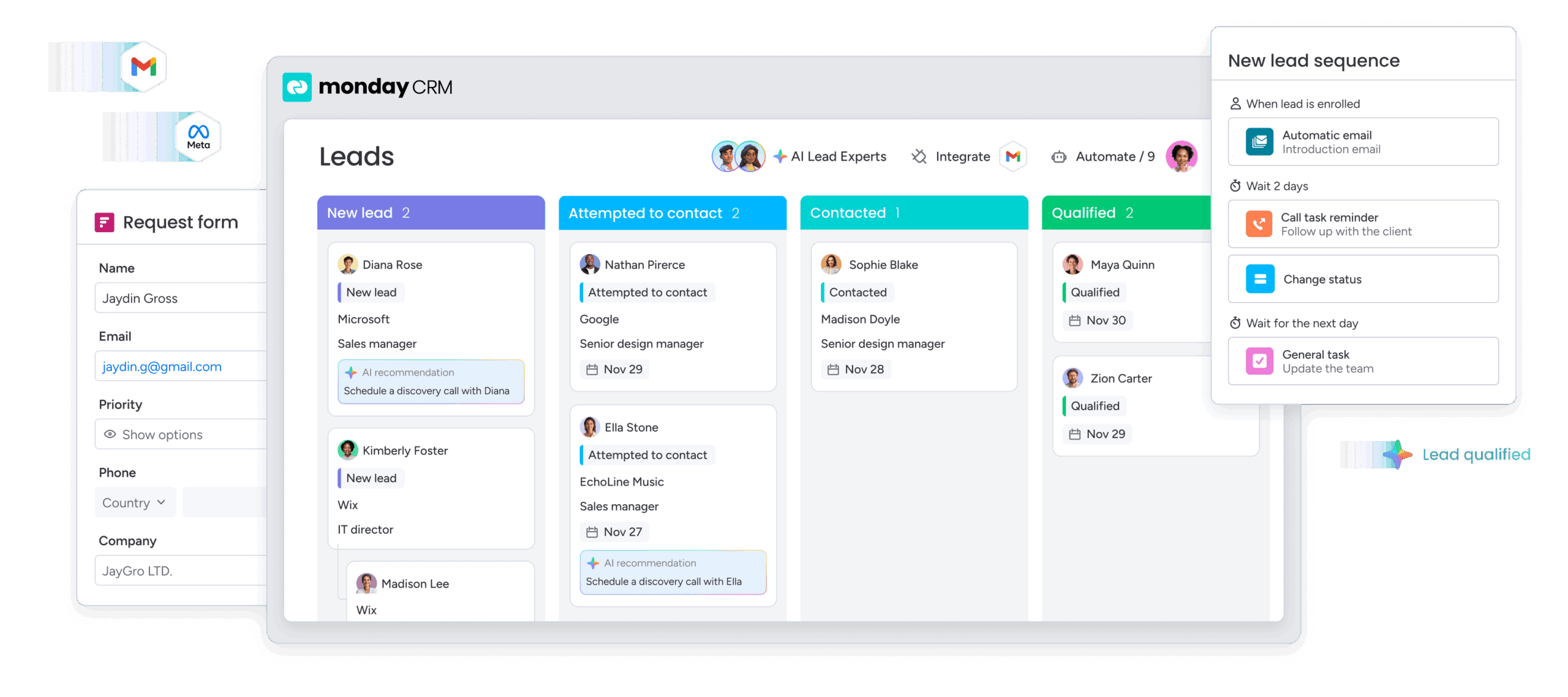
A sales qualified lead (SQL) is a prospect your sales team has vetted and confirmed has real buying intent, decision-making power, and budget to actually purchase. Unlike sales lead generation interest that signals curiosity, an SQL represents a sales-validated opportunity where someone with real authority has confirmed they’re actively evaluating solutions to solve a specific business problem.
Think of it this way: if an MQL is someone who raised their hand to learn more, an SQL is someone who’s ready to have a serious conversation about buying.
This matters because SQLs are your best shot at closing deals and forecasting revenue you can trust. When your pipeline is full of qualified SQLs instead of tire-kickers, your revenue becomes predictable and your team focuses energy on opportunities that actually close. According to McKinsey, this need for forecast reliability is particularly critical as 72% of CMOs plan to increase their marketing budgets relative to sales in 2026, intensifying pressure to prove revenue impact.
Defining SQL qualification criteria
An SQL meets specific criteria that show they’re ready to buy — not gut feelings or hunches, but concrete signals that separate real opportunities from leads that need more time. Understanding these criteria helps your team consistently identify prospects worth pursuing.
Here’s what separates SQLs from leads that waste your time:
- Budget range confirmed: the prospect has disclosed budget parameters that align with your pricing model and has either allocated funds or can access budget through their approval process.
- Decision timeline established: a specific project start date or procurement deadline exists, not just exploring solutions “someday”.
- Pain point validated: Through discovery questions, you’ve confirmed a specific business challenge that your solution addresses.
- Stakeholder access: you can engage with multiple decision influencers, not just a single contact.
- Competitive landscape understood: you know what alternative solutions the prospect is evaluating.
Revenue teams using monday CRM find that automating this qualification tracking through customizable scoring models helps qualify sales leads against these criteria and flag when leads meet SQL thresholds, ensuring consistent and accurate qualification.
This AI-assisted approach to lead scoring aligns with findings that organizations with mature gen-AI capabilities have already realized 22% efficiency gains and expect that to reach 28% within two years.
Understanding why SQLs drive revenue growth
SQLs directly impact the metrics that revenue leaders care about most. Understanding this connection helps justify the time and resources invested in proper qualification processes. Focus on SQLs and everything gets faster — forecasting, deal velocity, and close rates.
- Forecast accuracy: improves dramatically when your pipeline consists of properly qualified opportunities. You can predict quarterly revenue with confidence because you understand which deals will actually close.
- Sales cycle acceleration: happens naturally because qualified prospects move through pipeline stages faster than unqualified leads who need constant re-education and re-engagement.
- Resource allocation: becomes strategic rather than reactive. When your team focuses time on high-probability opportunities instead of chasing unqualified leads, productivity increases and burnout decreases.
Characteristics of high-converting SQLs
High-converting SQLs show specific patterns in how they behave and what their companies look like. Recognizing these patterns helps sales teams prioritize their efforts and allocate resources to opportunities most likely to close. These characteristics serve as early indicators of serious buying intent.
What separates SQLs that convert from those that stall? The following characteristics consistently indicate prospects who are serious about purchasing:
- Multi-stakeholder engagement: multiple contacts from the prospect organization actively participate in conversations and demos.
- Detailed discovery participation: the prospect willingly shares specific business metrics, challenges, and internal processes.
- Reference request behavior: asking for customer case studies or implementation examples signals serious evaluation.
- Technical evaluation readiness: requesting demos, trials, or proof-of-concept discussions indicates movement beyond conceptual interest.
- Procurement process awareness: understanding their internal approval procedures demonstrates thought about becoming a customer.
A disciplined SQL process brings order and focus. Sales reps invest their time in high-probability opportunities. Forecasts become reliable, and management gains confidence in pipeline reports. The entire revenue engine runs smoothly because everyone can distinguish between real opportunities and noise.
SQL vs MQL vs SAL: know the differences
MQLs, SALs, and SQLs aren’t competing categories — they’re different stages in how leads mature. Each plays a different role, and knowing the difference prevents handoff confusion and wasted effort. Clarity on these definitions helps teams allocate resources appropriately and set realistic expectations.
What is a marketing qualified lead (MQL)?
An MQL is someone marketing has flagged based on engagement, but they still need qualification before sales invests time. MQLs have downloaded content, attended webinars, or met lead scoring thresholds based on engagement activity. They’ve shown interest in your content or brand, but that interest hasn’t been validated by sales conversations.
MQLs may lack budget, authority, or immediate need confirmation. They’re potential, not proven.
A prospect who downloads three whitepapers and attends a webinar might be genuinely interested in purchasing, or they might be a student researching the industry, a competitor gathering intelligence, or an employee exploring solutions their company has no intention of buying.
What is a sales accepted lead (SAL)?
A SAL bridges the gap between marketing and sales qualification. It’s a lead that sales has agreed to pursue based on initial review, but full qualification remains pending. The sales team has accepted the lead for follow-up, initial contact has been attempted or scheduled, and basic fit criteria appear to be met.
SALs exist in the gray area between marketing handoff and sales qualification. The lead looks promising enough to warrant sales attention, but discovery hasn’t confirmed whether it meets SQL criteria.
This stage prevents leads from languishing in limbo. Once sales accepts a lead, they commit to qualifying it within a defined timeframe.
How SQLs fit into your revenue pipeline
Leads don’t become sales-ready all at once. They move through clear stages as intent, fit, and readiness are validated. The progression from MQL to SAL to SQL creates a structured handoff between marketing and sales, so each team knows when and how to engage.
The table below breaks down what each stage represents, how much sales involvement it requires, and how likely it is to convert.
| Stage | Qualification depth | Sales involvement | Conversion probability | Next steps |
|---|---|---|---|---|
| MQL | Surface-level engagement signals | None, marketing owned | 2-5% to closed-won | Nurturing campaigns and lead scoring |
| SAL | Initial fit assessment | Accepted for follow-up | 8-15% to closed-won | Initial outreach and discovery scheduling |
| SQL | Comprehensive validation | Actively qualified | 20-35% to closed-won | Opportunity development and proposal |
Teams leveraging monday CRM automate these transitions and maintain handoff protocols between marketing and sales through customizable workflows that trigger based on qualification criteria and engagement thresholds.
Try monday CRM6 lead qualification frameworks that drive results
No single framework works for every sale. Enterprise deals need different approaches than SMB. Complex cycles differ from simple ones. Technical sales differ from business-focused. The goal is providing sales teams with multiple methodologies to choose from based on their specific context.
Framework 1: BANT (budget, authority, need, timeline)
BANT is a classic framework best suited for straightforward, transactional deals, though it can be less effective for complex B2B sales with multiple stakeholders. It works best for straightforward, transactional deals.
The framework focuses on four key questions that help determine sales readiness:
- Budget: “what budget range have you allocated for solving this challenge?”.
- Authority: “who else would be involved in evaluating and approving this type of solution?”.
- Need: “what specific business impact are you experiencing from this problem?”.
- Timeline: “when do you need to have a solution implemented?”.
BANT works well for transactional sales with straightforward purchasing processes. It becomes too rigid for complex B2B environments where buying decisions involve multiple stakeholders and extended evaluation periods.
Framework 2: CHAMP (challenges, authority, money, prioritization)
CHAMP evolved from BANT because understanding business context beats checking boxes. This framework recognizes that modern B2B purchases often lack pre-allocated budgets and require deeper context understanding.
This framework prioritizes understanding the prospect’s challenges first, then explores decision-making structure, budget creation process, and where the initiative ranks among competing priorities. Many significant purchases don’t have pre-allocated budget, so understanding how budget gets created becomes crucial.
A prospect might have budget and authority, but if solving this problem ranks fifth on their priority list, the deal won’t close this quarter.
Framework 3: MEDDIC (metrics, economic buyer, decision criteria, decision process, identify pain, champion)
MEDDIC is the deepest framework — built for complex enterprise deals where the size justifies extensive discovery. It takes time, but you’ll understand the buying dynamics better than any other method.
Each element serves a specific purpose in understanding the buying environment:
- Metrics: quantifiable business impact the prospect expects to achieve.
- Economic buyer: the person with budget authority and veto power.
- Decision criteria: technical and business requirements for vendor selection.
- Decision process: steps, timeline, and stakeholders involved in evaluation.
- Identify pain: specific business problems driving the purchase decision.
- Champion: internal advocate who will promote your solution.
Framework 4: GPCTBA/C&I (goals, plans, challenges, timeline, budget, authority, consequences & implications)
This framework starts with business context before getting into qualification details — moving from strategy to tactics. It provides comprehensive insight into both strategic and tactical buying factors.
The framework starts with goals and plans to understand strategic direction, then moves through challenges, timeline, budget, and authority. It concludes with consequences and implications, which helps quantify the cost of inaction and creates urgency.
Framework 5: ANUM (authority, need, urgency, money)
ANUM prioritizes decision-making authority first. Without someone who can approve the purchase, other factors become irrelevant. This approach prevents time waste on contacts who lack purchasing power.
Starting with authority prevents wasting time on contacts who can’t move deals forward. ANUM works well for shorter sales cycles where identifying the decision maker quickly is crucial to efficient pipeline management.
Framework 6: custom hybrid approaches
Most successful sales organizations adapt frameworks based on their specific sales environment rather than rigidly following a single methodology. Combining elements from different frameworks based on your context produces stronger results than forcing every deal through the same qualification process.
Organizations using monday CRM create custom qualification workflows that incorporate multiple framework elements and automate scoring based on their specific criteria, adapting as teams learn what predicts conversion success in their unique environment.

How to identify sales qualified leads
Systems beat gut feelings every time. Sales teams that rely on frameworks, scoring models, and behavioral tracking consistently identify SQLs more accurately than teams that depend on gut feelings. This section provides practical methods for implementing systematic SQL identification.
Step 1: build effective lead scoring models
Lead scoring is a point-based system that evaluates prospects across multiple dimensions, combining explicit criteria like company size and role with implicit behaviors like email engagement and website activity. Good scoring models spot patterns in how buyers behave before they purchase.
These scoring categories show the complete picture:
- Demographic scoring: company size, industry, role, and geographic location indicate ideal customer profile fit in sales lead generation.
- Behavioral scoring: website visits, content engagement, and email responses signal interest level.
- Engagement scoring: demo requests, pricing inquiries, and reference requests indicate active evaluation.
- Fit scoring: alignment with ideal customer profile characteristics based on firmographic data.
Revenue teams discover that monday CRM’s AI-powered lead scoring capabilities learn from historical conversion patterns, identifying which combinations of behaviors and characteristics predict successful deals in your specific business.
Step 2: track behavioral indicators and engagement
What prospects do matters more than who they are. Track these behaviors to spot when curiosity turns into serious evaluation. Understanding the difference between general interest and buying intent prevents wasted effort.
- High-intent behaviors: multiple pricing page visits, case study downloads, technical documentation access, and team member additions from the same organization signal serious evaluation.
- Low-intent behaviors: newsletter subscriptions and blog reading signal general interest but don’t indicate immediate purchasing plans.
The key is distinguishing between engagement that indicates curiosity versus engagement that signals active evaluation and purchasing intent.
Step 3: recognize buying intent signals
Distinguishing between casual interest and genuine purchase intent prevents wasted effort on prospects who aren’t ready to buy. Strong intent signals indicate active evaluation, not passive research. These signals help prioritize follow-up efforts and resource allocation.
- Budget-related questions: pricing inquiries, payment terms discussions, or implementation cost questions show the prospect is evaluating financial commitment.
- Timeline discussions: deployment schedules or onboarding process conversations indicate planning for implementation.
- Stakeholder involvement: requests to include additional team members signals buying committee formation.
- Reference requests: asking to speak with existing customers indicates validation stage.
Step 4: map buying group dynamics
B2B deals involve multiple stakeholders, each with different priorities. Map the entire buying group early — any unmapped stakeholder can kill your deal. Understanding these roles helps ensure comprehensive qualification.
Key stakeholders in the buying group include:
- Economic buyer: has budget authority and final approval power, cares about ROI and risk mitigation.
- Technical evaluator: assesses solution capabilities and integration requirements.
- End user: will actually use the solution daily, cares about usability and workflow impact.
- Procurement: manages vendor evaluation and contract negotiation.
- Executive sponsor: provides strategic direction and removes obstacles.
Transform your SQL process with monday CRM
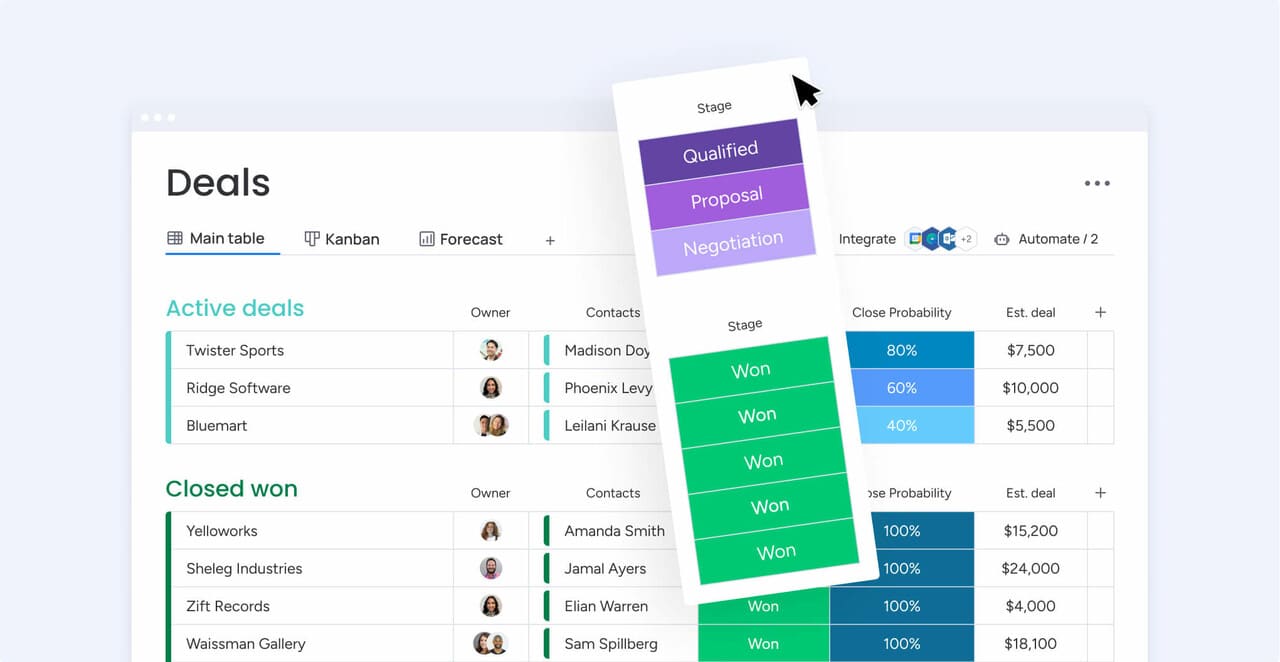
Organizations seeking to improve their SQL identification and conversion find that monday CRM provides comprehensive capabilities through customizable workflows, AI-powered automation, and real-time visibility. It solves common SQL challenges without forcing you into a rigid process.
Build custom SQL workflows without code
Build sophisticated SQL workflows without code or IT help. Change your process as your needs evolve — no technical team required.
- Custom qualification stages: match your specific SQL criteria and progression requirements without technical constraints.
- Automated lead routing: ensures SQLs reach appropriate sales reps based on territory, expertise, or workload distribution.
- Qualification checklists: guide sales reps through consistent discovery processes, reducing qualification variability.
- Integration automations: connect with marketing platforms to automatically import and process MQLs seamlessly.
These workflows can be modified in real-time as qualification processes evolve, without requiring IT support or development resources.
Leverage AI for smarter lead management
AI automates analysis and recommends next steps for more accurate and efficient qualification. These features reduce manual work while improving qualification accuracy and consistency.
- AI Blocks: automatically categorize incoming leads by industry, company size, or buying intent without manual intervention.
- Sentiment analysis: evaluates prospect communications to identify engagement levels and buying signals.
- Information extraction: automatically pulls key qualification data from emails, forms, or documents.
- Smart recommendations: suggests next best actions based on prospect behavior and similar successful conversions.
Get real-time pipeline visibility
Custom dashboards show exactly how SQLs move through your pipeline and convert. This transparency enables data-driven decisions and process improvements.
Custom dashboards: show SQL volume, conversion rates, and pipeline velocity in real-time for immediate insights.
Conversion tracking: monitors MQL-to-SQL and SQL-to-opportunity progression across different lead sources.
Rep performance analytics: provide individual and team metrics on SQL qualification and conversion success.
Bottleneck identification: uses visual indicators to highlight where SQLs are getting stuck in the qualification process.
Automate your entire handoff process
Automated handoffs keep all context intact and get leads to sales fast. No more dropped context or slow follow-up.
- Complete context preservation: every interaction, note, and engagement metric transfers with the lead automatically.
- Automated assignment rules: route SQLs to the right rep instantly based on predefined criteria.
- Response time tracking: monitors how quickly sales teams engage with new SQLs to optimize conversion rates.

“With monday CRM, we’re finally able to adapt the platform to our needs — not the other way around. It gives us the flexibility to work smarter, cut costs, save time, and scale with confidence.”
Samuel Lobao | Contract Administrator & Special Projects, Strategix
“Now we have a lot less data, but it’s quality data. That change allows us to use AI confidently, without second-guessing the outputs.”
Elizabeth Gerbel | CEO
“Without monday CRM, we’d be chasing updates and fixing errors. Now we’re focused on growing the program — not just keeping up with it."
Quentin Williams | Head of Dropship, Freedom Furniture
“There’s probably about a 70% increase in efficiency in regards to the admin tasks that were removed and automated, which is a huge win for us.“
Kyle Dorman | Department Manager - Operations, Ray White
"monday CRM helps us make sure the right people have immediate visibility into the information they need so we're not wasting time."
Luca Pope | Global Client Solutions Manager at Black Mountain
“In a couple of weeks, all of the team members were using monday CRM fully. The automations and the many integrations, make monday CRM the best CRM in the market right now.”
Nuno Godinho | CIO at VelvBuild a revenue engine that actually converts
Sales qualified leads drive predictable revenue — but only when qualification is intentional, consistent, and repeatable. The right frameworks turn gut instinct into a clear system, helping your team focus on opportunities that are actually ready to move forward.
When your pipeline is built on qualified SQLs, everything improves. Forecasts become more reliable. Sales cycles shorten. Reps spend less time chasing dead ends and more time closing real deals.
The key is choosing the frameworks, scoring models, and tracking methods that fit how your team sells. With monday CRM, you can build and evolve these processes without technical limits, while AI continuously learns from every deal to improve qualification over time.
Try monday CRMFrequently asked questions
What is a good MQL to SQL conversion rate?
A good MQL to SQL conversion rate typically ranges from 13-20%, with top-performing organizations achieving rates above 25%. These benchmarks vary by industry, sales cycle complexity, and lead source quality.
How long should it take to convert an MQL to SQL?
The ideal time to convert an MQL to an SQL is within 24-48 hours of the lead handoff. For optimal results, initial contact should occur within five minutes, as faster response times significantly increase qualification and conversion rates.
Who should own SQL qualification in the sales process?
SQL qualification should be owned by inside sales or sales development representatives (SDRs) who specialize in discovery and qualification activities. These specialists have the skills and focus needed for effective qualification.
What's the difference between lead scoring and lead grading?
Lead scoring measures prospect behavior and engagement levels using point-based systems, while lead grading evaluates how well a prospect fits your ideal customer profile based on demographic and firmographic data. Both work together for comprehensive qualification.
Can you skip the MQL stage and go straight to SQL?
Yes, prospects can become SQLs directly through high-intent activities like demo requests or direct sales inquiries, bypassing the traditional MQL stage. These inbound leads often show stronger buying intent than marketing-nurtured leads.
How do you handle SQLs that don't convert to opportunities?
SQLs that don't convert should be analyzed to understand why qualification failed, then either recycled back to marketing for further nurturing or marked as closed-lost with documented reasons. This feedback improves future qualification accuracy.

 Get started