


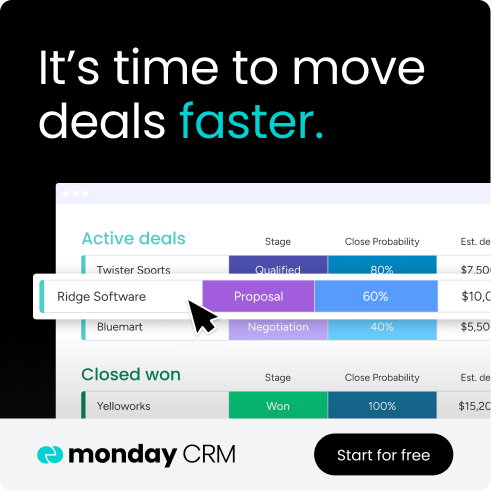
Sales teams rarely struggle because they lack opportunities. They struggle because it is hard to see which deals are moving forward, which ones are stuck, and what actions will actually close them. When opportunities pile up without clear next steps, sales pipelines feel full but results stay unpredictable.
Sales opportunity management brings structure and clarity to that chaos. It helps teams define pipeline stages, prioritize the right deals, maintain momentum, and spot risks before they turn into missed targets. With the right approach, opportunity tracking becomes a system that supports daily selling, not just reporting.
The strategies ahead focus on practical ways to manage opportunities more effectively. Explore our guide and you will learn how to score and prioritize deals, build pipeline stages that reflect how your team sells, and apply AI to surface insights you might otherwise miss.
Together, these practices help teams close more deals with greater consistency and confidence.
Key takeaways
- Prioritize opportunities that are most likely to close: score deals based on fit, engagement, and stakeholder involvement so your team focuses energy where it matters most.
- Build pipeline stages that reflect how you really sell: define clear stages with specific advancement criteria to eliminate guesswork and keep deals moving forward.
- Monitor deal health in real time: track stage duration, activity levels, and next steps to spot stalled opportunities early and intervene before revenue slips.
- Use automation to protect momentum: trigger follow-ups, reminders, and tasks automatically so no opportunity goes quiet or gets overlooked.
- Scale opportunity management with monday CRM: combine automation, AI insights, and visual pipelines to turn scattered sales activity into predictable revenue.
What is sales opportunity management?
Sales opportunity management means tracking and moving deals through your pipeline — from first contact to close. You know where each deal stands, what happens next, and which ones need your attention now.
Stop hoping deals close. Start knowing they will. Manage opportunities right, and scattered sales work becomes predictable revenue. You know which deals are progressing, which are stuck, and what specific actions will move them forward.
Here’s what creates that predictability:
- Qualified prospects: these are leads that have moved beyond initial interest to show real buying signals like confirmed budget and decision authority.
- Pipeline stages: your visual roadmap showing where each deal sits in the buying journey.
- Advancement criteria: specific requirements that must be met before a deal moves to the next stage.
- Activity tracking: a complete record of every interaction, email, and meeting with each opportunity.
How sales opportunity management drives revenue predictability
Revenue predictability? It starts with knowing what’s in your pipeline and how likely each deal is to close. Track opportunities through well-defined stages, and you’ll spot patterns fast. Fir example, deals in proposal stage with active stakeholder engagement close 70% of the time, while those stuck in discovery for three weeks rarely advance.
But it’s not just about individual deals. By tracking conversion rates between stages, you can work backward from revenue targets. Need $2 million next quarter? If your proposal-to-close rate is 40% and average deal size is $50,000, you need 100 proposals. If discovery-to-proposal converts at 60%, you need 167 discovery calls. Now hitting your number is math, not magic.
Real-time performance tracking also reveals risks before they derail your quarter. When high-value deals show declining engagement or miss key milestones, you can intervene with coaching, resources, or executive involvement.
Sales opportunities vs leads: what's the difference?
It’s really important to understand the difference between leads and opportunities as it will completely change how you tackle your sales process.
Sales leads
Sales leads are people or companies showing initial interest through actions like downloading content, attending webinars, or filling out contact forms.
They exist at the top of your funnel, requiring nurturing and qualification to determine if they’re worth pursuing.
Sales opportunities
On the other hand, an opportunity emerges when qualification confirms budget, authority, need, and timeline — the classic BANT criteria that signals real buying intent and distinguishes qualified sales leads from unqualified ones.
The shift from lead to opportunity changes everything about your approach. Lead management focuses on education and nurturing, gradually building interest through valuable content and touchpoints. Opportunity management shifts to active selling: uncovering specific requirements, demonstrating value, handling objections, and guiding the buying process.
| Aspect | Leads | Opportunities |
|---|---|---|
| Qualification level | Unqualified or showing initial interest | Fully qualified with confirmed BANT |
| Sales engagement | Marketing nurture or inside sales qualification | Active selling by account executives |
| Conversion likelihood | 5-20% to opportunity (Source: [e.g., Forrester, 2023]) | 20-40% to closed deal (Source: [e.g., Gartner, 2023]) |
| Primary activities | Education, nurturing, qualification calls | Demos, proposals, negotiations |
| Tracking focus | Engagement metrics and lead scoring | Stage progression and deal velocity |
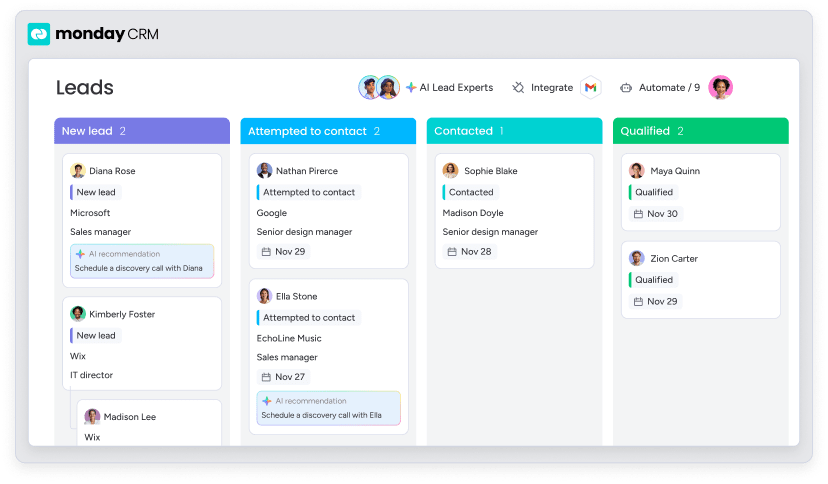
Top strategies to maximize sales opportunity management
These strategies below turn basic tracking into an edge over your competition. Each one tackles specific challenges that stall deals and helps you build predictable revenue. They help you prioritize the right deals, keep momentum, and close more revenue.
Strategy 1: score and prioritize high-value opportunities
Not all opportunities deserve equal attention, which is why effective prospecting and qualification are critical. Scoring helps you focus limited time on deals most likely to close with the highest value. Good scoring weighs multiple factors:
- Company fit indicators: industry alignment, company size, technology stack compatibility.
- Engagement signals: email response rates, meeting attendance, content consumption patterns.
- Stakeholder involvement: C-level participation, multiple department engagement, champion identification.
- Competitive position: whether you’re the incumbent, primary option, or competing against established vendors.
AI-powered scoring goes further — it spots patterns humans miss. Machine learning models consider hundreds of variables simultaneously — from communication sentiment to seasonal buying patterns — updating scores as new information arrives.
Strategy 2: build pipeline stages that reflect your actual sales process
Generic pipeline templates don’t work. Your sales process is unique. Your stages should mirror how your team actually sells, not how a consultant thinks you should sell. Start by mapping what really happens in successful deals, not what you wish happened, as part of your overall sales strategy.
You want enough stages to see what’s happening, but not so many that it gets complicated. Most teams need five to seven stages — each one a defined phase in the buying journey. Each stage needs specific entry and exit criteria that your entire team understands and follows consistently.
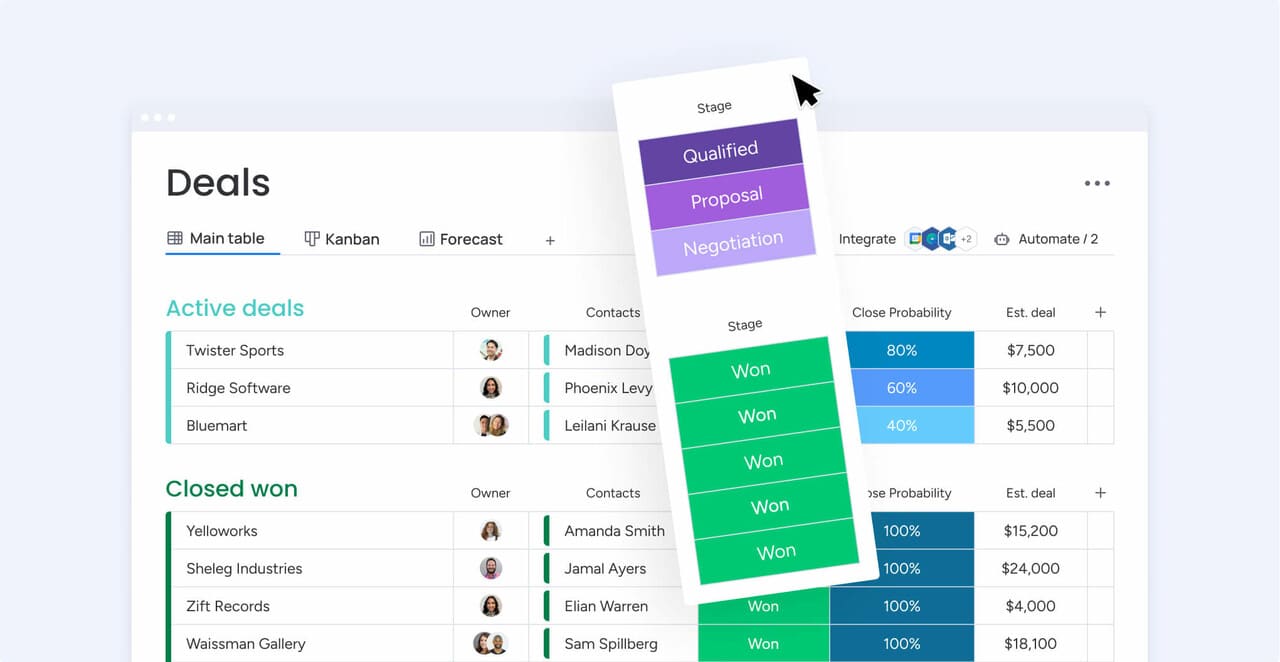
Here’s a framework many revenue teams adapt:
- Qualified: BANT confirmed, next steps scheduled.
- Discovery: pain points documented, success criteria defined.
- Solution design: requirements gathered, solution mapped to needs.
- Proposal: pricing delivered, decision process confirmed.
- Negotiation: terms being finalized, stakeholders aligned.
- Closed won/lost: contract signed or opportunity archived with reason.
Teams leveraging intelligent solutions like monday CRM can customize these stages with drag-and-drop simplicity, adjusting their pipeline as their sales process evolves without waiting for IT support.
Strategy 3: automate follow-ups to maintain deal momentum
Deals die in silence. When prospects don’t respond and reps get busy with active opportunities, promising deals stall unnecessarily, highlighting the importance of knowing how to prospect for sales leads effectively. Automation keeps follow-up consistent without drowning your team in manual work.
The best automation adapts to each deal and stage:
- High-value enterprise opportunities: trigger follow-ups after two days of inactivity.
- Smaller deals: allow four days between automated touchpoints.
- Early-stage opportunities: receive educational content and gentle check-ins.
- Late-stage deals: get more direct outreach about specific concerns or next steps.
Strategy 4: track deal health with real-time analytics
Deal health pulls from multiple signals — is the opportunity moving forward or stalling? These metrics show you what’s really happening:
- Stage duration: how long the deal has been in its current stage versus your average.
- Engagement frequency: days since last meaningful contact or activity.
- Stakeholder coverage: whether you’ve engaged all key decision makers.
- Next step clarity: specific, scheduled actions versus vague commitments.
Visual dashboards surface these patterns instantly. Color-coded pipeline views within monday CRM show healthy deals in green, concerning deals in yellow, and critical situations in red. Managers can drill into any deal to understand specific issues and provide targeted coaching.
The real value? Connecting insights to action. When certain reps consistently maintain healthy pipelines, you can study and share their approaches with the team.
Strategy 5: enable seamless collaboration across teams
Opportunity management isn’t just sales — it includes marketing, customer success, legal, and finance. Each team plays a role in moving deals forward. But coordination falls apart when teams work in silos.
These handoffs need tight coordination:
- Marketing to sales: context about lead source, content consumed, and engagement history.
- Sales to legal: requirements, special terms, and customer concerns for contract review.
- Sales to customer success: implementation timeline, success criteria, and stakeholder map.
- Finance involvement: payment terms, approval processes, and revenue recognition requirements.
Intuitive platforms like monday CRM solves this by centralizing every interaction in one timeline. When legal needs contract context, they see the complete conversation history. When customer success takes over post-sale, they understand exactly what was promised.
This transparency cuts the back-and-forth that slows deals and frustrates customers.
Strategy 6: use AI to surface hidden insights
AI looks at thousands of data points and finds what predicts success or failure. It spots patterns you’d never catch on your own.
Machine learning looks at everything at once — company fit, engagement patterns, sentiment, competitive mentions, seasonal trends. The AI updates predictions as new info comes in, so you prioritize based on what’s happening now — not old assumptions.
AI capabilities within modern platforms like monday CRM include practical applications that sales teams use daily:
- Timeline summaries: give instant context on any deal without reading through dozens of emails.
- Email drafting: AI drafts follow-up emails based on deal stage and previous conversations.
- Sentiment detection: identifies sentiment changes that signal risk.
- Team assignment: assigns the right team members based on skills and availability.
- Document extraction: extracts key information from documents automatically.
Strategy 7: create repeatable playbooks from winning patterns
Your best deals show you what works. Figure out what worked, then turn it into playbooks any rep can follow.
Good playbooks include specific, actionable guidance:
- Messaging frameworks: exact phrases that resonate with different buyer personas.
- Objection responses: proven ways to address common concerns at each stage.
- Competitive positioning: how to win against specific competitors.
- Stage-specific actions: what top performers do differently at each pipeline stage.
Update playbooks regularly to stay current. Quarterly reviews should incorporate lessons from recent wins and losses, adjusting for market changes and new competitive threats. Teams using monday CRM can store playbooks, templates, and battle cards directly in the platform, ensuring reps always have updated resources when they need them.
Try monday CRM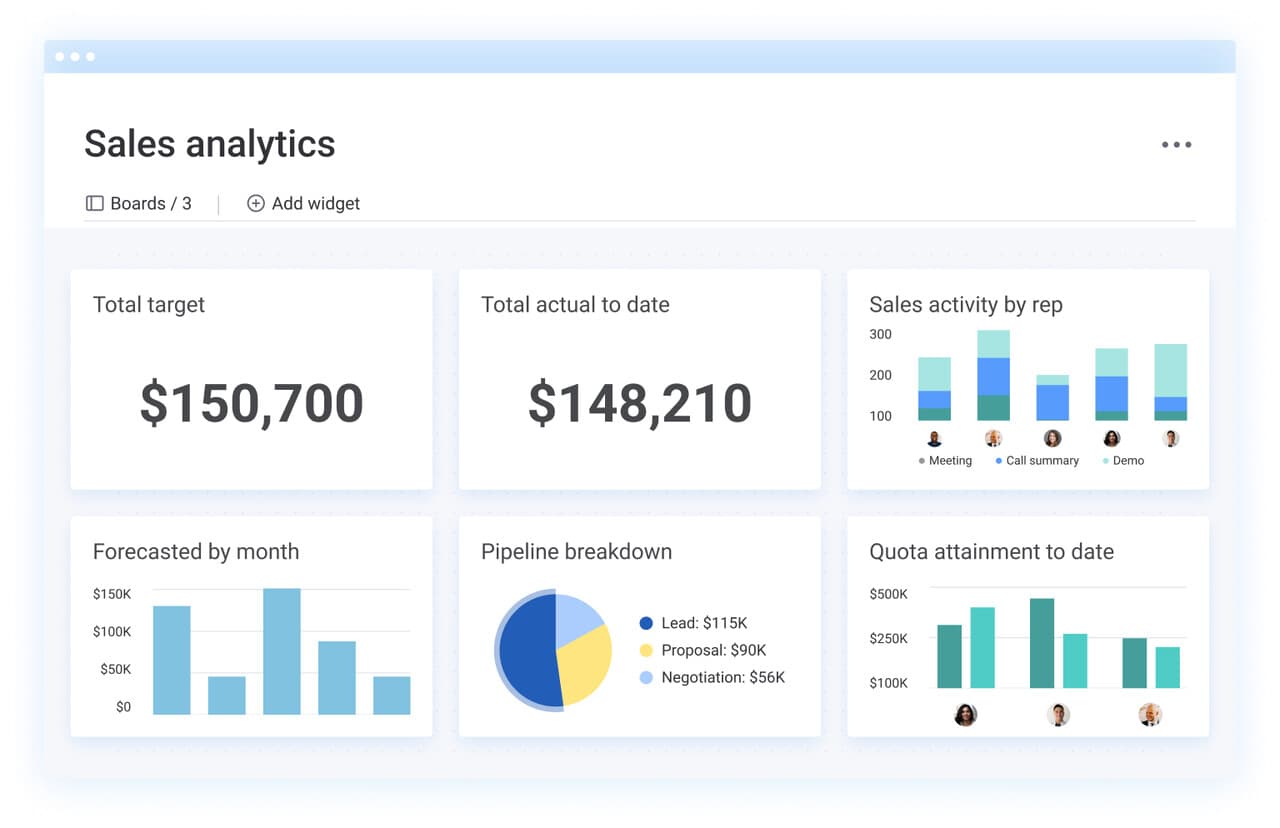
How to build your sales opportunity management system
Success means planning carefully and rolling out gradually. These steps below will help you map where you are, fix real problems, and bring your team along. This approach drives adoption and delivers real results.
Step 1: map your existing sales workflow
Document how sales actually happens today, not the idealized version in your sales methodology. Shadow different reps through complete deal cycles, including SDR activities, noting every touchpoint, decision point, and handoff. Watch for variations — top performers often do things differently, and those patterns are worth copying.
Answer these questions as you map:
- Stage transitions: what specific actions or outcomes trigger movement between stages?
- Bottlenecks: where do deals consistently slow down or stall?
- Success patterns: what differentiates won deals from lost ones?
- Tool usage: which systems do reps actually use versus ignore?
Step 2: design custom pipeline stages
Turn your workflow map into pipeline stages that show you what matters. Each stage should be a clear phase with entry and exit requirements everyone understands.
Test your stage design with real opportunities before full rollout. Have a small group classify their current deals using the new stages. If they struggle or disagree, your definitions need work.
The visual pipeline in monday CRM lets you adjust stages instantly with drag-and-drop, making iteration painless.
Step 3: set up automation rules
Start with automations that fix your biggest pain points. These automations deliver fast value:
- Follow-up reminders: alert reps when opportunities need attention.
- Stage updates: automatically advance deals when criteria are met.
- Task creation: generate activities based on stage or time triggers.
- Team notifications: alert managers to at-risk deals or big wins
Begin with three or four simple rules and expand gradually. Test each one carefully so nothing breaks. When you utilize a platform like monday CRM, the automation builder uses plain language conditions, making it easy to create rules like: “when deal value exceeds $50,000 and stage changes to proposal, assign legal review task and notify sales manager.”
Step 4: roll out to your team
How you manage change determines whether people actually use the system. Explain why you’re doing this and how it helps individual reps — not just leadership. Focus on time savings, higher close rates, and easier quota attainment rather than abstract concepts like “visibility” or “alignment.”
Roll out in phases to reduce pushback and make adjustments:
- Pilot phase: two to three enthusiastic reps test the system and provide feedback.
- Early adopters: expand to a full team that can demonstrate success.
- Department-wide: roll out to all sales with proven results and refined processes.
- Organization-wide: extend to supporting teams like marketing and customer success.
Train people on more than just how the system works — explain why each piece matters. When reps see how it helps them close more deals and make more money, they’ll use it.
Key metrics for measuring opportunity success
The right metrics show if your opportunity management actually works or just creates busywork. Focus on metrics tied to revenue and rep productivity. They show what’s working, surface problems early, and guide improvements.
Pipeline velocity
Pipeline velocity? It’s how fast opportunities move through your sales process. It combines four factors: number of opportunities, average deal value, win rate, and sales cycle length. Improve any piece, and you’ll speed up revenue.
Velocity analysis shows exactly where revenue slows down. If opportunities spend twice as long in technical evaluation compared to other stages, you might need more solution engineers or better technical documentation. Small improvements add up fast. Cut cycle time by 10% while keeping win rates steady, and you’ll see serious revenue growth.
Stage conversion rates
Conversion rates between stages show exactly where opportunities fall out of your pipeline. Use these rates to forecast accurately — just work backward from your targets. If you need 10 closed deals and your proposal-to-close rate is 40%, you need 25 proposals.
Look at conversion rates from different angles to spot where you can improve:
- By lead source: which channels produce opportunities that actually close?
- By rep: who needs coaching at specific stages?
- By deal size: do larger deals convert differently than smaller ones?
- By industry: which segments have the highest success rates?
monday CRM’s funnel widget visualizes these conversion rates, making it easy to spot where deals drop off and focus improvement efforts.
Win rate analysis
Win rate hits revenue directly. You don’t need more pipeline — just close more deals. A team improving win rate from 25% to 30% generates 20% more revenue from the same opportunities. But overall win rate doesn’t show everything.
Break it down to see what really matters:
- Competitive win rate: how often you win against specific competitors.
- Stage-specific win rate: likelihood of closing once reaching each stage.
- Rep win rate trends: whether individual performance is improving or declining.
- Product win rates: which offerings close most successfully.
Common opportunity management challenges and solutions
Every sales team hits the same challenges with opportunity management. Know these obstacles and how to fix them, and you’ll avoid the usual mistakes. These issues show up everywhere. But each one has a fix.
Stuck deals and extended sales cycles
Deals stall for predictable reasons. Here’s how to fix them early. Common causes:
- Unclear next steps: vague commitments without specific dates or actions.
- Lack of urgency: no compelling business reason to move forward quickly.
- Insufficient value demonstration: benefits don’t clearly outweigh costs.
- Hidden objections: unspoken concerns or competing priorities.
Catch stalls early with warning systems. Set up alerts for opportunities exceeding normal stage duration or showing declining engagement.
When monday CRM flags these deals, intervene with specific actions: re-confirm the business case, engage additional stakeholders, or adjust your approach based on new information.
Inconsistent data entry
Bad data ruins opportunity management. Usually it’s because:
- Unclear requirements: reps don’t know what information to track.
- Too many required fields: overwhelming forms that slow down daily work.
- Lack of accountability: no visibility into data completion rates
Simplify data requirements to only what drives decisions. Use automation to populate fields whenever possible. Show data quality on dashboards — completion rates by rep. It creates accountability without micromanaging.
Low CRM adoption rates
Resistance to CRM usage stems from legitimate concerns. Systems that are complex and time-consuming feel like administrative burden rather than sales tools. When reps don’t see personal benefit, they’ll find workarounds.
Drive adoption by making the CRM genuinely useful for daily selling. monday CRM’s intuitive interface and mobile app mean reps can update opportunities in seconds, not minutes. When the system helps them close more deals through better organization and automated follow-ups, adoption becomes voluntary rather than forced.
Try monday CRM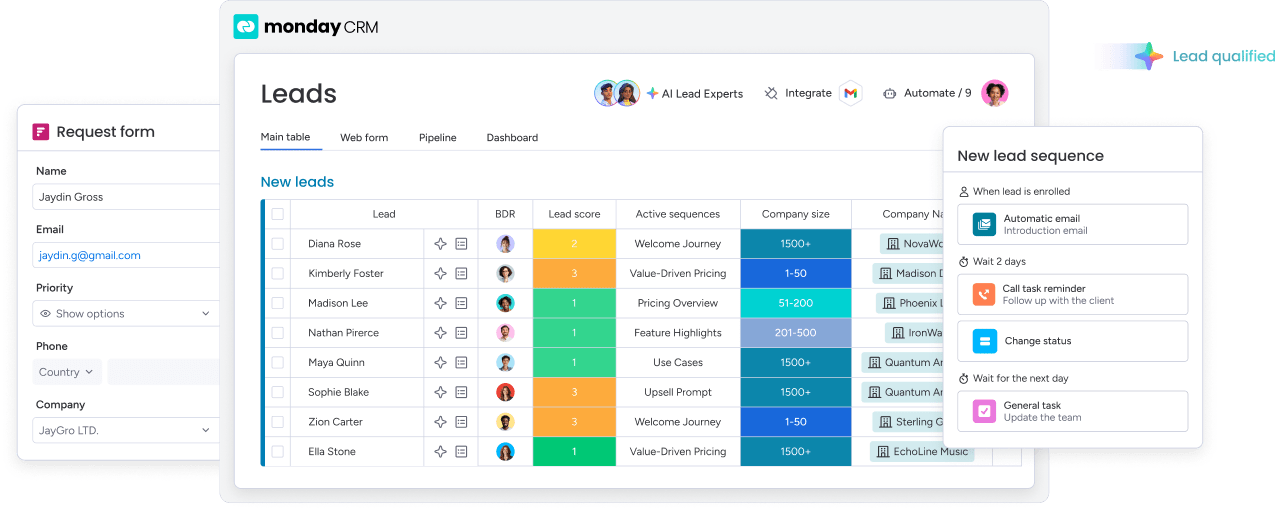
Transform your sales process with structured opportunity management
Effective opportunity management transforms scattered sales activities into a predictable revenue engine. When you implement the strategies and systems outlined above, your team gains the visibility and control needed to hit targets consistently. You move from hoping deals close to knowing they will.
The key is starting with your actual sales process, not generic templates. Map how your team really sells, design stages that reflect reality, and automate the repetitive tasks that slow down deal progression. Focus on metrics that connect directly to revenue outcomes, and address common challenges before they derail adoption.
Teams using monday CRM find this transformation happens faster because the platform adapts to their unique process rather than forcing them into rigid frameworks. The intuitive interface, powerful automation, and AI-driven insights help revenue teams work smarter and close more deals.
Try monday CRM
“With monday CRM, we’re finally able to adapt the platform to our needs — not the other way around. It gives us the flexibility to work smarter, cut costs, save time, and scale with confidence.”
Samuel Lobao | Contract Administrator & Special Projects, Strategix
“Now we have a lot less data, but it’s quality data. That change allows us to use AI confidently, without second-guessing the outputs.”
Elizabeth Gerbel | CEO
“Without monday CRM, we’d be chasing updates and fixing errors. Now we’re focused on growing the program — not just keeping up with it."
Quentin Williams | Head of Dropship, Freedom Furniture
“There’s probably about a 70% increase in efficiency in regards to the admin tasks that were removed and automated, which is a huge win for us.“
Kyle Dorman | Department Manager - Operations, Ray White
"monday CRM helps us make sure the right people have immediate visibility into the information they need so we're not wasting time."
Luca Pope | Global Client Solutions Manager at Black Mountain
“In a couple of weeks, all of the team members were using monday CRM fully. The automations and the many integrations, make monday CRM the best CRM in the market right now.”
Nuno Godinho | CIO at VelvFrequently asked questions
What's the difference between lead management and opportunity management?
Lead management focuses on nurturing unqualified prospects through marketing content and education until they show buying signals. Opportunity management begins when leads are qualified with confirmed budget, authority, need, and timeline, shifting focus to active selling activities like demos, proposals, and negotiations.
How many pipeline stages should a sales process have?
Most organizations find five to seven stages optimal, balancing visibility with simplicity. Your exact number depends on your sales complexity, but each stage should represent a distinct phase with clear entry and exit criteria that your team consistently follows.
What metrics best measure opportunity management effectiveness?
Pipeline velocity, stage conversion rates, and win rates provide the clearest picture of opportunity management success. These metrics directly connect to revenue outcomes and reveal specific areas for improvement in your sales process.
How can AI improve opportunity management?
AI analyzes patterns across deals to predict closure likelihood, automatically drafts follow-up emails, extracts information from documents, and flags at-risk opportunities before they stall, helping teams focus on the right actions at the right time.
What causes deals to stall in the pipeline?
Deals typically stall due to unclear next steps, lack of urgency, insufficient value demonstration, or hidden objections. Setting up early warning systems and maintaining consistent follow-up prevents most stalls.
How long should implementing opportunity management take?
Basic implementation takes two to four weeks for most teams, with full adoption and optimization occurring over 2-3 months as you refine stages, automations, and processes based on real usage and results.

 Get started