


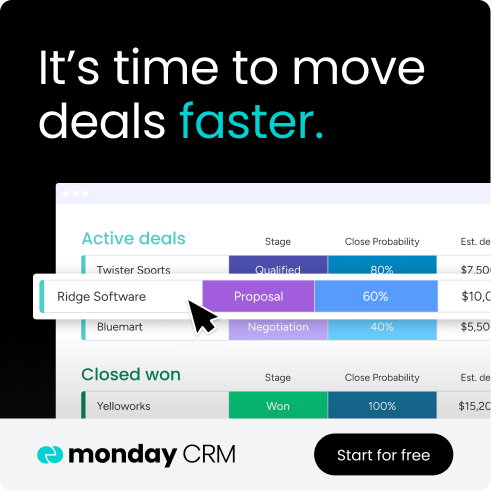
Every unanswered sales inquiry is a missed opportunity. Buyers expect immediate responses, personalized answers, and a smooth handoff to the right salesperson, regardless of when they reach out. The most efficient AI for handling sales inquiries doesn’t just send automated replies. It qualifies leads, routes conversations, updates your CRM, and helps your team respond while interest is still high.
In this guide, we’ll compare 8 AI-powered platforms based on response speed, qualification capabilities, workflow automation, CRM integration, pricing, and ease of use so you can find the best fit for your sales process.
Why AI makes handling sales inquiries more efficient
The most efficient AI-powered tools for handling sales inquiries do more than send polite auto-replies. The software reads buyer intent, routes the inquiry, logs the details, and tees up the next step without making reps dig through email threads.
- Instant response, any time: AI engages prospects the moment they reach out, even at 11:00 p.m. on a Friday, so no lead waits until Monday.
- Automatic qualification: The system evaluates each inquiry against your criteria, scores it, and routes it to the right rep without manual triage.
- Seamless CRM updates: AI logs every interaction and updates records in real time, so your team always has current context.
- True agents vs. basic bots: While chatbots return scripted responses and copilots suggest replies, true AI agents read the inquiry, take action, and prep the opportunity without manual work.
8 best AI platforms for handling sales inquiries
No single AI platform solves every sales challenge. Some focus on qualifying and routing inbound inquiries, while others help reps communicate more effectively or enrich prospect data. Use this comparison table to quickly identify the tools that best match your team’s needs.
| Platform | Use case | Free trial* | Notable AI feature | Starting price* |
|---|---|---|---|---|
| monday CRM | Teams that need AI embedded directly in their pipeline workspace | Yes | Autofill with AI across Text, Date, Number, Dropdown, People, and Status columns | $12/seat/month |
| HubSpot | Mid-market and SMB revenue teams that want AI built into a unified CRM | Yes | Breeze Customer Agent handles initial website chats using live CRM data | $20/seat/month |
| Salesforce | Large enterprise sales teams that want autonomous AI agents for inbound lead qualification | Yes | Agentforce autonomous agents execute multi-step workflows within Salesforce | $25/user/month |
| Apollo.io | SDR and outbound-focused teams that need to identify and engage high-intent prospects at scale | Yes | AI-generated email sequences with persona and industry customization | $49/user/month |
| ZoomInfo | Revenue teams that need to qualify and enrich inbound inquiries with verified account data | On request | ZoomInfo Chat identifies and auto-qualifies website visitors using firmographic data | Custom pricing |
| Gong | Revenue leaders who want to coach reps and improve response quality | On request | AI-powered call analysis surfaces objections, pricing discussions, and missed commitments | Custom pricing |
| Cognism | B2B sales teams that need phone-verified data and intent signals in one prospecting workflow | On request | AI Search and Research surfaces contacts, company news, and tech stack data automatically | Custom pricing |
| Outreach | Enterprise revenue teams that need AI-assisted execution across the full sales cycle | On request | Kaia surfaces battlecards and competitor responses in real time during calls | Custom pricing |
*Prices may vary based on plan, billing cycle, or region. Free trial availability may require contacting sales.
Want one system to run the entire pipeline? monday CRM keeps everything under one roof. Its AI features sit beside your customer data, not in a separate tool. That removes the friction of patching together disconnected systems. When automation happens inside the workflow, teams move faster and close more deals.
1. monday CRM
monday CRM combines pipeline management, communications, and AI-assisted workflows in a single workspace. Reps manage inquiries without bouncing between tabs. It’s designed for revenue teams that need flexibility, quick implementation, and a CRM people will actually keep using. Rather than tacking AI on as an extra, monday CRM places it directly inside the work: inside your boards, and across the columns your team already relies on to qualify, assign, and move deals ahead.

Use case: Revenue teams that need AI embedded directly into their CRM workflow so inquiries are qualified, routed, and managed without switching between separate tools
Key features
- Autofill with AI: Add AI to board columns so monday CRM categorizes, extracts, and routes inquiry data as it comes in. Supported columns include Text, Date, Number, Dropdown, People, and Status. Actions include Detect sentiment, Extract information, Summarize, Translate, Writing assistant, Custom action, Assign label, and Assign person.
- Timeline summary: Get an AI-generated summary of the full Emails & Activities timeline, including emails, calls, meetings, and notes, so anyone can review an inquiry with context in seconds.
- AI email assistant: Use AI to assist with composing emails directly inside Emails & Activities, so reps respond fast without leaving the CRM.
Pricing
- Basic: Starting at $12/seat/month
- Standard: Starting at $17/seat/month
- Pro: Starting at $28/seat/month
- Enterprise: Custom pricing available for organizations requiring advanced controls, dedicated support, and tailored onboarding
- Every account receives 500 free AI credits per month to explore AI features before committing to higher usage tiers
- AI features are available on Standard plans and above
Why it stands out
- Inquiry context lives in one place: monday CRM keeps inquiry activity, deal stages, and account history connected, so you answer the real question faster: “What’s happened with this prospect already?”
- AI you can actually operationalize: Apply AI actions to the columns your team already uses for qualification and routing, keeping your existing process intact.
- Flexible for the full customer journey: monday CRM supports pre-sale and post-sale work, including account management, renewals, and collection tracking, so handoffs don’t turn into scavenger hunts.
“With monday CRM, we’re finally able to adapt the platform to our needs — not the other way around. It gives us the flexibility to work smarter, cut costs, save time, and scale with confidence.”
Samuel Lobao | Contract Administrator & Special Projects, Strategix
“Now we have a lot less data, but it’s quality data. That change allows us to use AI confidently, without second-guessing the outputs.”
Elizabeth Gerbel | CEO
“Without monday CRM, we’d be chasing updates and fixing errors. Now we’re focused on growing the program — not just keeping up with it."
Quentin Williams | Head of Dropship, Freedom Furniture
“There’s probably about a 70% increase in efficiency in regards to the admin tasks that were removed and automated, which is a huge win for us.“
Kyle Dorman | Department Manager - Operations, Ray White
"monday CRM helps us make sure the right people have immediate visibility into the information they need so we're not wasting time."
Luca Pope | Global Client Solutions Manager at Black Mountain
“In a couple of weeks, all of the team members were using monday CRM fully. The automations and the many integrations, make monday CRM the best CRM in the market right now.”
Nuno Godinho | CIO at Velv
“monday.com provides developmental flexibility, operational efficiency, and data transparency — all in one place. We became a company that moved from chasing data to leading with it.”
Hyunghan Lee | Team Lead, Sandbox Network
"monday.com brought every part of our business into one connected space. The harmony between work management and CRM has become our operating system — giving us the clarity and confidence to scale.”
Jennifer Chinburg | Executive Vice President of Corporate Development & Brand, Chinburg Properties
“We just weren’t getting value from our old CRM. With monday.com, it's a thousand times better. Our sales teams are more informed, more consistent, and far more connected."
James Arnold | Chief Operating Officer, Cenversa2. HubSpot
HubSpot unifies CRM, marketing, and sales AI in a connected platform, giving revenue teams one place to manage the buyer journey from start to finish. Its primary AI experience acts as a capable copilot for reps, taking on research and drafting while leaving final control with humans. Newer tools such as Breeze AI agents add more targeted automation for early-stage chats, but the broader design still keeps people in the loop.

Use case: Mid-market and SMB revenue teams that want AI built into a unified CRM, helping reps move faster without fully handing over execution
Key features
- Breeze Prospecting Agent: Identifies target accounts and maps buying committees. Rather than sending generic outreach, it prepares personalized suggestions for your reps to review, approve, and send.
- Breeze Customer Agent: A newer feature built to handle initial website chats. It answers pricing and product questions using live CRM data, helping qualify prospects before routing them to a human.
- Conversation intelligence: Records and analyzes sales calls to surface coaching moments, deal risks, and next-step recommendations, giving managers the insights they need without listening to hours of recordings.
Pricing
- Starter: $20/seat/month
- Professional: Higher tier pricing; includes AI forecasting, guided selling, and conversation intelligence; mandatory onboarding fee of $1,500 applies.
- Enterprise: Higher tier pricing; mandatory onboarding fee of $3,500 applies
- AI agents (credits-based): Customer Agent charges $0.50 per resolved conversation; Prospecting Agent charges $1.00 per lead recommended for outreach
- Included monthly credits by tier: Starter (500), Professional (3,000), Enterprise (5,000); additional credits available from $10 per 1,000
Considerations
- HubSpot favors an assistive model. Teams looking for a fully autonomous AI sales rep that runs end-to-end without human oversight will find this approach more limited.
- Prospecting Agent is currently in beta, so functionality and pricing structures may change as the product develops. At high inquiry volume, credit usage can climb quickly, which makes long-term cost less predictable as adoption grows.
3. Salesforce
Salesforce’s Agentforce platform introduces autonomous AI agents into that environment. It is aimed at enterprise organizations that need extensive customization and deeply integrated workflows across the customer lifecycle. That power introduces complexity: Agentforce sits as a separate product layer above core Salesforce CRM, which should factor into any review of implementation effort and total cost.

Use case: Large enterprise sales teams that want autonomous AI agents for inbound lead qualification, inquiry routing, and multi-step follow-up
Key features
- Agentforce autonomous agents: AI agents that execute multi-step workflows, including lead qualification, inquiry routing, and response generation, directly within the Salesforce ecosystem, though configuration typically requires technical expertise or consulting resources.
- Einstein AI: Predictive lead scoring and opportunity insights based on historical data and engagement signals, helping sales teams prioritize high-value inquiries without manual triage.
- Inbound Lead Generation agent: A purpose-built agent template that engages website visitors, answers product questions, captures lead data, books meetings, and transfers to a Lead Nurturing agent, running 24/7 without rep involvement.
Pricing
- Agentforce Foundations: $0 (includes Agent Builder, Prompt Builder, and starter credits)
- Starter Suite: $25/user/month (billed monthly or annually)
- Pro Suite: $100/user/month (billed annually)
- Enterprise: $175/user/month (billed annually)
- Unlimited: $350/user/month (billed annually)
- Agentforce 1 Sales: $550/user/month (billed annually)
- Consumption-based options: Flex Credits at $500 per 100k credits; Conversations at $2 per conversation
- Add-ons such as Sales Engagement, Revenue Intelligence, and analytics credits carry additional costs; final pricing typically requires a quote from Salesforce.
Considerations
- Because Agentforce is separate from core Salesforce CRM, teams need to account for additional integration work and cost before moving forward.
- Turning on AI capabilities such as Inbound Lead Generation requires Enterprise, Performance, or Unlimited editions, and setup involves multiple platform features, admin permissions, and channel configurations — often demanding dedicated technical staff or outside consultants.
4. Apollo.io
Apollo.io structures outbound prospecting into an AI-driven system: from identifying the right contacts to helping book the meeting. Designed for SDR teams that need speed, it pairs a 230M+ contact database with AI sequencing, intent scoring, and inbound routing inside one workspace. For teams measured by sheer pipeline volume, there is plenty here to like.

Use case: SDR and outbound-focused teams that need to identify, prioritize, and engage high-intent prospects at scale without cobbling together several point solutions
Key features
- AI-generated email sequences: Builds multi-touch sequences based on persona, industry, and engagement data, with rep-level customization before launch.
- Intent scoring: Analyzes signals like email opens, link clicks, and website visits to surface which prospects are most likely to respond, so reps focus on the right conversations.
- Inbound routing and scheduling: Rule-based routers distribute inbound leads instantly and confirm meetings without manual handoffs, with Apollo’s 2024 product data citing 35% more bookings using AI-powered messaging.
Pricing
- Free: $0/user/month, 900 credits/seat/year
- Basic: $49/user/month
- Professional: $79/user/month
- Organization: $119/user/month (3-seat minimum)
- Inbound add-on: $119/team/month, includes 50,000 company IDs/month, 10,000 US contact IDs/month, and 5,000 enriched form contacts/month.
Considerations
- Apollo.io focuses on prospecting and sequencing rather than full CRM functionality. To manage the inquiry-to-close process beyond top-of-funnel activity, teams will need to connect it to a separate CRM, such as monday CRM.
- Contact-level website visitor identification is currently restricted to US-based visitors, and some visitor data may take up to 7 days to appear, which can slow responses for time-sensitive inbound leads.
5. ZoomInfo
ZoomInfo turns incoming sales inquiries into richer opportunities by layering verified B2B data and real-time buyer signals onto every interaction. Geared toward sales, marketing, and revenue operations teams in mid-market and enterprise organizations, it stands apart from generic chatbots by grounding qualification in verified company and intent data. That means less guesswork for reps and more time spent with the right buyers.

Use case: Revenue teams that need to qualify, enrich, and route inbound inquiries faster by relying on verified account data and buyer intent rather than intuition
Key features
- ZoomInfo Chat: Identifies website visitors in real time, auto-qualifies them using firmographic attributes like company size and revenue, and books meetings directly through an integrated scheduler.
- ZoomInfo Copilot: Prioritizes accounts based on verified buyer signals, drafts personalized outreach, and automates follow-up reminders and CRM updates so no inquiry falls through the cracks.
- ZoomInfo MCP and ChatGPT integration: Connects AI models directly to ZoomInfo’s structured B2B data, enabling agents to enrich contacts, surface intent signals, and return outputs that feed directly into CRM workflows.
Pricing
- Pricing model: Custom, quote-based pricing across Sales, Marketing, Talent, and Operations packages; per-seat tiers are available on request.
- Free trial: Available on request.
- Add-ons: Features like Streaming Intent carry additional costs; integrations may require minimum bulk-credit purchases.
- Credits: Usage beyond plan assumptions can be covered with additional credit purchases, which affects total cost of ownership.
Considerations
- ZoomInfo serves as a data and enrichment layer rather than a full inquiry management platform, so teams still need a separate CRM to receive inquiries, manage responses, and track deals to close.
- Credit-based pricing, along with add-on costs such as Streaming Intent and advanced technographic data, can escalate quickly, making total cost harder to estimate without detailed scoping.
6. Gong
Gong records every sales conversation and turns that activity into usable intelligence. It is built for revenue teams that want to understand why deals progress, or stall, by analyzing calls, emails, and buyer signals to surface coaching opportunities and forecast risks. While the platform is best known for conversation intelligence, Gong Engage also pushes it into the active workflow by supporting inbound call routing, response classification, and AI-generated follow-ups that keep momentum intact.

Use case: Revenue leaders and sales managers who want an easier way to coach reps, trigger better next steps, and steadily improve response quality
Key features
- AI-powered call analysis: Transcribes and analyzes every sales call, surfacing key moments like objections, pricing discussions, and missed commitments.
- Deal risk detection: Flags at-risk deals based on conversation signals such as low engagement, competitor mentions, or follow-through gaps, before they fall through.
- Gong Engage: Keeps reps moving with AI-generated follow-ups, response classification, and inbound call routing directly in their workflow.
Pricing
- Pricing model: Quote-only; pricing tiers are available on request.
- Costs are based on per-user licensing plus a platform fee.
- Advanced agent automations (AI Tracker, Data Extractor, agentic APIs) may consume Gong Credits, introducing a usage-based cost dimension at scale.
Considerations
- Gong Engage supports follow-ups, next-best actions, and routing, but it is not a fully autonomous first-response bot. Teams that need instant qualification of net-new leads without human oversight will likely need to pair it with a dedicated inbound tool.
- The AI Data Extractor only recalculates CRM fields for accounts with recent interactions (a call within the last month or an inbound email). For long-dormant accounts, automated data updates remain limited.
7. Cognism
Cognism turns B2B contact data into an AI-assisted prospecting engine built with compliance in mind. Its specialty is phone-verified mobile numbers and GDPR-aligned data sourcing, which makes it especially appealing to sales teams operating in regulated markets such as EMEA. If accurate contact data is the missing piece before inquiry handling can even begin, Cognism addresses that need.

Use case: B2B sales teams that need a faster path to the right contacts by combining phone-verified data, intent signals, and AI-powered research inside one prospecting workflow
Key features
- AI Search and Research by Cognism AI: Natural-language search automatically applies relevant filters to surface contacts and companies. Embedded AI research surfaces company news, funding, hiring signals, and tech stack data, so reps spend less time researching and more time engaging.
- Intent signals via Bombora: Tracks when target accounts are actively researching topics related to your product, allowing teams to prioritize high-intent inquiries right when interest peaks.
- Phone-verified mobile data: Provides direct mobile numbers across a database of 440M contacts and 100M mobiles, with a 3x improvement in connect rates according to Cognism’s 2024 data. That means fewer wasted dials on inquiry follow-ups.
Pricing
- Standard and Pro tiers: Custom pricing based on database size and feature access. You’ll need a quote from their sales team for exact figures.
- Add-ons: CRM Enrichment (currently in live beta) and Data-as-a-Service (API/bulk) are available at an additional cost. DaaS is usage-based and billed by records and data volume.
- No public list prices: All packages are tailored.
Considerations
- Cognism handles data enrichment and prospecting, not inquiry management end to end. You still need a separate CRM to receive, qualify, respond to, and close sales inquiries.
- AI Search cannot answer open-ended questions beyond the platform’s filter set, and access to Research by Cognism AI may vary depending on your account configuration.
8. Outreach
Outreach is a sales execution platform designed for high-volume inquiry workflows across email, phone, and social channels. It supports go-to-market teams, including SDRs, AEs, revenue operations, and customer success, with AI that covers prospecting, deal management, and live conversation coaching. Its most distinctive feature is Kaia, a real-time conversation intelligence layer that surfaces answers and coaching cues while reps are still on the call.

Use case: Enterprise revenue teams that need AI-assisted execution across the full sales cycle, from inbound lead triage through pipeline forecasting
Key features
- Real-time conversation intelligence (Kaia): Surfaces battlecards, competitor responses, and pricing answers mid-call via Content Cards triggered by keywords.
- AI-generated email drafts (Smart Email Assist): Drafts first-touch emails and post-call follow-ups grounded in prospect data and Kaia call summaries, available directly in Gmail and Outlook.
- Inbound lead triage (Agent Studio): Automatically researches, scores, and routes inbound prospects into tailored sequences based on enrichment signals, with minimal manual setup required.
Pricing
- Amplify Core: Custom pricing — includes AI Agents, core engagement features, integrated dialer, and post-call conversation intelligence.
- Amplify Plus: Custom pricing — adds real-time coaching, Content Cards, deal health scoring, and pipeline management.
- Amplify Pro: Custom pricing — adds forecasting, scenario planning, AI projections, and multi-currency support.
- Voice usage is metered separately: a Global Minutes package starts at $300/month per organization, plus $40 per additional 1,000 minutes beyond the included 10,000.
Considerations
- Outreach operates as an execution layer and depends on a separate CRM to maintain the full customer record, which leaves data continuity gaps for teams that do not already have one.
- Several Kaia capabilities, including Content Cards, Smart Meeting Assist, and Custom Topics, are English-only, limiting usefulness for multilingual sales organizations.
7 features to look for in AI sales inquiry platforms
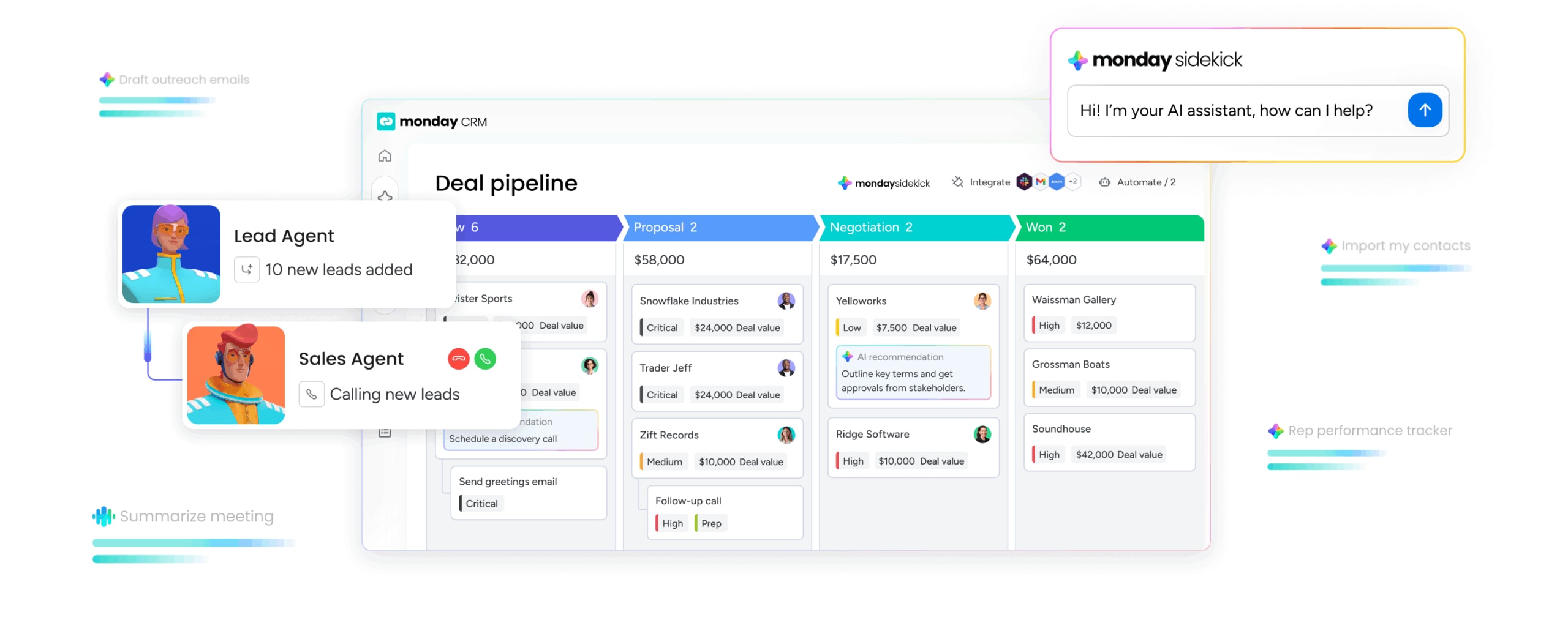
Adding “AI” to a product page does not automatically transform how your team works. What separates a platform that truly accelerates the pipeline from one that merely adds a shinier chatbot is a short list of capabilities. The real test is whether it removes bottlenecks instead of simply relocating them.
- Speed to first response and 24/7 coverage: AI engages prospects immediately, any time of day. The system receives inquiries, interprets questions, and either resolves them or routes them to the right rep without human involvement.
- Autonomous lead qualification and routing: AI evaluates each inquiry against your criteria, assigns a score, and routes it to the right person based on territory, expertise, or workload—eliminating manual triage.
- Native CRM integration and data sync: The platform reads and writes CRM data in real time. Contact records update, interactions log automatically, and deal stages move forward without rep involvement.
- No-code customization and agent building: Sales managers and RevOps professionals can build and modify workflows themselves without developer help or IT tickets.
- Cross-functional context across departments: The system pulls data from marketing, sales, and service into one place, so reps see the full customer journey when they pick up an inquiry.
- AI email drafting and sequence optimization: AI generates tailored email drafts based on prospect history and your tone. Sequence optimization analyzes which variants, send times, and subject lines drive engagement, then adjusts outreach automatically.
- Real-time analytics and forecasting: Real-time analytics surface pipeline health immediately. AI-powered forecasting uses current pipeline signals, inquiry velocity, and deal health indicators to project future revenue.
How AI agents outperform chatbots and copilots for sales inquiries
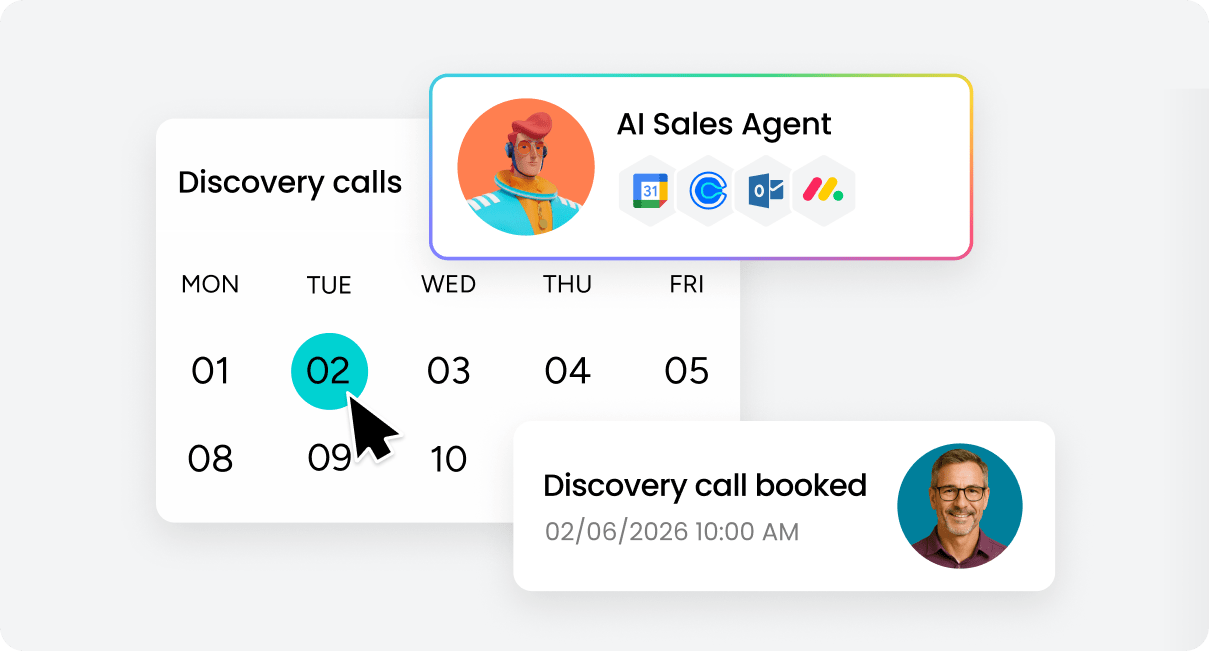
Selecting the wrong kind of AI for your sales pipeline does more than disappoint. It creates fresh manual work for your team. Here is why real autonomy matters when inquiry volume rises and rep time is limited:
| Capability | Chatbots | Copilots | AI agents |
|---|---|---|---|
| Primary role | Answer predefined questions | Assist reps with recommendations and content | Complete multi-step sales tasks autonomously |
| Autonomy | Low | Medium | High |
| Typical use | Responds to FAQs | Drafts emails, summarizes calls, suggests next steps | Qualifies leads, routes inquiries, schedules meetings, updates the CRM |
| Effect on productivity | Saves limited time | Reduces administrative work | Automates repetitive work so reps can focus on selling |
How to choose the right AI sales inquiry platform
Not every AI inquiry platform fits the way your sales motion actually works. The right choice protects team velocity, builds rep trust, and sustains pipeline momentum.
- Map your inquiry volume and channels: Before comparing vendors, get clear on your own numbers. Where are inquiries coming from? A team handling 20 inbound emails per week needs something very different from one processing 200 web form submissions a day.
- Define the metrics that actually matter: Track concrete metrics such as speed to first response, lead qualification accuracy, and pipeline conversion rates. Choose 2 or 3 numbers before you evaluate anything.
- Evaluate setup speed and flexibility: Ask whether sales managers can adjust workflows on their own or whether every change becomes an IT request. You need a system that can adjust in minutes, not after a development cycle.
- Check integration depth: AI inquiry handling only creates value when it writes back to your CRM in real time. Review how deeply the platform integrates with the rest of your stack.
- Test cross-functional context: Sales inquiries do not happen in a vacuum. To respond well, reps often need campaign history, support context, and contract details.
- Review governance and permission controls: Before deploying any AI on live inquiries, verify what data it can access, what actions it can take, and whether you have a clear audit trail for those decisions.
- Pilot with real workflows: Set up a pilot using real qualification criteria and let it run for a few weeks before committing to a broader rollout.
Operationalize sales inquiries with monday CRM
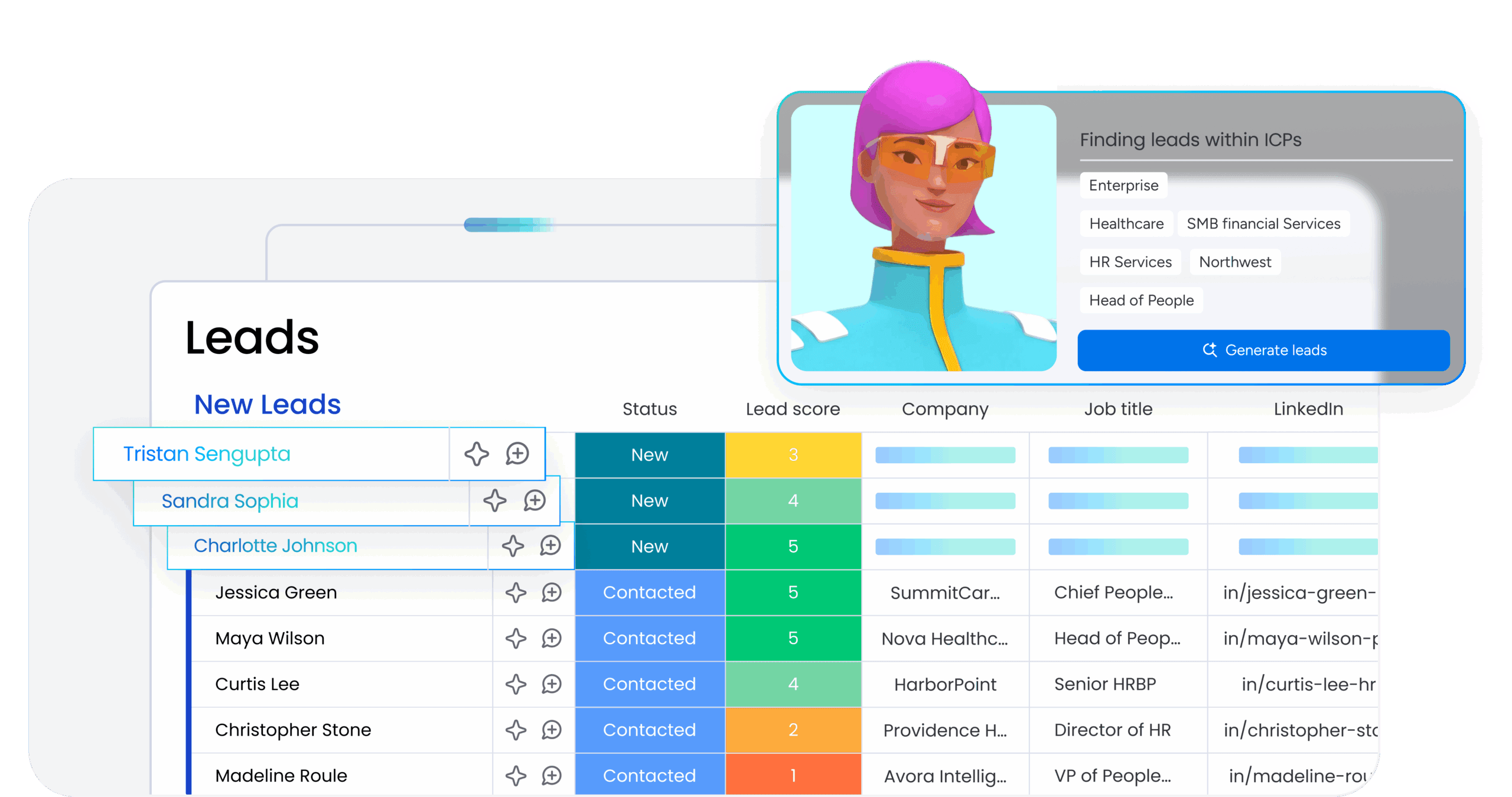
For teams managing more complex workflows, monday CRM offers a practical path forward. With more than 200 integrations, the platform can bring external AI assistants directly into your digital workspace, and teams can adjust AI workflows in minutes without developer support. Rather than patching together disconnected tools, monday CRM embeds AI directly into the workspace your team already uses to manage inquiries, qualify leads, and close deals.
Here’s how AI-powered features help you handle inquiries more efficiently:
- Pre-qualified feeds: SDRs receive a daily feed of pre-qualified leads with real intent signals, organized and ready to engage without manual sorting.
- Instant routing with Lead Scorer agents: AI routes high-intent prospects and schedules follow-ups instantly, so your team engages at the moment of peak interest.
- Tone monitoring: Sentiment detection catches tone shifts in emails before prospect engagement declines, giving reps early warning signals.
- Smart email drafting: The AI email assistant drafts outbound messages from a simple prompt, adjusting tone while tracking open rates on every send.
- Instant context with timeline summaries: The AI timeline summary condenses entire contact histories into a quick, scannable overview, so reps can review an inquiry with full context in seconds.
- Automated data entry: Autofill with AI takes this even further by automating CRM data entry across your columns, eliminating manual field updates.
- External AI connections: For teams already relying on external assistants, monday MCP connects Claude, ChatGPT, and others right to your workspace, so reps can ask their preferred AI to pull status updates or create new leads from call notes using natural language.
- No-code workflow customization: Sales managers can build and modify AI-powered workflows themselves using monday CRM’s automation builder, without waiting on IT or developers.
By consolidating inquiry handling, AI automation, and CRM functionality in one platform, monday CRM eliminates the data silos and manual handoffs that slow teams down. Reps spend less time switching between tools and more time engaging prospects when it matters most.
Turn more sales inquiries into opportunities
Every sales inquiry represents someone actively looking for a solution. The challenge isn’t generating interest — it’s responding quickly enough and giving every prospect the attention they deserve.
AI helps eliminate the delays, manual work, and disconnected systems that slow sales teams down. By qualifying leads automatically, routing inquiries to the right people, and keeping CRM data current, your team can spend less time on administration and more time building relationships that lead to revenue.
If you’re evaluating AI platforms, prioritize one that fits naturally into your existing workflow rather than adding another disconnected tool. When your CRM, automation, and AI work together, responding faster becomes part of your process — not another task to manage.
Try monday CRMFAQs
What is an AI sales agent?
An AI sales agent is an autonomous system that handles tasks like lead qualification, inquiry routing, and email drafting without human intervention.
How does AI help in sales?
AI in sales helps by automating repetitive administrative work, scoring leads based on intent, and providing real-time insights so reps can focus on selling.
What is the difference between an AI chatbot and an AI agent?
A chatbot follows scripted responses and stops after answering a question, while an AI agent interprets intent, takes action, and executes multi-step workflows like booking meetings or updating CRM records without waiting for human approval.
How quickly should you respond to a sales inquiry?
The faster, the better. Prospects who submit inquiries outside business hours will not wait until Monday morning. AI-powered systems that respond within minutes, even at 11:00 p.m. on a Friday, capture demand that manual processes miss entirely.
Do AI sales tools integrate with existing CRMs?
Most modern AI sales tools offer CRM integrations, but depth varies. Native integration means the AI reads and writes data in real time without manual syncing, while bolt-on tools may require middleware or create data silos that slow your team down.
