


A six-figure deal sits in the pipeline. Legal is waiting on documents. Finance wants revised projections. An executive sponsor just changed roles, and three stakeholders have gone quiet. Momentum slows, not because the opportunity disappeared, but because the process broke down.
This is the reality of high-stakes sales and investment deals. Complex opportunities rarely move in straight lines. They involve committees, shifting priorities, and approval chains that stretch across teams and organizations. Traditional CRMs are built to log contacts and stages, but they struggle to manage the web of relationships, dependencies, and timing that ultimately decide whether a deal closes or stalls.
Deal flow management software exists to handle that complexity. These platforms go beyond basic opportunity tracking to coordinate stakeholders, approvals, documents, and next steps in one system. This guide breaks down what separates deal flow tools from standard CRMs, highlights 15 platforms worth evaluating, and outlines how teams can implement the right system quickly to protect momentum and close more high-value deals.
Key takeaways
- Deal flow management goes beyond traditional CRM functionality: it’s designed for complex, high-value deals with multiple stakeholders, long sales cycles, and non-linear approval paths where standard CRMs often fall short.
- The right features directly impact deal velocity and win rates: visual pipelines, automated activity capture, AI-driven insights, real-time collaboration, and flexible analytics help teams prevent stalls and identify risks early.
- Implementation speed is a critical success factor: platforms that can be configured and adopted in weeks — not months — reduce disruption, accelerate time to value, and increase long-term user adoption.
- Tool fit depends on deal complexity, not company size: investment firms, enterprise sales teams, founders fundraising, and relationship-driven businesses all benefit when deal complexity outgrows spreadsheets or basic pipeline tracking.
- Flexible platforms like monday CRM stand out for adaptability: no-code customization, built-in automation, and AI support allow teams to shape workflows around how they actually close deals, rather than forcing process changes to fit rigid software.
Deal flow management software supports the opportunities that directly influence quarterly revenue and long-term growth. These platforms go beyond basic sales tracking, helping teams manage complex, high-value deals that involve multiple stakeholders, long approval chains, and extended timelines.
In environments where decisions span weeks or months, traditional tools struggle to keep pace. Deal flow platforms are designed for scenarios where coordination, visibility, and accuracy determine whether momentum continues or stalls.
Consider an investment firm reviewing fifty pitches at the same time, or an enterprise sales team navigating a nine-month buying cycle. Coordinating legal, finance, procurement, and executive stakeholders across organizations requires far more than a shared contact list.
Without structured systems, deal details fragment across inboxes and spreadsheets, causing delays and misalignment. Deal flow management software centralizes every moving part, consolidating conversations, documents, and decision points in one place.
Teams can track due diligence, capture stakeholder feedback, and maintain alignment from the first conversation through contract lifecycle management. The outcome is a process driven by data and clarity rather than assumptions or gut instinct.
Deal flow management software vs. traditional CRM
Every sales organization operates differently, and the software supporting revenue teams must reflect that reality. Traditional CRMs are effective for managing high volumes of straightforward transactions, but they often break down as deal complexity increases.
Deal flow platforms are built specifically for multi-stage, relationship-driven opportunities that require careful coordination across teams and functions. These are the deals that typically generate the greatest revenue impact.
Standard CRMs treat deals as linear progressions, moving from one stage to the next in a rigid sequence. High-value deals rarely follow that pattern, instead evolving through parallel legal reviews, financial analysis, and executive approvals.
Deal flow management software maps relationships, stakeholders, and dependencies across the entire buying group. Every interaction is captured and connected, ensuring that no conversation or decision is lost along the way.
Automation also serves a different purpose. Rather than focusing on basic follow-up emails, deal flow platforms trigger due diligence workflows, approval sequences, and cross-functional handoffs automatically.
This flexibility allows teams to build no-code workflows that reflect how they actually sell, adapting the platform to their process instead of adjusting their process to fit the software.
| Feature | Traditional CRM | Deal flow software |
|---|---|---|
| Focus | Volume and simple transactions | Complex, multi-stage relationships |
| Structure | Linear, rigid pipelines | Flexible, network-based mapping |
| Stakeholders | Single point of contact | Multiple stakeholders and committees |
| Automation | Basic email follow-ups | Complex due diligence and approvals |
7 must-have features for effective deal flow management
The effectiveness of a CRM is defined by whether it accelerates deal velocity or creates unnecessary overhead. The right capabilities reduce manual work and keep opportunities moving forward.
The features below distinguish a basic tracking system from a platform designed to close complex deals efficiently.
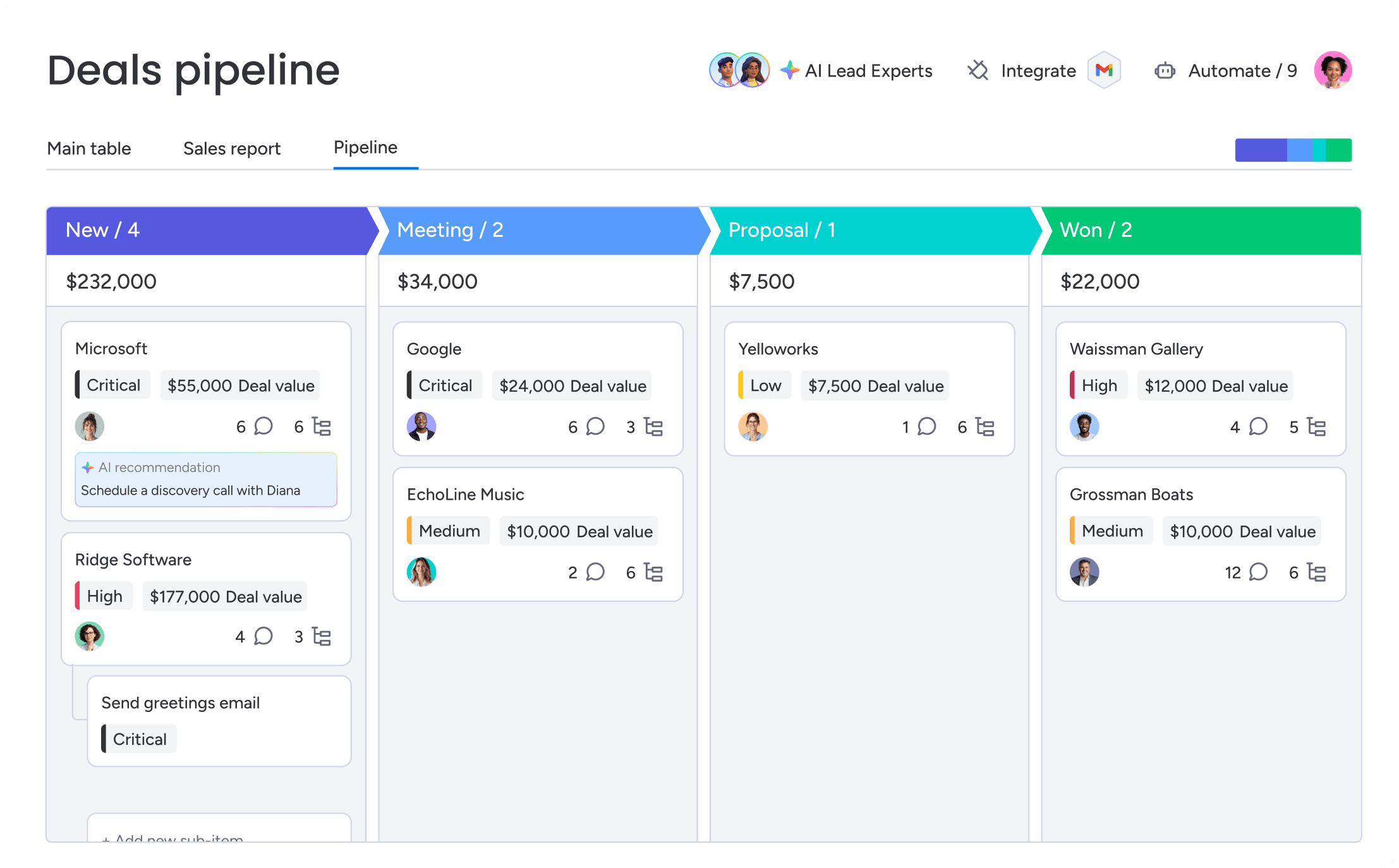
Visual pipeline tracking
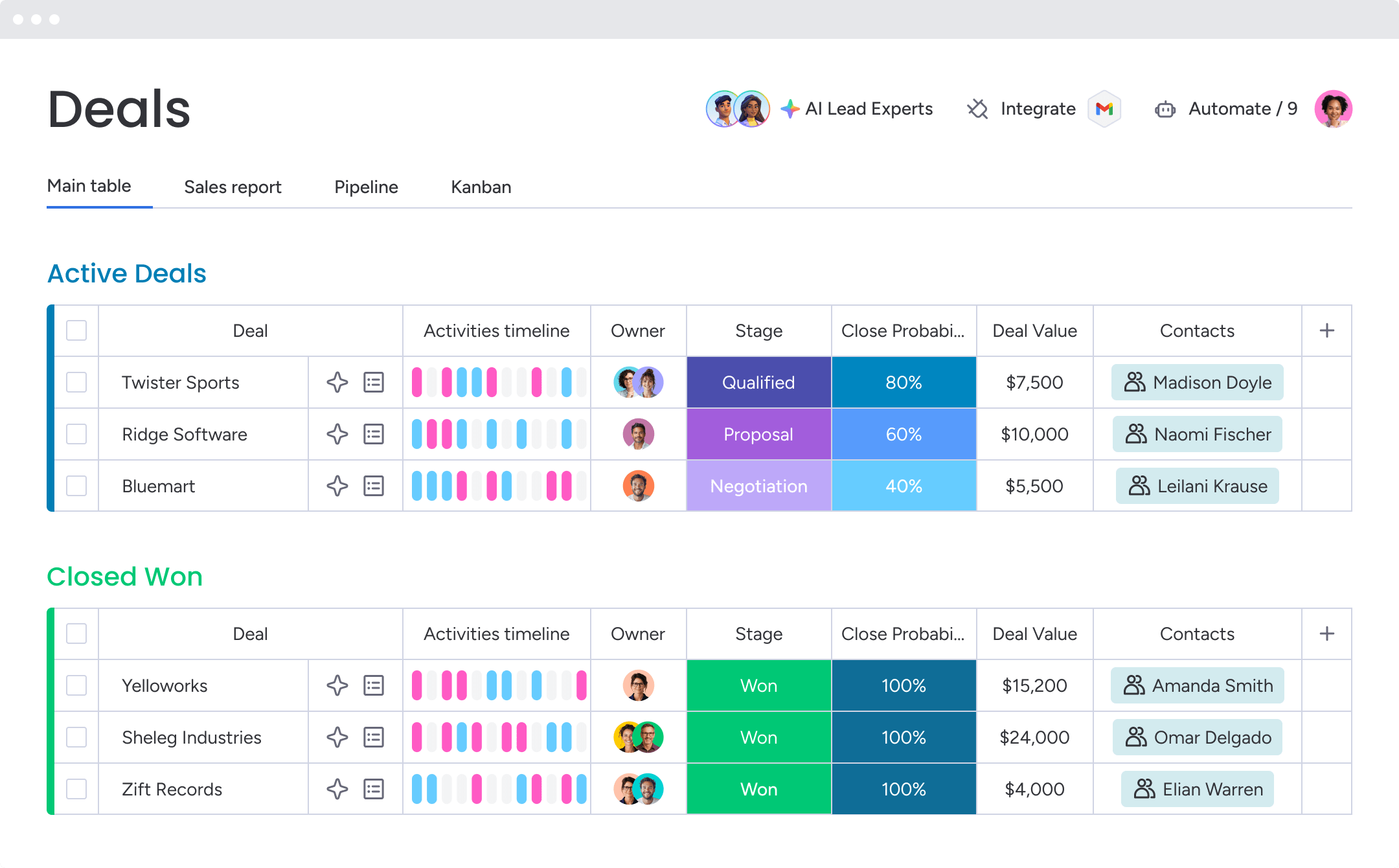
Static lists limit visibility and hide bottlenecks. A visual pipeline provides real-time clarity into where every deal stands, allowing teams to update stages quickly without manual logging.
When large portions of a pipeline stall in the same stage, visual layouts make the issue immediately apparent. Teams gain a clear understanding of what is happening across the entire quarter.
Automated activity capture
Manual logging slows teams down and increases the risk of incomplete records. Automated activity capture records emails, meetings, and calls without requiring extra effort from sales teams.
This creates a complete timeline for every deal, enabling smooth handoffs and faster onboarding for new team members. Context stays intact, even as ownership changes.
AI-powered deal insights
Reliable forecasting depends on data, not instinct. AI-powered insights surface patterns across deal activity, identifying risks and opportunities that may otherwise remain hidden.
Advanced platforms also support email drafting, conversation summaries, and commission tracking. This reduces administrative work and allows teams to focus on progressing deals.
Real-time team collaboration
Large deals depend on collaboration across sales, legal, finance, and operations. Siloed systems slow decision-making and create unnecessary communication gaps.
Shared deal records allow every contributor to work from the same information, with access tailored to their role. Approval cycles become faster, and alignment improves across the revenue team.
Customizable analytics dashboards
Historical reports show what already happened, but effective revenue managementrequires forward-looking visibility. Custom dashboards track metrics such as time-in-stage, deal velocity, and forecast accuracy.
These insights support more confident sales forecasting and enable leaders to address issues before they affect revenue outcomes.
Seamless tool integration
Deal flow data should not live in isolation. Integrations with email, calendars, and document storage systems reduce duplicate entry and maintain a single source of truth.
Teams continue using familiar tools while deal information flows automatically into one centralized platform.
Mobile deal management
Revenue teams work far beyond their desks. Mobile access ensures that updates, documents, and communications remain accessible wherever deals progress.
When teams can respond and update information in real time, momentum stays intact and opportunities move forward faster.
Try monday CRM
Why implementation speed determines success
Delayed CRM implementations come with hidden costs. While systems remain incomplete, information stays fragmented, collaboration slows, and forecasting accuracy declines.
Legacy CRM rollouts often take six to twelve months, during which strategies change and teams evolve. By the time adoption begins, the system may already feel outdated.
Revenue teams increasingly succeed by using monday CRM to get operational within weeks rather than quarters. This approach allows teams to adapt workflows quickly and align the platform with existing processes.
Speed matters because systems built for yesterday’s challenges cannot support today’s revenue goals. Rapid time-to-value directly impacts competitiveness and deal execution.
15 best deal flow management software platforms
Spreadsheets were never designed to manage complex deal pipelines. Manual tracking introduces risk, slows progress, and reduces predictability.
The platforms below were evaluated based on ease of implementation, integration capabilities, and flexibility across different deal flow processes.
Investment management platforms:
- Salesforce for Investment Management: enterprise-grade customization designed for financial services.
- Airtable: a flexible database for building shared workflows.
- Notion: a unified workspace combining documentation and structured data.
- Smartsheet: spreadsheet-based project management with advanced automations.
- Pipedrive: a sales-focused CRM with visual pipeline tracking.
Specialized deal flow solutions:
- DealCloud: built from the ground up for M&A and investment pros, with serious relationship mapping.
- 4Degrees: uses AI to map your team’s network and find your next deal.
- Affinity: an AI-driven platform that automates contact data and tracks relationships.
- SourceScrub: a sourcing platform packed with private company data and market intelligence.
- Navatar: cloud-based platform for investment management that integrates deal tracking.
Comprehensive business platforms:
- HubSpot: the inbound marketing giant with solid deal management tools included.
- monday CRM: a flexible, AI-powered platform you can shape to fit any deal flow process, not the other way around.
- Zoho CRM: part of a massive business suite, with highly customizable deal tracking.
- Copper: the CRM that lives inside your Google Workspace, automating data entry from your inbox.
- Freshsales: a user-friendly CRM with phone and email built right in.
1. monday CRM
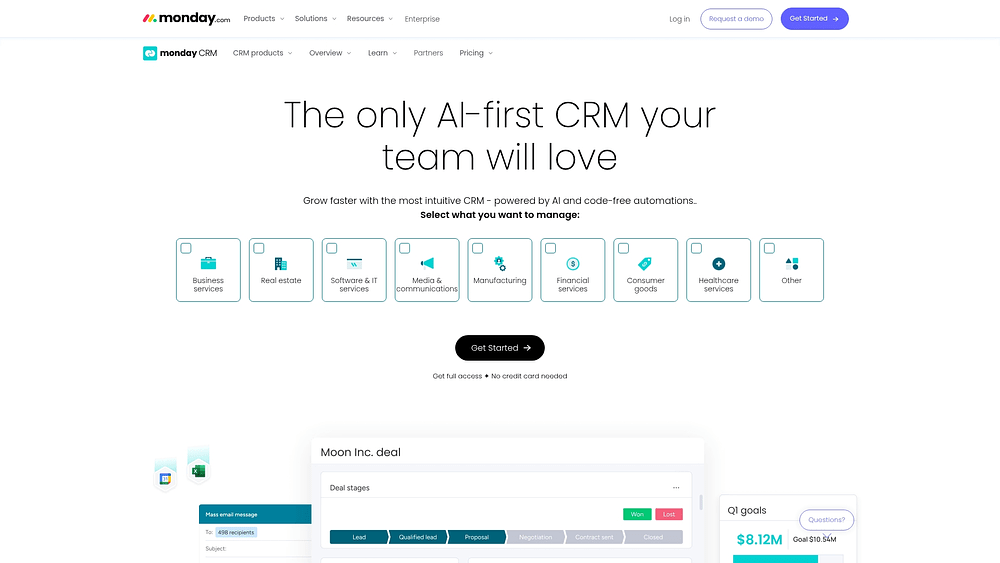
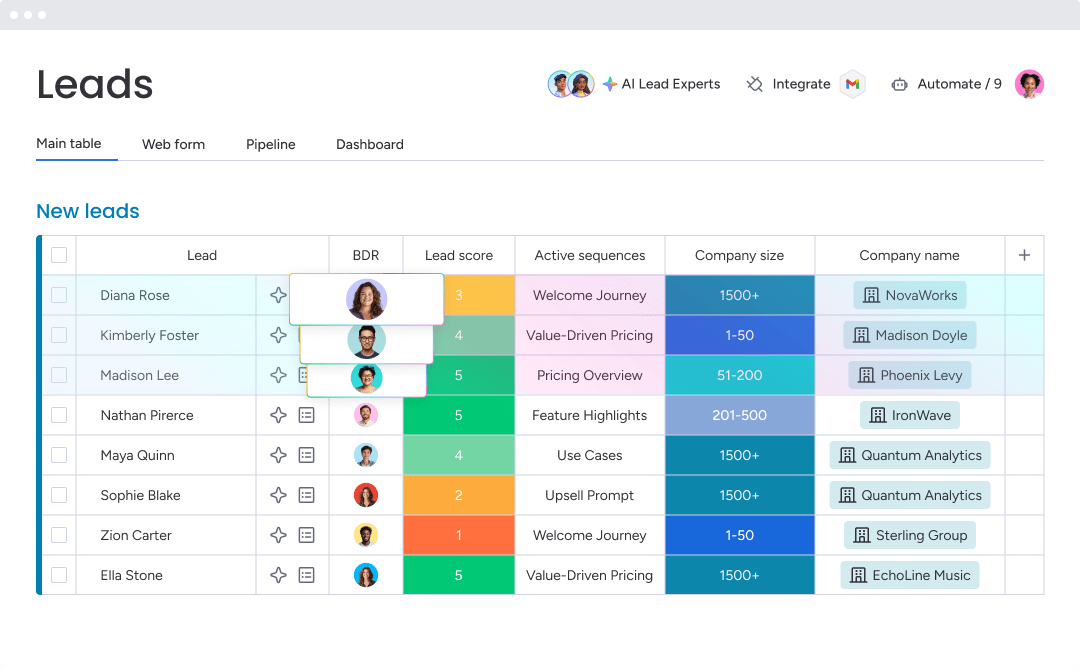
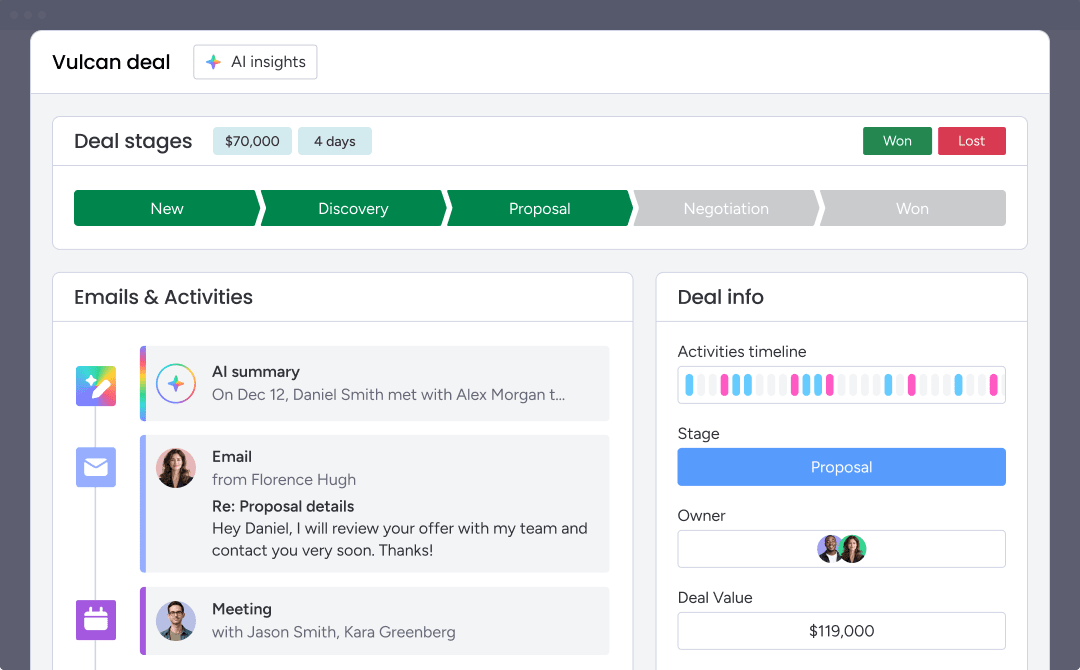
Modern revenue teams require visibility, flexibility, and fast adoption to manage complex deal flow effectively. monday CRM brings these elements together through visual pipelines and configurable workflows that align with real-world selling processes.
Teams can manage leads, deals, accounts, and handoffs in one connected system without turning CRM management into a separate initiative.
Example:
Teams use monday CRM to track deals from first contact to closed-won, with customizable pipelines that adapt to any sales process — from venture capital investments to enterprise partnerships.
Key features:
Before you add anything fancy, these are the building blocks that keep deal flow moving and provide a single source of truth for every deal.
- Visual pipeline management with drag-and-drop deal progression and customizable stage definitions
- Account and contact management that keeps deal context close, including an expanded item view to see relevant account details and connected work in one place
- Emails & Activities tracking so teams can log and track every interaction (emails, meetings, and notes) in one timeline, and email contacts directly from within the CRM
- Lead management workflows to collect and qualify leads from sources like website forms and social ad campaigns, then centralize and assign them for fast follow-up
- Sales forecasting and projections so leaders can track forecast vs. actual sales and drill down by month, sales rep, or other criteria
- Sales analytics with code-free, customizable dashboards that surface pipeline status, forecasting, team performance, and activity status
Advanced AI features:
AI in monday CRM helps you move faster on the work that usually slows deal flow down: writing, reading, and manual updates. How do you ensure the platform you choose will be adopted by your team instead of abandoned after a month?
- Compose emails with AI in Emails & Activities so reps can draft messages faster, then adjust tone and length before sending
- Timeline summary with AI that creates a short, readable recap of emails, calls, meetings, and notes, so anyone can jump into a deal without digging
- Autofill columns with AI to keep boards updated using actions like Detect sentiment, Summarize, Improve text, Translate, and Writing assistant
- Extract Info with AI to pull key data from files (including contracts and invoices) into board columns, reducing manual entry and copy-paste errors
- Assign label and Assign person AI actions to help categorize work and route items based on what AI reads in text (including Emails & Activities, when supported)
Automations:
Automations are where deal flow management software starts paying for itself. monday CRM lets teams set rules once, then rely on them every day.
- Automate actions based on custom conditions so handoffs, reminders, and updates happen when a deal changes stages
- Automate email follow-ups to keep momentum, especially when reps juggle high volume
- Use conditional label change to keep statuses consistent, so pipeline reporting stays reliable
Integrations:
Most revenue teams already have a stack they like. monday CRM supports powerful integrations so you can connect customer information, communication, and workflows without forcing a total reset.
- Connect monday CRM with your existing systems so customer data stays centralized and usable across teams
- Keep work connected beyond sales, since monday CRM sits within a larger monday product suite that supports processes across the customer journey
Deal flow management software features:
These are the features teams lean on when leadership asks for predictability, and reps ask for less admin work. Who needs another dashboard that looks nice but answers nothing?
- Sales pipeline widget to view deal movement and pipeline status at a glance
- Sales funnel widget to spot conversion points and focus coaching where it matters
- Leaderboard widget to track quota attainment and performance over time
- Dedicated mobile experience so reps can update deals and activity while they’re in motion
- Dashboards that give leaders organization-wide visibility across pipeline status, forecasting, activity, and team performance
Pricing:
- Basic: $12/seat/month (billed annually)
- Standard: $17/seat/month (billed annually)
- Pro: $28/seat/month (billed annually)
- Enterprise: Contact sales for custom pricing
- 18% discount with annual billing
- Minimum 3 seats required
- 14-day free trial available
Why it stands out:
- Keeps customer information centralized so sales, account management, and operations teams can work from the same record, not scattered tabs
- Adapts to your sales process with drag-and-drop pipelines, automations, and dashboards that RevOps can adjust without heavy technical work
- Uses automations and AI across everyday workflows (email writing, timeline summaries, and AI-powered column updates) so teams spend more time progressing deals, and less time updating fields
2. Affinity
Affinity transforms relationship intelligence into deal-closing power, automatically mapping your network and scoring connection strength. The platform specializes in capturing communication patterns from email and calendar data, making it perfect for investment professionals who rely on warm introductions and relationship-driven deal sourcing.

Use case:
Investment teams and relationship-focused sales professionals who need to leverage their network effectively to source and close deals faster benefit from specialized venture capital CRMs.
Key features:
- Automatic relationship scoring based on communication frequency and recency to identify your strongest connections
- Warm introduction pathfinding that shows the best route to reach prospects through mutual contacts
- AI-powered meeting intelligence with automated note-taking and deal insights extraction
Pricing:
- Essential: $2,000/user/year (automated activity capture, relationship scoring, basic deal pipeline)
- Scale: $2,300/user/year (adds Chrome extensions, enhanced relationship mapping, deal analytics)
- Advanced: $2,700/user/year (adds AI meeting intelligence, premium enrichment, scaled email)
- Enterprise: Custom pricing (includes SSO, granular access controls, full API access)
Considerations:
- Premium pricing may be steep for smaller teams or organizations outside private capital
- Some advanced features like Chrome extensions and AI capabilities are locked behind higher-tier plans
3. Qubit Capital
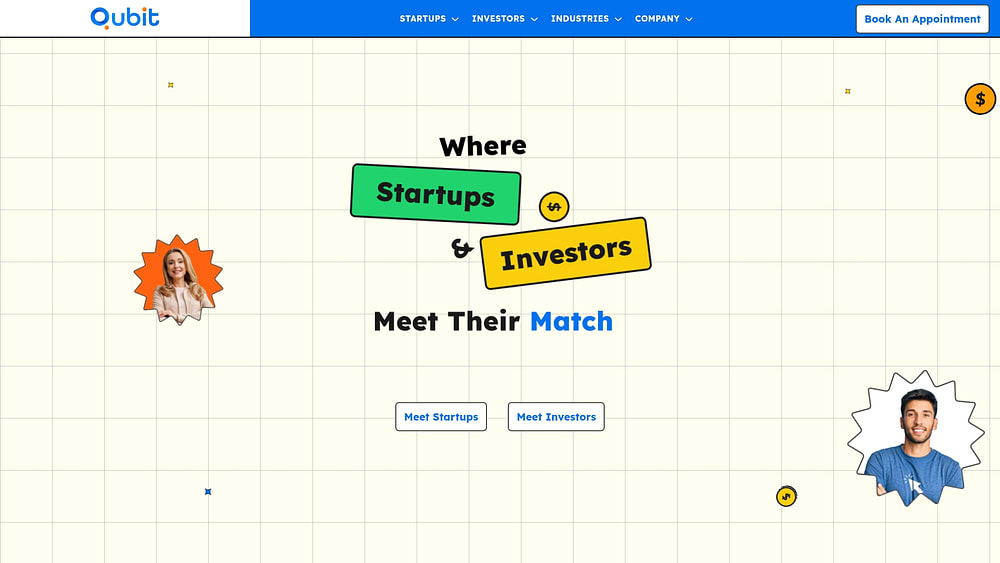
Qubit Capital combines AI-powered investor matching with hands-on transaction support for startups and investors. The platform goes beyond simple deal sourcing by offering structured due diligence, data room creation, and end-to-end transaction management. Founded in 2020, Qubit has facilitated over $215M across 237+ startups while serving a network of 20,000+ investors globally.
Use case:
Early-stage and growth equity investors managing both active deal pipelines and existing portfolio companies benefit from Qubit’s integrated approach to deal flow and transaction execution.
Key features:
- AI-driven investor mapping and relevancy scoring with thesis-based matching filters
- Structured due diligence support with audit-ready data rooms and compliance reviews
- End-to-end transaction management from initial outreach through closing and post-acquisition integration
Pricing:
- Pricing available upon request through consultation
- Engagement appears to follow a bespoke model based on stage, sector, and investor type
- Some reports suggest upfront fees plus success-based pricing structure
Considerations:
- No transparent pricing structure makes it difficult to evaluate cost-effectiveness upfront
- Mixed customer reviews highlight varying experiences with results versus expectations
4. OpenVC
OpenVC brings a fundraising-first approach to deal flow management, connecting startups directly with investors through a purpose-built CRM. The platform combines investor discovery, pitch deck tracking, and automated follow-ups in one free system, making it perfect for early-stage founders who need to manage their fundraising pipeline without breaking the bank.

Use case:
Early-stage startup founders (pre-seed to Series A) who want to streamline their fundraising process with integrated investor discovery, CRM functionality, and pitch deck analytics — all without the overhead of traditional sales platforms.
Key features:
- Auto-creates CRM records when founders email investors, with integrated deck analytics and pipeline tracking
- Built-in investor database with 20,000+ verified profiles and contact preferences (intro preferred, direct email, or forms)
- Automated follow-up sequences and outreach screening to maintain investor trust and improve reply rates
Pricing:
- Free: Unlimited CRM, deck sharing/analytics, investor search, team members, 1 daily “Submit deck” outreach
- Premium: $25/month (billed annually at $299/year) or $99/month month-to-month
- Premium includes 5 daily outreach submissions, 10 investor filters, Intro Finder, masterclass access, and deck reviews
- 75% discount available when billed annually
Considerations:
- Daily outreach limits (1 free, 5 premium) may slow aggressive fundraising campaigns
- No native data room feature — requires third-party solutions like DocSend for later-stage due diligence
5. Signal by NFX
Signal by NFX transforms deal sourcing through network intelligence and warm introduction pathways. The platform serves founders and investors with community-driven data and relationship mapping, making it perfect for teams who value authentic connections over cold outreach.

Use case:
Early-stage investors and founders who prioritize network-based deal discovery and warm introductions over traditional cold outreach methods.
Key features:
- Investor discovery with curated lists by sector, stage, and geography, featuring over 8,000 fintech seed investors and 5,000+ SaaS seed investors
- Intro Path intelligence that scores relationship strength (1-10) using Gmail integration to surface warm connection opportunities
- Private co-investor collaboration lists for deal sharing and pipeline coordination among trusted investment partners
Pricing:
- Free forever: Complete access to all features with no paid tiers or hidden fees
Considerations:
- Limited to network-driven sourcing only — investors cannot browse or discover founders directly on the platform
- Requires Gmail integration for full functionality, which may not suit teams using other email systems
6. Foundersuite
Foundersuite flips the script on deal flow management by serving founders instead of investors. The platform combines CRM functionality with a massive investor database, outreach automation, and fundraising analytics to help startups navigate the capital-raising process. Unlike generic CRMs that require manual sourcing, Foundersuite gives founders direct access to 216,000+ investor profiles with built-in warm introduction pathways.

Use case:
Startup founders managing fundraising campaigns who need to source investors, track conversations, and coordinate due diligence processes in one centralized platform.
Key features:
- Investor CRM with customizable pipeline stages, task management, and team collaboration for tracking fundraising progress
- Built-in database of 216,000+ investors with contact details, investment focus areas, and warm introduction tools
- Engagement analytics for investor updates and pitch decks, showing view times and recipient activity to prioritize follow-ups
Pricing:
- Basic: Free (75 investors per pipeline, unlimited users)
- Silver: $745/year (200 investors per pipeline, approximately $62/month)
- Gold: $1,069/year (1,000 investors per pipeline, approximately $89/month)
- Platinum: $1,609/year (1,500 investors per pipeline, approximately $134/month)
- Annual billing saves 10% compared to monthly plans
- Virtual data room available as paid add-on
Considerations:
- Investor contact data accuracy isn’t guaranteed, with some users reporting outdated information that requires manual verification
- Plan limits on investors per pipeline may require upgrades for larger fundraising campaigns, though unlimited users help offset per-seat costs
7. Dealroom
Dealroom delivers comprehensive market intelligence and startup database access for investors hunting the next big opportunity. The platform combines predictive analytics with government-backed ecosystem data, making it a go-to resource for VCs and corporate development teams conducting deep market research.

Use case:
Perfect for investment teams who need to identify emerging opportunities early and track funding rounds across global startup ecosystems with predictive insights.
Key features:
- Dealroom Signal: Predictive scoring that surfaces “round-ready” startups by stage, helping teams prioritize outreach timing
- Government ecosystem network: Access to proprietary early-stage data through 100+ government partnerships worldwide
- Investor Power Law rankings: Analytics that help qualify co-investors and understand LP performance across markets
Pricing:
- Premium: €12,500/year (starting from 3 seats) with core data access and 10,000 export credits per user
- Premium Plus: €17,000/year (starting from 3 seats) including 30,000 export credits, 3,000 business-email credits, and CRM integration via Zapier or API
- Enterprise: Custom pricing with full API access, SSO, and analyst support
- Annual contracts include automatic 7% renewal increases (or CPI if higher)
Considerations:
- No native CRM functionality — requires integration with external systems for full pipeline management
- Minimum 3-seat requirements and annual pricing may be challenging for smaller firms or individual scouts
8. Crunchbase
Crunchbase delivers the most comprehensive startup and company database, packed with funding histories, leadership intel, and competitive insights. The platform combines deep research capabilities with predictive intelligence, making it perfect for teams who need to move fast from discovery to outreach.

Use case:
Teams requiring extensive company data for prospecting and due diligence, with built-in pipeline tracking to manage deals without switching platforms.
Key features:
- Predictive intelligence models that forecast funding, acquisitions, and IPOs with 5,000+ confirmed predictions
- Native pipeline management through “Stages” — a kanban-style board for tracking deals directly within research workflows
- CRM integrations with Salesforce and HubSpot that sync data, prevent duplicates, and trigger alerts on account activity
Pricing:
- Free: Basic browsing with limited results and single list functionality
- Pro: $99/month (monthly billing) or $588 for first-year annual discount — includes Stages pipeline, alerts, 2,000 row exports, and 10 free contacts monthly
- Business: Quote-based team plan with predictive insights, 5,000 row exports, SSO, and full CRM integrations
- Contact packs: Additional contacts available from $29/month for 100 contacts up to $99/month for 500 contacts
Considerations:
- Pipeline functionality is lightweight compared to dedicated CRM platforms — lacks advanced relationship mapping and email auto-capture
- CRM integrations require Business plan and can take up to 24 hours for initial sync, with export limits that may restrict high-volume analysis
9. AngelList
AngelList brings venture capital infrastructure online with end-to-end deal management for angel investors and fund managers. The platform combines deal syndication, investor onboarding, and fund administration in one integrated environment, making it the go-to choice for emerging fund managers who want to tap into a massive network of 72,000+ investors. With $171 billion in assets on platform and transparent flat-fee pricing, AngelList eliminates the vendor sprawl that typically plagues early-stage investment operations.

Use case:
Angel investors, emerging fund managers, and early-stage funds seeking comprehensive deal flow infrastructure with built-in access to a large investor network.
Key features:
- Digital investor onboarding with “investor passport” for faster repeat subscriptions across deals
- Integrated data room, legal formation, banking, and lifetime fund administration services
- Platform distribution through AngelList’s network of accredited investors via Meridian
Pricing:
- SPVs: $8,000 one-time setup fee + $2,000 blue sky pass-through (10% cap on total fees)
- Follow-on SPVs: $5,000 setup fee + $2,000 blue sky pass-through
- Venture fund administration: 0.1% of fund size + $10,000/year (Traditional) or 0.15% + $20,000/year (Full Service)
- Data room: Free for all users
- Add-on services: Additional fees for international investments, blockers, and financial statements
Considerations:
- Minimum raise guidance of $80,000 for SPVs, with fee contributions required for smaller raises
- Some functions require AngelList assistance rather than full self-service capabilities
10. 4Degrees
4Degrees combines relationship intelligence with deal pipeline management, built specifically for private markets teams. The platform analyzes your email and calendar data to map connections and score relationship strength, making warm introductions a strategic advantage rather than guesswork.

Use case:
Perfect for venture capital, private equity, and investment banking teams where relationship-driven deal flow and warm introductions significantly impact success rates.
Key features:
- Automated relationship mapping that scores connection strength and suggests optimal introduction paths
- Real-time alerts for job changes, news mentions, and portfolio company updates to keep deals moving
- Chrome, LinkedIn, and Gmail extensions that surface insights directly in your existing workflow
Pricing:
- Custom pricing: Quote-based per-user monthly billing
- Implementation support: Included with enterprise options
- Third-party integrations: Additional costs for data sources like PitchBook
Considerations:
- Quote-only pricing makes upfront cost comparison difficult
- Cloud-only deployment may not fit certain regulated environments
11. DealCloud
DealCloud delivers enterprise-grade deal flow management built specifically for institutional investment firms. The platform combines AI-powered relationship intelligence with sophisticated pipeline tracking, making it the go-to choice for private equity, venture capital, and investment banking teams managing complex deal structures.

Use case:
Institutional investors and advisory firms requiring robust data management, automated workflow orchestration, and enterprise-level security for high-stakes deal processes.
Key features:
- AI-powered origination and relationship signals — Automatically identifies warm introductions, tracks contact changes, and surfaces deal opportunities through intelligent market monitoring
- Deep Microsoft and Google integrations — Native Outlook add-ins, Teams transcript capture, and Chrome extensions that eliminate manual data entry while keeping deal information current
- Third-party data ecosystem — Built-in connections to PitchBook, Preqin, D&B, and Cherre provide enriched company intelligence and market data directly within deal workflows
Pricing:
- Enterprise pricing: Quote-based pricing starting around $85K annually
- Pricing varies significantly based on firm size, user count, and module selection
- Add-on costs: AI features, data connectors, and enterprise security options require separate licensing
- Implementation: Professional services and training typically included in enterprise packages
Considerations:
- Steep learning curve — Users report the platform requires significant training due to its SQL-like configuration concepts and complex interface design
- Implementation complexity — Custom integrations may require extensive API development work, extending time-to-value for some organizations
12. Salesforce
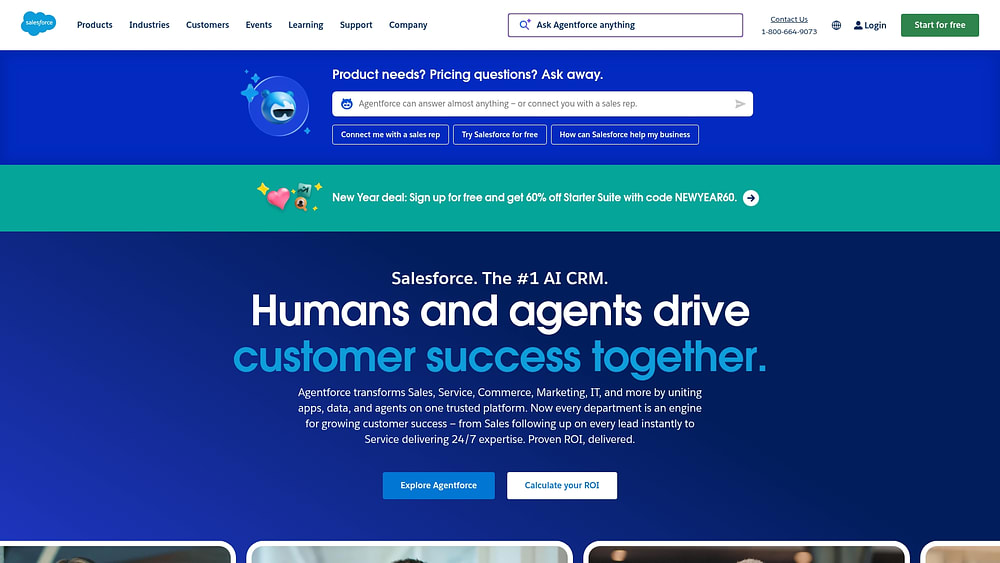
Salesforce delivers enterprise-grade deal management with AI-powered insights and end-to-end quote-to-cash capabilities. The platform combines Pipeline Inspection, Deal Insights, and Revenue Cloud to handle complex approval workflows and margin protection for large organizations. With 20.7% global CRM market share and deep customization options, it’s built for enterprises with dedicated technical resources.
Use case:
Large enterprises with complex deal structures, multi-stage approval processes, and dedicated Salesforce administration teams who need comprehensive quote-to-cash automation.
Key features:
- AI-driven Deal Insights and Opportunity Scoring with predictive forecasting to prioritize high-value opportunities
- Revenue Cloud integration for automated quote generation, discount management, and approval workflows
- Pipeline Inspection with collaborative forecasting and waterfall charts for executive visibility
Pricing:
- Free Suite: $0/user/month
- Starter Suite: $25/user/month
- Pro Suite: $100/user/month
- Enterprise: $175/user/month
- Unlimited: $350/user/month
- Agentforce 1 Sales: $550/user/month
- Revenue Intelligence add-on: $220/user/month (billed annually)
- Revenue Cloud (CPQ): $150-$200/user/month (billed annually)
Considerations:
- Advanced deal management features require expensive add-ons that can significantly increase total cost
- Implementation complexity demands dedicated technical resources and structured change management
13. HubSpot
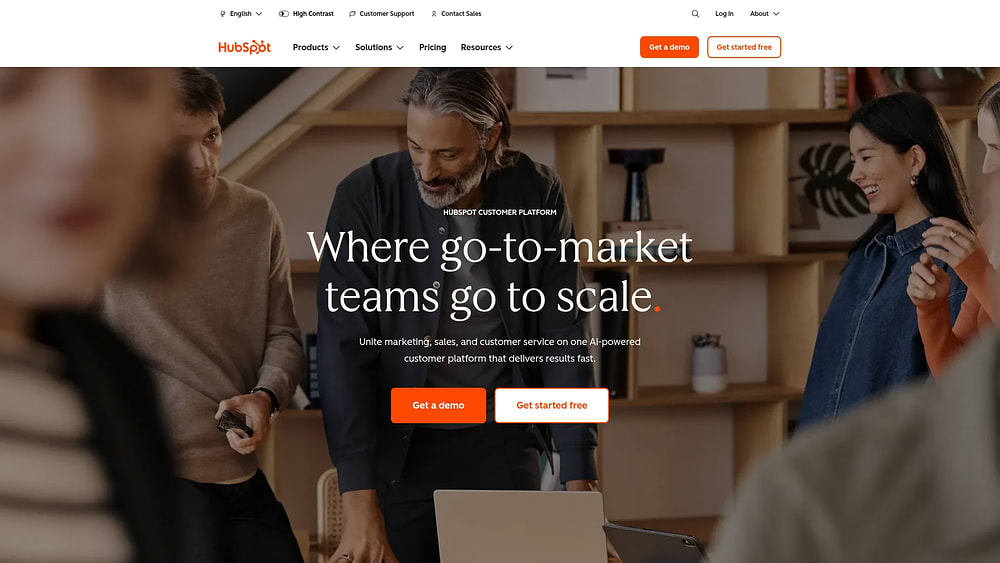
HubSpot combines marketing automation with CRM functionality, creating a unified platform for revenue teams who need both lead generation and deal management. The platform serves mid-market B2B companies with 2-2,000 employees, offering everything from free starter tools to enterprise-grade governance features. With over 258,000 customers across 135 countries, HubSpot has built a reputation for making complex sales processes accessible without sacrificing control.
Use case:
Teams that need integrated marketing and sales functionality with the ability to scale from simple deal tracking to sophisticated pipeline governance and forecasting.
Key features:
- AI-powered deal scoring and insights that automatically flag deal health and suggest next steps
- Robust pipeline governance with required fields, stage restrictions, and approval workflows typically found in enterprise CRMs
- Complete quote-to-cash functionality including CPQ, e-signatures, invoicing, and native payment processing
Pricing:
- Free: $0 (basic CRM and deal management)
- Starter: $45/month (5 seats included)
- Professional: $1,450/month (5 seats included, forecasting and advanced governance)
- Enterprise: $4,700/month (7 seats included, deal approvals and advanced analytics)
Considerations:
- Advanced features like forecasting and deal approvals require higher-tier subscriptions
- Native payment processing limited to US, UK, and Canada markets
14. Navatar
Navatar transforms deal flow management from basic pipeline tracking into sector intelligence for private equity and investment banking. The platform specializes in relationship-first workflows that automatically capture deal context across Outlook, Slack, and Salesforce, making it purpose-built for institutional investment environments. Built on Salesforce with two decades of private markets expertise, Navatar helps dealmakers source, qualify, and execute deals faster through embedded AI and “Who Knows What” intelligence.

Use case:
Private equity firms and investment banks managing sophisticated deal processes with complex approval workflows and multi-stage due diligence requirements.
Key features:
- Relationship intelligence with “Who Knows What” and “Who Knows Who” views that map deal networks and capture unified communication history
- Embedded AI workflows that automatically log activities, flag coverage risks, and deliver insights across Outlook, Slack, and Salesforce
- Deal execution capabilities including independent deal rooms, LP investor portals with dynamic watermarking, and integrated document management
Pricing:
- Enterprise pricing: Quote-only based on firm requirements
- Contact sales for custom pricing and demonstrations
- Additional costs may include Salesforce platform editions and optional integrations
Considerations:
- Steep learning curve — Users report the platform requires significant training due to its SQL-like configuration concepts and complex interface design
- Implementation complexity — Custom integrations may require extensive API development work, extending time-to-value for some organizations
15. PitchBook
PitchBook delivers comprehensive private market intelligence and deal flow management for investment professionals who need data-driven insights. The platform combines extensive company databases, valuation analytics, and market research with collaborative deal tracking capabilities, making it a go-to resource for PE/VC firms requiring both sourcing intelligence and pipeline management. Built for teams that live and breathe data, PitchBook integrates seamlessly with existing CRM systems while providing the research depth that drives smart investment decisions.

Use case:
Data-driven investment teams who need robust market intelligence alongside deal tracking capabilities, particularly those requiring extensive company research and competitive analysis.
Key features:
- Advanced screeners with granular filters for deal type, size, industry, and status, plus the ability to upload and match external lists up to 50,000 rows
- Collaborative workspaces with custom pipeline fields, notes, files, and alert systems for team-based deal management
- Managed CRM integrations with Salesforce, Microsoft Dynamics, and HubSpot that sync company and deal data automatically
Pricing:
- Custom pricing: Quote-based pricing varies by seat count, firm type, and premium add-ons
- Premium add-ons: Direct Data API and CRM Integration available as separate paid features
- Free trial: Available with full platform access during trial period
Considerations:
- Functions as a data and research platform rather than a full standalone CRM, requiring integration with external systems for complete pipeline management
- Weekly sync schedules and field mapping limitations may create workflow constraints for teams needing real-time CRM updates
How to select deal flow software for your team
Choosing a new platform can feel risky. The wrong decision costs more than budget alone. It can drain months of productivity and leave teams frustrated enough to abandon the software within weeks. Finding the right fit matters far more than chasing the newest or flashiest features.
The goal is not feature volume. The goal is alignment. A platform should support how your team already works while removing friction, not adding more. The guidance below focuses on how to identify a solution your team will actually adopt and rely on every day.
Assess your team’s actual workflow
Simple deals rarely need heavy systems. Complex deals often fail under tools that are too rigid or too shallow. Before comparing platforms, take a clear look at how deals truly move through your organization.
Start by mapping day-to-day realities:
- Sales cycle length: how long deals typically take to close, whether thirty days or nine months.
- Number of decision-makers: whether deals involve a single buyer or a full committee.
- Team handoffs: how often legal, finance, or operations participate during the process.
- Approval chains: whether sign-off requires one approver or multiple layers.
Straightforward sales do not require over-engineering. However, deals that involve multiple stakeholders, approvals, and long timelines need software designed for complexity without creating more of it.
Calculate the real cost
The subscription price rarely reflects the true cost of ownership. Implementation fees, training requirements, and ongoing administration often determine whether a platform becomes an asset or a burden. Low upfront pricing can hide expensive long-term consequences.
Review both direct and indirect costs:
- Subscription fees: per-user pricing models and annual commitment structures.
- Implementation costs: professional services, setup support, and data migration.
- Training expenses: onboarding sessions, ongoing education, and certifications.
- Administrative overhead: time spent managing users, permissions, and reporting.
Cost should also be evaluated against impact. A platform that shortens sales cycles by twenty percent and improves win rates by fifteen percent can outweigh its price quickly. Calculating return helps separate short-term savings from long-term value.
Put it to a real-world test
Polished demos do not reflect daily use. Trials should be based on real deals, real data, and real team members. Managing active opportunities from start to finish reveals where a platform excels and where it slows teams down.
Focus evaluation on core actions:
- New deal creation: how quickly opportunities can be added and updated.
- Stakeholder management: how easily relationships and roles can be mapped.
- Cross-team collaboration: how smoothly legal and finance can participate.
- Mobile use: how practical updates feel when done from a phone.
Team behavior during trials matters. Resistance, confusion, or workarounds signal future abandonment. The right platform reduces effort and improves clarity rather than adding new steps.
Check your integrations

A platform that operates in isolation quickly loses relevance. Deal flow software must connect cleanly with the tools teams already use every day. Data should sync reliably in both directions without manual fixes.
Confirm compatibility with essential systems:
- Email and calendar: for automatic activity capture and visibility.
- Document storage: to organize files, versions, and approvals.
- Communication platforms: such as Slack or Microsoft Teams.
- Financial and legal systems: including contracts, e-signatures, and compliance workflows.
Flexibility matters as much as compatibility. An open API prevents lock-in and allows teams to adapt as requirements evolve. The right platform grows with the business rather than limiting future options.

A 4-week roadmap for quick value
Extended rollouts drain momentum. They delay results, exhaust teams, and inflate costs. Implementing deal flow software should be a focused, four-week effort designed to deliver immediate impact.
Week 1: set up your deal pipeline
Build a pipeline reflecting how your team actually sells. Generic templates that only work in demos won’t cut it. This week focuses on defining meaningful stages
The first week establishes structure that reflects how deals actually progress. Generic templates rarely support forecasting or execution. This phase focuses on clarity, relevance, and accuracy.
Key outcomes include:
- Real deal stages: defining five to eight stages with clear entry and exit criteria.
- Fields that matter: capturing deal size, source, stakeholders, and timing.
- Active deal import: bringing in live opportunities instead of outdated history.
- Team access: assigning role-based permissions for every contributor.
- Mobile readiness: confirming updates work smoothly from any device.
Clean data matters more than volume. Fifty accurate deals provide more value than thousands of stale records.
Week 2: configure smart automations
Manual follow-ups and reminders drain focus. Automation reduces administrative work and keeps deals moving without constant oversight. Many revenue teams use monday CRM to reduce repetitive work and reclaim time for selling.
Primary setup areas include:
- Pipeline automations: creating follow-ups, notifications, and approvals as stages change.
- Communication flows: standardizing email templates, reminders, and scheduling.
- Data quality rules: enforcing required fields and identifying duplicates.
- Core integrations: connecting email, calendar, and file storage for activity tracking.
Starting with foundational automations creates quick wins. Additional workflows can be added over time without technical effort, supporting continuous improvement.
Week 3: train your team for real adoption
Software only delivers value when teams use it consistently. Training should focus on role-specific needs rather than generic walkthroughs. This approach builds confidence and relevance.
Effective training includes:
- Role-based sessions: tailored guidance for reps, managers, and leadership.
- Quick-reference guides: concise instructions accessible from any device.
- Internal champions: identifying experts who support peers.
- Feedback loops: creating a simple process to collect improvement ideas.
Training should emphasize outcomes. Showing how the platform saves time and improves visibility builds genuine engagement rather than compliance.
Week 4: go live and optimize
The final week makes adoption official and establishes measurement. Early monitoring helps teams address friction quickly and reinforce positive behaviors.
Key focus areas include:
- Launch communication: setting expectations and sharing support resources.
- Adoption tracking: monitoring activity and identifying gaps.
- Baseline metrics: capturing deal velocity, win rates, and forecast accuracy.
- Weekly check-ins: short meetings to resolve issues and refine workflows.
Early adoption predicts long-term success. Celebrating small wins reinforces momentum and builds confidence in the platform.
Manage complex deals without the complex CRM
High-value deals already involve enough coordination. Deal flow software should simplify execution rather than add layers. Revenue teams benefit from platforms that balance flexibility with ease of use.
Many teams choose monday CRM to manage complex deal flow without long implementations or heavy configuration. The platform supports sophisticated processes while remaining intuitive for daily use.
Let AI do the heavy lifting
Large deals generate significant communication and documentation. monday AI summarizes emails, notes, and files into clear overviews, helping new stakeholders get up to speed quickly. It also assists with drafting emails that match deal context and relationship tone.
Risk detection adds another layer of value. Sentiment analysis highlights changes in communication patterns, while automated data extraction removes the need for manual entry from contracts and financial documents.
Build your workflow, no code required
Every sales process is different. monday CRM allows teams to design workflows that match their reality through drag-and-drop configuration. Dashboards, automations, and deal stages adapt to the team, not the other way around.
Teams can create views that support their roles, from Kanban boards for reps to forecast tables for managers. Everyone works from the same data while seeing what matters most to them.
Get sales, legal, and finance on the same page
Complex deals depend on cross-functional coordination. monday CRM provides shared visibility while maintaining role-based permissions. Legal teams review contracts, finance teams validate economics, and sales teams track progress in one place.
Approval workflows replace manual follow-ups and reduce delays. Clear ownership and deadlines keep deals moving while supporting compliance requirements.
See real results, real fast
Long implementations delay value. Many teams are fully operational on monday CRM within four weeks and begin seeing results almost immediately. Intuitive design reduces training time and increases adoption.
Within the first thirty days, teams typically gain:
- A complete pipeline view: real-time visibility into deals, stages, and stakeholders.
- Improved forecasts: predictions based on live, accurate data.
- Greater efficiency: reduced administrative work through automation.
- Stronger collaboration: fewer handoff issues across departments.
monday CRM vs. the old way
| Dimension | monday CRM | Traditional Solutions |
|---|---|---|
| Implementation time | 2–4 weeks to full deployment | 6–12 months for enterprise platforms |
| Customization | No-code, drag-and-drop flexibility | Requires technical experts or paid services |
| AI capabilities | Built-in email help, sentiment analysis, and data extraction | Limited or requires expensive add-ons |
| Team collaboration | Unified visibility with role-based permissions | Sales-focused, with clunky cross-functional features |
| Integrations | 200+ pre-built integrations plus an open API | Varies widely, often needs custom development |
| Learning curve | Intuitive interface, minimal training needed | Steep learning curve, requires extensive training |
The difference between modern platforms and legacy systems extends beyond features. Speed, flexibility, and adoption determine whether software supports growth or slows it down.
Traditional solutions often require months to deploy and specialized expertise to customize. monday CRM emphasizes fast setup, no-code flexibility, and built-in intelligence that supports teams from day one.

“With monday CRM, we’re finally able to adapt the platform to our needs — not the other way around. It gives us the flexibility to work smarter, cut costs, save time, and scale with confidence.”
Samuel Lobao | Contract Administrator & Special Projects, Strategix
“Now we have a lot less data, but it’s quality data. That change allows us to use AI confidently, without second-guessing the outputs.”
Elizabeth Gerbel | CEO
“Without monday CRM, we’d be chasing updates and fixing errors. Now we’re focused on growing the program — not just keeping up with it."
Quentin Williams | Head of Dropship, Freedom Furniture
“There’s probably about a 70% increase in efficiency in regards to the admin tasks that were removed and automated, which is a huge win for us.“
Kyle Dorman | Department Manager - Operations, Ray White
"monday CRM helps us make sure the right people have immediate visibility into the information they need so we're not wasting time."
Luca Pope | Global Client Solutions Manager at Black Mountain
“In a couple of weeks, all of the team members were using monday CRM fully. The automations and the many integrations, make monday CRM the best CRM in the market right now.”
Nuno Godinho | CIO at VelvTurn pipeline chaos into closed deals
Unclear pipelines create missed opportunities and unreliable forecasts. Real-time visibility restores control and confidence. Clear data supports better decisions and more predictable revenue.
Revenue teams adopt monday CRM because it adapts to how they sell today while remaining flexible for tomorrow. When software aligns with team behavior, momentum follows.
Try monday CRMFrequently asked questions
What is the difference between deal flow and pipeline management?
The distinction comes down to complexity. Deal flow manages high-value, multi-stakeholder transactions with longer timelines and layered approvals, while pipeline management addresses more routine, higher-volume sales cycles with simpler decision paths.
How much does deal flow management software typically cost?
Pricing ranges from approximately ten dollars per user for basic platforms to custom enterprise pricing for advanced solutions, depending on features, scale, and deployment requirements.
Can deal flow software integrate with existing CRM systems?
Most deal flow platforms integrate seamlessly with existing CRMs to provide specialized capabilities, though some solutions are designed as complete CRM replacements. Integration typically includes two-way data sync and open APIs to support future workflows.
What size team needs dedicated deal flow management tools?
Team size is not the deciding factor. Deal complexity determines the need. When tracking relationships, approvals, and cross-functional collaboration becomes difficult in a standard CRM, dedicated tools provide clarity, control, and improved visibility.
How do you measure ROI from deal flow management software?
Return on investment is measured by improvements in win rates, shorter deal cycles, and reduced administrative effort. Comparing these gains against total platform costs provides a clear picture of financial impact and long-term value.
Is deal flow software only for private equity and venture capital?
No. Any team managing complex, high-value opportunities can benefit. Enterprise sales, business development, strategic partnerships, and real estate professionals all rely on deal flow management to maintain momentum and alignment across long cycles.

 Get started