


The right AI sales agent can transform how your revenue team operates, speeding up follow-up, sharpening forecasts, and keeping deals moving through the pipeline. The challenge is finding the platform that fits your sales motion, not just one that looks impressive in a demo.
This article walks through 15 AI sales platforms worth a serious look, what each one actually does, and where it fits in a real sales motion. You’ll learn the difference between agents, assistants, and automation, discover the features that matter most, and get a clear framework for choosing a platform your team will actually use.
What AI sales agents are and why they matter for revenue teams
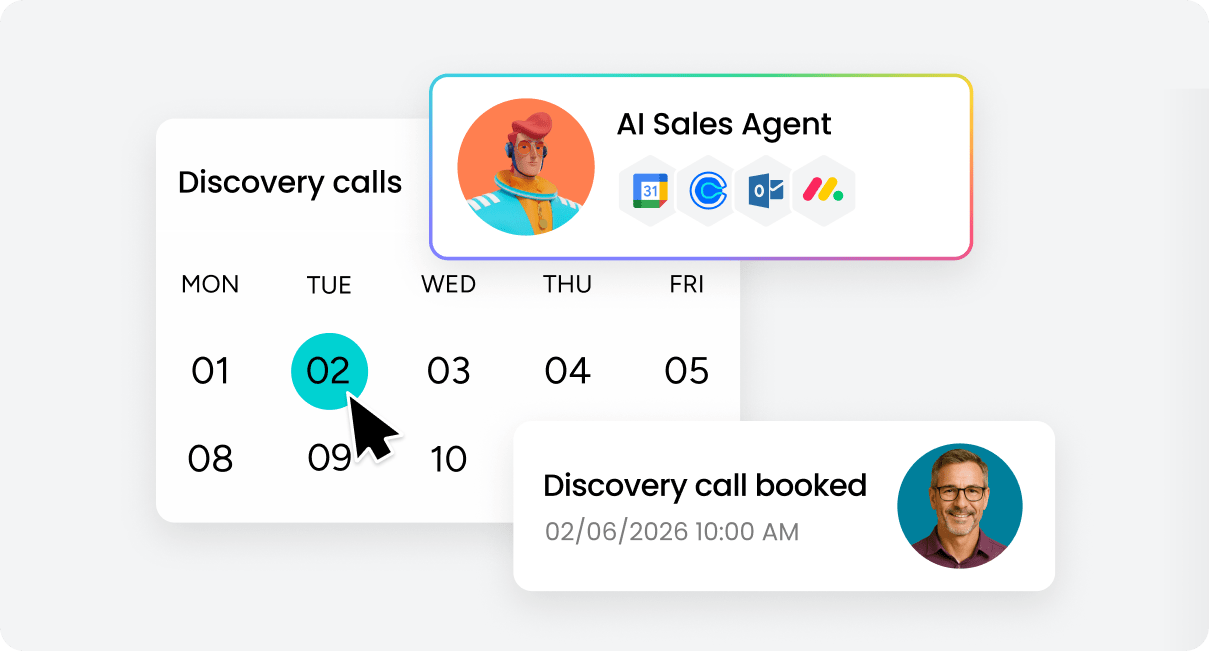
An AI sales agent is more than upgraded automation. It operates differently by interpreting context and acting on its own. Traditional sales automation follows predetermined rules; an AI agent interprets what’s happening, considers possible actions, and moves forward without waiting for step-by-step instructions. That’s the gap between a tool that trims admin work and one that actively helps advance deals.
There’s also a practical reality here. The stretch between buying a platform and actually adopting it is where many AI tools fall apart. The real cost isn’t just the subscription. It’s slower pipeline movement, shaky forecasting, and a team that never fully changes how it works. The AI worth paying for is the AI that produces measurable outcomes tied to sales performance optimization: quicker response times, stronger conversion rates, and scalable growth that doesn’t depend on adding more headcount.
AI sales agents vs. AI sales assistants vs. sales automation
AI sales agents, AI sales assistants, and sales automation often get lumped together, even though they solve very different problems. Here’s how they differ:
| Feature | AI sales agents | AI sales assistants | Sales automation |
|---|---|---|---|
| Acts independently | Yes, it monitors signals and takes action on its own | No, it waits for a human to tell it what to do | Partially, it runs pre-set rules but can’t adapt |
| Adapts to context | Yes, it analyzes real-time data and adjusts its approach | Yes, it tailors responses to specific requests | No, it follows the same steps no matter what |
| Requires human prompt | No, it runs continuously based on its goals | Yes, it only acts when you ask it to | No, it triggers based on pre-set rules |
| Example | Detects buying intent and books a meeting on its own | Drafts a personalized email after a rep requests it | Sends a follow-up email 48 hours after a demo |
Autopilot vs. copilot agents
AI agents don’t all operate with the same level of independence. The choice around agentic AI in sales comes down to a single question: how much decision-making do you want the system to handle on its own?
- Autopilot agents: These operate independently within clear guardrails. They can identify a high-intent lead, assign it to the right rep, and kick off initial outreach without human involvement.
- Copilot agents: These work more like an advisor at your side. They recommend next steps and draft content, but a human still approves the final action.
One model isn’t universally more effective. The right fit depends on how your sales motion works. High-volume teams often value the speed of autopilot, while enterprise sales usually require a person to stay involved.
Agents that act vs. agents that sense
A lot of software labeled “AI sales agent” is really closer to a sensing tool. It watches, scores, and flags. Then it stops. An acting agent goes further. Here’s what that means in practice:
| Feature | Sensing agents | Acting agents |
|---|---|---|
| Primary function | Monitors data and flags issues | Executes tasks and updates systems |
| Human input | Requires a rep to take the final step | Runs workflows independently |
| Example | Alerts a rep that a deal is stalling | Sends a re-engagement email automatically |
A sensing agent can tell your rep that momentum has faded. An acting agent can send the follow-up, log the activity, and push the opportunity forward. That distinction matters because sensing without execution just adds noise. Most teams don’t need one more dashboard pointing at problems. They need help solving them.
Try monday CRM AI sales agents15 AI sales platforms to boost revenue
The platforms in this list don’t all do the same job, and that’s intentional. Some are deeply autonomous systems designed to replace large chunks of work typically handled by an AI SDR agent. Others sit quietly alongside your team, improving judgment and execution without taking over.
What follows spans AI sales prospecting platforms, embedded CRM intelligence, and purpose-built sales agents. The best option depends on your workflow, your existing stack, and the exact revenue problem you’re trying to solve.
| Platform | Use case | AI agent type | Key AI capability | Starting price* |
|---|---|---|---|---|
| monday CRM | Revenue teams wanting AI embedded in their CRM | Copilot + autopilot | Deal Facilitator, Lead Scorer, AI Blocks, Sidekick | $12/seat/month |
| Gong | Sales coaching and conversation intelligence | Sensing | Call analysis, deal risk scoring | Quote-based |
| HubSpot | SMB and mid-market all-in-one CRM | Copilot | AI prospecting, guided selling | $100/seat/month |
| Salesforce | Enterprise CRM with autonomous agents | Autopilot | Agentforce, Atlas Reasoning Engine | $0 for Free Suite; paid plans from $25/user/month |
| Apollo.io | Outbound prospecting at scale | Autopilot | AI sequencing, intent signals | $0/month |
| Cognism | Compliant B2B data and prospecting | Sensing | Intent data, contact enrichment | Quote-based |
| Clay | Data enrichment and personalized outreach | Autopilot | AI research, waterfall enrichment | $0/month; paid plans from $185/month |
| ZoomInfo | Enterprise prospecting and intent data | Sensing + acting | Buying signals, automated outreach | Quote-based |
| Regie.ai | AI-generated sales sequences | Copilot | Sequence generation, rep coaching | $180/user/month |
| Clari | Revenue forecasting and pipeline intelligence | Sensing | Deal risk, forecast accuracy | Quote-based |
| Artisan | Fully autonomous outbound SDR agent | Autopilot | End-to-end outbound execution | $0/month; paid plans from $250/month |
| 11x | AI SDR for outbound at scale | Autopilot | Autonomous prospecting and outreach | Quote-based |
| Conversica | AI-powered lead engagement and follow-up | Autopilot | Conversational AI, lead nurturing | Quote-based |
| Common Room | Community and product-led growth signals | Sensing | Intent aggregation, signal routing | $1,700/month |
| Lavender | AI email coaching for sales reps | Copilot | Email scoring, personalization tips | $0/month; paid plans from $27/month |
*Pricing and features change. Check with vendors for current details.
1. monday CRM
monday CRM stands out because its AI agents work directly inside the platform where your team already manages deals, contacts, and pipeline. That means AI has full context from your boards and Emails & Activities timeline, so it can automate data entry, score leads, draft personalized emails, and surface next steps without forcing reps to switch tools or re-enter information. The result is a CRM that adapts to your sales motion, keeps records clean automatically, and helps your team focus on closing deals instead of managing data.

Use case: Revenue teams that want AI embedded directly in their CRM so reps can automate data entry, score leads, and draft personalized emails without switching tools or re-entering information
Key features
- AI in Emails & Activities (email writing + timeline summaries): Reps can use AI to compose emails and generate an AI Timeline Summary that recaps emails, calls, meetings, and notes — so they can quickly get up to speed before the next conversation.
- Autofill with AI for CRM data hygiene: Add AI to your CRM board columns (including Text, Date, Number, Dropdown, People, and Status columns) to automatically Summarize, Detect sentiment, Extract information, Assign label, or Assign person.
- Visual pipeline and automations for deal execution: Manage deals with a visual pipeline, customize stages with drag and drop, and automate actions based on your team’s conditions.
Pricing
- Basic CRM: $12/seat/month (billed annually)
- Standard CRM: $17/seat/month (billed annually)
- Pro CRM: $28/seat/month (billed annually)
- Enterprise (Ultimate): Contact sales for a quote
- Plans start from 3 seats; teams with more than 40 seats can request a custom quote
- AI features are available on Standard, Pro, and Enterprise plans; each seat includes 500 free AI credits per month
- AI credit usage is consumption-based: 150 credits per successful call (up to 5 minutes), 30 credits per scheduling SMS, and 10 credits per lead for the AI Lead Agent
Why it stands out
- AI you can use today, not promises about tomorrow: Admins can turn on AI capabilities at the account level, then teams can apply them where CRM work actually happens: Emails & Activities and the columns that drive lead and deal workflows.
- Oversight your team can verify: When AI actions run on boards, Run history shows what happened and why. For RevOps teams, that visibility makes it much easier to trust what’s being written into the pipeline.
- Sales stays connected to the rest of the business: monday CRM runs on the monday.com Work OS, so sales can stay linked to legal reviews, finance workflows, onboarding, and renewals instead of working in isolation.
“With monday CRM, we’re finally able to adapt the platform to our needs — not the other way around. It gives us the flexibility to work smarter, cut costs, save time, and scale with confidence.”
Samuel Lobao | Contract Administrator & Special Projects, Strategix
“Now we have a lot less data, but it’s quality data. That change allows us to use AI confidently, without second-guessing the outputs.”
Elizabeth Gerbel | CEO
“Without monday CRM, we’d be chasing updates and fixing errors. Now we’re focused on growing the program — not just keeping up with it."
Quentin Williams | Head of Dropship, Freedom Furniture
“There’s probably about a 70% increase in efficiency in regards to the admin tasks that were removed and automated, which is a huge win for us.“
Kyle Dorman | Department Manager - Operations, Ray White
"monday CRM helps us make sure the right people have immediate visibility into the information they need so we're not wasting time."
Luca Pope | Global Client Solutions Manager at Black Mountain
“In a couple of weeks, all of the team members were using monday CRM fully. The automations and the many integrations, make monday CRM the best CRM in the market right now.”
Nuno Godinho | CIO at Velv
“monday.com provides developmental flexibility, operational efficiency, and data transparency — all in one place. We became a company that moved from chasing data to leading with it.”
Hyunghan Lee | Team Lead, Sandbox Network
"monday.com brought every part of our business into one connected space. The harmony between work management and CRM has become our operating system — giving us the clarity and confidence to scale.”
Jennifer Chinburg | Executive Vice President of Corporate Development & Brand, Chinburg Properties
“We just weren’t getting value from our old CRM. With monday.com, it's a thousand times better. Our sales teams are more informed, more consistent, and far more connected."
James Arnold | Chief Operating Officer, Cenversa2. Gong
Gong converts customer conversations into revenue insight your team can use. For revenue leaders, RevOps, and sales managers who need more than intuition to understand pipeline health, it analyzes calls, emails, and meetings at scale to uncover deal risk, coaching opportunities, and forecast signals before those issues turn into lost revenue.

Use case: Revenue teams that already run a CRM and sales engagement stack, but want a conversation intelligence layer that improves forecasting, highlights deal risk earlier, and helps managers coach reps based on what top performers consistently do
Key features
- AI deal risk scoring: Gong analyzes conversation patterns, sentiment shifts, competitor mentions, and stakeholder engagement to flag stalling deals — so managers can intervene before it’s too late.
- Revenue forecasting: The platform’s AI draws on historical deal patterns and live pipeline activity to produce forecasts that go well beyond what manual CRM entry can deliver.
- Rep coaching and performance benchmarking: Gong identifies what top performers say and do differently — which questions they ask, how they handle objections, when they bring up pricing — and surfaces those patterns as coaching opportunities for the wider team.
Pricing
- Pricing model: Quote-based with per-user licensing and a platform fee; no free tier is available.
- Integrations with your existing tech stack are included at no additional cost.
- The Engage dialer runs over Twilio and is included for Engage seats.
Considerations
- Gong is more of a co-pilot than an autopilot. It excels at surfacing insights and can help draft emails or suggest next steps, but it doesn’t run outreach sequences on its own. If you need a fully autonomous sales bot, you’ll need to pair Gong with another platform.
- The platform requires significant conversation volume to deliver meaningful value, making it less relevant for teams with low call frequency or primarily text-based sales motions.
3. HubSpot
HubSpot combines marketing, sales, and customer service in a single AI-powered platform designed for growing companies. Its Breeze AI agents handle prospecting, research, and deal progression natively inside the CRM, which makes it especially appealing to SMB and mid-market teams that want one system for the full customer lifecycle.

Use case: SMB or mid-market teams that want sales and marketing operating on shared data, as its AI agents can prospect and run outreach from inside the same system
Key features
- Breeze Prospecting Agent: researches accounts, identifies buying signals, drafts personalized outreach, and enrolls prospects into sequences — with a “review before sending” or fully autonomous mode
- Predictive lead scoring: prioritizes leads based on engagement data and firmographic fit, so reps focus on the contacts most likely to convert
- Guided selling recommendations: surfaces next-step suggestions based on deal stage and historical win patterns, reducing guesswork for reps mid-cycle
Pricing
- Sales Hub Professional: $100/seat per month
- Sales Hub Enterprise: $150/seat per month
- HubSpot Credits: $0.010 per credit; Prospecting Agent consumes 100 credits per lead recommendation
- Included credits: 3,000/month on Professional; 5,000/month on Enterprise
- Startup discount: 30–90% off in early years for eligible startups through HubSpot’s for Startups program
Considerations
- AI features like the Prospecting Agent require Sales Hub Professional or Enterprise — teams on Starter or free plans won’t have access, and aggressive automation use can add meaningful credit costs at scale.
- The AI features are more deeply embedded on the marketing side than the pure sales execution side, which means sales teams may see slower AI ROI than marketing teams working in the same platform.
4. Salesforce
Salesforce’s Agentforce platform brings enterprise-scale AI agents into core sales workflows, from lead qualification and meeting booking to customer inquiry handling and pipeline updates. Built on the Atlas Reasoning Engine, it’s aimed at large organizations that need autonomous, multi-step workflows grounded in rich CRM data.

Use case: Large enterprises with dedicated RevOps and IT support that need a technically comprehensive agentic CRM and can absorb the effort required for setup, integration, and ongoing administration.
Key features
- Agentforce autonomous agents: Prebuilt SDR and Sales Coach agents that autonomously research prospects, answer objections, book meetings, and run personalized role-plays based on live deal context.
- Atlas Reasoning Engine: Powers multi-turn, context-aware decision-making across complex sales workflows, enabling agents to reason across multiple data sources and execute actions without manual input.
- Einstein predictive scoring and forecasting: Surfaces opportunity insights, lead scores, and revenue forecasts directly within the CRM, giving sales leaders a data-backed view of pipeline health.
Pricing
- Free Suite: $0 for up to 2 users
- Starter Suite: $25/user/month (billed annually)
- Pro Suite: $100/user/month (billed annually)
- Enterprise: $175/user/month (billed annually)
- Unlimited: $350/user/month (billed annually)
- Agentforce 1 Sales: $550/user/month (billed annually)
- Agentforce for Sales add-on: From $125/user/month
Considerations
- High implementation complexity: Configuring AI agents, defining business rules, and maintaining integrations typically requires dedicated Salesforce administrators or external consultants — making it a significant lift for teams without in-house technical resources.
- Pricing complexity: Multiple SKUs, Flex Credits, add-ons, and optional Success Plans make it difficult to forecast total cost of ownership, particularly for mid-market teams evaluating ROI before committing.
5. Apollo.io
Apollo.io is designed to make outbound prospecting systematic and scalable without forcing you to grow the team in parallel. For SDR-heavy organizations and outbound-focused revenue teams, it pairs a 230M+ contact database with an AI Assistant that can execute multi-step prospecting workflows, from list creation through sequence launch.

Use case: Teams focused on outbound that need to increase prospecting volume and targeting precision without hiring more SDRs to keep up
Key features
- AI sequence generation: Analyzes successful outreach patterns and builds multi-step sequences tailored to specific personas, industries, and buying stages — across email and LinkedIn.
- Intent signal detection: Surfaces prospects showing active buying behavior and triggers outreach automatically when intent spikes, so your team reaches out at exactly the right moment.
- Contact enrichment: Pulls firmographic, technographic, and engagement data to build complete prospect profiles, with 7-step email verification.
Pricing
- Free: $0/month
- Basic, Professional, and Organization: Paid plans available
- Annual billing discounts are available across paid plans.
- The Advanced Dialer Add-On is priced at $149/month, or $119/month billed annually.
- Credit-based actions — including contact exports, mobile number lookups, and AI research runs — consume plan credits and should be factored into budget planning.
Considerations
- Apollo excels at top-of-funnel prospecting but requires a separate CRM to manage deals, track pipeline, and maintain relationships after the first meeting.
- Data accuracy varies by region and industry, and the credit-based pricing model can make costs harder to predict as outreach volume scales.
6. Cognism
Cognism helps sales teams turn prospect research into something faster and more reliable, surfacing verified contacts at the moment they’re most useful. It’s especially strong in European markets, where GDPR compliance and phone-verified mobile data matter more than sheer database size. For B2B teams selling into EMEA, that focus can remove a lot of uncertainty from prospecting.

Use case: B2B sales teams that need accurate, compliance-ready contact data to find high-intent prospects and connect quickly, particularly when selling in European markets with tighter privacy requirements
Key features
- AI Search: Uses natural language queries to find contacts and companies fast — no complex filters needed.
- Research by Cognism AI: Delivers one-click account summaries with company context, priorities, competitors, and talking points — all grounded in cited sources to reduce inaccurate outputs.
- Diamond Data and Smart Personas: Phone-verified mobile numbers paired with AI-generated buyer personas help teams prioritize the right accounts and reach decision-makers who actually pick up.
Pricing
- Standard and Pro packages: Quote-only pricing based on team size, workflow needs, and desired signals — no public rates listed
- Add-ons: On-demand mobile verification, additional intent topics, CRM Enrichment, and Data-as-a-Service are available at additional cost
- Credits model: Contact reveals operate on a per-user subscription plus credits structure; total cost varies by usage
Considerations
- Cognism’s database is smaller than some alternatives, since the platform prioritizes verified data quality over raw volume — teams focused on high-contact-count prospecting may find coverage gaps outside EMEA.
- The platform functions as an assistive sensing agent, not an autonomous outreach engine — teams need to pair it with an engagement platform or CRM to act on the insights it surfaces.
7. Clay
Clay brings together 150+ data sources, AI-led prospect research, and personalized outreach generation before a rep ever hits send. It’s especially compelling for RevOps teams and technically comfortable SDR leaders that want to replace a patchwork of enrichment tools with one system for research, personalization, and activation. If you care as much about message quality as scale, Clay deserves close attention.

Use case: Revenue teams with RevOps support that want highly personalized outreach at scale without stitching together multiple enrichment vendors and workflow tools
Key features
- Waterfall enrichment: Pulls prospect data from 150+ sources in sequence, automatically moving to the next provider if the first doesn’t return a result — maximizing data coverage with zero manual effort.
- Claygent AI research agent: Navigates the web like a human would — filling forms, clicking filters, extracting structured data — to surface prospect signals that standard enrichment misses.
- MCP-powered first-party context: Connects agents to systems like Salesforce and Gong so reps can run Clay workflows directly from ChatGPT or Claude, with permissions and credit budgets controlled by Ops.
Pricing
- Free: $0/month — 100 data credits and 500 actions per month; includes Claygent and multi-provider waterfalls (up to 200 rows per table).
- Launch: Starting at $185/month — 2,500 data credits and 15,000 actions per month; adds phone enrichment, job-change tracking, and email campaign integrations.
- Growth: Starting at $495/month — 6,000 data credits and 40,000 actions per month; adds CRM auto-sync, webhooks, web intent, and ad audience pushes.
- Enterprise: Custom pricing — 100K+ data credits and 200K+ actions per month; includes SSO, RBAC, data warehouse sync, and a dedicated strategist.
- Annual billing saves 10% across paid plans.
Considerations
- Clay requires meaningful technical setup and ongoing workflow maintenance — teams without dedicated RevOps support may find the learning curve steep.
- While Clay has a native sequencer for activation, it isn’t a full-blown engagement platform. Most teams connect it to their existing CRM or sales tool to manage the complete outreach process.
8. ZoomInfo
ZoomInfo is built to turn B2B intelligence into action. It surfaces buying signals, enriches contact data, and can trigger outreach before competitors even realize an account is active. For enterprise sales teams running account-based strategies, that combination of massive data coverage, AI prioritization, and automated sequencing is a major advantage. Its Copilot layer adds next-best-action guidance, account summaries, and AI-drafted emails, all synced back to the CRM.

Use case: Enterprise sales teams with large total addressable markets that need to identify high-value accounts early, engage them quickly, and maintain clean CRM data without a heavy manual burden
Key features
- Intent data monitoring and buying signal detection: ZoomInfo scans 28M+ sites and domains daily to track research activity, technology stack changes, and competitor comparisons — flagging accounts showing active buying behavior so reps can act at the right moment.
- AI-guided prospecting with Copilot: Copilot delivers a prioritized homepage, “Breaking Alerts” via Slack or Teams, AI-generated email drafts, and account summaries — with bidirectional CRM sync so reps spend less time on research and more time selling.
- MCP connectors for agentic workflows: ZoomInfo’s Model Context Protocol (MCP) lets external AI agents — including Claude and ChatGPT — securely call ZoomInfo data to find, enrich, and research accounts inside natural-language workflows, making it a strong fit for teams building AI-native GTM motions.
Pricing
- Quote-based: ZoomInfo does not publish public pricing tiers. According to ZoomInfo’s own data sourcing page, paid access to ZoomInfo Sales averages more than $30,000 annually, reflecting its enterprise orientation.
- Contracts are typically structured on annual, semi-annual, or quarterly upfront billing schedules, with volume and term discounts negotiated during the sales cycle.
- Additional modules — including Engage for sequencing, Intent data, and API integrations — are available as separate add-ons.
Considerations
- Copilot functions as an AI-assisted selling layer rather than a fully autonomous outbound agent; it guides and drafts rather than executing unsupervised campaigns end-to-end, which may not suit teams looking for a hands-off SDR replacement.
- Pricing and annual commitment structures make ZoomInfo a significant investment, particularly for smaller teams who may find lower-cost, agent-first platforms a more accessible starting point.
9. Regie.ai
Regie.ai approaches outbound prospecting as a signal-driven, multi-channel workflow rather than a collection of disconnected tasks. It handles lead discovery, enrichment, personalized messaging, and CRM logging so reps can spend more time on conversations that may actually close. The platform is aimed at B2B sales organizations, especially SDR and AE teams, that want more outbound scale without sacrificing message quality or brand consistency. Its RegieOne platform brings signals, enrichment, sequencing, and a native parallel dialer into a single workspace.

Use case: B2B sales teams that want to automate repetitive outbound work while keeping human reps in charge of the highest-value interactions
Key features
- Signal-driven prospecting: Agents monitor 100+ built-in signals from sources like LinkedIn, G2, Crunchbase, and CRM records to prioritize accounts and trigger outreach at the right moment.
- Multi-channel engagement: Agents generate contextual emails, LinkedIn touches, and call guides, then coordinate follow-ups across channels — all within a single platform.
- Built-in parallel dialer: Native parallel dialing across up to 9 lines, with AI coaching, voicemail drop, and transcription analytics, reducing the need for a separate dialer platform.
Pricing
- AI SEP: $180/user/month (annual, 10-seat minimum)
- Force Multiplier Rep: $499/user/month (annual, 5-seat minimum)
- Enterprise: Custom pricing, contact sales
- Add-ons: Parallel Dialer at $1,800/user/year; mailbox rotation at $50–$100/user/month; additional data credit packages available
Considerations
- Output quality can vary — some users report that AI-generated messages occasionally require editing to match brand voice, and initial setup and playbook calibration takes meaningful time to get right.
- The parallel dialer is only available as a bundled add-on, not as a standalone purchase, which may limit flexibility for teams that only need dialing capabilities.
10. Clari
Clari is built to replace pipeline guesswork with clearer forecasting. By continuously analyzing deal activity, rep behavior, and historical win patterns, it gives CROs and VPs of Sales the visibility they need to report with confidence and allocate resources based on evidence instead of instinct.

Use case: VP of Sales and CRO-level buyers who need dependable pipeline visibility to report upward, allocate resources intelligently, and catch risk before deals slip
Key features
- AI-powered revenue forecasting: Analyzes deal progression, rep activity, and historical win patterns to predict which deals will close and when — producing forecast accuracy that manual CRM-based forecasts cannot match.
- Deal risk scoring: Flags deals showing signs of stalling, such as dropped champion engagement, repeatedly pushed close dates, or activity levels that don’t match historical win patterns.
- Rep activity tracking: Identifies which behaviors correlate with wins and flags when reps deviate from those patterns, giving managers a concrete basis for coaching conversations.
Pricing
- All plans: Quote-based only
- No standard per-tier pricing is published publicly
- Clari states no extra platform fees for integrations or continuous support, though specific module combinations are packaged via quote
Considerations
- Clari is a sensing platform that surfaces insights but does not take autonomous action, so teams looking for end-to-end execution automation will need to supplement it with additional platforms.
- The platform requires significant deal volume and historical data to produce accurate forecasts, meaning teams with short sales cycles or low deal counts may not see enough value to justify the investment.
11. Artisan
Artisan positions its AI agent, Ava, as an outbound SDR that can run the workflow end to end. From prospecting through meeting booking, it’s designed to minimize human involvement in day-to-day outbound execution. For B2B go-to-market teams trying to scale pipeline without scaling headcount, the combination of a 250M+ contact database and autonomous outreach engine is the main appeal.

Use case: Teams running high-volume outbound that want an autonomous agent to prospect, personalize, and book meetings at scale without hiring more SDRs
Key features
- Autonomous prospecting and outreach: Ava identifies target accounts, researches prospects using real-time signals (funding rounds, hiring surges, leadership changes), writes personalized messages without templates, and executes multi-step email and LinkedIn sequences end-to-end.
- Built-in deliverability management: Managed and warmed mailboxes, sender reputation monitoring, and self-healing deliverability workflows protect domain health at scale — so volume doesn’t come at the cost of inbox placement.
- Autonomy with guardrails: Teams can set tone locks, approval workflows, budget caps, reply sensitivity thresholds, and instant pause controls, giving revenue leaders oversight without micromanagement.
Pricing
- Free: $0/month — 300 credits, includes lead lookup, list building, enrichment, and CSV import/export
- Intern: $250/month (billed annually) — 12,000 credits; includes autonomous campaigns, HubSpot CRM sync, deliverability monitoring, and Slack integration; projected 1–12 positive replies/month
- Employee: $600/month (billed annually) — 30,000 credits; adds Salesforce CRM sync, advanced campaign types, and priority support; projected 4–30 positive replies/month
- Enterprise: Custom pricing — includes white-glove implementation, dedicated CSM, SSO/SAML, audit logs, and advanced security controls; projected 50+ positive replies/month
- Add-on: Human power dialer available at $67/seat/month
- Discount: 10% off with annual billing
Considerations
- Ava cannot make phone calls autonomously — call steps are queued to a human dialer, so teams with heavy phone-based outbound will need to account for that gap in their workflow.
- The credit-based model means high-volume teams may exhaust base allotments quickly; forecasting credit consumption carefully before committing to a plan is worth the time.
12. 11x
11x offers autonomous AI agents for both outbound prospecting and inbound qualification, giving mid-market and enterprise GTM teams a way to reduce manual SDR work across the funnel. Its 2 main agents — Alice for outbound and Julian for inbound — cover the path from first touch to booked meeting.

Use case: Sales teams that need more outbound reach and faster inbound response times without expanding SDR headcount
Key features
- Autonomous outbound prospecting: Alice identifies target accounts using live signals, researches prospects across 400M+ verified B2B contacts, generates personalized multi-channel sequences across email, LinkedIn, and SMS, and books meetings directly into reps’ calendars.
- Inbound speed-to-lead: Julian responds to inbound leads in under 20 seconds, qualifies them against defined criteria, and routes them to the right rep.
- Built-in deliverability and call infrastructure: The platform manages inbox warm-up, spam detection, number reputation, and local presence dialing natively — reducing reliance on separate deliverability vendors.
Pricing
- Custom pricing: Quote-only; no public rate card is available.
- Pricing is structured around outcomes such as leads contacted or qualified opportunities generated rather than messages sent.
Considerations
- Fully autonomous agents carry real risks around brand voice and compliance — poor configuration can produce off-brand or non-compliant outreach at scale. Teams should run small test cohorts and review message quality before deploying broadly.
- In March 2025, TechCrunch reported allegations that some customer logos displayed on 11x’s site were not active customers, and noted performance and churn concerns from sources. 11x subsequently made leadership changes. Teams evaluating the platform should weigh these reports alongside the company’s published case studies.
13. Conversica
Conversica specializes in AI agents that carry on real two-way conversations with leads over email and SMS. Instead of simply sending sequences, it qualifies interest, re-engages cold contacts, and books meetings with no SDR required in the middle.

Use case: Teams handling high inbound lead volume that need immediate follow-up, as well as organizations trying to revive cold contacts without adding more SDR capacity
Key features
- Two-way conversational AI: Agents send personalized email and SMS messages, read responses, adapt their follow-up, and handle multi-turn conversations — so leads feel engaged, not automated.
- Re-engagement campaigns: Sequences target cold or dormant leads with messaging that feels conversational rather than templated, improving response rates on contacts that would otherwise go untouched.
- Meeting booking automation: When a lead signals interest, the agent schedules the meeting directly — routing only qualified, ready-to-talk prospects to your sales team.
Pricing
- Quote-based: Conversica does not publish public pricing tiers. All plans are custom and require a sales conversation to scope.
- Subscriptions are billed in advance, with usage limits and optional Premium support available as add-ons.
Considerations
- Conversica focuses on lead engagement and follow-up; it does not handle top-of-funnel prospecting or outbound sourcing, so teams need existing lead sources to get value from the platform.
- Initial setup — particularly for AnswersIQ, the platform’s knowledge-based Q&A feature — requires a 2–3 week onboarding cycle, which may slow time-to-value for teams expecting a fast start.
14. Common Room
Common Room pulls together buying signals from places most sales software overlooks: community activity, product usage, social channels, and job changes. Then it routes those signals to the right rep with context attached. For B2B SaaS companies leaning into product-led or community-led growth, that visibility can reveal intent long before a prospect ever fills out a form.

Use case: SaaS revenue teams that need to spot and act on buying signals from non-traditional sources like community engagement, product usage, and social activity
Key features
- RoomieAI Capture: Automatically compiles account research and surfaces buying triggers so reps spend less time digging and more time selling.
- RoomieAI Spark: Delivers prioritized, person-level prospect briefs directly in-app, via Slack, or email — including a daily summary of the most important activity across each rep’s book.
- RoomieAI Activate: Generates personalized outbound using first-, second-, and third-party signals, supporting both autonomous sequences and rep-led iteration.
Pricing
- Starter: $1,700/month (billed annually) — includes up to 35,000 contacts and 2 seats.
- Team: Custom pricing — includes up to 100,000 contacts and 5 seats.
- Enterprise: Custom pricing — includes 200,000 contacts and up to 10 seats with comprehensive integrations and dedicated support.
- Add-ons available for Bombora Company Surge topics, premium phone enrichment via FullEnrich, and product activity ingestion.
- Team and Enterprise plans require a demo request for a quote.
Considerations
- Common Room’s core strength is aggregating and prioritizing hard-to-find signals. While it includes its own outbound activation features (like autonomous sequences), teams with established workflows may still prefer to use it alongside their primary CRM or sales engagement platform.
- Web visitor identification resolves US traffic to contacts, meaning teams with significant non-US audiences may see lower match rates.
15. Lavender
Lavender focuses on one problem many sales teams still struggle with: getting reps to write emails that earn replies. It scores outreach in real time inside the inbox and suggests specific improvements, making it especially useful when email quality varies from rep to rep and managers want better results without hovering. Its newer AI agent, Ora, expands that role by researching prospects, writing personalized emails, and sending them autonomously.

Use case: Sales teams that want stronger outreach across the board, whether that means coaching individual reps on email quality or running autonomous, research-led cold email campaigns
Key features
- Real-time email scoring: Analyzes subject lines, email length, personalization depth, mobile readability, and call-to-action strength, then shows how each suggested change affects predicted reply rates.
- Ora AI sales agent: Researches prospects, writes personalized emails using your company’s voice and value propositions, and sends automated sequences with deliverability-aware guardrails.
- Rep performance analytics: Tracks which reps consistently write high-scoring emails and surfaces coaching opportunities for the rest of the team.
Pricing
- Basic (free forever): Analyze and personalize 5 emails/month; Gmail and Outlook; AI writer and recommendations; mobile optimization.
- Starter: $27/month (billed annually) or $29/month (billed monthly); unlimited emails and personalization.
- Individual Pro: $45/month (billed annually) or $49/month (billed monthly); everything in Starter plus priority support.
- Team plan: $89/seat/month (billed annually) or $99/seat/month (billed monthly); includes coaching dashboard and team analytics.
- Ora AI agent: $500/agent/month (launch pricing); includes 1,000 emails/month to 4,000 contacts/year; “build for free” until launch.
- Annual billing discounts are available across all Email Coach tiers; free access is offered for job seekers, students, and bootstrapped founders.
Considerations
- Ora’s follow-up schedule is fixed and not currently user-editable, which limits teams that need custom cadence logic; scaling send volume requires purchasing additional agents per inbox.
- CRM enrichment features are currently available for Salesforce customers only, so HubSpot-only organizations won’t get the same depth of in-CRM insights.
6 ways AI sales agents drive real revenue growth
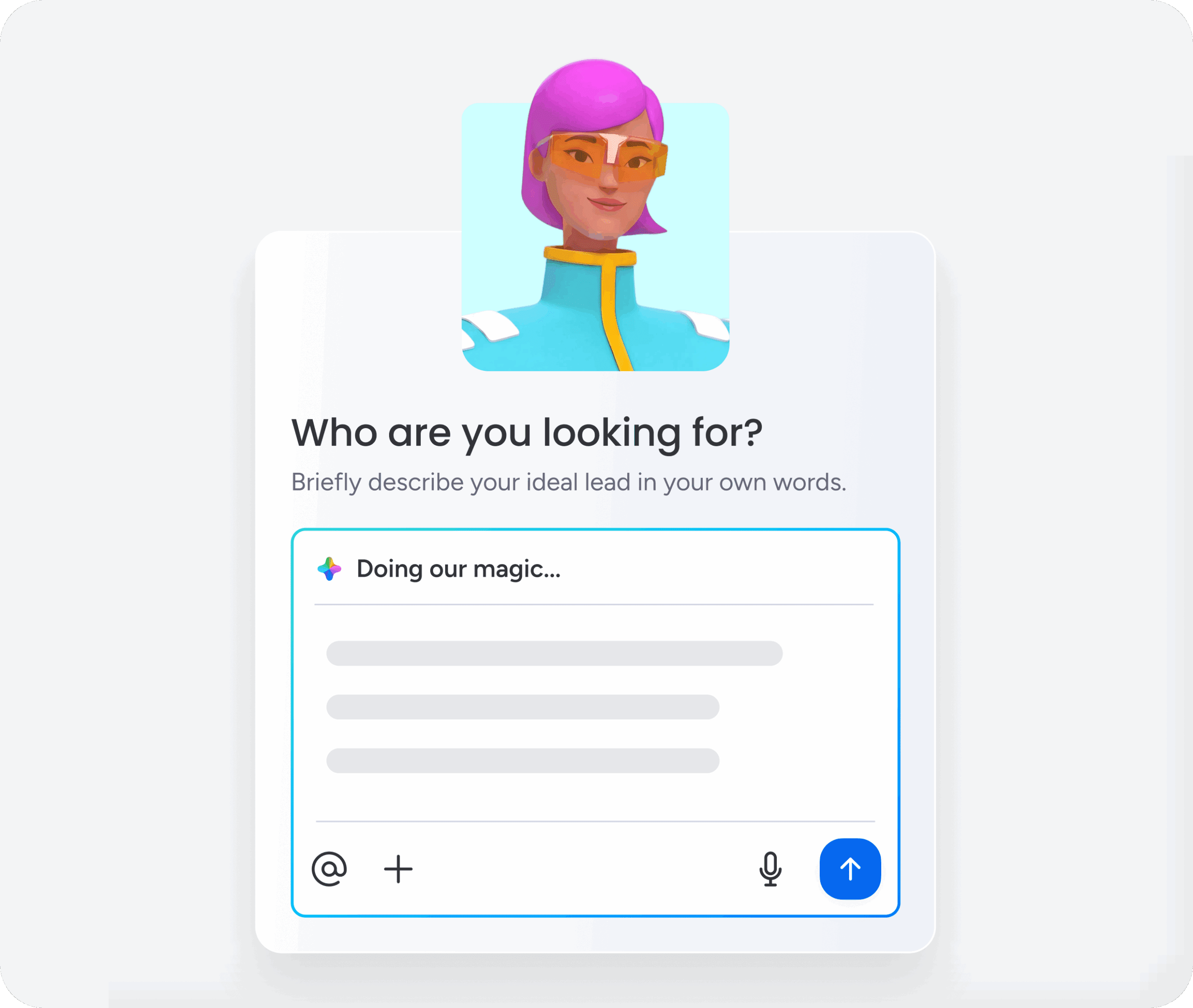
- Respond to leads faster and increase conversion: Reps who contact leads within an hour are nearly 7 times more likely to qualify them, according to Harvard Business Review. AI agents route leads, trigger outreach, and book meetings the moment interest appears—so your team starts each day with momentum already in motion.
- Personalize outreach at scale across every channel: AI outreach agents pick up on signals like funding events or job changes, then generate relevant messaging across multiple channels. The result is broader personalization without forcing reps to spend their entire day doing research.
- Score leads and prioritize your pipeline: AI scoring analyzes engagement and intent signals to highlight the deals most likely to close. In monday CRM, teams can bring those signals directly into the pipeline, making prioritization and upward reporting easier to manage.
- Prospect and book meetings around the clock: AI agents extend coverage without extending headcount by engaging prospects, qualifying interest, and booking meetings at all hours. The strongest platforms let you define exactly what the agent can do before it acts.
- Forecast accurately and accelerate deal velocity: AI agents improve data quality by monitoring activity, flagging stalled opportunities, and updating pipeline stages automatically. Teams using monday CRM can turn those cleaner inputs into real-time forecasting dashboards that leaders can actually rely on.
- Execute seamless cross-team handoffs: AI maintains detailed interaction records and generates concise briefs for whoever takes over next. In monday CRM, teams rely on AI-generated communication summaries so account managers can step in fully prepared and spot expansion opportunities early.
7 features your AI sales platform actually needs
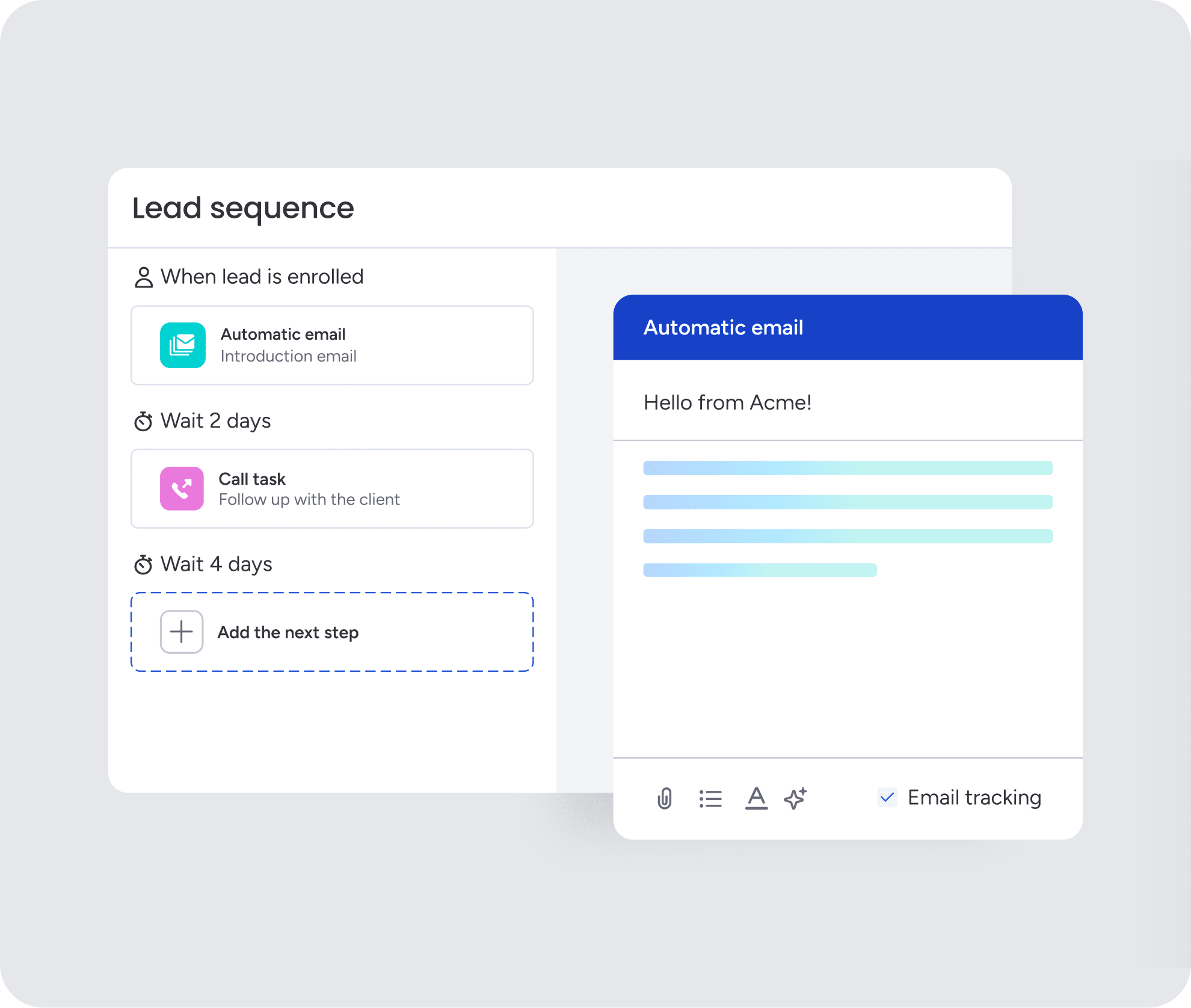
The feature checklist only matters if the platform gets used. Plenty of AI sales tools shine in a demo and then disappear into the background because they don’t fit the way real teams sell. Adoption, not novelty, is what separates a valuable tool from expensive shelfware.
These are the features that tend to make that difference.
- Native CRM integration: AI that is native to your CRM creates a seamless experience from the start. Reps don’t have to switch tabs, hunt for context, and deal with lagging data. Most won’t stick with a tool that adds complexity to the core workflow.
- Multi-channel outreach: Prospects don’t live in one channel, and your software shouldn’t assume they do. Email matters, but so do LinkedIn, phone calls, and everything in between. A tool limited to a single channel gives you only a partial picture.
- Real-time intent monitoring: Timing often matters as much as message quality. The best AI tools don’t just send communications on schedule; they watch for buying signals such as website visits, content engagement, or email activity and help reps act at the right moment.
- Tone and brand control: The moment AI writes or sends something on your behalf, it represents your company. If the message sounds generic or off-brand, the damage compounds quickly. That makes tone control essential, not optional.
- Security and audit trails: Autonomy only works when trust exists underneath it. Teams need to know who can access what, what the AI did, and how decisions were made — especially when sensitive information or regulated workflows are involved.
- No-code customization: Sales processes change constantly. If every adjustment requires engineering help or an IT ticket, the tool becomes a bottleneck instead of an advantage. RevOps and sales leaders need the ability to adapt workflows on their own.
- Cross-department visibility: Sales rarely operates in isolation. Legal, finance, marketing, and customer success all shape deal progression in ways that affect timing and forecast quality. An AI system with visibility into only one slice of that process is working with incomplete information.
Learn more: Automated outbound calls
3 steps to choose the right AI sales agent software
Feature lists can be distracting. A better starting point is the leak in your pipeline. Before comparing tools, identify the one issue slowing revenue down the most — whether inbound leads wait too long for a first touch, outbound stalls because reps spend half the day researching, or the forecast never feels credible. Pinpoint the bottleneck first, then evaluate software against that problem.
Step 1: Identify your biggest pipeline bottleneck
Start by looking at where your sales process loses momentum. If reps spend too much time researching, you may need AI focused on enrichment and account research. If leads cool off before anyone follows up, you likely need an agent that can respond instantly. Focus your AI investment on fixing the one thing slowing you down the most.
Step 2: Match the tool to your specific sales motion
Once the bottleneck is clear, the buying decision gets simpler. The right platform should fit the way your team already sells. High-volume transactional teams often benefit from autopilot speed, while complex enterprise motions usually need more human oversight. The most expensive AI is the one that solves a problem you don’t actually have.
Step 3: Start small and scale with confidence
The safest rollout usually begins with the use cases that deliver immediate value. Start with a copilot model if needed, prove the benefit, and expand into autopilot once your team trusts the system. Build trust with your team first. When reps see the AI saving them time, adoption takes care of itself. When the platform matches the workflow, better results tend to follow naturally.
Why monday CRM for AI sales agents
monday CRM delivers AI agents that work directly inside the platform where your team already manages deals, contacts, and pipeline. That means no context switching, no duplicate data entry, and no forcing reps to learn a separate tool just to access AI capabilities.
The agents have full visibility into your boards, communication timelines, and deal history, so they can act with the same context a human would have — automatically scoring leads, drafting personalized emails, updating records, and surfacing next steps without interrupting your team’s flow.
- AI Lead Scorer: Automatically evaluates and prioritizes incoming leads based on engagement signals, firmographic fit, and historical win patterns, so reps focus on the prospects most likely to convert.
- AI Deal Facilitator: Monitors deal progression, flags stalled opportunities, suggests next actions, and keeps pipeline stages current — giving managers real-time visibility into what’s moving and what needs attention.
- AI in Emails & Activities: Drafts contextual emails, generates timeline summaries from past interactions, and helps reps get up to speed before calls without digging through scattered records.
- Autofill with AI: Populates CRM fields automatically by extracting information from emails, detecting sentiment, assigning labels, and routing records to the right people — keeping data clean without manual effort.
- AI Blocks and Sidekick: Adds intelligent automation directly to your boards, answering questions, summarizing data, and executing workflows based on the conditions you define — all without requiring code or IT support.
monday CRM’s AI agents operate within a security framework designed for enterprise trust. The platform maintains SOC 2 Type II certification, undergoes regular third-party security audits, and encrypts data both in transit and at rest. Learn more in our AI trust center.
Start closing more deals with AI that works inside your CRM
AI sales agents are no longer experimental — they’re actively helping revenue teams respond faster, personalize at scale, and keep pipelines moving without adding headcount. The platforms that deliver the most value are the ones that fit naturally into how your team already works, turning AI from a side project into a core part of your sales motion.
monday CRM puts AI agents directly inside the platform where your deals, contacts, and pipeline already live, so your team can score leads, draft emails, and update records without switching tools or re-entering data. Try monday CRM and see how embedded AI can help your team close more deals with less manual work.
Try monday CRM AI sales agentsFAQs
What is an AI sales agent?
An AI sales agent is an autonomous software program that monitors buying signals, analyzes data, and takes independent action to move deals forward. Unlike basic automation, it adapts to context and executes multi-step workflows without requiring constant human input.
How do AI sales agents increase revenue?
AI sales agents increase revenue by responding to leads instantly, personalizing outreach at scale, and prioritizing high-intent prospects. This ensures sales teams spend their time closing warm deals rather than chasing cold leads.
What is the difference between AI sales assistants and AI sales agents?
The difference between AI sales assistants and AI sales agents comes down to autonomy. An AI assistant waits for a human prompt to draft an email or summarize a call, while an AI agent acts independently based on predefined goals and real-time data.
How much do AI sales agents cost?
AI sales agents cost anywhere from $0 for basic free tiers to over $500 per user per month for enterprise-grade autonomous platforms. Pricing typically depends on the level of autonomy, the number of contacts, and the specific features required.
Is AI good for B2B sales?
Yes, AI in B2B sales is highly effective because it processes large volumes of firmographic and intent data to identify the right buyers at the right time. It helps B2B teams maintain accurate CRM data, forecast accurately, and execute complex account-based marketing strategies.
