


Discovery calls and demonstrations often feel successful until a prospect reveals that budget approval is months away. This common frustration happens because qualification occurs too late, forcing reps to waste weeks on deals that were never viable. By adopting the BANT framework, you can identify these blockers early and protect your team’s most valuable resource: their time.
BANT focuses on four critical pillars: Budget, Authority, Need, and Timeline. These criteria allow sales teams to distinguish genuine opportunities from “tire-kickers” who lack the means or motivation to buy. Consequently, teams that prioritize BANT-qualified leads see significantly higher conversion rates because they focus exclusively on prospects ready to act.
Modern platforms now enhance this legacy framework with AI-powered scoring and visual tracking. This guide explores how to implement BANT without disrupting your workflow, ensuring your pipeline stays filled with high-probability deals. Ultimately, moving from manual checklists to automated qualification creates the predictability needed for consistent revenue growth.
Key takeaways
- Focus your time on prospects who can buy: use BANT’s four criteria (Budget, Authority, Need, and Timeline) to concentrate your efforts on leads with real purchase potential and decision-making power.
- Automate qualification with AI: let automated scoring analyze behavioral signals, engagement patterns, and sentiment to identify qualified prospects faster than manual assessment ever could.
- Turn qualification into a visual system: color-coded boards, automated workflows, and AI blocks in platforms like monday CRM transform BANT from manual checklists into real-time qualification tracking your whole team can see.
- Ask strategic questions that reveal the real story: go beyond “What’s your budget?” to uncover approval processes, stakeholder networks, and genuine timeline drivers that determine actual buying readiness.
- Measure what matters to improve your qualification process: track completion rates, time-to-qualify, and conversion by BANT score to identify gaps and optimize your system for maximum revenue impact.
What is BANT sales qualification?
.jpg)
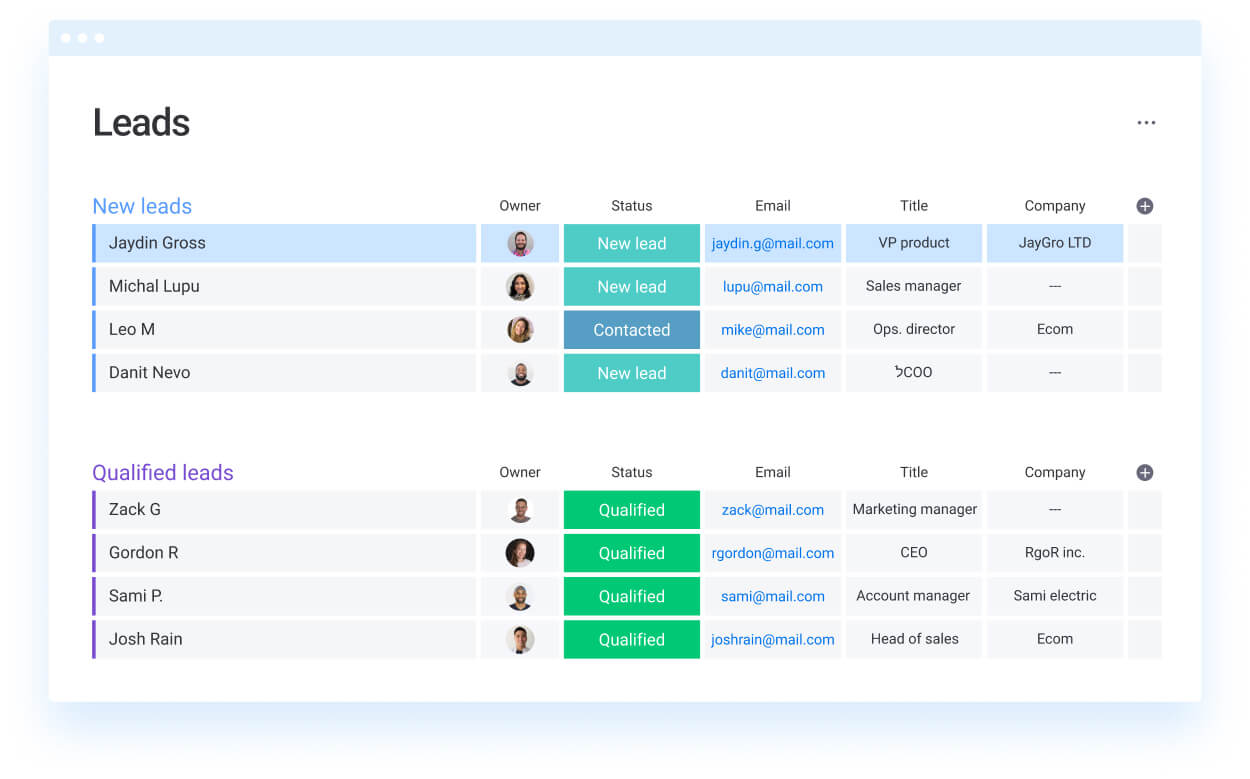
BANT is a framework that helps sales teams evaluate prospects based on four criteria: Budget, Authority, Need, and Timeline. With BANT, your team can quickly determine if prospects have the money to buy, the authority to decide, real problems to solve, and a timeline to act — the four essentials of a qualified opportunity.
The BANT framework originated at IBM in the 1960s and has evolved to address B2B sales complexity. BANT qualification now incorporates behavioral signals, multi-stakeholder dynamics, and AI-powered insights that reveal qualification status in realtime. Sales teams use BANT to prioritize efforts, allocate resources strategically, and build pipelines filled with high-probability opportunities.
Understanding budget in modern sales
Budget qualification goes beyond asking “What’s your budget?” B2B purchases involve complex procurement processes, multiple approval layers, and budget cycles spanning fiscal quarters or years. A prospect might have a budget allocated but lack the authority to release it, or they might need to reallocate funds from other initiatives to become a sales qualified lead.
Effective budget discovery reveals the dollar amount available, the budget holder’s identity, approval requirements, and the funding timeline. Questions like “How are similar purchases typically funded in your organization?” uncover the real budget structure.
AI enhances budget qualification by analyzing engagement patterns. Prospects who repeatedly view pricing pages, download ROI calculators, or request detailed quotes signal stronger budget intent than those avoiding pricing discussions.
Budget conversations also reveal competitive positioning. When prospects compare your solution against alternatives or request detailed cost breakdowns, they’re actively evaluating options within a defined budget range.
Identifying authority across buying committees
B2B purchases rarely involve a single decision-maker. Buying committees include economic buyers controlling the budget, technical evaluators assessing functionality, end users adopting the solution, and influencers shaping opinions without formal authority.
Authority qualification identifies three key roles:
- Decision-maker: the person who can approve the purchase.
- Influencer: those who shape the decision without final say.
- Budget holder: the person who releases funds.
These roles often reside in different people, requiring sales teams to engage multiple stakeholders simultaneously. Questions like “Who else needs to be involved in this decision?” reveal the authority landscape.
Successful revenue teams map stakeholder relationships through contact management features that track influence patterns and visualize buying committee structures. The platform’s collaborative boards allow sales teams to assign ownership for different stakeholder relationships, ensuring comprehensive coverage.
Assessing need through behavioral signals
Traditional needs assessment relies on prospects articulating pain points during discovery calls. In contrast, modern BANT qualification supplements stated needs with behavioral signals revealing genuine interest and urgency.
Behavioral need indicators used in lead qualification include website activity patterns (frequent visits to solution pages), content consumption habits (downloading case studies and whitepapers), engagement frequency (regular interaction with sales materials), and stakeholder involvement (sharing content with colleagues).
These behaviors validate stated needs and help sales teams distinguish between tire-kickers and serious buyers. AI analyzes behavioral data to detect need signals automatically, identifying patterns humans might miss. When prospects suddenly increase engagement frequency or shift from educational to solution-focused content, AI flags these changes as need acceleration signals.
Timeline indicators that matter
When it comes to timeline, you need to separate real urgency from the “we need it yesterday” talk that goes nowhere. Prospects might say it’s urgent, but the truth lies in:
- Budget cycles: when funds become available and fiscal planning windows.
- Implementation bandwidth: organizational capacity to deploy and adopt new solutions.
- Competitive threats: external pressures forcing action within specific timeframes.
- Change readiness: how prepared the organization is to implement transformation.
Effective timeline questions reveal the drivers behind stated urgency: “What happens if you don’t solve this problem by your target date?” These questions expose whether the timeline stems from real business consequences or arbitrary preferences. Prospects facing regulatory deadlines, contract expirations, or competitive threats demonstrate more credible timeline urgency.
Try monday CRMWhy do today's sales teams still need BANT?
BANT remains relevant because it provides structure in an increasingly complex sales environment. As buying committees expand and sales cycles lengthen, sales teams need systematic approaches to separate qualified opportunities from time-wasting prospects.
The framework’s value lies in its simplicity and comprehensiveness. Four criteria capture the essential elements determining whether a prospect can and will buy. Unlike newer frameworks adding complexity, BANT provides just enough structure to guide qualification without becoming bureaucratic.
3x higher conversion rates with structured qualification
Systematic qualification frameworks like BANT improve conversion rates by helping sales teams focus on prospects who can actually buy. When reps invest time in opportunities meeting all four BANT criteria, they convert at significantly higher rates.
Structured qualification improves conversion by enabling targeted sales conversations. When reps understand a prospect’s budget constraints, authority structure, pain points, and timeline pressures through effective lead qualification, they can tailor their approach to address specific concerns. This relevance builds trust and accelerates deal progression.
Eliminate hours wasted on dead-end prospects
Poor qualification creates massive opportunity costs. As a result, every hour spent on an unqualified prospect is an hour not spent on a qualified opportunity. BANT qualification protects sales productivity by identifying and disqualifying poor-fit prospects before significant effort investment.
Common time-wasting scenarios BANT prevents:
- Pursuing prospects without budget approval: spending weeks on deals that were never funded in the first place.
- Engaging influencers who can’t drive decisions: building relationships with people who lack purchasing authority.
- Solving problems lacking purchase urgency: addressing pain points that aren’t compelling enough to trigger action.
- Following timelines misaligned with business planning: chasing arbitrary deadlines disconnected from real budget cycles or organizational readiness.
Predictable revenue through accurate forecasting
Qualified leads create more accurate sales forecasts because they’re based on concrete criteria rather than optimistic assumptions. When every pipeline opportunity meets BANT standards, sales managers can predict close rates, revenue timing, and resource requirements with greater confidence.
BANT qualification improves forecast accuracy by standardizing how sales teams assess deal probability. Instead of subjective judgments about prospect interest, BANT provides objective criteria indicating purchase readiness.
Organizations achieve more predictable revenue when they leverage solutions like monday CRM for pipeline visualization by BANT criteria, showing how many opportunities have confirmed budget, identified decision-makers, validated need, and established timelines.
How does AI revolutionize the BANT lead qualification?
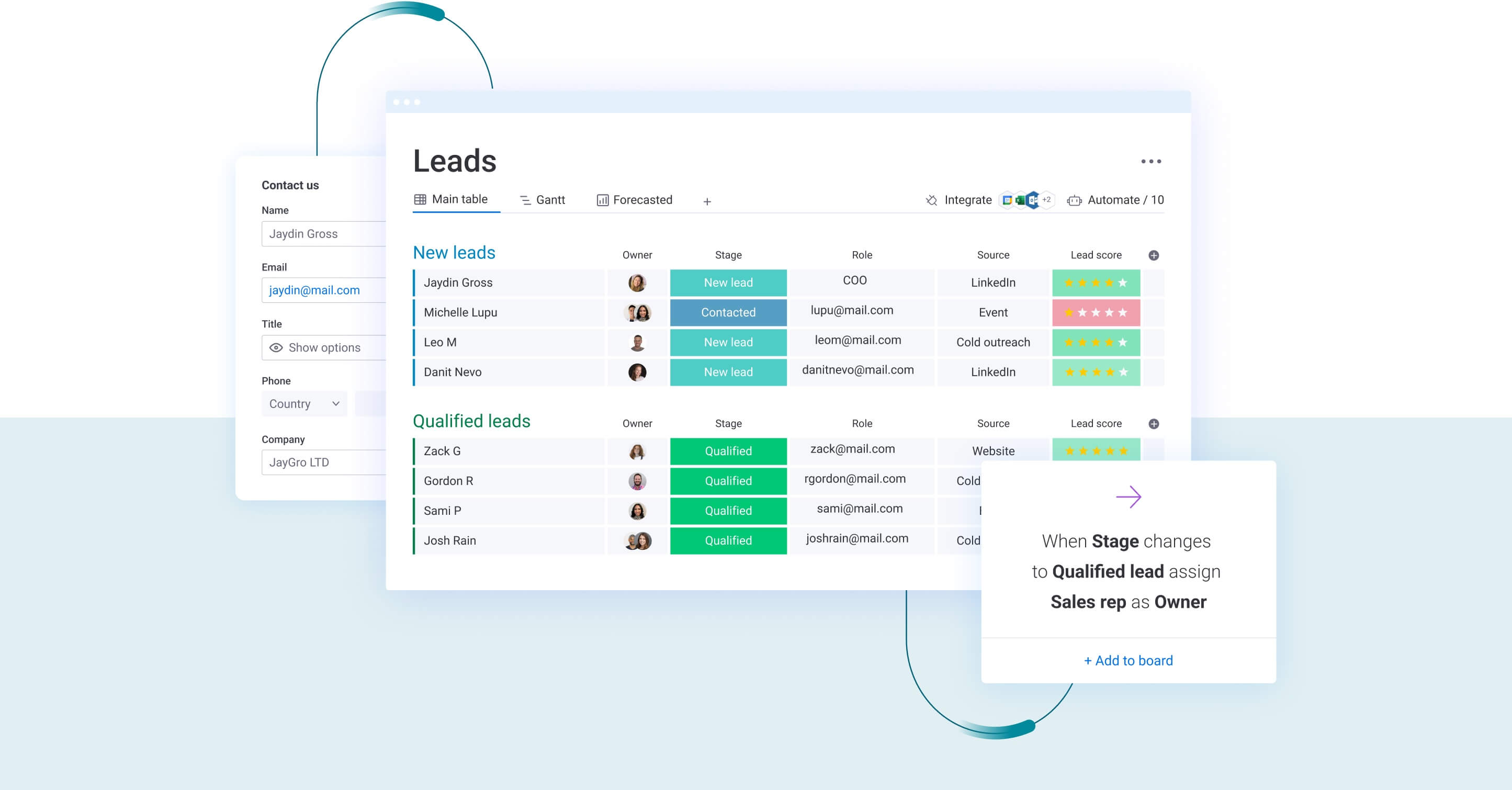
AI transforms BANT qualification from a manual process into an automated assessment that updates in real-time as new data emerges. Rather than relying on sales reps to ask the right questions and interpret responses, AI analyzes multiple data sources simultaneously.
Moreover, AI identifies patterns that manual analysis often overlooks, including subtle buying signals, stakeholder influence mapping within complex buying committees, urgency indicators in prospect communications, and deal acceleration predictions based on historical data. This technology addresses the limitations inherent in traditional BANT qualification approaches.
- Automated multi-criteria scoring: AI evaluates behavioral and firmographic data to score leads consistently. It prioritizes high-value actions, like pricing page visits, to eliminate rep variability and focus on high-authority engagement.
- Real-time sentiment and need detection: By analyzing email tone and engagement shifts, AI uncovers hidden urgency and pain points. It flags “need acceleration signals” the moment a prospect moves from general research to implementation planning.
- Predictive timeline intelligence: AI uses historical deal patterns and industry data to forecast closing dates more accurately than prospect estimates. This accuracy increases over time as the system learns which behaviors correlate with faster sales cycles.
5 steps to implement automated BANT qualification
Want to automate your BANT qualification? These five steps will help you build a qualification system that scales with your team while keeping things accurate and consistent.
You’ll move from manual checklists to automated workflows that score leads in real-time, guide your reps through strategic questions, and surface the highest-priority opportunities without adding administrative burden to your sales process.
Step 1: map your ideal BANT profile
Begin with defining what “qualified” means for your specific business by documenting ideal customer characteristics across all four BANT criteria. Analyze historical data to identify patterns in closed-won deals.
- Document budget ranges by customer segment: mid-market customers might have a $50,000-$200,000 annual budget for CRM solutions, while enterprise customers might allocate $500,000+
- Map typical authority structures for your target market: in mid-market companies, the CRO or VP of Sales might have direct purchasing authority, while enterprise deals require approval from procurement, IT, and executive leadership
- Identify common need patterns: analyze which pain points correlate with successful deals
- Define realistic timeline expectations: establish typical sales cycle lengths for different deal sizes and complexity levels
Step 2: configure AI-powered lead scoring
AI lead scoring translates your ideal BANT profile into a quantitative model that automatically evaluates prospects. Configure scoring models that weight BANT criteria appropriately for your business.
Data sources for effective scoring include:
- CRM engagement history: track interaction frequency and depth.
- Website behavioral data: monitor page visits and content consumption.
- Email interaction patterns: analyze open rates, click-through rates, and response times.
- Content consumption records: track whitepaper downloads and case study views.
- Third-party firmographic information: integrate company size, industry, and revenue data.
Step 3: design qualification workflows
Qualification workflows guide sales teams through systematic BANT assessment as part of the lead management process. Design decision trees mapping lead qualification question sequences. If a prospect confirms budget, proceed to authority questions. If they lack budget, route them to a nurturing workflow.
Teams discover that modern platforms like monday CRM enable workflow documentation through status columns, conditional formatting, and automated task assignments that guide reps through qualification steps.
Step 4: create visual BANT dashboards
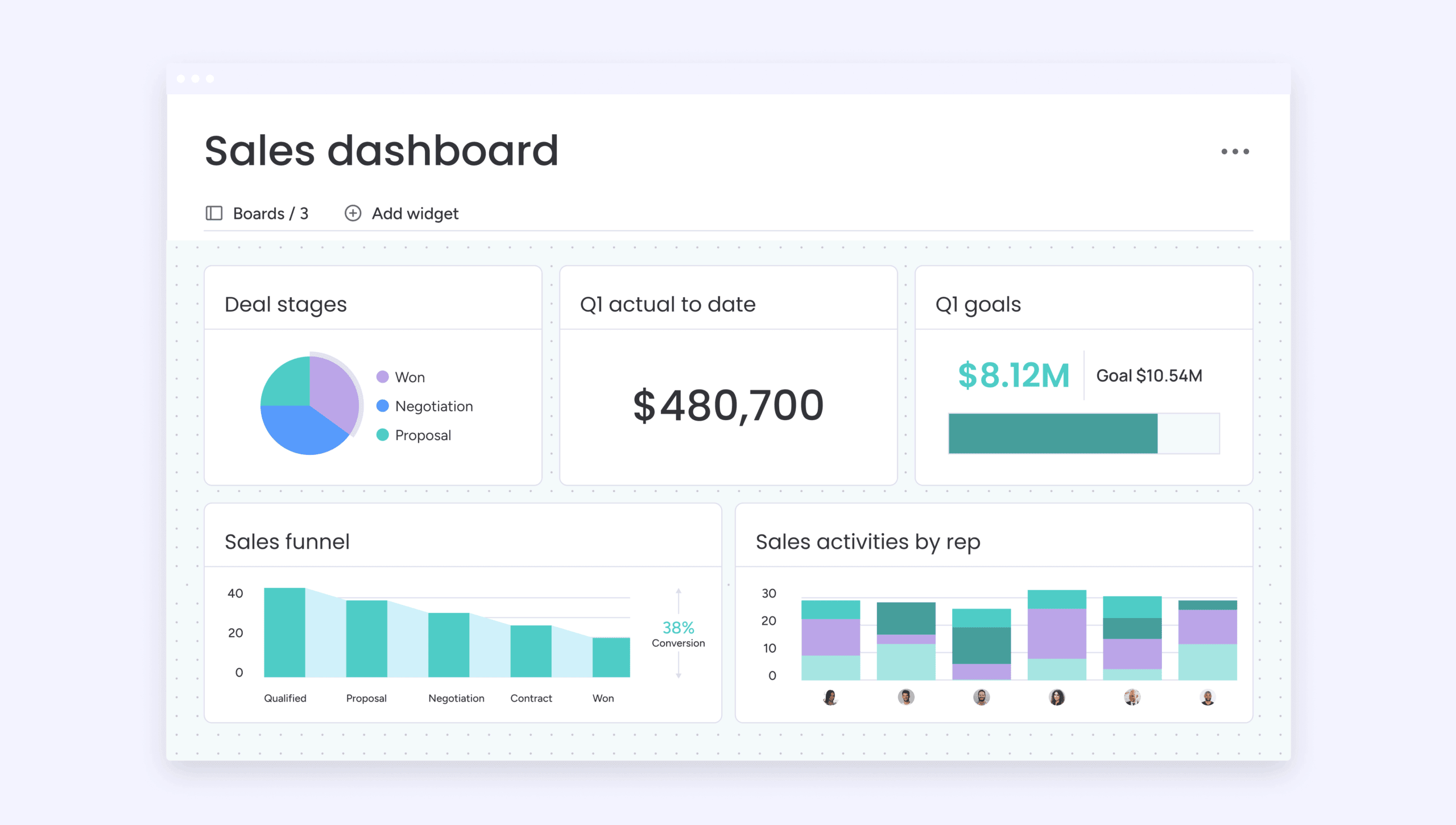
Visual dashboards display BANT qualification status in an actionable way. Design dashboards showing pipeline health by BANT criteria: how many opportunities have confirmed budget, identified decision-makers, validated need, and established timelines.
Key metrics to track:
- Qualification completion rate: percentage with all four criteria satisfied.
- Time-to-qualify: average days from lead creation to full qualification.
- Conversion rates by score: success rates at different qualification levels.
- Pipeline value by status: revenue potential of qualified vs. unqualified leads.
Step 5: activate predictive insights
Predictive analytics forecast lead behavior and qualification likelihood based on historical patterns. Therefore, implement predictive models that identify which leads are most likely to meet BANT criteria and which qualification gaps will resolve fastest.
Use predictive insights for proactive sales actions. When AI predicts a lead will meet budget criteria within 30 days based on engagement patterns, schedule follow-up accordingly.
cta-button url=”https://auth.monday.com/p/crm/users/sign_up_new#soft_signup_from_step”]Try monday CRM[/cta-button]
13 essential BANT questions enhanced with AI
Effective BANT qualification depends on asking strategic questions that reveal deeper insights than surface-level information. AI enhances question effectiveness by analyzing response patterns and identifying gaps between stated and demonstrated qualification. By doing so, these questions help uncover the real story behind each BANT criterion.
Smart budget discovery questions
Budget conversations reveal more than dollar amounts; they expose approval processes, funding sources, and ROI expectations that determine whether deals move forward. These questions help you understand the complete budget picture before investing time in unqualified opportunities.
- “What budget have you allocated for solving this problem?”: this direct question establishes baseline budget awareness. AI analyzes response specificity to gauge concrete budget planning.
- “How are similar purchases typically funded in your organization?”: reveals budget processes and approval requirements beyond the dollar amount.
- “What’s your process for securing budget approval?”: identifies potential budget blockers before they derail deals.
- “What ROI requirements do you need to meet for budget approval?”: uncovers justification standards that budget decisions must satisfy.
Authority mapping questions
Because decision-making rarely sits with one person, you must map the entire buying committee to engage the right stakeholders at the right time:
- “Who else needs to be involved in this decision?”: this open-ended question reveals buying committee composition. AI tracks the number and seniority of stakeholders mentioned.
- “What’s your typical approval process for purchases of this size?”: exposes decision-making procedures and approval hierarchies.
- “Who has final sign-off authority for this purchase?”: identifies the ultimate decision-maker, distinguishing them from influencers.
Need identification questions
Understanding what’s driving a prospect’s interest separates genuine urgency from casual browsing. These questions uncover the business consequences and pain points that create real buying motivation.
- “What’s driving your interest in solving this problem now?”: uncovers urgency factors and priority level. AI analyzes urgency language to assess need intensity.
- “What happens if you don’t solve this problem by your target date?”: reveals business consequences that validate stated urgency.
- “How are you currently handling this challenge?”: identifies existing solutions, workarounds, and pain points with current approaches.
Timeline acceleration questions
Timelines only matter if they are based on real business drivers. To determine what is actually pushing a prospect to act, ask:
- “What’s driving your timeline for this decision?”: exposes timeline drivers like budget cycles, contract expirations, or competitive pressures.
- “What needs to happen internally before you can move forward?”: identifies internal prerequisites that might delay purchase.
- “When does your current contract or solution expire?”: contract expiration creates genuine urgency because maintaining the status quo becomes impossible.
Transform BANT limitations into advantages
This framework faces legitimate criticisms about rigidity and oversimplification, but these limitations become advantages when teams adapt the approach thoughtfully. Its simplicity enables customization where teams can add criteria, adjust weights, or combine it with other qualification frameworks.
Modern BANT implementation acknowledges that qualification is continuous rather than binary. Prospects exist on a qualification spectrum that evolves throughout the sales cycle.
Navigate complex stakeholder networks
B2B purchasing today rarely involves a single contact. To succeed, you must use the BANT framework to map the entire decision-making unit, identifying the economic buyers, technical evaluators, and end users involved.
By tracking relationship strength and engagement levels within your CRM, you can quickly see which stakeholders are supportive and which require more attention.
Adapt qualification for extended sales cycles
Long sales cycles require continuous re-qualification as circumstances change. A prospect meeting all BANT criteria six months ago might face budget cuts or leadership changes altering their qualification status.
Re-qualification triggers include:
- Significant time gaps between interactions: extended periods without contact may indicate changed priorities or circumstances requiring fresh qualification.
- Stakeholder changes or departures: new decision-makers bring different priorities, budgets, and timelines that alter qualification status.
- Organizational restructuring: mergers, acquisitions, or internal reorganizations can shift authority structures and budget availability.
- Market condition shifts: economic changes, competitive pressures, or industry disruptions may accelerate or delay purchase timelines.
Track qualification status evolution through timestamped updates and historical tracking.
Capture nuanced buying signals
Modern BANT implementation captures subtle indicators beyond direct responses to qualification questions. Behavioral signals reveal qualification status through demonstrated interest rather than stated intent.
Engagement patterns provide qualification insights that supplement verbal responses. Prospects involving additional stakeholders signal authority expansion. Those requesting detailed implementation plans indicate timeline commitment.
Visualize BANT qualification with monday CRM
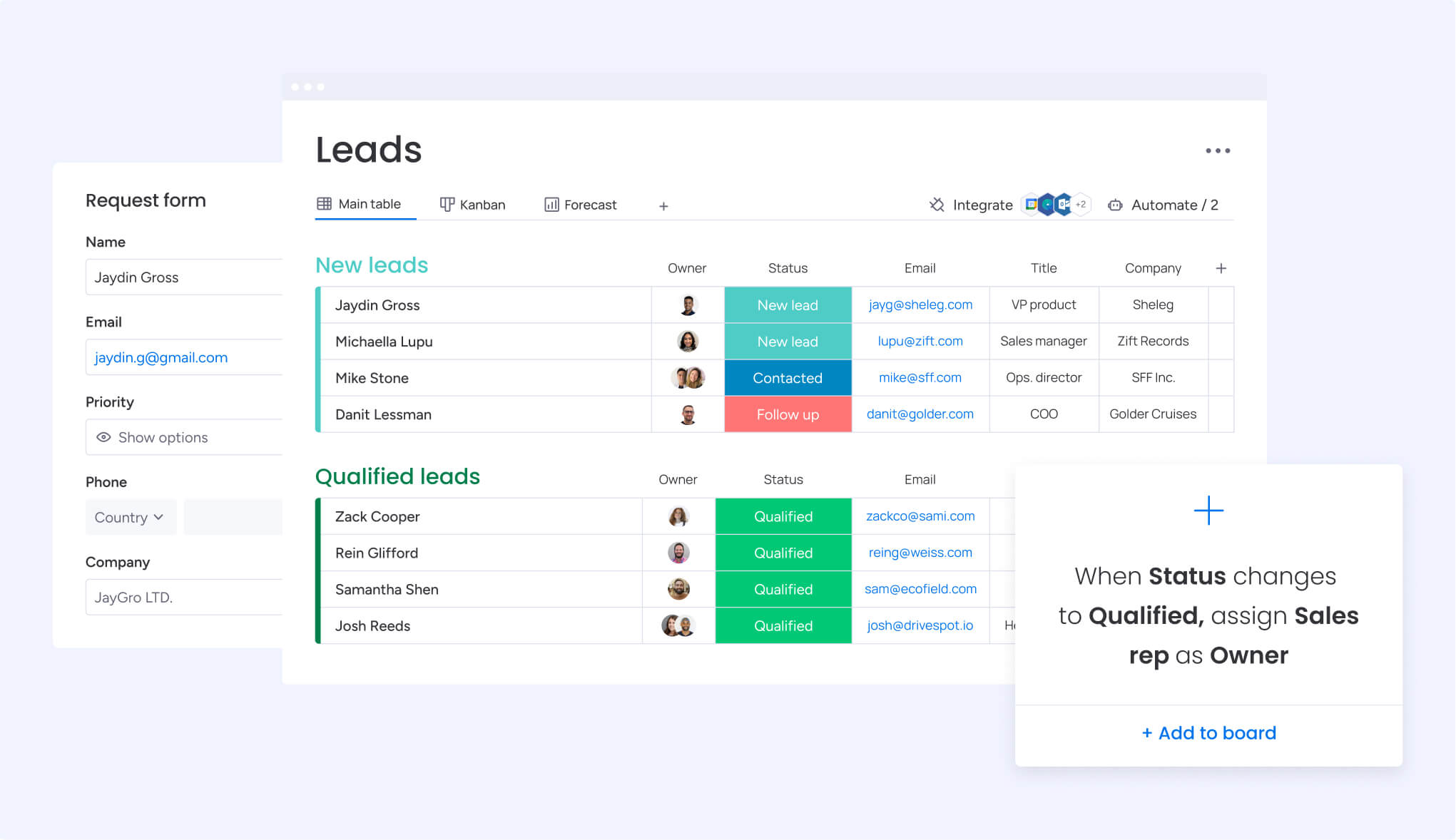
Revenue teams find success using monday CRM to transform BANT qualification from a manual checklist into a visual, automated system guiding sales teams through systematic lead assessment. The platform’s flexible board structure enables customized BANT qualification workflows matching your specific sales process.
| Capability | monday CRM | Traditional CRM | Manual Qualification |
|---|---|---|---|
| Setup complexity | Visual, no-code customization ready in hours | Requires technical configuration, weeks to implement | Spreadsheets, inconsistent formats |
| Customization flexibility | Drag-and-drop boards adapt to any criteria | Rigid fields require admin changes | Unlimited but lacks structure |
| AI integration | Built-in AI blocks for scoring and analysis | Requires expensive add-ons | No automation available |
| Visual management | Color-coded status, progress tracking | Text-heavy interfaces | No visual representation |
| Team collaboration | Real-time updates, shared boards | Siloed records | Email threads, disconnected |
| Automation capabilities | No-code automation for scoring and alerts | Complex workflow builders | Manual processes only |
Color-coded pipeline management
Visual boards enable color-coded BANT qualification status tracking through customizable status columns. Configure status columns for each BANT criterion with color codes indicating qualification level: green for confirmed, yellow for inprogress, red for unmet.
Conditional formatting automatically updates colors based on qualification data, ensuring visual status reflects current reality without manual updates.
Automated qualification workflows
Automation capabilities enable BANT qualification workflows that trigger actions based on criteria changes. Configure automations that assign follow-up tasks when prospects confirm budget, notify managers when opportunities reach full qualification, or route partially qualified leads to nurturing campaigns.
AI blocks for instant lead analysis
AI blocks enhance BANT qualification through automated analysis that supplements human judgment. The Extract information block pulls BANT-relevant data from emails, meeting notes, and documents automatically. The Detect sentiment block analyzes communication tone to assess need urgency and engagement quality.
Measuring your BANT qualification performance
Effective BANT qualification requires continuous measurement and optimization to ensure your process delivers the results your sales team needs. Track key performance indicators revealing qualification effectiveness and identifying improvement opportunities.
Essential metrics for qualification success
As, you can’t improve what you don’t measure, these three metrics reveal whether your BANT qualification process is actually working or just creating busywork for your sales team.
- Qualification completion rate: measures the percentage of opportunities meeting all four BANT criteria. Low completion rates indicate qualification process gaps.
- Time-to-qualify: tracks average days from lead creation to full BANT qualification. Extended timelines suggest process inefficiencies or insufficient sales capacity.
- Conversion rates by qualification score: reveal the correlation between BANT qualification thoroughness and deal success. Opportunities meeting all four criteria should convert at significantly higher rates.
Calculate ROI of automated qualification
Automated BANT qualification delivers measurable return on investment through time savings, improved conversion rates, and faster sales cycles.
Time savings from automation include hours previously spent on manual lead scoring, qualification data entry, and pipeline status updates. If automation saves each rep five hours weekly and your team includes 20 reps, that’s 5,200 hours annually.
Improved conversion rates translate directly to revenue impact. If automation improves conversion from 15% to 20%, calculate the revenue gain from those additional closed deals.

“With monday CRM, we’re finally able to adapt the platform to our needs — not the other way around. It gives us the flexibility to work smarter, cut costs, save time, and scale with confidence.”
Samuel Lobao | Contract Administrator & Special Projects, Strategix
“Now we have a lot less data, but it’s quality data. That change allows us to use AI confidently, without second-guessing the outputs.”
Elizabeth Gerbel | CEO
“Without monday CRM, we’d be chasing updates and fixing errors. Now we’re focused on growing the program — not just keeping up with it."
Quentin Williams | Head of Dropship, Freedom Furniture
“There’s probably about a 70% increase in efficiency in regards to the admin tasks that were removed and automated, which is a huge win for us.“
Kyle Dorman | Department Manager - Operations, Ray White
"monday CRM helps us make sure the right people have immediate visibility into the information they need so we're not wasting time."
Luca Pope | Global Client Solutions Manager at Black Mountain
“In a couple of weeks, all of the team members were using monday CRM fully. The automations and the many integrations, make monday CRM the best CRM in the market right now.”
Nuno Godinho | CIO at VelvBuild a qualification system that scales with your team
Modern BANT qualification combines the framework’s enduring simplicity with AI-powered automation making systematic qualification practical at scale. Teams achieve both thorough qualification and sales velocity through visual CRM systems guiding reps through comprehensive assessment while automating scoring, analysis, and follow-up.
We’ve moved way beyond manual BANT checklists. Today’s AI-powered qualification systems don’t just save time; they make your team smarter by spotting patterns in data, flagging key behaviors, and predicting which deals deserve your attention.
Organizations achieve better results when they leverage monday CRM to enable this transformation through intuitive visual boards, no-code automation, and built-in AI capabilities making sophisticated qualification accessible to teams of any size. The platform’s flexibility lets you start simple and add complexity as your qualification process matures, ensuring your system grows with your business needs.
The content in this article is provided for informational purposes only and, to the best of monday.com’s knowledge, the information provided in this article is accurate and up-to-date at the time of publication. That said, monday.com encourages readers to verify all information directly.
Frequently asked questions
How do I know if BANT is right for my sales process?
BANT works best for B2B sales with considered purchase decisions, multiple stakeholders, and sales cycles longer than a few days. The framework suits complex products where budget, authority, need, and timeline significantly influence purchase probability.
Can BANT work for complex enterprise sales?
BANT adapts to enterprise complexity through comprehensive stakeholder mapping, extended qualification processes, and integration with frameworks like MEDDIC that add enterprise-specific criteria. Treat BANT as a foundation rather than a complete enterprise qualification solution.
How often should I update BANT criteria?
Re-qualify opportunities whenever significant changes occur: stakeholder departures, budget cycle shifts, organizational restructuring, or extended time gaps between interactions. For active opportunities, review qualification status at 30-60 day intervals during long sales cycles.
What's the difference between BANT and lead scoring?
BANT is a qualification framework defining criteria for assessing lead quality, while lead scoring assigns numerical values to leads based on various characteristics. Lead scoring often incorporates BANT criteria alongside firmographic data and behavioral signals.
Should I disqualify leads that don't meet all BANT criteria?
Partial BANT qualification doesn't necessarily warrant immediate disqualification. Route partiallyqualified leads to nurturing workflows designed to address specific qualification gaps within your lead management process. Reserve disqualification for leads with fundamental misalignment.
How does AI improve BANT qualification accuracy?
AI enhances BANT qualification by analyzing behavioral signals humans might miss, detecting sentiment patterns in communication, predicting timeline acceleration based on historical data, and continuously monitoring qualification status across all prospects simultaneously.

 Get started