


Your sales team closes deals, but they’re also drowning in follow-up emails, lead research, and data entry. Every qualified prospect who doesn’t get a timely response is revenue walking out the door. Every manual process that pulls reps away from actual selling conversations costs you deals.
An automated sales funnel fixes this fast. It’s a system that moves prospects forward using software and triggers. It clears the bottlenecks slowing down your deals. Automation handles lead scoring, follow-ups, and CRM updates. Your team builds relationships and closes deals.
In this article, we’ll cover 7 steps — from mapping your process to launching AI workflows — for building a sales funnel that works. You’ll also learn the key features that matter and strategies that close deals faster, all within a single, unified platform.
Try monday CRMKey takeaways
- Automate repetitive work like manual data entry, follow-ups, and lead research so your team focuses on closing deals instead of administrative tasks.
- Scale revenue without hiring proportionally more reps by using automated nurturing to handle hundreds of prospects simultaneously while AI qualification ensures existing reps only engage high-potential opportunities.
- Build behavior-triggered workflows that adapt to each prospect by creating adaptive journeys where content and timing adjust based on actual engagement rather than generic schedules.
- Use AI blocks to intelligently categorize leads and automate routing by leveraging features like sentiment detection and automatic label assignment to prioritize prospects and route them to the right reps instantly.
- Accelerate deal velocity with a unified platform like monday CRM that delivers instant automated responses and behavior-triggered next steps to eliminate delays that cause prospects to lose interest or choose competitors.
What is an automated sales funnel?
An automated sales funnel moves potential customers forward without manual work at every step. Software handles the repetitive work. Your team closes deals.
It uses software, triggers, and rules to move prospects through stages based on what they do and who they are. Automation handles tasks like sending follow-up emails, scoring leads, routing prospects to sales reps, and updating records. The system handles clicks and follow-ups automatically, ensuring every action is completed on time.
Automation doesn’t replace people. It kills busywork so sales teams can build relationships and close deals. You want higher-quality conversations, not fewer of them.
How automated funnels replace manual sales processes
Teams that automate outperform those that don’t. Here’s why. The contrast isn’t subtle. It’s the difference between hoping your team remembers to follow up and knowing every prospect gets a response.
| Aspect | Manual process | Automated process |
|---|---|---|
| Lead follow-up | Sales rep manually emails each lead within 24–48 hours (if they remember) | Instant, personalized email triggered by form submission |
| Lead qualification | Rep reviews each lead individually, asks qualifying questions over multiple calls | AI scoring based on behavior and demographics with instant assessment |
| Data entry | Rep logs activities, updates CRM fields after each interaction | Automatic capture and sync across systems with zero manual entry |
| Lead routing | Manager assigns leads based on availability during business hours | Instant routing based on predefined rules and rep capacity, 24/7 |
| Follow-up consistency | Depends on rep memory and workload | Systematic, timely touchpoints for every prospect |
The results add up fast. Manual processes create bottlenecks, inconsistent experiences, and lost deals. Automation makes sure every prospect gets a response, no matter how busy your team is.
Core components of sales funnel automation
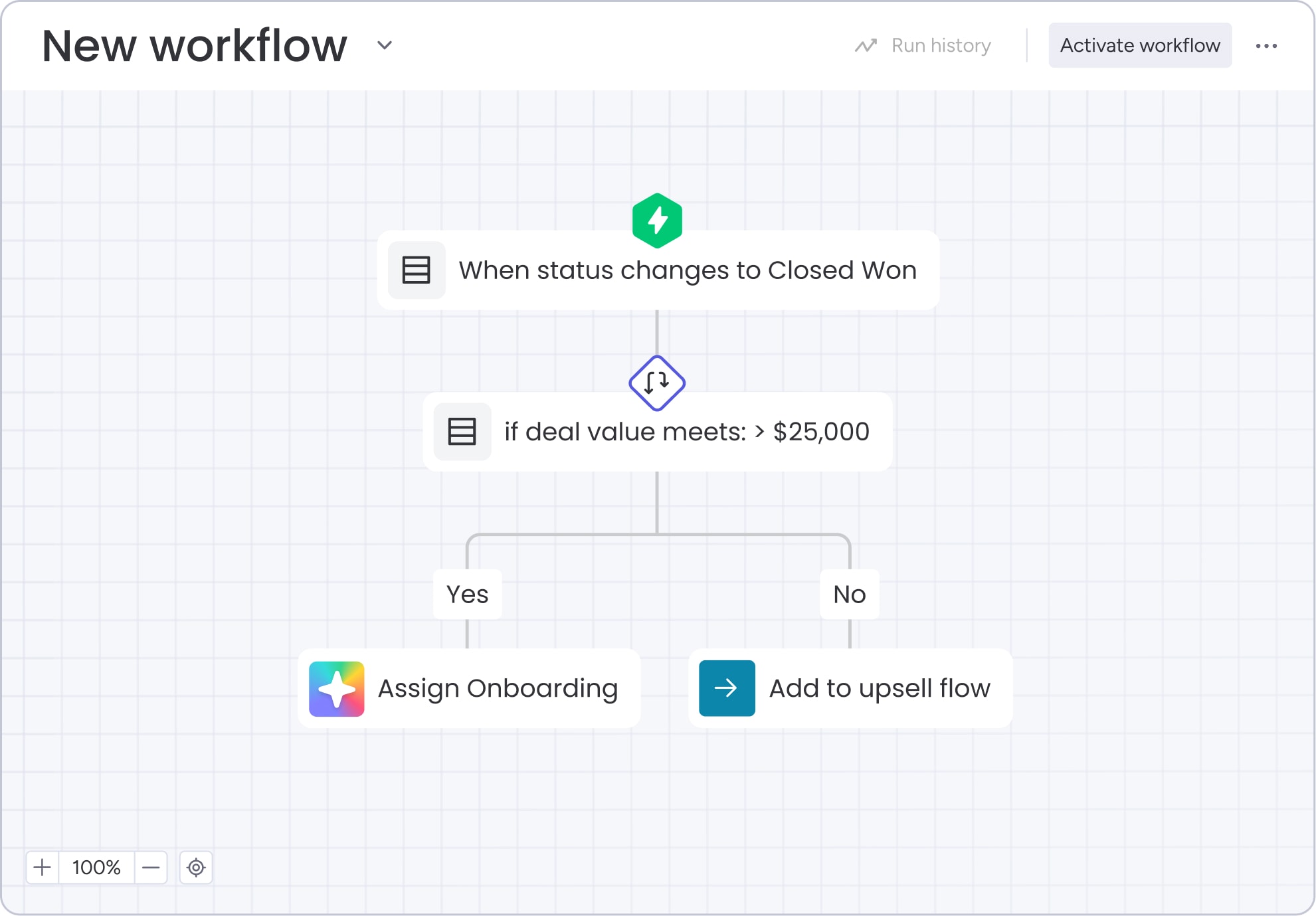
These building blocks help you evaluate platforms and plan implementation. Each piece does something specific. Together, they run without constant babysitting. Here are key components:
- Trigger events: Actions that initiate automated workflows, including form submissions, email opens, page visits, and status changes
- Workflow logic: If/then rules determining what happens next based on prospect behavior or characteristics
- Multi-channel touchpoints: Automated interactions across email, SMS, and in-app messages maintaining consistent engagement
- Lead scoring mechanisms: Systems assigning point values based on demographic fit and behavioral signals to prioritize prospects
- CRM integration: Bidirectional data flow between automation and customer relationship management systems
- Analytics and tracking: Measurement systems monitoring funnel performance and identifying optimization opportunities
These components work together. Triggers activate workflows. Workflows execute touchpoints, update lead scores, sync with your CRM, and generate analytics you can act on.
Why AI makes funnel automation more powerful
Basic automation follows your rules. AI learns, adapts, and predicts, changing how sales tech works. Here are 3 ways AI transforms funnel automation from a simple rules-based system into an intelligent one.
- Predictive lead scoring analyzes thousands of data points and historical patterns to identify which prospects are most likely to convert, with accuracy that improves over time. Manual scoring rules consider 5-10 factors. AI considers hundreds and spots patterns humans miss.
- Dynamic content personalization tailors messaging, offers, and timing based on individual prospect behavior. Instead of one-size-fits-all sequences, each prospect gets content shaped by what they care about.
- Intelligent routing and recommendations suggest optimal next actions and identify risks or opportunities humans might overlook.
5 game-changing benefits of automating your sales funnel
Automation takes upfront work, but it pays off in efficiency, revenue, and competitive edge. These benefits are specific and measurable.
1. Free your team to sell more
Sales reps spend huge chunks of time on stuff that isn’t selling — data entry, lead research, follow-up coordination, admin work. That’s nearly half their week not talking to prospects or closing deals.
Automation kills this time drain:
- Automatic lead capture: Eliminates 5-7 hours weekly of manual data entry
- Automated follow-up sequences: Handle initial nurturing so reps engage only when prospects show buying signals
- AI-powered lead scoring: Surfaces highest-priority opportunities, eliminating time wasted on unqualified leads
When reps spend more time selling, they hit quota more often, close bigger deals, and feel better about their work.
2. Scale revenue without proportional headcount growth
Traditional sales models require adding reps to handle more leads. More leads means more headcount, higher costs, tougher management, and constant hiring.
Automation breaks this constraint:
- Automated lead nurturing that handles hundreds or thousands of prospects simultaneously, maintaining engagement until they’re sales-ready
- AI-powered qualification and routing that ensures existing reps focus only on high-potential opportunities
- Self-service resources and automated responses that handle common questions, reducing the need for human intervention on every inquiry
3. Accelerate deal velocity
Deals stall when prospects wait for responses, information, or next steps. A 24-hour delay might seem small, but these delays add up.
Automation speeds things up with:
- Instant automated responses that acknowledge inquiries immediately
- Behavior-triggered workflows that advance prospects automatically based on their actions
- Automated task creation ensuring sales reps follow up at optimal times
Faster deal cycles mean more closed deals per quarter and better cash flow.
4. Personalize at scale for higher conversion rates

Prospects expect relevant, timely communication. Generic emails get deleted. But manual personalization doesn’t scale. Automation solves this with:
- Dynamic content insertion that customizes emails based on prospect industry, role, and company size
- Behavioral triggers that create unique journeys where each prospect receives content matched to their specific interests
- AI-optimized delivery that analyzes engagement patterns to optimize send times and content selection for each individual
5. Predict pipeline performance with AI accuracy

Traditional forecasting relies on rep intuition and historical averages. AI uses machine learning to analyze thousands of past deals and spot patterns that predict which ones will close.
Real-time scoring updates as prospects engage or disengage, providing early warning of at-risk deals. Aggregate pipeline predictions give leadership accurate revenue forecasts 60-90 days out.
Try monday CRM7 steps to build your automated sales funnel
Building an automated funnel is a process, not a one-time setup. Follow these steps in order to avoid automating broken processes or picking platforms that don’t fit. Each step builds on the last to create an automation system that works.
Step 1: Map your existing sales journey
Automation amplifies existing processes. If your current process is broken, automation makes it fail faster. Map every stage from first contact to closed deal, including what moves prospects between stages.
Essential mapping activities:
- Identify all touchpoints: Emails, calls, meetings, and content that currently occur at each stage
- Note stall points: Where leads typically drop off or require manual intervention
- List current systems: All platforms currently involved in the sales process
- Gather rep input: Sales reps know where the pain points are
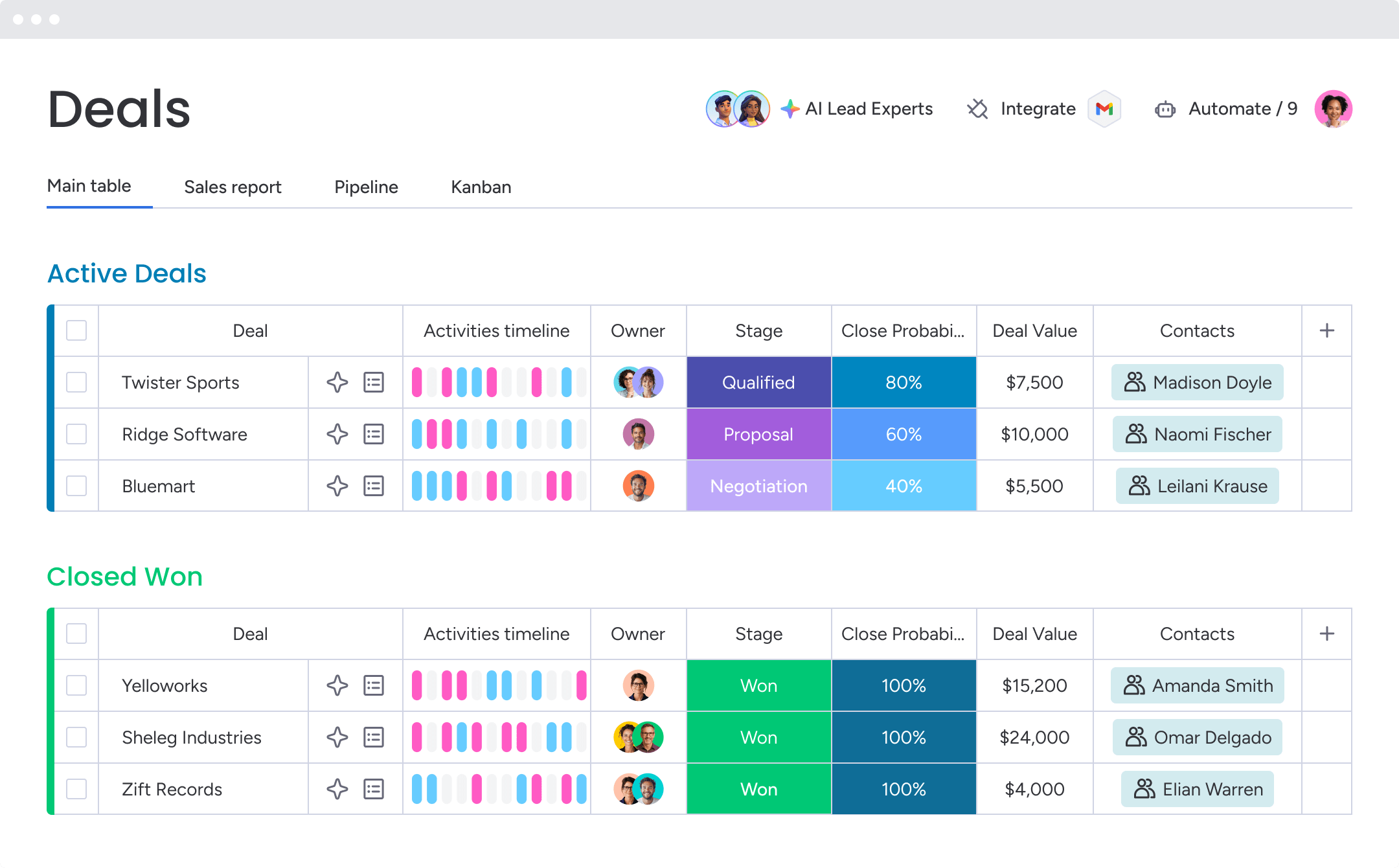
This exercise usually reveals 5-10 automation opportunities that’ll become the foundation of your funnel. Revenue teams find value in visualizing their entire pipeline with customizable stages that match their unique sales process.
Step 2: Select the right sales funnel software
Pick your platform based on the needs you identified in Step 1, not feature lists or vendor marketing. These criteria make sure your platform handles current needs and future growth.
Key evaluation criteria:
- No-code workflow builders that enable sales and operations teams to create and modify automations without developer dependency
- Native CRM integration that ensures unified data and eliminates sync issues
- AI-powered capabilities that provide intelligent lead scoring, routing, and recommendations that adapt based on outcomes
- Multi-channel automation that supports email, SMS, and other touchpoints from a single platform
- Real-time analytics that offer visibility into funnel performance and automation effectiveness
Step 3: Configure lead capture and AI scoring

Good automation starts with capturing complete lead data and assessing fit and intent right away. Capture both demographic data (company, role, industry) and behavioral signals (content downloaded, pages visited, referral source).
AI scoring models evaluate fit and intent. Does this prospect match your ideal customer profile? Are they actively looking to buy? Teams leverage monday CRM’s AI-powered column autofill using actions like Assign label and Assign person, which categorize leads and route them based on predefined criteria.
- Score 0-30 (Nurture): Enter educational email sequence
- Score 31-70 (Marketing qualified): Accelerated nurture plus sales notification
- Score 71-100 (Sales qualified): Immediate routing to sales rep
Step 4: Design behavior-based email sequences
Behavior-based email sequences outperform time-based sequences because they deliver relevant content when prospects demonstrate specific interests, not on arbitrary schedules. Map sequences to specific behaviors like downloading pricing guides, visiting case study pages, or abandoning demo requests.
Sequence design framework:
- Create 3-5 core sequences covering initial welcome and education, product consideration, decision support, and re-engagement.
- Design 4-7 emails per sequence that progressively build value and move toward a call-to-action.
- Map triggers to behaviors so content matches prospect interests.
Organizations using monday CRM send individual and mass emails using dynamic fields and templates, track open rates and link clicks, and automate email follow-ups. The AI email assistant helps compose emails directly within the Emails & Activities feature.
Step 5: Add AI blocks for smart automation
AI blocks are ready-made actions you can drop into workflows to handle tasks that’d otherwise need manual work or coding. They make funnel automation smarter by adapting to what prospects do.
Key AI capabilities for sales funnels:
- Assign label: Automatically categorizes incoming leads by industry, use case, or urgency
- Extract information: Pulls key details from uploaded documents and populates CRM fields automatically
- Detect sentiment: Analyzes email responses to identify frustrated prospects needing immediate attention
- Summarize: Condenses lengthy email threads or meeting notes into key points and action items
Step 6: Connect your CRM and marketing platforms
Automation breaks when data is siloed. Prospects get duplicate emails, reps miss context, and analytics show only part of the story.
Essential integrations include:
- Marketing automation platforms to sync lead data and campaign engagement
- Email and calendar systems to automatically log communications
- Data enrichment services to automatically append firmographic information to lead records
Step 7: Test, launch, and continuously optimize
Launch automation without testing and you risk embarrassing errors. Launch without optimization plans and you’ll miss chances to improve.
Testing phase checklist:
- Run test leads through each workflow.
- Verify email rendering across different devices and clients.
- Confirm CRM field updates happen as expected.
- Check scoring and routing logic works correctly.
After the soft launch, monitor email deliverability rates, workflow completion rates, and conversion rates at each stage. With monday CRM’s Run history, you can see what happened and why for each AI action, plus guidance when you need to adjust. This transparency helps teams test safely and scale when results look good.
Must-have features in sales funnel automation software
Automation platforms vary widely in capability. These criteria help you pick software that grows with your team and delivers results.
No-code workflow builder for quick setup
Good workflow builders let sales ops teams own their automation without needing developers or IT.
Essential builder capabilities:
- Visual, drag-and-drop interfaces that represent workflows as flowcharts
- Pre-built templates for common sales scenarios
- Intuitive trigger and action configuration that doesn’t require technical expertise
No-code builders let sales ops and revenue teams own automation without waiting on IT or developers.
AI-powered lead qualification and routing

AI should do more than follow rules — it should make smart decisions that get better over time.
Core AI features:
- Predictive scoring that analyzes dozens of signals to identify high-potential leads
- Intelligent routing that considers rep expertise and current workload
- Dynamic prioritization that continuously re-scores leads as they engage
Real-time analytics and performance dashboards
Good analytics show what’s working and what needs fixing across your funnel.
Key analytics features include:
- Funnel visualization showing conversion rates between each stage
- Workflow performance metrics identifying bottlenecks and optimization opportunities
- Lead source analysis revealing which channels drive highest-quality prospects
- Rep performance dashboards highlighting individual and team results
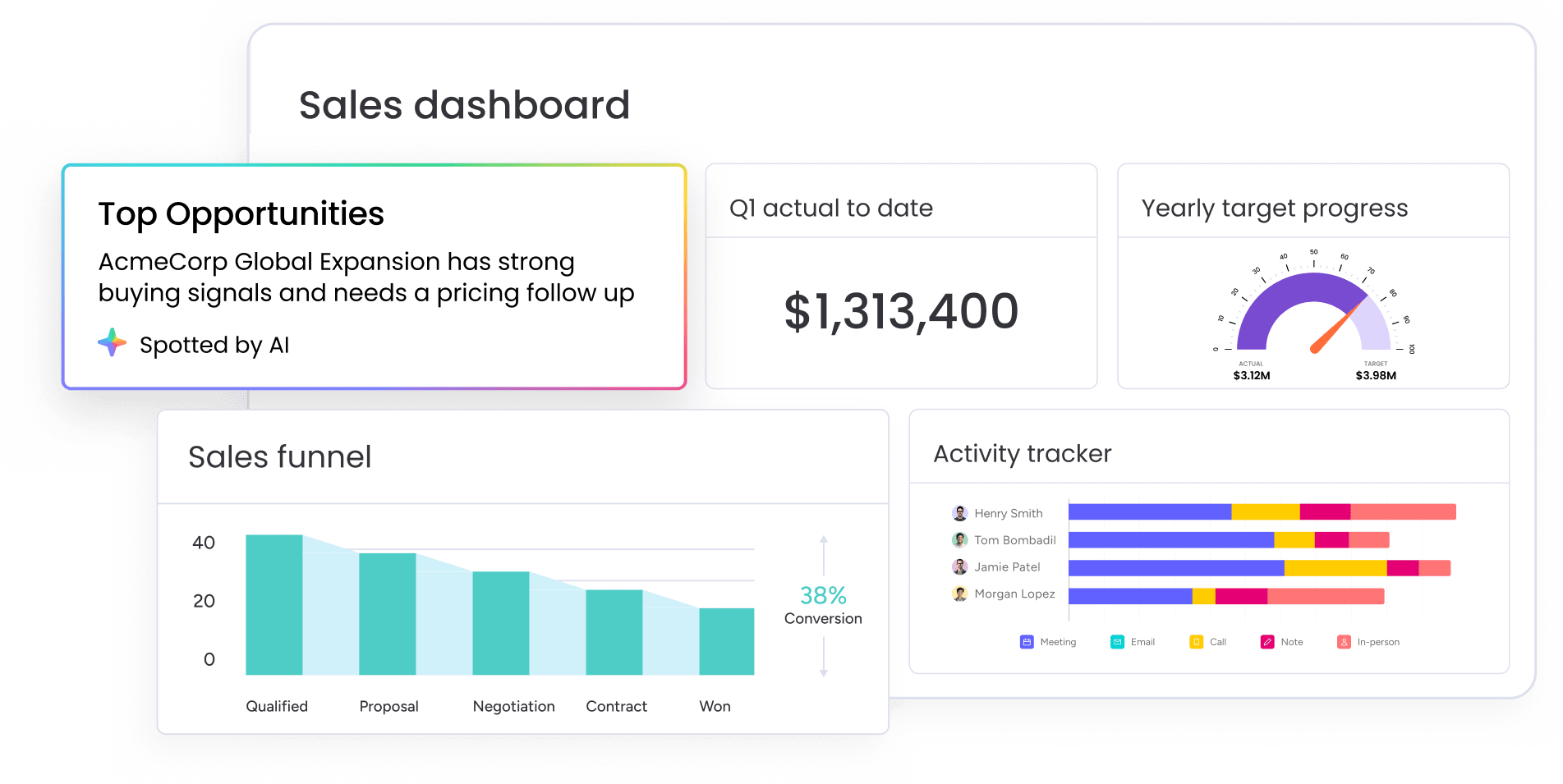
Sales teams using monday CRM access sales-specific widgets like the leaderboard, sales funnel widget, and sales pipeline widget to identify strong and weak points in their pipeline.
Native CRM integration for unified data
Native integration cuts out the complexity and failure points of third-party connectors. Look for bidirectional, real-time data sync to ensure all systems stay current and unified prospect records that combine automation engagement data with CRM sales data. Seamless workflow triggers should be based on CRM events.
Multi-channel automation capabilities
Prospects use multiple channels. Your automation should too. Look for a solution that has:
- Email automation with personalization and behavioral triggers
- SMS automation for time-sensitive communications
- Task automation that creates activities for sales reps when human touch is most valuable
Advanced AI strategies for your automated funnel
Once basic automation’s running, AI unlocks strategies that weren’t possible before. These approaches help experienced sales teams get higher conversion rates and more predictable revenue.
Replace static nurture tracks with dynamic journeys
Static nurture means everyone in a segment receives the same sequence regardless of engagement, whereas an AI sales funnel adapts dynamically. Dynamic journeys adapt to what each prospect does:
- Engagement-based adaptation analyzes each prospect’s patterns and adjusts subsequent touchpoints accordingly
- Interest-based content selection delivers different content based on what prospects engage with
- Timing optimization adapts to individual responsiveness patterns
Dynamic journeys convert better than static sequences because they respond to what prospects actually do, not assumptions.
Deploy digital workers for 24/7 sales activities
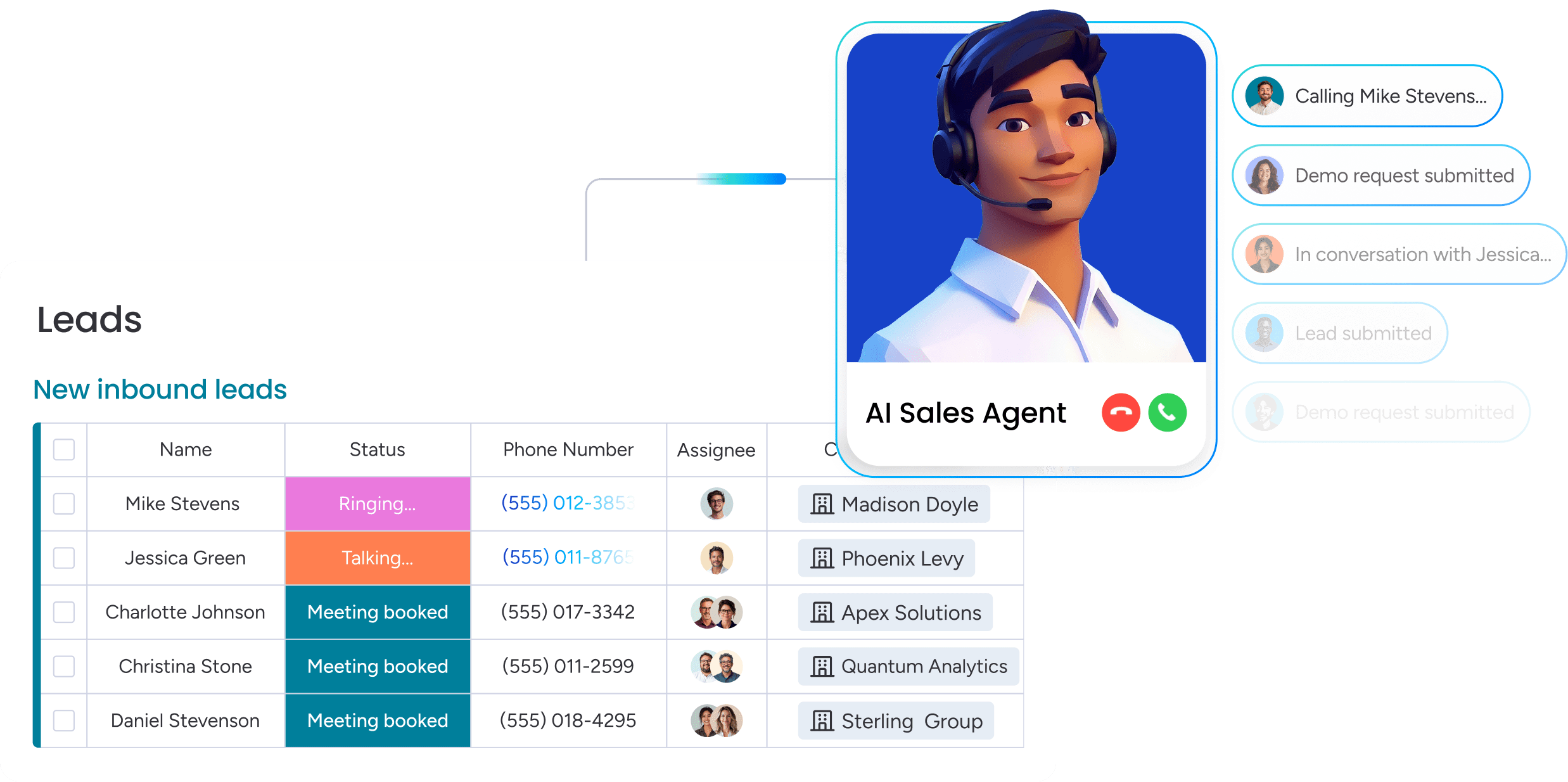
Digital workers do more than workflow automation. They’re AI that monitors situations, spots opportunities or issues, and acts without waiting for triggers.
- Deal facilitator continuously monitors open opportunities, identifies deals that are stalling, analyzes why, and takes action
- Sales advisor analyzes rep performance across the funnel and provides specific improvement recommendations
- Research assistant automatically enriches lead records with relevant company information and identifies buying signals
Build multi-stakeholder automation paths
B2B deals typically involve 5-8 stakeholders with different priorities, concerns, and information needs. Advanced automation handles this by delivering targeted messaging to each decision-maker.
- Role-based content tracks deliver different messaging to economic buyers focusing on ROI and business case, technical evaluators needing implementation and security details, and end users concerned with usability and training
- Stakeholder mapping automation identifies roles based on job titles and engagement patterns, then routes each contact to appropriate nurture tracks
- Champion enablement automation provides internal advocates with resources to build consensus within their organization
Maintain trust through transparent AI usage
AI does a lot, but prospects want to know when they’re talking to automation versus a person. Build trust through clear identification of when AI generates content. Include human escalation paths so prospects can reach actual humans when needed, and implement quality controls with review processes for AI-generated content
Teams using monday CRM benefit from AI Run history, which shows what happened and why for each AI action, helping teams understand AI decisions and iterate safely.
Transform your sales process with monday CRM's intelligent automation
Automated sales funnels shift you from reactive to proactive revenue. Instead of hoping prospects respond or relying on reps to follow up, automation ensures every lead gets consistent engagement that moves them toward buying. When you combine workflow automation with AI, your funnel gets smarter with each interaction — identifying patterns that predict success and adapting to maximize conversion rates.

With monday CRM, you get everything you need to build and optimize automated sales funnels in one unified platform. Unlike fragmented tech stacks that require constant maintenance and integration work, monday CRM combines your CRM, automation engine, and AI capabilities in a single system that sales teams actually want to use.
Key features that set monday CRM apart:
- No-code workflow builder: Create and modify automations without waiting on developers, with pre-built templates that get you started fast and customizable workflows that adapt to your unique sales process.
- AI-powered intelligence: Automatic lead scoring, intelligent routing, and sentiment detection work right out of the box, learning from your data to deliver increasingly accurate predictions.
- Complete sales journey management: Capture leads from any source, score and route them instantly, nurture with behavior-triggered sequences, and track every interaction in real time.
- Unified visibility: Your reps see the full context of each prospect relationship without switching between tools, while leadership gets accurate pipeline forecasts and performance analytics that actually drive decisions.
- Visual, accessible interface: Build conditional workflows, set up multi-channel touchpoints, and deploy AI blocks with drag-and-drop simplicity — changes happen in minutes, not weeks.
Because everything lives in one platform, your data stays clean, your team stays aligned, and your funnel keeps running smoothly. Revenue teams that embrace this level of automation gain a significant competitive advantage: They respond faster, personalize at scale, and focus human energy on high-value activities that close deals. The result is predictable growth that scales without proportional increases in headcount or complexity.
Start building your automated sales funnel today
Automated sales funnels eliminate the manual bottlenecks that slow down deals and drain your team’s time. By combining workflow automation with AI-powered intelligence, you’ll deliver consistent prospect experiences, accelerate deal velocity, and scale revenue without proportionally increasing headcount.
Get everything you need to build, launch, and optimize automated sales funnels in one unified platform: monday CRM. Start your free trial today and see how intelligent automation transforms your sales process.
Try monday CRMFAQs
What is a sales funnel?
A sales funnel is the journey potential customers take from first learning about your business to making a purchase, typically divided into stages like awareness, consideration, and decision.
What are the sales funnel stages?
The sales funnel stages typically include awareness (prospect discovers your business), consideration (prospect evaluates options), decision (prospect chooses a solution), and retention (customer continues relationship post-purchase).
Are sales funnels effective?
Sales funnels are effective when properly designed and measured, providing a structured approach to converting prospects into customers while identifying where leads drop off so teams can improve conversion rates.
What is an AI sales funnel?
An AI sales funnel uses artificial intelligence for lead scoring, routing, email composition, sentiment detection, and forecasting, adapting automatically based on prospect behavior rather than following static rules.
How does AI improve sales funnel performance?
AI improves sales funnel performance by analyzing patterns across thousands of data points to predict which leads will convert, personalizing content at scale, and identifying at-risk deals before they stall.
What is sales funnel software?
Sales funnel software is a platform that centralizes lead capture, follow-up automation, pipeline management, and reporting, enabling teams to manage the entire customer journey from one system.

 Get started