
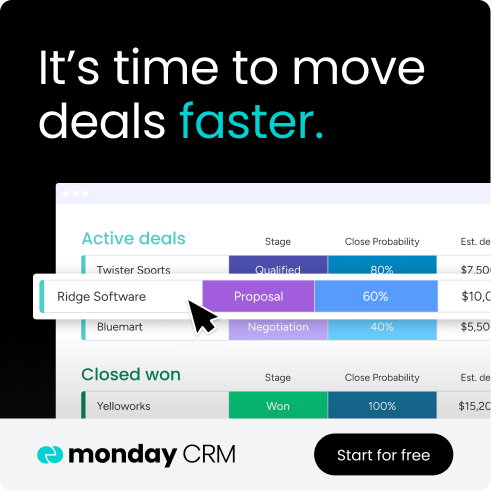
An SDR team sends 200 emails a day and only twelve prospects respond. Despite investing in CRM software, reps still rely on spreadsheets, sticky notes, and disconnected tools to track outreach and follow-ups. Instead of accelerating deals, the tech stack slows them down, turning high-effort activity into low-yield pipeline.
AI SDR platforms automate outreach, score leads, and personalize messages for hundreds of prospects simultaneously. But if the AI can’t talk to the CRM, it’s just another disconnected platform in an already complex tech stack. Therefore, AI SDR platforms deliver maximum value when they sync directly with CRM systems, turning scattered prospect data into a single system that helps close more deals.
Seven AI SDR platforms with native CRM integration stand out for their ability to drive measurable sales results. Key features that impact performance, along with the trade-offs between standalone tools and built-in CRM AI, help revenue teams choose the right approach.
Key takeaways
- Choose native CRM AI over standalone platforms: reduce integration complexity and potentially lower your total cost of ownership by using AI that’s already built into CRM platforms like monday CRM.
- Focus on bi-directional data sync that actually works: ensure your AI SDR tool updates both systems instantly. One-way sync creates data silos that hurt sales performance.
- Measure productivity gains, not just features: AI SDRs should help your team qualify 40-60% more leads while freeing up 15-20 hours per week for relationship building.
- Native AI eliminates integration complexity: get lead scoring, email personalization, and prospect research without managing multiple platforms or technical setup.
- Evaluate total cost beyond software licenses: factor in integration maintenance, training, and data reconciliation. Hidden costs often double your actual AI investment.
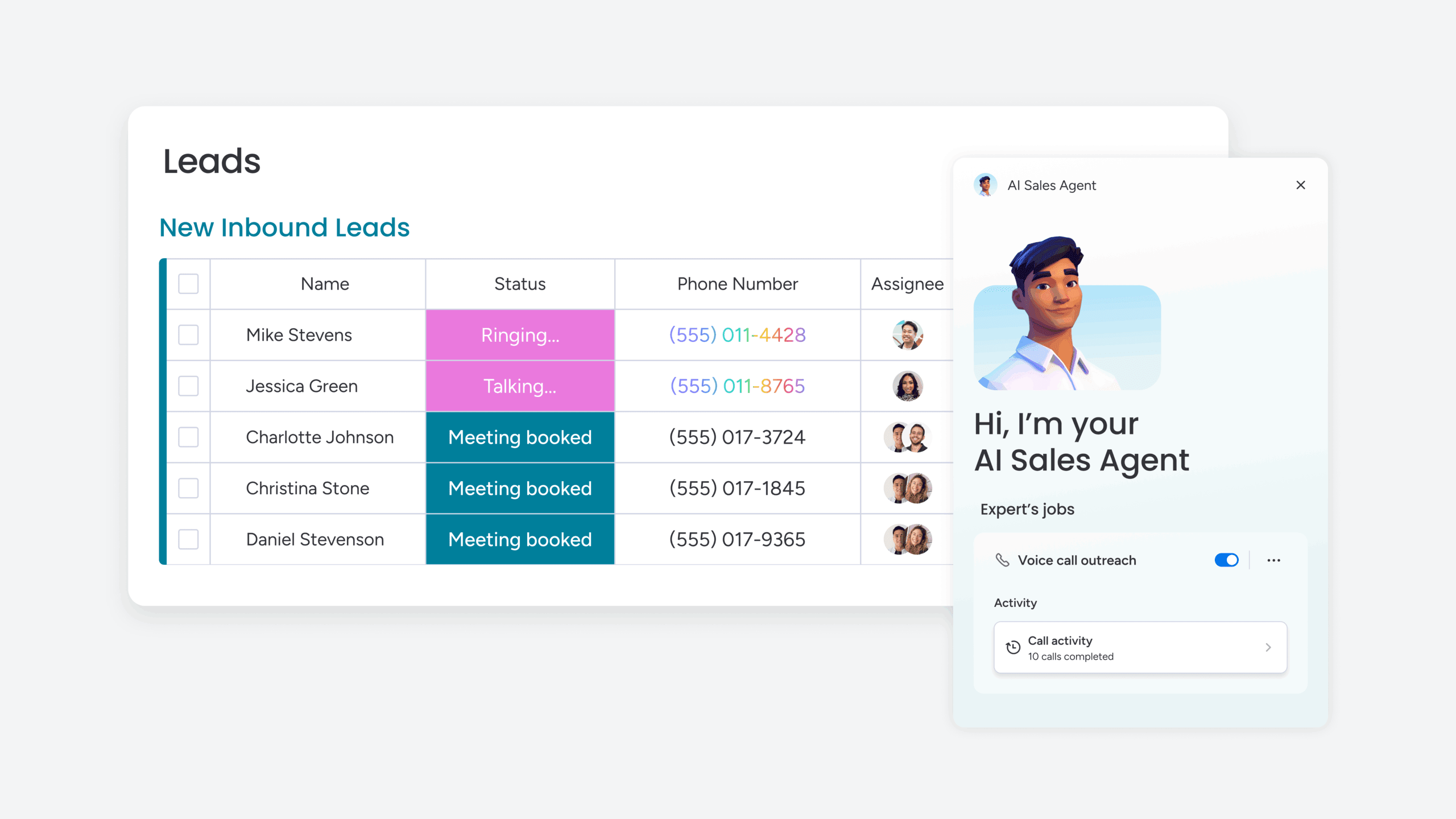
What are AI SDRs and how do they transform CRM data into revenue?
AI SDR (Sales Development Representative) tools are software platforms that automate prospecting, lead qualification, and initial outreach activities traditionally performed by human sales reps. These platforms handle repetitive research processes, personalize communication at scale, and identify which prospects deserve immediate attention from your sales team.
The real transformation happens when AI SDR tools connect directly with your CRM system. Every email open, website visit, and form submission feeds into the AI’s understanding of buyer intent. This connection turns your CRM from a static database into a system that updates lead scores and triggers follow-up sequences 24/7.
Identify AI SDR capabilities that matter for sales teams
Knowing which capabilities actually improve sales performance helps you figure out which features are worth paying for. These capabilities separate useful AI SDR tools from basic automation platforms.
Core AI SDR capabilities that drive results:
- Lead scoring and qualification: AI analyzes hundreds of data points including prospect behavior, company firmographics, deal history, to assign priority scores that predict which leads will convert.
- Automated email sequences: outreach campaigns adapt based on prospect responses, sending follow-ups that reference what the prospect actually did.
- Meeting scheduling: calendar coordination kills the back-and-forth by showing available time slots from both calendars.
- Pipeline forecasting: predictive analytics look at your current pipeline, past close rates, and deal speed to forecast revenue.
Choose between native integrations and API connections
AI SDR tools connect with CRMs in two ways, and each affects how fast you deploy, how reliable your data is, and how much maintenance you’ll need. To pick the right integration for your team’s tech skills and timeline, it’s essential to know the difference.
| Integration type | Setup time | Data sync speed | Maintenance required | Best for |
|---|---|---|---|---|
| Native integration | Minutes | Real-time | None | Teams wanting immediate deployment without technical resources |
| API connection | Days to weeks | Scheduled (typically hourly) | Ongoing IT support | Organizations with custom CRM configurations |
- Native integrations: pre-built connections that CRM platforms and AI SDR vendors create together. When you activate a native integration, the AI tool instantly accesses your CRM data and starts syncing both ways. These connections update in real-time — a lead score change in the AI platform shows up in your CRM within seconds.
- API connections: require technical configuration where your IT team maps specific data fields between systems, establishes authentication protocols, and schedules sync intervals. This approach offers more customization but creates technical debt. Every time either platform updates its API, you might need to test and adjust your integration.
Measure real impact on SDR productivity and pipeline growth
AI SDR tools change how sales reps spend their time. An SDR researching prospects can evaluate 15-20 companies per day. AI SDR tools analyze 200+ prospects in the same time and identify the 15 most likely to convert based on buying signals, fit, and engagement.
Productivity improvements translate to measurable results:
- Pipeline growth: teams using AI SDR tools typically see qualified leads jump 40-60% in the first quarter as AI handles initial outreach to hundreds of prospects simultaneously, sending personalized sequences while human SDRs focus on the warmest leads.
- Consistent outreach quality: AI SDR tools ensure every prospect gets personalized communication no matter which SDR is assigned, maintaining quality standards across the entire team.
- Faster team ramp-up: new team members onboard quicker because the AI walks them through proven sequences and suggests how to handle common objections.
“With monday CRM, we’re finally able to adapt the platform to our needs — not the other way around. It gives us the flexibility to work smarter, cut costs, save time, and scale with confidence.”
Samuel Lobao | Contract Administrator & Special Projects, Strategix
“Now we have a lot less data, but it’s quality data. That change allows us to use AI confidently, without second-guessing the outputs.”
Elizabeth Gerbel | CEO
“Without monday CRM, we’d be chasing updates and fixing errors. Now we’re focused on growing the program — not just keeping up with it."
Quentin Williams | Head of Dropship, Freedom Furniture
“There’s probably about a 70% increase in efficiency in regards to the admin tasks that were removed and automated, which is a huge win for us.“
Kyle Dorman | Department Manager - Operations, Ray White
"monday CRM helps us make sure the right people have immediate visibility into the information they need so we're not wasting time."
Luca Pope | Global Client Solutions Manager at Black Mountain
“In a couple of weeks, all of the team members were using monday CRM fully. The automations and the many integrations, make monday CRM the best CRM in the market right now.”
Nuno Godinho | CIO at Velv
“monday.com provides developmental flexibility, operational efficiency, and data transparency — all in one place. We became a company that moved from chasing data to leading with it.”
Hyunghan Lee | Team Lead, Sandbox Network
"monday.com brought every part of our business into one connected space. The harmony between work management and CRM has become our operating system — giving us the clarity and confidence to scale.”
Jennifer Chinburg | Executive Vice President of Corporate Development & Brand, Chinburg Properties
“We just weren’t getting value from our old CRM. With monday.com, it's a thousand times better. Our sales teams are more informed, more consistent, and far more connected."
James Arnold | Chief Operating Officer, Cenversa7 AI SDR tools with proven CRM integration
These seven AI SDR tools made the list because they sync data both ways with major CRMs, have proven track records with mid-market and enterprise customers, and offer capabilities for different sales team needs. Each tool has unique strengths for different organizations and sales strategies.
1. Salesforce Einstein SDR
Salesforce Einstein SDR uses data already in Sales Cloud to score leads, predict deal outcomes, and automate routine SDR tasks. The native integration means zero setup time as teams activate Einstein features right inside Salesforce.
Key specifications:
- Primary strength: native integration with the Salesforce ecosystem eliminates data sync issues.
- CRM compatibility: Salesforce (native), limited third-party options.
- Key differentiator: leverages existing Salesforce data to train AI models specific to your business.
- Best for: organizations already using Salesforce Sales Cloud.
2. Apollo.io for multi-CRM teams
Apollo.io combines a prospecting database of 275+ million contacts with automated AI outreach. The tool connects with 15+ CRM platforms including HubSpot, Pipedrive, Salesforce, and Zoho being perfect for teams using multiple CRMs or planning to switch.
Key specifications:
- Primary strength: connects with 15+ CRM platforms while maintaining consistent functionality.
- CRM compatibility: broad compatibility across major platforms.
- Key differentiator: built-in prospecting database eliminates need for separate data providers.
- Best for: teams using multiple CRMs or planning platform transitions.
3. Outreach AI for enterprise scale
Outreach AI handles complex campaigns across email, phone, and social with A/B testing and machine learning that optimizes message content, send times, and channel selection.
Key specifications:
- Primary strength: advanced sequence automation and A/B testing capabilities.
- CRM compatibility: Salesforce, HubSpot, Microsoft Dynamics, Pipedrive.
- Key differentiator: machine learning algorithms analyze millions of interactions.
- Best for: large sales teams running complex campaigns.
4. AiSDR for email-first teams
AiSDR focuses on email personalization. It uses AI to research each prospect’s company, role, recent activities, and pain points, then writes unique emails that reference specific details.
Key specifications:
- Primary strength: hyper-personalized email generation using AI research.
- CRM compatibility: integrates via Zapier and direct APIs.
- Key differentiator: creates unique email content for each prospect.
- Best for: teams prioritizing email outreach.
5. Conversica for lead qualification
Conversica’s AI assistants have two-way email conversations with leads. They ask qualification questions, handle objections, and figure out buying intent before passing qualified prospects to human reps.
Key specifications:
- Primary strength: AI-powered lead nurturing conversations that feel natural.
- CRM compatibility: Salesforce, HubSpot, Marketo, Pardot.
- Key differentiator: conducts persistent follow-up conversations over extended periods.
- Best for: organizations with high inbound lead volumes.
6. 6sense for account-based selling
6sense uses intent data from across the web to identify which accounts are researching solutions in your category, who’s on the buying committee, and where they are in the buying process.
Key specifications:
- Primary strength: account-level intent data and predictive analytics.
- CRM compatibility: Salesforce, HubSpot, Microsoft Dynamics.
- Key differentiator: identifies buying committee members across entire accounts.
- Best for: B2B companies with long sales cycles.
7. Reply.io with Jason AI assistant
Reply.io combines email sequences with LinkedIn outreach automation so SDRs can reach prospects across multiple channels from one platform. The Jason AI assistant handles prospect research, personalizes messages, and manages initial outreach.
Key specifications:
- Primary strength: combines email and LinkedIn automation.
- CRM compatibility: integrates with 20+ CRM platforms.
- Key differentiator: Jason AI handles multi-channel personalization.
- Best for: teams using multi-channel outreach strategies.
Must-have features for AI SDR and CRM integration
Successful AI SDR implementation depends on integration capabilities that make data flow reliably, updates happen automatically, and give sales teams info they can trust. These features determine whether your AI SDR investment actually boosts productivity and grows pipeline.
Bi-directional data sync that actually works
True bi-directional sync ensures data flows both ways automatically, with changes in either system reflecting immediately in both. The following outlines what genuine bi-directional sync entails and its significance for sales teams.
Essential sync capabilities:
- Contact updates: changes to contact information in either system reflect immediately in both.
- Activity logging: every email sent, call made, and meeting scheduled appears in the CRM timeline.
- Status changes: lead progression through qualification stages updates simultaneously.
- Custom field mapping: organizations can sync industry-specific data fields without developer assistance.
Many tools advertise “CRM integration” but only offer one-way data sync. This creates data silos where the AI tool uses outdated info — like sending outreach emails to prospects who already became customers.
Lead scoring that updates in real time
Dynamic lead scoring adjusts based on prospect behavior across email, website, and other touchpoints. Real-time scoring systems monitor prospect activities including email opens, link clicks, website visits, content downloads, and adjust scores within seconds.
Advanced platforms use AI scoring that learns from successful deals. The AI figures out which behaviors and firmographic traits predict conversion, then refines its scoring model as more deals close.
Compliance features for GDPR and CCPA
Legal requirements for data handling in sales have gotten stricter. Therefore, AI SDR tools must include built-in compliance features that help organizations meet regulatory obligations and avoid costly violations, particularly with California’s updated CCPA regulations taking effect January 1st, 2026, which cover automated decision-making technology used in lead scoring and routing.
Required compliance capabilities:
- Data retention controls: automatic deletion of prospect data after specified periods, including compliance with California’s 90-day deletion requirement for data broker requests through the new Delete Request and Opt-out Platform (DROP).
- Consent tracking: complete records of when and how prospects agreed to communication.
- Right to be forgotten: easy removal of prospect data across all systems.
- Audit trails: complete logs showing who accessed or changed prospect information.
Custom field mapping without IT help
Sales teams need the ability to map their unique data fields without technical assistance. Drag-and-drop field mapping lets sales ops connect fields between systems visually. Pre-built templates for common CRM setups speed up deployment with ready-made field mappings teams can customize.
Third-party AI SDR tools vs CRM-native AI
Choosing between standalone AI SDR tools and CRM-native AI means trading specialization for simplicity, with real impacts on total cost, implementation speed, and long-term maintenance. These differences affect picking the right AI strategy.
Total cost of managing multiple integrations
Using separate AI SDR tools creates hidden costs beyond software licensing fees. However, organizations typically underestimate the true expense by 40-60% when evaluating standalone tools, missing significant operational costs that accumulate over time following CRM best practices helps avoid these pitfalls.
| Cost category | Standalone SDR tools | Native CRM AI |
|---|---|---|
| Software licenses | $36,000-96,000/year | Included in CRM license |
| Integration maintenance | $4,800-14,400/year | $0 |
| Training and onboarding | $15,000-25,000/year | $10,000-15,000/year |
| Data reconciliation | $50,000-75,000/year | $5,000-10,000/year |
Integration maintenance consumes four to eight hours per month from IT or sales ops teams. This includes monitoring sync errors, fixing data conflicts, and testing compatibility after platform updates. When information conflicts between systems, reps waste five to ten minutes per instance verifying which data is correct. These minutes accumulate into hours of lost productivity each week.
Speed to value comparison
Implementation timelines directly impact how fast sales teams see productivity gains. Standalone tools typically need two to eight weeks for full deployment, including integration setup, data migration, and team training. During this time, sales teams often run dual systems, cutting productivity by 20-30%.
In contrast, native AI features activate immediately through the existing CRM interface. You don’t need integration setup because the AI works with data already in the CRM. Sales reps can start using AI lead scoring and automated sequences within hours instead of weeks.
When built-in AI makes more sense
Teams happy with their CRM benefit most from native AI because they skip the complexity of adding separate tools while improving what they already use daily. Organizations focused on data security cut risk by keeping AI capabilities inside their CRM platform. Each additional vendor creates another security vulnerability and compliance audit.
Sales ops with limited tech resources can’t handle the ongoing maintenance that standalone AI SDR tools require. If you don’t have dedicated IT support for sales systems, maintaining standalone tools becomes unsustainable.
Learn more: The best AI SDR tools

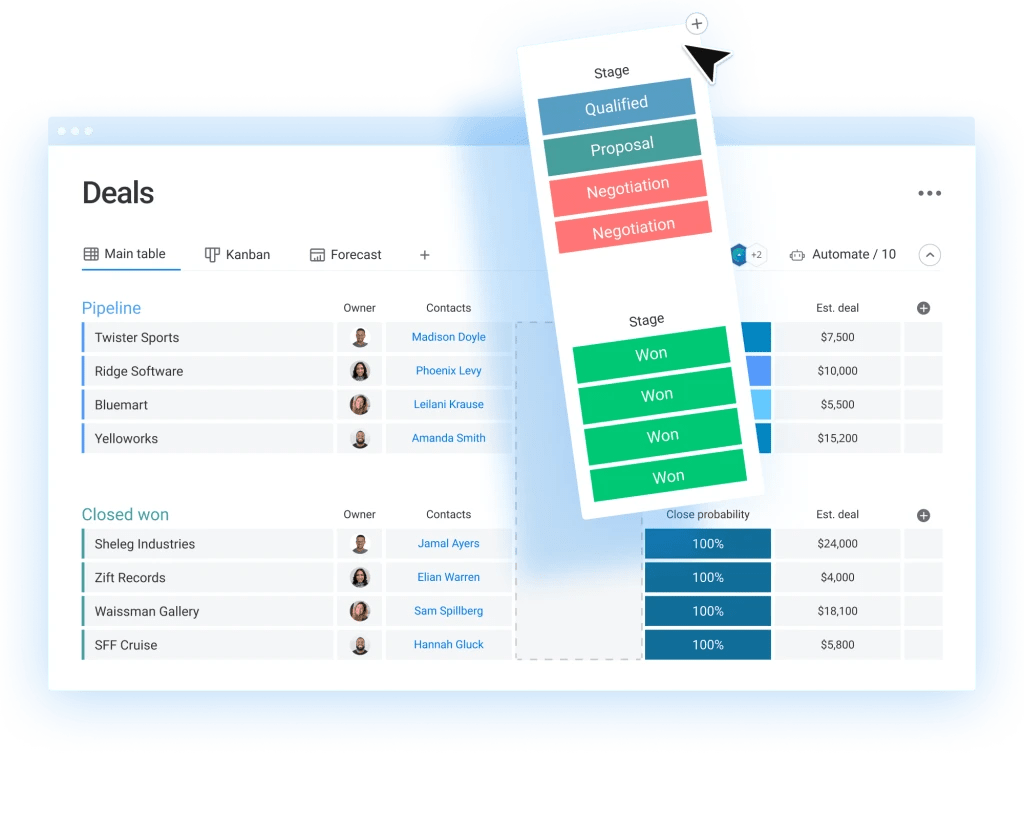
How does monday CRM's native AI outperform standalone SDR tools?
The approach to AI in monday CRM fundamentally differs from standalone SDR tools by embedding intelligence directly into the sales workflow. This native architecture delivers capabilities that match or exceed specialized tools while eliminating the complexity of managing multiple systems, giving revenue teams the power they need without the operational headaches.
AI blocks that customize to your process
AI blocks are ready-made AI capabilities that integrate directly into sales workflows. Teams add sophisticated automation without technical configuration or separate tool management. Unlike standalone AI SDR tools that impose their workflow structure, AI Blocks adapt to how your team already works.
Available AI blocks transform sales operations:
- Categorize block: automatically sorts leads by industry, company size, or buying intent.
- Extract info block: pulls key details from prospect emails and LinkedIn profiles.
- Summarize block: creates concise prospect profiles from multiple data sources.
- Detect sentiment block: analyzes prospect communication tone to guide follow-up strategies.
- Custom block: allows teams to create AI actions using natural language prompts.
| Traditional approach | monday CRM AI blocks |
|---|---|
| Multiple tool licenses ($3,000-8,000/month) | Single platform solution (included) |
| Complex integrations requiring IT support | Native functionality, no integration |
| Data sync delays (hourly or daily) | Real-time processing |
| Technical setup (two to eight weeks) | Drag-and-drop configuration (minutes) |
Zero integration maintenance forever
Native AI eliminates the operational burden that standalone SDR tools create. There’s no API management, no authentication updates, and no compatibility testing. When monday CRM enhances its AI capabilities, improvements appear immediately for all users without integration testing or disruption.
Sales operations teams save an average of eight hours per month on integration maintenance when using native AI instead of standalone SDR tools. Over a year, this equals 96 hours that can be redirected to strategic initiatives like process optimization and team training.
Why does native AI beat standalone tools for most revenue teams?
The choice between standalone AI SDR tools and native CRM AI comes down to simplicity versus complexity. Revenue teams using monday CRM gain access to sophisticated AI capabilities without the operational overhead that standalone tools require. This approach delivers faster time to value, lower total cost of ownership, and eliminates the technical debt that accumulates with multiple integrations.
Teams achieve better results when they can focus on selling instead of managing technology. Native AI removes the barriers that prevent sales teams from fully adopting AI-powered workflows, ensuring that productivity gains translate directly to pipeline growth and revenue acceleration.
Frequently asked questions
How much time do AI SDR tools save sales teams?
AI SDR tools typically save sales development representatives 15-20 hours per week by automating prospecting research, email personalization, lead qualification tasks, and follow-up scheduling that previously required manual effort.
Which CRM platforms work best with AI SDRs?
Salesforce, HubSpot, and Pipedrive offer the most native AI SDR integrations from third-party vendors, with extensive app marketplaces and pre-built connectors that simplify deployment.
Can AI SDR tools handle complex B2B sales cycles?
AI SDR tools excel at early-stage activities like prospecting, initial qualification, and nurturing leads through extended consideration periods, but they require human oversight for complex deal navigation and relationship building with multiple stakeholders.
What happens to existing SDR workflows when implementing AI?
Existing workflows typically evolve rather than disappear, with AI handling data-intensive tasks like prospect research and initial outreach while human SDRs focus on relationship building and strategic account planning.
Do AI SDR tools require technical expertise to set up?
Setup complexity varies significantly between tools, with some requiring weeks of technical configuration while others offer same-day deployment through native CRM integrations or built-in capabilities.
How do AI SDR tools maintain data quality in your CRM?
AI SDR tools maintain data quality through automated deduplication that identifies and merges duplicate contact records, standardized field formatting that ensures consistent data entry, and real-time validation that flags outdated emails or phone numbers.