Sales teams are drowning in leads that don’t convert. Despite investing heavily in marketing campaigns, trade shows, and outbound efforts, most organizations struggle with the same fundamental challenge: identifying which prospects are actually ready to buy. Traditional lead generation methods produce high volumes but low conversion rates, leaving sales representatives buried in unqualified opportunities instead of engaging genuine buyers.
AI sales lead generation changes this equation by applying machine learning and predictive analytics to identify, qualify, and prioritize prospects automatically. Instead of manually researching hundreds of companies or cold-calling generic lists, AI analyzes behavioral patterns, engagement signals, and historical data to surface the prospects most likely to convert.
This practical article explores how AI is reshaping lead generation at every stage, from finding prospects to qualifying and nurturing them. It unpacks the technology that makes this possible, reveals concrete benefits for sales teams, and shares strategies organizations can implement today for real, measurable wins.
Key takeaways
- AI lead generation delivers 70-85% qualification accuracy compared to 30-40% with manual methods: automate prospect research and scoring to focus your team on deals most likely to close, freeing up time for meaningful customer conversations.
- Deploy AI across your entire sales funnel, from initial contact through deal closure: use conversational AI for instant qualification, predictive scoring for prioritization, and behavioral triggers for timely follow-up that keeps prospects engaged.
- Start with smart lead scoring models using your historical deal data: analyze your last 500 closed deals to identify patterns, then let AI automatically score new prospects based on what actually converts in your business.
- Modern CRM platforms offer AI capabilities that handle lead processing without coding: look for features provided by solutions like monday CRM that extract information from forms automatically, assign prospect categories, and provide continuous pipeline insights that keep deals moving forward.
- Expect three to six months for significant ROI as AI systems learn your specific business patterns: begin with pilot programs on specific use cases while your team adapts to AI-enhanced workflows and builds confidence with the technology.
What is AI lead generation?
At its core, AI lead generation puts the grunt work of finding customers on autopilot. This means, your sales team can finally stop manually researching companies, cold calling random lists, or wasting hours qualifying leads. Instead, AI does the heavy lifting by spotting patterns in data, tracking behavior signals, and learning from your past wins to surface prospects who are actually ready to buy.
AI functions as a sales assistant who never sleeps, processes thousands of data points instantly, and learns what makes a good lead for your specific business, an approach that significantly benefits AI in B2B sales scenarios. Where a human might spend days researching 50 prospects, AI analyzes 10,000+ prospects in minutes, identifying which ones match your ideal customer profile and show buying signals.
The shift from traditional to AI-powered lead generation transforms every aspect of sales operations, creating a more efficient AI sales funnel.
| Aspect | Traditional lead generation | AI lead generation |
|---|---|---|
| Speed | Manual research takes days per prospect list | Analyzes thousands of prospects in minutes |
| Accuracy | 30-40% of leads meet qualification criteria | 70-85% of leads meet qualification criteria |
| Scalability | Adding more leads requires more staff | Handles 10x volume without additional headcount |
| Cost | $50-200 per qualified lead | $15-50 per qualified lead |
| Personalization | Generic messaging to broad segments | Individual customization at scale |
How does AI lead generation work?
AI lead generation operates through three interconnected processes that function like an experienced sales professional working at machine speed. These systems continuously learn from every interaction, becoming more accurate as they process more data about what makes prospects convert in your specific market.
Machine learning for lead prediction
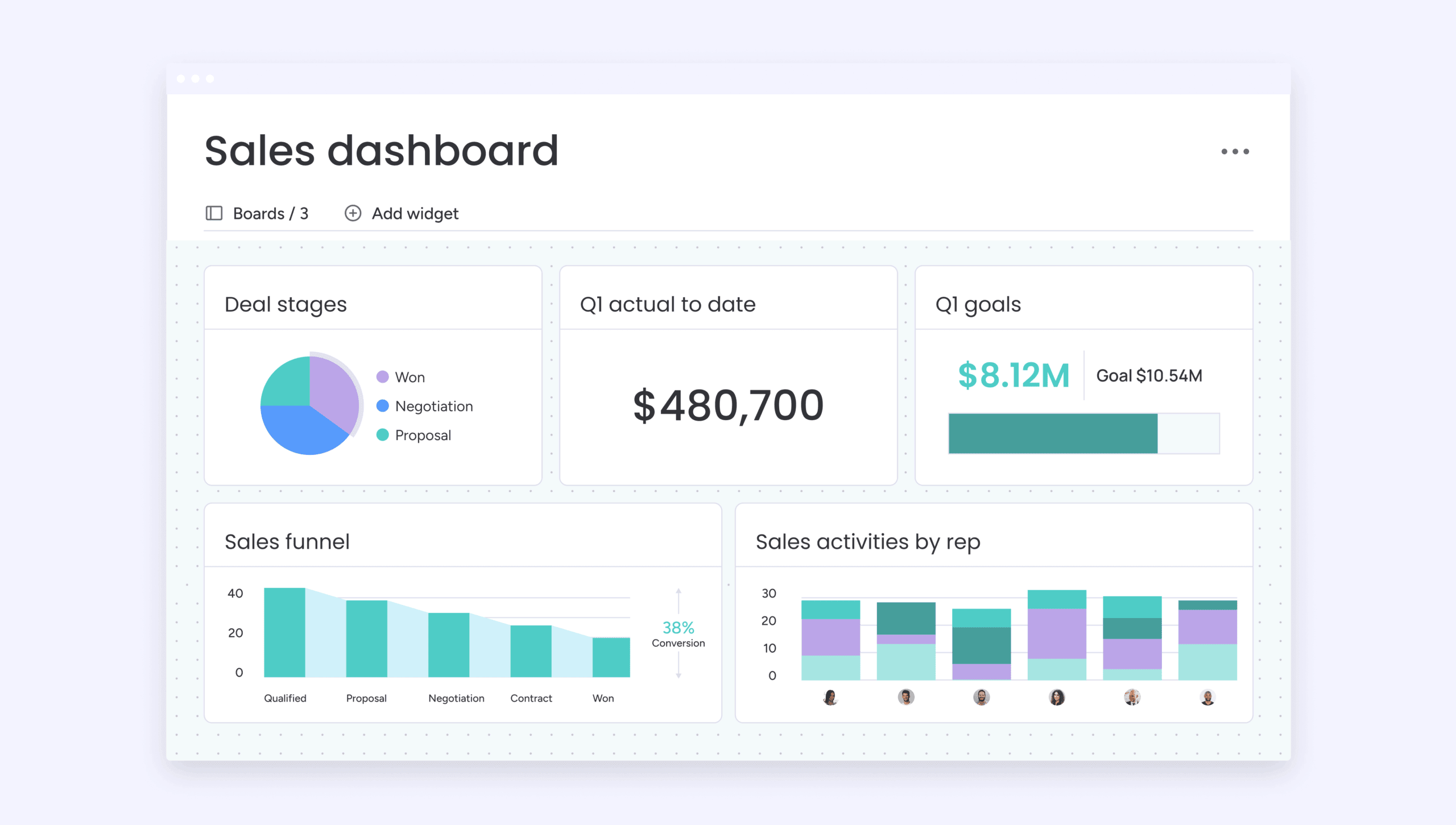
Machine learning acts as your data detective. It digs through your sales history to spot what actually leads to closed deals. By analyzing specific prospect behaviors and engagement patterns, the system identifies your winning formula and automatically applies those insights to score new leads.
Once it figures out your winning formula, it automatically applies these insights to score new leads without you lifting a finger.
For instance, if prospects who visit pricing pages three times, download two resources, and work at companies with 50-200 employees convert at higher rates, the AI recognizes this pattern. It then scores similar prospects higher, helping your team prioritize outreach.
Unlike static scoring models that need manual updates, machine learning adapts automatically as market conditions and buyer behaviors change, making it easier to use AI in sales strategies effectively.
Natural language processing in sales engagement
NLP is what helps AI read between the lines in your prospect communications. Instead of just spotting keywords, it actually gets the meaning and intent. So when someone emails asking about “implementation timelines,” the system can tell if they’re ready to buy or just kicking tires.
The technology analyzes email responses to gauge interest levels, detects objections in conversations, and monitors social posts for buying signals. Advanced NLP generates personalized responses that match each prospect’s communication style and address their specific concerns, maintaining engagement without requiring immediate human intervention.
Real-time pattern recognition
AI monitors prospect behavior across multiple touchpoints simultaneously, illustrating the power of AI in sales, marketing to recognize buying signals as they happen. The system tracks website visits, content engagement, email opens, and social interactions to identify patterns indicating readiness to buy.
When prospects exhibit high-intent behavior (visiting competitor comparison pages, downloading pricing information, and viewing case studies within 48 hours) AI flags this for immediate sales follow-up. This real-time analysis is a core component of AI lead management, enabling instant response to buying signals that might otherwise go unnoticed for days or weeks.
10 benefits of AI-powered lead generation
The numbers don’t lie: AI lead generation moves the needle on the metrics that matter most. In fact, most sales teams experience a significant spike in productivity and a jump in pipeline value within just three months of implementation.
When you deploy AI, you can expect a fundamental shift in how your organization operates.
1. More accurate lead scoring
AI analyzes 50+ data points simultaneously to create precise lead scores reflecting true conversion likelihood. This multidimensional analysis reduces false positives by 60-70% compared to traditional methods.
Key advantages of AI scoring are:
- Firmographic analysis: company size, industry, growth signals, and technology stack.
- Behavioral tracking: website visits, content downloads, email engagement patterns.
- Intent signals: competitor research, pricing page views, demo requests.
- Engagement history: past interactions, response times, conversation sentiment.
2. Personalization at scale
AI enables customized messaging for thousands of prospects simultaneously by analyzing individual behavioral data and preferences. In doing so, the system tailors subject lines and content recommendations to each prospect’s specific buying stage.
3. Round-the-clock lead engagement
AI systems work continuously across all time zones. When prospects visit your website at 2 AM or send questions on weekends, AI chatbots provide immediate responses, qualify interest levels, and schedule follow-up conversations, preventing lead loss due to delayed response times.
4. Higher quality lead identification
AI filters out unqualified prospects early by applying consistent qualification criteria. The system identifies prospects who lack budget authority, don’t match ideal customer profiles, or show low engagement patterns, routing them to nurture campaigns rather than direct sales contact.
5. Less manual work for sales teams
AI eliminates the repetitive, administrative “drudge work” that typically consumes 10-15 hours of a rep’s week. By offloading these manual tasks, your team can shift their focus from navigating software to navigating relationships. This transformation is driven by:
- Data entry: automatic CRM updates from all touchpoints.
- Research: instant company and contact information gathering.
- Qualification: automated initial prospect screening.
- Scheduling: smart calendar management and meeting booking.
- Follow-ups: triggered email sequences based on behavior.
6. Instant sales intelligence
AI provides real-time insights about prospect companies including recent funding rounds, leadership changes, and market expansion signals. The system monitors news sources, social media, and industry publications, surfacing relevant information that creates conversation opportunities.
7. Infinitely scalable operations
A team that manually processed 500 leads monthly can manage 5,000 leads with the same headcount. AI handles initial qualification, nurturing, and routing while humans focus on high-value conversations and relationship building.
8. Lower cost per lead
Automation reduces resources required to generate and qualify each lead by 60-75%. Organizations report costs dropping from $150-200 to $40-60 per qualified lead as manual research, outreach, and qualification shift to automated processes.
9. Predictive revenue forecasting
AI analyzes pipeline data, historical close rates, and deal velocity to provide accurate revenue predictions. The system identifies deals at risk, forecasts which opportunities will close this quarter, and highlights pipeline gaps requiring additional lead generation investment.
10. Competitive market advantage
AI enables response times measured in minutes rather than hours or days. Companies implementing AI report 30-40% higher conversion rates on inbound leads simply by engaging prospects faster with more relevant information than competitors using manual processes.
Essential AI lead generation platforms
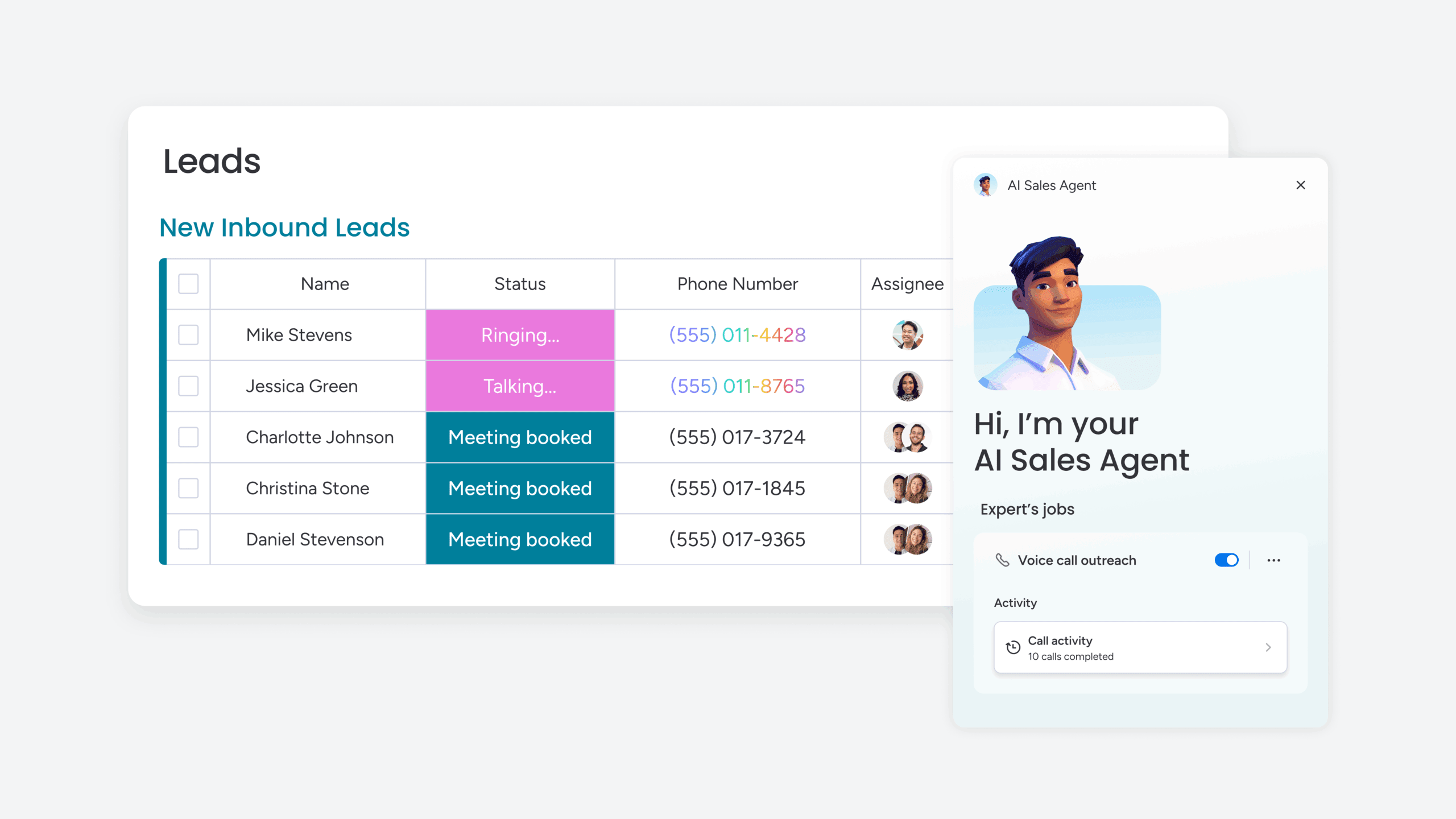
Successful AI lead generation requires a technology stack covering the full spectrum from prospect identification through qualification and engagement. To be effective, your tools need to work together seamlessly, sharing data and insights to create a unified view of each prospect’s journey.
Conversational AI and chatbots
Conversational AI goes beyond basic chatbots following scripted decision trees. These systems use natural language processing to understand prospect intent and context, enabling natural conversations that adapt based on responses.
Modern conversational AI handles multiple critical functions:
- Lead qualification: asks relevant questions about budget, timeline, and authority.
- Appointment scheduling: checks calendar availability and confirms meeting times.
- Initial engagement: answers product questions and provides resources.
- Context maintenance: remembers conversation history across multiple interactions.
Organizations implementing conversational AI report 40-60% of inbound leads qualifying themselves through automated conversations.
Predictive lead scoring software
Predictive scoring platforms analyze prospect data against historical conversion patterns to assign numerical scores indicating likelihood to close. These systems weigh dozens of variables simultaneously and adjust scoring logic based on actual outcomes.
The software integrates directly with CRM systems like monday CRM, automatically updating lead scores as prospects take new actions in alignment with CRM best practices. It identifies which combination of factors including company size, industry, engagement level, and behavioral patterns, correlate most strongly with closed deals in your specific business.
AI email automation platforms
AI-powered email tools optimize every touchpoint of your communication strategy by tailoring the experience to the individual recipient. Instead of generic outreach, the technology determines the most effective send times and generates personalized subject lines that align with a prospect’s specific interests.
By triggering behavioral sequences based on real-time actions, these platforms ensure your messaging remains relevant. The software identifies the highest-performing content for each segment by testing different value propositions across your prospect base. Ultimately, the technology detects buying signals or objections in responses, flagging them for immediate human follow-up.
Intent data and social listening tools
Intent data platforms monitor prospect research behavior across thousands of websites, identifying companies actively researching solutions in your category. These tools track content consumption patterns and search queries that indicate buying intent, surfacing prospects before they contact vendors directly.
Social listening capabilities monitor conversations, forums, and review sites for mentions of pain points your solution addresses. The combination creates a comprehensive view of prospect interests and concerns before initial contact.
Lead enrichment solutions
Lead enrichment tools transform incomplete prospect data into comprehensive profiles automatically. These platforms pull information from multiple sources to build complete pictures of your leads without manual research.
What lead enrichment AI delivers:
- Company intelligence: automatically appends company size, revenue, industry, technology stack, and growth signals when prospects submit minimal form information.
- Contact validation: verifies and updates phone numbers, email addresses, and social profiles to maintain accuracy as prospects change roles or companies.
- Continuous monitoring: tracks enriched data for changes like funding rounds, leadership shifts, or expansion plans that create new conversation opportunities.
- Real-time updates: keeps your CRM current with the latest prospect information without manual data entry or research time.
7 AI lead generation strategies for maximum impact
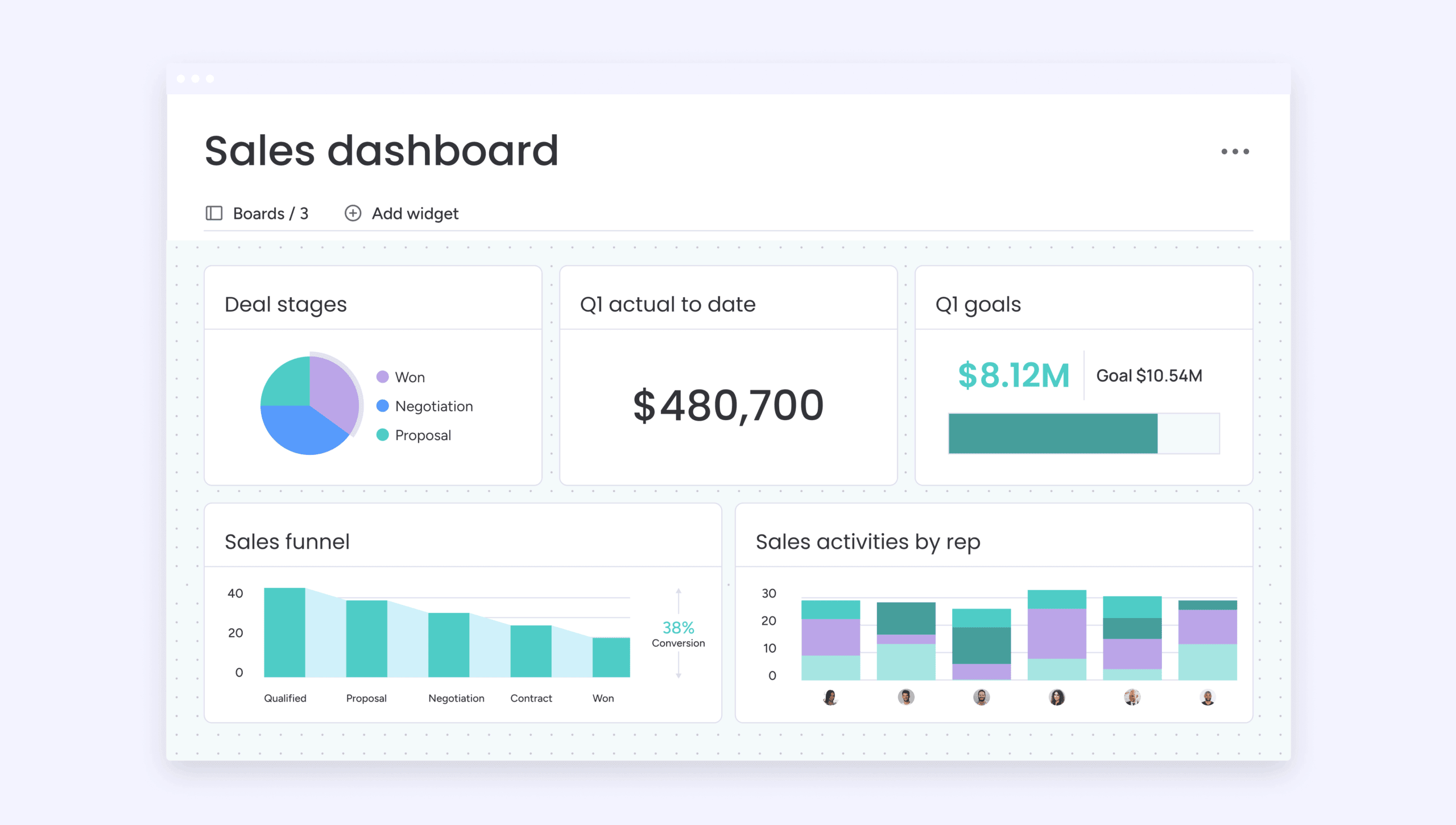
Teams using these strategies below are seeing lead quality jump by 50-80% and conversion rates climb 30-40%. Each tactic leverages AI to give you an edge that manual prospecting simply can’t match.
1. Build smart lead scoring models
Create AI-powered scoring models by analyzing your last 500 closed deals to identify common characteristics among converted prospects. By feeding this historical data into machine learning algorithms, you can identify which factors most strongly predict conversion.
Configure the system to weight these factors appropriately, giving higher scores to prospects matching your best customer profiles. Set score thresholds that route high-scoring leads directly to sales while directing lower-scoring prospects to nurture campaigns.
The model also updates automatically as new deals close, continuously refining predictions based on actual outcomes.
2. Deploy AI for instant lead qualification
Set up automated qualification processes that engage prospects immediately upon form submission or website visit. Configure conversational AI to ask key qualifying questions through natural chat conversations.
Program the system to route prospects meeting qualification criteria directly to sales representatives’ calendars while enrolling others in appropriate nurture sequences. To be most effective, create qualification pathways for different prospect types (such as enterprise buyers or technical evaluators) each with relevant questions and unique routing logic.
3. Perfect your timing with predictive analytics
Use AI to analyze when prospects are most likely to engage based on historical interaction patterns. Because the system identifies optimal contact times for different prospect segments, it can configure automated outreach to send messages when individual prospects show the highest engagement. when individual prospects show highest engagement.
Monitor behavioral signals indicating immediate buying intent — multiple pricing page visits in 24 hours trigger instant sales alerts for real-time follow-up. This timing optimization increases email response rates and booked meetings from the same lead volume.
4. Personalize every interaction with AI
Deploy AI systems that analyze each prospect’s content consumption, website behavior, and engagement history to customize all communications. This approach transforms generic outreach into relevant conversations that resonate with individual prospects.
How to implement AI personalization:
- Dynamic email content: configure email platforms to automatically insert relevant case studies, product features, and value propositions based on the prospect’s industry and demonstrated interests.
- Smart subject lines: use AI to generate personalized subject lines that reference specific pain points the prospect has shown through their behavior and engagement patterns.
- Adaptive website experiences: create dynamic website experiences that display different messaging and calls-to-action based on visitor profiles and previous interactions.
- Behavioral triggers: set up automated responses that adapt messaging based on which content prospects consume and how they navigate your digital properties.
5. Automate multi-channel lead nurturing
Build AI-driven nurturing campaigns that adapt based on prospect responses across email, social media, and website interactions. Configure systems to monitor engagement across all channels, adjusting message frequency and content based on response patterns.
Set up behavioral triggers moving prospects between nurture tracks, prospects visiting pricing pages exit educational sequences and enter evaluation-focused campaigns. Additionally, program AI to detect disengagement signals, automatically adjusting message frequency or content approach.
6. Power account-based marketing with AI
Use AI to identify all key stakeholders within target accounts by analyzing organizational charts and engagement patterns. Configure systems to coordinate messaging across multiple contacts within the same account, ensuring consistent value propositions while personalizing content to each stakeholder’s role.
Deploy AI to monitor account-level engagement, tracking when multiple contacts from the same company show interest. Set up automated sequences nurturing different stakeholders simultaneously, sending technical content to IT contacts while sharing ROI information with finance stakeholders.
7. Create self-qualifying content experiences
Build interactive content including assessments, calculators and configurators that uses AI to qualify prospects based on their responses and engagement patterns. Design tools providing genuine value while gathering qualification information naturally through the user experience.
Configure AI to analyze how prospects interact with content, identifying high-intent behaviors. Set up automated follow-up sequences triggered by content engagement, with messaging tailored to specific interests and concerns prospects revealed through their interactions.

“With monday CRM, we’re finally able to adapt the platform to our needs — not the other way around. It gives us the flexibility to work smarter, cut costs, save time, and scale with confidence.”
Samuel Lobao | Contract Administrator & Special Projects, Strategix
“Now we have a lot less data, but it’s quality data. That change allows us to use AI confidently, without second-guessing the outputs.”
Elizabeth Gerbel | CEO
“Without monday CRM, we’d be chasing updates and fixing errors. Now we’re focused on growing the program — not just keeping up with it."
Quentin Williams | Head of Dropship, Freedom Furniture
“There’s probably about a 70% increase in efficiency in regards to the admin tasks that were removed and automated, which is a huge win for us.“
Kyle Dorman | Department Manager - Operations, Ray White
"monday CRM helps us make sure the right people have immediate visibility into the information they need so we're not wasting time."
Luca Pope | Global Client Solutions Manager at Black Mountain
“In a couple of weeks, all of the team members were using monday CRM fully. The automations and the many integrations, make monday CRM the best CRM in the market right now.”
Nuno Godinho | CIO at Velv
“monday.com provides developmental flexibility, operational efficiency, and data transparency — all in one place. We became a company that moved from chasing data to leading with it.”
Hyunghan Lee | Team Lead, Sandbox Network
"monday.com brought every part of our business into one connected space. The harmony between work management and CRM has become our operating system — giving us the clarity and confidence to scale.”
Jennifer Chinburg | Executive Vice President of Corporate Development & Brand, Chinburg Properties
“We just weren’t getting value from our old CRM. With monday.com, it's a thousand times better. Our sales teams are more informed, more consistent, and far more connected."
James Arnold | Chief Operating Officer, CenversaAutomate your pipeline with monday CRM
Looking for a robust CRM for lead generation without the technical headaches? With monday CRM, you get comprehensive AI capabilities designed specifically for sales teams. The platform addresses every stage of your lead generation process through integrated AI features that work seamlessly within your existing workflows:
AI blocks for automated lead processing
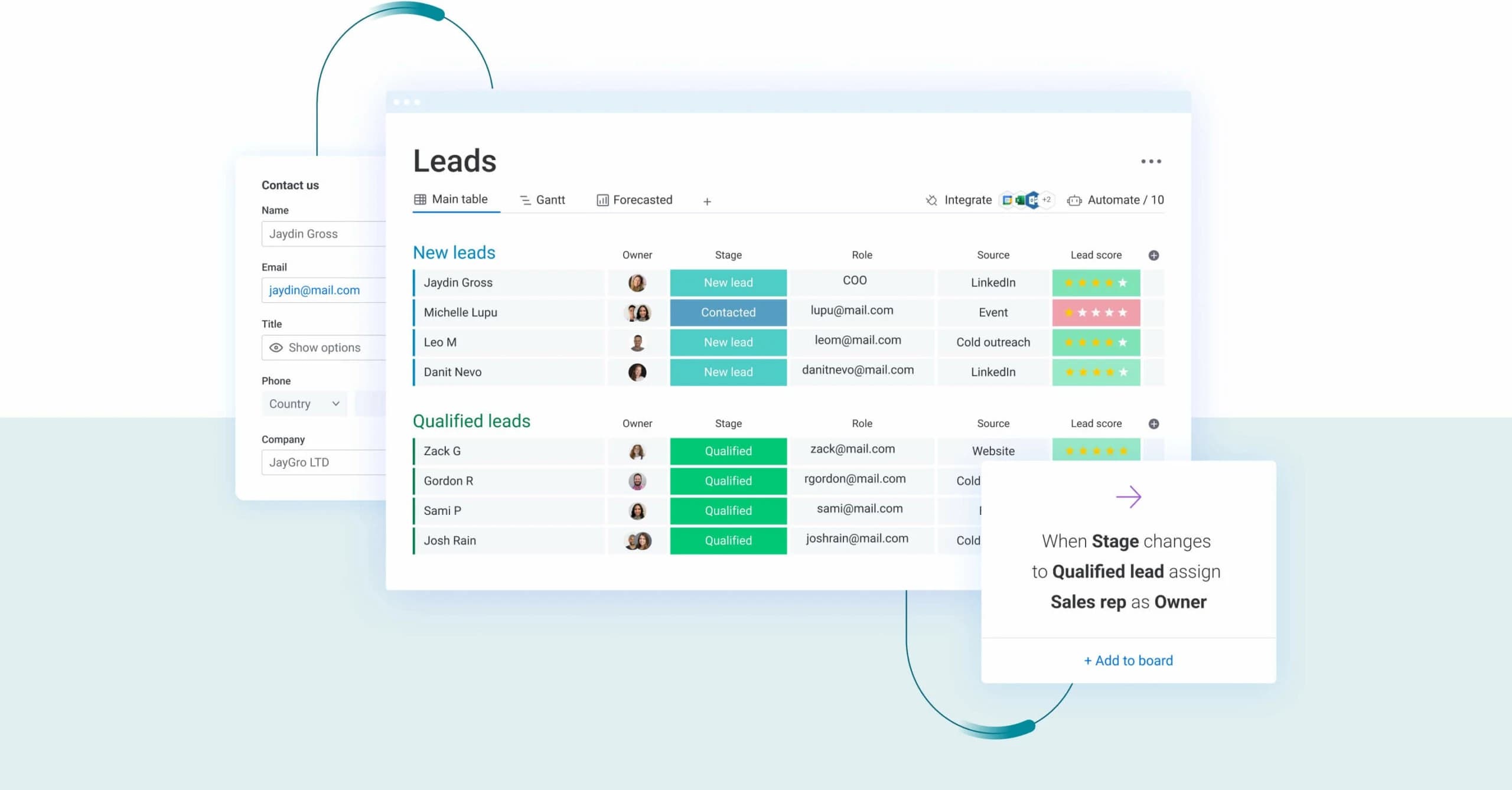
Deploy no-code automation for critical lead generation tasks. Extract information blocks automatically pull key details from lead forms, emails, and documents, eliminating manual data entry while ensuring complete CRM records. Assign labels blocks categorize leads by industry, company size, or qualification status, automatically organizing prospects for appropriate follow-up.
You can also detect sentiment blocks analyze prospect communications to gauge interest levels, flagging enthusiastic prospects for immediate follow-up.
Digital Workers for continuous engagement
Digital Workers act as your autonomous AI sales agent handling specific sales functions continuously. The Sales Advisor analyzes pipeline data and conversion rates to provide performance insights, identifying which lead sources produce highest-quality opportunities. The Deal Facilitator monitors stuck deals and suggests advancement strategies based on successful patterns.
Finally, the Research Assistant enriches lead data with company information, competitive intelligence, and buying signals, ensuring sales reps have complete context before every conversation.
No-code implementation for fast results
The visual interface enables rapid AI deployment without technical expertise. Sales operations teams use drag-and-drop builders to create AI-powered workflows, configure lead scoring models, and set up automated nurture sequences without writing code. Pre-built templates for common AI use cases like lead qualification, opportunity scoring, automated follow-up, let teams customize to their specific needs quickly.
Integrated AI throughout your sales process
AI capabilities work seamlessly within existing CRM workflows, from initial lead capture through deal closure. When prospects submit forms or engage with chatbots, AI immediately qualifies interest, enriches contact records, and routes qualified leads to appropriate representatives.
Further, as opportunities progress through the pipeline, AI continuously updates scores based on new behavioral signals and engagement patterns.
Frequently asked questions
How quickly can I expect results from AI lead generation?
You'll likely see your results improve within the first month. However, the most significant ROI typically appears around the three to six month mark, once the system has gathered enough data and your team has adapted to the new workflows.
Will AI eventually replace human sales teams?
AI enhances human sales professionals by handling routine tasks and providing insights. Relationship building, complex problem-solving, and nuanced negotiation remain fundamentally human skills that machines cannot replicate; AI makes these human capabilities more impactful.
What's the typical investment for AI lead generation tools?
AI lead generation platforms range from $50-500 per user monthly, depending on feature complexity, automation capabilities, and integration requirements. Consider total cost including implementation time and training when evaluating options.
Can AI integrate with existing CRM systems?
Most modern AI lead generation tools offer native integrations with popular CRM platforms. These integrations enable seamless data flow and workflow automation without manual data transfer between systems.
How do I manage the initial productivity decline during AI implementation?
Start with pilot programs on specific use cases, provide comprehensive training focused on practical application, and set realistic expectations for the four to eight week adjustment period when productivity temporarily declines before improving significantly.
Does AI automation impact lead quality negatively?
Properly configured AI systems actually improve lead quality by applying consistent qualification criteria across all prospects and eliminating human bias in evaluation. Organizations report 40-60% higher conversion rates on AI-qualified leads compared to manually qualified prospects.