


A missed part shipment, a machine running hot, and a quality note from the previous shift can all hit before most people finish their first coffee. None of those issues stay in one lane. They affect production schedules, maintenance plans, supplier follow-up, and customer commitments at the same time. AI for manufacturing spots patterns in machine data, quality records, and supply updates before they turn into production problems. The real value isn’t another alert. It’s helping people make informed calls and keep work moving across the operation.
This article covers what AI in manufacturing means in practical terms, 10 platforms worth evaluating, the benefits teams are seeing, and the reasons some projects stall after a promising start. It also looks at what it takes to turn insight into coordinated follow-through, exploring how a central work platform like monday agents can support teams that need action to move across production, quality, maintenance, and supply chain.
Try monday agentsWhat is AI in manufacturing?
Every shift on the factory floor generates thousands of sensor readings, quality logs, and production records. Sensor readings and quality logs contain patterns that can help you avoid downtime and raise output. Trying to catch production issues early is like spotting one loose bolt while a machine runs at full speed.
AI sifts through that information as it arrives, connecting a small temperature fluctuation to a possible equipment issue before it becomes a problem. The value goes beyond alerts.
AI can recommend or initiate preventive maintenance before a machine fails, flag a quality concern for review, and adjust workflows to keep production on track.
When applied correctly, AI gives operations teams time to respond before small issues become expensive problems. Moving from reactive firefighting to informed decisions ahead of time, that’s where AI delivers practical value in manufacturing.
10 AI solutions for manufacturing
No single platform handles everything from predictive maintenance to supply chain optimization. One platform predicts machine failures, while another optimizes supply chains, but they rarely talk to each other. As a result, teams end up stitching together insights by hand, trying to bridge what happens on the factory floor with procurement and quality control.
We’ve mapped 10 platforms below, from embedded machine intelligence to enterprise workflow automation.
| Platform | Primary use case | Best for | Key differentiator | Starting approach |
|---|---|---|---|---|
| monday agents | Cross-department AI execution | Teams needing coordinated action across production, quality, maintenance, and supply chain | Agents execute work across departments, not just within isolated systems | Early access request |
| IBM | Enterprise asset management and predictive maintenance | Large manufacturers with dedicated IT resources | Comprehensive industrial AI with Watson and Maximo integration | Enterprise sales |
| SAP | AI embedded in ERP and supply chain operations | Existing SAP customers seeking native AI capabilities | Deep integration with SAP operational systems | Enterprise sales |
| Autodesk | Design-to-manufacturing optimization | Design-heavy manufacturing operations | Generative design and CAM optimization | Self-service and enterprise |
| Microsoft | Cloud-based manufacturing AI across technology stack | Manufacturers with Microsoft infrastructure | Breadth of capabilities from shop floor IoT to enterprise planning | Self-service and enterprise |
| NVIDIA | Computer vision, digital twins, and edge AI | Manufacturers implementing vision or robotics initiatives | High-performance AI computing hardware and software | Hardware purchase and partnerships |
| Arm | Edge AI and embedded processing | IoT and edge deployments requiring power efficiency | Energy-efficient AI processing architecture | Partner ecosystem |
| Hitachi | AI-driven production optimization | Manufacturers valuing operational technology expertise | Industrial heritage combined with Lumada AI platform | Enterprise sales with consulting |
| Boston Dynamics | Mobile robotics for inspection and logistics | Operations in challenging environments | AI-powered autonomous navigation in changing environments | Enterprise sales |
| DMG MORI | AI integrated into CNC machining equipment | Precision manufacturing operations | AI capabilities embedded directly in machining equipment | Equipment purchase |
Here’s what matters: can the AI system work across your full value chain? A quality alert delivers its full value when it can automatically trigger an engineering review and update the production schedule. The platforms that deliver lasting impact translate isolated signals into coordinated action across the whole team.
1. monday agents
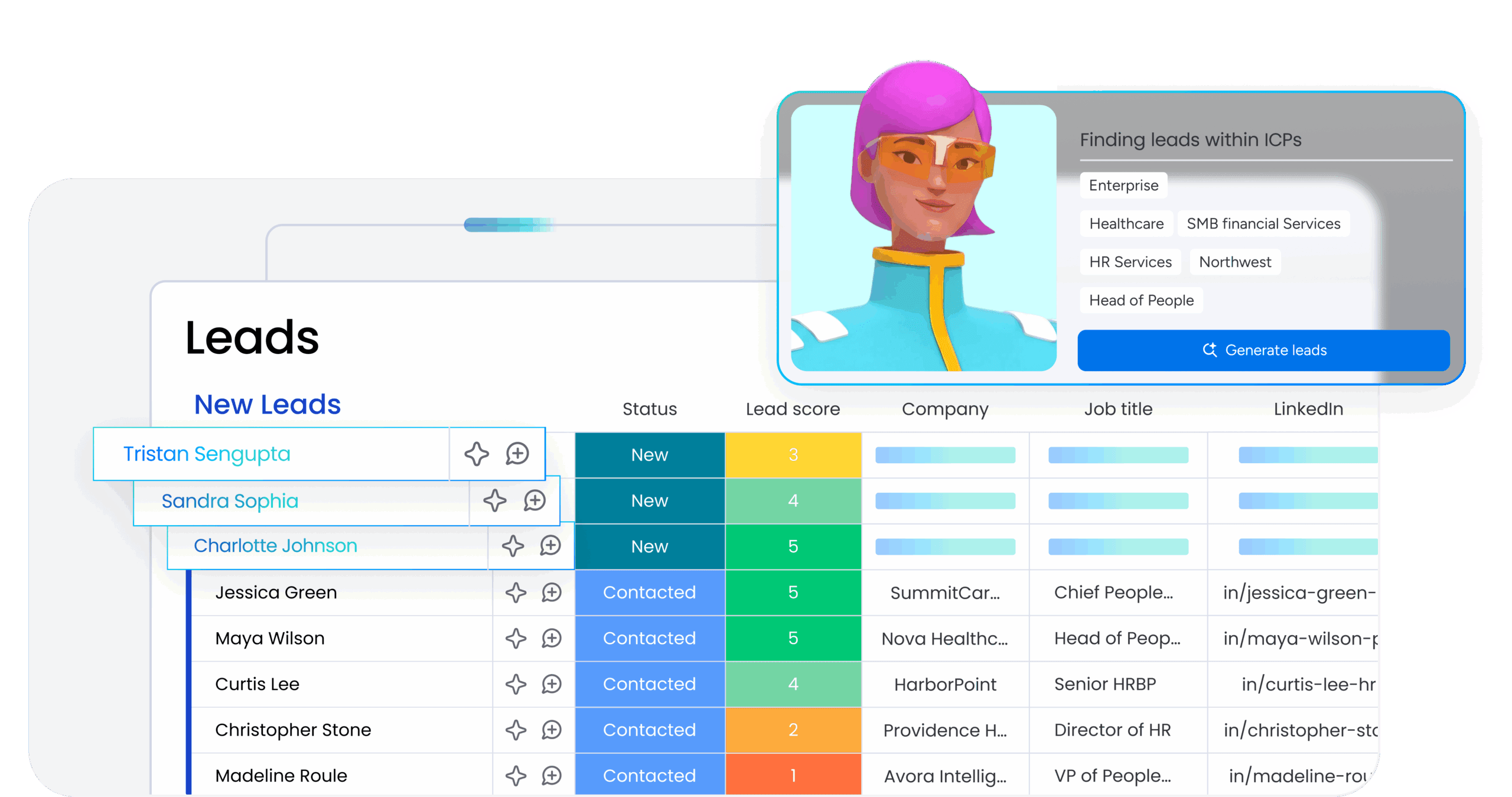
monday agents brings autonomous AI agents into the workspace where your teams already manage production schedules, quality checks, maintenance requests, and supplier follow-up. Instead of stopping at a notification, agents use the boards, docs, and PDFs you choose as context, then carry work forward across connected workflows.
That cross-functional design matters for ai for manufacturing because plant operations rarely stay confined to one team. A supplier delay hits production timing, maintenance planning, customer commitments, and executive reporting.
Use case:
Operations teams that need AI to act across departments for flagging production risks, coordinating supplier research, and capturing decisions from shift and project meetings. Agents operate where work already happens on monday.com, so people set direction while the system handles repeatable execution.
Key features:
- Cross-department context: Agents draw on your docs, PDFs, and boards to work from the same operational context your team uses every day.
- Autonomous execution across workflows: Agents assign owners, create updates, route work, and push processes ahead across connected workflows.
- Ready-made agents for common operational work: Expert agents like Risk Analyzer, Vendor Researcher, and Meeting Summarizer handle schedule risks, vendor research, and meeting follow-ups.
- Custom agents in 3 steps: Create plant-specific agents by describing the role, connecting knowledge and workflows, then testing and refining.
- Guardrails for control and transparency: Every action stays visible with defined permissions, simulation mode, and enterprise-grade governance including HIPAA, ISO/IEC 27001, ISO/IEC 27701, and SOC 2 Type II certifications.
Pricing:
- monday agents: Currently available through an early access program.
- monday.com platform: Agents operate on the monday.com Work OS, which offers a Free plan. Paid plans start at $9 per seat/month (Starter plan), billed annually.
- Agent Factory: A standalone product for building cross-channel agents, with separate credit-based pricing.
Why it stands out:
For manufacturing leaders, the question isn’t just whether AI can detect a signal. The bigger issue is whether it can help the business respond while staying aligned with operating rules, approvals, and deadlines.
- Turns signals into coordinated action: monday agents moves from detection into execution. A schedule risk triggers updates, owner assignments, notifications, and follow-up work across workflows instead of becoming another alert left in a queue.
- Works with the context behind the work: Agents are grounded in your boards, docs, and PDFs, so they operate with plant-specific instructions, quality standards, supplier requirements, and historical work records.
- Fits how teams already work on monday.com: With 225,000 organizations running work on monday.com, agents join existing processes instead of forcing teams into another system.
- Built for trust at scale: Permissions, audit trails, and review points keep you in control when manufacturing processes touch compliance, supplier decisions, and cross-site coordination.
2. IBM
IBM brings decades of industrial AI experience through its Maximo Application Suite, focused on maintenance and reliability workflows. The platform connects asset management, quality control, and supply chain intelligence in one system. It’s built for asset-intensive manufacturers across automotive, aerospace, electronics, and life sciences who need AI embedded directly in operations, not added on later. Recognized as a Leader in the 2025–2026 IDC MarketScape for AI-Enabled Asset-Intensive EAM Applications, IBM combines technical depth with the governance infrastructure large-scale operations expect.
Use case:
Large manufacturers with dedicated IT resources who want comprehensive AI transformation across asset management, quality control, and supply chain operations in one governed platform.
Key features:
- IBM Maximo Application Suite: Brings together condition-based maintenance, asset health scoring, and predictive failure detection across facilities. Maintenance teams act on actual equipment condition instead of fixed schedules, reducing unplanned downtime before production takes a hit.
- Visual inspection and defect detection: Computer vision models trained on production images identify defects, surface anomalies, and assembly errors at production speed. Mobile and edge inferencing options support real-time quality checks on the line.
- Supply chain intelligence: Reviews supplier performance, logistics data, and external signals to flag disruption risks before they reach the shop floor, giving operations leaders time to intervene instead of reacting late.
Pricing:
- Maximo Essentials (select capabilities): Starting under $40,000/year for certain packages, billed annually
- Standard and Premium tiers: Available for broader capability sets; pricing provided on request
- Client-managed software: Available alongside SaaS deployment options across IBM Cloud and major hyperscalers
- watsonx.ai Essentials: Pay-as-you-go consumption model; Standard plans starting around $1,050/month
- Enterprise configurations and MRO Inventory Optimization packages are quote-based; IBM Expert Labs service packages are available to accelerate deployment
Considerations:
- Getting full platform value typically requires existing IBM infrastructure or dedicated integration resources, which can extend implementation timelines if you’re starting from scratch.
- Entry-level pricing and platform scope can be a steeper commitment for smaller manufacturers than more focused point solutions.
3. SAP
For companies already running SAP, the appeal is straightforward. Manufacturing AI is embedded directly into ERP and supply chain workflows, not layered on through separate pipelines. The platform ties shop-floor execution to enterprise planning, quality, and supplier processes, a strong option for manufacturers who want AI built on existing operational data.
Use case:
Manufacturers already running SAP ERP who want AI embedded in their existing systems, from shop-floor quality inspection to enterprise demand planning, without building separate infrastructure.
Key features:
- AI-based visual inspection: Automatically identifies shape, assembly, and surface defects on the production line. SAP cites up to 90% higher flaw identification and up to 25% lower inspection costs compared to manual processes.
- Shop Floor Supervisor Agent (Joule): Detects resource breakdowns, proposes optimal action plans, and auto-reschedules production. SAP reports up to 50% higher supervisor productivity.
- AI-assisted production engineering: Reviews error logs, suggests fixes, and generates script processes from natural language inputs — reducing error-analysis and connectivity-analysis time by up to 20%.
Pricing:
- Base AI: Foundational AI features included in standard SAP cloud subscriptions at no additional cost.
- Premium AI: Advanced capabilities priced via SAP AI Units on a consumption or per-user-per-month basis.
- SAP Digital Manufacturing: Monthly list prices based on Cost-of-Goods blocks; regional pricing pages publish specific figures.
- Activation services: One-time professional services fees apply for initial setup and baseline activation.
Considerations:
- The value proposition is strongest for existing SAP customers. Net-new implementations require substantial planning, resources, and time before AI capabilities are fully active.
- The pricing model combines COGS-based entitlements with AI Unit consumption, which can be hard to forecast — particularly for teams used to straightforward per-device or per-line pricing.
4. Autodesk
Upstream design decisions shape downstream manufacturing results, and that’s where Autodesk applies AI most directly. The platform helps engineering and manufacturing teams identify expensive issues before the first part is made. With over 1.2 million people on Autodesk Fusion, it’s built for mechanical engineers, CNC programmers, and industrial designers who need CAD, CAM, and simulation working together in one environment. Generative design expands the range of manufacturing-ready options at a speed and scale manual methods can’t match.
Use case:
Manufacturers focused on optimizing complex parts and assemblies before production — where AI-driven design exploration and CAM automation reduce rework and shorten time to first article.
Key features:
- Generative design: AI creates design alternatives optimized against real manufacturing constraints — material usage, machining operations, and assembly requirements. It reveals possibilities human designers are unlikely to explore on their own.
- CAM optimization: AI-driven toolpath and machining analysis cuts cycle times, extends tool life, and improves surface finish. It evaluates cutting parameters and tool engagement across the full program.
- Drawing automation: Automatically produces views, dimensions, and annotations for 2D manufacturing drawings — speeding the handoff from design to production without manual documentation.
Pricing:
- Fusion (core): $57/month, billed annually
- Fusion for Manufacturing: $170/month, billed annually
- Fusion for Design: $183/month, billed annually
- Flex tokens (pay-as-you-go): Fusion at 3 tokens/day; Fusion Manufacturing Extension at 10 tokens/day
- Free 30-day trial available; personal use plan available with limited features
- Advanced AI and simulation capabilities may require higher-tier plans or extensions
Considerations:
- Generative design is included with Fusion for Design or accessed via the Fusion Simulation Extension, so teams on the core plan may need to upgrade to access the full AI feature set.
- The platform is strongest for design-heavy manufacturing operations; process manufacturing or assembly-focused environments where product design is already stable will see less direct value from its AI capabilities.
5. Microsoft
Across the manufacturing stack, Microsoft positions AI as an extension of infrastructure many companies already use. Built on Azure, Dynamics 365, and Copilot, the platform reaches from shop floor sensors to enterprise planning systems. It is aimed at discrete and process manufacturers invested in the Microsoft ecosystem who want to build on that base for AI-powered operations. With Gartner recognizing Microsoft as a leader in the 2025 Magic Quadrant for Global Industrial IoT Platforms, the company brings recognized industrial depth to large-scale deployments.
Use case:
Manufacturers already running Microsoft infrastructure who want to connect shop floor IoT data, supply chain planning, and enterprise operations through a unified AI-powered stack without introducing new vendors.
Key features:
- Azure IoT and AI: Captures sensor streams, production records, and quality data at scale, supporting reference architectures that handle more than 1 million IIoT events per hour with subsecond latency, enabling real-time anomaly detection and predictive maintenance across distributed factory networks.
- Dynamics 365 Supply Chain: Uses AI for demand forecasting, inventory optimization, and production scheduling inside the Dynamics environment, giving supply chain leaders one planning system grounded in live operational data.
- Copilot for manufacturing: Lets operators and plant managers ask natural language questions about production status, quality trends, and equipment health, with responses drawn from unified OT and IT data sources through the Factory Operations Agent.
Pricing:
- Azure IoT Operations: consumption-based pricing
- Azure OpenAI / AI Foundry: token-based pricing with provisioned throughput options
- Microsoft Fabric: capacity-based pricing; see Microsoft Fabric pricing for current rates
- Microsoft 365 Copilot: $30 per user per month, billed annually, for enterprise plans
- Azure savings options: 1–3 year Savings Plans, Reserved Instances, and Azure Hybrid Benefit are available to reduce compute costs
- Costs span multiple services; total spend varies based on AI model usage, data volume, and real-time analytics throughput
Considerations:
- Realizing full value typically requires significant data engineering work to unify OT and IT data, along with change management across plant locations, which means implementation timelines can extend well beyond initial deployment.
- Costs are distributed across multiple Azure services, making total spend harder to forecast without careful scoping and architecture planning upfront.
6. NVIDIA
For the most compute-intensive manufacturing AI use cases, NVIDIA often supplies the underlying engine. The company focuses on computer vision, digital twins, and autonomous robotics running at production speed, all supported by high-performance infrastructure. This makes it well-suited to industrial enterprises that need physics-accurate simulation and real-time inference on the factory floor. BMW Group’s deployment of NVIDIA’s virtual factory platform across 30+ sites, projecting up to 30% reduction in production planning costs, shows the scale this approach can reach.
Use case:
Manufacturers implementing computer vision, robotics, or digital twin initiatives that require high-performance AI computing for real-time inference and simulation.
Key features:
- Omniverse: A digital twin platform that creates physics-accurate virtual representations of production lines, enabling teams to test layout changes, robot behavior, and logistics workflows before any physical implementation.
- Metropolis: A computer vision platform for quality inspection and factory analytics that provides pre-trained models and development workflows for visual AI applications across manufacturing environments.
- Isaac: A robotics AI development platform that enables training and deployment of AI for autonomous robots, including simulation environments for validating robot behavior before live deployment.
Pricing:
- NVIDIA AI Enterprise: $4,500 per GPU/year (list price); cloud marketplace options available at $1/GPU/hour on demand
- Omniverse Enterprise: $4,500 per GPU/year; purchase includes NVIDIA AI Enterprise
- Free trial: 90-day evaluation license available for AI Enterprise; many SDKs are open-source, including Isaac Sim
- Hardware (DGX, RTX PRO Servers, IGX, Jetson): Quote-based pricing via partners and OEMs
- Optional add-ons: Business-Critical Support and Technical Account Manager services available at additional cost
Considerations:
- NVIDIA’s hardware-centric approach means manufacturers typically need AI development capabilities or established system integrator partnerships to implement solutions effectively.
- Cloud-native deployment (Metropolis microservices, NIM) runs on Kubernetes with GPU operators, which raises DevOps complexity for industrial IT and OT teams without dedicated infrastructure resources.
7. Arm
Not every manufacturing AI workload belongs in the cloud. Arm focuses on the processors that run directly inside sensors, controllers, and equipment on the factory floor, making edge deployment both practical and power efficient. With over 350 billion Arm-based chips shipped to date, the company offers a widely proven architecture for distributed AI processing. That reach across IoT and edge devices makes Arm a natural fit for manufacturers dealing with real-time requirements, limited connectivity, or tight power constraints.

Use case:
Manufacturers deploying AI at the edge — in sensors, controllers, and equipment — where power efficiency, real-time processing, and compact form factors are essential.
Key features:
- Arm Cortex processors: Energy-efficient AI processing for embedded systems that makes intelligent sensors and controllers possible without the power demands of traditional computing hardware.
- Ethos NPU: Neural processing units that accelerate machine learning workloads in power-constrained devices, supporting sophisticated AI inference, including transformer models, in compact form factors.
- IoT platform: Secure device management for manufacturing sensors that handles provisioning, updates, and security for fleets of connected devices across facilities.
Pricing:
- Arm Flexible Access: Membership fee listed publicly; design rights included with per-project fees due at tape-out
- Arm Total Access: Comprehensive subscription including manufacturing rights; quote-only via Arm sales
- Arm Development Studio Gold: $4,820/year per user
- Keil MDK v6 Essential: $99/month per user
- Keil MDK v6 Professional: $199/month or $1,999/year per user
Considerations:
- Arm licenses architecture rather than complete solutions, so manufacturers coordinate across chip vendors, device manufacturers, and software partners to reach a finished implementation.
- IP licensing beyond the public Flexible Access membership is quote-only, making total cost structures harder to assess without direct engagement with Arm’s sales team.
8. Hitachi
Industrial operators often value domain experience as much as software capability, and that is where Hitachi differentiates itself. Through its Lumada AI platform, the company brings more than a century of equipment expertise to manufacturing environments. The platform is aimed at asset-heavy industries — discrete and process manufacturers, energy, and mobility — where operational technology carries as much weight as digital systems. Its “OT × IT × Products” model is designed to narrow the distance between physical equipment and digital intelligence in ways pure-software vendors often struggle to match.
Use case:
Manufacturers seeking AI solutions from a vendor with deep operational technology and industrial equipment expertise, particularly those who need hands-on implementation support from edge to cloud.
Key features:
- Lumada Manufacturing Insights: Pulls together equipment and KPI data across the plant floor to provide real-time visibility, anomaly detection, and production optimization recommendations based on actual operating conditions.
- Predictive maintenance and asset health monitoring: Uses equipment sensor data and operational history to forecast maintenance needs before failures occur, helping teams optimize schedules and reduce unplanned downtime.
- HMAX Industry AI agents: Conversational AI assistants that combine manuals, live equipment status, and service expertise to guide maintenance and troubleshooting — directly addressing the skills gap on the factory floor.
Pricing:
- Quote-based pricing: Hitachi does not publish list pricing for Lumada or HMAX Industry solutions; all engagements are scoped individually.
- Implementation typically includes professional services through Hitachi’s ecosystem, covering MES, SCADA, and ERP integration.
Considerations:
- Quote-only pricing and a co-creation delivery model can extend procurement and deployment timelines compared to off-the-shelf SaaS platforms.
- Portfolio navigation across Hitachi group companies — including Hitachi Vantara, JR Automation, and Hitachi High-Tech — can be complex for first-time buyers, even as the company works to simplify its go-to-market approach.
9. Boston Dynamics
Some manufacturing environments are too variable for fixed automation, which is where Boston Dynamics enters the picture. Its AI-powered mobile robots can climb stairs, move around obstacles, and operate in the shifting conditions of a live factory floor. With over 1,500 Spot robots deployed across more than 35 countries, the company serves manufacturers, energy firms, and logistics operators that need continuous monitoring without exposing people to risk. Orbit, its software platform, brings robot data, AI-driven inspections, and fleet management together in one enterprise-grade system.
Use case:
Manufacturers that need autonomous mobile robots to handle inspection, equipment monitoring, and data collection in hazardous or hard-to-access environments where fixed automation falls short.
Key features:
- Autonomous facility inspection: Spot navigates manufacturing facilities on scheduled missions, capturing visual, thermal, and acoustic data from equipment and infrastructure — with customers like Michelin running seven missions per day across approximately 700 assets per mission, generating 72 work orders from detected issues.
- AI Visual Inspections via Orbit: The Orbit platform uses vision-language models to perform gauge readings, sight-glass checks, and safety hazard detection, with continuous cloud-based model updates that improve accuracy over time without requiring local software changes.
- Multi-modal anomaly detection: Thermal hot-spot identification, acoustic leak detection, and acoustic change tracking work together to surface equipment issues early, with customers reporting a return on investment within two years for acoustic leak detection programs alone.
Pricing:
- Hardware (Spot, Stretch) and software (Orbit) are sold through direct enterprise sales; no public pricing tiers are available
- Orbit is subscription-based with annual terms and auto-renewal
- Hardware includes optional Spot Care service plans, with discounts available for multi-year and multi-unit coverage
- Add-ons such as payloads (thermal imagers, acoustic sensors, Spot Cam 2), docking stations, and on-premises Site Hub or VM deployment are priced separately
- Taxes and duties are not included in quoted prices
Considerations:
- AI Visual Inspections are powered by a vision-language model, and Boston Dynamics discloses that outputs should be independently verified — an important consideration for safety-critical manufacturing environments.
- Deployments at scale require reliable wireless network infrastructure on-site; some cloud-based AI features also depend on consistent connectivity, which may require additional preparation for restricted or air-gapped facilities.
10. DMG MORI
In precision machining, AI is often most valuable when it is embedded at the machine itself. DMG MORI takes that approach by integrating AI directly into CNC equipment used across aviation, automotive, medical, and semiconductor manufacturing. The focus is on adaptive process control and in-process quality assurance where value is created in real time. With operations across 44 countries and 17 production plants, the company pairs those capabilities with the global service depth needed to support large and complex equipment fleets.

Use case:
Precision manufacturers seeking AI capabilities integrated directly into machining equipment for process optimization, adaptive control, and in-process quality assurance.
Key features:
- CELOS digital platform: Monitors cutting conditions, tool wear, and process parameters in real time to recommend and implement machining improvements, reducing the manual effort needed to sustain optimal output.
- Adaptive process control: Automatically adjusts feed rates, spindle speeds, and cutting depths based on actual cutting conditions, compensating for material variation and tool wear without operator intervention.
- In-process quality assurance: Measures parts during machining and applies AI-driven corrections to maintain dimensional accuracy, reducing scrap rates and rework before parts leave the machine.
Pricing:
- AI in Production (TULIP): Quote-based; contact DMG MORI for a free potential analysis
- Production Planning and Control — Starter: €599/month (annual billing, up to 9 machines or workstations)
- Production Planning and Control — Extended: €10 per additional resource/month (annual billing)
- 30-day demo: Available for Production Planning and Control
- Total program cost may include connectivity options, CELOS X configurations, CAM software seats, and hardware add-ons such as camera systems for AI Chip Removal
Considerations:
- AI capabilities are tied to DMG MORI equipment, so manufacturers with mixed equipment fleets will need additional integration work to achieve unified visibility across all machines.
- The embedded Edge AI Board is available on machines produced after 2025; retrofit options for legacy equipment are not publicly specified, which may affect planning for existing fleets.
Benefits of artificial intelligence in manufacturing
Manufacturing teams do not lack data. What is harder is converting that volume of information into action quickly enough to matter. AI serves as a co-pilot by linking equipment signals, supply chain changes, and production schedules so people can make faster, more informed decisions. Instead of waiting for problems to surface fully, teams can act earlier. Cross-department movement is where the payoff grows. Once insights travel immediately between functions, teams stop working from isolated alerts and start responding from a shared operational picture.
- Predict maintenance earlier: AI identifies patterns in machine behavior before breakdowns hit throughput, helping maintenance teams schedule work at the right moment.
- Catch quality issues sooner: Vision systems and anomaly detection can flag small defects while products are still on the line, protecting yield and customer satisfaction.
- Adjust production plans faster: Supply chain signals, material availability, and equipment status can feed directly into scheduling decisions without waiting on manual updates.
- Coordinate responses across teams: A risk in one workflow can trigger action in maintenance, production, procurement, and leadership so work keeps moving with fewer handoffs.
Prediction alone is not the full value. The real advantage comes from turning those predictions into action that improves output, consistency, and resilience across the business. That’s where monday agents makes a difference — by connecting AI insights directly to coordinated execution across production, quality, maintenance, and supply chain workflows.
Try monday agentsWhy manufacturing AI investments fall short of expectations
A manufacturing AI project can look promising on paper and still disappoint in practice for one simple reason: a prediction on a dashboard does not coordinate action on its own. A system may correctly identify a motor that is likely to fail, but the business benefit only appears when maintenance, production, and materials teams can respond together.
That disconnect between insight and execution creates hidden costs. Overnight reports, siloed data, and disconnected workflows leave teams lagging behind events, which often results in larger inventory buffers and slower responses to quality or supply disruptions.
In most cases, the breakdown shows up in familiar ways:
- Insights stay trapped in one department: One team sees the signal, but other teams do not get the context or next steps they need.
- Workflows are not connected to the alert: The AI identifies a risk, but owners, approvals, and follow-up actions still depend on manual coordination.
- Data arrives too late: If updates come after the shift, after the batch, or after the delivery window, teams lose the opportunity to act at the right moment.
- Teams optimize for different goals: One function may reduce local risk while another absorbs the operational cost, creating friction instead of progress.
The companies seeing meaningful results are not just the ones with sophisticated models. They are the ones linking AI recommendations directly to cross-team execution, so each signal can trigger an operational response.
How to evaluate AI platforms for manufacturing operations
The right AI platform should work with your systems, your data, and your people without creating a second job for whoever has to manage it. The evaluation is less about futuristic ambition and more about practical problem-solving. Whether the goal is predictive maintenance or faster response to supply chain disruptions, what matters is making decisions with better context and moving on them sooner.
A useful process keeps attention on fit, trust, and rollout speed. That way, teams can compare platforms without getting lost in long feature lists.
| Evaluation area | What to ask | Why it matters |
|---|---|---|
| Data fit | Can it connect to MES, ERP, quality logs, docs, and PDFs you already use? | Faster time to value and less integration friction |
| Governance | What permissions, audit trails, and review points are available? | Stronger control for regulated operations |
| Rollout plan | How long to first live workflow, and what support is included? | Faster adoption and more predictable ROI |
Assess the data and systems you already have
Useful manufacturing signals are already being generated through equipment sensors, quality logs, and business systems. A strong AI platform works with what you already have and helps your team improve from there. The central question is how easily the platform can combine manufacturing and business systems into one shared operational view. Can it handle missing fields and inconsistent records? Can it connect to your current MES and ERP systems? The best partners meet your operation as it exists now, making it easier to build momentum first and expand based on proven results.
Verify security, compliance, and trust controls
In manufacturing, trust has to be earned. If AI is going to influence maintenance, quality, or supplier decisions, teams need confidence in how recommendations are generated and how actions are controlled. That means looking past headline performance claims and examining governance in detail. Check for complete visibility into permissions, audit history, review controls for high-stakes actions, and vendor support for the certifications and governance standards your business requires. The right platform should feel accountable, not opaque.
Plan for a fast and successful rollout
Even a strong platform needs a rollout your organization can absorb. Long implementation cycles tend to sap momentum, while early wins build trust and encourage adoption.A successful rollout starts with realistic scope, a concrete timeline, and support that matches the complexity of the operation. Confirm there’s a clear day-one plan, a timeline to production value, dedicated support during onboarding and integration, and customer references from manufacturers running similar operations. Rollout speed tells you how naturally the platform fits the way your teams already work.
How monday agents turns manufacturing AI insights into coordinated action
Many manufacturing AI platforms are good at identifying a signal, and then the process stalls. A delay surfaces in one workflow, a quality issue appears elsewhere, and your team is still left coordinating across operations, procurement, maintenance, and leadership to get a response underway.
The platform addresses that execution gap by working inside the same AI Work Platform where your teams already manage the work. Agents operate across connected workflows, turning isolated signals into coordinated responses that move production, quality, maintenance, and supply chain work forward together.
AI-powered context across your operation
Agents draw on the boards, docs, and PDFs you connect as knowledge, so they understand how a production risk affects related projects, supplier timelines, and downstream execution. A quality alert can be assessed against schedules, supplier records, operating procedures, and project updates already on monday.com. That means responses are grounded in the full operational picture, not just a single data point.
Autonomous execution across departments
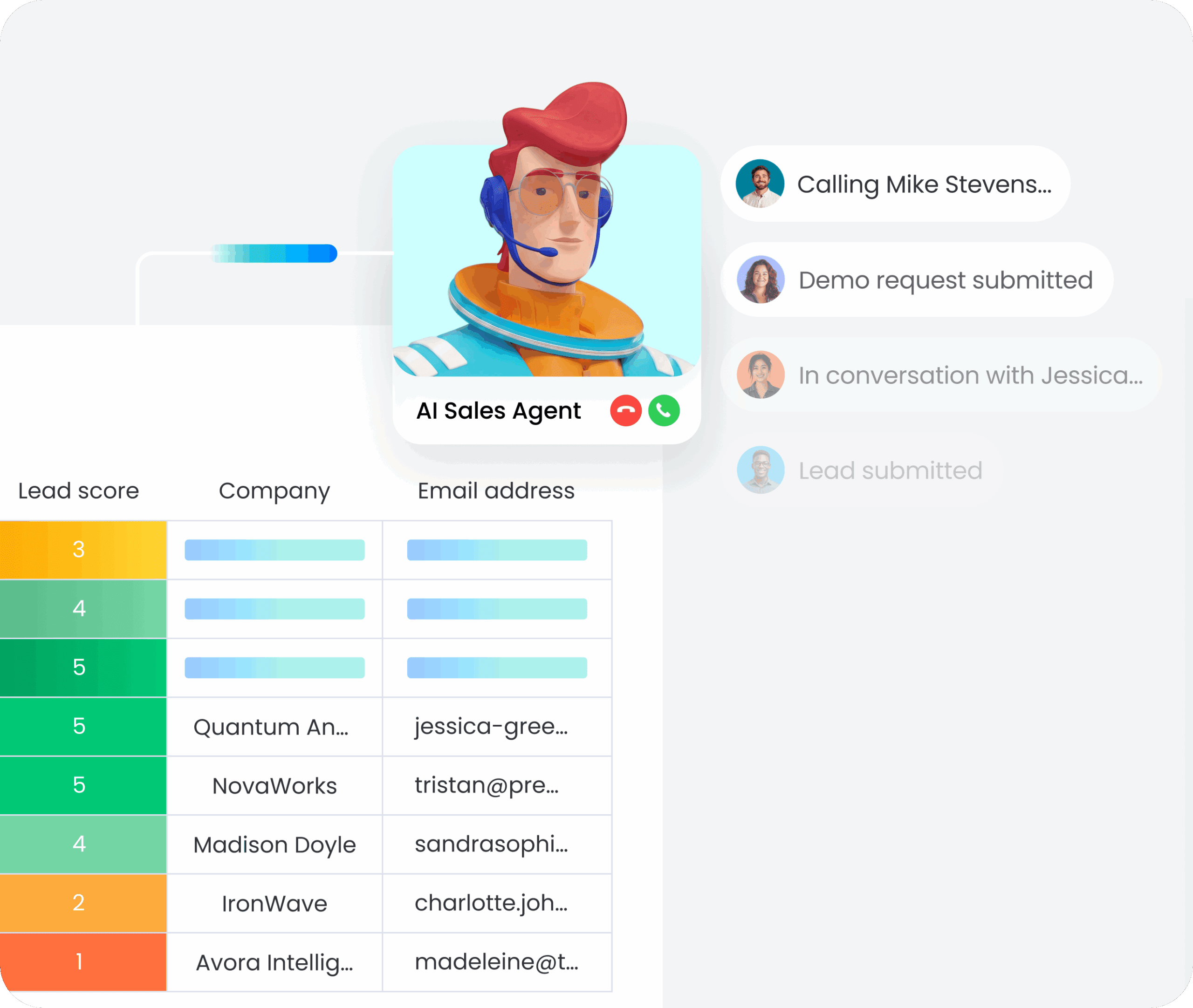
Agents don’t stop at recommendations. They can assign owners, create updates, route work, and push processes ahead across connected workflows without manual handoffs. When a supplier delay hits production timing, agents can update schedules, notify stakeholders, and trigger follow-up actions across procurement, operations, and leadership in one coordinated response.
Intelligent workflow automation

AI capabilities extend across the work your teams do every day. Agents can turn operations reviews into documented follow-ups with owners and status updates, compile supplier details when shortages affect production timing, and surface schedule and dependency impact before issues spread across launches or customer commitments. The automation adapts to your processes instead of forcing teams into rigid templates.
Governed AI with full transparency
Control stays firmly with your team. The platform is built with permissions, audit trails, simulation mode for human review, and enterprise-grade compliance controls, so AI can support execution in a way that feels accountable and practical. Every action stays visible with defined permissions, giving you confidence that AI operates within your operational and compliance boundaries.
What successful manufacturing AI looks like
The best manufacturing AI helps teams respond with the right context, the right owners, and the right timing across production, quality, maintenance, and supply chain. That is where monday agents stands apart. It turns signals into coordinated execution inside the same monday.com workspace where teams already manage work, allowing AI to support the business in a way that feels practical, visible, and governed.
Try monday agentsFAQs
What infrastructure do I need before implementing AI in manufacturing?
Start with accessible, consistent data from systems you already use, such as MES or ERP platforms. The exact setup varies by project, but a dependable data foundation is the most important place to begin.
How long does it take to see ROI from manufacturing AI?
Pilot projects often produce results within a few months, while scaled operational ROI typically takes 6–12 months. In many cases, your team’s readiness to adopt new workflows is the biggest factor in how quickly value appears.
What are the most common reasons manufacturing AI projects fail?
These projects usually stall because of weak data quality or a disconnect between AI insights and the team’s response. Success depends on creating a strong connection between a prediction and the coordinated action that follows.
How do I prepare frontline workers for AI adoption?
Emphasize that AI is there to augment your team's capabilities and help them achieve more. Bringing frontline team members into the design and rollout process helps ensure the solution reflects how work actually happens each day.
How does monday agents approach AI differently for manufacturing operations?
monday agents are built for cross-team collaboration, connecting workflows across production, quality, and maintenance so each action is coordinated. That gives you a governed and transparent way to automate processes with full visibility and control.
 Get started