


New managers face a familiar headache: the decision-making skills that earned your promotion were individual, but your effectiveness now depends on how well you decide for a team. You’ll make dozens of calls in a week, some minor and some that shape a whole quarter, often without any training on how to do it well.
This guide walks through key decision-making tips you can start applying today, along with the style managers rely on, the mistakes that repeat until they cost you, and the tools that put live data and risk signals in front of you.
Key takeaways
- Treat every decision as data. Log what you chose and how it turned out, then review the pattern once a month to learn faster.
- Gather evidence deliberately, and watch for the correlation trap: correlation isn’t causation.
- Give yourself 3-4 real options, then commit before extra choices stall you in analysis paralysis.
- Pull your company’s values and outside perspectives into hard calls to counter groupthink and blind spots.
- monday AI Workspace puts real-time dashboards and AI risk insights in front of you, so you decide on live signal instead of stale reports.
What is decision-making in management?
Decision-making in management means identifying a problem or opportunity, then choosing the path most likely to reach the outcome you want, based on clear criteria rather than guesswork. It sounds simple, but it’s the work that fills a manager’s day. An approved budget is a decision. So is a resolved conflict.
A structured decision-making process turns that definition into a habit you can repeat. Good decisions put resources where they earn the best return and build trust because your team sees consistent reasoning behind them. Poor ones waste money and erode confidence in your leadership.
Most managers start from intuition: a gut read shaped by past experience. Intuition is fast and sometimes right, but it hides bias and can’t be checked by anyone else. Evidence-based decision-making adds a layer of proof on top of instinct, and it’s now the norm managers are expected to work from. The World Economic Forum’s Future of Jobs Report 2025 ranks analytical thinking the most sought-after core skill, with seven in ten employers calling it essential. Managers are expected to reason with evidence, not just opinion.
7 decision-making tips for new managers
The practical tips below are designed to work in the real conditions new managers face: tight deadlines, incomplete information, and teams watching how you reason through hard calls.
1. Learn from experience
Treat decision-making like a science. Record what you chose, how you arrived at it, and how things turned out.
You don’t need this level of detail for every choice, but good governance as a new manager means keeping a record of your critical project decisions. Set aside time to reflect on recent ones, giving equal attention to a decision that went well and one that didn’t.
Before you make a new call, check it against the past. Has a previous decision shared key traits with what’s in front of you now? It’s tempting to treat every decision as unique and skip the value of experience, but wisdom comes from learning a pattern and applying it to the specific case at hand. Watch for the differences too. A decision that turned out badly might not point to a flaw in how you decided at all.
To make this stick, build a lightweight decision journal. For each meaningful call, log the decision, your rationale, the options you rejected, and the expected outcome in a few sentences. Once a month, review the entries and compare what you expected against what happened. This turns memory into a pattern you can act on. A new operations manager who journals for one quarter often spots a recurring habit, like consistently underestimating how long approvals take, and adjusts the next 10 decisions because of it.
2. Use data carefully and extensively
When you face a difficult decision, start by asking what data it requires. That question pushes you past the data already in front of you and toward a complete picture of the evidence. It’s easy to focus only on information that supports your view and ignore what contradicts it. And remember: data often shows a correlation between two things, but correlation isn’t causation. Don’t fall into that trap.
Data-driven decision-making has moved from a nice-to-have to a baseline expectation, and your team increasingly expects you to back a call with evidence rather than a hunch. The problem is that data usually lives across spreadsheets and disconnected tools, so pulling a clear picture eats hours you don’t have.
This is where real-time dashboards and AI summaries change the math. monday AI Workspace pulls work data into a single live view and generates plain-language summaries, so you see the full evidence base in one place instead of piecing it together by hand. Faster access to complete, current data means you spend your time judging the decision rather than assembling the inputs for it.

3. Entertain doubt and test your assumptions
There’s always doubt: you will never be as precise as you’d like to be. So, you must stop pretending that you’re more confident than you actually are. Always embrace the unknowns and accept that you could be wrong.
We are not advocating for decision paralysis, or analysis paralysis. Instead, you should test every decision you make against various scenarios. Ask: what if this choice is completely wrong? Think about how the decision could play out while considering aspects that could frustrate it. Be sure to test it against alternative decisions and against previous scenarios, and if it still appears to be the best choice, go with it.
A simple way to structure the doubt is a pre-mortem. Before you commit, imagine it is three months later and the decision failed, then write down every plausible reason why.
4. Give yourself options
Here’s a simple idea worth keeping in mind: your probability of success rises with the quality and number of options you seriously consider. When you only see one path, you are not really deciding, you are reacting. Generating a few genuine alternatives forces you to compare tradeoffs instead of defending the first idea that came to mind.
In practice, aim for 3-4 realistic alternatives. One option means you have no choice at all. Two options trap you in a yes-or-no dilemma. Three or four give you a real spread to weigh without overwhelming you. Push past four or five and the effort flips: you start worrying more about the good options you might leave out than about picking a strong one.
So generate widely, then narrow deliberately. List every reasonable path first, cut the weak ones quickly, and keep the short list you can actually evaluate against your criteria. That balance is where good decisions live, between too few options and too many.
5. Draw your company’s values into the decision
When your company’s values are well-defined and visible, they can settle some of the toughest calls you’ll face. Values shape how your team pursues innovation, handles conflict, treats customers, and works with each other. Pull those values into everyday decisions, not just the big ones, and make sure your team understands how they apply too.
Values matter most when two options both look defensible on paper. When the spreadsheet is a tie, the choice that better reflects how your company treats customers or teammates is usually the right one. A manager weighing a faster launch against a more thorough quality check can lean on a stated value like “earn trust” to break the deadlock with confidence.
6. Argue every option out
Encourage rigorous argument and debate. Assign team members to build the case for each option, and assign others to find the flaws in every argument. Track the reasoning so you understand each choice from more than one angle: is it backed by data, by how that data gets interpreted, or by values and priorities that differ from your own?
When a decision is high-stakes, assign someone to argue against your preferred option and pressure-test it as hard as they can.
This is the difference between inquiry and advocacy. In advocacy, people defend the position they walked in with. In inquiry, the group treats the decision as a shared problem to solve together, and it produces better calls, but only when people feel safe enough to disagree. Psychological safety is what lets a junior team member challenge your preferred option without fear, and that challenge is often exactly what saves you from a costly mistake. Build that safety in practical ways: thank people who flag risks, and structure debate so dissent is expected rather than punished.
7. Bring in outsiders
Outsiders sharpen your decisions because they think differently and know less about the situation, which means they ask the questions you’ve stopped noticing. Take the time to answer those questions and you’ll learn something from them.
They also bring objectivity. Outsiders care more about getting the decision right than about protecting relationships or egos, which makes them a natural check on groupthink. When people inside a group worry about causing conflict, they slow down decisions that need to move. Outsiders don’t carry that same pressure.
Decisions get harder as you take on more responsibility. As a manager, you’ll eventually decide where to deploy resources and who to hire, and you’ll run into ethical calls where the right answer isn’t obvious. Improving your decision-making is a core part of growing into the role, worth revisiting throughout your career.
Common decision-making styles managers should know
Managers lean on different styles depending on the stakes, the time available, and how much input they need. Knowing your default style helps you notice when it fits the moment and when you should switch. The styles below are the ones most commonly used to describe how managers reason and commit.
| Decision-making style | How it works | When to use it |
|---|---|---|
| Directive | You decide quickly using what you already know, with little outside input | Urgent, low-ambiguity calls where speed matters more than consensus |
| Analytical | You gather substantial data and weigh options carefully before committing | Complex, high-stakes decisions where the cost of being wrong is high |
| Collaborative | You involve the team and build a decision from shared input | Choices that need buy-in or draw on knowledge spread across people |
| Conceptual | You take a broad, long-range view and welcome creative alternatives | Strategy and planning where many futures are possible |
| Behavioral | You prioritize how a decision affects people and team relationships | Sensitive calls where morale and trust are central |
Each style has a natural home. Match the approach to the decision rather than forcing every call through the same one. Here are the styles worth recognizing, with a quick definition and the situation each one suits best.

Beyond these, managers also differ in when they engage a problem at all. Some are avoiding, delaying decisions in the hope that issues resolve themselves. Some are problem-seeking, actively hunting for issues to fix before they grow. Others are problem-solving, stepping in once a problem clearly appears. The strongest managers stay problem-seeking on the risks that matter and resist the pull toward avoidance when a call feels uncomfortable.
Common decision-making mistakes to avoid
Even sound reasoning can be derailed by a few predictable traps. Most bad management decisions do not come from a lack of intelligence. They come from patterns that repeat quietly until they cost you. Learning to name them is the first step to catching them in yourself and your team.
The mistakes below show up across teams and industries. Read each one as a warning sign to watch for the next time a decision feels harder than it should.
- Analysis paralysis: to avoid analysis paralysis, set decision criteria upfront, cap your options at three or four, and give yourself a deadline to commit. Endless research feels productive but often just delays the call.
- Groupthink: when a team values harmony over honesty, dissent gets buried and weak options survive. Invite challenge and assign someone to argue the opposing case.
- Confirmation bias: we favor evidence that supports what we already believe. Deliberately seek data that could prove you wrong before you commit.
- Acting on incomplete or outdated data: a decision is only as good as the information behind it. Stale spreadsheets and half-updated reports lead to confident calls built on the wrong facts.
- Emotional bias: stress, ego, and time pressure push you toward the choice that feels safe rather than the one that is sound. Name the emotion, then return to your criteria.
Several of these traps share a root cause: risk that surfaces too late to act on. AI risk detection helps here. An agent like monday’s Risk Analyzer scans schedule, dependency, and workload signals across projects in real time and flags trouble early, so you respond to a genuine signal instead of guessing after the fact.
How monday AI Workspace supports faster, more confident decisions
Better judgment is the foundation, but the right platform makes that judgment repeatable. monday AI Workspace brings data, risk signals, and AI support into the same place your team already works, so decisions rest on live evidence rather than scattered files. Here is how the pieces fit together for a manager who wants to decide faster without lowering quality.
- Real-time dashboards and reporting. No-code dashboards turn work data from across your team into a single live view of progress, resource use, and timelines. AI-generated summaries and risk alerts shift you from hindsight reporting toward foresight, so you spot what needs attention before it becomes a problem instead of reading about it afterward.
- AI risk insights. The Risk Analyzer agent detects schedule, dependency, and workload risks across projects in real time and alerts the right owner. Rather than discovering a blocked dependency in a status meeting, you get the signal while there is still time to reroute work or reset an expectation.
- AI Blocks. AI Blocks summarize long threads and documents and extract the key details buried inside them. When a decision depends on a dense contract or a 50-message thread, you gather the relevant evidence in minutes instead of an afternoon.

monday MCP. monday MCP connects trusted AI assistants like Claude, ChatGPT, and Copilot to your monday data so they can securely read and analyze it within your existing permissions. You can ask a question in plain language and get an answer grounded in your real work, without exporting anything or loosening access controls.
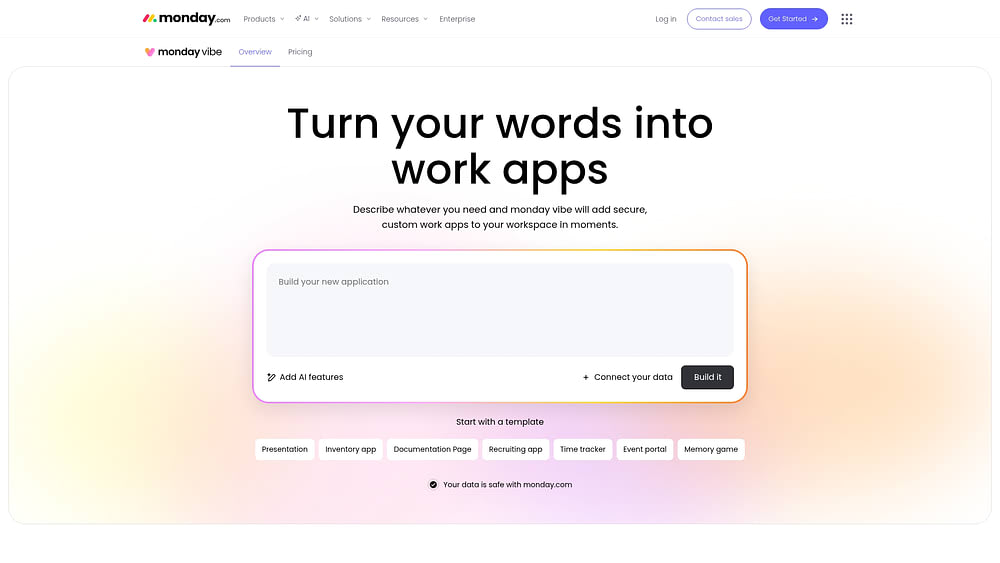
monday vibe. With monday vibe, you can build a custom decision-scoring or options-comparison app from a plain-language prompt. A manager who repeatedly weighs vendors or candidates against the same criteria can stand up a scoring tool in minutes, making the process consistent for the whole team.
The contrast becomes clear when you compare how a single management decision gets made across common approaches. The table below shows what changes as you move from instinct alone to a connected platform.
Turn better decisions into stronger team results
Strong managers are not the ones who never doubt themselves. They are the ones who turn judgment into a repeatable practice: learning from each outcome, gathering real evidence, weighing a few solid options, and inviting honest challenge before they commit. Applied together, these decision making tips for managers compound over a career, and they matter most in the early years when every call still feels heavy.
The next layer is visibility. When you can see live work data and get early warning on risk, you make decisions faster without trading away quality, and your team feels the steadiness in how you lead. That is the payoff of pairing sharper judgment with a platform that keeps the full picture in front of you, so better decisions turn into stronger, more consistent results.
FAQs
What is the most important decision-making skill for a new manager?
Learning from your own outcomes is the highest-leverage skill. When you record decisions and review how they turned out, every future call gets sharper because you are reasoning from evidence rather than memory.
How can managers make decisions faster without lowering quality?
Set your criteria upfront, cap options at three or four, and give yourself a deadline to commit. Live dashboards and AI summaries speed things further by putting complete, current data in one place so you judge instead of assemble.
What are common decision-making mistakes managers make?
The frequent traps are analysis paralysis, groupthink, confirmation bias, acting on outdated data, and emotional bias. Naming the one you are prone to is the first step to catching it before it costs you.
How does monday AI Workspace help managers make better decisions?
It combines real-time dashboards with the Risk Analyzer agent, so you see live work data and get early alerts on schedule and workload risks. That means you act on current signal and commit with more confidence.
 Get started