

The skills that made you great at your job aren’t the same ones that make you great at leading people. Good management is about organizing work clearly, coaching people toward their potential, and connecting daily tasks to goals that actually matter — and those habits can be learned.
Below, we break down the ten traits that consistently separate strong managers from the rest and practical ways to build each one. We’ve also gathered advice from people in senior leadership positions so you can start strong instead of guessing.
Key takeaways
- A good manager coaches people and connects their work to clear goals, rather than simply assigning tasks and chasing status updates.
- The most important characteristics of a good manager include clear communication, transparency, emotional intelligence, delegation, and accountability.
- Management skills are learnable through feedback, mentorship, and deliberate practice, not fixed traits you’re born with.
- Common mistakes like micromanaging, avoiding hard conversations, and setting unclear goals quietly erode trust and engagement.
- Platforms like the monday.com AI Work Platform give managers real-time visibility, workload balancing, and AI risk alerts so they can be better leaders.
What makes a good manager
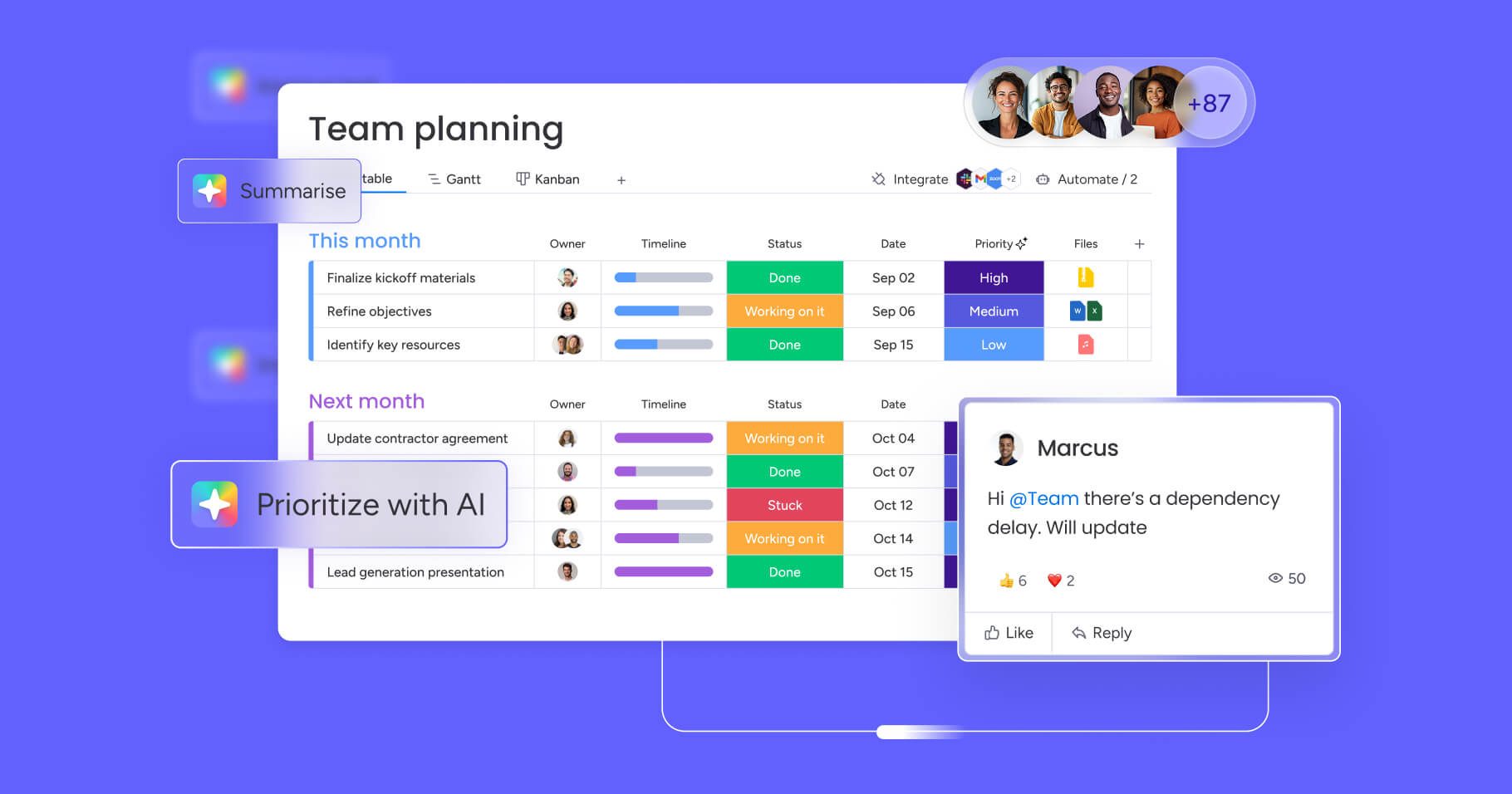
A good manager organizes work, develops people, and keeps a team aligned around shared goals. They set clear expectations, remove obstacles, and connect daily tasks to bigger outcomes. While individual contributors are measured by their own output, managers are measured by what their team produces and how the team grows. That influence matters: Gallup research has long found that managers account for a large share of the variance in team engagement.
Management and leadership aren’t the same thing. Team management is about process: planning work, coordinating people, tracking progress, and delivering results. Leadership is about vision and influence: setting direction and inspiring people to move toward it. The strongest managers blend both, handling operations well while giving people a reason to care.
Good manager skills fall into 2 groups:
- Operational: Planning, delegation, decision-making, follow-through
- Human: Communication, empathy, coaching, recognition
You need both. A manager brilliant at planning but weak on connection will struggle to keep a team engaged. A warm, well-liked manager who can’t organize work will struggle to deliver. What makes a good manager is holding both sides at once.
10 characteristics of a good manager
The most important qualities of a good manager come down to how they communicate, how they treat people, and how they get work done. No one is born with all of these, and no manager nails every one of them every day. Each trait below includes what it looks like in practice and a simple way to start strengthening it.
1. Clear communication
Good managers set clear expectations, give and receive feedback openly, and keep people informed. Communication also runs the other way: Active listening turns talking into understanding. Give people your full attention, paraphrase what you heard, and ask open questions like “what would help here?” instead of jumping straight to answers.
Example: A manager who notices confusion after assigning a project takes 5 minutes to clarify the goal, the deadline, and what success looks like, then asks “what questions do you have?” People who feel heard raise problems early, when they’re still small enough to fix.
2. Transparency
Transparency means being honest about the why behind decisions, especially the hard ones. Share strategic plans, customer feedback, and the reasoning that shaped a choice. When people understand the context, they trust the outcome, even when it isn’t the one they wanted.
Example: Instead of announcing a sudden priority shift, a transparent manager explains what changed, why it matters, and how the team’s work fits into the new direction.
3. Emotional intelligence and empathy
Emotional intelligence is the ability to recognize and manage your own emotions while reading and responding to the emotions of others. It shows up as noticing when someone’s unusually quiet in a meeting, sensing tension before it boils over, or staying calm when a project goes sideways.
Example: A manager who notices a normally reliable teammate missing deadlines has a private conversation and discovers the person is drowning in low-value work that can be reassigned. That single act of empathy protects both the person and the project.
4. Delegation and empowerment
Delegation means handing over the outcome and trusting the person to find the path. Define what good looks like, provide the context and resources, then get out of the way. People grow when they own real decisions, and they disengage fast when every choice is second-guessed.
Example: Instead of dictating every step of a presentation, a manager shares the goal, the audience, and the key message, then lets the team member build it their way.
5. Coaching and team growth
Great managers act as coaches, not just evaluators. That means having regular development conversations that aren’t tied to a specific deliverable. When people see that you’re invested in their careers, not just their output, they bring more of themselves to the work.
Example: A manager sets aside time each quarter to ask “what do you want to get better at?” and then creates opportunities for that person to practice the skill.
6. Accountability and decisiveness
Good managers take responsibility for outcomes, including the ones that go wrong. They look at what the team can learn rather than searching for someone to blame. Decisiveness means gathering enough input, making a timely call, and communicating the reasoning clearly so the team can keep moving.
Example: When a launch misses the deadline, an accountable manager says “here’s what I could have done differently” in the postmortem, which gives the team permission to own their mistakes too.
7. Recognition and appreciation
Acknowledging accomplishments, both privately and publicly, builds a strong team culture. Call out wins in team meetings, share credit widely, and celebrate milestones. A quick, specific “thank you” often means more than a formal reward months later.
Example: A manager who sees someone solve a tough problem sends a message in the team channel: “Great work on the client issue today—your quick thinking saved us hours.”
8. Conflict resolution
Teams will always have conflicts, and managers need to resolve them fairly and quickly. Let people air their perspectives, stay neutral while you understand both sides, and foster an environment where individuals come together for the good of the team.
Example: When 2 teammates disagree on an approach, a manager facilitates a conversation where each person explains their reasoning, then guides the group toward a decision everyone can support.
9. Adaptability
Adaptable managers treat change as a normal part of the job rather than a disruption to endure. They stay calm when plans change, communicate what’s known and what isn’t, and help their team adjust without losing momentum.
Example: When a client shifts priorities mid-sprint, an adaptable manager quickly regroups the team, explains the new direction, and adjusts the plan while keeping everyone focused.
10. Purpose and impact
People want to feel that their work matters. Help them see how their effort connects to the team’s goals and to outcomes that matter. Connecting daily tasks to a clear purpose turns a to-do list into work worth caring about.
Example: A manager explains how a routine data cleanup directly improves customer experience, so the person doing it understands the impact beyond the spreadsheet.
Get started
How to develop good manager skills
 Yes, management skills can be learned. Very few people arrive in their first management role fully formed, and the managers who improve fastest are the ones who treat it as a craft to practice rather than a title to hold. Management skills come from feedback, reflection, and repetition. Becoming a stronger manager is a deliberate, ongoing practice.
The steps below give you a practical starting point:
- Seek regular feedback: Ask your team and your peers what’s working and what isn’t. Lightweight 360-style feedback or a simple recurring question in one-on-ones surfaces blind spots you can’t see on your own.
- Find a mentor: A more experienced manager can help you navigate situations you haven’t faced yet and shorten your learning curve considerably.
- Practice delegation on low-risk work: Start by handing off tasks where a mistake won’t be costly. This builds your comfort with letting go and gives your team room to grow.
- Take on stretch assignments: Volunteer for projects that push you slightly beyond your current skill set. Managing through a bit of discomfort is where most real growth happens.
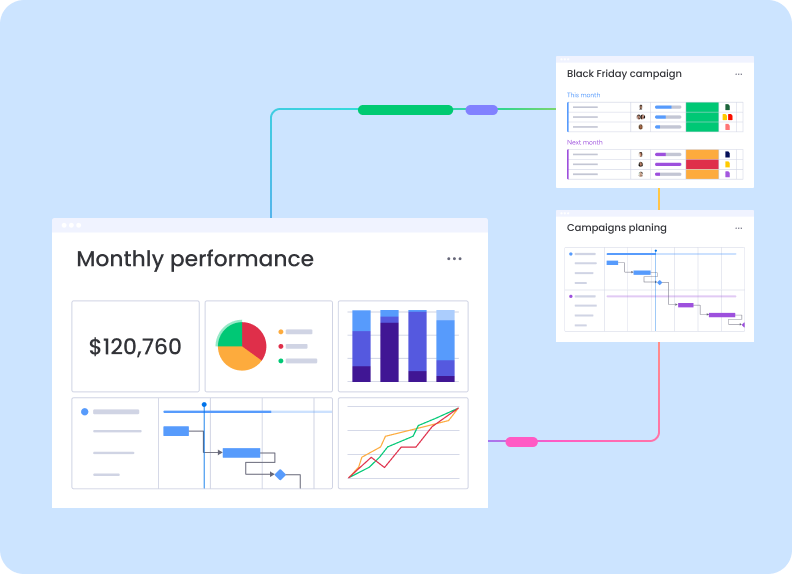
- Use a system to track goals and workload: A shared, visible way to see who’s working on what, how projects are progressing, and where the pressure points are keeps you guiding instead of chasing updates.
The pattern across all 5 is the same: Get honest input, learn from people ahead of you, and practice in real conditions. Improvement is rarely dramatic. It’s the steady result of paying attention and adjusting, week after week.
Common management mistakes to avoid
Knowing the traits of a good manager is only half the picture. Just as useful is knowing the habits that quietly undermine a team. Most of these mistakes come from good intentions, which is exactly why they’re easy to miss. This list pairs each common mistake with a simple correction.
- Micromanaging every detail: Hovering over each task signals distrust and drains your own time. Fix it by delegating outcomes, not steps, and checking in at agreed milestones instead of constantly.
- Avoiding hard conversations: Letting a performance or behavior issue slide lets it grow. Fix it by addressing problems early, directly, and privately, while they’re still small.
- Setting unclear goals: Vague expectations leave people guessing and second-guessing. Fix it by defining what success looks like, by when, and how it will be measured.
- Taking credit for the team’s work: Claiming wins as your own erodes trust fast. Fix it by sharing credit publicly and taking responsibility privately when things go wrong.
- Ignoring burnout signals: Missed deadlines, disengagement, and quietness are often symptoms, not laziness. Fix it by watching workload, checking in early, and rebalancing before someone breaks.
None of these fixes require a personality transplant. They just require noticing the pattern and choosing the harder, more honest response. Managers who catch these habits early protect both their team’s trust and their own credibility.

How the monday.com AI Work Platform supports good managers
Every characteristic above is a human skill, and no tool replaces it. What a good system does is remove the busywork that gets in the way, so managers spend less time chasing status and more time coaching people. The monday.com AI Work Platform is built around exactly that shift, and it maps closely to the traits managers most want to strengthen.
- Visibility and transparency: Real-time Dashboards turn scattered updates into a single, live view of who’s working on what and how projects are tracking. Executive and portfolio views roll that up for leaders, and AI risk identification flags at-risk work early.
- Delegation and workload: Clear task ownership and deadlines make delegation stick, because everyone can see what they own and by when. The Workload widget and resource management tools show capacity across the team at a glance.
- Communication: monday workdocs keep plans, notes, and decisions connected to the work they describe, and item updates keep conversation next to the task instead of buried in email. With 200+ integrations across tools like Slack, Teams, and Gmail, context stays in one place.
- Goal alignment: Connecting daily tasks to Goals and OKRs lets people see how their work ladders up to something bigger. That direct line from task to purpose is what turns a checklist into work people care about.
- AI that works alongside people and managers: monday sidekick summarizes long update threads, surfaces team overload and SLA risks, assists with resource planning, and can generate a dashboard from a plain-language description.
- Always-on execution: monday agents handle routine detection and reporting in the background, with ready-made agents like the Risk Analyzer and meeting summarizer running continuously.
- Custom apps without code: With monday vibe, a manager can describe a custom OKR monitor or team dashboard in a sentence and get a working app built on the platform.
- AI tool integration: monday MCP connects the workspace to AI tools like Claude, so a manager can securely ask questions about workload or project status and act on the answer, all within existing permissions.
Here’s how that changes the day-to-day work of managing a team.
| Management need | Traditional approach | monday's AI Work Platform approach |
|---|---|---|
| Visibility into work | Status meetings and manual check-ins | Real-time Dashboards provide a live view across projects |
| Workload and capacity | Guesswork about who is overloaded | Workload widget and resource management show capacity instantly |
| Spotting risks | Problems appear after impact | AI risk identification and the Risk Analyzer flag issues early |
| Connecting work to goals | Goals live separately from daily work | Tasks connect directly to Goals and OKRs |
| Admin and status updates | Manual reports and recurring check-ins | monday sidekick summarizes updates and generates reports |
Become a better manager by building these habits
The characteristics of a good manager aren’t fixed traits reserved for a lucky few. Clear communication, empathy, delegation, accountability, and the rest are skills anyone can build with feedback and practice, and they compound over time into the kind of leadership people remember.
The managers who make the biggest difference pair those human skills with a system that gives them visibility and cuts down the busywork. When the status-chasing fades into the background, you get back the time and attention that coaching, listening, and developing people actually require. That’s where good management turns into lasting team impact.
Get started
FAQs
What are the most important characteristics of a good manager?
The most important characteristics include clear communication, transparency, emotional intelligence, delegation, accountability, and the ability to connect people's work to meaningful goals. Together they build the trust and clarity a team needs to perform.
What is the difference between a manager and a leader?
A manager focuses on process: planning work, coordinating people, and delivering results reliably. A leader focuses on vision and influence, and the strongest managers combine both.
Can management skills be learned?
Yes. Management skills are developed through feedback, mentorship, and deliberate practice rather than being innate, which is why intentional effort makes such a difference.
How do I know if I'm a good manager?
Look at your team's outcomes: engagement, retention, goal achievement, and how comfortable people feel giving you honest feedback. Strong results in those areas are the clearest signal.
How does the monday.com AI Work Platform help managers lead better?
It gives managers real-time visibility into work, workload balancing to prevent burnout, AI-powered risk alerts, and a direct link between daily tasks and goals, so they can spend more time coaching and less time chasing status.
Can someone become a good manager without leadership experience?
Yes. Many strong managers start without formal leadership experience and build their skills on the job. What matters most is the willingness to learn, seek feedback, and practice the core habits: clear communication, delegation, and developing people. Starting with a mentor, taking on small leadership opportunities, and treating management as a learnable craft rather than an innate talent accelerates the learning curve considerably.

 Get started