


Capacity planning sounds pretty straightforward. Planning the capacity of a project — simple. We wish it were that easy. Effective capacity planning is no simple feat.
Truth be told, making a capacity plan is a bit of a juggling act. Whether it’s organizing budgets, managing stakeholder expectations, or figuring out how much work your team can actually do, there’s a lot to cover if you want to do it right.
This guide walks through the fundamentals of capacity planning, including definitions, strategies, step-by-step processes, real-world examples, and best practices. You will also see how teams can put these principles into practice with monday.com’s AI Work Platform to plan capacity with confidence.
Key takeaways
- Capacity planning aligns resources with demand: It ensures your organization has the right people, skills, and bandwidth to meet current and future workload requirements.
- Proactive planning reduces costly bottlenecks: Forecasting demand and identifying gaps early prevents project delays, budget overruns, and team burnout.
- Three core strategies guide your approach: Lead, lag, and match strategies each serve different risk tolerances and business contexts.
- Consistent monitoring drives continuous improvement: Capacity planning is not a one-time exercise but an ongoing cycle of assessment, adjustment, and optimization.
- The right platform centralizes capacity data: Features like Workload View, Resource Planner, and AI-powered insights connect resource availability to real-time project execution on a single platform.
What is capacity planning?
Capacity planning is the process of determining the production capacity an organization needs to meet changing demand for its products, services, or deliverables. It involves assessing current resources, forecasting future requirements, and aligning workforce availability with strategic priorities to ensure teams can deliver on time and within budget.
In other words, capacity planning aims to have the right resources available when needed, ensuring efficient workflows from start to finish. This planning process is closely linked to other key management areas:
- Resource management for effective allocation of available resources
- Time management for optimized scheduling and reduced delays
- Team management to maintain balanced workloads and avoid burnout
- Work management to streamline processes and meet customer demand
- Project management to ensure projects remain on time and on budget
Different types of capacity planning
Capacity planning focuses on different resource types to align teams with market demands and advance projects with agility and precision. Here’s how each type of capacity planning helps teams manage demand and resources effectively.
- Workforce capacity planning: Focuses on whether you have enough people with the right skills to meet demand. Teams increasingly run this analysis inside AI-powered workforce planning tools rather than manually cross-referencing headcount sheets. For example, a software company assessing whether its engineering team can absorb three new product features in Q3 without additional hires.
- Resource capacity planning: Evaluates the availability of all resources required to deliver work, including people, equipment, budget, and technology. A construction firm analyzing whether its equipment fleet and crew availability can support two simultaneous project sites is practicing resource capacity planning.
- Production capacity planning: Common in manufacturing and operations, this type measures output potential against demand forecasts. A food manufacturer determining whether its production line can handle a 25% increase in holiday orders is a classic example.
- Platform capacity planning: Assesses whether your technology infrastructure and digital systems can handle projected workloads. A SaaS company stress-testing its servers before a major product launch falls into this category.
The benefits of capacity planning
Effective capacity planning offers significant advantages that empower organizations to make the most of their resources, increase productivity, and achieve their project goals. Here’s a look at how it drives impact.
Budget accuracy
Capacity planning provides a comprehensive overview of where funds and resources are needed most, reducing overspending and keeping projects on budget. By planning capacity in anticipation of future needs, teams can allocate funds efficiently, supporting a clear financial strategy for each project.
Bottleneck reduction
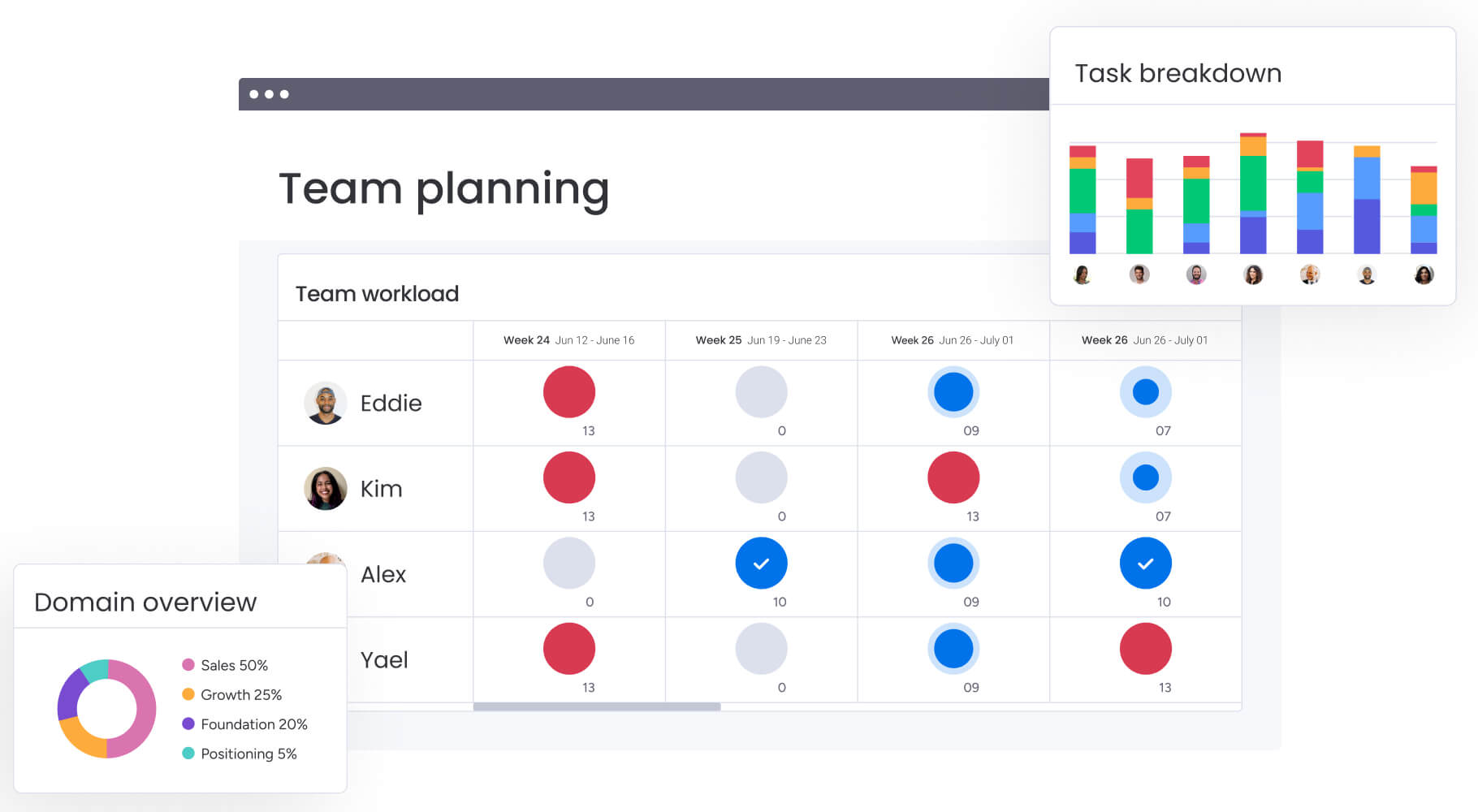
By forecasting anticipated demand, capacity planning identifies potential bottlenecks early, whether in staffing, equipment, or timelines. This proactive approach helps cross-functional teams work through challenges before they arise, preventing delays and smoothing out project planning. With the right strategy in place, organizations can scale up resources when needed to meet an increase in demand over a set period of time. This can include everything from resource scheduling to resource management.
Team productivity
Balanced workloads mean team members work at a sustainable pace without being overloaded or idle. Capacity planning aligns workload with capacity requirements, boosting team morale and helping cross-functional teams stay focused and motivated.
Strategic decision-making
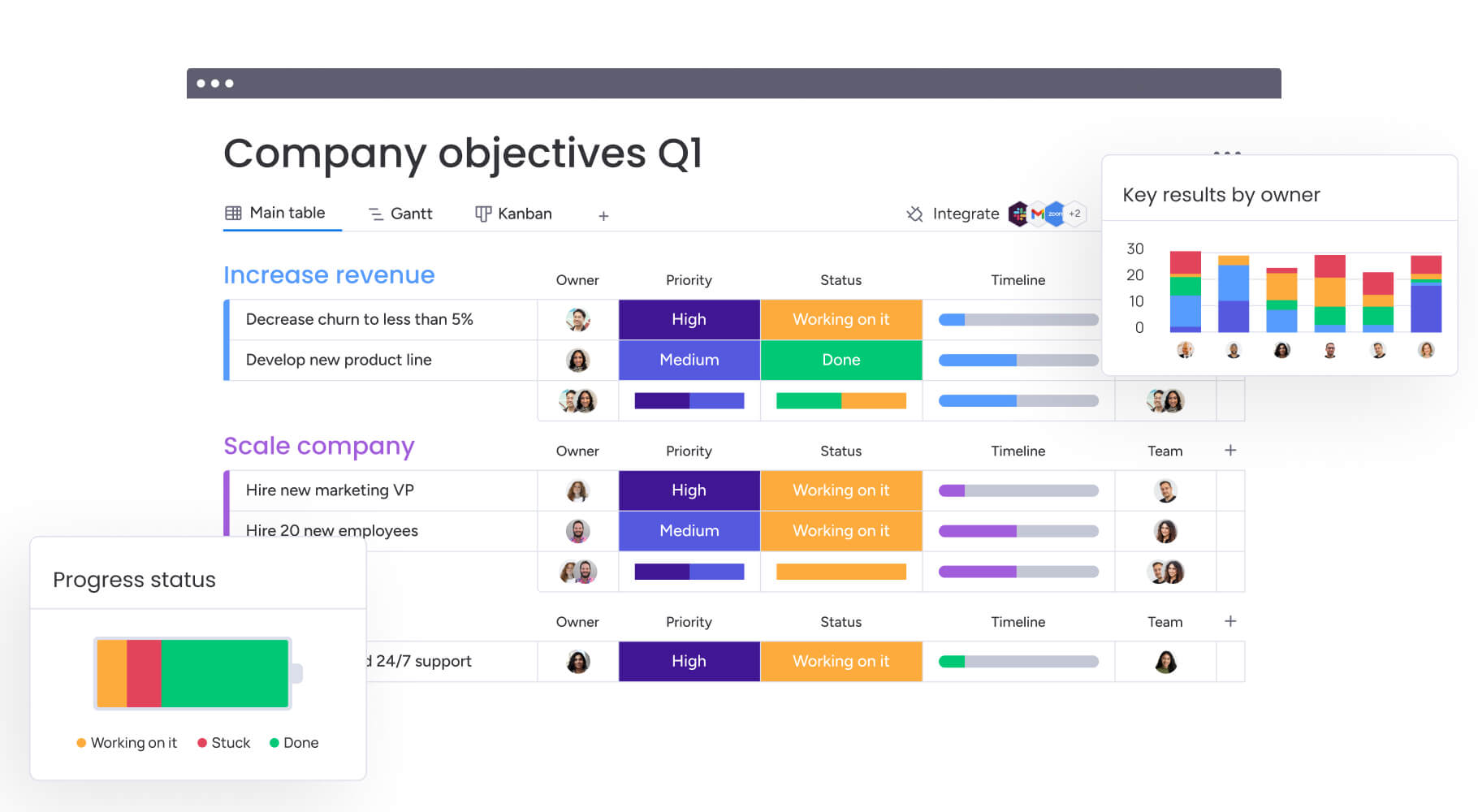
Capacity planning offers managers a clear overview of resource availability, enabling them to make informed, data-driven decisions aligned with broader business goals. With insights into how resources are used over a period of time, managers can anticipate future needs and optimize resource utilization to keep projects running efficiently.
Employee retention
Chronic overwork is one of the top drivers of turnover. Capacity planning protects teams from burnout by managing workloads to ensure that they’re distributed fairly and resource forecasting accounts for sustainable utilization rates.
Steps for effective capacity planning
The capacity planning process follows a structured cycle that begins with understanding your current state and ends with continuous optimization. These six steps provide a repeatable framework for any team or department.
Step 1: Assess current capacity
Start by cataloging your available resources, including team members, their skills, current assignments, and utilization rates. Review historical data to establish baseline output levels. You cannot plan for the future without an honest picture of the present.
Step 2: Forecast future demand
Analyze upcoming projects, seasonal patterns, growth targets, and critical paths to estimate what your organization will need over the next quarter or year. Combine quantitative data with input from department leads who understand pipeline realities. monday.com’s AI Work Platform supports this with workload and resource forecasting that surface demand trends as they emerge.
Step 3: Identify gaps and bottlenecks
Compare your current capacity against forecasted demand to find where shortfalls exist. Look for skill gaps, overallocated individuals, and departments that consistently run above sustainable utilization thresholds.
Step 4: Develop a capacity plan
Create a documented plan that outlines how you will close identified gaps. This might include hiring timelines, contractor engagements, skill development programs, or project planning adjustments that redistribute work across teams.
Step 5: Execute and allocate resources
Put your plan into action by assigning people to projects based on availability, skills, and priority. Use time management practices to protect high-priority initiatives from scope creep and resource contention.
Step 6: Monitor and adjust
Capacity planning is not a set-it-and-forget-it exercise. Track actual utilization against your plan on a weekly or biweekly cadence. Adjust allocations as priorities shift, new projects emerge, or team availability changes.
What are the 3 main capacity planning strategies?
Capacity planning strategies vary based on demand and resources. There are 3 key approaches; each reflects a different philosophy about when to scale resources relative to demand. Your choice depends on your industry, risk appetite, and growth trajectory.
| Strategy | Approach | Best for | Risk level |
|---|---|---|---|
| Lead strategy | Add capacity before demand materializes | High-growth companies, seasonal businesses | Higher (risk of unused capacity) |
| Lag strategy | Add capacity only after demand is confirmed | Cost-conscious organizations, stable markets | Lower financial risk, higher delivery risk |
| Match strategy | Add capacity in small increments as demand grows | Organizations balancing growth with fiscal discipline | Moderate (requires frequent monitoring) |
Lead strategy works when the cost of missing demand exceeds the cost of carrying extra capacity. A retail company hiring seasonal staff two months before peak holiday traffic is using a lead approach.
Lag strategy suits organizations where demand is difficult to predict, and excess capacity is expensive. A consulting firm that hires only after securing signed contracts follows this model.
Match strategy splits the difference by scaling resources incrementally. An operations team that adds one contractor per quarter based on actual project intake volume is practicing a match strategy.
Capacity planning vs. resource planning
Capacity planning and resource planning work together seamlessly, but each has its own role. While the two are related disciplines, they answer different questions. Capacity planning asks “do we have enough?” while resource planning asks “who does what, and when?
Capacity planning is proactive and is all about looking ahead to ensure you’ll have the right resources to meet future demand. It provides a high-level view of potential gaps, giving your team the insight needed to avoid bottlenecks and keep projects on track.
Resource planning, on the other hand, is about optimizing what’s currently available. It’s the precise allocation of resources for ongoing tasks, ensuring day-to-day work flows smoothly. Think of it as the tactical counterpart to capacity planning’s strategic foresight. Together, they create a balanced approach, allowing teams to be both ready for what’s ahead and effective in the here and now.
Both are essential for well-run projects; capacity planning sets the ceiling, and resource planning determines how you work within it.
Capacity planning in action: A case study with Scalerrs
For agencies, capacity planning isn’t just about hitting deadlines; it’s a direct lever on profitability. Scalerrs, an SEO agency, built their entire project management system around granular capacity data, tagging every task by assignee, client project, delivery role, task type, and time tracked. The result is a real-time view of where time is actually going across the business.

With every team member tracking time against client projects, Scalerrs can identify which accounts are consuming disproportionate resources, spot patterns in their most profitable client relationships, and proactively replicate those. The system also surfaces individual performance data, flagging where team members may need additional support or training before it affects delivery.
One particularly high-value insight came from analyzing work by delivery role. By identifying where senior team members were handling work that junior staff could take on, Scalerrs were able to redistribute accordingly, protecting senior capacity for the work that genuinely needed it.
The outcome: a 15% increase in profitability, driven not by winning more clients, but by understanding and acting on how existing capacity was being spent.
Capacity planning best practices
Elevate your capacity planning with these practical, solution-oriented tips:
- Build in buffer capacity: Plan for 75-80% utilization rather than 100%. The remaining bandwidth absorbs unplanned work, sick days, and urgent requests without derailing active projects.
- Use rolling forecasts: Replace static annual plans with quarterly or monthly rolling forecasts that incorporate the latest demand signals and actual performance data.
- Centralize your data: Capacity decisions are only as accurate as the data behind them. Consolidate resource information, project timelines, and utilization metrics into a single source of truth that all stakeholders can access.
- Involve department leads early: The people closest to the work understand demand patterns that spreadsheets miss. Include team leads in forecasting conversations to validate assumptions and surface hidden constraints.
- Review and iterate regularly: Schedule cross-functional capacity reviews on a consistent cadence. Monthly reviews for tactical adjustments and quarterly reviews for strategic realignment keep plans relevant.
Using capacity planning in practice
Capacity planning is versatile and adaptable, supporting various functions across teams. Here’s how capacity planning can be applied in specific areas to improve efficiency and ensure projects meet their goals:
Sprint planning
In agile sprint planning, capacity planning ensures resources are balanced and that each sprint’s workload is achievable. With a clear view of actual capacity, teams can set realistic goals that align with project timelines, keeping deadlines on track without over-committing. monday.com’s AI work platform offers capacity insights, helping teams to optimize sprints for sustained productivity.
Operations capacity planning
Efficiency is central to operations management, and capacity planning lays the foundation. By forecasting demand and strategically aligning resources, operations teams can manage daily and weekly targets without overstretching. This approach optimizes workflows, preventing bottlenecks and ensuring resources are used where they’re most effective.
Learn more about how to achieve long-term goals with an effective operations strategy.
Marketing capacity management
For marketing, capacity planning is essential for executing campaigns smoothly, particularly during high-demand periods like seasonal promotions or product launches. By forecasting resource needs for each campaign, marketing teams ensure they have the creative, ad spend, and bandwidth required to achieve every goal. monday.com’s AI Work Platform offers a centralized view, allowing marketing teams to track resources and pivot quickly to adapt to changing trends.
Manufacturing and retail
In manufacturing and retail, capacity planning is vital for balancing supply and demand. Manufacturers use it to scale production and ensure materials and workforce are ready for peak periods. This forward-thinking approach also supports maintenance schedules and minimizes downtime. Retailers, meanwhile, rely on capacity planning to manage staffing (considering vacation time and sick leave), inventory, and supply chains effectively. The AI Work Platform provides a centralized platform to track inventory, manage demand spikes, and streamline operations for a seamless experience.
Making capacity planning easier with monday.com
Capacity planning tools are essential for keeping projects on track and ensuring that resources are used effectively. With the right software, like monday.com’s AI Work Platform, teams can achieve clarity on workloads, gain visibility into resources, implement intelligent automation, and centralize planning into one workspace where capacity decisions happen alongside the actual work.
Real-time visibility into team capacity

The Workload View on the AI Work Platform provides a color-coded overview of every team member’s allocation across projects. Managers can immediately spot who is overloaded and who has availability, then drag and drop assignments to rebalance workloads without leaving the board.
AI-powered planning and automation

AI Blocks on the platform provide ready-made AI actions for risk management and workflow automation, building on the principles of AI-powered project management. monday sidekick acts as a context-aware AI assistant that can generate status updates, summarize project health, and surface capacity-related insights across boards. monday agents, including the Project Analyzer, scan for bottlenecks and delivery risks before they escalate.
Learn more: AI capacity planning software
Capacity planning templates
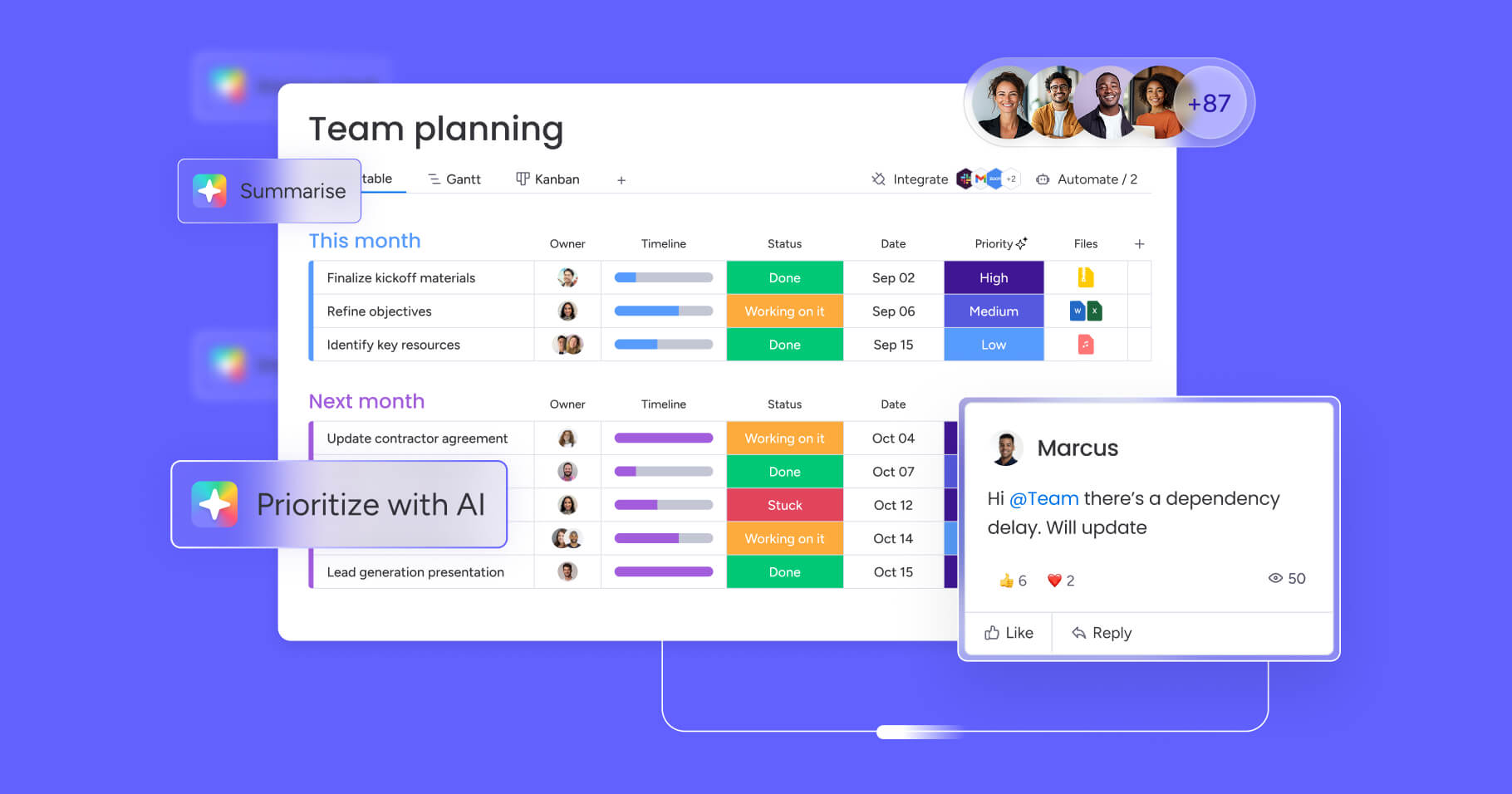
The AI Work Platform includes ready-to-use templates for team capacity planning, project resource allocation, sprint planning, and resource management. These templates give teams a structured starting point they can customize to match their specific workflows and reporting needs. With monday vibe, teams can also generate custom capacity dashboards by describing what they want in plain language.
Dashboards and integrations

Capacity planning dashboards on the platform feature 10+ drag-and-drop widgets that display utilization rates, project timelines, budget tracking, and resource distribution in real time. Executive views aggregate data across portfolios of 100 to 1,000+ projects, giving leadership the visibility they need for strategic capacity decisions. Time Tracking connects planned versus actual effort, improving future forecasting accuracy.
Why capacity planning is essential
If you’re aiming to keep projects on track, stay within budget, and make the best use of your team’s time, capacity planning is a game-changer. It’s one of those disciplines that compounds in value the longer you practice it. Organizations that commit to regular capacity reviews build institutional knowledge about their own throughput, seasonal patterns, and resource constraints that strengthens every future planning cycle.
With a well-structured capacity plan, you’re setting your team up for success, giving them the tools to focus on high-impact work without the risk of overload. The AI Work Platform brings capacity planning to life with features that make the entire process smoother and more collaborative. From real-time workload views to automated workflows and customizable templates, the AI Work Platform helps you make proactive, informed decisions every step of the way.
FAQs
What is an example of a capacity plan?
An example of a capacity plan is a software development team that maps its 10 engineers' available hours against upcoming sprint commitments, identifies that two major projects overlap in Q3, and decides to hire two contractors to fill the gap while maintaining sustainable workloads.
What are the 3 main types of capacity planning?
The three main types of capacity planning are workforce capacity planning (assessing people and skills), resource capacity planning (evaluating all resources including equipment and budget), and production capacity planning (measuring output potential against demand in manufacturing or operations environments).
What does a capacity planner do?
A capacity planner assesses current resource availability, forecasts future demand, identifies gaps between supply and need, and develops plans to ensure the organization can meet its commitments. They work with department leads to balance workloads and optimize utilization rates.
Can monday.com’s AI Work Platform support agile capacity planning?
The AI Work Platform supports agile capacity planning through sprint boards, Workload Views that track individual and team utilization per sprint, and automations that route incoming work based on availability. Teams can monitor velocity, adjust sprint commitments, and balance workloads across iterations.
What is an example of short-term capacity planning?
An example of short-term capacity planning is a marketing team evaluating whether its designers and copywriters have enough bandwidth to execute a product launch campaign over the next two weeks while maintaining ongoing content production commitments.

 Get started