

Most leadership teams eventually reach a point where the next set of decisions requires experience they don’t have in-house. Whether it’s expanding into new markets, adopting AI, or navigating complex regulations, there’s only so much an internal team can figure out alone. Hiring full-time leaders for every gap isn’t realistic, and consultants tend to step in and out without staying close to how decisions play out.
That’s where advisory boards start to make real sense. They give you ongoing access to people who’ve already solved the kinds of problems you’re facing, without adding another layer of formal governance or slowing decisions down. The right advisors bring perspective, ask better questions, and help you move forward with more confidence.
Getting real value from an advisory board comes down to how you build and run it. The sections ahead walk through how advisory boards work, how they differ from boards of directors, and what it takes to structure one that actually contributes to growth. You’ll also see how to choose the right advisors, run meetings that lead to decisions, and turn advice into action.
Key takeaways
- Build advisory boards with 5-9 experts who fill specific skill gaps: Recruit advisors based on strategic objectives like market expansion or AI transformation, not general networking needs.
- Structure formal engagement with clear compensation and 2-year terms: Offer equity for startups or $20K-$100K cash for enterprises, plus defined meeting schedules and documented expectations.
- Focus meetings on decisions, not updates: Spend 70% of time discussing strategic choices and 30% on context, with pre-read materials distributed 72 hours in advance.
- Track advisory recommendations from insight to implementation: Use monday work management to convert meeting advice into assigned workflows with deadlines, ownership, and progress visibility across your organization.
- Measure advisory board impact through specific outcomes: Track recommendation adoption rates, implementation velocity, and business results rather than just meeting attendance or general satisfaction.
What is an advisory board?
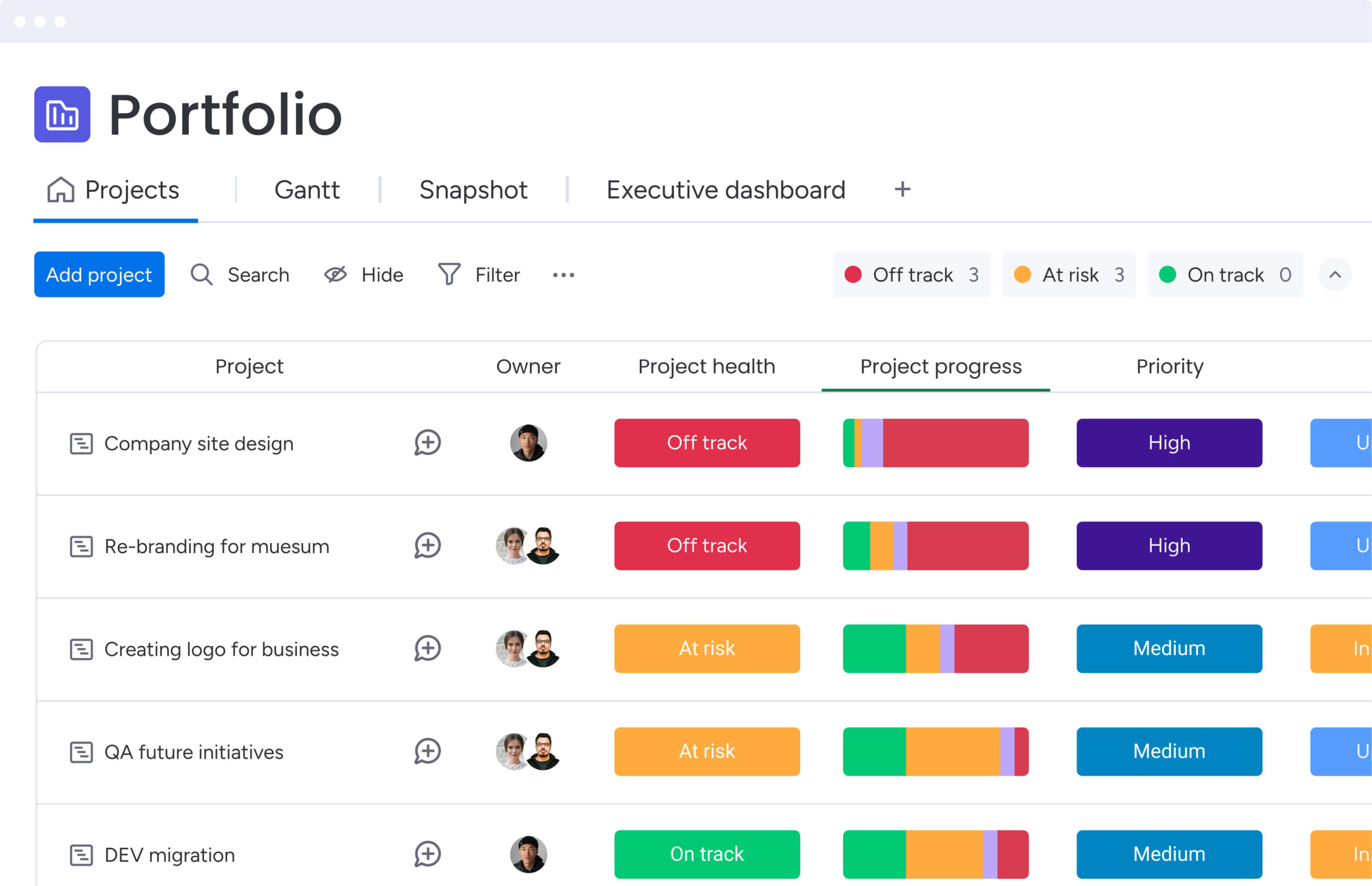
An advisory board is a group of external experts who provide strategic guidance to an organization’s leadership without legal authority or fiduciary responsibility. Unlike a board of directors, advisory members offer non-binding recommendations based on their specialized expertise, industry connections, and objective perspectives.
Advisory boards fill critical knowledge gaps that internal teams can’t address alone. They challenge assumptions, validate strategies, and accelerate growth by bringing fresh perspectives from outside the organization. Members are selected for specific skills — whether that’s navigating international expansion, implementing AI transformation, or understanding regulatory landscapes.
The structure also offers flexibility that formal governance can’t match. Without regulatory constraints, advisory boards can dive into unconventional strategies and explore ideas that formal board meetings would shut down. Members provide guidance as independent contractors rather than fiduciaries, which means they can offer candid feedback without the legal weight of binding decisions.
How advisory boards differ from boards of directors
The distinction between advisory boards and boards of directors goes beyond titles, fundamentally shaping how organizations leverage external expertise. Understanding these differences is crucial for designing a governance structure that aligns with your strategic goals and operational needs.
| Aspect | Advisory board | Board of directors |
|---|---|---|
| Legal authority | None; operates through informal influence | Full legal control over major decisions |
| Fiduciary duty | No duty to shareholders | Legal duty of care and loyalty |
| Decision power | Recommendations only | Binding votes on strategy and leadership |
| Liability | Limited to contractual disputes | Personal liability for governance failures |
| Focus | Strategic growth and specialized expertise | Governance, compliance, and oversight |
| Compensation | Flexible (cash, equity, or per-meeting) | Standardized with D&O insurance requirements |
In practice, advisory boards offer more flexibility. They create space to explore ideas, challenge assumptions, and have open conversations without the constraints of formal governance. This also makes them more appealing to experienced leaders who want to contribute without taking on legal responsibility.
The evolving role of advisory boards in 2026.
Advisory boards have moved beyond occasional meetings into ongoing partnerships. Advisors stay connected between sessions, contributing insights in real time rather than waiting for quarterly discussions.
This shift reflects how quickly organizations are changing. Nearly two-thirds of companies have redesigned their operating models in the past two years, highlighting just how fast priorities and structures are evolving. In this environment, leaders need timely input, not delayed feedback.
Digital workspaces make this possible by keeping advisors connected to progress, challenges, and decisions as they happen. Instead of waiting for formal meetings, organizations can maintain continuous dialogue and get input when it matters most.
As expectations rise, advisory boards are no longer there to offer general guidance — they’re expected to drive specific outcomes, whether that’s entering new markets, accelerating AI adoption, or navigating regulatory complexity. The focus is on measurable impact, not just advice.
Try monday work managementAdvisory boards fill critical knowledge gaps that internal teams can’t address alone. They challenge assumptions, validate strategies, and accelerate growth by bringing fresh perspectives from outside the organization.
Core functions of advisory boards
Advisory boards serve six essential functions that directly impact organizational performance. Know these roles, and you’ll get a lot more value from your advisors while tracking exactly what they contribute.
Strategic guidance and market insights
Advisors spot patterns across industries, identifying opportunities and threats your internal team might miss because they’re too close to the work. This external perspective is most valuable when you’re making big bets, such as launching new products, entering new markets, or pivoting your strategy.
This matters most when you’re making big bets — launching new products, entering new markets, or pivoting strategy. An advisor who’s guided multiple companies through digital transformation can help you avoid common pitfalls. Someone who’s navigated regulatory changes in your target market can accelerate expansion while reducing risk.
Business development and network activation
Advisory board members open doors that would otherwise remain closed. Their professional networks become extensions of your business development efforts, creating warm introductions to potential partners, customers, and investors.
But it’s not just about introductions. Advisors lend credibility to your outreach, validate your approach with prospects, and often participate directly in high-stakes negotiations. A single strategic connection from an advisor can accelerate months of relationship building into weeks.
Risk identification and mitigation
Advisors catch risks early — whether operational, strategic, or reputational — before they become expensive problems. They review expansion plans through the lens of experience, identifying regulatory hurdles, market dynamics, or operational challenges before they become costly problems.
Risk assessment from advisors carries unique weight because they’re not invested in existing plans or internal politics. They can challenge assumptions, question strategies, and highlight vulnerabilities that internal teams might rationalize away. This external perspective proves especially valuable given current market volatility, where 82% of companies report that new tariffs are affecting their supply chains according to McKinsey’s 2026 Supply Chain Risk Pulse survey.
Technology and innovation guidance
Most leadership teams don’t have deep technical expertise. That’s a problem when technology decisions determine who wins and who gets left behind.
Advisory boards bridge this gap, helping organizations navigate build-versus-buy decisions, evaluate emerging technologies, and implement digital transformation without costly missteps. This expertise gap is particularly acute in AI implementation, where 92% of companies plan to increase AI investment over the next three years, yet only 1% of C-suite leaders say their gen-AI rollout is ‘mature’.
Technical advisors cut through the noise. They’ll tell you which AI capabilities actually matter for your industry and when to build versus buy. They further help you understand which AI capabilities matter for your industry, how to structure data governance, and when to adopt versus wait on emerging technologies.
Talent development and succession planning
Advisors serve as mentors to your executive team, providing coaching that internal HR can’t offer. They share lessons from their own leadership journeys, help executives navigate complex decisions, and provide confidential sounding boards for sensitive issues.
Advisors also help with succession planning and executive hiring — bringing an outside perspective when you’re evaluating leadership potential. Their external perspective proves invaluable when assessing cultural fit, leadership potential, and the skills needed for future growth.
Performance accountability and measurement
Advisory boards create accountability mechanisms that keep leadership focused on strategic priorities. Through regular reviews, they track progress against stated goals, question deviations from strategy, and ensure leadership follows through on commitments.
This isn’t board-level oversight. It’s collaborative accountability that strengthens execution rather than just monitoring it. Advisors help refine metrics, interpret results, and adjust strategies based on performance data. They ask tough questions not to criticize but to strengthen execution.
How to build an effective advisory board structure
Structure determines whether your advisory board delivers value or becomes an expensive discussion group. Size, composition, meeting cadence, and documentation all impact whether advisors deliver meaningful value or become an expensive discussion group. Getting these fundamentals right creates the foundation for strategic impact.
Optimal size and composition
The most effective advisory boards have between five and nine members. This size gives you diverse perspectives while keeping discussions focused. More than nine people, and you’re herding cats. Fewer than five limits the breadth of expertise; more than nine makes meaningful discussion difficult and dilutes individual contribution.
Build your board around strategic priorities, not just impressive titles. Avoid redundancy — you don’t need three CFOs. Consider this framework for building a balanced board:
- Functional expertise: Include at least one expert each in finance, technology, and your core industry.
- Geographic diversity: Add members who understand your target markets.
- Career stages: Mix current operators with recently retired executives.
- Network reach: Select advisors whose connections complement rather than duplicate each other.
Look beyond résumés. Different thinking styles and problem-solving approaches prevent groupthink. Different thinking styles, cultural perspectives, and problem-solving approaches prevent groupthink and generate richer discussions.
Meeting cadence and engagement models
Quarterly meetings create a predictable rhythm. Use these for major decisions, long-term planning, and comprehensive performance reviews. These sessions should focus on major decisions, long-term planning, and comprehensive performance assessments. Between quarterly meetings, monthly check-ins or targeted “sprint” sessions address immediate challenges.
The most successful boards combine multiple engagement models:
- Annual strategic retreats: In-person sessions for relationship building and long-term planning.
- Quarterly virtual reviews: Structured meetings focused on metrics and milestones.
- Monthly office hours: Optional sessions where executives can get quick input.
- Asynchronous collaboration: Ongoing dialogue through shared workspaces and documents.
Organizations leveraging intelligent solutions such as monday work management can create dedicated boards where advisors can review materials, comment on proposals, and track initiative progress between formal meetings. This continuous engagement keeps advisors connected without requiring constant meetings.
Documentation and governance frameworks
Put it in writing. Clear documentation prevents misunderstandings and keeps the relationship professional. Essential documentation includes:
- Advisory board charter: Defines the mission, scope, and operating principles.
- Engagement letters: Specify individual expectations, time commitments, and compensation.
- Confidentiality agreements: Protect sensitive information and intellectual property.
- Meeting protocols: Establish agenda formats, pre-read timelines, and follow-up processes.
Clear documentation also helps with advisor transitions. When terms end or needs change, having structured agreements makes renewal or replacement discussions straightforward.
The most effective advisory boards have between five and nine members. This size gives you diverse perspectives while keeping discussions focused.
Compensation models for advisory boards
Pay matters. It signals whether you’re serious about advisory input or just collecting names for your website. While some nonprofits successfully use volunteer advisors, commercial organizations need competitive packages to attract top talent. The right compensation structure aligns advisor incentives with your strategic objectives.
Equity versus cash considerations
Choosing between equity and cash comes down to your company stage, available budget, and how you want to align incentives. Early-stage companies often trade ownership for expertise, while more established organizations lean toward predictable compensation.
The table below shows how compensation typically evolves as companies grow:
| Company stage | Typical compensation | Rationale |
|---|---|---|
| Early startup | 0.25% - 1% equity only | Preserves cash while aligning long-term incentives |
| Growth stage | $5K-$10K cash + 0.1% equity | Balances immediate value with future upside |
| Established enterprise | $20K-$100K cash annually | Provides predictable compensation without dilution |
| Project-based | $1K-$5K per meeting | Flexible engagement for specific initiatives |
Equity works well when you want advisors invested in long-term outcomes. It encourages deeper involvement, stronger advocacy, and a willingness to open up their network. The tradeoff is complexity and delayed value.
Cash is simpler and more immediate. It appeals to experienced advisors who prefer clear, predictable compensation and are less focused on long-term upside.
Term length and renewal practices
Two-year terms work best. That’s long enough for advisors to understand your business and make an impact, but short enough to refresh the board if priorities shift.
Don’t auto-renew. Evaluate whether each advisor still fits your needs. Both parties should evaluate:
- Value delivered: Did the advisor meet engagement expectations?
- Ongoing relevance: Do their skills match future priorities?
- Relationship quality: Is the collaboration productive and respectful?
- Fresh perspectives: Would new advisors bring needed expertise?
Some organizations use staggered terms, renewing half the board each year. This approach maintains continuity while ensuring regular fresh perspectives.
Try monday work managementLaunching your advisory board: 7 essential steps
Treat advisory board creation like any other strategic project. That means clear objectives, defined roles, and measurable outcomes. Follow this process, and you’ll build a board that solves real problems instead of hosting unfocused discussions.
Also keep in mind that each step builds toward a high-performing advisory structure that drives measurable business impact.
Step 1: define strategic objectives
Start with why. What specific problems will this board solve? Vague goals like “getting advice” won’t drive meaningful outcomes. Instead, identify specific objectives tied to business priorities.
Strong objectives might include:
- Accelerating entry into Asian markets within 18 months.
- Building AI capabilities to automate core processes.
- Preparing for Series B fundraising and institutional investors.
- Navigating upcoming regulatory changes in your industry.
These objectives determine who you recruit, meeting frequency, and success metrics.
Step 2: map required expertise
Conduct a skills gap analysis comparing your internal capabilities against your strategic objectives. If you’re entering Asian markets, you need advisors with regional experience, cultural understanding, and local networks.
Create specific profiles for each advisor role:
- Required expertise: Deep knowledge essential for your objectives.
- Valuable experience: Background that adds helpful perspective.
- Network assets: Connections that accelerate your goals.
- Cultural fit: Working style that meshes with your organization.
This specificity turns recruitment into a targeted search, not random networking.
Step 3: develop compelling role descriptions
Top advisors are in demand. Your role description needs to stand out. Your role description must stand out by articulating the opportunity, impact, and value exchange.
Include these elements:
- Company vision: Where you’re headed and why it matters.
- Specific impact: How this advisor will shape outcomes.
- Time expectations: Meeting frequency and preparation requirements.
- Compensation package: Equity, cash, or hybrid structure.
- Success metrics: How you’ll measure advisory impact.
Sell the impact, not the meetings. Show how they’ll shape an industry leader.
Step 4: execute targeted recruitment
Recruit through direct outreach, executive search firms, and your existing network. Start with your ideal candidates, even if they seem unreachable. Many successful executives want to stay engaged through advisory roles.
The recruitment process typically includes:
- Initial conversation: CEO or founder discusses vision and role.
- Stakeholder meeting: Key executives explore specific expertise areas.
- Reference checks: Verify track record and collaborative style.
- Formal offer: Present terms with expectations.
Take the time to find the right fit, as a mediocre advisor can be more detrimental than having no advisor at all. A mediocre advisor is worse than no advisor.
Step 5: design comprehensive onboarding
Good onboarding gets advisors contributing faster. Give advisors enough context to contribute without drowning them in details.
Create an onboarding package including:
- Strategic documents: Three-year plan, recent board presentations, competitive analysis.
- Operational overview: Org structure, key metrics, system architecture.
- Product deep-dive: Demos, customer feedback, roadmap priorities.
- Cultural immersion: Values, communication style, decision-making process.
Schedule one-on-one meetings between advisors and key executives. These conversations build relationships and surface immediate opportunities for advisory input.
Step 6: establish operating rhythms
Consistency is key, so establish the full meeting schedule for the upcoming year as soon as the board is formed. Set the schedule for the next year immediately, establishing:
- Quarterly meeting dates: Lock these in everyone’s calendar.
- Pre-read timelines: Materials distributed 72 hours before meetings.
- Communication channels: Dedicated workspace or collaboration platform.
- Office hours: Optional monthly sessions for ad-hoc questions.
- Response expectations: How quickly advisors should reply to requests.
Organizations using modern solutions like monday work management can create dedicated advisory workspaces with meeting schedules, document libraries, and action item tracking. This centralization keeps everyone aligned without constant coordination.
Step 7: implement measurement systems
Start measuring from day one. Don’t wait a year to evaluate impact. Track both activity metrics and outcome indicators:
- Activity metrics: Meeting attendance, document reviews, introduction quality.
- Outcome indicators: Recommendations implemented, deals sourced, risks avoided.
- Engagement quality: Executive feedback, advisor satisfaction, discussion depth.
Create a simple scorecard updated quarterly. This data informs renewal decisions and helps optimize board operations over time.
Maximizing advisory board meetings
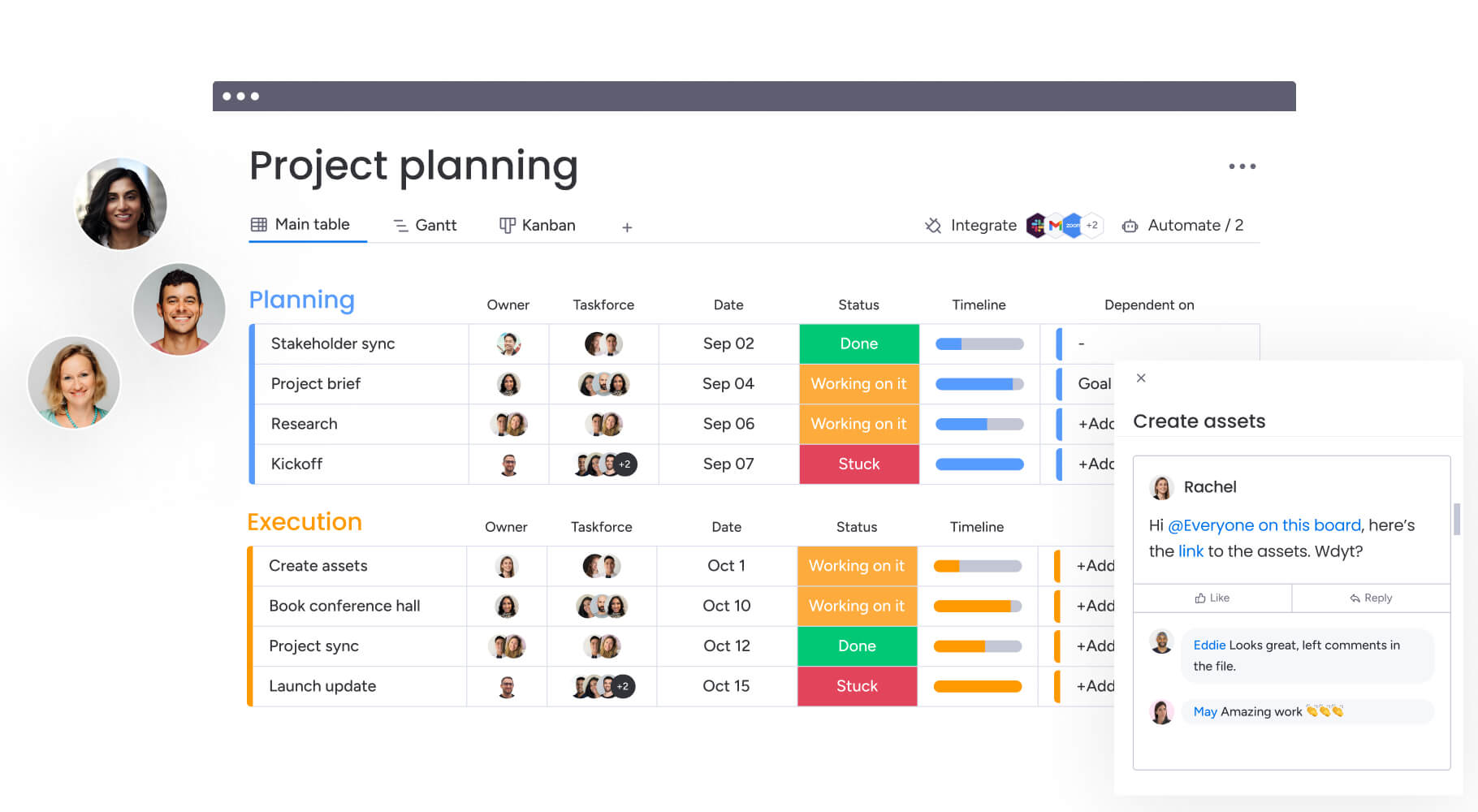
Meetings are where advisory boards prove their worth. Bad meetings waste everyone’s time and kill engagement. Great meetings generate insights that transform strategy into results. The difference? Preparation, structure, and follow-through.
Strategic agenda development
Focus meetings on decisions, not updates, by applying the 30/70 rule: spend no more than 30% of your time on context and at least 70% on strategic discussion. Apply the 30/70 rule: spend 30% of time on context and 70% on discussion. Frame each topic as a specific question requiring advisory input.
Strong agenda topics:
- “Should we prioritize Enterprise or SMB segments for expansion?”.
- “How do we balance growth investment with profitability targets?”.
- “What capabilities must we build versus buy for AI transformation?”.
Weak agenda topics:
- “Q3 marketing update”.
- “Product roadmap review”.
- “Financial performance”.
Each topic should have a designated executive owner who frames the issue, presents options, and facilitates discussion.
Pre-meeting preparation excellence
Don’t make advisors learn facts during meetings. Send materials 72 hours ahead. Distribute pre-read materials 72 hours in advance, including:
- Executive summary: Two-page overview of key topics and decisions needed.
- Supporting data: Relevant metrics, competitive intelligence, customer feedback.
- Specific questions: What you need advisors to address.
- Context documents: Background for those needing deeper understanding.
Organizations using monday work management share materials through centralized workspaces where advisors can review documents, ask clarifying questions, and even begin discussions before the meeting starts.
Action item management
Every meeting must end with action items, owners, and deadlines. Otherwise, even brilliant advice goes nowhere. Without follow-through, even brilliant advice becomes worthless.
Effective action item management includes:
- Real-time capture: Document decisions and next steps during the meeting.
- Ownership: Assign each item to a specific person.
- Defined deadlines: Set realistic but urgent timelines.
- Progress tracking: Monitor completion between meetings.
- Feedback loops: Report back on implementation results.
Converting advisory input into tracked workflows ensures recommendations become reality. When advisors see their input driving change, engagement deepens.
Continuous engagement between sessions
Don’t limit advisory relationships to quarterly meetings. Create touchpoints that keep advisors connected. Create touchpoints that keep advisors connected without overwhelming them:
- Monthly updates: Brief emails highlighting progress and challenges.
- Quick polls: Gather input on specific decisions via short surveys.
- Document reviews: Share strategic documents for asynchronous feedback.
- Informal connections: Coffee chats or calls on emerging issues.
Real-time dashboards give advisors visibility into implementation progress. They can see which recommendations are advancing, where bottlenecks exist, and how their input impacts outcomes.
Try monday work managementManage advisory board execution with monday work management
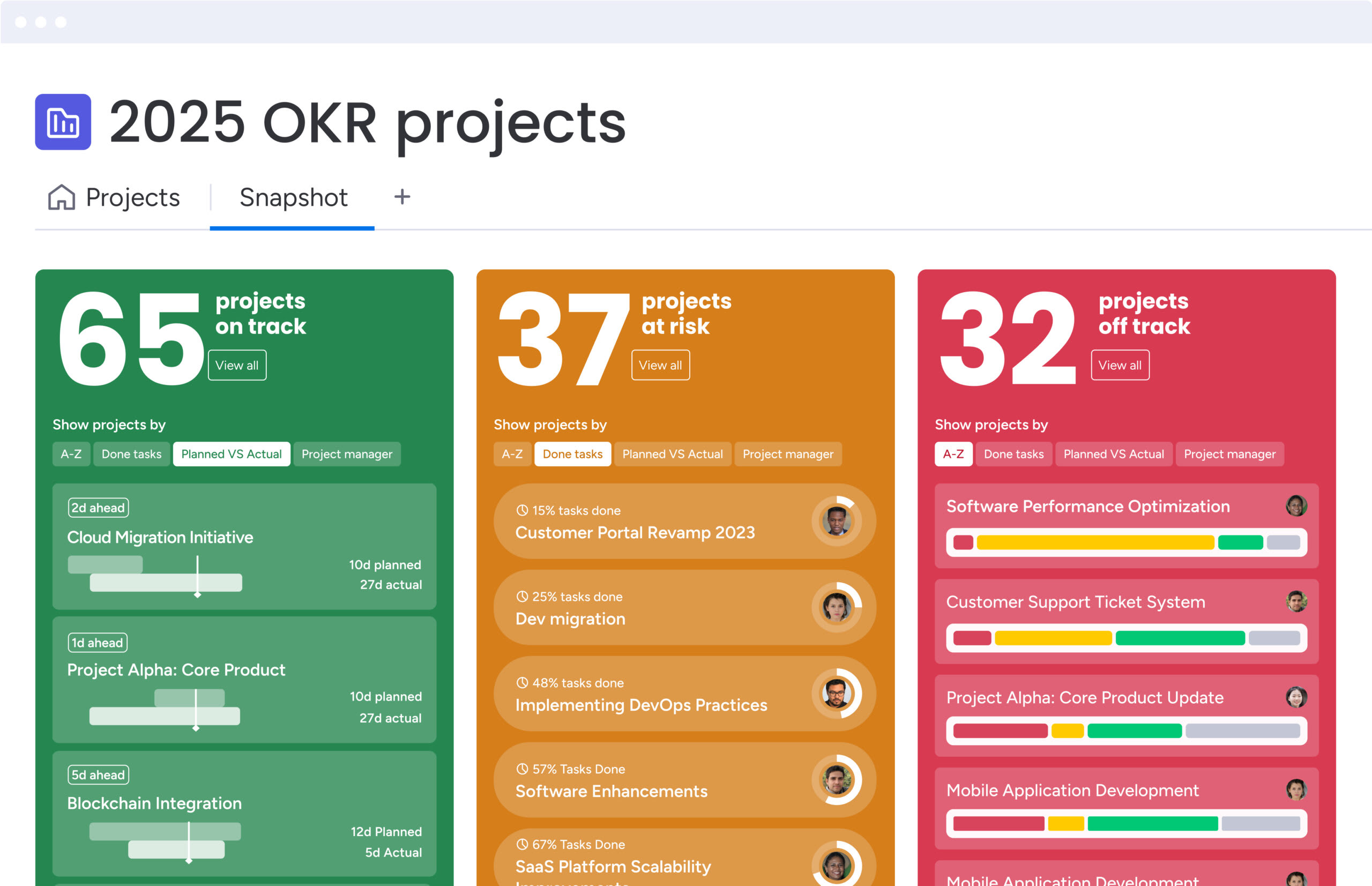
Advisory boards are only valuable if their recommendations lead to real progress. Without a clear system for follow-through, even strong insights can get lost across meetings, emails, and disconnected workflows.
monday work management provides the structure to close that gap. It connects advisory input directly to execution, so decisions don’t stop at discussion — they move forward with clear ownership, timelines, and visibility across teams.
Centralize advisory board operations
Create a dedicated workspace for all advisory board activities. This becomes your single source of truth for:
- Meeting management: Schedules, agendas, minutes, and recordings in one place.
- Document repository: Strategic plans, pre-reads, and reference materials.
- Action tracking: Every recommendation becomes a trackable item with ownership.
- Progress visibility: Real-time dashboards showing implementation status.
When advisory work lives in the same system as daily operations, recommendations turn into action instead of sitting in separate tools.
Track recommendations from insight to impact
Each advisory recommendation becomes a tracked workflow with:
- Assigned owner: The executive responsible for implementation.
- Priority level: How this fits within other initiatives.
- Timeline: Specific milestones and deadlines.
- Dependencies: Related projects or resources needed.
- Success metrics: How you’ll measure impact.
As teams execute on advisory input, automatic status updates keep everyone informed. Advisors can log in anytime to see their recommendations progressing from idea to implementation to measured outcome.
Create transparency with real-time dashboards
Dashboards show you what matters:
- Recommendation adoption rate: Percentage of advisory input being implemented.
- Implementation velocity: How quickly recommendations move to action.
- Impact metrics: Business outcomes tied to advisory input.
- Engagement indicators: Advisor participation and contribution levels.
This visibility does three things: It demonstrates advisory board ROI to stakeholders, keeps advisors engaged by showing their impact, and helps leadership identify which types of advice drive the most value.
Automate follow-through on strategic priorities
Automation ensures advisory input doesn’t stall after meetings. Set up workflows that:
- Convert recommendations to tasks: Meeting notes automatically generate assigned action items.
- Trigger status updates: Regular prompts keep implementation moving.
- Escalate delays: Alerts when advisory initiatives fall behind schedule.
- Connect related work: Link advisory input to existing projects and teams.
These automations reduce the manual work of managing advisory relationships while ensuring consistent follow-through on strategic guidance.

“monday.com has been a life-changer. It gives us transparency, accountability, and a centralized place to manage projects across the globe".
Kendra Seier | Project Manager
“monday.com is the link that holds our business together — connecting our support office and stores with the visibility to move fast, stay consistent, and understand the impact on revenue.”
Duncan McHugh | Chief Operations OfficerBuild and advisory board that delivers value today
Advisory boards work when they’re built with intent and run with consistency. The right mix of expertise, clear objectives, and structured engagement turns outside perspective into something you can actually use.
Too often, advisory boards stay at the level of conversation. The real impact comes when advice leads to decisions, and decisions lead to action. That requires clear ownership, follow-through, and a way to keep everything moving between meetings.
That’s where a solution like monday work management comes in. It helps connect advisory input to execution, so nothing gets lost and every recommendation has a clear path forward.
When everything is set up this way, advisory boards become more than a sounding board. They become a reliable source of direction, helping teams move faster, make better calls, and stay focused on what matters most.
Try monday work managementFrequently asked questions
What is the typical size of an advisory board?
The typical size of an advisory board ranges from five to nine members, which provides diverse expertise without creating coordination challenges or diluting individual contributions.
How do advisory boards differ from consultants?
Advisory boards differ from consultants by providing ongoing strategic guidance through collective expertise rather than project-based analysis, and they typically receive equity or modest retainers instead of hourly fees.
Can advisory board members be held legally liable?
Advisory board members generally face minimal legal liability since they lack fiduciary duties, though they should still be covered by indemnification clauses in their engagement agreements.
How often should advisory boards meet?
Advisory boards should meet quarterly for formal strategic reviews, with monthly check-ins or ad-hoc sessions between meetings to address immediate challenges and maintain engagement.
What compensation do advisory board members typically receive?
Advisory board compensation varies by company stage, with startups offering 0.25-1% equity, growth companies providing $5,000-$10,000 plus equity, and enterprises paying $20,000-$100,000 annually in cash.
How long do advisory board terms usually last?
Advisory board terms usually last two years, providing enough time for meaningful contribution while allowing natural transition points if strategic needs change.

 Get started