


Your service desk is no longer just a cost center for fixing problems. It is a strategic engine that drives employee productivity and customer loyalty. But without the right data, you are managing this critical function based on guesswork, not facts.
This is where help desk statistics provide critical clarity. These metrics act as your service operation’s vital signs, revealing everything from resolution speed and user satisfaction to agent productivity. They transform abstract goals like ‘higher-quality service’ into concrete numbers you can track, manage, and improve.
This helpful guide breaks down the essential help desk statistics every leader should know. We will explore key indicators for customer experience, team performance, technology impact, and cross-department collaboration.
Understanding these numbers is the first step toward turning data into a real competitive advantage.
Key takeaways
-
Use help desk metrics to move from guesswork to control: tracking resolution speed, satisfaction, and backlog trends turns service management into a measurable, improvable system.
-
Customer experience metrics drive real business outcomes: indicators like CSAT, first contact resolution, and effort score directly influence productivity, loyalty, and support costs.
-
Automation changes how teams scale support: AI and self-service reduce repetitive work so agents focus on complex issues that require human judgment.
-
Unify service operations with monday service: a single Work OS connects IT, HR, and facilities workflows to reduce handoffs, improve visibility, and speed resolution.
-
Cross-team collaboration is a force multiplier: shared context and integrated workflows resolve issues faster than isolated, ticket-by-ticket approaches.
What are help desk statistics and why they matter
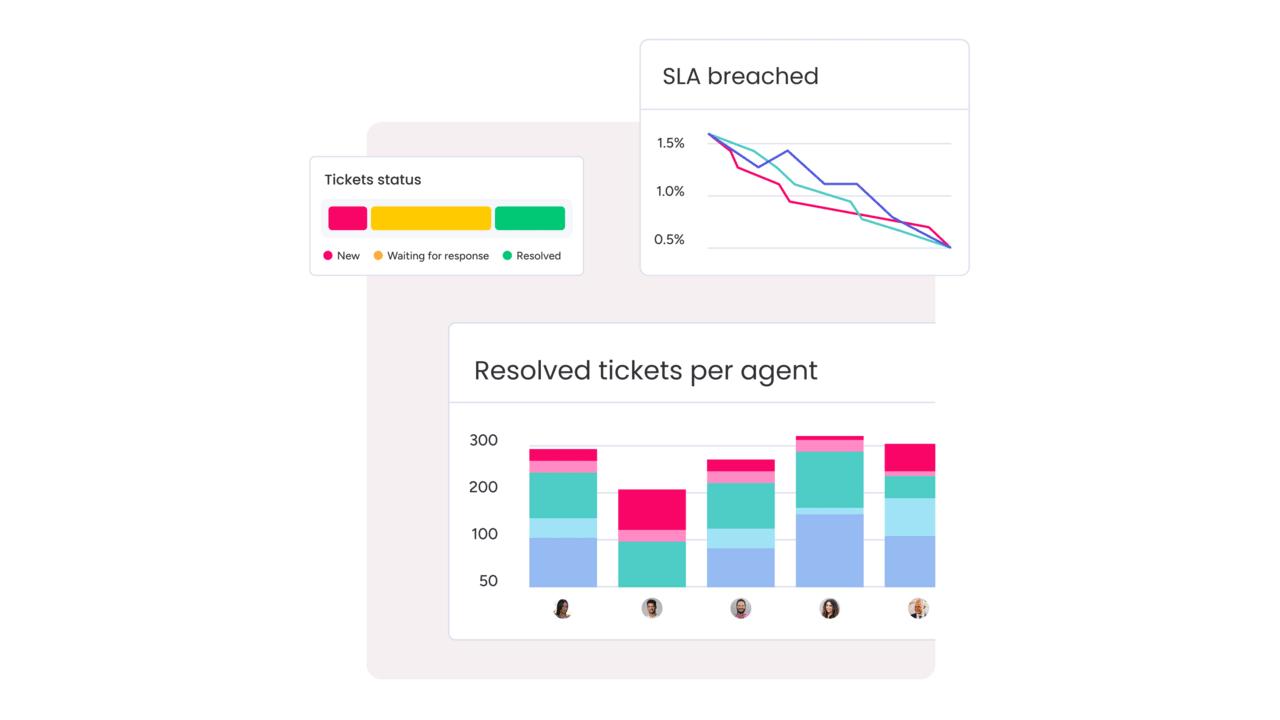
Help desk statistics are numbers that measure how well your service desk performs. They track things like how fast you resolve tickets, how happy customers are, and how efficiently your team works.
Think of these metrics as your service desk’s vital signs. Just like a doctor checks blood pressure and heart rate, you check resolution times and satisfaction scores. These numbers tell you if your support operation is healthy or needs attention.
Why should you care? Because these statistics answer the questions that keep service leaders up at night. Are we meeting our commitments? Where are bottlenecks slowing us down? What’s driving the most support requests?
To make sense of the data, it’s helpful to group it into distinct areas. Help desk statistics break down into four main categories that reveal different aspects of your service performance:
- Market growth metrics: show where the industry is heading and how your spending compares to peers.
- Customer experience indicators: reveal how well you meet user expectations.
- Performance benchmarks: help you spot productivity issues and process improvements.
- Technology impact data: demonstrate how AI and automation drive real results.
Essential help desk market growth statistics
Market statistics give you context for your service desk investments. When you understand industry trends, you can make smarter decisions about where to spend your budget.
According to Gartner/Forrester 2025 research, global IT service spending keeps climbing year after year. Organizations now see the direct link between quality support and business success. Service desks aren’t cost centers anymore — they’re strategic assets that keep employees productive and customers happy.
The service management software market has exploded in recent years. Remote work, digital transformation, and rising ticket volumes drive this growth. Companies that stick with outdated systems risk falling behind competitors who use modern platforms, especially as 63% of executives expect profit growth and cite technology investments as their top growth opportunity.
Digital transformation has reshaped service desks everywhere. Most organizations are ditching legacy help desks for integrated platforms that unify workflows and automate routine work.
Platforms like monday service exemplifies this shift, connecting IT, HR, and operations teams on one platform.
Customer experience statistics that define success
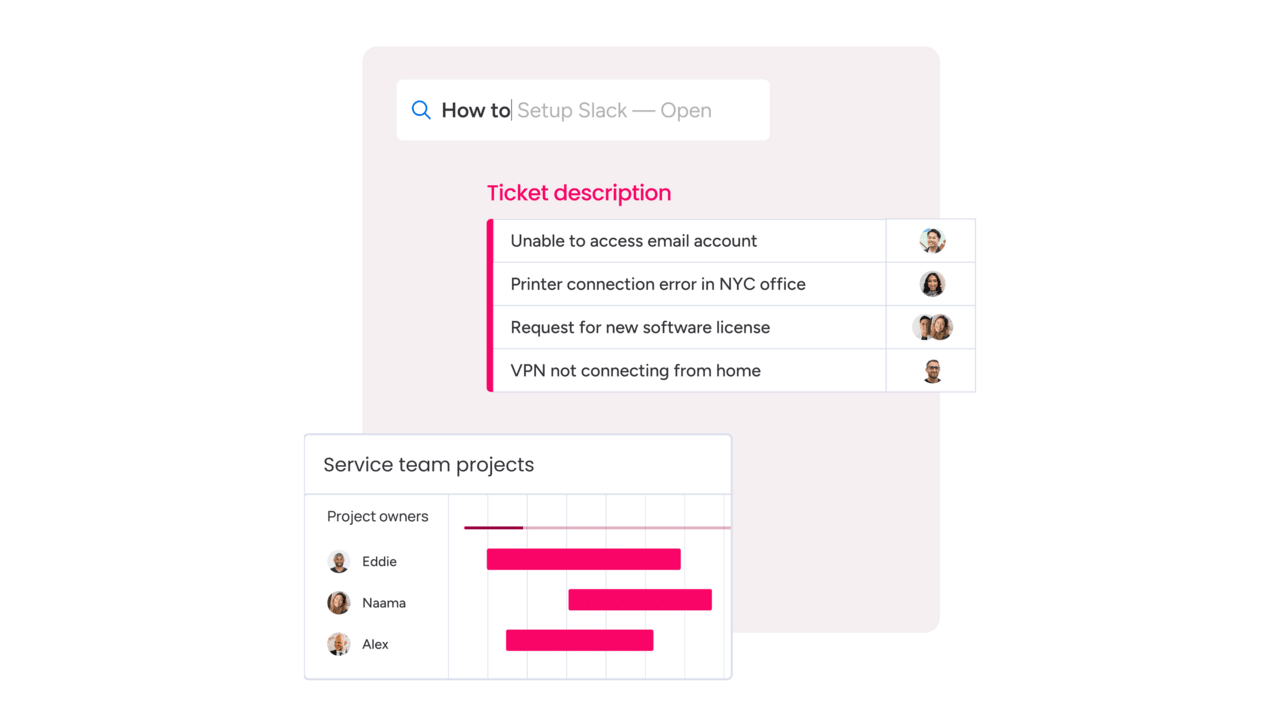
Customer experience metrics show whether your service desk actually helps users or just processes tickets. These numbers reveal the human side of your support operation.
Customer satisfaction score benchmarks
Customer Satisfaction Score (CSAT) measures how users feel right after a support interaction. You typically ask them to rate their experience on a scale of one to five.
What drives high CSAT scores? Speed matters, but it’s not everything. Users also value:
- Agent empathy: feeling heard and understood.
- Easy access: getting help without jumping through hoops.
- Complete resolution: having their issue fully solved.
First contact resolution rates
First Contact Resolution (FCR) tracks how often you solve issues on the first try. No callbacks, no escalations, no frustrated users waiting for answers.
High FCR rates mean your agents have the right knowledge and authority to solve problems immediately. Intelligent solutions like monday service boosts FCR by giving agents instant access to user histories and knowledge bases right in their workflow.
Net promoter score standards
Net Promoter Score (NPS) asks users one simple question: Would you recommend our service to others? This metric captures long-term loyalty, not just satisfaction with one interaction. Strong NPS scores mean you’re building trust over time, creating advocates who actively promote your organization.
Customer effort score metrics
Customer Effort Score (CES) measures how hard users have to work to get help. Did they struggle to find the right channel? Did they have to repeat their issue multiple times?
Low effort equals happy users. Even if resolution takes time, users appreciate when the process feels smooth and straightforward.
Try monday serviceStrong NPS scores mean you’re building trust over time. Your service desk creates advocates who actively promote your organization.
Help desk performance and productivity statistics
Performance metrics reveal how efficiently your team operates. Without clear data, you’re flying blind — unable to spot problems until users complain.
Average ticket resolution times across industries
Resolution times vary wildly based on ticket complexity. A password reset might take minutes, while a system integration issue could take days.
Understanding your benchmarks helps set realistic expectations. You can also spot where processes need improvement. Is manual ticket routing slowing you down? Are agents missing key information?
Ticket volume per agent benchmarks
How many tickets can one agent handle without burning out? The answer depends on your industry and support model.
Automation changes the equation completely. When routine requests handle themselves, agents can manage higher volumes while actually improving quality. They spend time on complex issues that need human expertise.
First response time standards
First response time measures how quickly a user receives acknowledgment after submitting a ticket. Even when resolution takes longer, a fast response reassures users that their issue is being handled.
Real-world improvements show why this metric matters. In FY2025, the Social Security Administration reduced average wait times on its National 800 Number from 30 minutes in January to 7 minutes by September while serving significantly more callers year over year. Faster acknowledgment improved trust without sacrificing volume.
Automated routing plays a key role in achieving this. By sending tickets directly to the right agent or team, organizations avoid long waits in shared queues and ensure users are not left wondering whether anyone has seen their request.
Service level agreement compliance rates
SLAs are promises you make to users about response and resolution times. Compliance rates show how often you keep those promises.
Missing SLAs damages trust and can have real business consequences. monday service helps teams stay ahead with real-time SLA tracking and automatic escalations for at-risk tickets.
Ticket backlog management metrics
Your ticket backlog reveals whether you’re keeping up with demand. Small backlogs are normal, but when they grow beyond a certain point, you’ve got a problem.
Effective backlog management requires three things:
- Clear prioritization: know which tickets matter most.
- Smart automation: let machines handle routine requests.
- Cross-team collaboration: get help when you need it.
AI and automation statistics reshaping service desks
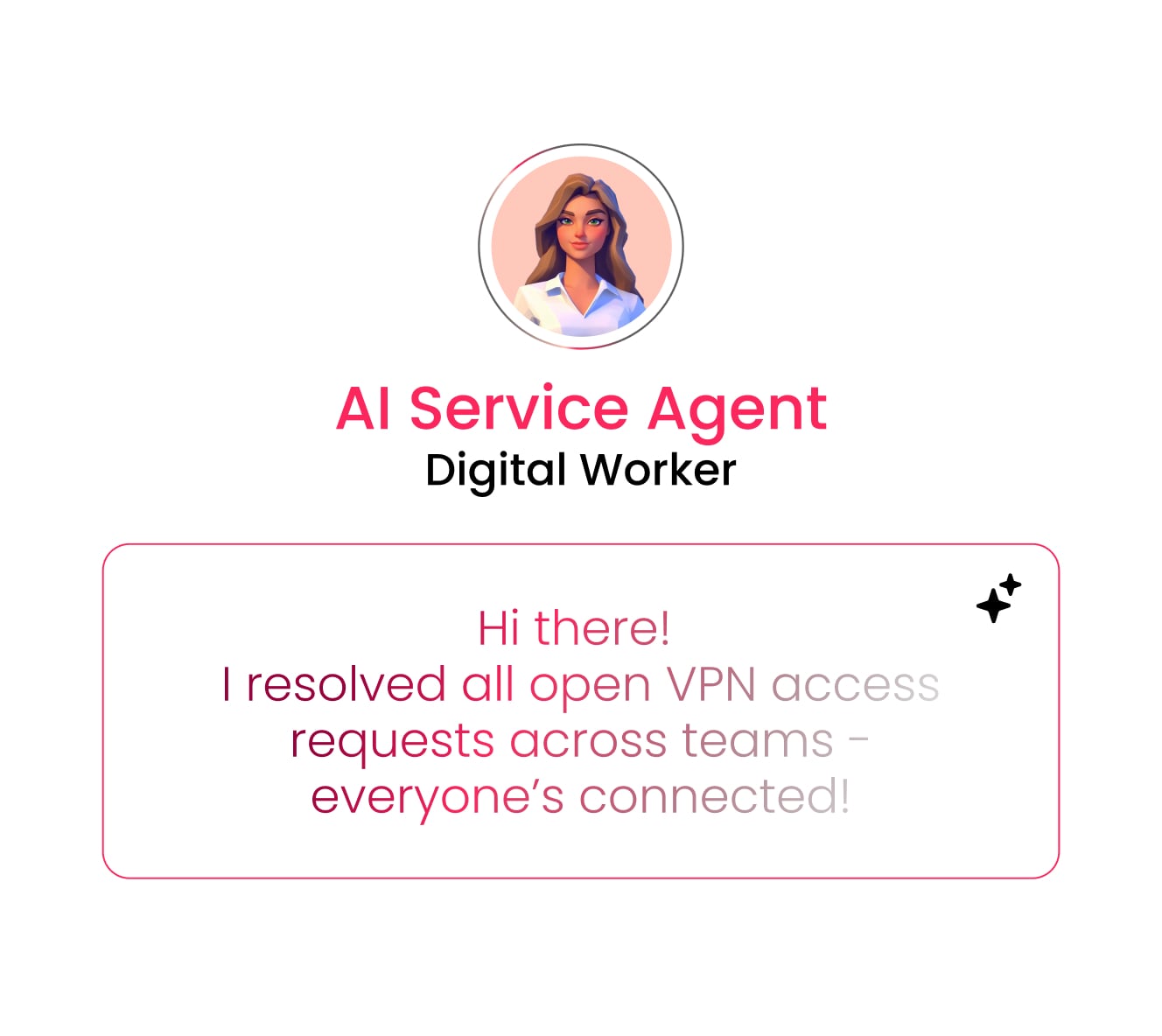
AI isn’t experimental anymore — it’s essential for competitive service delivery. These technologies transform how teams work and what they can accomplish.
AI adoption rates in service management
Most organizations now use AI for ticket classification, routing, and automation. The holdouts risk falling behind as competitors deliver faster, more accurate service.
monday service makes AI accessible without requiring technical expertise. The platform’s AI capabilities work right out of the box, learning from your data to improve over time.
Automation impact on ticket volume
Automation dramatically reduces the number of tickets agents handle manually. Password resets, status updates, and basic troubleshooting happen automatically.
What does this mean for your team? Agents focus on work that matters — complex problems that need human judgment and creativity. Job satisfaction goes up as mundane work disappears.
Self-service portal success rates
Good self-service portals deflect huge numbers of tickets. Users find answers on their own schedule without waiting for agent availability.
Success depends on making self-service truly helpful:
- Intuitive search: Users find what they need quickly
- Current content: Articles stay updated and relevant
- Easy escalation: Users can reach agents when needed
Chatbot resolution effectiveness
Modern chatbots handle routine inquiries with impressive success rates. They’ve moved beyond simple scripts to understand context and provide genuinely helpful responses.
The key is knowing when to hand off to humans. Chatbots excel at FAQs and simple processes but should escalate when users need deeper help.
ROI of AI implementation in help desks
Organizations see major returns from AI investments. Costs drop as automation handles routine work. Satisfaction rises as users get faster, more consistent service.
Organizations see major returns from AI investments, with companies deploying AI-powered systems achieving a 15–20% increase in customer satisfaction and a 20–30% reduction in cost-to-serve. The real value comes from what AI enables: scaling support without adding headcount and freeing agents to do meaningful work.
Communication channel statistics and preferences
Users want support on their terms, through their preferred channels. Understanding these preferences helps you meet users where they are.
Email support usage trends
Email remains popular for complex issues that need detailed explanations. Users like having a written record of their request and resolution.
But email creates challenges too. Requests can get lost, context gets scattered across threads, and response times lag. Solutions like monday service solve this by automatically converting emails into trackable tickets.
Live chat adoption and satisfaction
Live chat delivers the immediacy users crave. No phone queues, no waiting for email responses — just real-time problem solving.
Chat works best for quick questions and simple issues. Users get answers fast, and agents can handle multiple chats simultaneously.
Phone support vs digital channels
Phone support still matters for urgent or sensitive issues. Some users simply prefer talking through problems rather than typing them.
The trend is clear though — digital channels dominate. Successful organizations offer both options, letting users choose based on their needs and preferences.
Knowledge base effectiveness
A great knowledge base is like having an agent available 24/7. Users find answers instantly without creating tickets.
Effective knowledge bases share common traits:
- Clear organization: logical categories and navigation.
- Plain language: no jargon or technical speak.
- Regular updates: content stays current and accurate.
Omnichannel service expectations
Users don’t think in channels — they just want their problem solved. They might start with self-service, switch to chat, then follow up by email.
Integrated platforms like monday service make this seamless. Every interaction connects to the same ticket, giving agents full context regardless of channel.
Try monday service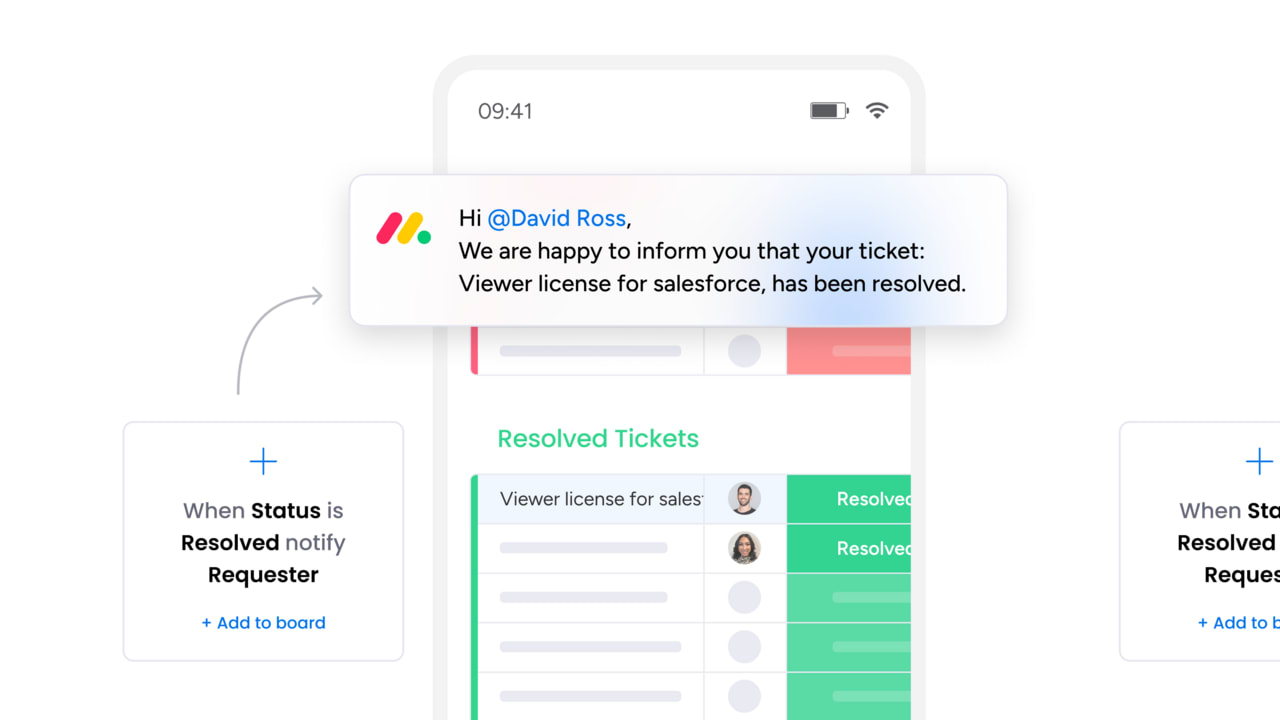
Help desk challenges and opportunity statistics
Every challenge in your help desk data points to an opportunity for improvement. Smart leaders use these insights to drive positive change.
Common service desk bottlenecks
Where do tickets get stuck? Common culprits include manual triage, disconnected systems, and slow escalations.
Advanced platforms like monday service attacks these bottlenecks directly. Automated routing eliminates manual sorting. Integrated workflows connect all your systems. Clear escalation paths keep tickets moving.
Agent productivity barriers
What stops agents from doing their best work? Usually it’s not lack of effort — it’s outdated technology, insufficient training, or too many repetitive tasks.
Remove these barriers and watch productivity soar. Give agents modern platforms, ongoing training, and automation for routine work.
Technology adoption success rates
Most service desk technology implementations succeed when done right. Success factors include user-friendly interfaces, good training, and strong leadership support.
Failed implementations usually stem from poor change management. People resist new systems when they don’t understand the benefits or feel excluded from decisions.
Cost per ticket benchmarks
Every ticket costs money to resolve. The range is huge — from a few dollars for self-service to much more for complex, escalated issues.
Smart organizations optimize costs without sacrificing quality:
- Automate routine requests: let machines handle the simple stuff.
- Invest in knowledge: help users help themselves.
- Streamline processes: remove unnecessary steps.
Cross-department collaboration impact statistics
Modern service management spans the entire organization. When departments work together, everyone wins — especially your users.
Multi-team resolution time improvements
Complex issues often need input from multiple teams. Without good collaboration, tickets bounce around while users wait.
Integrated platforms change the game. Teams work together in real-time, sharing context and resolving issues faster. monday service provides this unified workspace where IT, HR, and facilities coordinate seamlessly.
Project and ticket correlation metrics
Service requests often connect to larger projects. A new employee needs IT access, HR onboarding, and facilities setup.
Linking tickets to projects provides crucial context. Teams understand priorities better and allocate resources more effectively.
Resource optimization through integration
When service management spans departments, you eliminate duplicate systems and redundant work. Everyone uses the same platform and follows consistent processes.
monday service’s Work OS approach makes this integration natural. Teams share workflows while maintaining their unique needs.
Enterprise service management benefits
Expanding service management beyond IT delivers measurable improvements everywhere. HR onboards employees faster. Facilities responds to requests quicker. Legal processes contracts more efficiently.
The key is using the same proven processes across all service functions. Consistency drives quality.
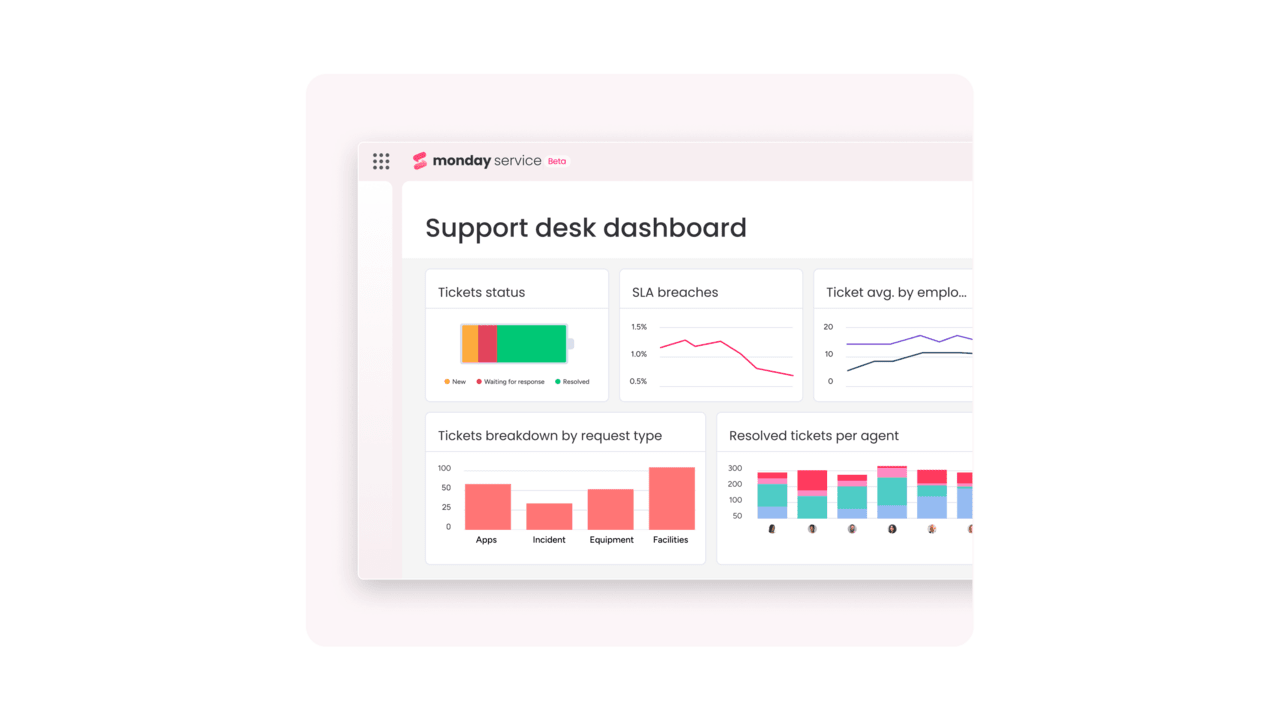
Implementation and adoption statistics for modern platforms
Choosing the right platform is just the start. Success depends on how you implement and drive adoption.
Time-to-value for no-code solutions
No-code platforms get you running fast. While traditional systems take months to implement, no-code solutions launch in weeks.
monday service exemplifies this speed. Teams build workflows visually, test immediately, and refine based on real usage. No waiting for developers or consultants.
User adoption rates by platform type
Intuitive platforms see high adoption rates. When software feels natural to use, people embrace it quickly.
What drives adoption? Three factors matter most:
- Ease of use: can users figure it out themselves?
- Clear value: do they see immediate benefits?
- Mobile access: can they work from anywhere?
Total cost of ownership comparisons
Cloud platforms cost significantly less than on-premises solutions over time. You avoid infrastructure costs, reduce maintenance, and scale easily.
The savings go beyond money. Cloud platforms update automatically, integrate smoothly, and require less specialized support.
Training time requirements
Modern platforms require minimal training. Intuitive interfaces and in-app guidance help users become productive quickly.
This matters because lengthy training kills momentum. People want to start working, not sit through weeks of classes.
How monday service helps you beat these benchmarks
monday service addresses a wide variety of challenges revealed by help desk statistics. The platform combines intuitive design, powerful automation, and AI intelligence to help you exceed industry benchmarks.
AI-powered classification and routing ensure tickets reach the right team immediately. No manual sorting, no delays — just accurate assignment based on content and context.
The Work OS approach breaks down silos between departments. When facilities needs IT help with a request, they collaborate in one place. Resolution times drop as handoffs become seamless.
No-code customization means you launch fast and adapt quickly. Build the workflows you need without waiting for IT or vendors. See results in weeks, not months.
Finally, monday service customers consistently outperform industry averages. They report higher satisfaction scores, improved SLA compliance, increased agent productivity, and lower costs per ticket.

"Our team LOVES the monday service platform and we’re already exploring how we could incorporate it for other departments, too. It has streamlined our workflow in a way that both our team and customers appreciate."
Andrew Marshall | VP Operations
״monday service provides clear insights into requests volume and types, response times, and trends - helping us continuously improve operations"
Grant De Waal-Dubla | CIO
"The biggest value for us is speed and flexibility. You can get up and running in days, change anything instantly, and see everything in real time. And you don’t need a dedicated admin to do it."
Clive Camilleri | Head of People Tech & OperationsTurn statistics into success with smart service management
Help desk statistics illuminate the path to exceptional service. They show where you excel and where you need improvement.
The most successful teams use these insights to drive continuous improvement. They invest in modern platforms, embrace automation, and focus relentlessly on user experience.
Smart service management isn’t about following every trend. It’s about understanding what matters for your organization and using the right platforms to achieve it. With clear metrics and modern technology, any team can transform their service desk into a competitive advantage.
Try monday serviceFrequently asked questions
What is the difference between help desk metrics and KPIs?
The difference between help desk metrics and KPIs is that metrics track basic activity like ticket counts and response times, while KPIs (key performance indicators) measure strategic impact like customer satisfaction and cost per resolution. Metrics tell you what happened, but KPIs tell you if it mattered to the business.
How do help desk statistics vary by industry?
Industries with complex technical products typically see longer resolution times because issues require specialized knowledge. healthcare and financial services often have stricter SLA requirements due to regulations, while retail focuses more on volume and speed.
When should you upgrade your service management platform?
You should consider upgrading when customer satisfaction drops consistently, resolution times keep increasing, or costs per ticket rise above industry benchmarks. Other warning signs include growing ticket backlogs and frequent SLA breaches.
How often should you review help desk performance metrics?
Review operational metrics like ticket volume and resolution times monthly to catch issues early. Review strategic KPIs like customer satisfaction and ROI quarterly to track longer-term trends and make informed decisions.
Which help desk statistics matter most to executives?
Executives care most about metrics that show business impact: customer satisfaction scores demonstrate service quality, cost per ticket shows operational efficiency, and ROI metrics prove the value of technology investments.
What help desk trends will emerge in the next few years?
AI will continue advancing to handle more complex requests autonomously, while self-service will become the primary channel for routine issues. Expect to see more predictive analytics that prevent problems before users notice them.

 Get started