


Employees once accepted that workplace technology would be slow and disconnected. Submitting a request often meant sending an email into a black hole and waiting days for a response from a siloed department. Today, that friction is a major barrier to productivity and a key reason top talent looks for employers who get it right.
A digital employee experience strategy is your organization’s plan to fix this. It connects every digital interaction, from IT tickets to HR onboarding, into one seamless experience that feels as smooth as using an app at home. This article walks through the core components of a successful strategy, the benefits it delivers, and a step-by-step roadmap for implementation.
Building this strategy is about more than just technology. It requires a service-first mindset that puts employee needs at the center of your operations. By unifying departments and automating workflows, you can create an environment that empowers people to do their best work, not fight with their technology.
Try monday serviceKey takeaways
- A digital employee experience strategy unifies all workplace technology into one seamless platform, eliminating the frustration of juggling multiple systems and reducing time wasted on simple tasks.
- Start with a clear assessment of current pain points and define specific metrics like resolution time and satisfaction scores to measure success and prove ROI to leadership..
- monday service connects IT, HR, and operations on one flexible platform with built-in AI automation, enabling teams to customize workflows without coding while tracking real-time analytics.
- Focus on self-service options and AI-powered automation to reduce routine ticket volume by up to 40%, freeing your teams to work on strategic projects instead of password resets.
- Implement in phases starting with eager departments, then expand gradually to build momentum and reduce risk while ensuring each rollout teaches valuable lessons for the next phase.
What is digital employee experience strategy?
A digital employee experience strategy is your organization’s plan for making all workplace technology work seamlessly together, supported by employee experience software. This means every digital interaction — from submitting IT tickets to accessing HR information — feels as smooth as using your favorite apps at home.
This means every digital interaction — from submitting IT tickets to accessing HR information — feels as smooth as using your favorite apps at home. Did you have to remember which system to use? Wait days for IT to respond? A digital employee experience strategy fixes these friction points by connecting all your workplace services into one unified experience.
Digital employee experience definition
Digital employee experience is how employees feel when using workplace technology. It covers every digital touchpoint, from logging into systems to getting help from IT.
When employees can find what they need quickly and solve problems without waiting, that’s good digital employee experience. When they’re bouncing between disconnected systems and waiting days for simple requests, that’s where a strategy becomes essential.
DEX strategy vs. traditional employee experience
Traditional employee experience relies on manual processes and separate systems. Digital employee experience strategy uses connected platforms and automation to deliver faster, more personalized support.
Here’s what sets them apart:
- Technology approach: Traditional uses disconnected systems. DEX integrates everything into unified platforms.
- Service delivery: Traditional depends on email and phone calls. DEX offers self-service portals and instant chat.
- Data collection: Traditional gathers feedback annually. DEX tracks satisfaction in real time.
- Collaboration: Traditional keeps departments separate. DEX connects teams on shared platforms.
Why digital employee experience matters now
Remote work changed everything. With 13.3% of U.S. workers now working from home regularly, according to the U.S. Census Bureau’s American Community Survey, employees expect workplace technology to work as smoothly as consumer apps. They want instant answers, not three-day email chains.
Without a strong digital strategy, employees waste hours navigating clunky systems. They lose trust in IT support. Productivity drops. Top talent leaves for companies that get it right.
Core components of a successful DEX strategy
Building a successful digital employee experience strategy requires five essential components. Each one addresses a specific challenge that holds employees back from doing their best work.
Unified digital workplace platforms
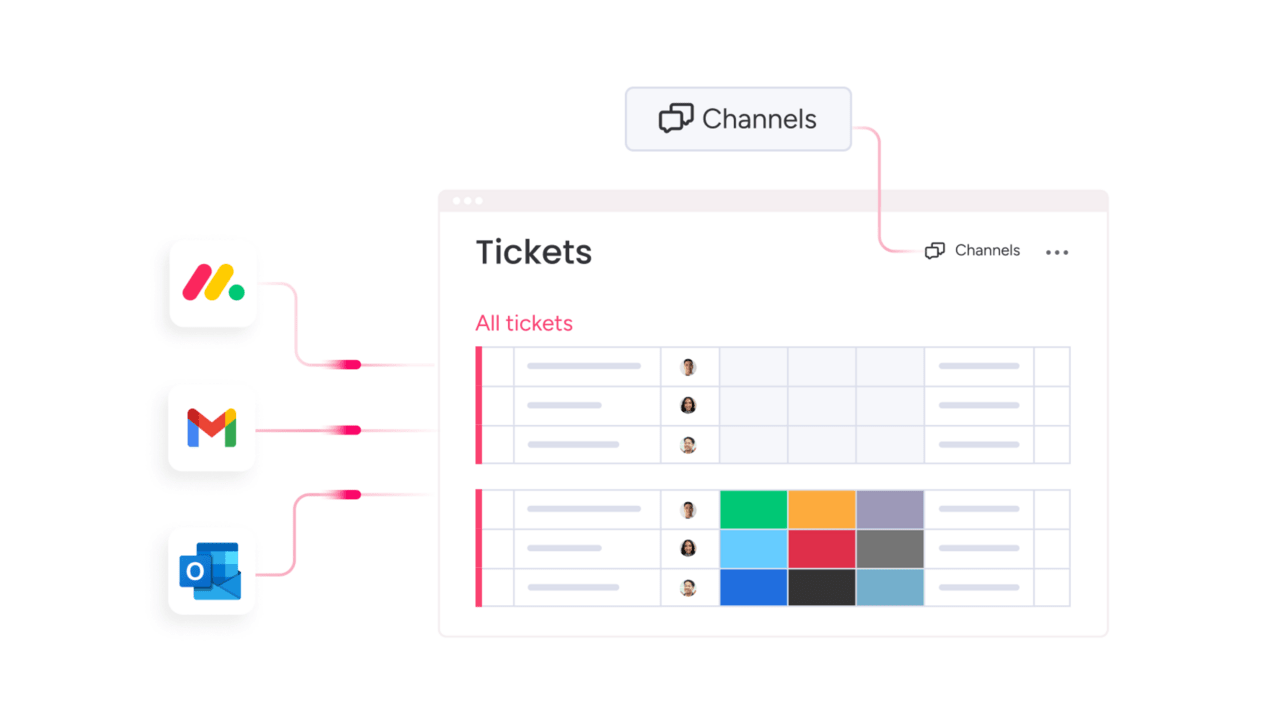
A unified platform brings all your workplace services into one place. Instead of juggling multiple logins and systems, employees find everything they need in a single portal.
monday service connects IT, HR, and operations on one platform. Employees submit requests once and track them through completion. No more wondering which system to use or where their request went.
AI-powered service automation
AI handles the repetitive work that slows everyone down, even as 92% of companies plan to increase AI investments over the next three years, according to a McKinsey report. Password resets happen instantly. Common questions get answered 24/7. Tickets route to the right team automatically.
This isn’t about replacing people — it’s about freeing them to solve complex problems. When AI handles routine requests, your service teams can focus on work that actually needs human expertise.
Employee-centric design
Good design starts with understanding what employees actually need. Not what departments think they need.
An employee-centric portal shows new hires exactly what to do first. It guides managers through approval workflows. It remembers preferences so people don’t repeat the same information. Every interaction feels intuitive because it’s built around real employee journeys.
Real-time analytics and insights
You can’t improve what you can’t measure. Real-time analytics show exactly where employees get stuck and which services need attention.
monday service tracks every metric that matters — from resolution times to satisfaction scores. Leaders see trends as they develop, not months later in a quarterly report. This visibility turns guesswork into informed decisions.
Cross-departmental integration
Most employee needs span multiple departments. New hires need IT access, HR onboarding, and facilities setup. Equipment requests involve IT, procurement, and finance.
Most employee needs span multiple departments throughout the employee lifecycle. Updates happen automatically. Handoffs are seamless. Employees get coordinated support instead of departmental runarounds.
7 key benefits of digital employee experience strategy
A well-executed digital employee experience strategy delivers measurable benefits that executives care about. Here’s what organizations achieve when they get it right.
1. Boost employee productivity and engagement
When employees can solve problems in minutes instead of days, they stay focused on meaningful work. A unified service portal eliminates the time lost to hunting for information or waiting for responses.
Engagement naturally follows. Employees who feel supported by their technology bring more energy to their work. They’re not frustrated by systems — they’re empowered by them.
2. Reduce IT service desk ticket volume
Self-service options cut repetitive tickets dramatically. When employees can reset passwords, find answers, and track requests on their own, IT teams handle fewer routine issues.
This creates a positive cycle. Faster response times for complex issues. Higher satisfaction all around. IT teams focus on strategic projects instead of password resets.
3. Accelerate digital transformation adoption
New technology fails when employees won’t use it. But when digital experiences are intuitive and helpful, adoption happens naturally.
Employees embrace platforms that make their lives easier. Success with one digital service builds confidence to try others. The entire organization becomes more agile and ready for change.
4. Improve talent retention and attraction
A strong digital employee experience strategy signals that you value employee time and invest in their success, directly impacting talent retention. Top candidates choose employers who provide modern, frictionless work experiences.
Current employees stay longer when technology supports rather than frustrates them. Word spreads. Your organization becomes known as a place where people can do their best work.
5. Enable data-driven decision making
Digital platforms capture rich data about how work really happens. Leaders see which processes cause delays, where employees struggle, and what improvements would have the most impact.
This data transforms planning from guesswork to science. Resources go where they’ll make the biggest difference. Investments target real problems, not perceived ones.
6. Scale support without adding headcount
Automation and self-service let you support more employees without hiring more staff. As your organization grows, the digital infrastructure scales with it.
Quality stays consistent whether you’re supporting 500 or 5,000 employees. Automated workflows handle increased volume. AI assists with more requests. Growth doesn’t mean growing pains.
7. Create seamless cross-team collaboration
When teams use the same platform, collaboration happens naturally. Information flows freely. Updates are automatic. Projects move forward without the usual delays.
monday service breaks down silos by giving everyone visibility into the full picture. IT sees what HR needs. Finance understands IT priorities. Real teamwork replaces departmental politics.
Try monday service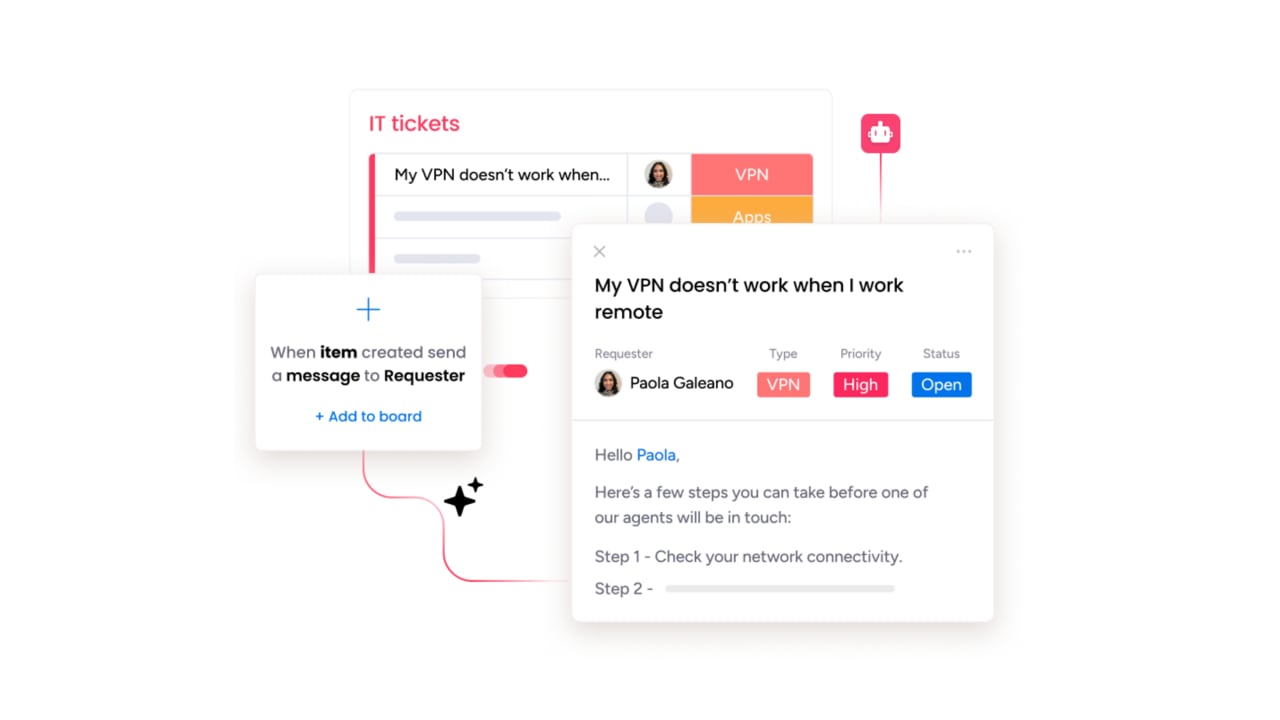
6-step implementation roadmap for your DEX strategy
Transforming your digital employee experience requires a structured approach. This roadmap guides you through each critical phase.
Step 1: Assess your current digital employee experience
Start by understanding where you are today by surveying employees about their biggest technology frustrations to assess your current employee experience. Map the journey of common requests from submission to resolution.
Look for patterns. Where do delays happen? Which systems cause the most confusion? What workarounds have employees created? This baseline shows you exactly what needs to change.
Step 2: Define clear objectives and success metrics
Set specific, measurable goals that align with business priorities. Don’t aim to “improve employee experience” — target reducing average resolution time by 40% or achieving 80% first-contact resolution.
Clear metrics keep everyone aligned. They prove value to stakeholders. They show whether changes are actually working. Pick 3-5 key metrics and track them religiously.
Step 3: Build your cross-functional DEX team
Digital employee experience touches every department. Your implementation team needs representatives from IT, HR, operations, and other key areas. Include frontline employees who know the real pain points.
Give this team real authority. They need to make decisions, not just recommendations. They’ll champion change across the organization and ensure every perspective is considered.
Step 4: Choose the right digital employee experience platform
The right platform makes everything else possible. The right employee experience platform makes everything else possible. Test with real scenarios from your organization.
monday service stands out for its flexibility and ease of use. Teams can build exactly what they need without coding. The platform grows with you, adapting as requirements change.
Step 5: Create your phased rollout plan
Start small with a pilot group. Choose a department that’s eager for change or facing the biggest challenges. Let them test the new system, provide feedback, and become advocates.
Use their success to build momentum. Roll out to additional departments one at a time. Each phase teaches you something new and reduces risk of widespread issues.
Step 6: Launch, measure, and continuously improve
Go live with clear communication about what’s changing and why. Track your defined metrics from day one. Collect feedback constantly — not just during annual surveys.
Digital employee experience isn’t a project with an end date. It’s an ongoing commitment. Regular reviews, quarterly improvements, and constant listening keep your strategy relevant and effective.
How AI transforms digital employee experience in 2026
AI has moved from experimental to essential. Today’s AI doesn’t just automate tasks — it anticipates needs, learns from patterns, and delivers personalized experiences at scale.
AI agents for autonomous service delivery
AI agents handle entire service requests without human intervention. An employee requests software access. The AI agent verifies their role, checks approval requirements, and provisions access instantly.
These agents work around the clock. They don’t take breaks or get overwhelmed. They deliver consistent service whether it’s 3 p.m. or 3 a.m., ensuring global teams get support when they need it.
Smart ticket routing and auto-classification
Every service request contains clues about where it should go. AI reads these clues instantly — keywords, urgency indicators, historical patterns — and routes tickets perfectly.
No more tickets sitting in general queues. No more transfers between departments. Requests reach the right expert immediately, cutting resolution time dramatically.
Personalized employee experiences at scale
AI remembers how each employee works. It knows a developer needs different resources than a sales manager. It customizes interfaces, suggests relevant articles, and anticipates common requests.
This personalization happens automatically. No manual configuration needed. Every employee gets an experience tailored to their role, preferences, and work patterns.
Predictive analytics for proactive support
Why wait for problems to happen? AI spots patterns that predict issues before they impact employees. It might notice that certain software always fails after updates or that password reset requests spike on Mondays.
With these insights, teams can act proactively. Fix issues before they spread. Staff up before busy periods. Turn reactive firefighting into strategic planning.
Essential digital employee experience platforms and software
Choosing the right technology stack is crucial for digital employee experience success. Different platforms serve different purposes, but they must work together seamlessly.
The most effective organizations combine these platform types:
- Service management platforms: Centralize all service requests and automate workflows
- Analytics solutions: Measure satisfaction and identify improvement opportunities
- Knowledge management: Enable self-service through searchable documentation
- Integration tools: Connect existing systems without replacing them
Service management platforms for DEX
Service management platforms form the backbone of your digital employee experience strategy. They centralize requests, automate workflows, and connect departments.
monday service excels here by offering complete flexibility. Build the exact workflows your organization needs. Connect every department. Scale as you grow. All without writing code or hiring consultants.
Employee experience analytics solutions
You need to know how employees really feel about their digital experience. Analytics platforms capture satisfaction scores, track usage patterns, and identify pain points.
Real-time dashboards show what’s working and what isn’t. Sentiment analysis reveals how employees feel, not just what they do. This combination of hard data and human insight drives more informed decisions.
Knowledge management and self-service tools
The best support is self-support. Self-service tools let employees find answers instantly through searchable articles, video guides, and interactive tutorials.
When knowledge is easy to find and always current, employees solve their own problems. Support tickets drop. Satisfaction rises. Everyone wins.
Integration capabilities and APIs
Your existing systems contain valuable data and established workflows. Integration tools connect these systems to your digital employee experience platform without disrupting what works.
Strong integration means employees never notice the technical complexity. Data flows seamlessly. Updates sync automatically. The experience feels unified even when the backend involves multiple systems.
Try monday service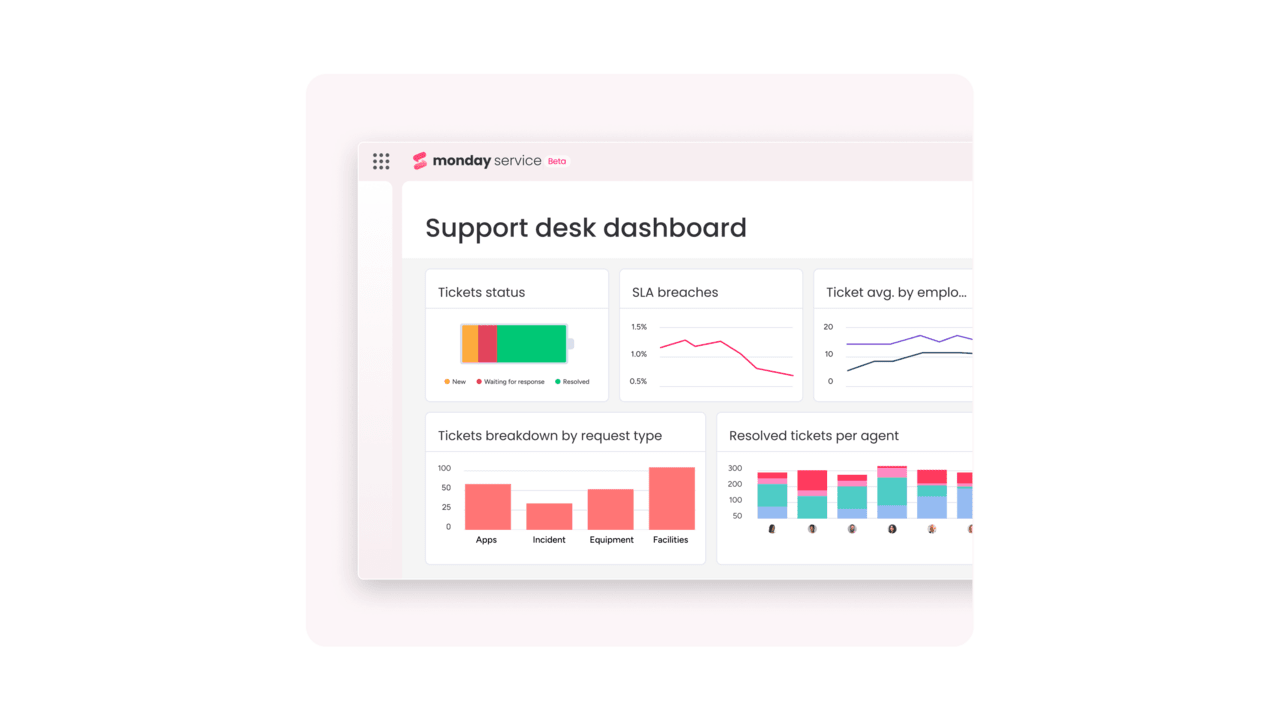
Measuring digital employee experience success
Measurement separates successful digital employee experience strategies from expensive experiments. Track the right metrics to prove value and guide improvements.
Focus on metrics that matter to both employees and executives. Operational metrics show efficiency. Experience metrics reveal satisfaction. Together, they paint the complete picture.
First-contact resolution rate
This metric shows the percentage of issues resolved without escalation or follow-up. High rates mean employees get answers quickly and service teams work efficiently.
Improving first-contact resolution often requires better knowledge bases, smarter routing, and more empowered agents. monday service helps by ensuring agents have full context and the right tools to solve issues immediately.
Employee satisfaction and sentiment scores
Numbers tell what happened. Sentiment explains how employees feel about it. Regular pulse surveys and in-app ratings capture this crucial feedback.
Regular pulse surveys and in-app ratings capture this crucial feedback about employee satisfaction. Investigate sudden drops. Celebrate improvements. Let employee voices guide your strategy, not assumptions.
Service adoption rates
Low adoption means something’s wrong. Maybe the platform is confusing. Maybe communication failed. Maybe it doesn’t solve real problems.
High adoption proves you’re on the right track. Employees vote with their usage. When they choose your platform over old workarounds, you know you’ve delivered value.
Average resolution time
Speed matters, but not at the expense of quality. Track how quickly issues get resolved while monitoring satisfaction scores.
Faster resolution usually means happier employees and more efficient teams. But watch for shortcuts that create repeat issues. Sustainable speed comes from good processes, not rushed work.
Experience-level agreement (XLA) performance
XLAs measure what employees actually care about — ease of use, satisfaction, and outcome quality. Unlike technical SLAs, XLAs focus on the human experience.
Strong XLA performance shows you’re delivering on promises that matter. Employees feel heard. Service teams align with real needs. Technology serves people, not the other way around.
How to navigate DEX implementation challenges
Every organization faces obstacles when implementing digital employee experience strategy. Acknowledging these challenges — and planning for them — ensures success.
Breaking down departmental silos
Departments often protect their own systems and processes. They worry about losing control or changing established workflows.
monday service helps by giving each department flexibility within a unified platform. They keep their unique workflows while gaining visibility and collaboration. Success comes from showing how connection benefits everyone, not forcing conformity.
Managing change and building adoption
People resist change, especially when they don’t understand the benefits. Clear communication, hands-on training, and visible quick wins overcome this resistance.
Involve skeptics early. Let them shape the solution. When they see their input reflected in the final platform, they become your strongest advocates.
Securing budget and leadership buy-in
Executives want to see clear ROI before investing. Build your business case around measurable benefits — reduced support costs, improved retention, faster service delivery.
Frame digital employee experience as strategic, not operational. Show how it enables business goals, attracts talent, and creates competitive advantage. Numbers matter, but vision sells.
Connecting legacy systems and new platforms
Ripping out established systems rarely works. Instead, use integration to connect old and new gradually. The robust API and integration capabilities of monday service make this transition smooth.
Start by integrating your most critical systems. Expand connections over time. Let employees experience benefits before asking them to abandon familiar tools completely.
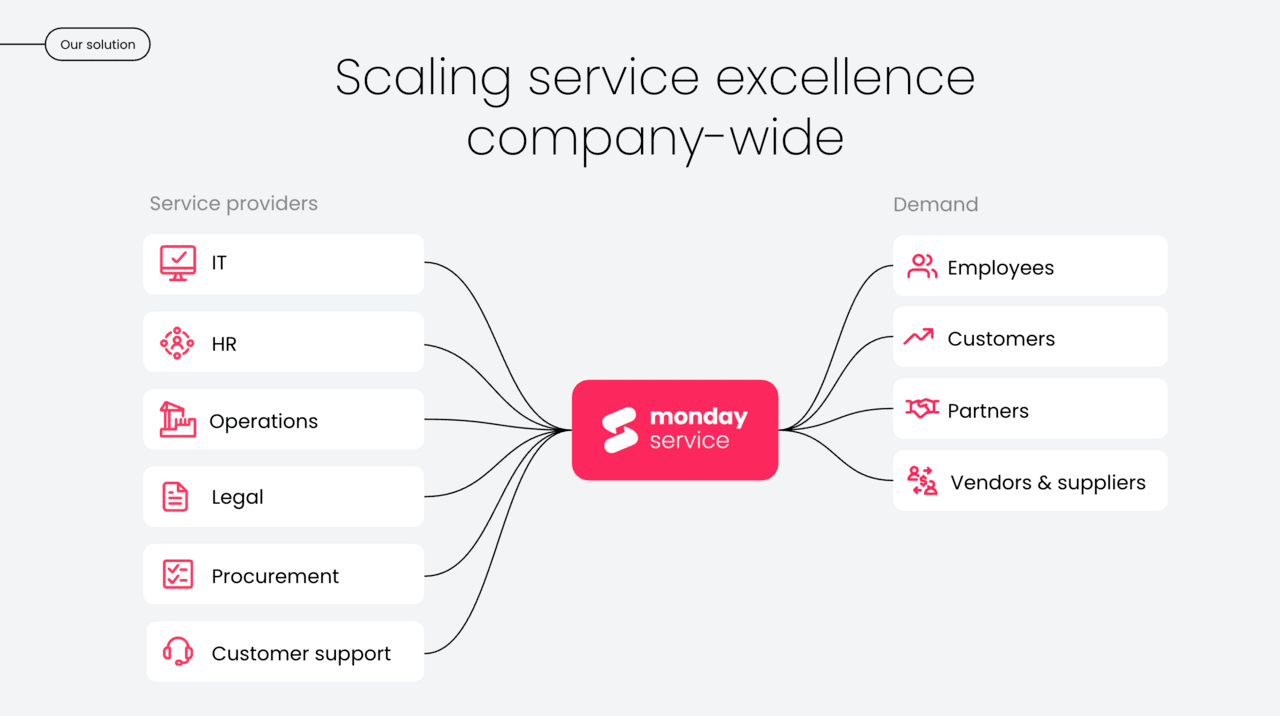
The service-first approach to digital employee experience
Technology alone doesn’t create great digital employee experience. You need a service-first mindset that puts employee needs ahead of departmental preferences.
Unifying all employee services in one place
Employees shouldn’t need to remember which system handles which request. A unified portal gives them one place for everything — IT support, HR questions, facilities requests, and more.
monday service creates this unified experience naturally. Its flexible platform adapts to any service type while maintaining consistency. Employees learn one system and use it for everything.
Creating seamless self-service experiences
Self-service only works when it’s easier than asking for help. Design with clarity. Guide users step-by-step. Anticipate questions before they’re asked.
Make self-service the fastest path to resolution. When employees discover they can solve problems instantly, they’ll choose self-service every time. Your support teams can then focus on complex, high-value work.
Building cross-departmental service workflows
Employee needs rarely fit neat departmental boxes. Onboarding involves HR, IT, facilities, and more. Equipment requests touch IT, procurement, and finance.
Service-first platforms coordinate these multi-department workflows automatically. monday service ensures smooth handoffs, automatic updates, and complete visibility for everyone involved.
Enabling no-code customization for teams
Business needs change faster than IT can keep up. No-code platforms let teams adapt their own workflows without waiting for developers.
monday service puts this power in your hands. Drag and drop to build new workflows. Adjust automation rules as needs evolve. Test improvements immediately. Innovation happens at the speed of ideas, not development cycles.
Try monday serviceAccelerate your DEX strategy with monday service
monday service brings together everything you need for exceptional digital employee experience. One platform. Endless possibilities. Zero coding required.
Connect every department on one platform
Stop juggling disconnected systems. monday service unifies IT, HR, facilities, and every other service function. Employees submit requests once. Teams collaborate seamlessly. Leaders see everything in real-time dashboards.
This connection happens without forcing conformity. Each department maintains their unique processes while gaining the benefits of integration. It’s flexibility with unity.
Leverage AI-powered service automation
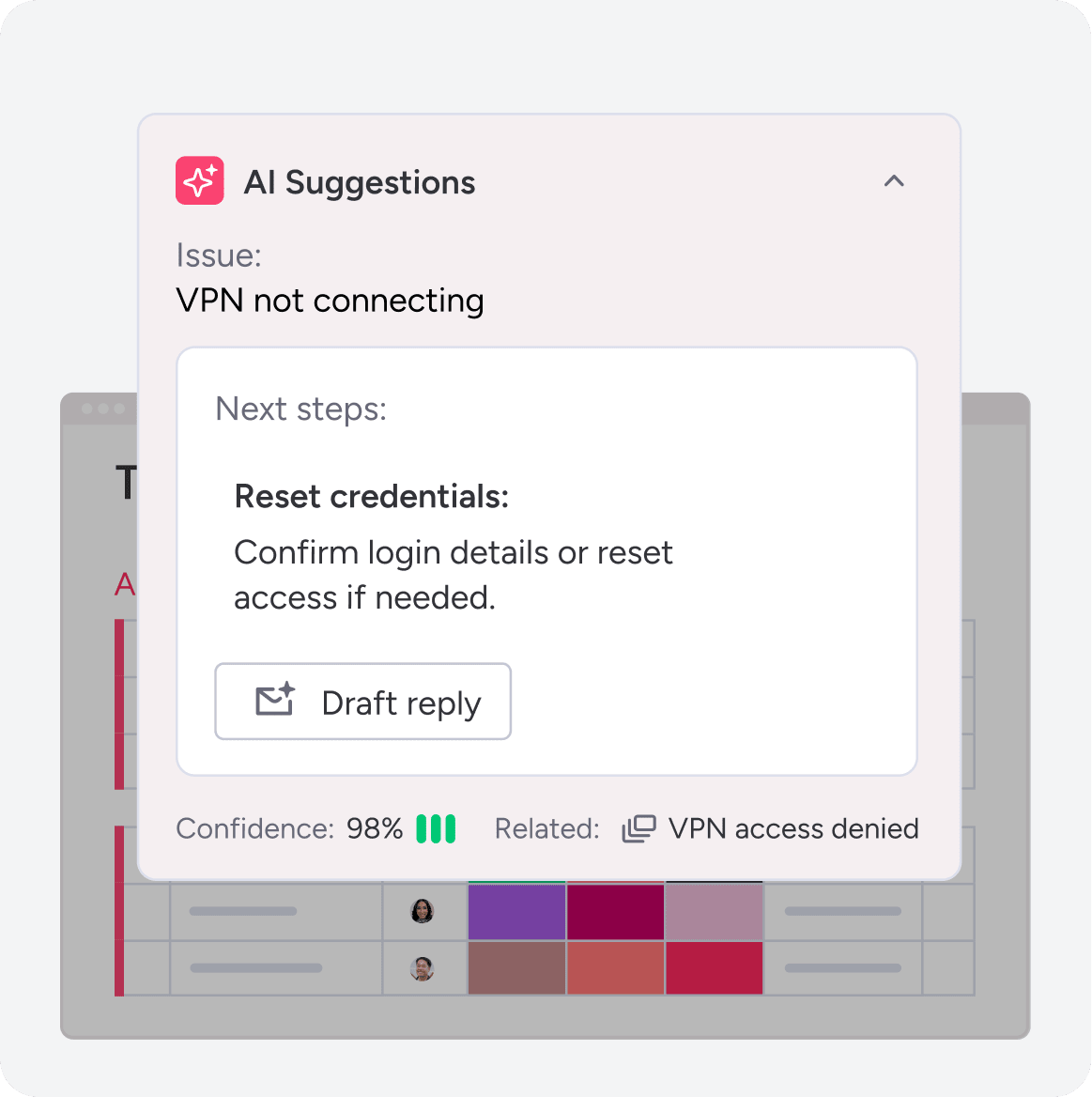
Built-in AI transforms how service teams work. Tickets classify and route themselves. Common requests resolve automatically. Agents get AI-powered suggestions for faster resolution.
The AI learns from your organization’s patterns. It gets smarter over time. What starts as basic automation evolves into intelligent service delivery that anticipates needs.
Customize workflows without code
Your organization is unique. Your workflows should be too. monday service’s drag-and-drop builder lets you create exactly what you need.
Change happens at your pace. Test new ideas immediately. Adjust based on feedback. No waiting for IT. No expensive consultants. Just continuous improvement driven by the people who know your business best.
Track real-time service analytics
Make decisions based on data, not hunches. monday service’s analytics show exactly how your service operations perform. Track SLA compliance. Monitor satisfaction trends. Identify bottlenecks before they cause problems.
Real-time visibility means real-time response. When metrics drift, you know immediately. When improvements work, you see the impact. Data drives confidence in every decision.
Try monday service
FAQs
What's the difference between digital employee experience and employee experience?
Digital employee experience focuses specifically on how employees interact with workplace technology and digital services. Employee experience covers everything about work — physical office, culture, management, and benefits. Digital employee experience is one part of the overall employee experience.
How much does a digital employee experience platform cost?
Digital employee experience platform costs vary based on organization size and features needed. Basic platforms start around $10-20 per user monthly. Enterprise solutions with advanced AI and analytics can reach $100+ per user monthly. Most vendors offer tiered pricing with different feature sets.
What's the typical timeline for DEX strategy implementation?
Most organizations see initial results within 3-6 months and full implementation within 12 months. The timeline depends on organization size, current technology state, and implementation approach. Phased rollouts typically show value faster than big-bang approaches.
How do you calculate ROI for digital employee experience investments?
ROI calculation for digital employee experience combines reduced support costs, productivity gains, and retention improvements. Measure baseline metrics before implementation, then track improvements in ticket volume, resolution time, and employee satisfaction. Include soft benefits like reduced turnover and faster onboarding.
What are the first steps in building a DEX strategy?
Building a DEX strategy starts with assessing your current state through employee surveys and journey mapping. Next, define clear success metrics aligned with business goals. Then build a cross-functional team to guide implementation. These foundational steps ensure your strategy addresses real needs.
How does DEX strategy support remote and hybrid work models?
Digital employee experience strategy enables consistent support regardless of location through cloud-based platforms and self-service options. Remote employees access the same services as office workers. AI-powered assistance provides 24/7 support across time zones. Mobile-friendly interfaces ensure access from any device.

 Get started