


Procurement teams are often buried in administrative tasks instead of driving strategic value. Chasing approvals, manually entering invoice data, and navigating complex forms consumes time that could be spent negotiating better contracts or strengthening supplier relationships. An AI procurement portal transforms this function from a cost center into a strategic partner.
This guide explains how these platforms automate the entire purchasing lifecycle. We’ll walk through the core components, essential AI capabilities, and key benefits for your organization. You’ll also learn about the data foundation required for success and the practical steps for building your own portal, including how monday service streamlines the entire process.
Key takeaways
- Natural language automation: AI procurement portals understand plain English requests and automate approvals, cutting purchase cycles from weeks to days while reducing manual work by up to 80%.
- Start small: Begin with high-impact, low-complexity use cases like invoice processing and approval routing to see quick wins before expanding to full autonomous purchasing.
- Clean data matters: Deduplicate suppliers, standardize categories, and validate approval hierarchies before implementing automation.
- No-code flexibility:monday service combines visual workflow design with AI capabilities, letting procurement teams build and modify automations without coding or IT bottlenecks.
- Phased rollout: Pilot with one department for 6-10 weeks, then gradually expand enterprise-wide over 4-9 months for sustainable adoption.
What is an AI procurement portal?
An AI procurement portal is a digital platform that uses artificial intelligence to automate and streamline purchasing processes from request to payment.
Unlike traditional e-procurement systems that simply digitize forms, AI portals understand natural language requests, automatically route approvals, and learn from past purchases to make smarter recommendations.
Think of it as the difference between filling out a rigid form versus having a conversation. When you need office supplies, you can type “need 20 laptops for new hires by next Friday” and the system understands what you want, suggests approved models, checks your budget, and routes it to the right approver, all without you knowing the exact form or category code.
Core components of modern AI procurement systems
Modern AI procurement systems combine several key components that work together to transform how organizations buy goods and services. Each piece serves a specific purpose, and their integration determines whether your procurement runs smoothly or hits constant roadblocks.
- Portal interface: The front door where employees browse catalogs, submit requests, and track orders without juggling multiple systems
- AI automation layer: The brain that reads requests, extracts data from invoices, suggests suppliers, and flags policy violations
- Workflow engine: The traffic controller that routes approvals based on amount, category, and risk level
- Data foundation: The memory bank storing supplier info, contracts, pricing, and purchase history that makes AI recommendations accurate
- Integration hub: The connector that syncs with your ERP, finance systems, and supplier platforms to keep everything aligned
How AI transforms manual procurement workflows
Manual procurement means endless emails, data entry, and chasing approvals. AI changes this by automating the repetitive work while humans focus on strategy and relationships. Organizations often face procurement cycles stretching weeks or even months, demonstrating the significant optimization opportunity that AI-driven automation can address.
Take invoice processing. Instead of typing every line item from a PDF into your system, AI extracts the data, validates totals, and flags any mismatches. What used to take hours now happens in minutes.
Or consider how requests get routed. Rather than remembering who approves what, AI applies your rules automatically. A $500 office supply order might auto-approve, while a $50,000 software purchase routes through IT, legal, and finance based on your policies. This intelligent routing is part of a broader shift toward workflow automation that eliminates bottlenecks across service operations.
Key differences from traditional e-procurement
Traditional e-procurement digitizes paper processes, but it still requires you to know exactly which form to use and which category to select. AI procurement portals create a fundamental shift by focusing on intent and context rather than rigid procedures.
| Factor | Traditional e-procurement | AI procurement portals |
|---|---|---|
| Request handling | Dropdown menus and form fields | Natural language interpretation |
| Decision-making | Static rules that never change | Learning system that improves over time |
| Problem detection | Reactive (flags issues after submission) | Proactive (suggests alternatives before problems occur) |
| User experience | Requires knowledge of categories and codes | Understands intent without technical knowledge |
| Approval routing | Manual selection or basic rules | Intelligent routing based on content and context |
Essential AI capabilities for procurement automation
Successful AI procurement covers the entire purchasing lifecycle. These capabilities reduce manual work while maintaining the controls that IT directors and service managers need for compliance and visibility.
Intelligent document processing and classification
Intelligent document processing reads invoices, contracts, and purchase orders without manual data entry. The AI recognizes different document types, extracts key fields like amounts and dates, and validates the information before it enters your system.
This matters because procurement teams spend hours retyping information from PDFs. With AI handling extraction, your team focuses on exceptions and strategic work instead of data entry.
Predictive spend analytics
Predictive analytics uses your purchase history to forecast future needs and identify savings opportunities. The system spots patterns like seasonal spikes in contractor spend or gradual price increases from specific suppliers.
Platforms like monday service incorporate these insights into daily workflows, alerting teams when it’s time to negotiate new contracts or consolidate suppliers. You’re not just reacting to spend, you’re getting ahead of it.
Automated supplier risk monitoring
AI continuously monitors supplier performance using delivery data, quality metrics, and external signals. When a vendor starts shipping late or their financial health declines, you get an alert before it impacts your operations.
The system tracks multiple risk factors simultaneously:
- Performance trends: On-time delivery, defect rates, SLA compliance
- Financial indicators: Credit scores, payment delays, bankruptcy filings
- Compliance status: Certification expirations, audit findings, regulatory issues
Natural language requisition processing
Employees can request what they need in plain English. Type “need standing desks for the new office opening in March” and the AI converts this into a proper requisition with item codes, quantities, and delivery dates.
This removes the friction of procurement forms. People get what they need faster, and requests arrive complete instead of requiring multiple clarification emails.
Real-time compliance tracking
Every purchase gets checked against your policies while it’s being processed. The AI flags issues like unapproved vendors, missing competitive quotes, or purchases that need security review.
Common compliance rules that AI enforces automatically include:
- Spending thresholds: Different approval levels based on amount
- Category requirements: IT security review for software, legal review for contracts
- Vendor requirements: Only approved suppliers for certain categories
Smart contract management
AI turns static contract PDFs into active management tools. The system extracts key dates, terms, and pricing, then monitors performance against those commitments.
When renewal dates approach or suppliers miss SLAs, you get proactive alerts. This prevents surprise renewals and gives you leverage in negotiations because you have performance data at your fingertips.With monday service, these contract insights connect directly to your procurement workflows, so alerts trigger the right actions automatically.
Autonomous purchase order generation
For routine purchases that meet all requirements, AI can generate and send purchase orders automatically. The system checks approved items, validates budgets, confirms pricing, and creates the PO without manual intervention.
You maintain control through clear rules about what can process automatically versus what needs human review. A $200 catalog order might go through instantly, while anything over $10,000 waits for approval.
Try monday serviceBenefits of AI-powered procurement platforms
AI procurement delivers concrete improvements that matter to IT leaders managing service delivery. You get measurable reductions in cycle time, cost, and compliance riskinstead of abstract efficiency gains.
Reduce procurement costs
AI cuts procurement costs through multiple channels. First, it eliminates hours of manual processing by automating data entry and approval routing. Second, it reduces maverick spend by making the approved purchasing path easier than going rogue. The potential impact is substantial: federal agencies alone reported an estimated $162 billion in improper payments in FY 2024, with 84% being overpayments that AI-driven controls could help prevent.
The platform also catches expensive errors before they happen:
- Duplicate invoices: AI recognizes when you’re about to pay twice
- Contract leakage: Purchases get matched to negotiated pricing automatically
- Process waste: Fewer touches mean lower processing cost per transaction
Accelerate purchase cycles
What used to take weeks now happens in days. AI removes the waiting time between steps by routing approvals instantly and requesting missing information immediately.
Standard hardware requests that took 5-10 days now complete in 1-3 days. Software purchases requiring security review drop from 6 weeks to 2 weeks. The acceleration comes from eliminating idle time, not rushing decisions.
Eliminate manual data entry and errors
Your team stops acting as human copy-paste machines between systems. AI extracts data from documents and enters it accurately into your ERP, freeing staff to handle exceptions and build supplier relationships.
This shift improves job satisfaction, too. Instead of mindless data entry, your team focuses on strategic work that actually uses their expertise.
Enable strategic supplier collaboration
With AI handling routine transactions, procurement teams can focus on supplier partnerships. Real-time performance data enables productive conversations about improvement rather than finger-pointing about past failures.
monday service connects procurement workflows to broader business processes, giving suppliers visibility into upcoming needs. This coordination reduces lead times and improves fill rates without excess inventory. For organizations managing complex vendor relationships, this integration extends to vendor management capabilities that track performance across all touchpoints.
Ensure continuous compliance monitoring
Every transaction leaves an audit trail showing what was checked, who approved it, and why exceptions were granted. When auditors arrive, you produce documentation in hours instead of scrambling for weeks.
The system also helps refine policies by showing which rules create unnecessary friction. You can adjust based on data rather than complaints.
Data foundation requirements for AI procurement success
AI procurement only works with clean, connected data. Poor data quality leads to wrong recommendations, misrouted approvals, and unreliable analytics that undermine trust in the system.
Master data management essentials
Master data forms the foundation of every procurement transaction. Without clean supplier records, consistent categories, and accurate contract information, AI can’t make good decisions. Critical master data elements include:
- Supplier records: Legal names, tax IDs, payment terms, contacts
- Item taxonomy: Categories and subcategories used consistently across departments
- Contract repository: Active contracts linked to suppliers and pricing
- Approval matrix: Who approves what based on amount and category
Integration architecture for unified data
Your procurement portal needs real-time connections to other systems. APIs sync budget availability from finance, create POs in your ERP, and update supplier catalogs automatically. Key integration points that keep data flowing:
- ERP/finance: Budget checks, PO creation, invoice matching
- Identity management: Role-based access tied to org structure
- Supplier platforms: Catalog updates, order status, shipping notices
- Contract systems: Terms, pricing, renewal dates
Quality standards for AI readiness
AI needs complete, accurate, consistent, and timely data. Missing fields lead to wrong routing. Duplicate suppliers split spend visibility. Outdated budgets cause false declines. How do you know if your data is ready? Check these indicators:
- Completeness: Sample recent transactions for missing categories or departments
- Accuracy: Compare top suppliers across systems to find duplicates
- Consistency: Look for different names for the same thing (“laptop” vs “notebook”)
- Timeliness: Test how quickly budget updates reflect in the portal
Security and governance frameworks
Procurement data includes sensitive pricing and payment information. Strong security requires role-based access, encryption, audit logs, and segregation of duties. AI governance keeps automation predictable through:
- Decision transparency: Clear records of why AI made each recommendation
- Override capability: Easy ways to exception with documented reasons
- Usage policies: Rules about what data trains models and who can access it
7 steps to build your AI procurement portal
Building an AI procurement portal requires a methodical approach. Rush the foundation and you’ll struggle with adoption. Take it step by step and you’ll transform how your organization buys.
Step 1: Assess current procurement process maturity
Start by measuring where you are today. Document your current cycle times, compliance rates, and pain points to establish a baseline for improvement.
Key areas to assess:
- Process documentation: Are workflows written down or in people’s heads?
- System usage: What percentage of spend goes through formal channels?
- Data quality: How many duplicate suppliers and missing categories exist?
- Control effectiveness: Do security and legal reviews happen consistently?
Step 2: Identify high-value AI use cases
Pick initial use cases that deliver quick wins without requiring perfect data. High-volume, rules-based processes like invoice processing and approval routing typically work well.
Evaluate potential use cases based on impact and feasibility:
- Invoice automation: High impact, medium complexity
- Natural language requests: Medium impact, low complexity
- Supplier risk monitoring: High impact, medium complexity
- Full autonomous purchasing: Very high impact, high complexity (save for later)
Step 3: Prepare your data infrastructure
Clean up master data before expanding automation. Deduplicate suppliers, standardize categories, link contracts, and validate approval hierarchies.
This isn’t glamorous work, but it determines whether your AI makes good decisions or compounds existing problems. Focus on the data that directly impacts your chosen use cases.
Step 4: Select no-code AI platform technology
Choose a platform that lets business users modify workflows without coding. Procurement processes change frequently, so you need flexibility without IT bottlenecks.
One solution that excels here is monday service because it combines visual workflow building with AI capabilities. Teams can adjust routing rules, add approval steps, and refine automations through drag-and-drop interfaces.
Step 5: Design cross-departmental workflows
Map how procurement connects across departments. IT requests flow through security review, HR purchases tie directly to onboarding workflows, and operations orders sync with inventory levels. Design workflows that reflect these real connections:
- IT procurement: Security review → budget check → purchase → provisioning
- HR procurement: New hire trigger → equipment request → delivery coordination
- Operations procurement: Inventory alert → reorder → receiving → allocation
Step 6: Launch phased implementation
Start small with one department and expand gradually. A typical rollout might look like:
- Weeks 1-10: Pilot with IT hardware purchases
- Months 3-5: Add invoice processing and more categories
- Months 6-9: Enterprise rollout with advanced analytics
Step 7: Monitor performance and scale
Track metrics that matter: cycle time, exception rates, compliance scores, and user satisfaction. Use this data to refine rules and expand capabilities.
Regular monitoring reveals where to focus next. Maybe approval routing works perfectly but supplier onboarding still takes too long. Address bottlenecks systematically rather than trying to fix everything at once.
Transform procurement with monday service AI platform
Procurement teams need a platform that automates routine tasks while staying flexible enough to adapt as business needs change. Built on the monday.com Work OS, monday service connects AI-powered procurement capabilities directly to your broader service management workflows, eliminating the gaps that typically slow down purchasing cycles.
The platform combines intelligent automation with a visual workflow design that procurement teams can configure themselves. You can start with basic request routing and approvals, then layer in advanced AI capabilities as your team gains confidence, all without writing code or waiting for IT resources.
Intelligent request routing and approvals
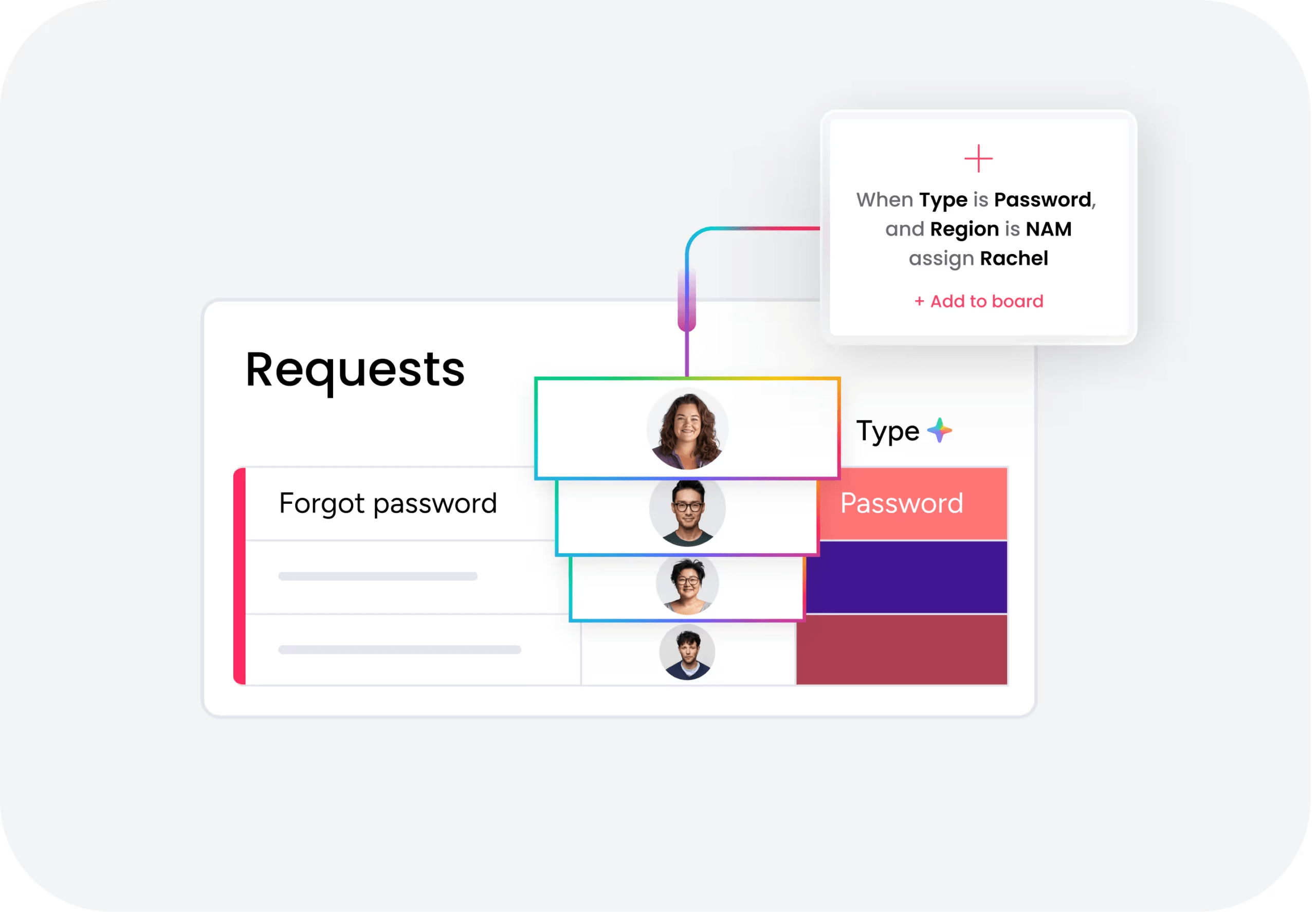
Requests automatically route to the right approver based on purchase amount, category, and department context. The AI analyzes request content to determine the appropriate approval path, whether that’s a simple manager sign-off or a multi-step review involving IT, legal, and finance. Routine purchases that meet all policy requirements can auto-approve instantly, while exceptions get flagged for human review.
Natural language intake and processing

Employees submit requests in plain language without navigating complex forms or category codes. The platform interprets what people need and converts conversational requests into structured procurement data. This natural language processing reduces friction in the request process and ensures submissions arrive complete rather than requiring multiple clarification rounds.
AI-powered workflow automation
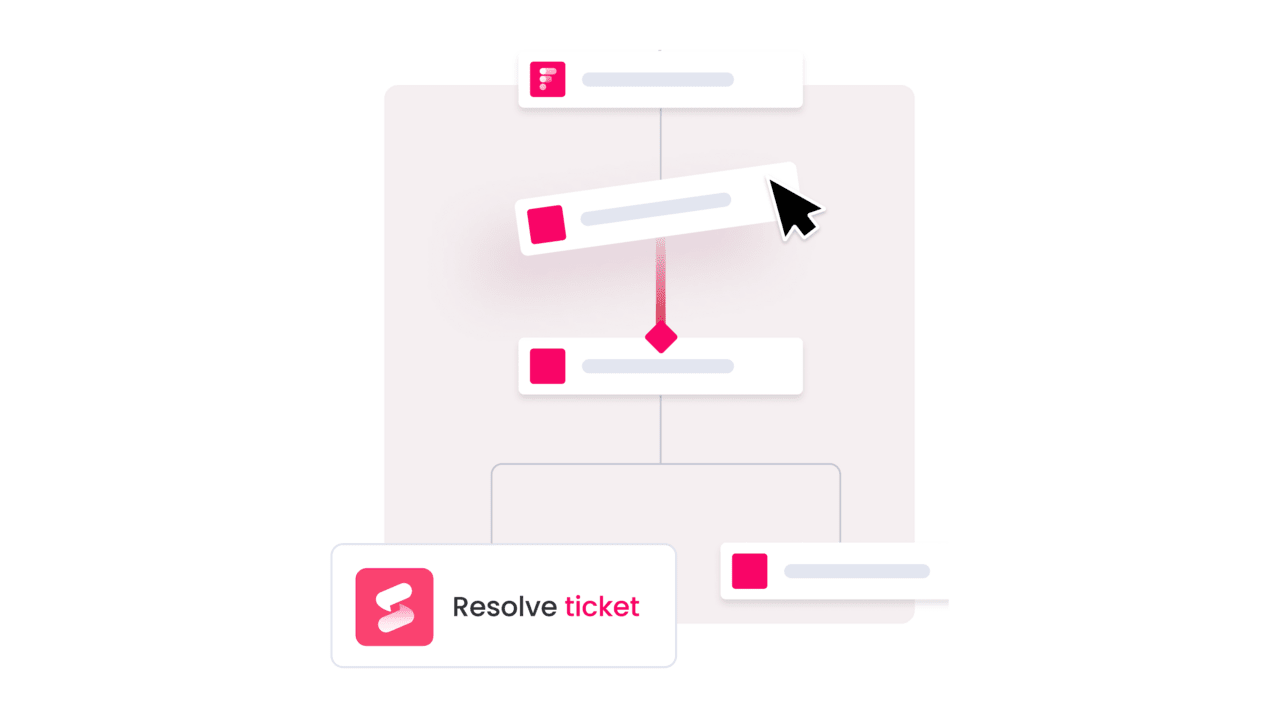
Automated workflows in monday service handle repetitive procurement tasks from invoice processing to purchase order generation. The AI extracts data from documents, validates information against contracts and budgets, and triggers the next step in your process without manual intervention. Teams can build and modify these automations through drag-and-drop interfaces that don’t require technical expertise.
Real-time visibility and analytics
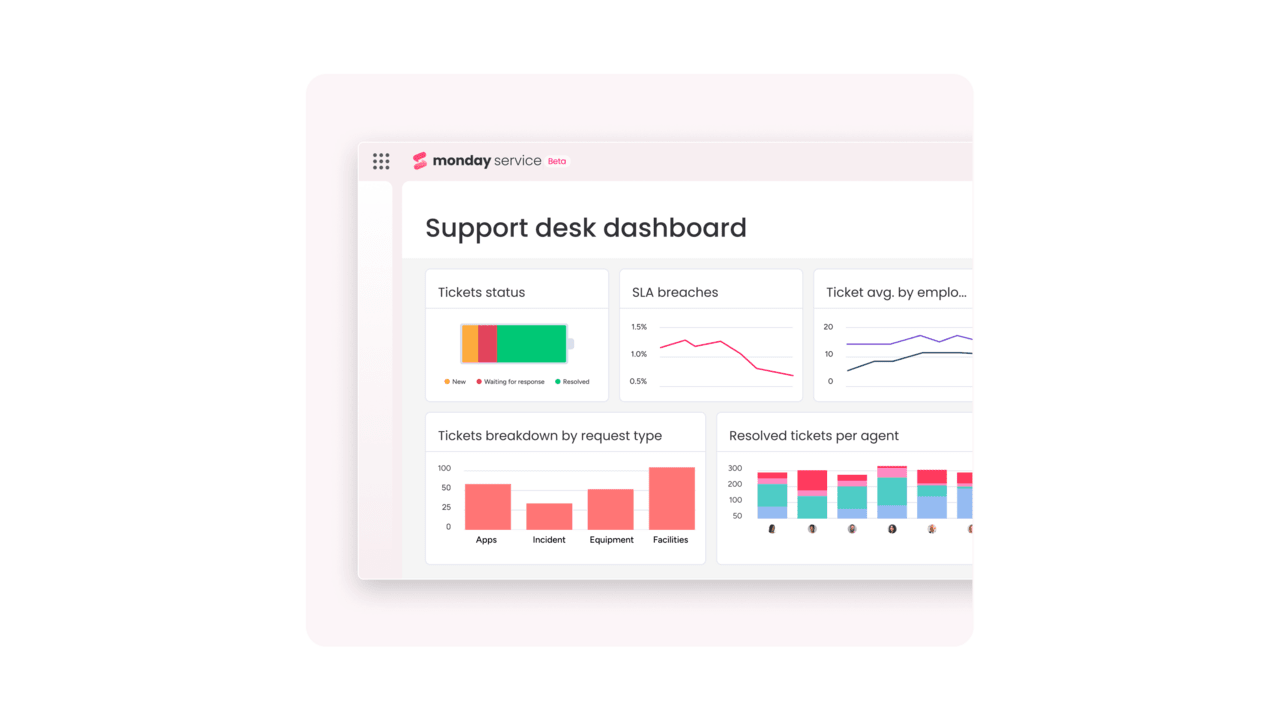
Dashboards surface procurement metrics that matter, from cycle times and approval bottlenecks to compliance rates and spending patterns. The platform tracks every transaction and provides audit trails showing what was checked, who approved it, and why exceptions were granted. This visibility helps teams identify process improvements and respond quickly when auditors need documentation.
Start automating your procurement today
AI procurement portals transform purchasing from a slow, manual process into a strategic advantage. The technology handles routine tasks like invoice processing and approval routing while your team focuses on supplier relationships and cost optimization. Organizations that implement these systems see faster purchase cycles, lower processing costs, and better compliance without adding headcount.
The key is starting with focused use cases that deliver quick wins, then expanding as your team gains confidence and your data quality improves. Platforms like monday service make this progression natural by combining powerful AI capabilities with visual workflow tools that procurement teams can configure themselves. You don’t need to wait for a massive IT project or perfect data to begin seeing results.
Try monday serviceFAQs
How long does AI procurement portal implementation typically take?
AI procurement portal implementation typically takes 6-10 weeks for a focused pilot and 4-9 months for full enterprise rollout. The timeline depends mainly on data cleanup complexity, number of integrations needed, and how many departments you're including in each phase.
What is the typical ROI timeline for AI procurement automation?
The typical ROI timeline for AI procurement automation is 3-12 months, with faster returns in high-volume categories with clean data. Cost savings come from reduced processing time, fewer errors, and better contract compliance, while the exact timeline depends on your current manual effort and maverick spend levels.
Can small businesses effectively use AI procurement platforms?
Small businesses can effectively use AI procurement platforms by starting with a focused scope, like intake and approvals for specific categories. No-code platforms reduce implementation costs and allow small teams to manage the system without dedicated IT resources, making AI procurement accessible even with limited budgets.
How do AI procurement systems ensure data security?
AI procurement systems ensure data security through role-based access control, encryption for data in transit and at rest, detailed audit logs, and segregation of duties. Additional protections include limiting who can view pricing and payment details, requiring multi-factor authentication for sensitive actions, and maintaining separate environments for testing versus production.
What skills are needed to manage AI procurement solutions?
The skills needed to manage AI procurement solutions include procurement process knowledge, basic workflow configuration abilities, data quality management, and change management expertise. Technical coding skills aren't required with no-code platforms, but teams benefit from understanding how to read reports, configure rules, and train users on new processes.
How does AI handle complex procurement scenarios with multiple stakeholders?
AI procurement differs from traditional e-procurement by interpreting unstructured requests, learning from patterns, and making intelligent recommendations rather than just digitizing forms. While traditional e-procurement records what humans decide, AI procurement helps make those decisions by suggesting suppliers, flagging risks, and automating routine approvals within defined rules.

 Get started