


When dev teams outgrow ad hoc planning, the cracks usually appear in the roadmap first. Without roadmapping, strategy lives in one document, sprint boards tell a different story, and priorities change faster than anyone can keep track of, leaving engineers firefighting instead of shipping meaningful work.
This guide is for product and engineering leaders who want a practical, modern approach to roadmapping — one that balances long-term direction with day-to-day agility. It walks through clear definitions, a reusable 6-step framework, real-world examples, and how monday dev can help you turn your roadmap into a living, shared workspace your team actually trusts.
Try monday devKey takeaways
- Roadmapping is the ongoing practice of turning strategy into a clear, time-based roadmap that shows what matters most, why, and roughly when you’ll tackle it.
- The strongest development roadmaps connect a clear product vision, prioritized themes and epics, and a visual, living plan that teams review and update regularly.
- Different development roadmap types (product, technical, release, capacity, UX, platform, portfolio) give each audience the slice of the plan they need without overloading one view.
- When treated as a continuous, data-informed process, roadmapping improves alignment, reduces churn, surfaces risks early, and makes trade-offs transparent across the organization.
- With monday dev, product and engineering teams keep goals, epics, sprints, capacity, prioritization, and AI-powered insights in one place so the roadmap always reflects real execution.
What is roadmapping for development teams?
When people talk about “the roadmap,” they usually mean a high-level view of how a product or platform will evolve. An engineering roadmap shows the direction you’re heading, the major problems you plan to solve, and roughly when you expect to tackle them, without dropping down into sprint-by-sprint detail.
Roadmapping (or road mapping) is the ongoing process of creating, maintaining, and communicating that plan. It covers everything from gathering input and setting goals through to deciding what makes the cut, updating timelines, and sharing changes with the teams who do the work.
What is the roadmap?
A roadmap is a strategic, time-based view of where your product or technology is headed, typically over the next 3–18 months. It focuses on the “why” and “when” of major themes, epics, and releases — not the exact list of items you’ll complete in each sprint.
This is different from your day-to-day delivery plans. A roadmap sets long-term direction and big bets, while project plans and sprint backlogs break that direction down into specific tasks, estimates, and deadlines.
In practice, you’ll tackle the road map definition first, then translate that strategy into a backlog your development team can execute on.
Why roadmapping transforms how dev teams work
Roadmapping makes the biggest difference not when everything is calm, but when priorities are shifting, stakeholders disagree, and the backlog is overflowing. A good roadmap gives your team a shared picture of what matters most, so you can make decisions with intent rather than reacting to the loudest request or the latest crisis.
When you treat roadmapping as a regular practice — not a one-off planning exercise — it becomes the backbone of alignment across product, engineering, and the wider business. It connects your company goals to concrete initiatives, helps people see how their work contributes, and turns “Can we just add this?” into a conversation about trade-offs instead of scope creep.
A clear roadmap also reduces churn inside your development team. When priorities and timelines are visible, engineers spend less time context-switching or redoing work after last-minute changes, and more time making steady progress on the highest-impact problems.
It gives you a neutral artifact to point to in tricky discussions — whether that’s pushing back on a new request or explaining why a low-priority feature isn’t scheduled — so decisions feel fair and transparent rather than arbitrary.
Core benefits of creating a development roadmap
A development roadmap is more than a nice diagram for slide decks. Here are some of the concrete benefits dev teams see when they commit to roadmapping as an ongoing practice:
- Realistic capacity planning. A roadmap forces you to zoom out from the next sprint and look at capacity over quarters, so you can see where teams are overcommitted, where you have slack, and where critical initiatives are likely to collide.
- Clearer priorities across squads. Instead of each team optimizing for its own backlog, a shared development roadmap shows which themes and epics matter most right now, reducing conflicting work and duplicated effort.
- Better expectations with stakeholders. When stakeholders can see what’s planned, what’s tentative, and what’s not on the roadmap, conversations shift from “Can we squeeze this in?” to “What are we willing to move or delay?” which makes trade-offs explicit.
- Stronger connection between strategy and code. Engineers can see how their current tickets ladder up to bigger product bets and business outcomes, which helps them make better technical decisions and feel more invested in the work.
- Earlier risk detection and fewer surprises. Mapping work over time makes dependencies, bottlenecks, and risky clusters of work visible sooner, so you can adjust scope, sequence, or staffing before issues turn into delays.
- More focused discussions and fewer resets. With a roadmap as a single source of truth, planning meetings and reviews focus on refining direction rather than debating every request from scratch, reducing churn and keeping teams moving forward.
3 essential components of effective roadmapping
Most development organizations don’t require a complicated roadmapping framework. They need a simple structure that keeps strategy, priorities, and execution tightly connected and can withstand real-world change. At a minimum, effective roadmapping for dev teams rests on 3 core components.
1. Clear product vision and measurable goals
Every roadmap should start with a shared understanding of your product direction. A concise product vision and a small set of measurable goals, such as OKRs or similar outcome metrics, give your team a north star to steer toward, so roadmap discussions are anchored on impact rather than individual features.
When teams skip this step, roadmaps quickly become grab bags of requests that feel disconnected from the bigger picture. By explicitly linking each roadmap theme or epic back to a goal — such as improving retention, reducing support volume, or paying down specific technical debt — you make it easier to say no to work that doesn’t move the needle.
2. Prioritized themes, epics, and initiatives
Underneath that vision, the roadmap should be organized into a small number of themes and epics that reflect the main problems you want to solve. Themes give stakeholders a clear narrative (e.g., improve onboarding, modernize our architecture, expand enterprise reporting) while epics and initiatives translate those narratives into concrete chunks of work your teams can actually deliver.
Crucially, these themes and epics must be prioritized, not just listed. Deciding what comes first, what waits, and what gets dropped is where roadmapping earns its value, because it forces you to align engineering effort with strategy instead of treating every idea as equally important.
3. A visual, living roadmap your team actually uses
Finally, the roadmap has to be easy to understand at a glance and easy to update as things change. A visual roadmap — whether it’s a simple timeline, swimlanes grouped by theme, or a now/next/later view — helps people quickly see what’s planned, when work is likely to land, and how different streams relate to each other.
Just as important, it should be treated as a living artifact rather than a one-off presentation. When you review and adjust the roadmap regularly, you build trust that it reflects reality, and your team will actually use it to guide decisions rather than default to local priorities or outdated plans.
7 types of development roadmaps every team needs
Different stakeholders care about different slices of your plans. Executives want to understand the big bets and sequence of outcomes, engineers need to see technical dependencies, and cross-functional partners care about when changes will hit their world.
Rather than trying to cram everything into a single view, it helps to think in terms of a small set of roadmap types that complement each other.
Product roadmap
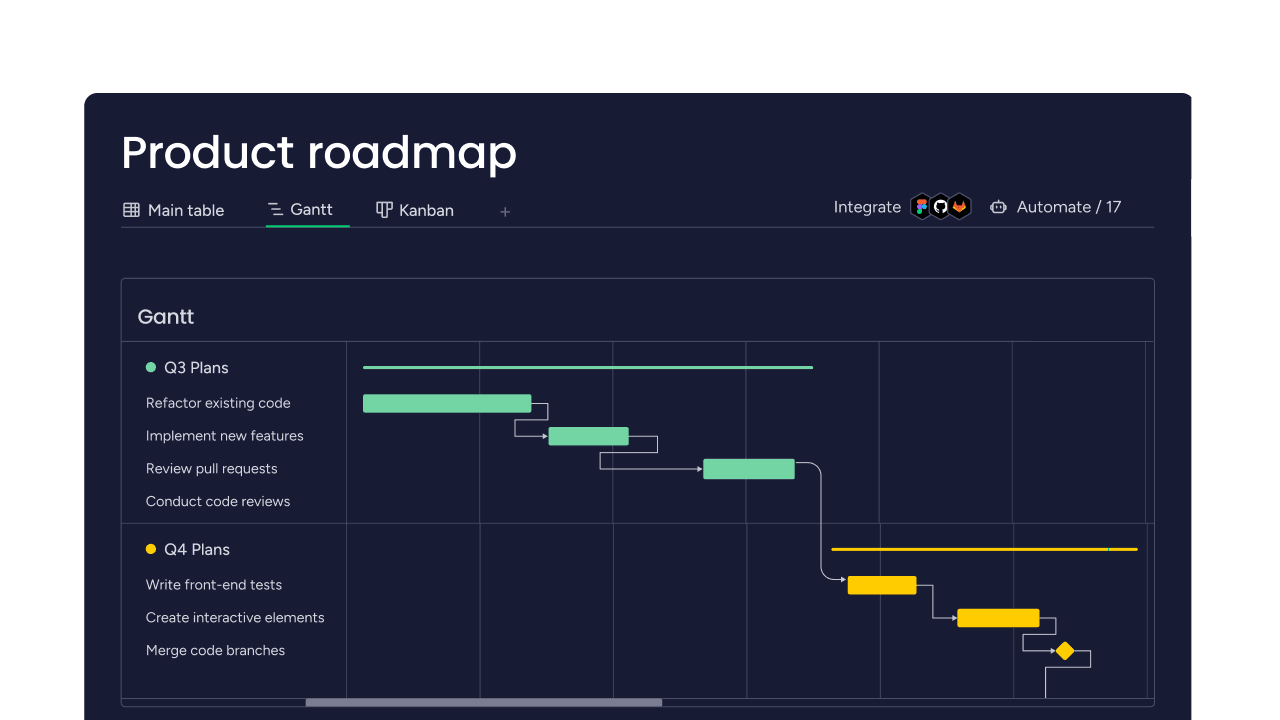
A product roadmap shows how a product or area will evolve, usually organized by themes or outcomes and plotted across quarters. It’s designed to tell a clear story to a broad audience — what problems you’ll focus on and roughly when — without going deep into technical details or sprint plans.
Template shortcut: If you want a fast starting point, use this product roadmap template to set up a now/next/later or timeline view and adapt it to your team’s themes, epics, and time horizons.
Technical/architecture roadmap
A technical or architecture roadmap focuses on the evolution of your systems, stack, and underlying capabilities — refactors, migrations, performance and reliability work, and enabling infrastructure. It helps engineering leaders explain “invisible” work, manage technical risk, and align longer-term architecture decisions with the product roadmap.
Release roadmap
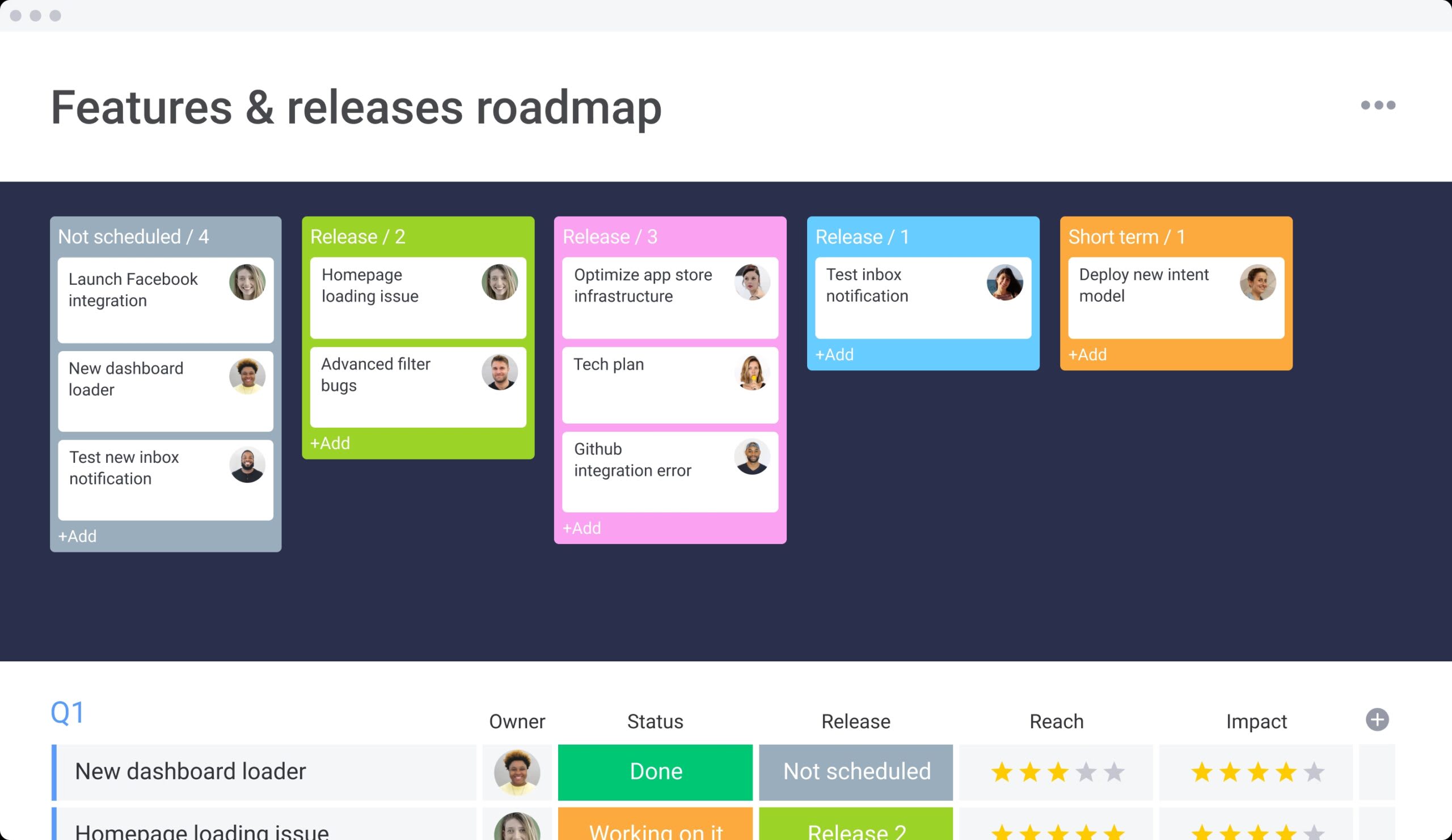
A release roadmap outlines upcoming releases or version milestones and what each will include. It’s especially useful for coordinating across teams and keeping sales, marketing, support, and customers aligned on what’s coming when, without exposing every internal change.
Team capacity roadmap
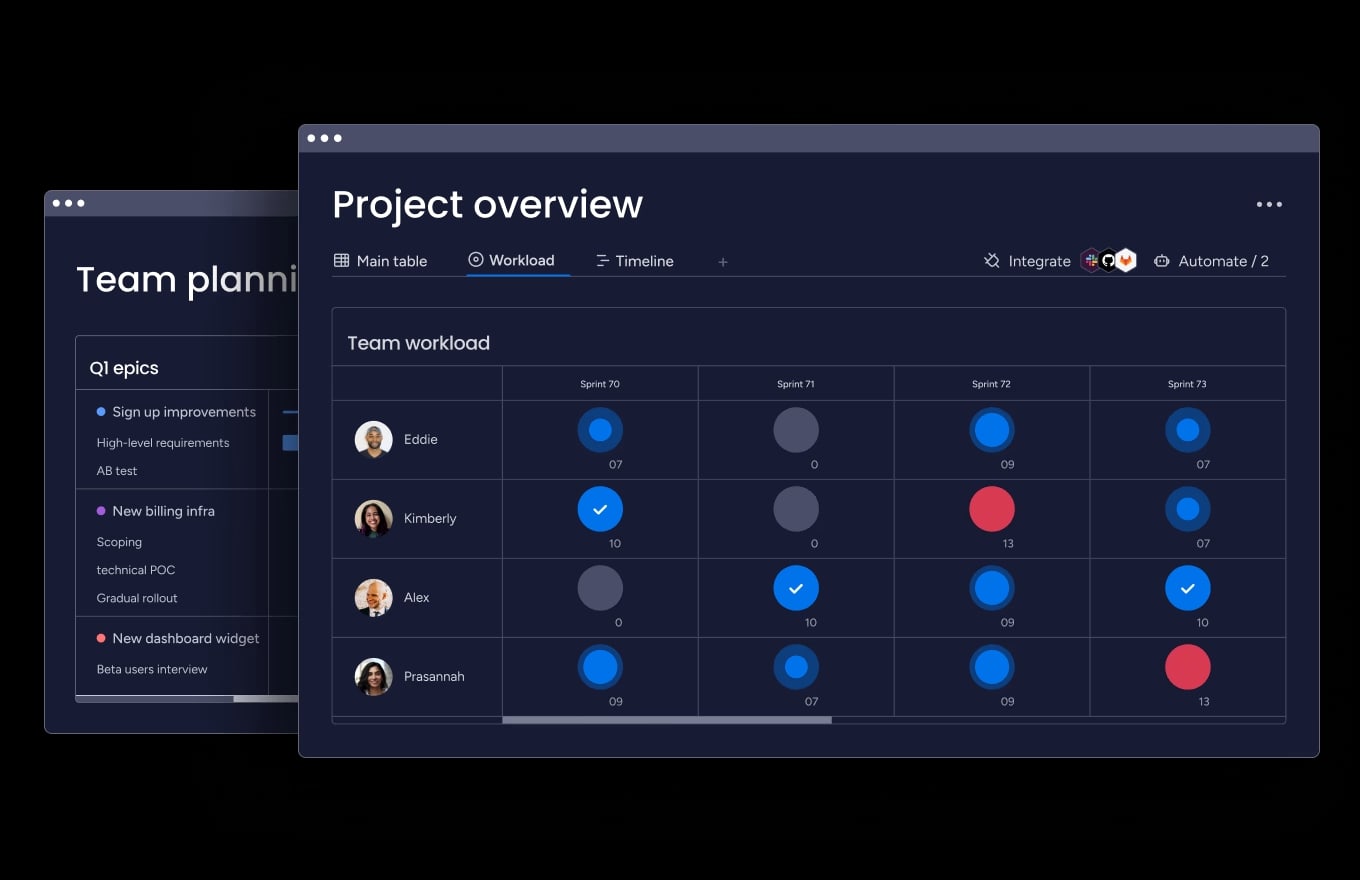
A team capacity roadmap shows how engineering capacity is allocated across initiatives over time, often at the squad or tribe level. It highlights when teams are overcommitted, when they can take on new work, and where competing priorities could create bottlenecks or delays.
UX/research roadmap
A UX or research roadmap outlines the discovery, validation, and design work needed to support future product decisions. It makes customer research and design activities visible alongside development work, so teams don’t skip crucial learning steps in the rush to build.
Platform/infrastructure roadmap
A platform or infrastructure roadmap focuses on shared services, internal tools, and foundational capabilities that other teams depend on. It helps platform and DevOps teams communicate long-term plans, manage dependencies across multiple products, and secure the investment needed to keep the foundations healthy.
Portfolio/multi-product roadmap
A portfolio or multi-product roadmap rolls up plans across several products or major domains into a single view. It’s primarily for senior leadership, helping them see how key initiatives align across the organization, identify overlaps or gaps, and assess whether the overall investment mix aligns with the strategy.
5 roadmapping mistakes that slow dev teams down (and how to avoid them)
Even experienced product and engineering teams fall into some roadmapping traps. These mistakes don’t just create messy documents — they cause misalignment, churn, and missed expectations across the organization. The good news is that each of them has a straightforward fix.
Mistake: Treating the roadmap as a fixed contract
When a roadmap is treated as a promise, every change feels like failure. Teams cling to the original plan even as new information emerges, or they quietly diverge from it until nobody trusts it anymore. This is especially risky in fast-moving markets, where customer needs and technical realities shift faster than annual planning cycles.
How to fix it
- Frame the roadmap explicitly as a best-available plan under current assumptions, not a commitment carved in stone.
- Build in regular review points, for example, quarterly or every major release, where you revisit priorities, timelines, and scope with stakeholders and update the roadmap accordingly.
Mistake: Confusing the roadmap with the backlog or project plan
Another common mistake is turning the roadmap into a long list of features, user stories, or tasks. That blurs the line between strategy and execution and makes it hard for stakeholders to see the bigger picture or understand trade-offs. It also tends to create duplicate work, because teams end up maintaining both a “roadmap backlog” and a separate delivery backlog that drift apart.
How to fix it
- Keep the roadmap focused on outcomes, themes, and major epics, not every individual item you might build.
- Use the roadmap to set direction and then translate it into a backlog and project plan, making sure those tactical artifacts stay visibly linked to the strategic view.
Mistake: Overloading the roadmap with too many features and dates
It’s tempting to pack the roadmap with every idea and attach specific dates to each one. The result is usually an unrealistic plan that spreads teams too thin, locks you into fragile estimates, and crowds out space for learning or technical improvements. Overloaded, date-driven roadmaps quickly become impossible to keep accurate, which damages credibility.
How to fix it
- Limit the number of active themes or epics in each time horizon and focus on the most impactful work first.
- Use broader time buckets (such as “now/next/later” or quarterly windows) instead of exact dates for everything, and reserve precise commitments for a smaller subset of work that’s genuinely well understood.
Mistake: Hiding the roadmap from the wider organization
Some teams keep the roadmap tucked away in a slide deck or internal folder, or share different versions with different audiences. This creates confusion, misaligned expectations, and the sense that decisions are being made in a black box. It also means useful feedback arrives late, after teams have already invested heavily in the wrong things.
How to fix it
- Treat the roadmap as a communication tool, not just an internal planning document, and make a single, current version accessible to everyone who’s affected.
- Offer different levels of detail for various audiences, such as a simple view for executives and a more detailed one for internal teams, but keep them all derived from the same underlying plan.
Mistake: Not using data or feedback to update the roadmap
If your roadmap never changes after you ship features, it’s probably not reflecting reality. Ignoring delivery data, customer feedback, and market signals means you’re optimizing for the original plan instead of what you’ve learned along the way. Over time, this leads to bloated products, missed opportunities, and teams building features that don’t solve the most important problems.
How to fix it
- Regularly feed insights from usage analytics, support tickets, customer conversations, and delivery metrics back into your roadmapping discussions.
- Make it a habit to adjust priorities based on what you learn, explicitly calling out which roadmap items are being added, removed, or reshaped because of new evidence.
How to make a roadmap in 6 strategic steps
A good roadmap doesn’t appear out of nowhere. It comes from a repeatable process your team can trust — one that moves from goals to ideas to clear priorities and a visual plan you can actually execute.
Here’s a quick look at the 6-step roadmapping flow you can reuse every quarter, but you’ll find details about each step up next:
- Set your product vision and goals
- Gather inputs from customers, stakeholders, and your team
- Prioritize features with data-driven methods
- Choose a roadmap structure and time horizons
- Visualize and share your roadmap
- Review, learn, and update regularly
In tools like monday dev or similar platforms, you can map these steps into a shared roadmap board your team updates regularly, rather than keeping everything in disconnected documents.
Step 1: Set your product vision and goals
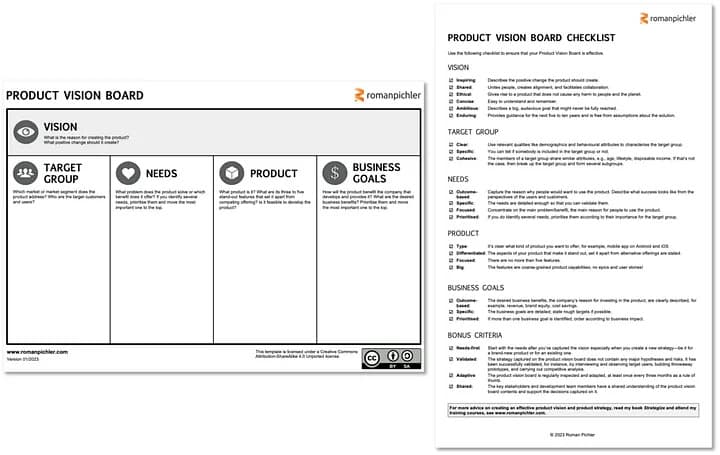
Start by clarifying what you want to achieve over the next 6–12 months and why. A short product vision statement and a small set of measurable goals (for example, improving activation, reducing time-to-resolution, or paying down critical tech debt) give you a filter for every roadmap discussion that follows.
Capture these goals somewhere visible and stable so that when new ideas arise, you can quickly ask, “Does this move us closer to what we said matters most?”
(Source)
Step 2: Gather inputs from customers, stakeholders, and your team
Next, collect the problems and opportunities you might address. This usually includes customer feedback, support tickets, qualitative research, product analytics, sales input, and ideas from engineers who know the system’s weak spots.
The goal isn’t to promise everything you hear — it’s to build a rich input set you can sort and prioritize. Encourage people to submit problems rather than pre-baked solutions, so you have more flexibility when you design the roadmap.

Step 3: Prioritize features with data-driven methods
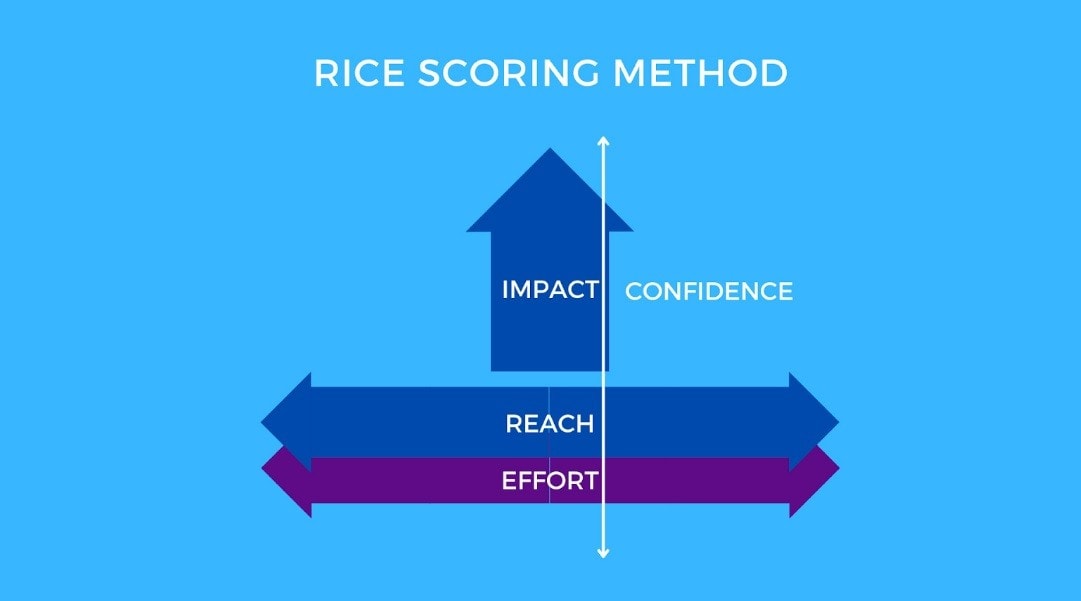
With a long list of potential work, you need a structured way to decide what comes first. Simple prioritization frameworks like RICE (Reach, Impact, Confidence, Effort) and MoSCoW (Must/Should/Could/Won’t), or a basic Impact-Effort matrix, help you compare options more objectively and make trade-offs visible.
You don’t need a perfect scoring model — you need consistent criteria your team understands. Score or categorise the most important themes and epics, then sort by impact relative to effort so you can see which bets will deliver the most value for the least cost right now.
Step 4: Choose a roadmap structure and time horizons
Once you know your priorities, decide how you’ll structure the roadmap itself. Many development teams find it useful to group work into themes or streams and then map them into broad time horizons, such as “now/next/later,” quarters, or half-years — rather than assigning exact dates to everything.
Pick the structure that best fits your context. A timeline by quarter, a swimlane view per squad, or a now–next–later board can all work as long as they clearly show sequence, focus, and how much you’re taking on at once.

(Source)
Step 5: Visualize and share your roadmap
Now turn the structure into a visual roadmap your stakeholders can actually read. Aim for a view that shows, at a glance, what you’re focusing on in each period, without overwhelming people with detail.
Share this roadmap widely: with executives, product and engineering leaders, cross-functional partners, and, crucially, the dev teams doing the work. Use it in planning meetings and reviews so it becomes the default reference point for “what’s next” rather than a slide that only appears once a year.

Step 6: Review, learn, and update regularly
Finally, build a cadence for revisiting and adjusting the roadmap. After each release cycle or at least once a quarter, look at what shipped, what slipped, and what you learned from customers and data.
Use those insights to update priorities, remove items that no longer make sense, and add or reshape initiatives that better fit your goals. A roadmap that changes for good reasons — new information, new constraints, new opportunities — is a sign of a healthy process, not a lack of discipline.
Dynamic roadmap planning for Agile and Scrum teams
Agile and Scrum teams often feel a tension between the need for a long-term roadmap and the reality that plans change as soon as you start shipping. The goal isn’t to choose between strategy and agility — it’s to design a roadmap that sets direction while leaving room to adapt as you learn.
One useful way to reconcile the 2 is to think in terms of planning layers:
- The roadmap sets quarterly or half-year themes and outcomes.
- The product backlog holds the evolving list of work that could achieve them.
- Each sprint backlog captures the small slice of that work your team commits to right now.
This keeps the roadmap high-level and relatively stable, while still allowing sprint-level plans to change as new information arrives.
Quarterly themes work particularly well
Instead of promising specific features far in advance, you agree on a small set of themes, such as “improve activation” or “reduce incidents in core services”, and define what success would look like by the end of the quarter. As you move through sprints, you can swap individual stories in and out as long as the work still contributes to those outcomes.
Shorter commitment horizons also help
Many teams use more detailed plans only for the next 1–2 sprints, a moderately detailed view for the next quarter, and a very high-level view beyond that. This “zoomed-in vs. zoomed-out” approach makes it clear which parts of the roadmap are relatively firm and which are likely to evolve, so stakeholders know how seriously to take each level of detail.
Dynamic roadmapping depends on regular reshaping
Treat roadmap reviews as part of your Agile cadence — use sprint or release reviews, quarterly planning, and backlog refinement sessions to adjust themes, move items between “now/next/later,” and retire work that no longer fits. When teams see the roadmap being updated in response to real data and feedback, it becomes a living guide rather than a static document they ignore.
Presenting your development roadmap effectively
A strong roadmap is only helpful if people understand it and believe in it. How you present it should change depending on who’s in the room, but the core story stays the same — where you’re heading and what you’re focusing on next.
Presenting to executives
Executives care most about direction, outcomes, and risk, not individual features. When you present to them, stay high-level and focus on how the roadmap supports company strategy, what trade-offs you’ve made, and where you need their support or decisions.
A simple timeline view or high-level dashboard works well here. Show themes or major initiatives by quarter, key milestones, and a few clear success metrics. Limit the number of items on screen and avoid jargon so they can grasp the story quickly and ask targeted questions.
Presenting to cross-functional partners
Teams like sales, marketing, customer success, and support want to know what’s coming, when, and how it will affect customers and their own work. For this audience, connect the roadmap directly to customer value, launch plans, and enablement needs.
A swimlane view grouped by customer segment, product area, or release is often more helpful than a dense timeline. Call out which items are confirmed vs. tentative and highlight dependencies that require their involvement, such as beta programs, content, or training.
Presenting to dev teams
Developers and engineers already live in the details — what they need from the roadmap is context. Use roadmap sessions to explain the “why” behind upcoming work, how different streams fit together, and what constraints or bets leadership is making.
Here, a more detailed view that sits between strategy and sprint boards works best. For example, a roadmap grouped by themes with links to underlying epics and backlogs, plus a lightweight dashboard showing progress and risks. Leave plenty of time for questions and feedback so teams can flag technical concerns and suggest better implementations before plans are locked in.
How monday dev supports modern roadmapping
You can accomplish all of the practices in this guide with spreadsheets and slide decks, but they become much easier to sustain when your roadmap lives in the same place as your day-to-day development work. Built on monday.com Work OS, monday dev gives product and engineering teams a shared workspace where strategy, planning, and execution stay connected.
Here’s why monday dev beats docs, spreadsheets, and slide decks:
- Your roadmap updates itself: When epics, sprints, or bugs change, the roadmap reflects it automatically — no manual rework or stale decks.
- Strategy and execution stay connected: Goals roll down into epics and work items, so teams always see how day-to-day delivery ladders up.
- Capacity is visible before it breaks: You can see overcommitment and conflicts early, not after deadlines slip.
- One plan, many views: Different stakeholders get the level of detail they need without maintaining separate versions.
- Less admin, more signal: Automations and built-in AI reduce intake clutter and surface risks instead of adding reporting overhead.
Here’s how those differences show up once your roadmap lives inside your workflow in monday dev:
End-to-end visibility for dev teams
In monday dev, your roadmap isn’t an isolated artifact — it’s directly linked to the rest of the product development lifecycle. You can connect high-level goals and product epics to the sprints, tasks, bugs, and releases that bring them to life, so anyone can move from “What are we doing this quarter?” down to “What exactly is shipping in this sprint?” in a couple of clicks.
This end-to-end view helps teams spot misalignments early. If an epic is slipping, you can see which underlying tasks are blocked; if a sprint is overloaded, you can see which roadmap items might need to move. That way, the roadmap stays an accurate reflection of reality rather than a static plan that drifts over time.
Different roadmap views for different audiences
Because monday dev is built on monday.com Work OS, you can maintain a single source of truth and present it in different ways for different stakeholders. Executives can see a high-level roadmap timeline grouped by themes or quarters, cross-functional partners can view upcoming releases and customer-facing changes, and dev squads can drill into their own lane of epics and sprints — all powered by the same underlying data.
Board views, timeline views, hierarchy views, and dashboards make it easy to switch from a visual roadmap tracker to a more detailed breakdown that shows how epics map to features and tasks. This flexibility helps you avoid version sprawl while still tailoring the story to each audience.
Data-informed prioritization in one place
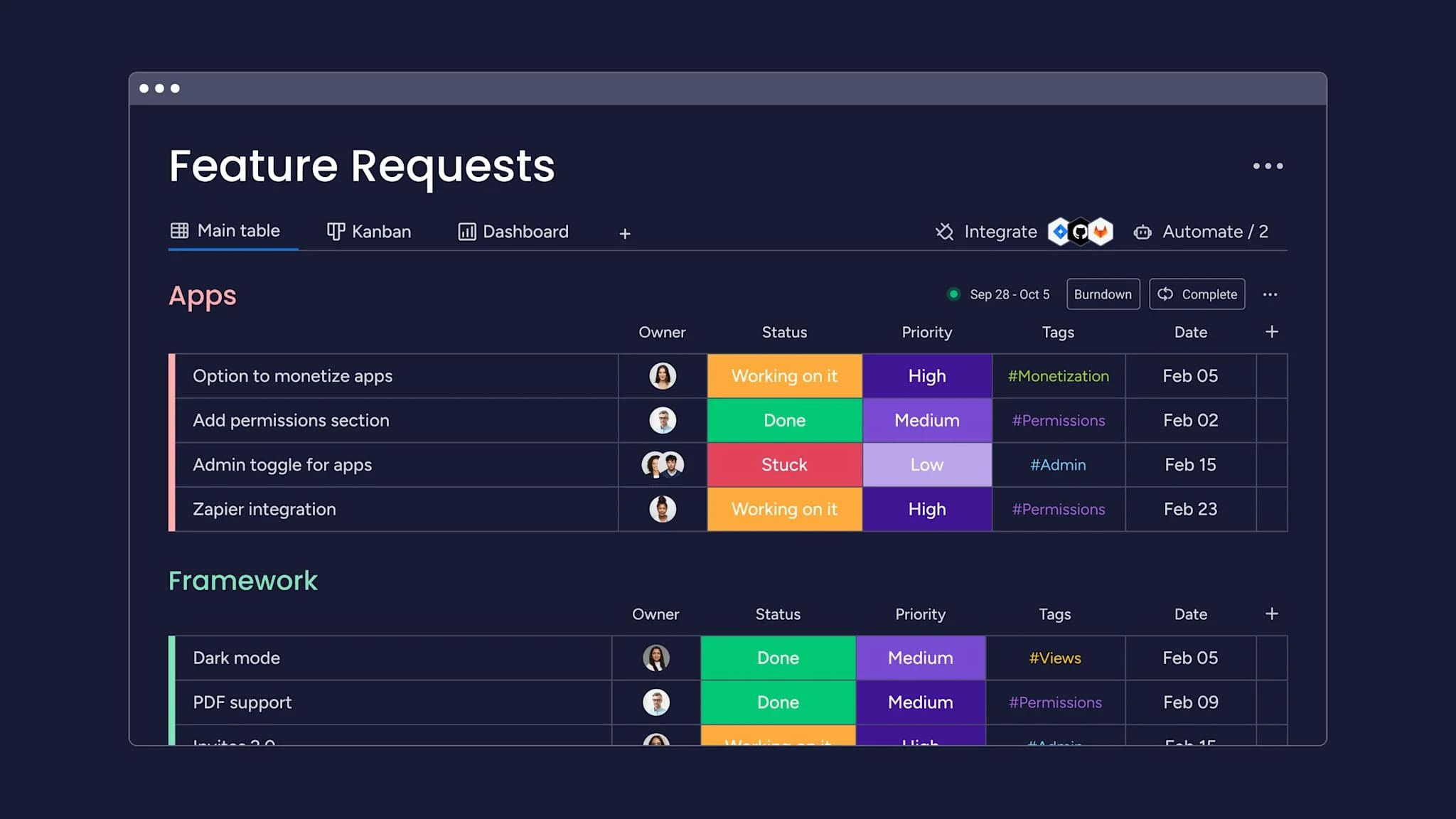
With monday dev, it’s also easier to run a transparent, data-informed prioritization process. You can pull in customer feedback, usage metrics, support signals, and delivery data alongside your list of candidate initiatives, then add fields for frameworks like RICE, MoSCoW, or simple impact–effort scoring.
Because all of this lives in one shared board, product and engineering leaders can sort and filter by scores, see how much capacity is already committed, and have grounded conversations about what to move up, down, or off the roadmap entirely. It turns prioritization from a subjective debate into a repeatable process everyone can see and understand.
AI-powered roadmapping for 2026 and beyond
The built-in AI takes repetitive work off your plate and surfaces insights you’d otherwise miss. AI Blocks can summarize large volumes of feedback, extract key themes from tickets or research notes, and automatically categorize items to keep your intake organized.
AI-powered views can help you spot risks across your roadmap by flagging delayed initiatives, highlighting velocity based on past sprints, and surfacing at-risk items or dependencies on critical paths. This gives you a more realistic, proactive view of your plans — so roadmap reviews can focus on decisions, not just status reporting.
Roadmapping works best when you treat it as a continuous practice rather than a one-off planning exercise. The most effective dev teams focus on outcomes, keep their plans transparent, and update their roadmap regularly as they learn. If you’re ready to operationalize this process, explore how monday dev can support modern roadmapping for your team and bring everything together in a single collaborative workspace.
Try monday devFAQs
What is the difference between a roadmap and roadmapping?
A roadmap is the artifact — a visual, time-based plan showing where and roughly when your product is heading. Roadmapping is the ongoing process behind it — gathering input, prioritizing, aligning stakeholders, and regularly updating that roadmap as you learn and conditions change.
What is the difference between a roadmap and a backlog/plan?
A roadmap describes the strategic direction: which problems you’ll tackle, in what sequence, and on what rough timeframe. A backlog or project plan breaks that direction into detailed tasks and user stories the team will actually deliver, usually organized by sprints or releases. Roadmaps focus on “why” and “when;” backlogs emphasize “what” and “how."
How often should development teams update their roadmaps?
Most development teams benefit from reviewing and updating their roadmap at least quarterly, with lighter-touch monthly adjustments if priorities or assumptions change. In fast-moving environments, shorter update cycles — such as aligning roadmap changes with each major release or PI — keep plans realistic without turning roadmapping into a weekly distraction.
Can roadmapping work with Agile and Scrum methodologies?
Yes. In Agile and Scrum teams, the roadmap provides a high-level view of themes and outcomes over quarters, while the product and sprint backlogs handle detailed work. The roadmap remains flexible and outcome-based, and sprint planning becomes the place where you decide exactly which backlog items to deliver next.
What is the ideal timeline for a development roadmap?
There’s no universal timeline, but many teams plan in the 6–12 month range, with more detail in the near term and a fuzzier view further out. A typical pattern is to be specific for the next 1–2 quarters, directional for the following 2–3, and avoid making firm promises beyond that unless there are immovable deadlines.
Who should own the roadmap in a software development team?
Typically, a product manager owns the roadmap, working closely with engineering leadership, design, and other stakeholders to keep it aligned with customer needs and strategy. In some teams, a head of product, CTO, or dedicated product lead holds overall ownership, while individual PMs manage roadmaps for their specific areas or squads.

 Get started