


Redmine has been a reliable workhorse for development teams that prefer open-source flexibility and self-hosted control. But as organizations grow and workflows become more complex, the gap between what Redmine offers and what teams actually need widens. That gap is exactly why so many teams are actively searching for a Redmine alternative that can keep pace with how they work today.
The challenge goes beyond missing features. Teams managing cross-functional project management across departments need visual dashboards, built-in automation, and integrations that connect their entire technology stack. Relying on community-maintained plugins and a dated interface creates friction that slows down execution.
This guide walks through what makes Redmine useful, where it falls short, and the specific capabilities you should prioritize when evaluating a project management platform to replace it. Along the way, you will see how monday.com’s AI Work Platform fits into that picture.
Get started with monday.comKey takeaways
- Redmine’s limitations are structural: Outdated UX, plugin dependency, and no professional support push teams to seek alternatives
- Evaluation starts with features: Prioritize visual interfaces, native agile support, automation, and integrations when comparing platforms
- Top alternatives differ by philosophy: Some focus on open-source flexibility, others on enterprise readiness or developer workflows
- monday.com’s AI Work Platform fills the gaps: AI-powered workflows, integrations, and visual tracking address the exact pain points Redmine users face
- Scalability determines long-term fit: Choose a platform that grows with your team rather than one you will outgrow in a year
What is Redmine, and who uses it?
Redmine is a free, open-source project management and issue-tracking platform built on Ruby on Rails. It has been available since 2006 and remains one of the most recognized open source project management options for development teams that want full control over their hosting environment and configuration. Organizations across industries, from software development to manufacturing and education, have adopted the Redmine tool for its zero-cost entry point and extensibility.
The Redmine tool supports multi-project management, role-based access control, Gantt charts, calendar views, time tracking, and a flexible issue-tracking system. Because it is self-hosted, organizations can customize it with plugins and themes. Its pricing is straightforward: completely free, with no paid tiers.
However, Redmine’s development has slowed noticeably. The latest stable release (version 5.1.x, released in 2024) introduced incremental fixes rather than meaningful feature additions. The platform relies on volunteer contributors, which means updates arrive on no predictable schedule. For teams that need responsive support, regular feature development, and a polished user experience, that volunteer-
Why teams look for a Redmine alternative
Is Redmine still a good option in 2026? For small teams with technical staff who can manage a self-hosted instance, Redmine still handles basic issue tracking and project organization adequately. But for growing organizations that need cross-departmental collaboration, automation to reduce manual overhead, and a unified view of every project in progress, Redmine increasingly falls short of expectations.
So what exactly drives teams away? The pain points tend to compound over time, turning minor inconveniences into serious productivity drains. Here are the most common reasons teams start evaluating the best Redmine alternative for their needs.
- Outdated user interface: Redmine’s UI has not changed meaningfully in years. New team members struggle to navigate its dense, text-heavy screens, and the visual design makes it difficult to quickly get an overview of project status
- No native agile or Scrum support: Agile workflows require plugins that vary in quality and maintenance. There are no built-in sprint boards, backlogs, or velocity tracking, which means teams adopting Scrum or Kanban methodologies need to patch together functionality from multiple sources
- Plugin dependency: Most functionality beyond the basics requires third-party plugins. These plugins can conflict with each other, break during upgrades, and go unmaintained without warning. Every plugin adds a maintenance burden that compounds as your team’s needs grow
- No professional support: When something breaks, you rely on community forums and documentation. There is no vendor to call, no SLA, and no guaranteed response time
- Limited integrations: Connecting Redmine to platforms like Slack, Microsoft Teams, or CRM systems requires custom development or unreliable plugins. This creates data silos that undermine team collaboration
- Steep learning curve: Setting up and configuring Redmine requires Ruby on Rails knowledge and server administration skills. Non-technical team members often cannot modify workflows, create reports, or adjust permissions without developer assistance, creating bottlenecks and slowing adoption across departments
Any single pain point might be manageable. But when outdated UX combines with plugin fragility, missing integrations, and a lack of a support safety net, the cumulative cost to productivity becomes difficult to justify. That is why so many organizations reach a point where evaluating alternatives is no longer optional.
Seven features to look for in a Redmine alternative
Once you have decided that Redmine no longer fits your team’s needs, the next question is obvious: what should you actually look for? Not every platform that calls itself a project management solution will solve the specific problems Redmine creates. The features below represent the capabilities that matter most when evaluating a replacement.
How do you separate genuine capability from marketing claims? Focus on these seven criteria to build a structured comparison across the project management platforms you are considering.
- A visual, intuitive interface: Your team should be able to switch between Kanban boards, Gantt charts, timelines, and calendar views without plugins or workarounds. The interface should make project status obvious at a glance, not buried in text-heavy screens. New team members should be productive within hours, not weeks
- Native agile and Scrum support: Sprint planning, backlog management, and burndown charts should be built into the platform. Relying on third-party add-ons for core agile workflows introduces fragility and maintenance overhead
- Automation capabilities: Repetitive actions like status updates, assignments, and notifications should run automatically. Look for platforms that offer workflow automation templates you can customize without writing code. The time saved by eliminating manual follow-ups compounds quickly across a growing team
- An integrations ecosystem: Your project management platform needs to connect with the applications your team already uses. Platforms like monday.com’s AI Work Platform offer native integrations with applications including Slack, GitHub, Jira, and Salesforce, helping teams connect work across tools without relying on custom development
- Professional support and onboarding: When something goes wrong, you need a direct response, not a forum thread. Evaluate whether the vendor offers 24/7 support, dedicated onboarding, and a searchable knowledge base
- Scalability: A platform that works for a 10-person team should also work for 500 people across multiple departments. Check for enterprise-grade permissions, cross-project dashboards, and portfolio-level reporting. Growing organizations need a system that scales without requiring a complete reconfiguration every time a new team joins
- Deployment flexibility: Are there free or open-source alternatives that match Redmine’s flexibility? Some teams need self-hosted deployments for compliance reasons, while others prefer the simplicity of cloud hosting. Evaluate whether the free or self-hosted Redmine alternatives you are considering offer the deployment model your organization requires. Open-source project management platforms like OpenProject offer self-hosted options, while cloud-native platforms eliminate the infrastructure burden entirely
How six popular Redmine alternatives compare
With those evaluation criteria in mind, how do the most commonly cited Redmine alternatives actually stack up? Each platform takes a different approach to solving the problems Redmine creates. Some prioritize an open-source philosophy, others focus on developer ecosystems, and a few aim to serve every type of team on a single platform.
Before diving into the details, note that our sibling article provides a full breakdown of 15 Redmine alternatives with deeper feature comparisons. The overview below covers the six platforms teams evaluate most frequently.
1. monday.com’s AI Work Platform
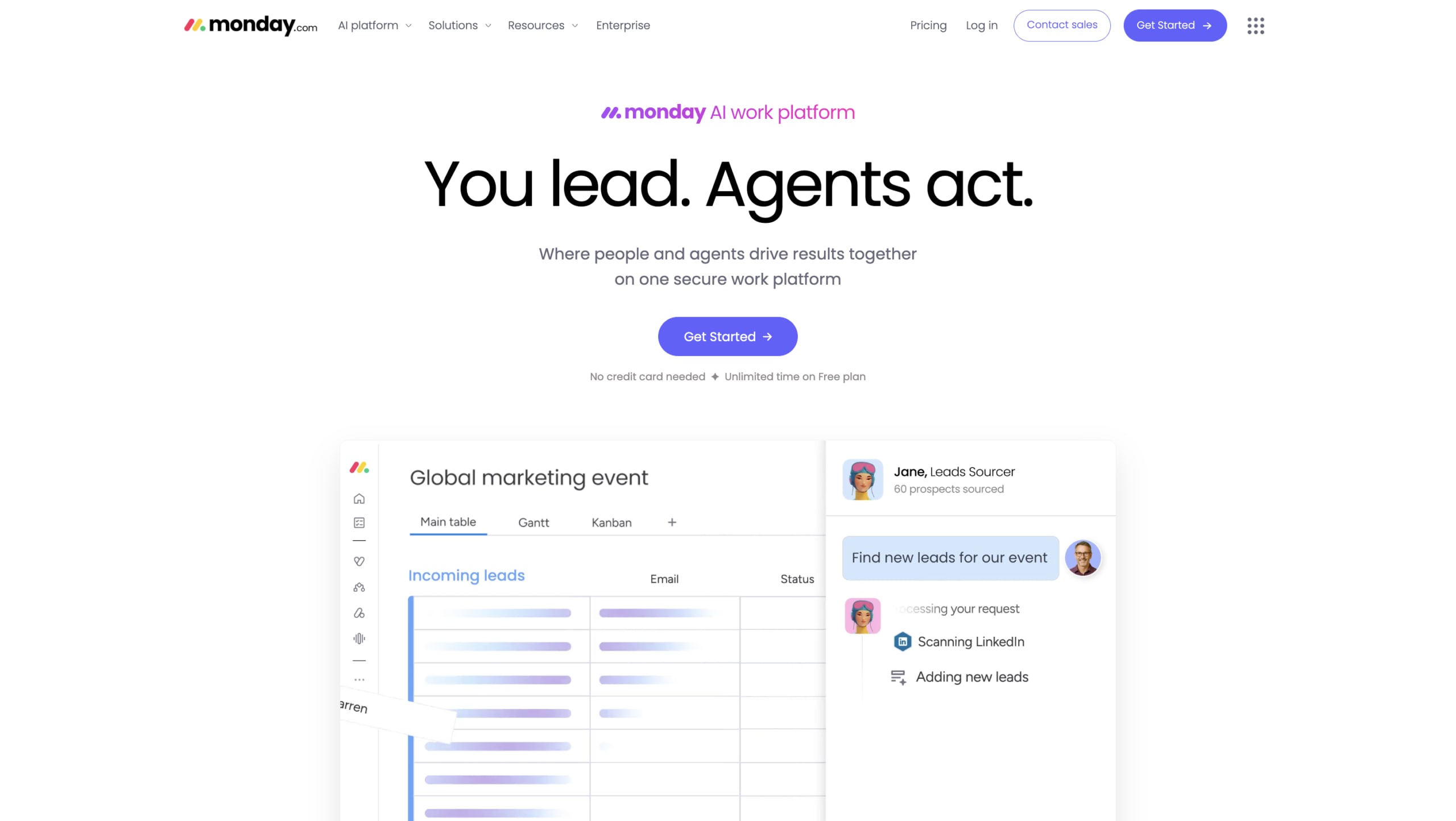
A visual, AI-powered platform built for teams that need flexibility without complexity. With native integrations, automations, and multiple project views, monday.com’s AI Work Platform replaces Redmine’s plugin-dependent model with connected capabilities and professional support.
2. OpenProject
The closest open-source equivalent to Redmine. OpenProject vs Redmine is a common comparison because OpenProject was originally forked from Redmine in 2012. It offers a more polished interface, built-in agile boards, and both community and enterprise editions with self-hosted deployment. For teams that require open-source licensing and on-premises hosting, OpenProject is the most direct upgrade path.
3. Jira
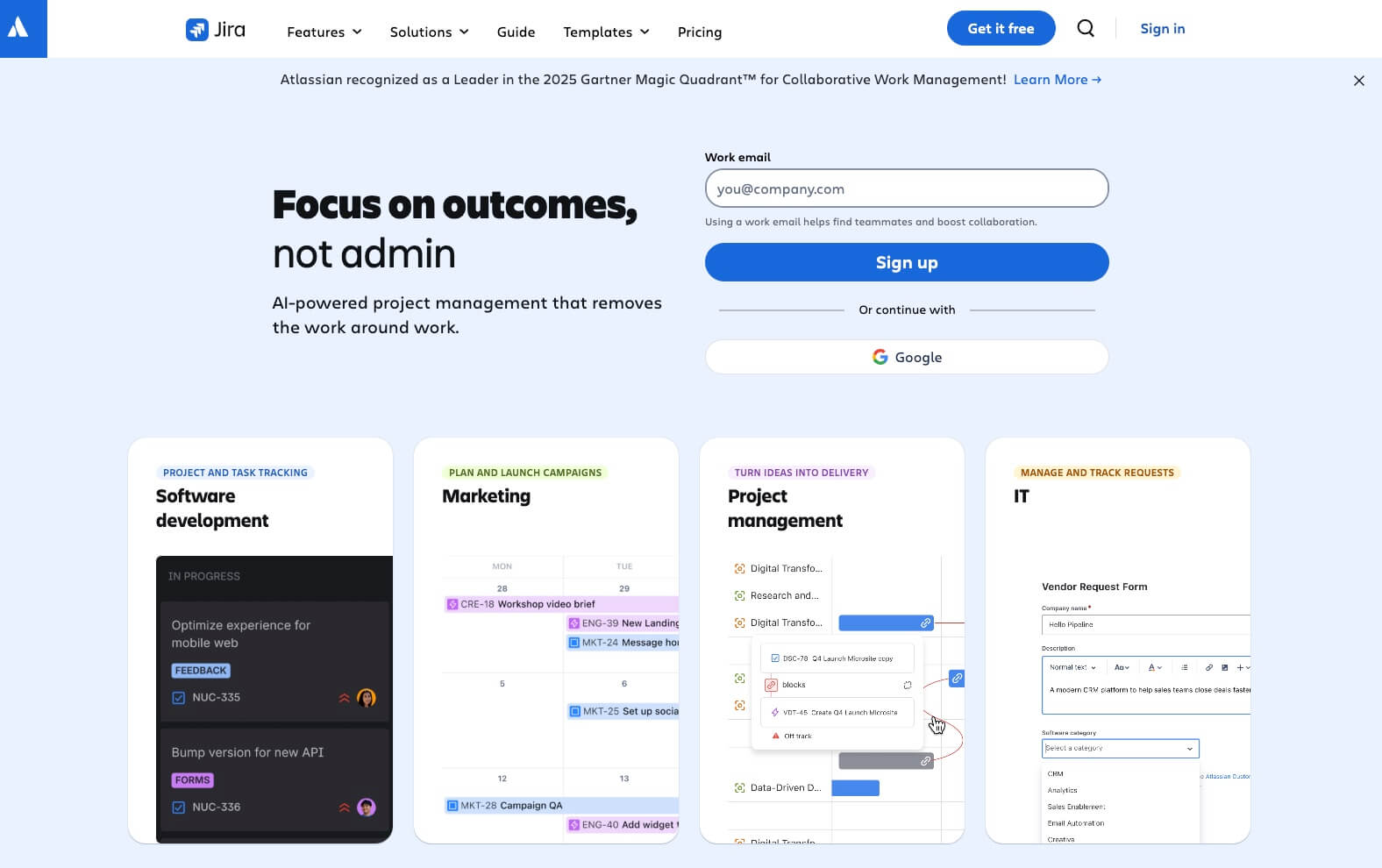
The dominant platform for software development teams. Jira offers strong native agile support, deep integration with the Atlassian ecosystem (Confluence, Bitbucket), and extensive customization through its marketplace. For a detailed Redmine vs Jira comparison, see our dedicated guide. Its complexity, however, can overwhelm non-technical teams, and pricing scales quickly for larger organizations.
4. ClickUp

A feature-dense platform with a freemium model that appeals to teams seeking broad functionality at a low entry cost. ClickUp covers project management, documentation, and goal tracking in a single workspace. The trade-off is that its sheer volume of features can create a steep learning curve and make initial setup time-consuming.
5. Asana

Known for its clean interface and strong adoption in marketing and operations teams. Asana focuses on work management and cross-functional collaboration, making it a strong fit for non-technical departments. Its reporting and customization options, however, are less extensive than some alternatives on this list.
6. Plane.so

An emerging open-source project management platform with a polished UI that targets teams wanting a Redmine-like self-hosted experience with a contemporary design. Plane.so is still maturing and its integration ecosystem is limited, but its active development community and focus on developer experience make it worth watching for teams committed to open-source principles.
How monday.com’s AI Work Platform replaces Redmine
Switching from Redmine is not just about finding a platform with more features. It is about removing the operational overhead of managing a self-hosted, plugin-dependent system, while gaining capabilities your team did not have before. What does that transition actually look like in practice? Here is how monday.com’s AI Work Platform addresses each of the core challenges Redmine users face.
Visual project tracking across 15+ views
Where Redmine limits you to basic list views and plugin-dependent Gantt charts, the platform offers Kanban boards, Gantt timelines, calendar views, workload views, chart views, and more. Every view updates in real time and requires zero configuration. Your team picks the view that matches how they think about work, and switches between views without losing context.
What does that look like in practice? A project manager might start the morning in a timeline view to check deadlines, switch to the workload view to rebalance assignments, then open a dashboard to review progress metrics. All of that happens within the same workspace, using the same underlying data.
250+ automation recipes
Manual status updates, assignment notifications, and deadline reminders consume hours every week. With monday.com’s AI Work Platform, teams can use no-code automations or build custom workflows to reduce repetitive manual work. “When status changes to Done, notify the project lead and move the item to the Completed group” takes seconds to set up, no code required.
AI that accelerates execution
What if your project management platform could draft status summaries, suggest workflow improvements, and surface risks before they become blockers? monday vibe, monday sidekick, monday agents, AI columns, and the AI workflow builder help teams move from planning to execution faster while keeping people in control of decisions.
200+ native integrations
Redmine’s integration story relies almost entirely on plugins. The platform connects natively with Slack, Microsoft Teams, Gmail, Jira, Salesforce, GitHub, and 200+ other applications. Data flows between systems automatically, eliminating the copy-paste workflows and data silos that Redmine creates.
Resource management and capacity planning
How do you prevent overload before it becomes burnout? The workload widget gives managers a visual overview of how work is distributed across team members, with color-coded indicators showing who has capacity and who is at risk. Combined with time-tracking and capacity-planning features, it turns resource allocation from guesswork into data-driven decisions.
Dashboards with 30+ widgets
Custom dashboards pull real-time data from across your workspace into a single view. With 30+ widget types, including charts, timelines, battery indicators, and number summaries, you build the reporting layer your team needs without exporting data to spreadsheets. Executives get portfolio-level visibility while team leads can focus on sprint-level detail, all from the same data source.
24/7 support, knowledge base, and onboarding
Unlike Redmine’s community-only support model, monday.com provides 24/7 customer support, an extensive knowledge base, webinars, and guided onboarding for new teams. When something needs attention, you get a response from a real person, not a forum thread that may or may not receive a community reply.
Migrating from Redmine
Redmine migration does not have to be disruptive. You can import project data through CSV files or the API, and monday.com can help teams map existing Redmine workflows into boards, views, automations, and dashboards that reflect how their work actually runs. The transition typically involves exporting issues, projects, and user data from Redmine, then restructuring that data into boards and groups that match how your team actually operates.
As one organization reported after making the switch: “monday.com saves us about 1,850 hours of staff time and somewhere in the range of $50,000 a month.” That kind of impact comes from replacing manual processes and plugin maintenance with built-in automation and a unified workspace.
Get started with monday.comChoosing the right path forward from Redmine
Redmine served a generation of development teams well. Its open-source model and self-hosted flexibility gave organizations control at a time when few alternatives existed. But project management demands have evolved, and the gap between what Redmine provides and what growing teams require continues to widen.
Teams need real-time collaboration, automation, AI-powered insights, and integrations that work without custom development. The right Redmine alternative depends on your specific priorities: team size, budget constraints, open-source requirements, and the level of support you expect.
If open-source deployment is non-negotiable, OpenProject and Plane.so deserve serious evaluation. If your team needs a platform that delivers visual project tracking, built-in automation, and professional support without the infrastructure burden, monday.com provides exactly that combination. The question is not whether to move beyond Redmine. It is the direction your team takes next.
Get started with monday.comThe content in this article is provided for informational purposes only and, to the best of monday.com’s knowledge, the information provided in this article is accurate and up-to-date at the time of publication. That said, monday.com encourages readers to verify all information directly.
FAQs
What is the best alternative to Redmine?
The best alternative to Redmine depends on your team's requirements. For teams seeking a visual, flexible platform with automations, integrations, dashboards, and AI-powered capabilities, monday.com’s AI Work Platform is a strong choice.
Is OpenProject based on Redmine?
OpenProject is based on Redmine. It was forked from the Redmine codebase in 2012 and has since diverged significantly, adding native agile boards, a refreshed UI, and enterprise features that Redmine does not offer.
Is Redmine still worth using in 2026?
Redmine is still worth using in 2026 for small technical teams that only need basic issue tracking and can manage self-hosted infrastructure. However, it lacks a polished user experience, native agile support, AI capabilities, and professional support, all of which are standard in current alternatives.
Can I migrate my data from Redmine to another platform?
You can migrate your data from Redmine to another platform. Most alternatives support CSV import and API-based migration. With monday.com’s AI Work Platform, teams can import project data via CSV or API and map existing workflows into boards, views, dashboards, and automations.
What are the best self-hosted Redmine alternatives?
The best self-hosted Redmine alternatives are OpenProject and Plane.so. Both offer open-source community editions with self-hosted deployment, giving teams full control over their data and infrastructure while providing more polished interfaces than Redmine.
How does monday.com’s AI Work Platform compare to Redmine?
Compared to Redmine, monday.com’s AI Work Platform offers visual project tracking, native integrations, no-code automations, AI-powered capabilities, dashboards, and professional support in a cloud-based workspace. Redmine provides a free, self-hosted, developer-focused experience that relies on community plugins for extended functionality.

 Get started