


Work estimates are an important part of the sales process for construction, repairs, automotive services, cleaning, and many other project-based businesses. But creating a new estimate for each client can take time, especially when you need to accurately list labor, materials, timelines, taxes, terms, and project details.
A customizable work estimate template gives you a repeatable starting point, so you can start with clearer, easy quote creation and reduce the risk of missing important information. In this article, we’ll explain what a work estimate template is, why it matters, and how different industries use them. We’ll also show how monday.com’s AI Work Platform can help teams manage estimates, timelines, customer details, approvals, and project workflows in one connected workspace.
Key takeaways
- A work estimate template helps businesses create consistent, professional quotes for labor, materials, timelines, taxes, and project details
- Work estimates are useful for industries like construction, repairs, automotive services, cleaning, maintenance, and other project-based work
- A good work estimate should include company details, customer information, estimate number, itemized work, costs, payment terms, and any relevant notes or conditions
- Templates reduce manual setup, improve consistency, and help teams avoid missing important estimate details
- monday.com’s AI Work Platform helps teams manage estimates, customer records, timelines, approvals, documents, and project workflows in one connected workspace
What is a work estimate template?
For companies and contractors that don’t operate on a fixed pricing model, work estimates are a key part of the sales process. Instead of giving every customer the same price, the business provides an estimated cost based on the specific work, materials, labor, and timeline required.
For example, a plumber might provide a potential customer with an estimate for repairing a broken valve.
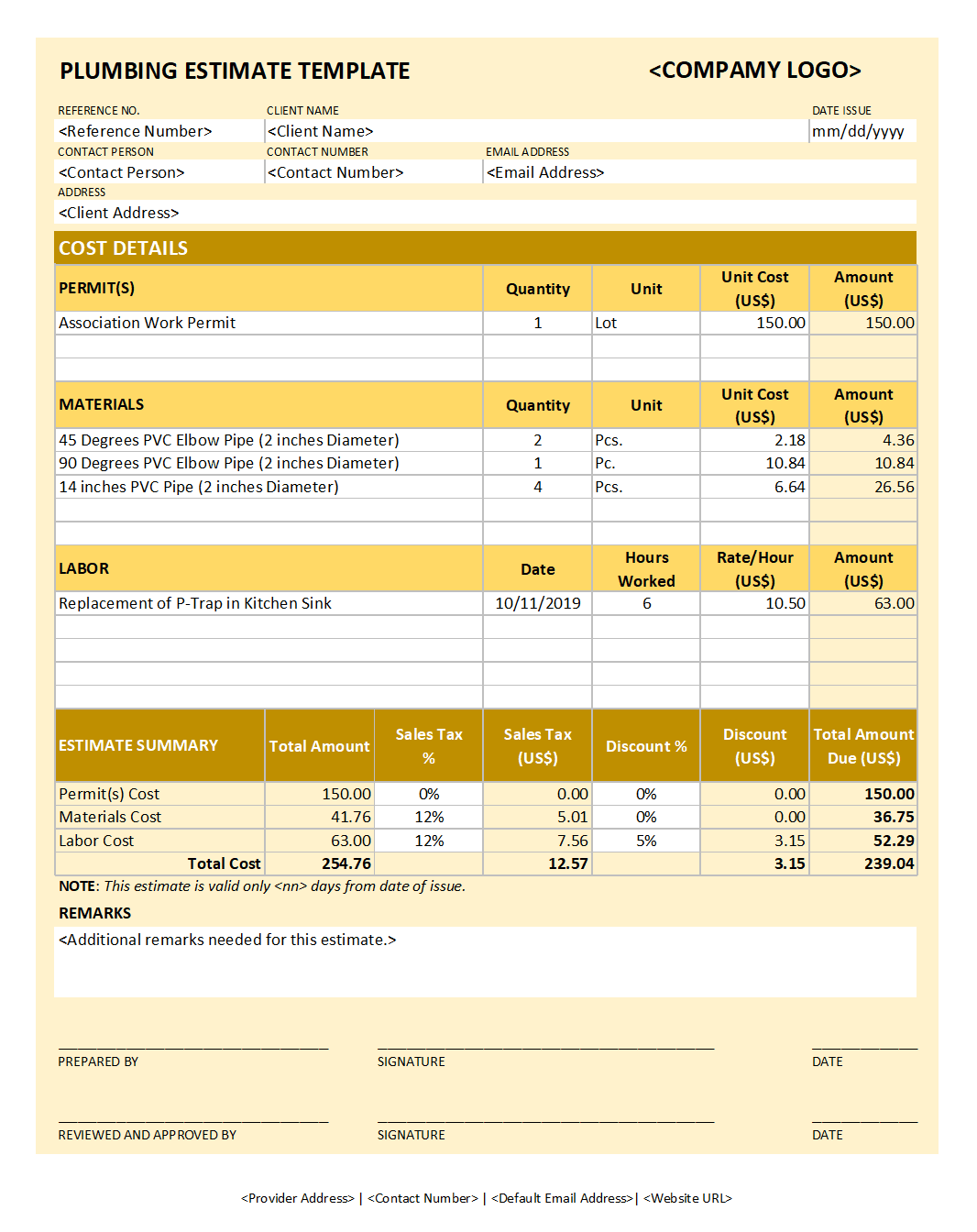
Work estimates, also called quotes, job estimates, or cost estimates, usually include more than the estimated total.
- The company name and address
- A quote or estimate
- The date you created the work estimate
- The customer’s contact details (i.e., address and phone number)
- A breakdown of the work required, as well as any parts needed
That’s a lot!
Many contractors use a job estimate or work estimate template because it already includes the core fields they need. Some information, such as company details and standard terms, can stay the same, while customer details, line items, pricing, and notes can be updated for each job.
Instead of starting from scratch, you can duplicate the template, add the job-specific details, and get that quote or invoice sent.
Why use a work estimate template?
The main reason companies and contractors use quote templates is speed. Even solo contractors likely send out dozens of work estimates each month. Creating a new quote entirely from scratch each time is a time-waster.Item prices, copying and pasting company information, and adding various tables and formatting could take each team member hours. And they could better spend that time on completing actual work!
Using a work estimate template, “pre-work” is already done. The job cost details are there, and many other items are already filled out. Pre-defined fields for customer details mean you only need to fill in some data. Plus, the company info and logo are right at the top.
Work estimate templates are customizable and can be adjusted as your business evolves. For example, after a few months of using a work estimate template, it was determined that including payment terms up front is essential.
That’s not all, though.
Work estimate templates instill a sense of professionalism in your customer communications, mainly when you send repeat clients multiple estimates, as each price quote template will look alike. They’re also a helpful way to reduce human error, since certain elements, such as formulas that automatically calculate the estimated total, are already set up.
Learn more: Project estimate template
What are some examples of work estimate templates?
Work estimate templates can vary by industry. Here are a few common examples.
Work estimate template for construction
A construction work estimate template usually includes company details, customer information, project location, line items, materials, labor, equipment, taxes, and a quote expiration date. Estimate expiration dates are optional, but they can help clarify how long pricing is valid.
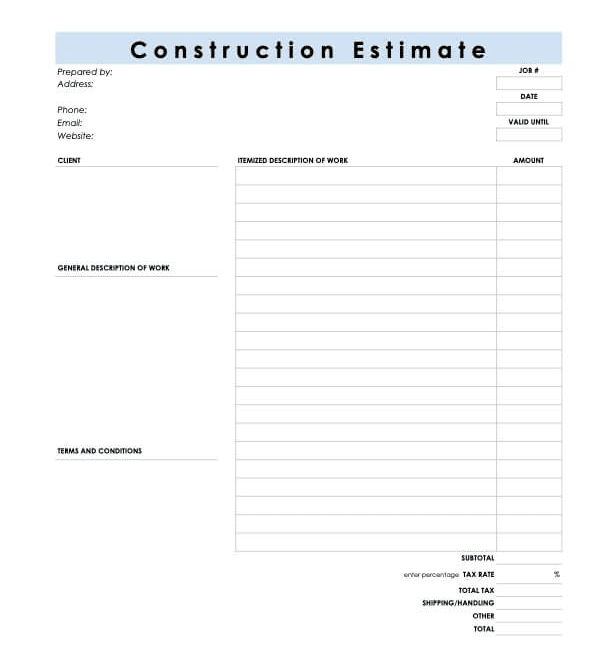
For construction jobs, it’s helpful to list labor, materials, supplies, equipment, and any special terms as separate line items. This gives customers a clearer view of what is included and helps reduce confusion later.
Work estimate template for vehicle repairs
A vehicle repair estimate template helps automotive teams break down parts, labor, diagnostics, taxes, and payment terms before the work begins.
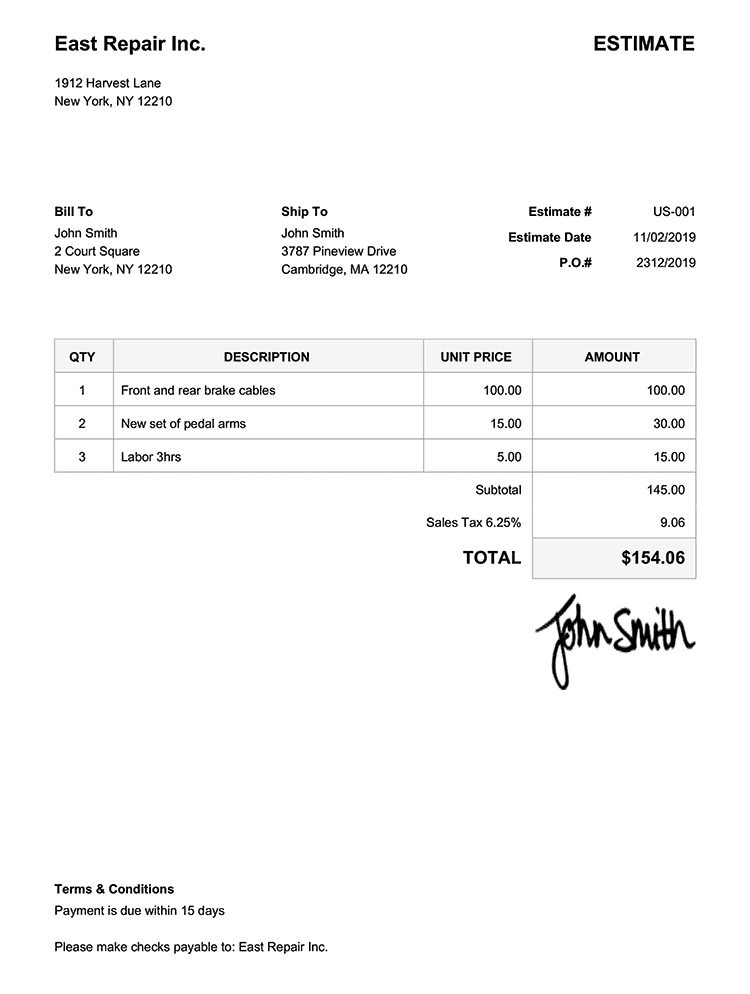
Including payment terms and conditions can help set expectations early, especially for larger repairs or jobs that require upfront parts ordering.
Work estimate template for cleaners
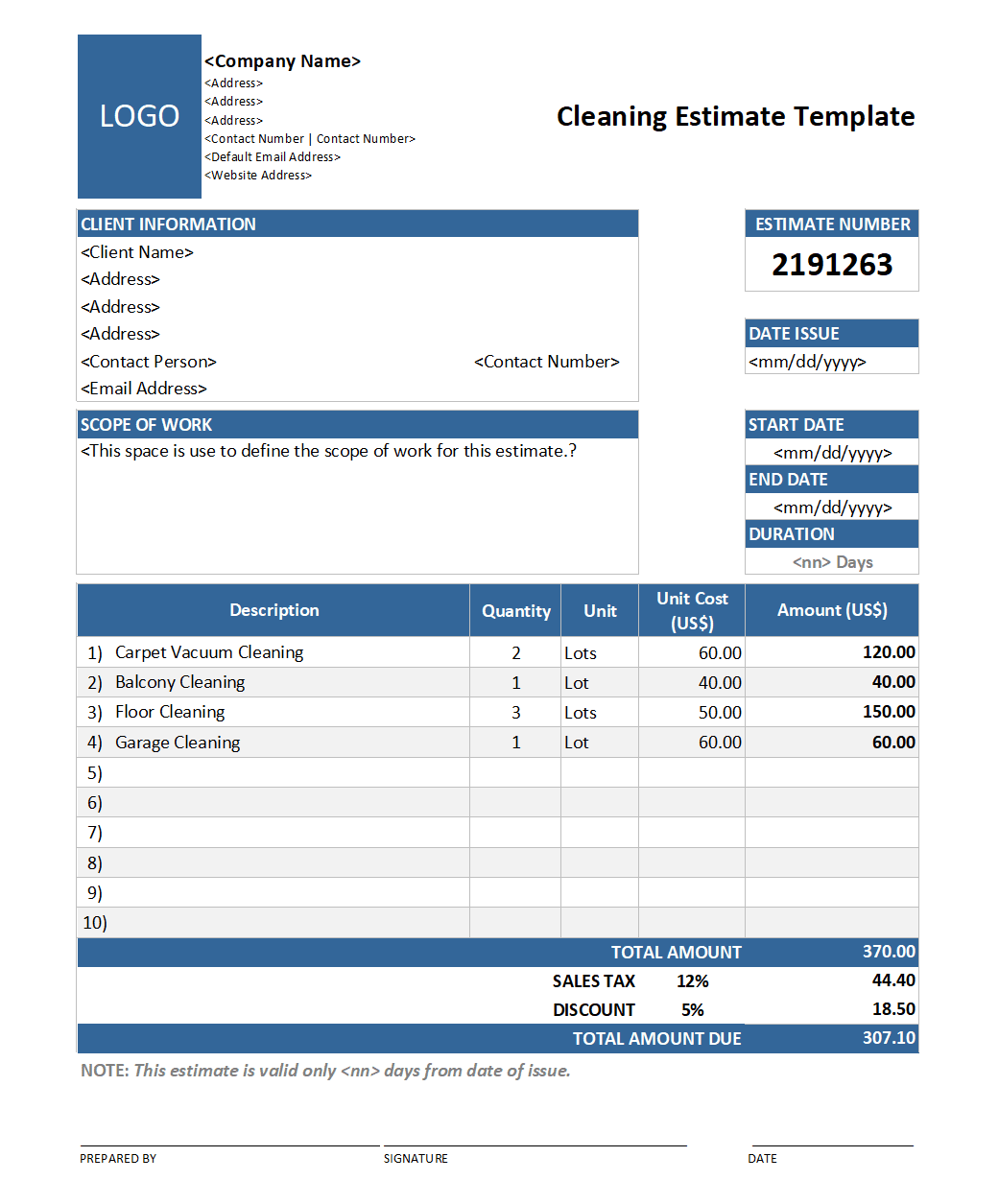
A cleaning work estimate template is useful for jobs that span multiple rooms, locations, or days. Start date, end date, duration, service type, supply costs, and recurring service terms can all help customers understand what the estimate covers.
monday.com’s work estimate template
Many free estimate templates are built in Google Docs, Microsoft Word, Excel, or Google Sheets. These formats can work well for simple estimates, but they often keep quotes separate from other work, such as customer records, approvals, timelines, billing, and project delivery.
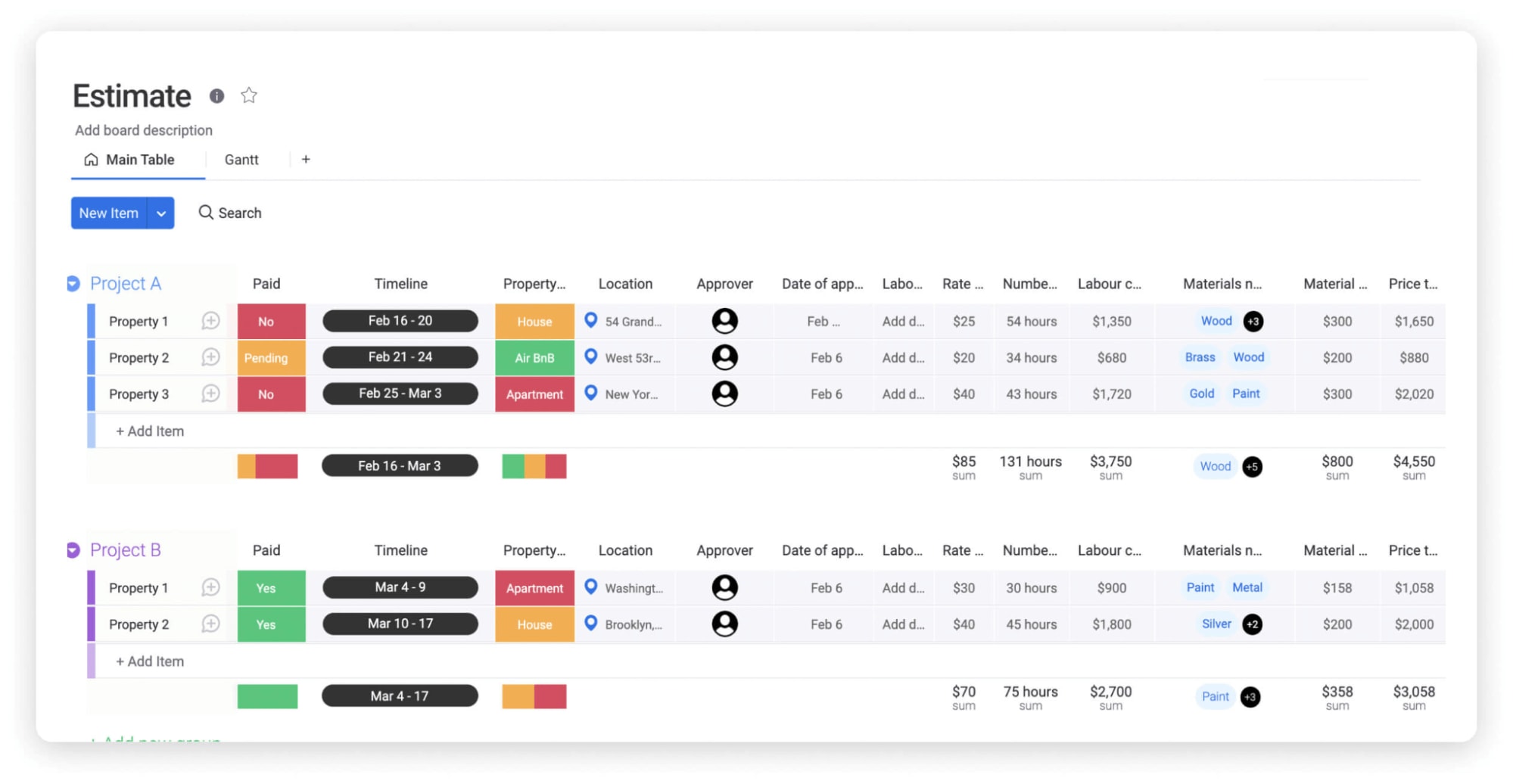
That’s why we decided to create a work estimate template for the monday.com Work OS. With our work estimate template, it’s easy to edit fields, create and share forms digitally with staff, and generate dynamic output for specific job types.
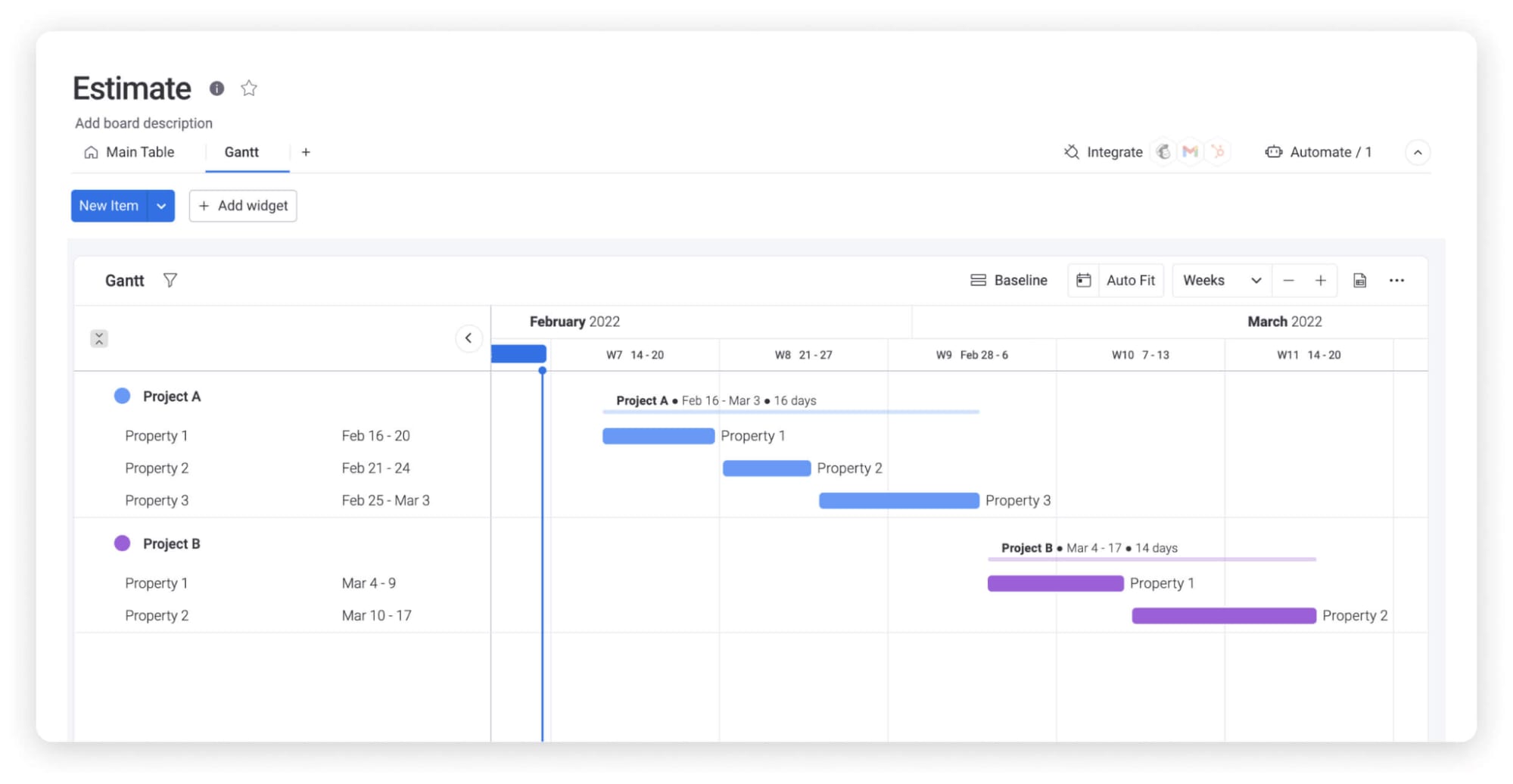
Teams can also use Timeline View to manage multiple jobs, estimate stages, project timelines, and follow-up dates in one visual place.
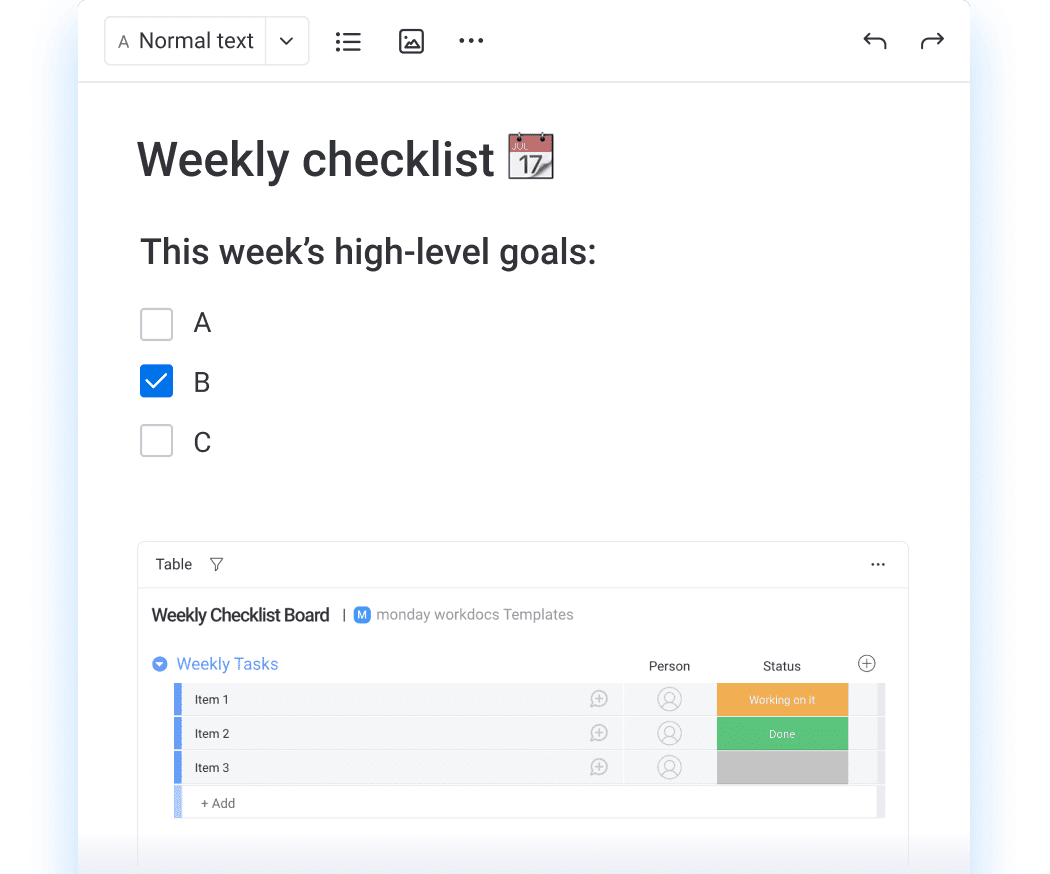
Want to print a physical document? Use monday workdocs, an intuitive, collaborative word editor. Since it lives in the monday.com Work OS, your team can quickly pull data from various monday.com boards.
All work estimates can be saved against the customer’s record in the monday.com CRM. When an estimate is approved, the relevant details can be moved into a project board or delivery workflow, reducing duplicate data entry and keeping customer context connected.
AI-powered capabilities can also support estimate workflows by helping teams summarize customer requests, extract key details from notes, and surface follow-up actions. monday agents, monday sidekick, and monday vibe can help teams keep estimates, approvals, and project handoffs moving while people stay in control of final decisions.
Best practices for using a work estimate template
New to using a work estimate template? Keep these best practices in mind before sending your next quote:
- Make sure to create a working copy of the template before editing, so the original template stays intact.
- Always change the quote number on the new estimate and keep quotes in sequential order. Or, better yet, use a platform like monday.com that does this automagically.
- Ensure company details are up-to-date. If anything changes, update the template.
- Include a clause that stipulates all costs are estimates and may be subject to change. For example, material costs may increase before the quote is accepted.
- If there are any special circumstances for a given job, add these to the notes section.
FAQs
What is a work estimate template?
A work estimate template is a reusable document or workspace that helps businesses outline the expected cost of a job. It usually includes customer details, company information, an estimate number, itemized labor and materials, taxes, payment terms, and notes about the project.
What should a work estimate include?
A work estimate should include the company name and contact details, customer information, estimate number, date, itemized work description, labor costs, material costs, taxes, total estimated cost, payment terms, timeline, and any exclusions or assumptions.
What is the difference between an estimate and an invoice?
An estimate is sent before work begins and shows the expected cost of a job. An invoice is sent after work is completed, or according to agreed payment milestones, and requests payment for the actual work performed.
How do I create a work estimate?
To create a work estimate, list the customer details, define the work required, break down labor and materials, add taxes and fees, include payment terms, and calculate the estimated total. A template helps standardize this process so each estimate follows the same format.
How does monday.com help with work estimates?
monday.com’s AI Work Platform helps teams manage work estimates with customizable templates, digital forms, dashboards, Timeline View, monday workdocs, monday CRM, automations, and AI-powered support. Teams can keep estimates, approvals, customer details, and project workflows connected in one place.
 Get started