


Ambitious strategies often start strong, then gradually lose clarity as daily priorities take over. Teams stay busy, projects keep moving, yet decisions begin to drift in different directions. Without a vivid picture of the future, even capable organizations can struggle to stay aligned on what truly matters.
A compelling vision brings focus back to the bigger picture. It acts as a clear, energizing reference point that helps teams make confident decisions and prioritize work that supports long-term progress. When the destination is easy to understand, alignment becomes more natural and momentum is easier to maintain.
This helpful, forward-looking guide shows how to create a vision that people can actually use. You will learn what strong vision statements look like, how they connect to strategy, and how to translate ambition into coordinated action that keeps teams moving in the same direction.
Key takeaways
- A clear vision aligns execution with long term strategy: Organizations that define a focused 5-10 year destination reduce fragmentation and ensure teams move in the same direction.
- Effective vision statements are concise, future focused, and actionable: Strong statements typically use 15-30 words, avoid vague language, and imply measurable outcomes that guide decision making.
- Cascading vision into goals turns strategy into daily work: Breaking vision into multi year plans, annual objectives, and quarterly results helps teams connect their tasks to broader business outcomes.
- Structured workflows improve visibility and alignment: Intuitive platforms like monday work management help link projects to strategic goals, making it easier to track progress and prevent misalignment across departments.
- Measuring impact ensures the vision drives real results: Metrics such as initiative alignment, employee engagement, decision speed, and market progress indicate whether the vision is influencing behavior or remaining unused.
What is a vision statement that drives results?
A vision statement defines what your organization aims to become over time. It acts as your strategic North Star, shaping where you invest, who you hire, and which opportunities you pursue. Instead of reacting to short term pressures, you make decisions with a clear destination in mind.
Unlike a mission statement, which focuses on what you do today, a vision statement looks ahead. It describes where you want to be in five to ten years. Because of that, it turns broad ambition into something your leadership can measure and your teams can align with.
Defining vision statements for today’s organizations
A strong vision statement spells out your future position in a simple and direct way. It focuses on impact and market position, not day to day operations. In other words, it answers where you are going, not what you are doing right now.
They’re not marketing slogans meant to boost brand awareness. A vision statement is an internal guide that keeps your operations focused on what matters. For example:
- Technology company: “Universal access to information”.
- Healthcare provider: “Eliminate preventable diseases globally”.
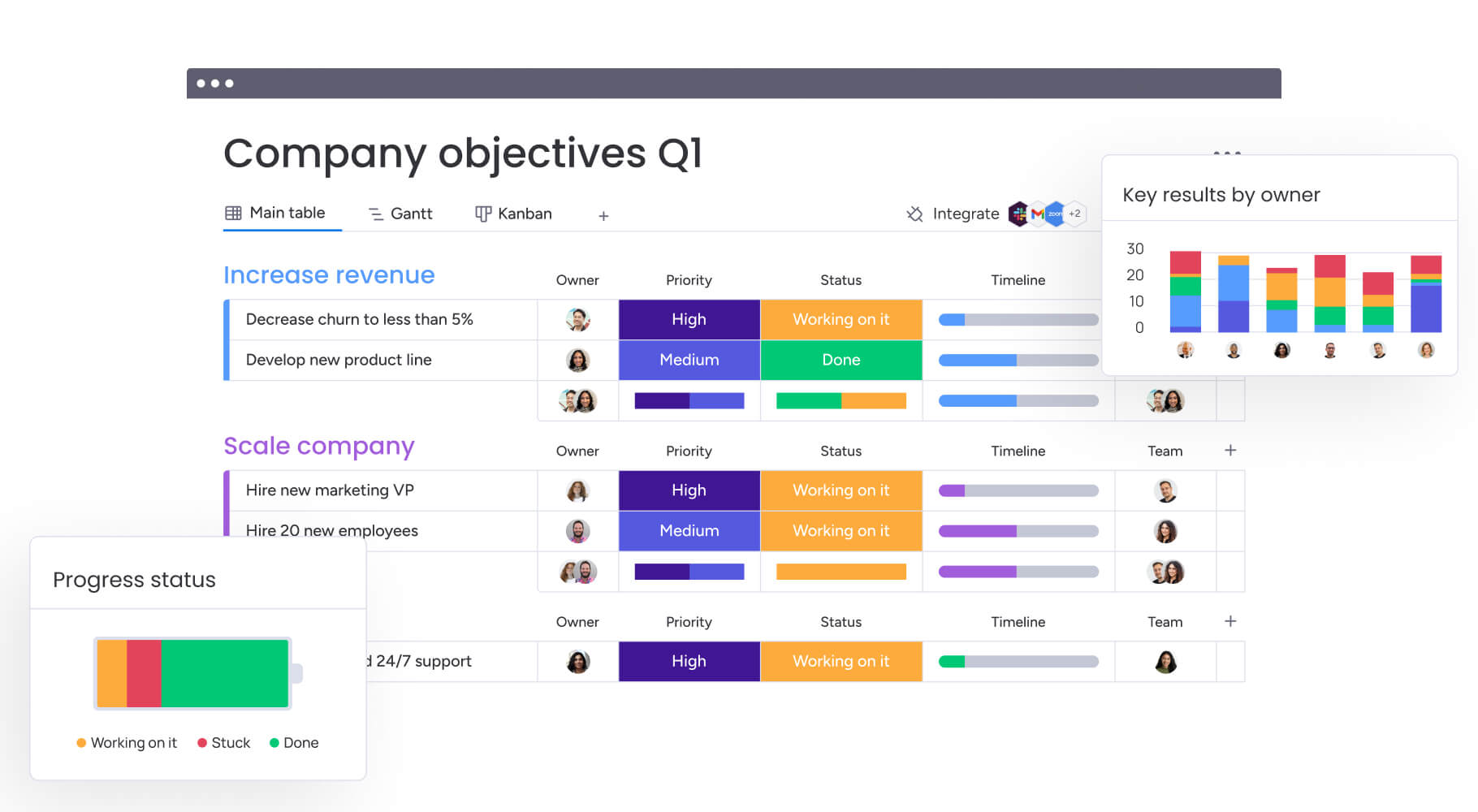
These statements are not just words on a wall. They set clear benchmarks for success. Organizations use platforms like monday work management to track how daily workflows contribute to these long-term visions, ensuring the statement remains a living part of the business rather than forgotten documentation.
The strategic role of vision in business success
A well defined vision gives you a clear filter for major decisions. When you evaluate new markets, partnerships, or investments, you can quickly determine whether they align with your long term direction. Because of this, decision making becomes faster and more consistent.
At the same time, a shared vision brings alignment across teams. Engineering, sales, and marketing move toward the same outcome instead of chasing separate goals. This clarity helps you prioritize effectively and avoid distractions that do not support your future direction.
How leading companies operationalize vision statements
High performing organizations treat their vision as a working framework, not just inspiration. They translate it into measurable outcomes and embed it into daily operations so it actively shapes performance.
Here are several ways companies operationalize their vision:
- Cascading objectives: Leadership breaks the long term vision into three year strategies, then into annual goals and quarterly results that teams can execute against.
- Performance evaluation: Teams are assessed based on how their work contributes to the vision, not just on output or efficiency.
- Investment decisions: Major investments, acquisitions, and R&D efforts are filtered through the vision to ensure alignment.
- Cultural integration: The vision becomes part of onboarding and internal communication, helping every employee understand their role in the bigger picture.
Why every organization needs a vision statement
Without a clear vision, teams often move in different directions and decisions become reactive. Over time, this creates confusion, slows progress, and weakens execution. A strong vision, on the other hand, brings focus, speeds up decisions, and helps you retain people who care about where the company is headed.
Just as importantly, it gives your organization a shared sense of purpose. When everyone understands the destination, it becomes easier to prioritize work and stay aligned, even as the business grows.
Creating unity and direction across teams
A vision statement removes uncertainty about what matters most. It gives every department a shared direction, which is critical when teams are used to working toward their own KPIs. As a result, silos start to break down and collaboration improves.
Because of this shared clarity, teams can evaluate their work more effectively. They begin asking whether a project supports the long term goal or simply consumes resources.
Intelligent and powerful platforms like monday work management make this connection visible, helping teams see how their work ties back to the bigger picture.
Accelerating strategic decision-making
A well defined vision acts as a decision filter. Instead of debating every opportunity, you can quickly assess whether it aligns with your future direction. This reduces hesitation and keeps momentum strong.
For example, if a partnership does not support your five year goal, you can confidently decline it: this clarity also prevents analysis paralysis, allowing leaders to move forward without overthinking every choice.
Building competitive advantage through focus
Organizations with a clear vision move faster because they already know where they are going. While others are still deciding on direction, you are executing against a defined path. This gives you a practical edge in competitive markets.
Focus helps you spot the right opportunities. You naturally pay attention to signals that match your long term goals. As a result, product development and go to market efforts become more efficient and aligned.
Attracting top talent with purpose
A strong vision helps you stand out to candidates who want meaningful work. Today, people look beyond compensation and care about the impact they can make. A clear direction shows that your organization is working toward something important.
In addition, employees are more engaged when they see how their work contributes to a larger goal. This sense of purpose improves retention and builds a more committed workforce over time.
A vision statement removes uncertainty about what matters most.
Vision statement vs mission statement and core values
Vision, mission, and values often get grouped together, yet each serves a different purpose in shaping direction and decision making. Understanding how they work individually — and how they connect — helps ensure your strategy feels consistent, clear, and easier for teams to follow.
Understanding each element’s purpose
The table below highlights the key differences between vision, mission, and values:
| Strategic element | Role in organization | Time horizon | Primary question |
|---|---|---|---|
| Vision | Sets long-term destination | Future (5-10+ years) | Where are we going? |
| Mission | Defines daily operational focus | Present | What do we do today? |
| Values | Guides behavioral standards | Permanent | How do we behave? |
Your vision describes the future you are working toward. Meanwhile, your mission explains what you do today to move in that direction. Your values shape how your team behaves along the way, ensuring consistency in how work gets done.
How vision, mission, and values work together
These elements are most effective when they are connected. The vision sets the destination, the mission defines the path, and values guide how you move forward. Together, they create a clear structure for decision making.
However, when they exist in isolation, teams often struggle to connect their work to the bigger picture. That is why many organizations use platforms like monday work management to bring everything into one place and maintain alignment across teams.
When to use each strategic element
Different situations call for different strategic elements. Knowing when to use each one helps you communicate clearly and stay consistent across the organization.
Here are some common scenarios:
- Strategic planning: Use the vision to ensure long term plans align with your intended future state.
- Marketing and branding: Use the mission to clearly explain your value to customers.
- Employee onboarding: Use values to guide behavior and help new hires understand your culture.
- Performance reviews: Use values to assess how work is done and mission to evaluate results, while also connecting progress back to the vision.
6 essential elements of powerful vision statements
Strong vision statements share a set of characteristics that make them practical and effective. These elements discussed below help ensure your vision guides decisions, aligns teams, and remains relevant over time.
1. Future focused aspiration
A vision statement should clearly describe a future state, typically five to ten years ahead. It needs to stretch beyond your current position and push the organization to grow. It should also focus on where you are going, not where you are today: this distinction keeps the vision forward looking and meaningful.
2. Inspirational yet achievable goals
The best visions balance ambition with realism. If the goal is too safe, it will not motivate your team. If it feels impossible, it can create doubt instead. So, aim for a stretch target that challenges people while still feeling within reach. This balance builds both excitement and confidence.
3. Memorable and concise language
Clarity is essential. A vision statement should be easy to understand and simple to remember across all levels of the organization. In most cases, fifteen to thirty words is enough. If people cannot recall it easily, it will not guide their day to day decisions.
4. Measurable strategic outcomes
Even though a vision statement describes a future state, it should still imply outcomes you can track. Clear signals of progress help teams understand what success looks like and keep efforts aligned over time.
For example, a vision centered on market leadership naturally connects to indicators like market share or category growth. Platforms like monday work management make these connections easier to monitor by linking strategic outcomes to real-time dashboards and performance tracking.
5. Stakeholder resonance
A strong vision should connect with employees, customers, investors, and the broader community. Each group should see value in the future you are building. For example, employees look for purpose, investors expect growth, and customers want better experiences. Aligning these perspectives strengthens your overall direction.
6. Adaptability to change
Finally, your vision should remain flexible as markets evolve. While your core ambition stays consistent, the way you achieve it may change over time. Because of this, avoid being too specific about methods or technologies.
A broader focus ensures your vision stays relevant even as conditions shift.
Vision, mission, and values often get grouped together, yet each serves a different purpose in shaping direction and decision making. Understanding how they work individually — and how they connect — helps ensure your strategy feels consistent, clear, and easier for teams to follow.

7 steps to create your vision statement
Creating a vision statement is not a one step task. It requires thoughtful input, testing, and alignment. These seven steps help you move from ideas to a clear and practical statement your organization can use.
Step 1: analyze your current position
Start by understanding where your organization stands today. Look at strengths, weaknesses, and your position in the market.
You can use a SWOT analysis to map this out clearly. In addition, include real data such as customer satisfaction and market share to keep your vision grounded.
Step 2: engage key stakeholders
Gather input from employees, customers, and board members through stakeholder engagement activities like surveys, interviews, or workshops. Uncover shared aspirations and understand what different groups value most about your organization’s potential. This collaborative approach builds buy-in before the vision launches.
Step 3: research market opportunities
Next, look outside your organization to understand where the market is heading. Industry trends and customer expectations can reveal new directions.
For instance, studying competitors and emerging technologies can highlight gaps you are well positioned to fill. This ensures your vision stays relevant to real opportunities.
Step 4: define your future state
Now, shift your focus to what success looks like in the long term. Think about the impact you want to create and the problems you aim to solve.
At this stage, do not limit yourself by current constraints. Instead, explore bold ideas that still align with your organization’s strengths.
Step 5: draft multiple versions
Rather than settling on one idea immediately, create several versions of your vision. Each version can emphasize a different angle or priority.
Then, compare them against key criteria such as clarity, ambition, and relevance. This helps you identify which direction feels most authentic.
Step 6: test and refine
Once you have strong drafts, gather feedback from a broader group. Ask whether the statement feels clear, motivating, and believable.
In addition, check if people can see their role in achieving it. Platforms like monday work management can help collect and organize this feedback efficiently with its collaboration features.
Step 7: validate with leadership
Finally, present your refined vision to leadership for alignment and approval. This step ensures long term commitment, not just agreement.
After that, plan how you will share the vision across the organization. Clear communication helps turn the statement into something people actively follow.
Vision statement examples that inspire action
Strong vision statements make the future feel clear and worth working toward. Reviewing real examples helps you see how leading organizations express ambition in a way that is focused, memorable, and aligned with long-term impact.
Technology companies leading digital transformation
- Microsoft: “To empower every person and every organization on the planet to achieve more”.
- Google: “To organize the world’s information and make it universally accessible and useful”.
- LinkedIn: “To create economic opportunity for every member of the global workforce”.
- Zoom: “Video communications empowering people to accomplish more”.
- Intel: “To create world-changing technology that improves the life of every person on earth”.
Healthcare organizations improving lives
- Mayo Clinic: “To inspire hope and contribute to health and well-being by providing the best care to every patient”.
- Pfizer: “Innovating to bring therapies to patients that significantly improve their lives”.
- Alzheimer’s Association: “A world without Alzheimer’s and all other dementia”.
- CVS Health: “Helping people on their path to better health”.
- Cleveland Clinic: “To be the world’s leader in patient experience, clinical outcomes, research and education”.
Financial services building trust
- American Express: “Provide the world’s best customer experience every day”.
- PayPal: “To democratize financial services ensuring everyone has access to affordable, convenient and secure products”.
- Visa: “To be the best way to pay and be paid, for everyone, everywhere”.
- Charles Schwab: “To be the most trusted leader in investment services”.
- Square: “To help businesses and individuals participate in the economy”.
Retail brands creating experiences
- IKEA: “To create a better everyday life for the many people”.
- Amazon: “To be Earth’s most customer-centric company”.
- Nike: “To bring inspiration and innovation to every athlete in the world”.
- Starbucks: “To inspire and nurture the human spirit”.
- Whole Foods: “To nourish people and the planet”.
Manufacturing companies driving progress
- Tesla: “To accelerate the world’s transition to sustainable energy”.
- General Electric: “To build, move, power and cure the world”.
- Ford: “To become the world’s most trusted company”.
- Boeing: “Connect, protect, explore and inspire the world through aerospace innovation”.
- Caterpillar: “A world where basic needs are fulfilled in an environmentally sustainable way”.
Nonprofits making global impact
- Habitat for Humanity: “A world where everyone has a decent place to live”.
- WWF: “To build a future where people live in harmony with nature”.
- Feeding America: “A hunger-free America”.
- Oxfam: “A world without poverty”.
- Teach for America: “One day, all children will have the opportunity to attain an excellent education”.
How to cascade vision across your organization
A vision only creates impact when teams can connect it to the work they do every day. Turning long-term direction into clear priorities, goals, and responsibilities helps ensure the vision guides decisions rather than sitting separate from execution.
Align departments with the bigger goal
Each department needs to understand how their work supports the overall direction. That connection does not happen automatically, so leaders need to make it visible.
For example, if your vision centers on customer experience, your IT team may shift focus from uptime metrics to user journey stability. Because of this, teams start seeing their work as part of something larger, not just isolated tasks.
Translate vision into team level goals
Once departments are aligned, the next step is turning that vision into measurable outcomes. Teams need clear objectives that reflect the bigger picture.
A sales team, for instance, might focus on customer retention instead of only new deals. That shift ensures daily efforts support long term relationships, not just short term wins.
Build accountability into everyday work
Accountability keeps the vision active, not optional. You need systems that regularly check if work aligns with your direction.
This includes performance reviews, progress tracking, and team discussions. Over time, people start asking how their work contributes to the vision, not just whether it gets done.
Track progress in real time
You cannot rely on instinct to measure progress. Data gives you a clear picture of whether you are moving in the right direction.
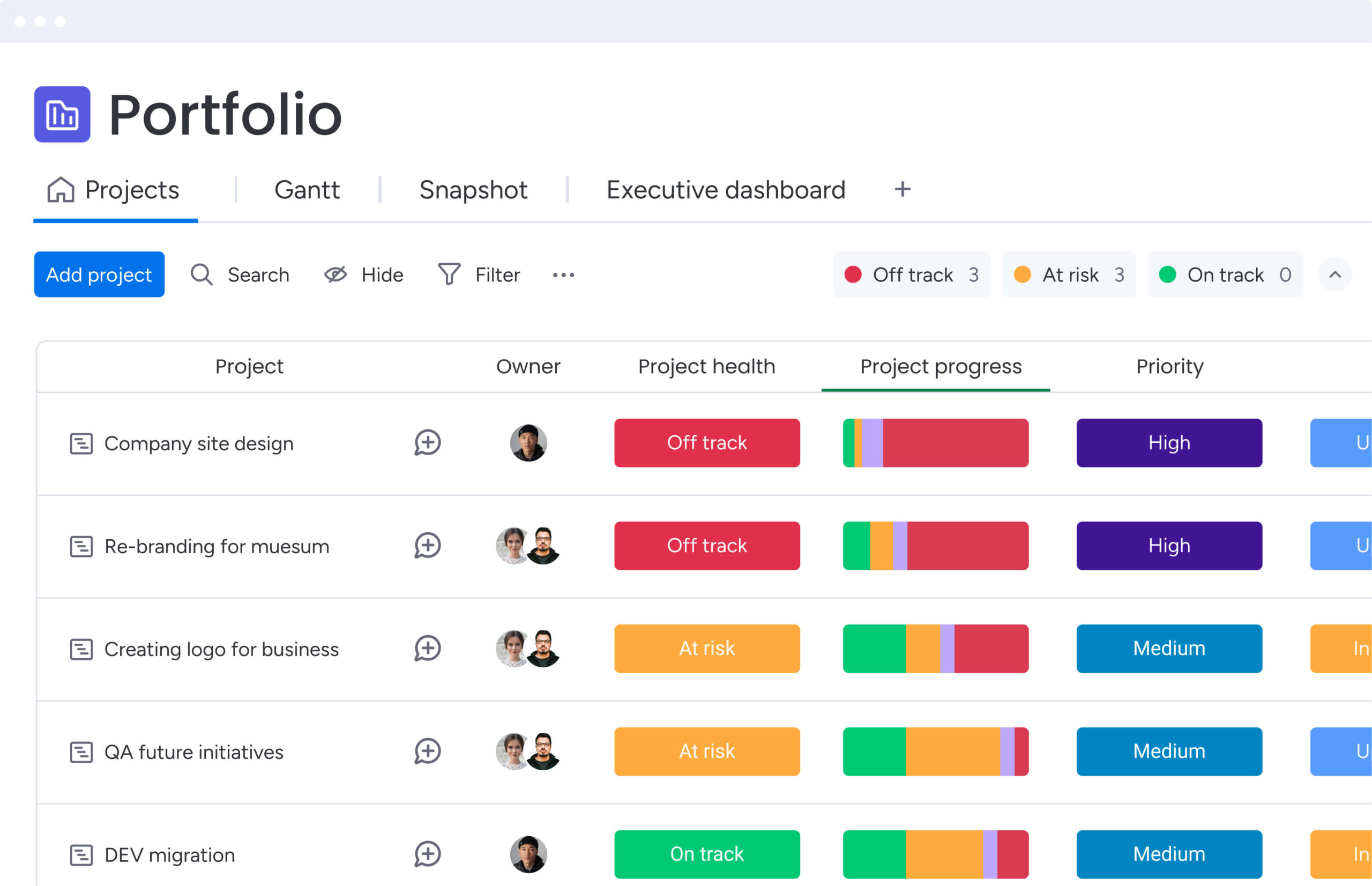
That is where a platform like monday work management helps. It connects projects, goals, and dashboards, so you can see how daily work ties back to your vision without guesswork.
5 ways to measure vision statement success
To understand whether your vision actually drives results, you need clear indicators. The points below show how you can evaluate its impact in a practical way.
1. Strategic initiative alignment scores
Look at how well your projects support your vision. You can score initiatives based on how closely they match your long term goals.
When alignment is strong, resources naturally flow toward what matters most. If not, it signals that your strategy needs adjustment.
2. Employee engagement metrics
Ask your team if they understand the vision and how their work connects to it. Surveys can reveal whether the message is clear or confusing.
High engagement usually means people feel connected to the direction. As a result, motivation and retention tend to improve.
3. Decision-making speed
A clear vision should make decisions faster, not slower. It acts as a filter that helps you rule out options that do not fit.
If your team makes quicker decisions without losing quality, your vision is doing its job well.
4. Market position progress
Your vision should reflect where you want to stand in the market. That means tracking metrics like customer perception and competitive position.
For example, if your goal is to become the most trusted brand, trust scores should improve over time. Otherwise, there is a gap between intention and reality.
5. Stakeholder satisfaction levels
Finally, look at feedback from customers, employees, and partners. Their experience shows whether your vision is being lived out in real situations.
Consistently strong feedback suggests alignment across the organization. In the end, that is what turns a vision into something people actually believe in.
Try monday work management
“monday.com has been a life-changer. It gives us transparency, accountability, and a centralized place to manage projects across the globe".
Kendra Seier | Project Manager
“monday.com is the link that holds our business together — connecting our support office and stores with the visibility to move fast, stay consistent, and understand the impact on revenue.”
Duncan McHugh | Chief Operations OfficerCommon vision statement mistakes and solutions
When you build a vision statement, it is easy to fall into patterns that weaken its impact. However, spotting these early helps you create something that actually guides decisions and keeps teams aligned over time.
- Avoid vague aspirations: Generic phrases like “be the best” sound inspiring, yet they offer no real direction. Instead, focus on clarity and intent so your team knows what success looks like. For example, replacing broad claims with a clear ambition gives people something concrete to work toward.
- Prevent mission creep: Teams often lose focus when new opportunities start pulling them away from the original vision. So, use your vision as a filter when evaluating ideas and priorities. monday work management helps you stay aligned by connecting strategy directly to ongoing work.
- Ensure measurable outcomes: A vision should hint at how progress will be tracked, even if it stays high level. For instance, aiming for market leadership naturally ties to market share, while sustainability points to environmental metrics. This makes it easier to hold teams accountable without overcomplicating the vision.
- Keep it relevant over time: Markets shift, and your vision needs to stay meaningful as those changes happen. While the core idea should remain steady, reviewing it each year helps you adjust how it is applied. This way, your organization stays grounded while still adapting to new realities.
Turn vision into execution with strategic work management
Even with a clear vision in place, many teams struggle to keep daily work aligned with long term goals. Priorities shift, visibility drops, and execution starts to drift. That’s where monday work management really helps, by connecting strategy directly to the work happening across your organization.
- Lack of alignment across teams: Teams often work toward different priorities, making it difficult to stay focused on shared long term goals.
- Limited visibility into strategic progress: Without clear tracking, it becomes hard to see how projects contribute to the broader direction.
- Unclear prioritization of work: Teams may focus on urgent tasks instead of work that supports strategic objectives.
- Inconsistent accountability in execution: Progress is difficult to measure when ownership and outcomes are not clearly defined.
- Disconnected planning and execution: Strategy and daily work often exist separately, reducing overall impact.
By bringing goals, projects, and workflows into one place, monday work management helps you maintain alignment without adding complexity. As a result, your teams move faster, make clearer decisions, and consistently turn vision into measurable progress.
Try monday work managementFrequently asked questions
How long should a vision statement be?
The ideal length is around fifteen to thirty words, or one to two sentences. This keeps it clear and memorable while still giving enough direction for teams to act on it.
How often should you update your vision statement?
You should review your vision each year to confirm it still fits your direction. That said, full updates are usually only needed every three to five years, or when major changes occur.
Who should be involved in creating a vision statement?
You should involve senior leaders, key stakeholders, and team members from different departments. This mix brings in diverse perspectives and helps build stronger alignment across the organization.
Can small businesses benefit from vision statements?
Yes, vision statements are just as valuable for small businesses. They guide decisions early on and help communicate purpose clearly to both employees and customers.
What’s the difference between a vision statement and a purpose statement?
A vision statement focuses on where your organization is heading. A purpose statement explains why it exists and the problem it aims to solve.
How do you know if your vision statement is working?
You can assess this through employee engagement, alignment in decision making, stakeholder satisfaction, and progress toward long term goals. When these areas improve, your vision is doing its job.

 Get started