


Toxic positivity at work rarely looks harmful at first. It often appears as encouragement, resilience, or strong team spirit. But when positivity becomes expected in every situation, even when deadlines slip or pressure builds, communication begins to change. Concerns go unspoken, risks surface too late, and honest feedback becomes harder to share.
Over time, a gap forms between how work actually feels and how it is discussed. Teams may celebrate progress publicly while privately managing overload, uncertainty, or unrealistic expectations. When optimism replaces honest conversation, organizations lose the clarity needed to solve problems early and support employees effectively.
This practical post explains how toxic positivity develops, how to recognize the early warning signs, and what healthier communication looks like in modern organizations. It also explores helpful ways to encourage honest input without creating unnecessary friction, helping teams stay realistic, constructive, and focused on meaningful progress.
Key takeaways
- Toxic positivity silences useful truth: When concerns, frustration, or risk signals are brushed aside in the name of staying upbeat, teams lose the honest input needed to solve problems early.
- Healthy optimism makes space for reality: Strong workplace culture does not ignore pressure or setbacks, it acknowledges them clearly and helps teams respond with focus, support, and practical action.
- Warning signs often show up in everyday behavior: Dismissed feedback, forced enthusiasm during stressful periods, meeting silence, and gaps between leadership messaging and team experience can all point to a deeper culture issue.
- Data helps teams raise concerns credibly: Objective metrics, workload patterns, project timelines, and delivery risks make it easier to discuss problems productively without the conversation being reduced to attitude or tone.
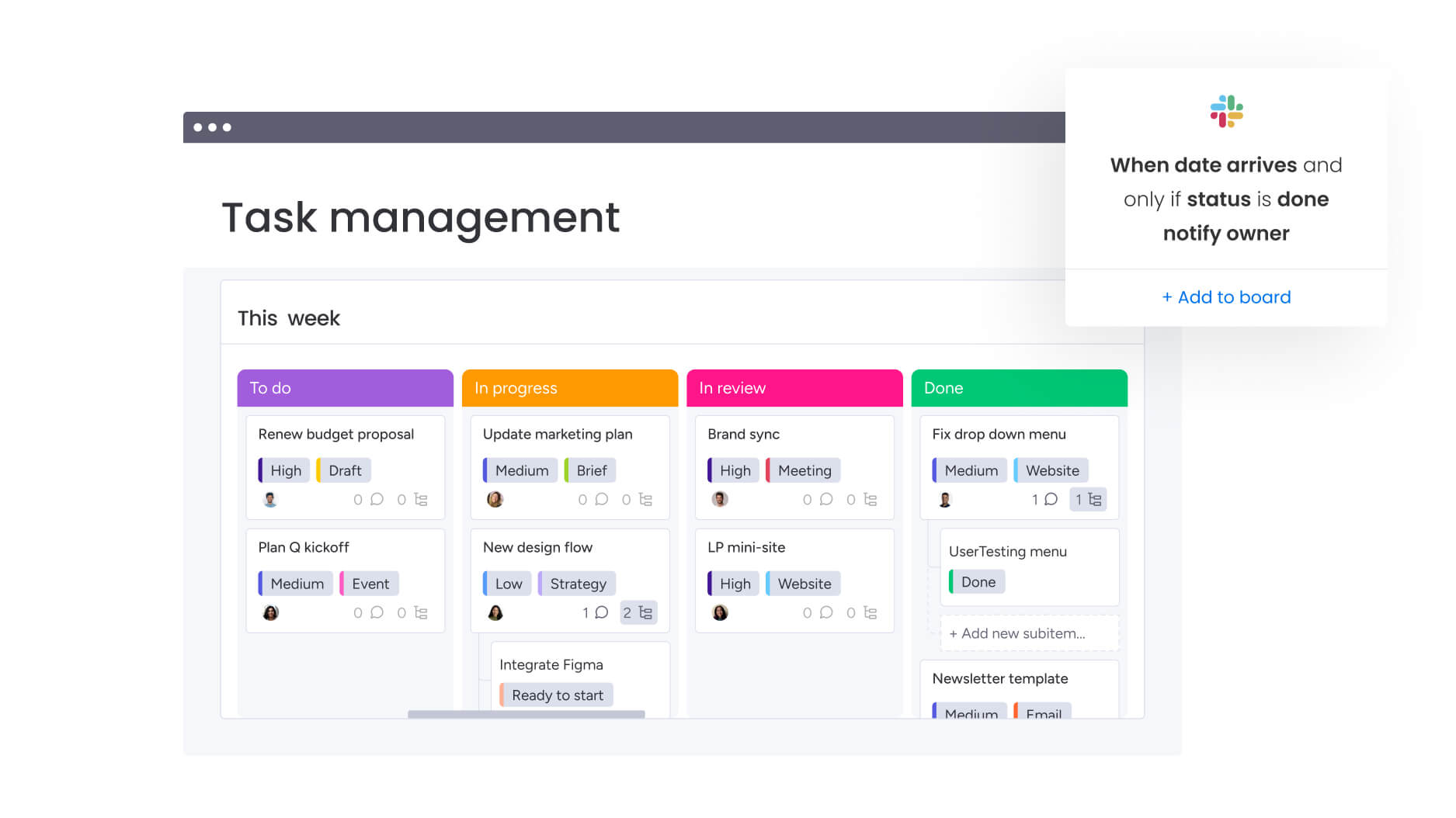
- Transparent systems support more honest work: Shared workflows and visible project tracking in tools such as monday work management can help surface blockers, validate team concerns, and create room for clearer communication.
What is toxic positivity in the workplace?
Toxic positivity at work happens when optimism is pushed so hard that it leaves no room for honest concern, frustration, or doubt. In that kind of culture, people feel pressure to sound upbeat even when projects are failing, workloads are unrealistic, or teams are under real strain. What starts as a positive mindset can slowly turn into something that shuts down truth.
Unlike healthy optimism that acknowledges difficulties while maintaining confidence, toxic positivity demands employees suppress authentic reactions and maintain artificial cheerfulness in the work environment. This pressure to stay positive becomes particularly damaging when organizations face real operational challenges, resource constraints, or strategic failures that require honest assessment.
Defining toxic positivity at work
In the workplace, toxic positivity usually shows up through three connected patterns.
Together, they create an environment where honesty feels risky and surface level positivity matters more than reality. Once that happens, people stop speaking freely, even when the business clearly needs better information.
You can usually spot it through a few recurring behaviors:
- Reality dismissal: Leadership treats risk assessments or critical feedback as negativity rather than valuable input.
- Emotional suppression: Employees must maintain cheerful facades during layoffs, restructuring, or project failures.
- Conflict avoidance: Teams sidestep difficult conversations to preserve surface harmony while problems grow.
How forced optimism shows up in teams
Forced positivity often looks polished from the outside. It can sound like strong culture, resilience, or team spirit. Still, the clearest signs show up in everyday communication, especially in how teams talk about risk, pressure, and missed expectations.
You can often see it in patterns like these:
- Risk blindness: Team members hesitate to flag delays or budget concerns after previous warnings met dismissive responses.
- The yes trap: Teams accept impossible deadlines to appear supportive, knowing delivery isn’t feasible.
- Meeting silence: Brainstorming sessions become echo chambers where only positive reinforcement surfaces.
- Stress gaslighting: When employees express burnout, they hear “look on the bright side” instead of receiving resource support.
The psychology behind dismissive positivity
Toxic positivity usually comes from fear rather than bad intent. Some leaders worry that naming a problem will make them look weak, uncertain, or out of control. As a result, they start treating honesty as a threat instead of a normal part of good leadership.
They may also believe that talking about risk somehow invites failure. So, silence starts to look like alignment. No one objects, no one pushes back, and no one brings bad news, which can easily be mistaken for strong morale. In reality, people are often just protecting themselves.
Try monday work managementUnlike healthy optimism that acknowledges difficulties while maintaining confidence, toxic positivity demands employees suppress authentic reactions and maintain artificial cheerfulness in the work environment.

7 signs of toxic positivity in your organization
If you want to spot toxic positivity, do not focus only on whether people seem happy. Instead, pay attention to what happens when someone raises a concern, questions a plan, or shares that something is not working. That reaction tells you far more than a cheerful all hands meeting ever will.
Below are seven signs that often show a culture has crossed the line.
1. Valid concerns get dismissed as negativity
Legitimate business concerns about project risks or process inefficiencies receive labels like “negative thinking” or “resistance to change.” When team members identify flaws in plans, they hear “don’t bring me problems, bring me solutions,” which shuts down necessary problem identification stages and prevents constructive feedback.
As a result, people stop speaking up early, which is when problems are easiest to fix. Over time, critical thinking starts to feel unwelcome instead of appreciated.
2. Realistic feedback faces punishment
Speaking up should be part of a healthy culture, yet here it quietly comes at a cost. People who raise concerns may find themselves excluded from meetings or overlooked for new opportunities.
Even though the pushback is rarely formal, it still sends a strong message. Eventually, employees learn that staying quiet feels safer than being honest.
3. Forced enthusiasm during genuine challenges
During layoffs, budget cuts, or failed projects, teams are still expected to show excitement. Leaders may ask for energy and optimism even when the situation clearly does not call for it.
This gap between what people feel and what they are expected to show creates strain. Over time, that disconnect wears people down and blurs emotional boundaries.
4. Leadership shows perception gaps
Leaders often describe the culture as strong and supportive, yet employees experience burnout and inefficiency. This gap exists because difficult feedback gets softened or filtered as it moves upward.
Because of this, decisions are made using incomplete information. What looks stable on the surface may actually be fragile underneath.
5. Problems get reframed without solutions
Challenges are quickly turned into “learning moments” or “opportunities,” but no real action follows. While a growth mindset matters, it should not replace accountability.
For example, a system failure needs analysis and correction, not just a positive spin. Without real solutions, the same issues keep coming back.
6. Emotional honesty meets resistance
When someone shares that they feel overwhelmed or frustrated, the response often skips straight to reassurance. Phrases like “you have got this” replace meaningful conversations about workload or support.
Because of this, people stop expressing how they truly feel. Without that openness, teams lose the ability to work through challenges together.
7. Team morale metrics hide true sentiment
On paper, morale may look high, yet the day to day experience tells a different story. Employees may hesitate to share honest feedback if they doubt anonymity or believe nothing will change.
At the same time, operational data often tells the truth. Missed deadlines, uneven workloads, and turnover rates usually reveal what surveys do not.
Toxic positivity vs healthy optimism
If you understand the gap between forced positivity and real optimism, you set your team up to perform better. Both aim to motivate, yet they operate in very different ways. As a result, the outcomes they create are often completely opposite.
Below is a side by side breakdown that really helps make that difference clear:
| Feature | Toxic positivity | Healthy optimism |
|---|---|---|
| Response to problems | Denies existence: "Everything's fine" | Acknowledges difficulty: "This is challenging, but we have a plan" |
| Communication style | Dismissive, shutting down dissent | Validating, encouraging critical thinking |
| Decision making | Based on wishful thinking | Based on data, risk assessment, and planning |
| Treatment of team | Demands emotional conformity | Supports emotional authenticity |
| Outcome focus | Focuses on appearance | Focuses on results and resolution |
Understanding the critical differences
At the center of this difference is validation. Healthy optimism starts by recognizing concerns, then shifts toward action. For example, you might hear, “I understand why this risk matters, so here is how we will handle it.”
On the other hand, toxic positivity skips that first step entirely. When someone says, “Don’t worry about it, stay positive,” they shut down the conversation. Because of this, trust erodes as people feel their concerns are ignored.
When motivation becomes manipulation
Encouragement crosses the line when it is used to push more output without real support. For instance, calling an exhausted team “rockstars” while asking for extra work does not motivate, it pressures.
Real motivation looks different. You set clear goals, acknowledge the effort required, and provide the resources to get there. That is why a simple test works here, does leadership match their words with action or just offer praise.
Building authentic team energy
Genuine energy does not come from pep talks alone. Instead, it grows when people see progress, understand priorities, and feel safe speaking up. As a result, teams stay engaged because they know their input matters.
In addition, being honest about wins and setbacks builds resilience. When you openly discuss what went wrong and what changed, people stay grounded and committed to moving forward.
Try monday work management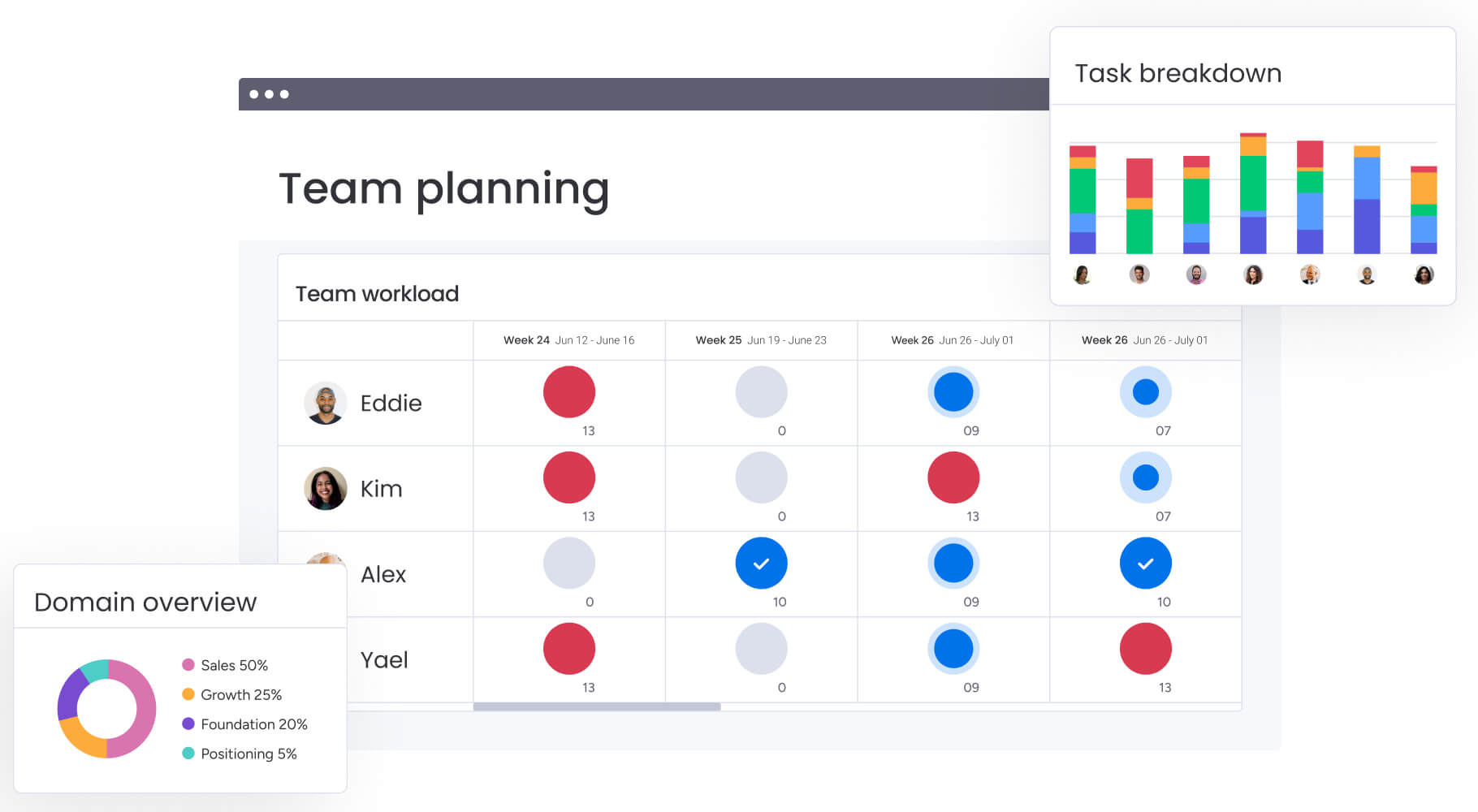
Examples of toxic positivity at work
To spot toxic positivity, pay attention to moments where honest input gets brushed aside. These situations show up in casual conversations as well as formal reviews. Once you notice them, you will start seeing patterns across the organization.
Phrases that shut down real conversation
Certain phrases immediately signal that honest discussion is not welcome. Learning to recognize them helps you understand when communication is being cut short.
Here are some common examples and what they actually do:
- “Everything happens for a reason”: Dismisses accountability and avoids learning from mistakes.
- “Look on the bright side”: Minimizes the actual problem being raised.
- “Don’t be so negative”: Turns critical thinking into a personality issue.
- “We’re a family here”: Uses emotion to override professional boundaries.
- “It could be worse”: Downplays current challenges through comparison.
- “Just manifest it”: Replaces planning with unrealistic thinking.
- “Good vibes only”: Blocks any discussion of real problems.
- “Failure is not an option”: Creates fear that prevents risk planning.
Meeting dynamics that silence truth
You will often see toxic positivity in how meetings are run. Discussions stay tightly controlled, and any concern is quickly pushed aside with “let’s take this offline.”
As a result, real issues never get addressed. Instead, decisions lean toward the most optimistic view rather than the most accurate one. Using advanced work management platforms like monday work management during meetings helps ground discussions in visible data, so teams cannot ignore what is actually happening.
Post-change positivity pressure
After major changes like restructuring or new software rollouts, people need time to adjust. However, toxic positivity demands immediate acceptance and enthusiasm.
When employees express confusion or concern, they are often told to “embrace it” and move on. Because of this, valuable feedback about what is not working gets lost.
Performance review warning signs
Performance reviews can quietly reinforce toxic positivity. Employees who raise valid concerns may receive lower ratings for “attitude,” even if their results are strong.
At the same time, those who stay agreeable may be rewarded despite missing targets. This creates a culture where appearing positive matters more than actual performance.
Certain phrases immediately signal that honest discussion is not welcome. Learning to recognize them helps you understand when communication is being cut short.
How toxic positivity damages workplace culture
Toxic positivity does more than frustrate people, it affects real business outcomes. It slows down information flow, hides risks, and pushes talent away. Because of this, problems grow until they are much harder to fix.
Here are four key ways it impacts your organization:
- Eroding psychological safety: When honesty feels risky, people stop speaking up.
- Suppressing innovation: New ideas require admitting something is not working.
- Accelerating burnout: Pretending to feel fine drains energy faster than the work itself.
- Delaying problem resolution: Issues stay hidden until they become urgent.
1. Eroding psychological safety
Psychological safety means you can speak openly without fear of backlash. Toxic positivity weakens this by labeling concerns as negativity.
As a result, leaders lose access to important information. Teams using monday work management can rebuild this by making progress visible, shifting focus from individuals to shared data.
2. Suppressing innovation and risk-taking
Innovation involves uncertainty and often includes failure. However, when speaking up feels risky, people avoid pointing out flaws or suggesting changes.
Because of this, teams continue with weak plans instead of improving them. Healthy environments, on the other hand, welcome different viewpoints and early warnings.
3. Accelerating employee burnout
Burnout grows faster when people must manage their emotions constantly. Hiding stress or frustration to appear positive takes mental effort.
Over time, this leads to exhaustion and disengagement. That is why emotional honesty is not optional, it directly affects long term performance.
4. Delaying critical problem resolution
One of the most harmful effects is when issues are hidden until the last moment. Projects appear on track until deadlines hit, then suddenly fail.
Because of this delay, teams lose the chance to adjust early. monday work management helps prevent this by surfacing risks in real time, even when people hesitate to raise them.
Try monday work management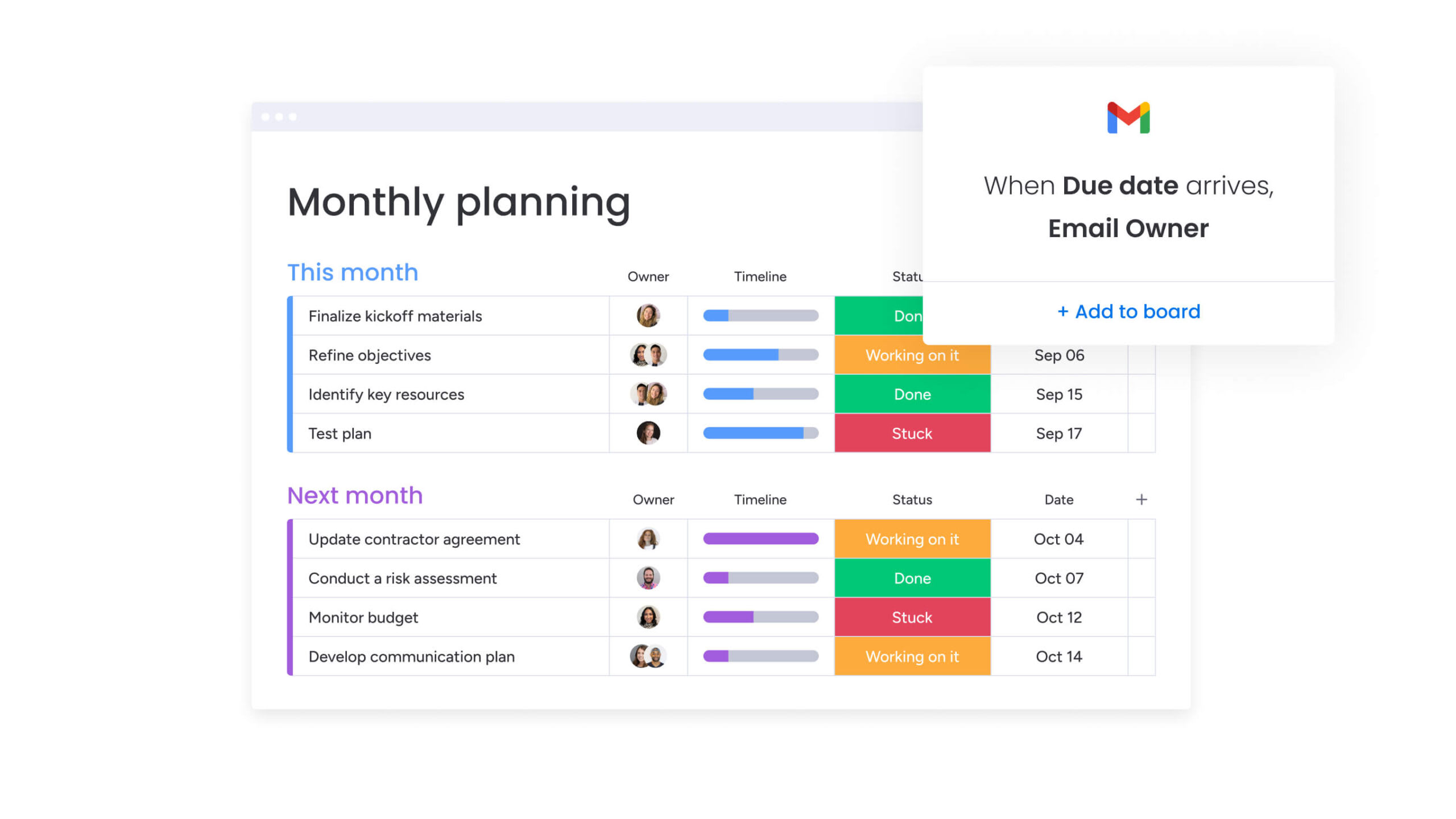
6 ways to address toxic positivity without being labeled negative
You can shift the culture without being labeled negative. The key is to connect honesty with results and show how it improves outcomes.
Here are six ways to do that effectively:
1. Start with data and evidence
Opinions are easy to dismiss, but data is harder to ignore. When you back concerns with numbers, the conversation stays focused on facts. For example, instead of saying you are worried, show how timelines or capacity point to a delay.
2. Present concerns as opportunities
Framing matters. When you connect a problem to improvement, people are less likely to get defensive. For instance, you can highlight how addressing a bottleneck now reduces future risk.
3. Bring solutions with your concerns
Raising issues alone can sound like complaining. However, pairing them with possible solutions shifts the tone to collaboration. This shows that you are focused on progress, not just pointing out problems.
4. Build support across the team
A single voice is easier to ignore than a group. When multiple people highlight the same issue, it becomes harder to dismiss. This also changes the narrative from one person being negative to a shared concern.
5. Keep track of patterns
Documenting recurring issues gives you a clear record of what happened and when. This helps you stay grounded in facts during discussions. It is not about blame, it is about clarity when decisions need context.
6. Use neutral and precise language
The way you phrase concerns matters. Neutral language keeps the focus on the issue without triggering emotional reactions. For example, using terms like “risk” or “constraint” keeps the discussion calm and productive.
Raising issues alone can sound like complaining. However, pairing them with possible solutions shifts the tone to collaboration.
What to say instead of toxic positive responses
Replacing these habits takes practice. You need responses that acknowledge reality while still moving things forward.
This table shows better ways to respond in common situations:
| Toxic phrase | Why it's harmful | Healthier alternative |
|---|---|---|
| Look on the bright side | Invalidates the problem | That sounds tough. What's the biggest hurdle right now? |
| Everything happens for a reason | Dismisses accountability | Let's look at what happened so we can learn from it |
| Don't bring me problems | Silences critical feedback | What barriers are you facing, and how can I help remove them? |
| Failure is not an option | Induces fear and hiding | If this fails, what is our contingency plan? |
| Just stay positive | Ignores emotional reality | I know this is stressful. Let's break it down into manageable steps |
Scripts for validating team concerns
If you want to respond better in the moment, it helps to have a few go to phrases ready. These keep the conversation grounded while still moving toward solutions.
Here are a few examples you can use:
- For project setbacks: “I hear your concern about the timeline. Let’s review the data and adjust scope if needed.”
- For workload issues: “It sounds like you’re at capacity. Let’s revisit priorities and pause what is not urgent.”
- For organizational change: “It is normal to feel uncertain here. Let’s go through what is unclear and find answers.”
Manager responses that build trust
As a manager, your response sets the tone for the team. When you acknowledge reality and stay involved, people feel supported. For example, saying, “I know this deadline is tight, and I appreciate the effort. Let’s check in daily and remove blockers as they come up,” shows both awareness and action. That balance builds trust over time.

How to detect toxic positivity using workplace metrics
Toxic positivity leaves a clear trail in your data. You will often notice a gap between what people report and how work actually progresses. That mismatch is where patterns start to show.
Work management platforms make these gaps easier to spot. When you compare sentiment with real performance data, the inconsistencies become hard to ignore.
Measuring psychological safety levels
Psychological safety is not about how happy people claim to be. Instead, it shows up in whether people feel safe admitting mistakes or raising concerns. That is where you should focus your measurement.
Ask direct questions such as whether mistakes are held against employees or if taking risks feels safe. If these scores are low while engagement appears high, that contrast usually points to hidden fear behind surface level positivity.
Analyzing communication patterns
The way your team communicates can reveal more than survey results. For example, if leaders dominate conversations while others stay quiet, it often signals hesitation rather than agreement.
At the same time, silence in public channels paired with active private chats suggests people are avoiding open discussion. Even a lack of questions during company meetings can indicate that people do not feel comfortable speaking up.
Tracking project health indicators
Project data often exposes what conversations hide. When projects stay marked as green for long periods and suddenly turn red near deadlines, it usually means risks were not shared early.
In addition, projects with no reported issues are rarely realistic. That pattern often signals that concerns are being filtered out instead of addressed in real time.
Monitoring employee sentiment shifts
Looking at sentiment alone rarely tells the full story. You need to compare it with operational metrics like retention, absenteeism, and delivery performance.
For instance, if satisfaction scores remain high while turnover increases, something is off. That gap often shows that people do not feel safe sharing honest feedback.
Creating psychological safety to counter toxic positivity
If you want to reduce toxic positivity, you need to make honesty easier than silence. This means building structures where transparency becomes the default, not the exception.
When systems reward truth and surface issues early, teams naturally shift toward more honest conversations.
Building transparency into team culture
Transparency helps normalize the fact that problems exist. When work is visible, status updates become shared facts instead of personal opinions.
Regular check ins that ask about blockers or risks make these conversations routine. Teams using monday work management support this by keeping workflows visible and accessible, while dashboards surface real time insights across projects.
Normalizing productive disagreement
Disagreement should feel like part of the process, not a risk. One way to support this is by assigning someone in meetings to challenge ideas and highlight potential gaps.
This removes the stigma around raising concerns. In addition, when leaders actively ask for opposing views and thank contributors, it reinforces that honest input is valued.
Designing reward systems for honesty
Recognition systems often focus on results, yet they should also highlight early problem identification. When someone flags a risk before it escalates, that action should be visible and appreciated.
This shifts the mindset from avoiding bad news to valuing it. Over time, teams become more accurate in forecasting and better at managing risk.
Leadership behaviors that enable truth
Leaders set tone by how they handle bad news, and certain leadership behaviors can either encourage or suppress honest communication. If leaders react with anger or dismissal, teams learn to lie. If leaders react with curiosity and support, teams learn to speak up.
However, when leaders respond with curiosity and support, it encourages openness. Admitting uncertainty or mistakes also signals that honesty is expected, not punished.
Try monday work management
“monday.com has been a life-changer. It gives us transparency, accountability, and a centralized place to manage projects across the globe".
Kendra Seier | Project Manager
“monday.com is the link that holds our business together — connecting our support office and stores with the visibility to move fast, stay consistent, and understand the impact on revenue.”
Duncan McHugh | Chief Operations OfficerManaging toxic positivity in remote and hybrid teams
Remote work adds another layer of complexity. Without in person cues, it becomes harder to notice when something feels off. Because of this, teams need more intentional ways to keep communication honest.
You have to rely more on structure and clarity rather than assumptions.
Digital communication blind spots
In remote settings, silence can be misleading. A lack of response might look like agreement, yet it often reflects disengagement.
At the same time, digital communication leans toward polite and surface level responses. This can create an environment where real concerns stay hidden behind constant positivity.
Asynchronous work considerations
Asynchronous communication can support honesty when used well. Writing updates gives people time to think and present concerns clearly without pressure.
However, if written feedback is ignored, people stop contributing. That is why it is important to actively review and respond to these inputs.
Virtual meeting best practices
Virtual meetings need more structure to encourage participation. Without it, many voices remain unheard behind muted microphones.
Using polls, breakout discussions, or direct questions helps bring balance. Setting aside time for risk discussions also signals that critical thinking is expected.
Technology solutions for authentic connection
Digital platforms can encourage transparency when configured correctly. monday work management provides shared visibility into project status, making challenges visible across teams.
Features like commenting, tagging, and status updates create multiple ways to share input. As a result, concerns raised anywhere remain visible and part of the broader conversation.
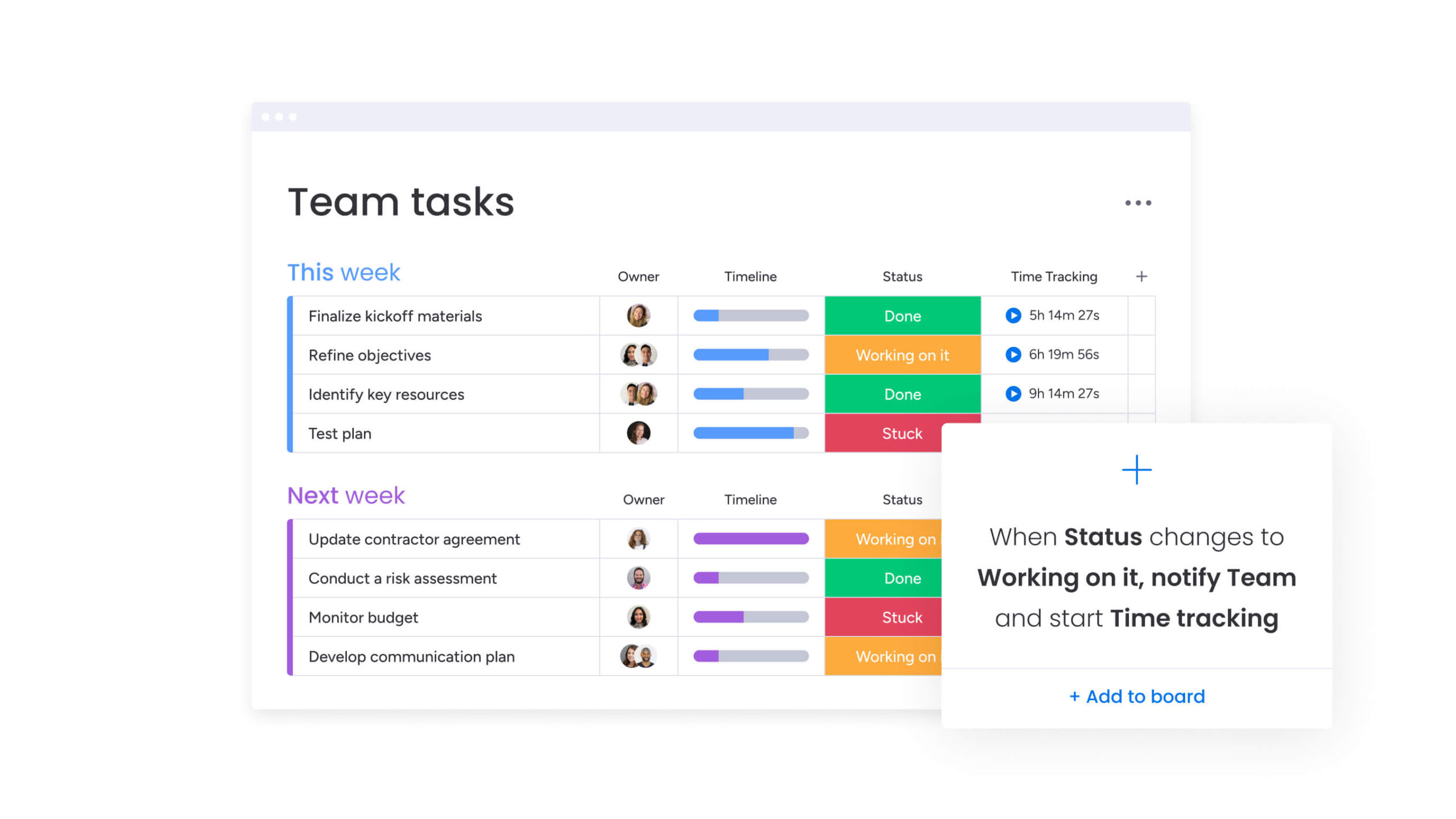
Build a transparent workplace culture with better work management
Toxic positivity usually grows when teams lack clear visibility, shared context, and safe ways to raise concerns. When work stays scattered across conversations, updates become filtered, risks surface too late, and daily execution drifts away from larger business priorities.
monday work management helps close that gap by giving teams a shared view of work, capacity, and progress, so honest communication becomes easier and better decisions happen sooner.
Below are a few ways the intelligent platform helps teams stay aligned, accountable, and focused on real outcomes:
- Shared visibility: Keeps project status, blockers, and delivery risks visible across teams, so people do not need to rely on polished verbal updates to understand what is happening.
- Workload clarity: Helps managers see who is at capacity and where work is uneven, which supports better prioritization and more realistic planning.
- Connected communication: Keeps updates, feedback, and decisions tied to the work itself, making discussions clearer, more specific, and easier to act on.
- Early risk signals: Uses dashboards, automations, and status tracking to surface delays or stalled work before they become larger operational issues.
- Stronger alignment: Connects daily execution to broader goals through shared boards, timelines, and reporting, so teams can see how their work supports business priorities.
When work is visible and expectations are clear, teams no longer need to rely on surface level positivity to stay aligned. monday work management supports more honest conversations, earlier problem solving, and decisions grounded in real progress.
Try monday work managementFrequently asked questions
What is toxic positivity?
Toxic positivity is the belief that people should maintain a positive mindset regardless of how dire or difficult a situation is, while dismissing negative emotions and valid concerns in favor of false cheerfulness.
What are examples of toxic positivity phrases?
Common toxic positivity phrases include “Good vibes only,” “Everything happens for a reason,” “It could be worse,” and “Do not bring me problems, bring me solutions.” These phrases tend to shut down critical thinking and minimize real concerns.
What should I say instead of toxic positive responses?
Instead of dismissing a concern, acknowledge it and offer support. For example, you can say, “I can see this is difficult. How can I support you?” or “That sounds like a real risk. Let us work through a mitigation plan.”
Is toxic positivity a coping mechanism?
Toxic positivity can act as a way to avoid discomfort or conflict. However, in a workplace, it often prevents teams from addressing real issues and leads to unresolved problems building over time.
Can toxic positivity cause burnout or depression?
Yes, it can contribute to both. When people feel pressure to hide their real emotions and maintain a positive front, it creates mental strain and emotional fatigue, which are key drivers of burnout and can also lead to depression.
How do I address toxic positivity with my manager?
Start by focusing on impact rather than emotion. For instance, highlight missed risks or delayed decisions, and then suggest practical ways to improve communication. This approach keeps the discussion constructive and focused on better outcomes.

 Get started