


Every leader in every organization should be providing feedback to their team, both in the form of positive and constructive feedback. While praise and recognition fall into the first of these categories, the constructive type is much harder to get right.
This guide breaks down how to constructive feedback to employees, the characteristics that make it land, and 7 practical tips with example scripts you can adapt to real situations. We’ll also look at how the monday AI Workspace helps managers build a steady feedback habit.
Get startedKey takeaways
- Constructive feedback highlights a specific behavior and offers an actionable path forward. It looks forward rather than a backward-looking judgment.
- Effective feedback shares 5 traits: it’s specific, objective, timely, actionable, and balanced.
- Frameworks like SBI (Situation, Behavior, Impact) and SMART goals give managers a repeatable structure so feedback stays clear and fair.
- Timing, brevity, and openness to receiving feedback are as important as your selection of words.
- monday AI Workspace supports a feedback culture by capturing 1:1 notes, tracking action items, and giving managers real-time performance visibility to reference during reviews.

What is constructive feedback?
Constructive feedback is feedback aimed at a positive outcome. It points to a specific behavior, explains the effect of that behavior, and offers a practical suggestion for improvement. Instead of leaving someone feeling judged, it gives them a clear next step.
The goal is to be direct about what needs to change while keeping the conversation focused on growth. Effective constructive feedback works in both directions too: it names what’s going well and pairs recognition with the areas that need attention. Think of it as a coaching tool rather than a verdict.
Example: When a manager says, “Your last 3 reports came in a day late, and it pushed the client review back; let’s map out a timeline that gives you more buffer,” the employee knows the behavior, the impact, and the fix. This level of clarity makes the feedback constructive.
Constructive feedback vs constructive criticism
People often use “constructive feedback” and “constructive criticism” interchangeably, but there’s a useful distinction. Constructive criticism tends to focus merely on what went wrong and why. Constructive feedback is solution-oriented and forward-looking: it takes the same observation and turns it into a plan for what to do next.
The best feedback conversations blend both. You acknowledge the issue honestly (the criticism) and then shift quickly to how the person can improve (the feedback). The critical part earns trust because it’s honest; the constructive part keeps the employee motivated because it highlights the path forward.
Why constructive feedback matters at work
Constructive feedback is just one form of communication managers and teams should focus on at work. Here’s what it brings to the table:
- Drives employee engagement: There are strong links between the quality of feedback your workers receive and how engaged they are at work. In particular, 80% of employees who received meaningful feedback in the past week are fully engaged. On the flipside, when your team receives feedback that’s too vague or too infrequent, this can result in disengaged employees and high workplace turnover.
- Encourages development: Struggling employees can’t correct their behavior unless they know what they’re doing wrong. Gallup also finds that frequent, meaningful feedback is a great manager’s most important habit.
- Supports performance: Feedback is the core mechanism behind effective performance management, keeping people engaged and pointed in the right direction.
Each of these patterns are consistent across teams and industries. When feedback is regular and specific, employees understand their goals and feel invested in hitting them. When it’s rare or vague, small problems mount up, presenting as missed targets and friction that eventually result in resignation letters.
5 characteristics of effective constructive feedback
The difference between a comment that changes behavior and one that gets brushed off boils down to 5 characteristics you should keep in mind whenever you prepare for a feedback conversation.
- Specific: Point to a concrete behavior or moment, not a general impression. “Your update in Monday’s standup skipped the blockers” beats “you need to communicate better.”
- Objective: Focus on the behavior, not the person. “The deck had 3 data errors” keeps the conversation factual, while “you’re careless” makes it personal and defensive.
- Timely: Share feedback while the work is still fresh. A note delivered the same week lands far better than one saved for a review three months later.
- Actionable: Give the person something they can do. Pair the observation with a suggestion, like “let’s add a peer review step before anything goes to the client.”
- Balanced: Recognize what’s working alongside what needs to improve. Balanced feedback feels fair, and fair feedback is far more likely to stick.
7 tips for giving constructive feedback to employees
The characteristics above tell you what effective feedback looks like. But the following practical tips show you how to deliver it in real conversations, with scripts you can adapt to your own team.
1. Frame feedback as a net positive
Managers don’t need to tiptoe around criticizing their employees. Well-delivered negative feedback can encourage employees to improve their performance, but only when it’s framed appropriately.
Playing “bad cop” and berating your employees isn’t effective and can be harmful. On the flip side, being too friendly or cheery might send mixed signals.
Remember: if your employees need to make a change, you must be explicit about it for their and your own sake.
Here are some examples of how legitimate criticism can be framed as positive, constructive feedback.
| Positive Framing | Negative Framing |
|---|---|
| I'd really like to see you take on more ownership of the project timeline. | I really need you to step up and manage the timeline better. |
| I think you're off to a good start. However, I think there's room for improvement in how you structure your client emails. | To be honest, I'm not really sure what you're trying to do with these client emails. |
| Listen: you're part of this team, and we appreciate your effort. That said, I've noticed that you've missed a few standups lately. | You're not pulling your weight around here compared to the rest of the team when it comes to showing up. |
2. Provide context to the feedback and criticism (be specific!)
Vague, wishy-washy feedback won’t work, especially when making critical comments to someone on your team. Instead, provide context to what needs improvement and detail why you’re having a conversation in the first place.
- Critical example: “I’m concerned about the amount of missed deadlines from last month. I want to figure out what we can do to get things back on track.”
- Praise example: “Based on our data from last quarter and current sales quotas, you’re knocking it out of the park.”
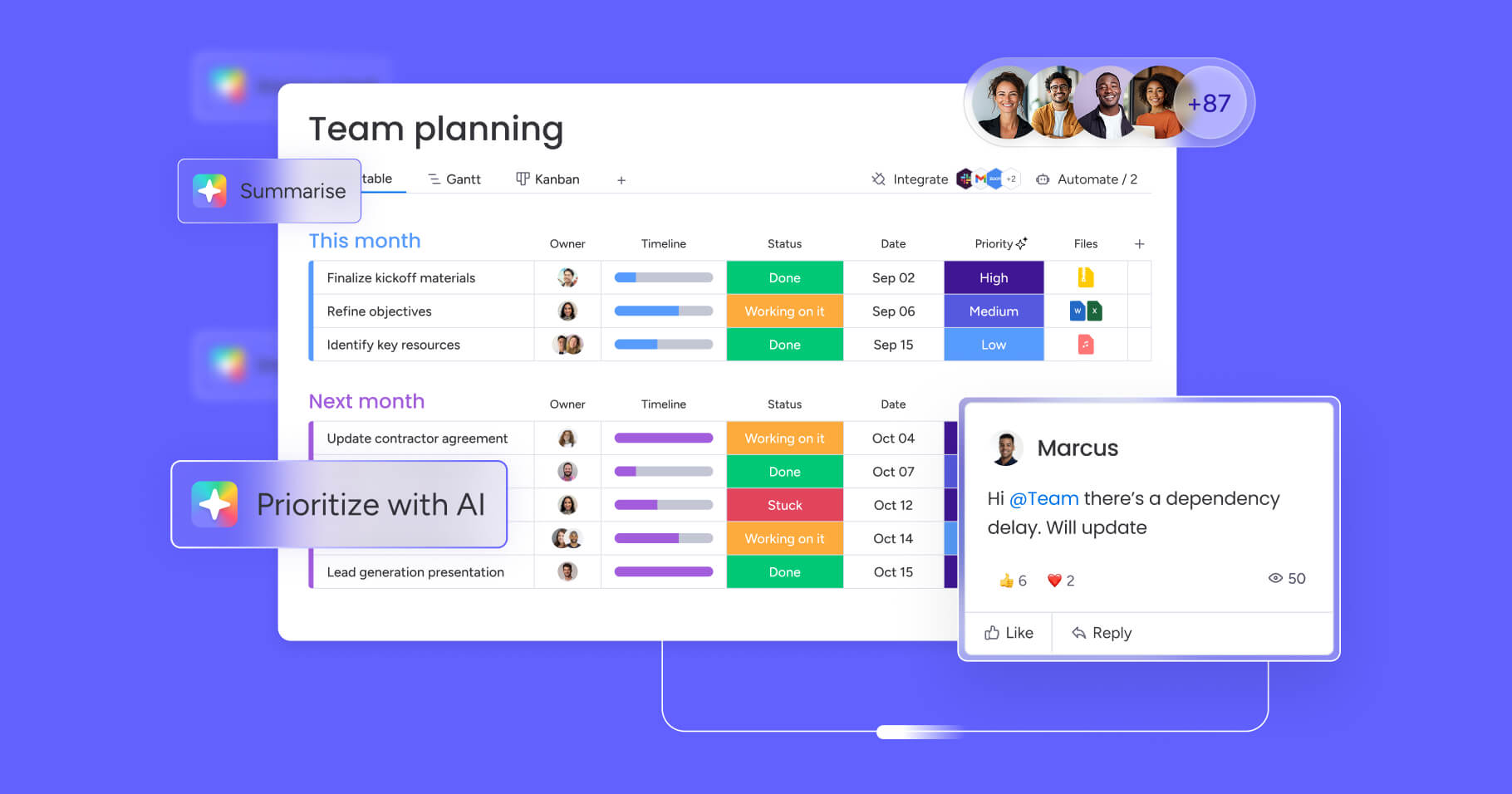
It’s easier than ever to track performance and find talking points for performance reviews and feedback sessions. This includes data from your CRM or team management tools like monday AI Workspace.
As many workers still don’t fully understand what’s expected of them, it’s crucial to review employee data regularly and highlight expectations so nobody’s ever blindsided during a feedback session.
3. Keep feedback brief and without too much commentary
Short feedback is preferred. There’s nothing wrong with getting to the point (“This is what I need you to work on…”) as long as you keep your overall conversation positive rather than cold or impersonal. The goal is to make sure conversations don’t stray too far from the feedback you’re trying to convey.
The bonus: it’s also easier to retain the information shared in short feedback notes (based on Ebbinghaus Forgetting Curve for more details.)
4. Be mindful of timing
Planning a feedback session in advance makes employees more accountable for listening. Additionally, they’ll have the opportunity to prepare their own points and review their data ahead of time.
Pro tip: Give employees feedback consistently and frequently to become more familiar and comfortable with you and your leadership style.
Many companies now aim for regular monthly check-ins rather than only quarterly performance reviews. More frequent feedback means more meetings, but it also means problems among employees are less likely to snowball out of control.
5. Choose the right feedback delivery place
Where you deliver feedback shapes how it’s received. Critical feedback belongs in a private setting, never in front of the team, where it can feel like a public reprimand and put someone on the defensive. A quiet 1:1, a scheduled check-in, or a private video call all work. The setting should signal that this is a supportive conversation, not an ambush.
6. Be open to receiving feedback yourself
It’s important also to understand the concept of listening to feedback as a leadership tool. Allowing workers to speak their minds shows empathy. Nobody wants to feel like they’re being talked at, and no manager is perfect, either.
Making yourself open to employee comments will make your own constructive criticism more meaningful in the long run.
Let your employees know they can always reach you via email or Slack (or text or phone) if they need to share something. Anonymous pulse surveys can also help you pick your team’s brains without anyone having to worry about repercussions.
7. Follow up with a clear action plan
Feedback without a follow-up rarely sticks. Once you’ve talked through what needs to change, agree on specific next steps together so the employee leaves with a concrete plan rather than a vague sense of having done something wrong.
Write down what you both committed to, then set a date to check in on progress. A short follow-up conversation 2-3 weeks later shows the employee you’re invested in their growth and gives you a natural moment to recognize improvement.

Feedback frameworks that make criticism land
When you’re not sure how to structure a tough conversation, a framework takes the guesswork out of it. Each of the models below gives you a repeatable pattern, so your feedback stays clear and fair even when the topic is uncomfortable.
- SBI (Situation, Behavior, Impact): Describe the situation, name the specific behavior, then explain its impact. It keeps feedback factual and grounded in observable events rather than assumptions.
- SMART goals: Frame the improvement as a goal that’s specific, measurable, achievable, relevant, and time-bound. This turns “communicate better” into “share blockers in every standup for the next month.”
- The feedback sandwich: Open with a positive, deliver the constructive point, then close on an encouraging note. It can ease tension, but use it carefully; if the criticism gets buried, the message can be lost.
Here’s a quick guide to when each model fits best.
| Framework | Best for | Watch out for |
|---|---|---|
| SBI | One-off behavioral feedback where clarity matters most | Skipping the impact step, which is what makes it land |
| SMART goals | Ongoing development and measurable improvement over time | Setting goals that are vague or have no deadline |
| Feedback sandwich | Softening a first tough conversation with a newer employee | Burying the real message between too much praise |
Constructive feedback examples for common workplace situations
It can be difficult to find the right words to deliver constructive feedback effectively. The table below pairs common situations with sample phrasing you can adapt, along with a note on why each version works. Notice how every example names a specific behavior and points toward a fix.
| Situation | Constructive phrasing | Why it works |
|---|---|---|
| Missed deadlines | The last two deliverables came in after the due date, which delayed the client review. Let's look at your workload and build in some buffer. | Names the behavior and its impact, then moves straight to a shared solution. |
| Unclear communication | In the last few updates, the key decision got lost in the detail. Could you lead with the takeaway, then add context below? | Offers a concrete, repeatable format instead of a vague "be clearer." |
| Negative attitude in meetings | I've noticed some sharp reactions when plans change. The team looks to you, so a calmer tone would help everyone stay steady. | Focuses on observable behavior and its effect on others, not on personality. |
| Low collaboration | You produce strong work solo. I'd love to see you share drafts earlier so the rest of the team can build on your ideas. | Pairs genuine recognition with a specific, forward-looking request. |
| Missed meetings | You've missed a few of our syncs recently. Is something clashing on your calendar? Let's find a time that consistently works. | Assumes good intent and turns the issue into a problem you solve together. |
Adapt the wording to your own voice, but keep the structure: observation, impact, and a path forward.
One more note on tone. Even the sharpest phrasing works better when you invite a response rather than deliver a verdict. Ending with a question like “How does that land for you?” or “What support would help?” signals that you see the conversation as a two-way exchange, and it gives the employee room to explain context you might be missing.
How to build a feedback culture with monday AI Workspace
Good intentions fade fast when feedback lives in scattered notebooks, one-off Slack messages, and half-remembered hallway chats. The hard part isn’t wanting to give feedback; it’s building a system that keeps it regular, documented, and grounded in real work. That’s where a connected platform helps.
The monday AI Workspace pulls the moving parts of a feedback habit into one place, so managers spend less time chasing notes and more time on the conversation itself. Here’s how an ad hoc process compares to one supported by the platform.
| Feedback task | Ad hoc / manual process | Supported by monday AI Workspace |
|---|---|---|
| Capturing 1:1 notes | Personal notebooks or docs no one else can see | Shared Workdocs with reusable templates, connected to live board data |
| Tracking action items | Easy to promise, easy to forget | Action items become trackable work items with owners and due dates |
| Performance visibility | Feedback based on memory or gut feel | Real-time dashboards so conversations reference data, not guesswork |
| Feedback cadence | Slips whenever the week gets busy | Automated reminders that keep check-ins on a steady rhythm |
| Collecting team input | Long email threads and manual tallying | WorkForms surveys that turn responses into structured, summarized data |
A few monday AI Workspace capabilities do most of the heavy lifting:
- Workdocs for 1:1s: Prepare and share feedback docs from ready-made templates, with AI helping you draft and summarize so notes stay clear and both sides can revisit what was agreed.
- WorkForms for team input: Run no-code feedback and pulse surveys that convert every response into a trackable work item, while AI Insights summarizes long answers into themes you can act on.
- Dashboards for context: See performance in real time so feedback points to actual results, with AI-generated summaries and risk alerts flagging issues before they grow.
- Automations for cadence: Set no-code reminders that nudge managers when a check-in is due, so a regular feedback rhythm doesn’t depend on anyone’s memory.
- monday sidekick and AI Notetaker: Let the AI join a 1:1, transcribe and summarize the discussion, and generate action items directly on monday.com, so you stay present in the conversation.
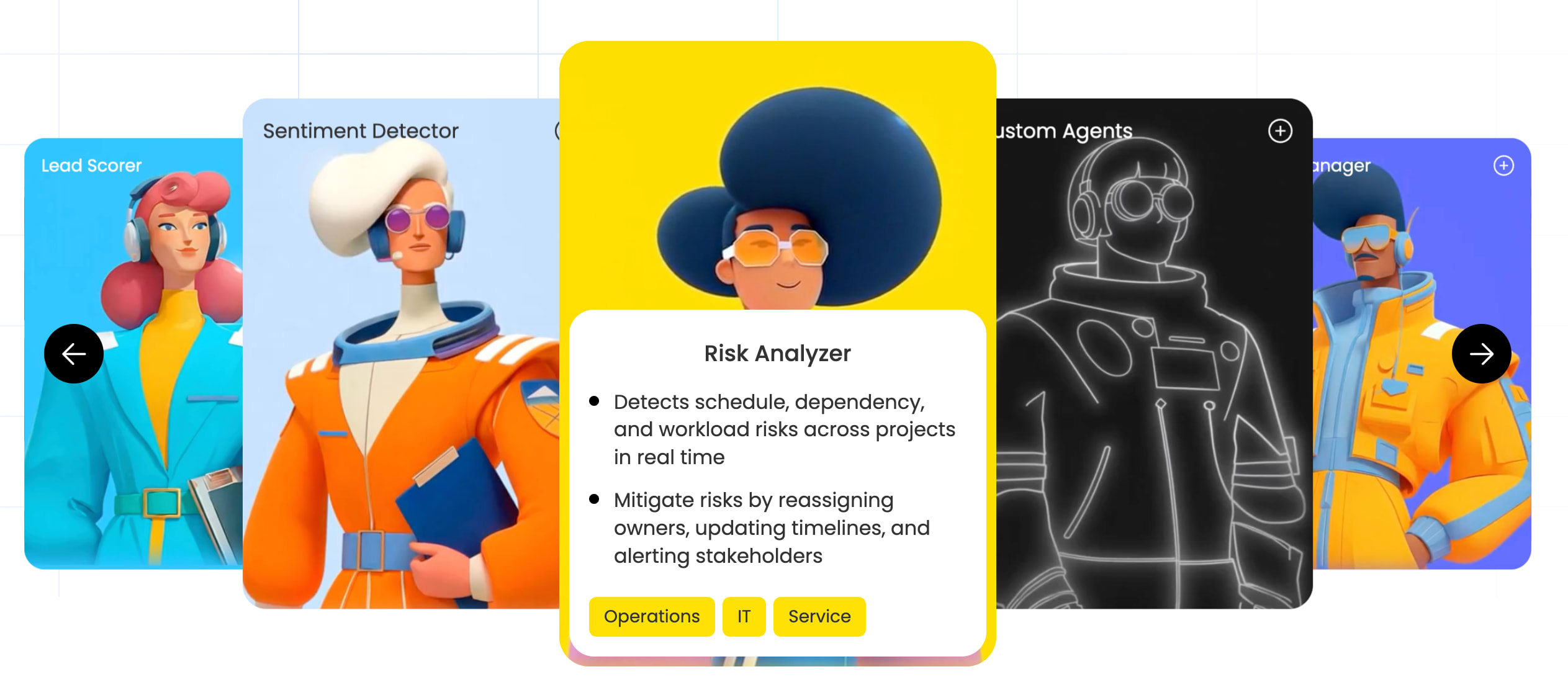
- monday agents: Prebuilt agents like the HR Feedback Manager and Sentiment Detector help synthesize feedback signals and route them to the right owner.
- monday MCP: Ask your AI assistant, in plain language, to pull action items, themes, and feedback across meeting transcripts, so nothing important slips through.
If your team needs something more tailored, monday vibe can turn a short prompt into a custom feedback or OKR tracker app, giving you a dedicated space to log conversations and monitor progress. Together, these tools make consistent, evidence-based feedback the default rather than the exception.
Get started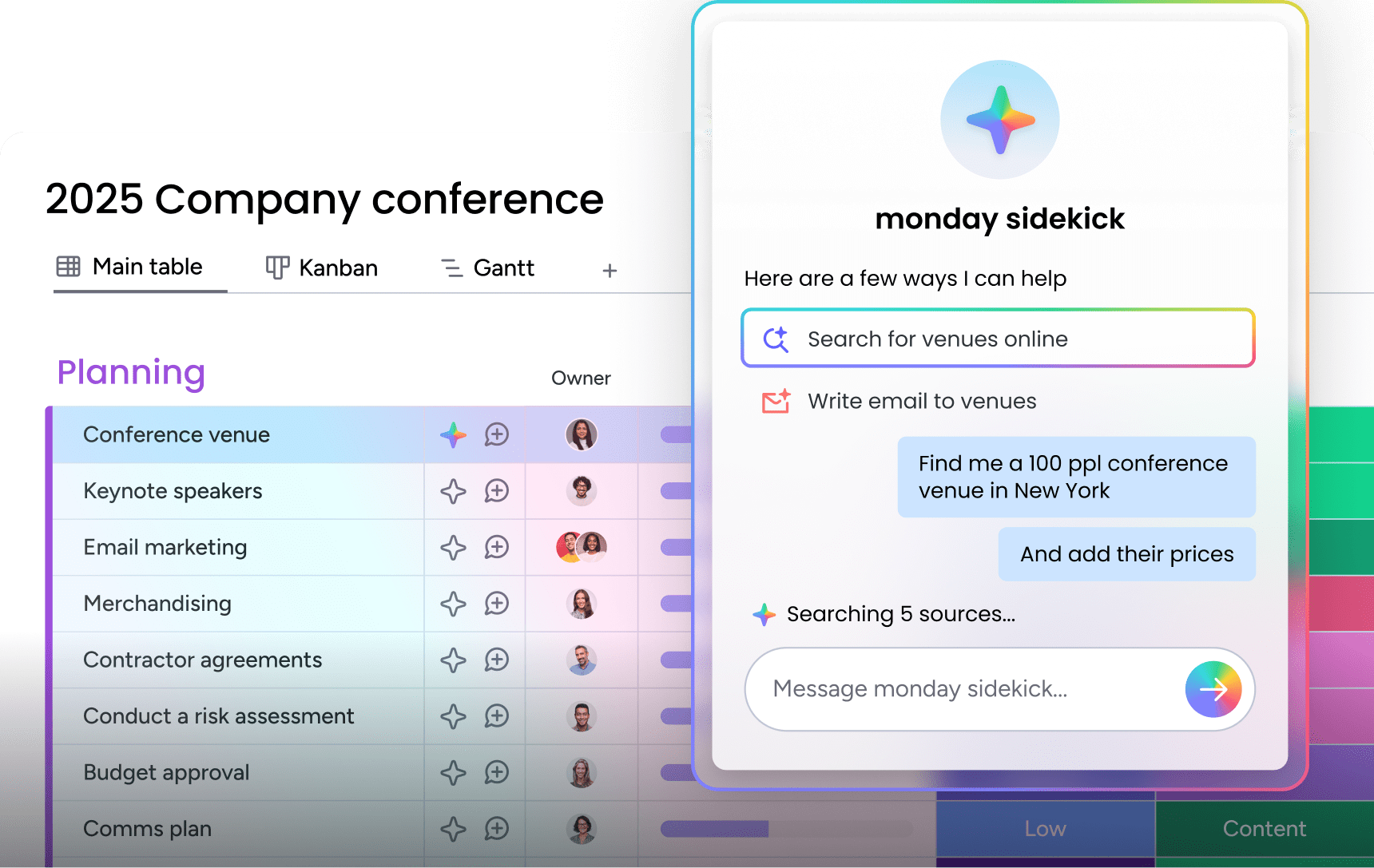
Turn everyday feedback into stronger teams
Employees thrive when they receive constructive feedback, and managers are expected to provide it in a way that empowers and builds people up rather than tearing them down.
By sticking to the principles above, being specific, timely, balanced, and open to hearing feedback yourself, you can have meaningful conversations that lead to real improvement. The managers who do this consistently treat feedback as continuous execution, not a once-a-year event.
And don’t forget how tools like monday AI Workspace, backed by a solid performance management system, can help create tighter-knit teams within your company, keeping feedback flowing and turning good intentions into a lasting habit.
Get startedFAQs
What's the difference between constructive feedback and positive feedback?
Positive feedback reinforces what someone is already doing well, while constructive feedback points to a specific behavior and offers a way to improve it. The best managers use both regularly.
How often should managers give employees feedback?
Aim for frequent, informal feedback rather than saving it for quarterly reviews. Many teams settle on monthly check-ins, supplemented by in-the-moment feedback when work is still fresh.
What is the SBI feedback model?
SBI stands for Situation, Behavior, and Impact. You describe the situation, name the specific behavior, and explain the impact it had, which keeps feedback factual and easy to act on.
How does monday AI Workspace support constructive feedback?
It centralizes 1:1 notes in shared Workdocs, turns action items into trackable tasks, and highilghts real-time performance data in dashboards. Automated reminders keep the feedback cadence steady so check-ins don't slip.

 Get started