


Projects often start with alignment and momentum: kickoff meetings are full of nodding heads, objectives are clear, and timelines look achievable. Yet, even the most technically sound initiatives can encounter unexpected resistance as stakeholders shift priorities, raise concerns, or disengage. In many cases, project outcomes falter not because of poor execution, but because stakeholder relationships were not actively managed.
A stakeholder engagement assessment matrix provides a structured approach to address this challenge. By mapping each stakeholder’s current level of engagement against the level required for project success, the matrix transforms relationship management into a measurable, strategic discipline (internal linking). It identifies engagement gaps, sets clear targets, and ensures progress can be tracked systematically.
This article outlines how organizations can build and deploy a stakeholder engagement assessment matrix, covering stakeholder identification, engagement evaluation, gap analysis, targeted strategies, and monitoring. It also highlights ways to integrate the matrix into standard workflows, making stakeholder management as visible and trackable as project milestones, resources, and timelines.
Key takeaways
- Assess current versus desired engagement: evaluate where stakeholders stand today and define the level of engagement needed for project success.
- Use a structured five-level framework: move stakeholders strategically between unaware, resistant, neutral, supportive, and leading based on their role and influence.
- Treat engagement as a measurable deliverable: schedule, track, and review stakeholder interactions with the same rigor as project tasks to prevent last-minute resistance.
- Update the matrix regularly: review stakeholder positions monthly and after major milestones to detect shifts and address risks proactively.
- Leverage centralized platforms for visibility: tools like monday work management enable real-time, portfolio-level tracking of stakeholders across multiple projects to maintain alignment and prevent fatigue.
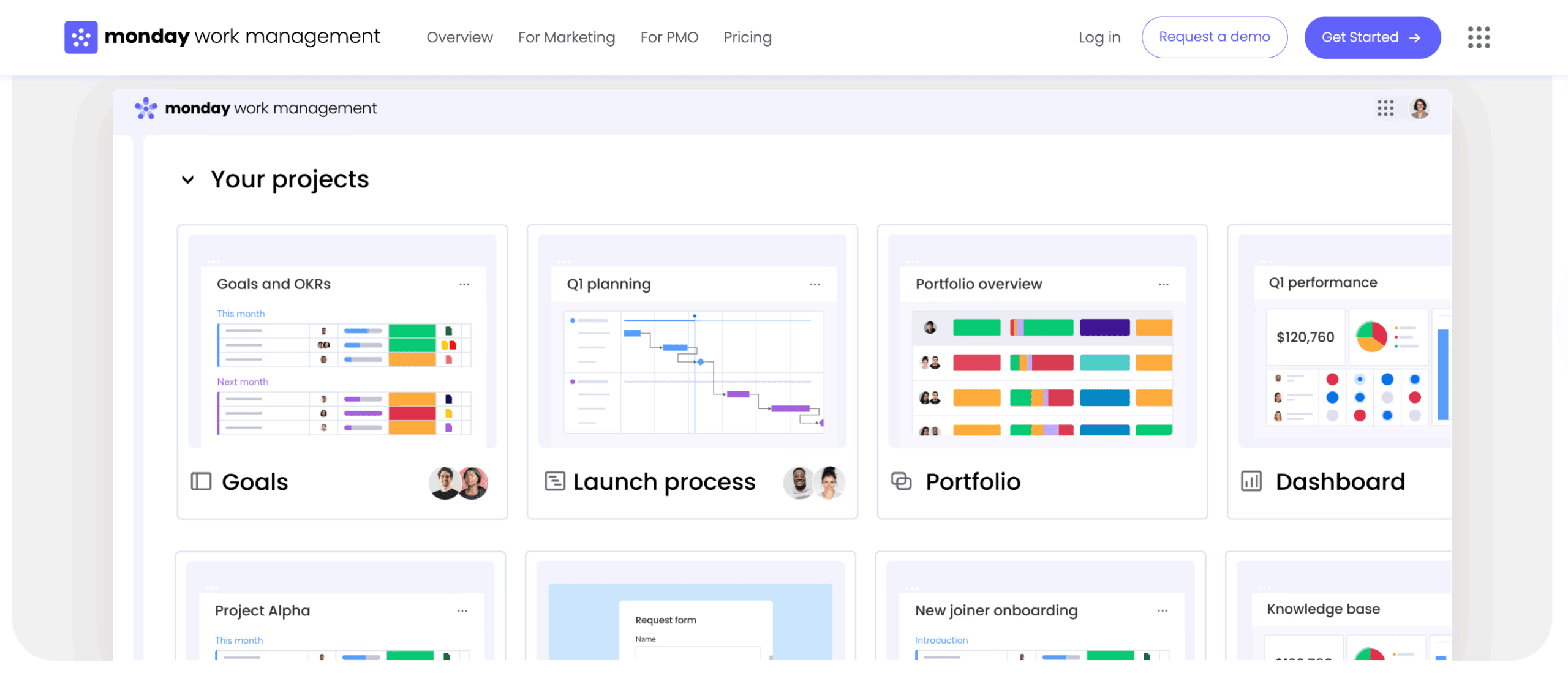
A stakeholder engagement assessment matrix is a strategic framework that maps stakeholders against their current and desired levels of engagement with a project or initiative. It visualizes the gap between where stakeholders stand today and where they need to be for successful execution.
Unlike basic stakeholder lists that only catalog names and roles, this matrix actively plans the journey from awareness to support through systematic stakeholder management. It transforms stakeholder management from reactive problem-solving into a predictable, plannable discipline. The matrix ensures time is invested in the relationships that matter most.
The matrix serves as a dynamic roadmap for organizational alignment. Leaders can see at a glance which stakeholders need immediate attention, who is already on board, and where resistance might derail progress. This visibility enables informed decisions on where to invest time and resources for maximum impact while addressing common project management challenges.
Understanding the core components
The stakeholder engagement assessment matrix consists of two primary dimensions that together provide a complete view of the project landscape. These components turn behavioral and attitudinal data into clear next steps.
The first dimension covers stakeholder identification and categorization:
- Internal vs. external positioning: distinguishes between those within the organizational hierarchy and external partners, regulators, or customers who influence outcomes.
- Influence classification: separates decision-makers with veto power from influencers who shape opinion and implementers who execute work.
- Role definition: specifies the relationship between each stakeholder and project deliverables, providing context for engagement levels.
The second dimension tracks engagement levels:
- Current engagement state: an evidence-based assessment of where the stakeholder stands currently.
- Desired engagement state: the strategic target level required from that stakeholder.
- Engagement gap: the measurable distance between current and desired states, defining the work required to close it.
Current vs. desired engagement states
The matrix is most powerful when distinguishing between current reality and necessary future states. This gap analysis prevents the mistake of trying to convert everyone into a champion. Instead, it shows exactly how much movement each stakeholder needs — and no more.
Evaluating the current state focuses on observable behaviors rather than assumptions. Analysis includes participation in meetings, tone of feedback, resource allocation decisions, and informal communication patterns. Honest assessment is critical, as overestimating support can hide risks that may impact timelines.
Strategic planning determines the minimum engagement level required for project success. A regulatory auditor may only need to be neutral, while a department head controlling budgets must be supportive or leading. The gap between neutral and supportive states requires targeted communication strategies, while maintaining stakeholders already at the desired level requires ongoing engagement to prevent drift.
How it differs from a stakeholder analysis matrix
Although related, these matrices serve different purposes at different project stages. Choosing the right framework ensures you move from simple identification to strategic action.
| Feature | Stakeholder analysis matrix | Stakeholder engagement assessment matrix |
|---|---|---|
| Primary focus | Static categorization of influence and interest | Dynamic planning of behavioral change |
| Key question | "Who are they and do they matter?" | "How do we get them where we need them?" |
| Timing | Primarily a one-time exercise during initiation | Continuous tool used throughout the lifecycle |
| Output | A snapshot of the stakeholder landscape | An action plan for relationship management |
| Strategic goal | Prioritization of attention | Execution of engagement strategies |
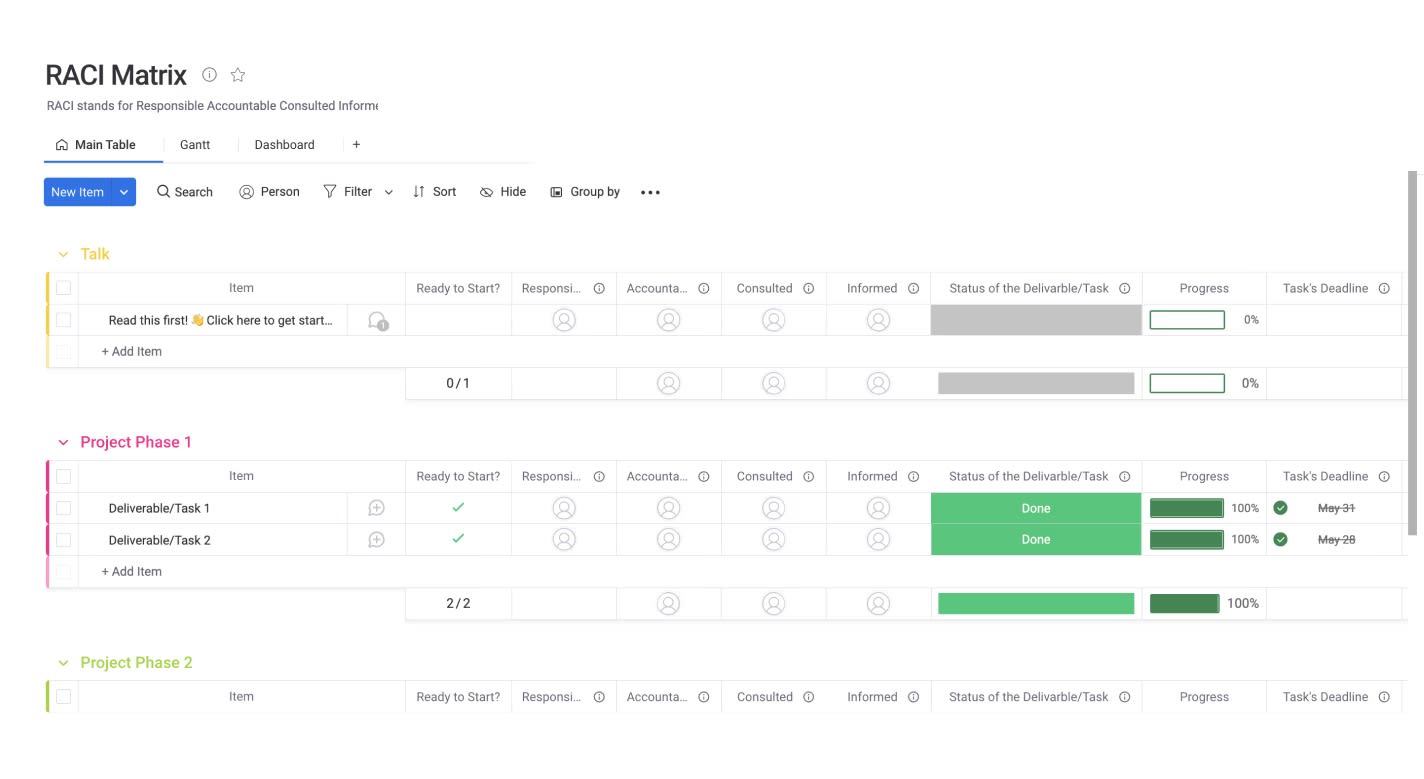
The 5 levels of stakeholder engagement
Most frameworks use a five-level progression to standardize engagement measurement. This scale provides project teams with a common language for tracking stakeholder status over time. The goal is not to move every stakeholder to the top level but to reach the level required by their role and influence.
Unaware
Stakeholders at the unaware level have no knowledge of the project, its potential impact, or its strategic value. This is common during early phases of confidential initiatives or among secondary stakeholders who have not yet been briefed.
Unaware stakeholders typically show:
- Information void: the stakeholder has received no formal or informal communication regarding the initiative.
- Zero impact: they neither support nor oppose the project because it does not exist in their operational reality.
- Potential risk: if they remain unaware for too long, they may be blindsided by changes, which can result in immediate resistance.
Resistant
Resistant stakeholders are aware of the project but actively oppose it. This resistance often stems from perceived threats to authority, resources, or workflows.
Signs of resistance include:
- Active opposition: vocalizing concerns in meetings, withholding necessary data, or challenging the project’s validity.
- Resource blocking: delaying approvals or refusing to allocate team members to project activities.
- Negative advocacy: influencing others to view the project skeptically.
Resistance can provide valuable insight by highlighting genuine flaws in the project plan or overlooked risks. Effective stakeholder engagement focuses on understanding why opposition exists rather than simply communicating more frequently.
Neutral
Neutral stakeholders are aware of the project but haven’t taken a definitive stance, requiring targeted stakeholder engagement strategies to build support. They’re watching to see how it impacts them before they commit any political capital or resources.
Neutral stakeholders usually show:
- Passive observation: attending meetings and reviewing updates without offering proactive feedback.
- Swing capacity: this group represents the largest potential for momentum shifts.
- Maintenance needs: without engagement, neutral stakeholders may drift toward resistance if they perceive the project as burdensome.
Supportive
Supportive stakeholders agree with project goals and accept upcoming changes. They are cooperative when asked but will not drive the project forward without prompting.
Supportive stakeholders typically:
- Resource availability: approving requests and providing access to necessary data or personnel.
- Positive reinforcement: speaking favorably about the project within their circles.
- Constructive feedback: offering input aimed at improving execution rather than stopping the project.
Leading
Leading stakeholders actively champion the project, treating its success as their own responsibility. They go beyond support by driving adoption and removing obstacles for the project team.
Leading stakeholders typically:
- Proactive problem solving: anticipating roadblocks and removing them before they impact the project.
- Advocacy: leveraging political capital to promote the project to executives and resistant stakeholders.
- Resource investment: prioritizing the project above competing demands.
Why your stakeholder assessment matrix matters more than ever
Modern business environments demand structured stakeholder management. Informal relationship handling is no longer sufficient due to rising regulatory complexity, costly project failures, and interlinked portfolios.
Meeting ESG and compliance requirements
Stakeholder engagement has moved from best practice to regulatory expectation. Environmental, social, and governance frameworks now require verifiable evidence of consultation and impact assessment.
- Regulatory mandates: new reporting standards require documentation of how stakeholder concerns are identified and addressed. The number of Fortune Global 500 companies with measurable ESG targets across multiple dimensions is projected to rise from 16% in 2022 to 28% in 2025, underscoring the need for audit-ready engagement records.
- Audit trails: organizations must demonstrate systematic engagement that informs decision-making. Government agencies provide structured examples, such as EPA public comment periods limited to three minutes per participant, showing the value of time-boxed, formalized engagement practices.
- Risk governance: boards rely on stakeholder sentiment as a leading indicator of reputational and operational risk.
Centralized platforms can support compliance by automating documentation, offering permission-based workflows, and capturing every stakeholder interaction.
Driving project success through alignment
Projects rarely fail due to technical infeasibility but rather due to common project management challenges like misalignment between the solution and the people who must adopt it. Systematic stakeholder engagement directly impacts project delivery rates.
- Adoption velocity: properly aligned stakeholders accelerate uptake of new processes and technologies.
- Resource stability: alignment protects budgets and personnel from reallocation during critical periods.
- Decision speed: pre-aligned stakeholders make faster decisions, reducing delays. Research shows that structured processes can accelerate deal cycles by 30–50%, demonstrating the impact of systematic alignment on complex initiatives.
The rise of portfolio-level stakeholder management
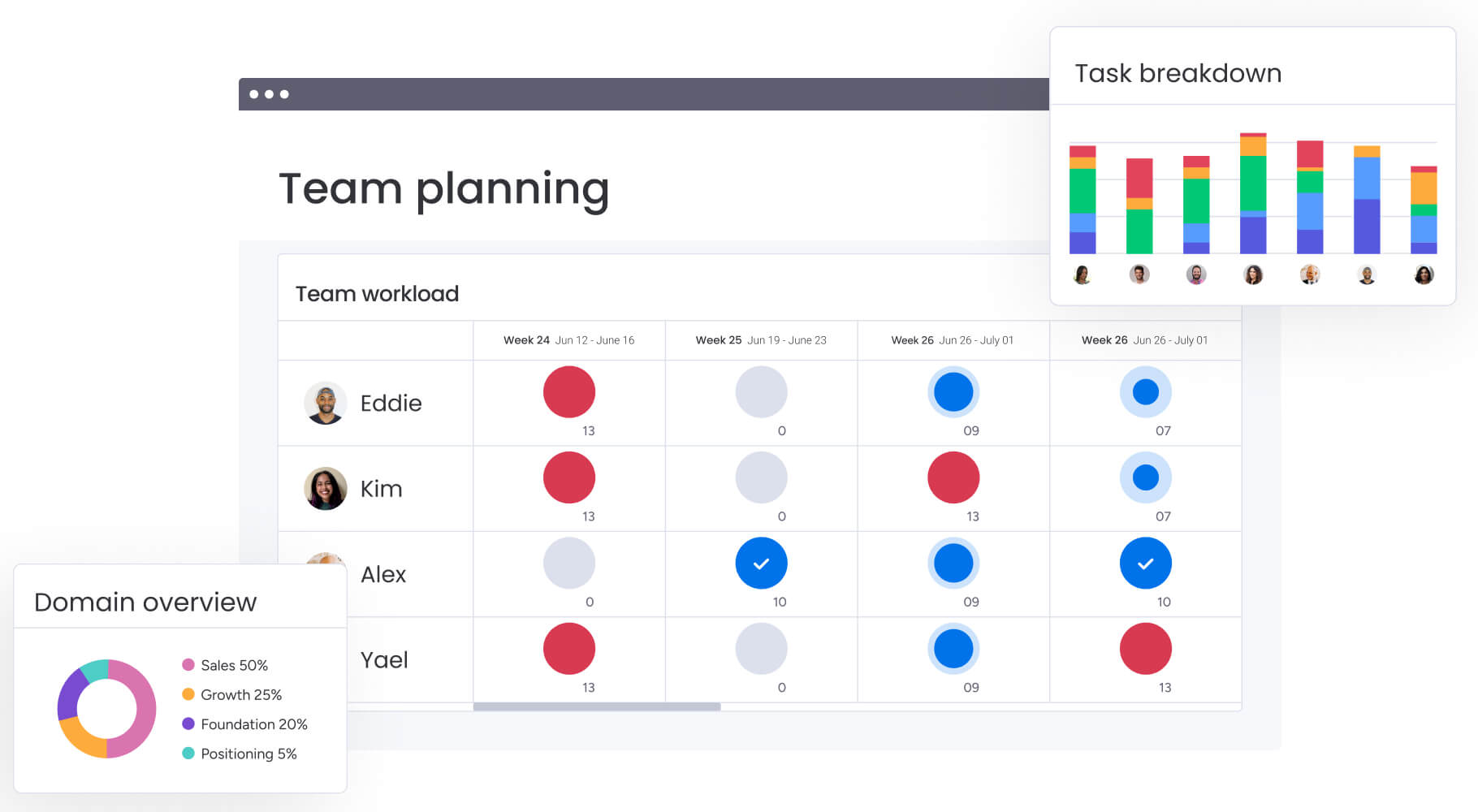
Organizations increasingly manage stakeholders at the portfolio level rather than on a per-project basis. Executives may champion one initiative while resisting another, creating management challenges.
- Stakeholder fatigue: uncoordinated communication across projects can lead to disengagement.
- Resource contention: portfolio-level visibility prevents multiple projects from competing for the same stakeholders simultaneously.
- Consistent experience: a unified approach ensures stakeholders receive coherent messaging about organizational change.
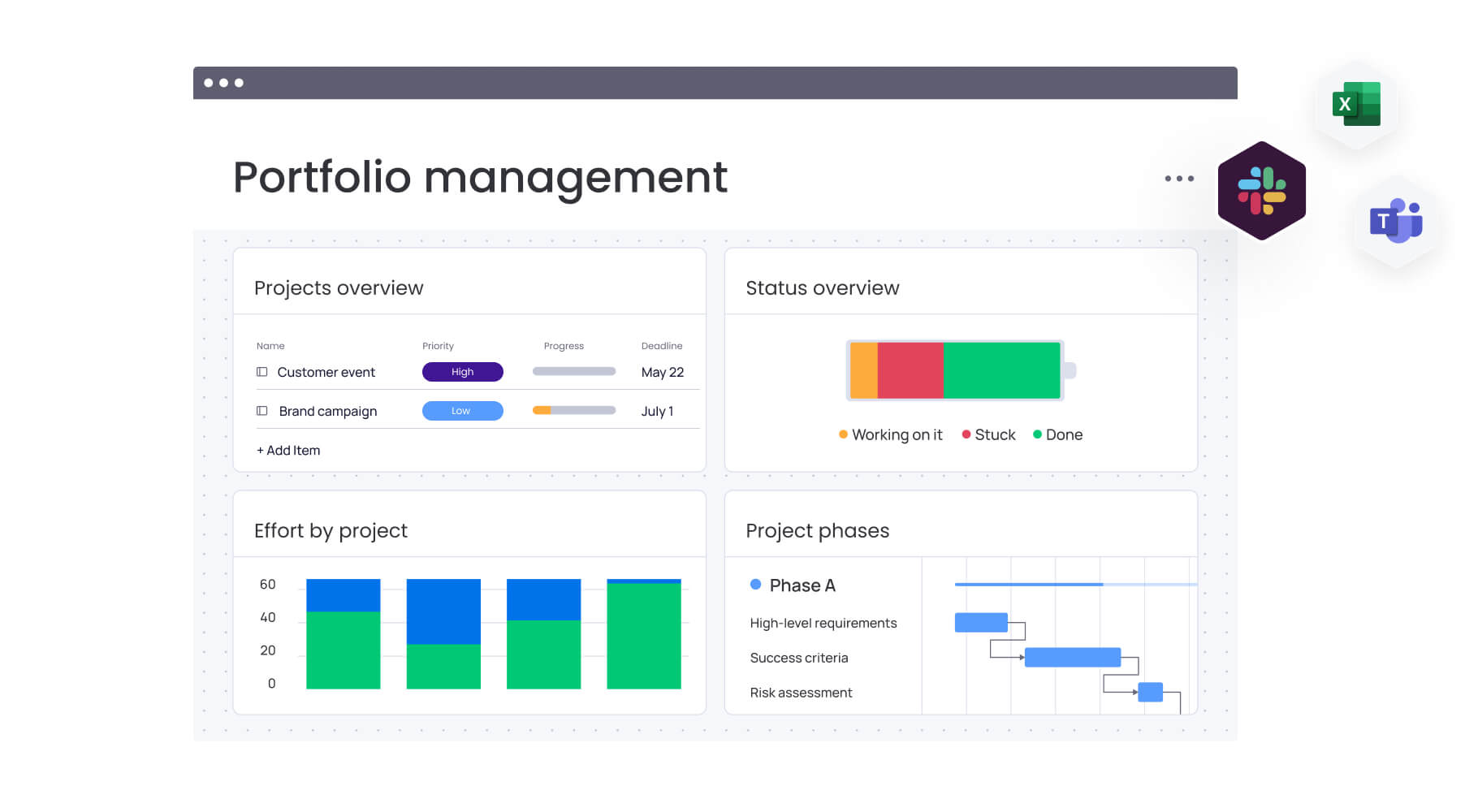
An effective matrix follows a structured approach, moving from broad identification to actionable strategies. Each step builds on the last, creating a living document to guide engagement throughout the project.
Step 1: identify and map your stakeholders
Start with a thorough scan of the project environment. This step captures anyone impacted by the project or capable of influencing its outcome. A complete sweep ensures no stakeholder is overlooked.
Look at multiple sources to identify stakeholders:
- Process maps: identify upstream suppliers and downstream recipients of project outputs.
- Org charts: pinpoint functional managers and executive sponsors.
- Governance bodies: include steering committees, regulatory reviewers, and compliance officers.
Mapping stakeholders early provides clarity on who matters most and who could shape the project’s success.
Step 2: assess power and interest levels
Once stakeholders are identified, evaluate their ability to impact the project (power) and their level of concern about outcomes (interest). This helps prioritize engagement efforts efficiently.
Stakeholders typically fall into four categories:
- High power/high interest: key players who require immediate and consistent attention.
- High power/low interest: context setters who must be kept satisfied but not overwhelmed.
- Low power/high interest: defenders who can be valuable allies but lack decision-making authority.
- Low power/low interest: crowd members who require monitoring and minimal effort.
Understanding these categories prevents wasted effort on stakeholders who are unlikely to affect results.
Step 3: evaluate current engagement status
Honest assessment is essential. Assign a current engagement level to each stakeholder based on observed behaviors rather than assumptions.
Use multiple methods to determine engagement:
- Behavioral data: review attendance records, email response times, and action item completion rates.
- Sentiment analysis: track the tone of questions asked during briefings.
- Direct feedback: collect input through one-on-one interviews or surveys.
This step highlights gaps between perceived and actual engagement, creating a realistic baseline.
Step 4: define desired engagement levels
Set strategic targets for each stakeholder. Not everyone needs to be a leading champion, and over-investing in low-impact stakeholders can waste resources.
Consider these guidelines:
- Critical path owners: must be at least supportive.
- Executive sponsors: should be leading.
- End-users: need to move from unaware to supportive by rollout.
- Regulators: often only require neutral or supportive engagement.
Clear targets help the team focus engagement efforts where they will make the most difference.
Step 5: design your visual matrix
A visual matrix highlights gaps and informs prioritization. Typically, it displays stakeholders along the X-axis and engagement levels along the Y-axis.
Include these elements for clarity:
- C (Current): a marker showing where stakeholders are today.
- D (Desired): a marker showing the target engagement level.
- The gap: the visual distance between C and D indicates the work required.
- Priority coding: color-code stakeholders by power and influence to highlight high-stakes gaps.
The matrix transforms engagement from a conceptual idea into an actionable visual tool.
Step 6: create targeted engagement strategies
For every gap identified, a specific stakeholder engagement strategy is developed. Generic communications rarely move stakeholders from resistant to supportive.
Effective tactics include:
- Unaware to aware: briefings, introductory emails, and town halls.
- Resistant to neutral: one-on-one listening sessions, risk mitigation workshops, and scope adjustments.
- Neutral to supportive: demonstrate specific benefits, showcase early wins, and involve them in decisions.
- Supportive to leading: offer a platform, assign mentorship roles, or include in steering committees.
Tailored strategies ensure effort aligns with influence, interest, and desired outcomes.
Step 7: establish monitoring and update processes
The stakeholder matrix is dynamic and should evolve as the project progresses. Regular reviews ensure strategies remain relevant.
Include these checks in your process:
- Monthly reviews: re-assess key stakeholders’ current positions.
- Milestone checks: validate engagement levels before major decisions.
- Trigger-based updates: adjust immediately after organizational announcements or crises.
Continuous monitoring treats stakeholder shifts as a project risk and addresses them proactively.
When to deploy your stakeholder engagement assessment
Strategic timing maximizes impact. While valuable at any stage, structured assessments are particularly effective during certain project phases.
Project initiation and planning phases
Deploying the matrix at project initiation establishes a baseline before the project narrative is finalized. It identifies potential roadblocks early, when the cost of change is still low. During planning, the assessment informs the communication strategy and resource allocation, ensuring the budget accounts for relationship-building activities.
Regular review cycles and checkpoints
Integrating stakeholder engagement into standard project governance keeps teams proactive. Weekly or monthly status meetings should review the matrix alongside budget and timeline metrics. This approach identifies drift toward resistance early, treating it as a project risk and allowing corrective action before it impacts the critical path.
Organizational changes and crisis scenarios
During mergers, acquisitions, or restructuring, the matrix provides stability. It tracks shifting alliances and highlights areas of concern. In crisis situations, rapid assessment identifies which stakeholders need immediate reassurance and which can actively support organizational stability.
Cross-portfolio stakeholder analysis
PMOs can deploy the matrix across the organization’s project portfolio to manage aggregate stakeholder demands. This visibility highlights individuals tasked with championing multiple initiatives simultaneously, enabling teams to reduce engagement overload and prevent burnout.
Try monday work management7 strategies to maximize your stakeholder matrix impact
Applying the matrix strategically transforms it from a static tracking tool into a competitive advantage, leveraging data and integrations to drive measurable results.
1. Automate engagement tracking and updates
Platforms like monday work management capture engagement data automatically, eliminating manual bias. Integrations with communication tools track email interactions, meeting attendance, and document activity. This data feeds directly into the matrix, providing real-time visibility rather than relying on outdated manual updates.
2. Integrate with project management workflows
Treat engagement tasks with the same rigor as technical milestones. Scheduling stakeholder briefings becomes a tracked item with a due date and assignee within the main project plan. Linking dependencies ensures technical milestones are only marked complete after confirming engagement levels.
3. Use data to predict engagement shifts
Historical analysis reveals stakeholder behavior patterns. Analytics can forecast when departments may resist changes or when stakeholders are likely to disengage during critical periods. Teams can adjust strategies proactively to prevent lapses in support.
4. Scale across your project portfolio
A unified stakeholder database serves as a single source of truth for all projects. Updates to a stakeholder’s role automatically reflect across every project matrix. This portfolio-level visibility prevents data silos, ensuring engagement strategies remain aligned organization-wide.
5. Connect to ESG reporting systems
Engagement data can feed ESG compliance reports, documenting interactions, feedback, and actions taken. This integration reduces administrative burden while ensuring accurate, transparent reporting.
6. Measure and demonstrate ROI
Matrix scores can be correlated with project performance, quantifying the impact of engagement. Teams can track reductions in delays and rework, building a business case for continued investment in change management resources.
7. Build dynamic rather than static assessments
Transform the assessment into a live dashboard. Real-time data updates allow the matrix to reflect current organizational realities, ensuring strategic decisions in meetings are informed by the most recent communications.
The future of stakeholder engagement
Technological advancements are reshaping how organizations understand and interact with stakeholders, moving from intuition-based management to data-driven intelligence.
AI-powered sentiment analysis
Artificial intelligence evaluates the tone of written communications and meeting transcripts to generate objective engagement scores. Algorithms detect subtle signals, such as hesitation, frustration, or enthusiasm, that a human manager might overlook. This provides early warning of resistance and allows for timely intervention.
Predictive engagement modeling
Machine learning leverages historical project data to forecast stakeholder responses to specific changes. These models simulate how delays or scope adjustments affect engagement levels across stakeholder groups, enabling leaders to plan communication strategies before delivering news.
Real-time stakeholder intelligence
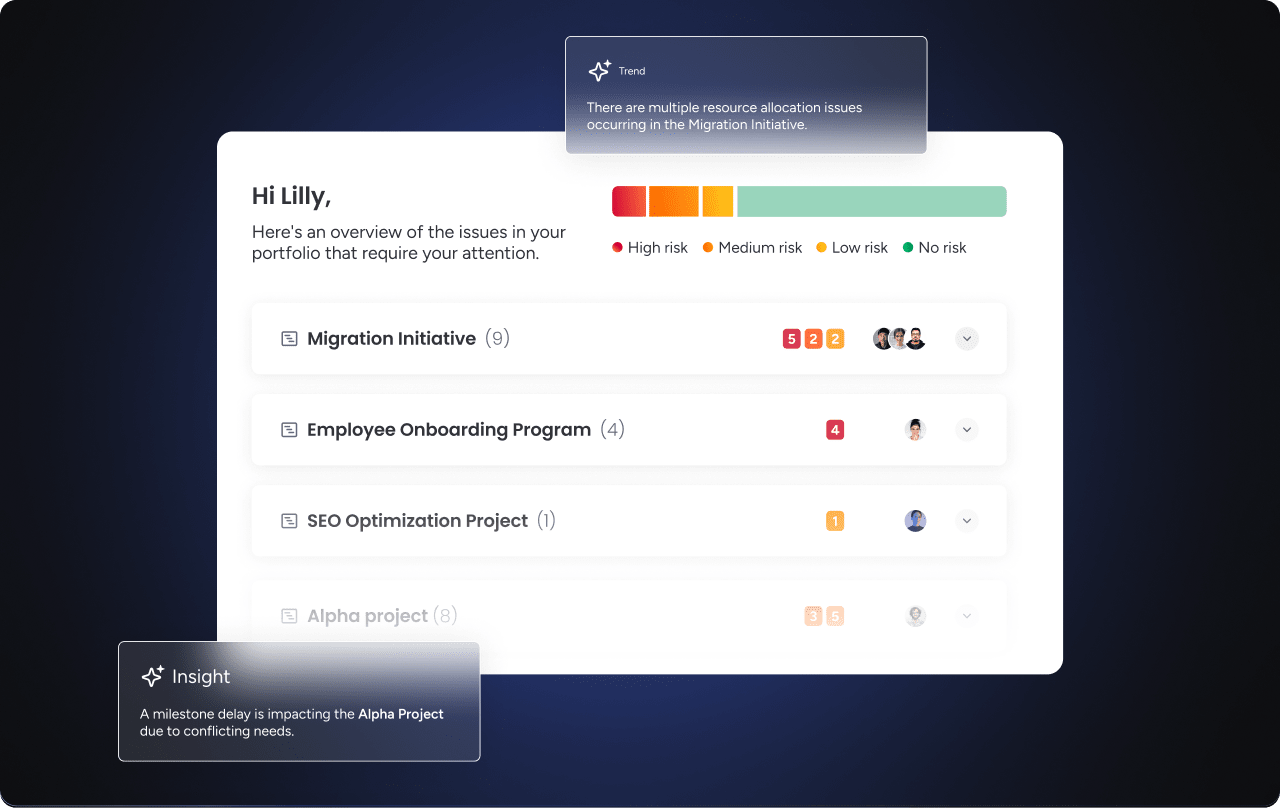
Integrated platforms provide a mission control view of stakeholder health. Executives can explore heat maps of support and resistance by department, geography, or seniority. Teams using monday work management achieve this through dashboards that display live, high-level project data on goals, schedules, resources, and engagement trends.
Digital workers for continuous communication
AI-driven digital workers manage routine engagement tasks, ensuring consistency and responsiveness. These agents schedule meetings, answer frequently asked questions, and deliver personalized updates based on stakeholder engagement profiles. Automation allows project managers to focus on complex, high-value relationship building.
Transform stakeholder management with monday work management
Effective stakeholder engagement depends on having systems that make interactions visible, measurable, and aligned with project execution. Modern platforms like monday work management consolidate these elements into one environment, connecting strategy with operational execution.
See all stakeholders across your portfolio
The platform centralizes stakeholder information across the enterprise. Instead of fragmented local lists, teams access a single source of truth that maps relationships, influence, and engagement history.
Comparison of traditional vs. monday work management approach:
| Capability | Traditional approach | monday work management |
|---|---|---|
| Data source | Disconnected spreadsheets | Centralized, relational database |
| Visibility | Project-specific data | Cross-portfolio transparency |
| Updates | Manual and periodic | Real-time and automated |
| Access | Limited to individuals | Collaborative and permission-based |
| Insights | Static snapshots | Dynamic dashboards |
Portfolio-level visibility allows a stakeholder profile to reflect status across multiple projects, preventing conflicting engagement approaches. Dashboards visually map engagement gaps with color-coded status columns, while executive-level reporting flags areas at risk of stakeholder resistance.
Automate engagement workflows and communications
The platform converts engagement strategies into automated processes. Triggers and automations ensure no stakeholder is overlooked and engagement plans are executed consistently.
Key automation capabilities include:
- Automated prompts: the system notifies project owners when a stakeholder has not been contacted within a set timeframe.
- Sentiment tracking: integration with communication tools captures interaction data and flags changes in participation automatically.
- Activity generation: moving a stakeholder status from neutral to resistant triggers an item for the project sponsor to schedule an intervention.
- Scalable communication: personalized updates are automatically distributed based on stakeholder role and engagement level.

“monday.com has been a life-changer. It gives us transparency, accountability, and a centralized place to manage projects across the globe".
Kendra Seier | Project Manager
“monday.com is the link that holds our business together — connecting our support office and stores with the visibility to move fast, stay consistent, and understand the impact on revenue.”
Duncan McHugh | Chief Operations OfficerDrive stakeholder success with strategic engagement
The stakeholder engagement assessment matrix transforms relationship management from guesswork into strategic advantage. By mapping current reality against desired outcomes, organizations gain the visibility needed to allocate resources effectively and prevent costly misalignment.
Success depends on treating stakeholder engagement as a measurable discipline rather than an afterthought. The matrix provides the framework to track progress, identify risks early, and demonstrate the ROI of relationship investment. Organizations that adopt this systematic approach see faster project delivery, reduced resistance, and stronger organizational alignment.
The future belongs to teams that navigate complex stakeholder landscapes with precision and agility. Start building your matrix today to transform how your organization manages relationships and drives results.
Try monday work managementFrequently asked questions
What is a stakeholder engagement assessment matrix?
A stakeholder engagement assessment matrix is a strategic planning tool that maps stakeholders against their current and desired levels of engagement. It helps project teams identify gaps and develop targeted strategies to move stakeholders toward the support levels needed for project success.
How do you create a stakeholder engagement assessment matrix?
To create a stakeholder engagement assessment matrix, identify all stakeholders, assess their current engagement level using observable evidence, define the desired engagement level for each stakeholder, visualize the gaps, and develop specific strategies to close those gaps.
What are the 5 levels of stakeholder engagement?
The five levels of stakeholder engagement are: Unaware — no knowledge of the project, Resistant — actively opposing, Neutral — aware but uncommitted, Supportive — willing to help when asked, and Leading — actively championing the project.
What is the difference between stakeholder analysis and stakeholder engagement?
A stakeholder analysis matrix categorizes stakeholders by power and interest as a one-time exercise, while a stakeholder engagement assessment matrix is a continuous tool. It plans and tracks behavioral change from current to desired engagement states.
How often should you update a stakeholder engagement assessment matrix?
A stakeholder engagement assessment matrix should be updated monthly at minimum. Additional reviews should occur at major project milestones and immediately following significant organizational changes or crises that may shift stakeholder positions.
Why is stakeholder engagement assessment important for project success?
Stakeholder engagement assessment is important because projects rarely fail due to technical issues. Failure usually results from misalignment between the solution and the people who must adopt it. Proactive engagement management is essential for delivery success.
Can you use a stakeholder engagement matrix for multiple projects simultaneously?
Yes, stakeholder engagement matrices can be scaled across multiple projects to provide portfolio-level visibility, prevent stakeholder fatigue, and ensure consistent messaging across organizational initiatives.
What tools can help automate stakeholder engagement tracking?
Modern platforms like monday work management can automate engagement tracking. They integrate with communication tools to monitor email responses, meeting attendance, and document interactions, providing real-time updates to the engagement matrix.

 Get started