

A solid strategy is in place. The team knows the plan. But three months in, key departments are pushing back, deadlines are slipping, and what looked like organizational alignment is starting to fracture. The difference between initiatives that succeed and those that stall often comes down to one factor: how well the people who can make or break outcomes are engaged.
Stakeholder engagement means finding the people who can make or break the work, then building real relationships with them. Instead of broadcasting updates, it creates conversations where the right feedback actually changes what gets built. Status reports tell people what happened. Real engagement connects the boardroom plan to the team actually doing the work.
With this article you’ll explore the mechanics of mapping influence, building communication strategies that scale, and using the four engagement levels to drive a systematic 8-step planning process. You will learn to identify critical influencers, build trust through transparency, and establish the digital infrastructure needed to manage relationships at scale.
Key takeaways
- Move beyond status updates to true collaboration: stop broadcasting updates. Start conversations where feedback actually changes what you ship.
- Use the four-level engagement framework: match your interaction intensity to stakeholder influence: inform low-impact groups, collaborate with strategic partners, and consult everyone in between.
- Map stakeholder power and interest systematically: categorize every stakeholder group so you spend time where it matters most and ensure predictable outcomes.
- Measure engagement success with concrete metrics: track participation rates, response times, and sentiment scores. You’ll prove value and catch relationship problems before they kill your project.
- Scale engagement with the right platform: spot stakeholder bottlenecks across your portfolio before they blow up your timeline using AI-powered insights from monday work management.
What is stakeholder engagement?
Stakeholder engagement is the systematic process of identifying, communicating with, and building relationships with individuals or groups who influence or are affected by your organization’s work. Rather than simply distributing updates, effective engagement establishes feedback loops that inform and shape strategic decisions.
Unlike simple updates or status reports, engagement creates continuous dialogue. You capture input, synthesize insights, and adapt your approach based on what you learn. This practice connects high-level strategy to ground-level execution, ensuring technical success translates into organizational adoption.
Understanding stakeholder engagement definition
True engagement means active participation and iterative feedback loops. It’s the difference between announcing a change and working with affected teams to shape how that change happens. This happens throughout the project, not just at big milestones.
Consider how this plays out across different organizational contexts:
- IT infrastructure rollout: instead of announcing a new security protocol, the IT team pilots the change with key departments, gathering friction points and adjusting the rollout schedule based on operational realities.
- Product development: rather than waiting for beta testing, product teams involve customer success leaders in early roadmap planning to anticipate client objections before code is written.
Stakeholder engagement vs stakeholder management
While often used interchangeably, these terms represent fundamentally different approaches to business relationships, with stakeholder management focusing on control and mitigation, treating people as risks. Engagement focuses on collaboration and value creation, treating people as partners.
| Feature | Stakeholder management | Stakeholder engagement |
|---|---|---|
| Primary goal | Minimize resistance and control outcomes | Maximize value and build consensus |
| Communication | Unidirectional (broadcast/inform) | Bidirectional (dialogue/listen) |
| Relationship | Transactional and project-bound | Relational and continuous |
| View of stakeholders | Risks to be mitigated | Partners to be leveraged |
| Outcome | Compliance and acceptance | Commitment and advocacy |
Key elements of effective stakeholder engagement
Successful engagement needs defined principles that turn vague ideas into processes you can repeat. Engagement scale across your entire portfolio with:
- Transparency: share information about decisions, timelines, and impacts openly — even the bad news. This builds credibility for navigating crises.
- Feedback integration: engagement only works when stakeholder input actually changes what you deliver. Showing how feedback changed decisions is critical.
- Inclusivity: seek out quiet voices, not just the loudest people in the room.
- Adaptive responsiveness: your strategy should shift as the project moves. Stick to rigid plans and ignore what stakeholders are saying? Your project will fail.
- Strategic alignment: tie every engagement activity to business goals. Otherwise, you’re just creating meeting fatigue.

Why does stakeholder engagement matter for business success?
Strong stakeholder engagement accelerates team performance and helps identify risks early. When stakeholders are aligned, decision-making speeds up and rework decreases, creating more predictable outcomes for executives. Engaged stakeholders flag roadblocks in advance, allowing you to pivot strategically and protect your budget.
Strategic benefits of strong stakeholder relationships
Investing in relationships pays off across the entire organization. The benefits go beyond finishing projects on time. You’re building organizational agility and competitive advantage:
- Accelerated decision making: when stakeholders are already aligned, you need fewer meetings to approve changes. Ideas move to execution faster.
- Risk mitigation: engaged stakeholders spot regulatory, technical, or cultural risks your core team might miss.
- Enhanced innovation: cross-functional stakeholders bring different perspectives. The solutions they help build are stronger than what siloed teams create alone.
- Regulatory agility: engage compliance teams early to ensure documentation is an accelerator, not a bottleneck.
- Resource optimization: engaging functional leads early and resource allocation becomes a negotiation, not a fight.
Real costs of poor stakeholder engagement
Neglecting stakeholder engagement creates significant downstream costs. Organizations often encounter passive resistance, where stakeholders provide nominal agreement during meetings but subsequently delay or obstruct implementation.
Poor engagement leads to several costly outcomes:
- Project stagnation: initiatives halt when key influencers exercise veto power during critical phases.
- Reputational erosion: teams who feel blindsided lose trust in leadership, making future initiatives harder to launch.
- Scope creep: without early alignment, stakeholders introduce new demands late, inflating budgets and timelines.
- Compliance violations: ignoring legal or compliance stakeholder constraints leads to costly fines or scrapped work.
Measuring ROI and business impact
To quantify engagement, look at both hard numbers and soft signals. High-performing teams track these metrics through portfolio dashboards that tie engagement directly to project results.
Key metrics to monitor include:
- Adoption rates: high engagement correlates with faster adoption of new processes.
- Cycle time: reduction in approval or sign-off time compared to previous baselines.
- Issue resolution speed: how quickly conflicts resolve indicates relationship strength.
- Sentiment analysis: regular pulse checks provide leading indicators of project health.
Who are your stakeholders?
Stakeholder identification isn’t static and it requires constant attention. Someone relevant during planning may be irrelevant during execution, while new stakeholders emerge as projects impact different business units. A static list becomes a liability. Keep your stakeholder map living and updated.
Internal stakeholders across your organization
Internal stakeholders hold power to resource, approve, or block initiatives. Understand their concerns and you can tailor communication that actually lands:
- Executive leadership: focus on ROI, strategic alignment, and risk. They require concise updates and no-surprise communication.
- Functional managers: heads of HR, IT, or finance care about resource impact and operational disruption.
- Operational teams: end-users who will live with changes need practical details and training for adoption.
- Project team members: the core execution group needs precision on workflows, dependencies, and timelines.
- Internal support functions: legal, compliance, and security teams act as gatekeepers requiring early engagement.
External stakeholders that impact success
External parties sit outside your control but heavily influence your operating environment. Their engagement often requires different communication channels and cadences:
- Customers: ultimate judges of value whose feedback should shape delivery directly.
- Suppliers and partners: critical for supply chain and delivery, needing visibility into timelines.
- Regulatory bodies: government agencies requiring strict protocol adherence and timely reporting.
- Investors and shareholders: focused on financial performance and long-term viability.
- Community groups: local or industry organizations influencing public perception and brand reputation.
Discovering hidden stakeholder groups
The most impactful stakeholders are often the ones you haven’t identified yet. Systematic discovery prevents blind spots that can derail projects late in the game.
Discovery methods that reveal hidden stakeholders:
- Influence mapping: analyze who key decision-makers listen to. It’s often a senior engineer or veteran assistant who holds significant informal sway.
- Process dependency analysis: trace workflows to identify downstream teams affected by data changes.
- Legacy owners: identify who built or owns systems being replaced, as they have deep investment in the status quo.

4 levels of stakeholder engagement
Not every stakeholder needs a seat in your weekly meeting. Match how often you engage to how much influence and interest each stakeholder has. This approach saves time while making sure each group gets the attention they need.
Level 1: inform
One-way communication keeps stakeholders in the loop on progress and decisions. Use this for low-influence, low-interest stakeholders who need updates but not a voice.
Examples include:
- Company-wide newsletters: broad updates that reach entire organizations without requiring individual responses.
- Intranet updates: centralized information hubs where stakeholders can access project status on demand.
- Automated dashboards: real-time visibility into key metrics without manual reporting overhead.
Keep them informed without overwhelming them.
Level 2: consult
Consultation seeks feedback on specific issues while retaining decision-making authority as part of your engagement strategy. They are vital for subject matter experts or affected departments.
Methods include:
- Surveys: structured questionnaires that gather input from large stakeholder groups efficiently.
- Focus groups: facilitated discussions that explore specific topics in depth with representative stakeholders.
- Feedback sessions: dedicated forums where stakeholders provide input on proposals or prototypes.
Set direct expectations: their input is advisory, not binding.
Level 3: involve
Partner with stakeholders so their concerns shape the alternatives you develop. For high-influence stakeholders whose buy-in is critical.
This level involves:
- Working groups: cross-functional teams that collaborate on solving specific challenges together.
- Alignment workshops: structured sessions that build consensus on approach and priorities.
- Co-design sessions: collaborative meetings where stakeholders actively shape solutions alongside the project team.
This ensures final solutions reflect what key players need — preventing rejection at rollout.
Level 4: collaborate
The highest engagement level where stakeholders partner in every decision aspect, including developing alternatives and identifying preferred solutions. Reserved for strategic partners and executive sponsors. Requires shared accountability and often shared resources. Success depends on high-trust relationships and integrated workflows.
How to create a stakeholder engagement plan in 8 steps?
A robust engagement plan is an operational roadmap: actionable, trackable, and adaptable to changing conditions. This systematic approach ensures you build relationships that drive project success while avoiding common pitfalls that derail initiatives.
Step 1: set engagement goals
Goals must align with business outcomes. Therefore, determine whether the objective is securing a budget, ensuring adoption, or addressing regulatory hurdles. Distinguish between goals (outcomes) and activities (methods) to keep efforts focused on results.
For example:
- Goal: Secure Finance Director approval by Q2.
- Activity: bi-weekly budget review meetings.
Step 2: map all stakeholder groups
Conduct a comprehensive ecosystem audit using a stakeholder map. Use brainstorming sessions with cross-functional leads to identify everyone the project touches. Document groups in a centralized database where stakeholder data connects directly to project timelines and deliverables and then validate this list with subject matter experts to ensure no critical groups are omitted.
Step 3: analyze stakeholder power and interest
Use a Power-Interest grid to categorize stakeholders. This analysis dictates resource allocation, ensuring time yields the highest strategic return:
- High power/high interest: manage closely (collaborate).
- High power/low interest: keep satisfied (involve/consult).
- Low power/high interest: keep informed (inform).
- Low power/low interest: monitor (minimum effort).
Step 4: choose engagement methods for each group
Next, map specific tactics to each analysis quadrant. High-touch stakeholders might require face-to-face strategy sessions, while broader groups receive automated email digests. Consider cultural and technical preferences: some teams live in Slack, others prefer formal presentations. A matrix matching stakeholder groups to communication channels ensures consistency.
Step 5: build your communication strategy
Develop the core narrative by defining key messages and how they change for different audiences. The strategy should establish communication frequency and channels used. Create structured avenues for questions and concerns to flow back to the project team. Communication isn’t just pushing information out, but creating feedback mechanisms.
Step 6: launch engagement activities
Execute with a defined kickoff. Set expectations early about how and when stakeholders will be engaged. Accessibility is key: stakeholders should know exactly where to find information and who to contact. Coordination prevents overwhelming stakeholders involved in multiple initiatives.
Step 7: track and monitor progress
Establish metrics to gauge engagement health using an engagement assessment matrix. Are stakeholders attending meetings? Opening updates? Is feedback constructive or hostile? Organizations using solutions like monday work management visualize engagement health alongside project health through real-time dashboards. If a key stakeholder stops engaging, investigate immediately.
Step 8: adapt based on feedback
Finally, treat the engagement plan as a living hypothesis. Cancel meeting formats that aren’t yielding value. Increase engagement levels from “Inform” to “Consult” if resistance is higher than anticipated. Regularly review engagement effectiveness, asking stakeholders if they feel heard and informed.
7 stakeholder engagement strategies that scale
Managing relationships for one project is difficult, but managing them across a portfolio requires systemic strategies. Scaling engagement demands moving from ad-hoc emails toward standardized, technology-enabled processes that work consistently across hundreds of initiatives.
1. Build continuous listening systems
Replace annual surveys with always-on feedback mechanisms. Embed feedback forms in project deliverables, utilize pulse surveys after milestones, and monitor internal channels for sentiment shifts. Continuous listening detects micro-fractures in relationships before they become breaks, enabling real-time course correction.
2. Use AI for stakeholder intelligence
AI processes vast amounts of unstructured data to reveal patterns humans miss. AI capabilities analyze sentiment across project comments, categorize feedback automatically, and predict stakeholder churn. This shifts engagement from reactive firefighting to proactive relationship management.
monday work management’s AI blocks instantly summarize feedback threads or categorize incoming requests, ensuring stakeholder input is processed efficiently.
3. Create cross-team collaboration
As silos fragment engagement, establishing Communities of Practice allows stakeholder leads from different departments to share insights and coordinate outreach. If marketing and sales engage the same customer segment, coordinate approaches to avoid fatigue. Shared stakeholder registries prevent duplicate outreach and ensure a unified organizational voice.
4. Implement digital engagement platforms
Centralize engagement in a single digital workspace. A platform housing project data, communication logs, and stakeholder maps creates a single source of truth. This transparency reduces administrative burden and allows stakeholders to self-serve information, reducing status-check emails.
5. Establish portfolio-wide visibility
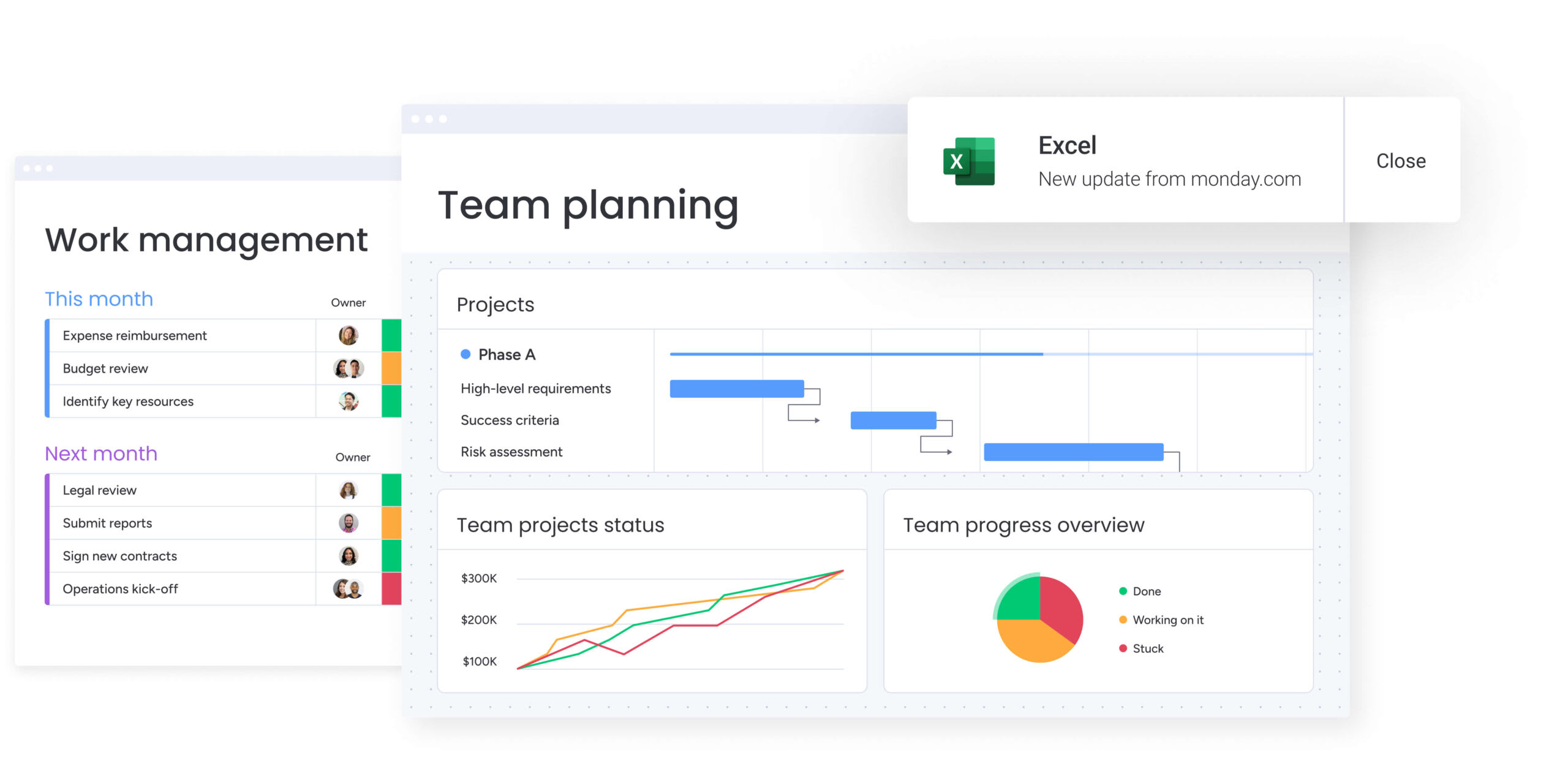
Executives need aggregate views. Dashboarding capabilities should roll up engagement health from individual projects into portfolio views. This highlights systemic risks (like specific departments being chronically overloaded) allowing leadership to intervene strategically. Portfolio dashboards within solutions like monday work management provide real-time analysis across hundreds of projects.
6. Standardize with smart templates
Create standardized templates for stakeholder maps, communication plans, and status reports. Managed templates ensure consistency across the organization and reduce setup time for new initiatives. They enforce best practices by default while allowing teams to adapt workflows to specific needs.
7. Embed compliance and ESG tracking
Modern engagement intersects with Environmental, Social, and Governance mandates. Integrate these requirements into engagement workflows. Track interactions with community groups or regulators directly within the project management system to create automatic, audit-ready trails of compliance efforts.

How to measure stakeholder engagement success?
Measurement validates engagement investment and transforms good relationships into hard data proving business value. A balanced scorecard approach examines activity, sentiment, and outcome to provide comprehensive insights into relationship health.
Essential KPIs for stakeholder engagement
These metrics provide comprehensive engagement health views. Consistent tracking allows organizations to identify trends and intervene before small issues become project-threatening:
- Participation rate: percentage of invited stakeholders attending sessions or interacting with content.
- Feedback implementation rate: ratio of suggestions received to suggestions acted upon.
- Response time: how quickly the project team addresses stakeholder inquiries.
- Sentiment score: aggregated positive/negative sentiment from surveys and communications.
- Net Promoter Score: internal NPS measuring likelihood stakeholders recommend working with the project team.
- Blocker frequency: number of times projects pause due to stakeholder objections.
Tracking satisfaction and sentiment
Beyond numbers, qualitative tracking is essential. Regular interviews with key influencers reveal the why behind metrics. Therefore, monitor email exchange tone and comment threads. A shift from constructive questioning to passive-aggressive brevity signals trust loss that no KPI dashboard catches immediately.
Proving business value to leadership
To secure resources for engagement, connect metrics to the bottom line. Report that early stakeholder alignment reduced requirements gathering time by specific percentages. Correlate high engagement scores with on-budget delivery. And also show projects with robust engagement plans have significantly lower rework costs than those without.
Managing common stakeholder engagement challenges
Even perfect plans encounter friction. The goal isn’t eliminating challenges but navigating them with minimal disruption. Understanding these common obstacles helps teams prepare responses and maintain momentum when issues arise.
- Balancing competing stakeholder demands: conflicts are inevitable when incentives differ. Use transparent prioritization tied to strategic objectives and clearly explain decisions to maintain trust.
- Breaking communication silos: disconnected teams create confusion and duplication. Implement a shared work management platform with executive-backed visibility across departments.
- Scaling across hundreds of projects: manual engagement doesn’t scale. Standardize workflows, automate routine updates, and focus human effort where strategic value is highest.
- Meeting regulatory requirements: compliance requires consistent documentation. Use systems that automatically log interactions, approvals, and document versions to avoid audit chaos.
Digital platforms and AI for stakeholder engagement
Technology doesn’t replace engagement’s human element; it removes administrative friction preventing it. The right stack amplifies teams’ ability to listen, analyze, and respond while maintaining the personal connections that drive successful relationships.
Centralized stakeholder engagement platforms
Contemporary platforms integrate project execution with relationship management. They offer dynamic stakeholder registries linking people to workflows, risks, and decisions.
Features include automated status reporting, centralized feedback portals, and permission-based views allowing stakeholders to see exactly what they need without navigating complex project details.
AI-powered analytics and insights
AI multiplies engagement team capabilities. It scans project updates to identify risk keywords indicating stakeholder unhappiness. Predictive models flag projects likely to miss deadlines based on communication patterns, allowing preemptive intervention.
Portfolio Risk Insights within monday work management scan the entire project landscape, identifying potential stakeholder bottlenecks before they impact delivery.
Automation that saves time
Automation manages engagement logistics by scheduling recurring check-ins, sending approval reminders, and distributing meeting minutes. This ensures consistency across all stakeholder interactions and allows teams to focus on strategic problem-solving and relationship building rather than administrative tasks.
Integrating with your tech stack
Stakeholder data shouldn’t live in isolation. Engagement platforms must integrate with CRM for customer data, HR systems for internal hierarchy, and communication applications like Slack or Teams. This integration ensures status changes in one system reflect everywhere, providing holistic relationship views.
Scale stakeholder engagement with monday work management
Enterprise-grade stakeholder engagement requires a platform connecting strategy to execution. The platform provides infrastructure to systematize relationships, automate communication, and gain visibility across complex portfolios while maintaining the human connections that drive success.
- See risks across your entire portfolio: Portfolio Risk Insights utilize AI to scan the project landscape, identifying stakeholder bottlenecks before delivery impact. The system detects patterns, like specific departments consistently delaying approvals, and surfaces risks to leadership.
- Automate stakeholder workflows: trigger onboarding, reviews, and feedback routing automatically. AI blocks within the platform instantly summarize feedback threads or categorize incoming requests, ensuring stakeholder input processes efficiently and accurately.
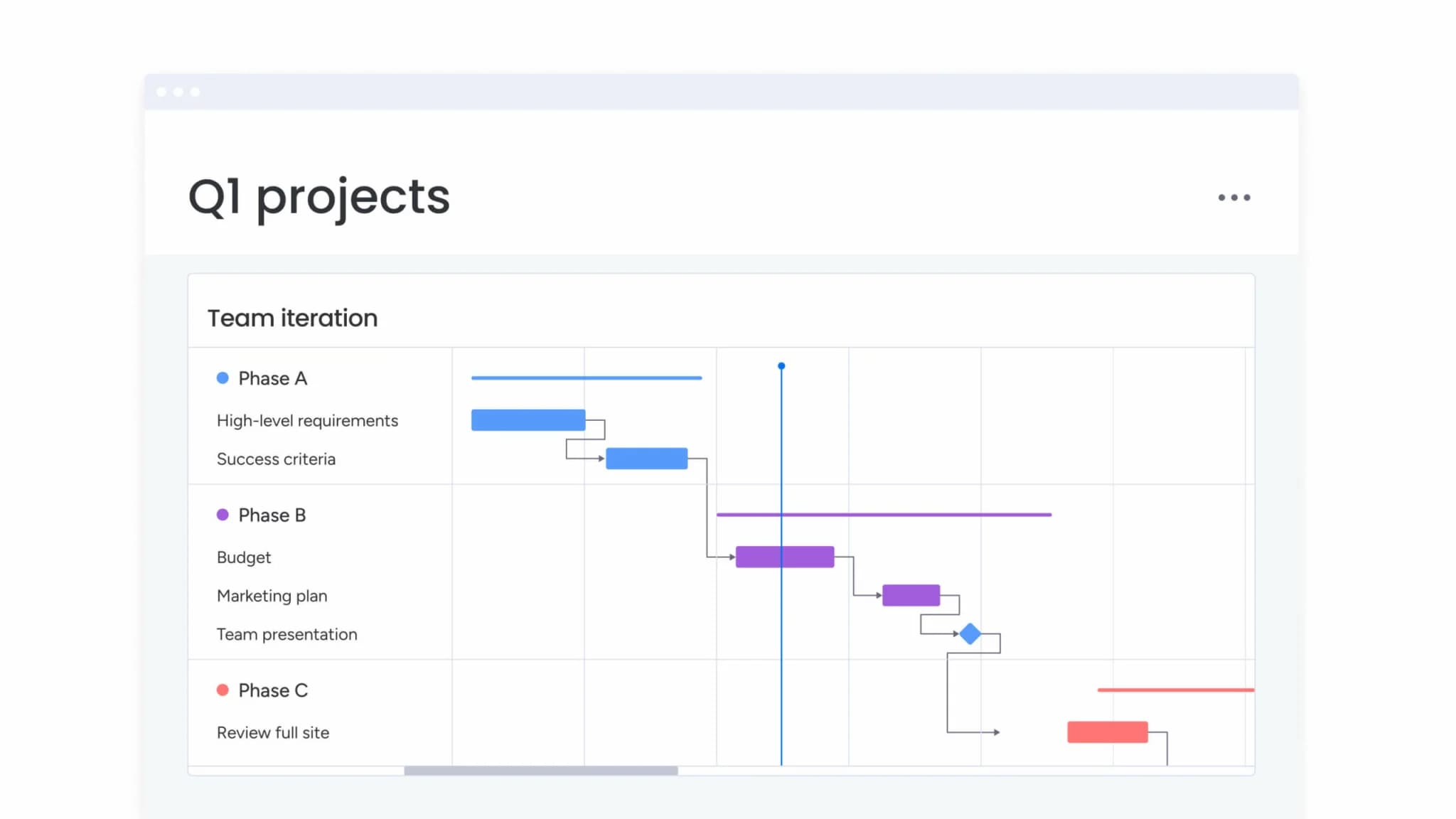
- Track cross-project dependencies: in complex organizations, marketing delays often stall engineering. monday work management visualizes these cross-project dependencies, showing exactly how stakeholder decisions in one area ripple through portfolios.
- Get real-time executive dashboards: the platform transforms raw data into executive intelligence. Customizable dashboards aggregate engagement metrics, risk levels, and project status into single views. AI-powered reporting generates executive summaries automatically, highlighting key trends and anomalies.
- Manage resources intelligently: resource directory and workload management features ensure team members assigned to manage key stakeholders have required capacity and expertise. The system prevents burnout by visualizing workload distribution, ensuring high-value relationships aren’t managed by overwhelmed staff.
Turn stakeholder engagement into your competitive advantage
Stakeholder engagement is the difference between strategy that looks good on paper and one that actually works. As organizations grow more complex and interconnected, the ability to align diverse groups toward common goals becomes a primary competitive advantage.
Companies mastering this discipline execute faster, navigate change with less friction, and build trust reservoirs carrying them through crises.
The future belongs to organizations that can systematize human connection. By combining rigorous frameworks with platforms like monday work management, leaders transform stakeholder engagement from chaotic variable into predictable, scalable asset. The frameworks and strategies exist to turn every stakeholder into a partner — the next step is building the system that makes it happen.
Frequently asked questions
What is meant by stakeholder engagement?
Stakeholder engagement is the systematic process of identifying, communicating with, and involving individuals or groups who influence or are affected by an organization's objectives to build relationships and improve decision-making.
What are the 4 levels of stakeholder engagement?
The four levels are Inform (providing updates), Consult (seeking feedback), Involve (working directly with stakeholders on concerns), and Collaborate (partnering on decisions and solutions).
How do you create a stakeholder engagement plan?
A successful plan involves setting goals aligned with business outcomes, mapping all stakeholder groups, analyzing their power and interest, selecting appropriate engagement methods for each group, and establishing a schedule for communication and review.
What is the difference between stakeholder engagement and management?
Stakeholder management focuses on controlling outcomes and minimizing resistance, while stakeholder engagement emphasizes collaboration, two-way dialogue, and mutual value creation.
How do you measure stakeholder engagement effectiveness?
Effectiveness is measured through participation rates, response times, stakeholder satisfaction scores, sentiment analysis, and successful conflict resolution.
What platforms help manage stakeholder engagement at scale?
Enterprise work management platforms like monday work management help scale engagement by centralizing stakeholder data, automating communication workflows, tracking cross-project dependencies, and providing AI-driven insights into portfolio health.

 Get started