

Three weeks into a major initiative, a stakeholder may drop the dreaded phrase: “Can we just add one more feature?” This scenario causes focused projects to suddenly expand in every direction, stretching timelines and leaving teams questioning what they are actually supposed to deliver. The solution is establishing a scope baseline, a project’s locked-in reference point that defines what is being built, how work is organized, and what success looks like.
This baseline combines three essential components: the scope statement, the work breakdown structure (WBS), and detailed work descriptions. It acts as a project’s North Star, keeping everyone aligned on boundaries and preventing the endless “just one more thing” requests that derail delivery.
Mastering this control point ensures reduced risk, greater efficiency, and stakeholders who trust the process. Discover how a comprehensive scope baseline acts as your strongest defense against scope creep and project failure by exploring the full article.
Key takeaways
- Lock in your project boundaries before work begins with platforms like monday work management you can create a scope baseline with three components (scope statement, work breakdown structure, and detailed dictionary) to prevent costly scope creep and keep teams focused.
- Use your baseline as a decision-making filter: every change request gets evaluated against your approved scope baseline, helping you distinguish between necessary adjustments and unnecessary additions that derail projects.
- Transform static documents into dynamic project control: connect your scope baseline directly to execution with real-time dashboards, AI-powered risk detection, and collaborative workflows that make scope management both visual and actionable.
- Time your baseline approval strategically: establish your scope baseline when stakeholders agree on deliverables, your work breakdown structure is complete, and resources align with requirements (not too early or too late).
- Adapt baselines for modern project approaches: even Agile and hybrid projects need scope control through rolling wave baselines that define high-level boundaries while allowing sprint-level flexibility and iterative refinement.
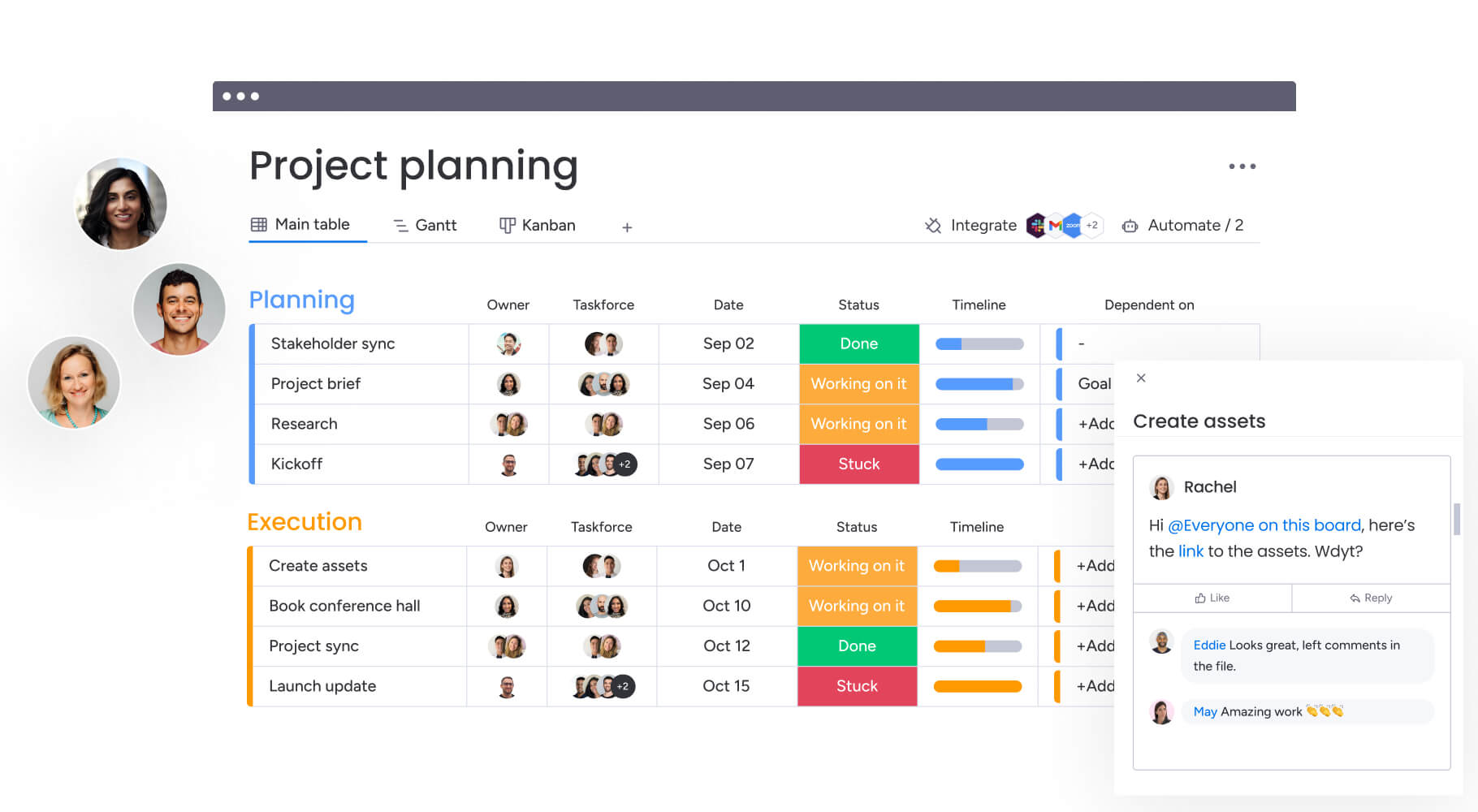
What is a scope baseline in project management?
A scope baseline is the approved version of your project’s scope that serves as your reference point throughout execution. It combines three essential documents: the scope statement (what you’re delivering), the work breakdown structure (how work is organized), and the WBS dictionary (detailed work descriptions).
This becomes your project’s control point: the agreed-upon standard that keeps everyone aligned on what’s included, what’s not, and how success is measured.
Unlike preliminary planning documents that evolve during early discussions, you formally approve and control a scope baseline. Changes require documented approval through your change management process. This protection blocks unauthorized additions while keeping the door open for necessary adjustments.
The baseline serves as your measuring stick for project performance. It helps you track whether work stays within boundaries, identify when changes occur, and assess their impact on timelines and budgets. Without this reference point, projects drift, expectations shift, and teams lose sight of original commitments.
This drift can be substantial: NASA’s major projects alone saw over $500 million in annual cost growth in recent assessments, with individual programs experiencing overruns exceeding $360 million.
Scope baseline vs. project scope
Project scope and scope baseline represent distinct stages of project definition. Understanding this distinction is essential for determining when flexibility is appropriate and when formal control mechanisms should be established.
Project scope refers to the evolving description of work during the planning phase: characterized by fluidity, openness to refinement, and responsiveness to stakeholder input. The scope baseline, by contrast, is the formally approved version that is established once stakeholder consensus is achieved, serving as the primary control mechanism throughout project execution.
| Aspect | Project scope | Scope baseline |
|---|---|---|
| Definition | Evolving description during planning | Approved, locked version for control |
| Status | Fluid and refinable | Fixed with formal change process |
| Components | Preliminary statements and requirements | Finalized scope statement, WBS, dictionary |
| Purpose | Explore requirements and reach consensus | Control execution and measure variance |
This matters because it separates the discovery phase from the execution phase. During planning, you need flexibility to discover requirements, while during execution, you need stability to maintain focus and prevent scope creep.
When to establish your baseline?
You need to time your baseline carefully: detailed enough to be useful, but fast enough to keep moving. Lock it in too early, and you’ll face excessive change requests. Wait too long, and work begins without clear boundaries.
The optimal moment arrives when these four conditions align:
- Scope statement finalized: all deliverables, assumptions, constraints, and exclusions are documented and understood by stakeholders.
- WBS completed: the project is broken down into manageable work packages sized for tracking and assignment.
- Stakeholder approval obtained: key decision-makers have reviewed documentation and provided formal sign-off on scope boundaries.
- Resource planning aligned: team capacity and available resources match the scope requirements you’ve defined.
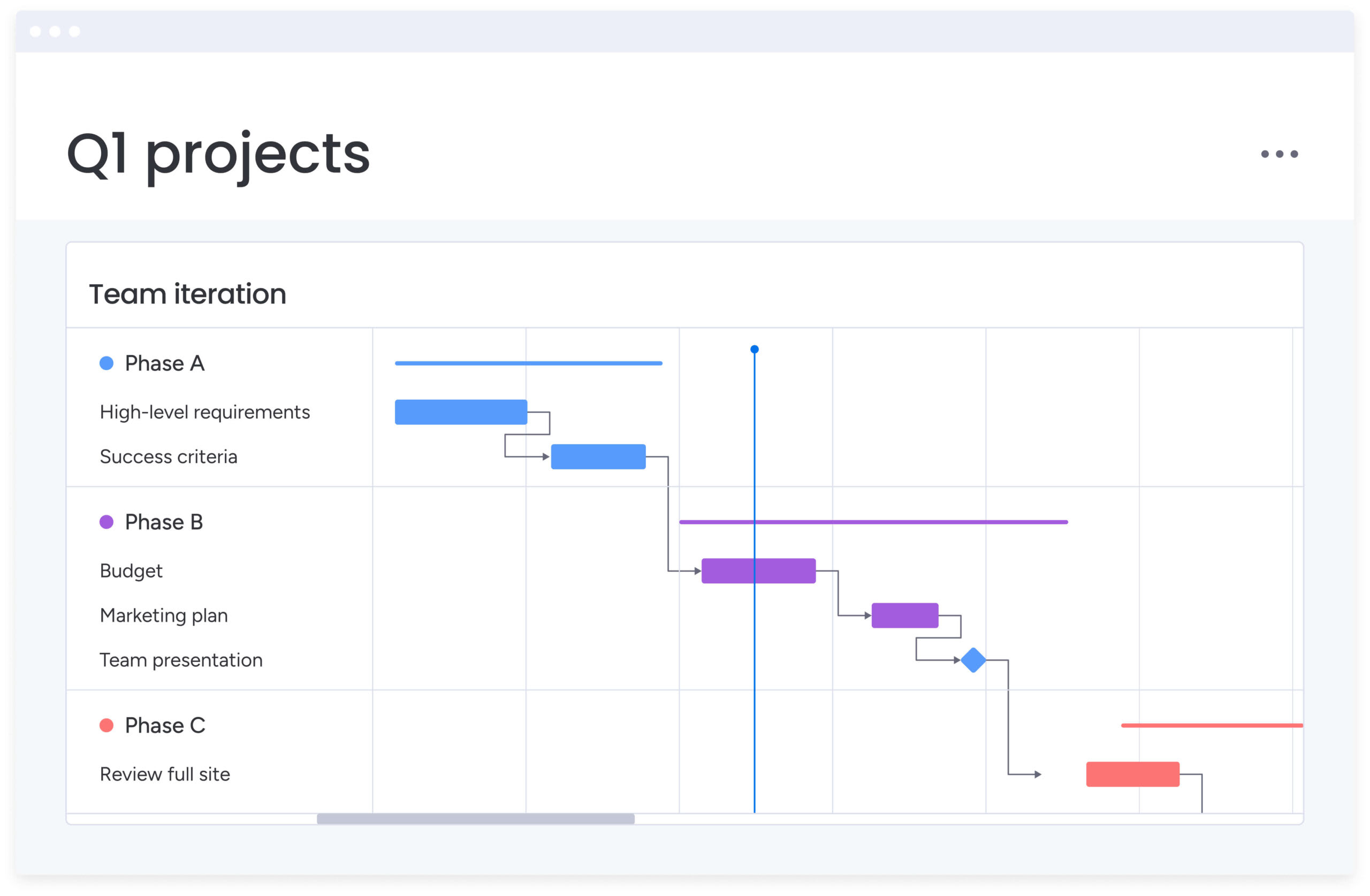
The 3 essential components of a scope baseline
A complete scope baseline combines three components that work as a system. The scope statement gives you context, the WBS breaks down the structure, and the dictionary adds the details. Skip any of these, and you’re opening the door to confusion and scope creep.
1. Scope statement
The scope statement is your project’s narrative foundation. It defines boundaries in plain language anyone can understand. This document answers the big questions: what you’re building and why it matters.
A comprehensive scope statement addresses these critical elements:
- Project objectives: measurable goals tied to business strategy.
- Deliverables: specific products, services, or results you’ll produce.
- Acceptance criteria: conditions that must be met for approval.
- Boundaries: explicit statements about what’s excluded.
- Assumptions and constraints: planning factors and limitations affecting execution.
2. Work breakdown structure (WBS)
The WBS transforms your narrative scope into a visual hierarchy. It breaks down deliverables into progressively smaller components until you reach work packages that teams can execute and track.
Creating an effective WBS requires following these proven principles:
- Hierarchical decomposition: major deliverables at Level 2, breaking down to work packages at Levels 3 or 4.
- 100% rule: every element of project work must appear once and only once.
- Mutually exclusive elements: no overlap between work packages to prevent duplication.
- Appropriate sizing: work packages follow the 8/80 rule (8-80 hours of effort).
3. WBS dictionary
The WBS dictionary adds substance to your visual structure. While the WBS shows what needs to be done, the dictionary explains how, providing technical specifications and work instructions for execution.
Each dictionary entry eliminates ambiguity by documenting:
- Work package description: comprehensive explanation of required work.
- Specific deliverables: what will be produced and how it’s measured.
- Resource requirements: skills, materials, and time needed.
- Dependencies and risks: relationships and potential issues.
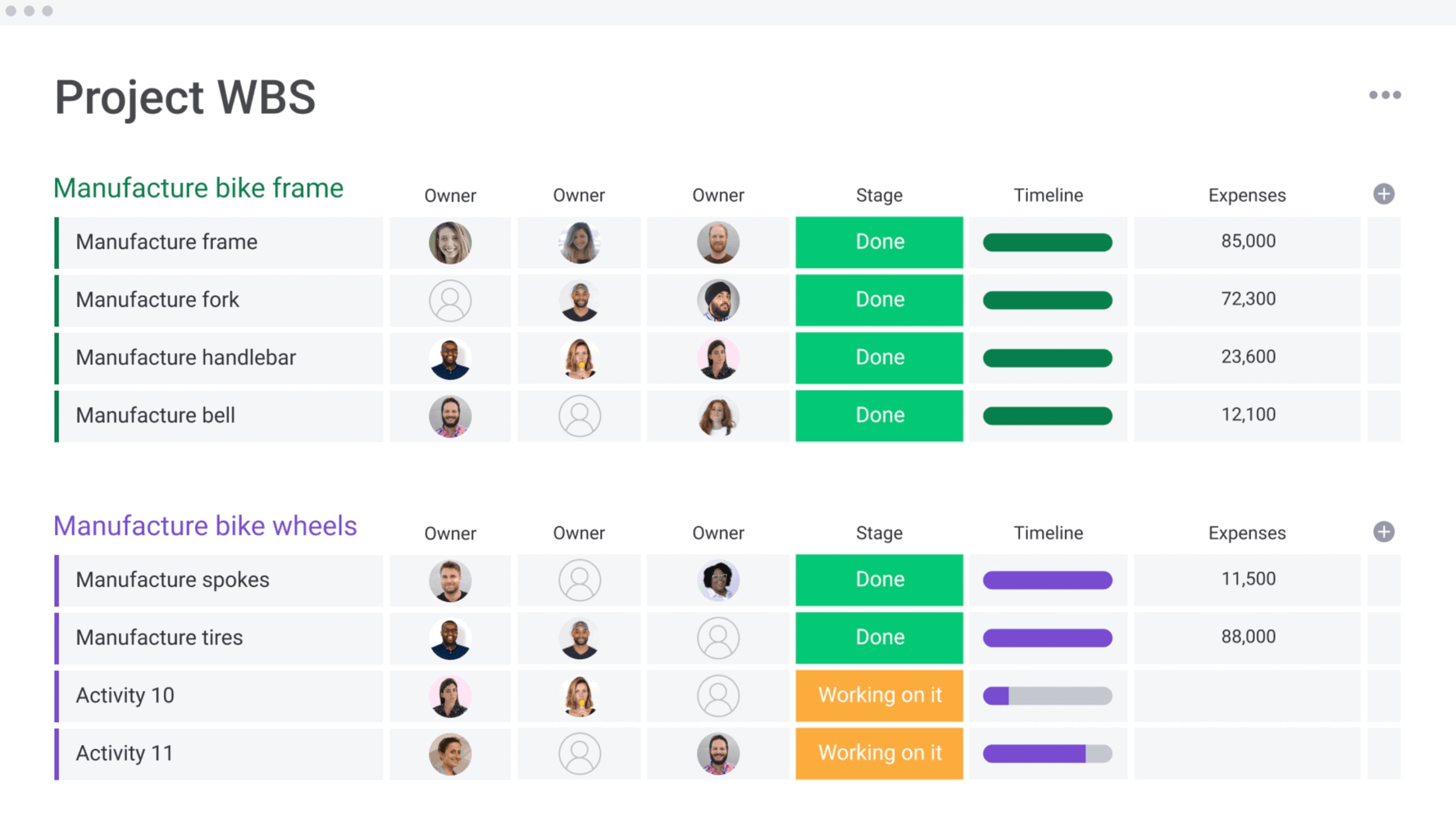
How to build a scope baseline in 5 steps?
Building a scope baseline turns vague requirements into a clear execution plan. This approach cuts down on rework and gets stakeholders on board from day one. Each step builds on the last, creating a solid foundation for your project.
Step 1: create your project scope statement
Start by getting everyone on the same page through real collaboration. Your scope statement becomes the foundation for everything that follows.
Talk to stakeholders to find out what they actually need, not just what they say they want. Document specific, measurable deliverables rather than vague activities. Also define clear boundaries by explicitly stating what’s excluded from scope. Identify all constraints affecting time, budget, and resources. Validate assumptions to reduce risk and prevent surprises.
Step 2: develop the work breakdown structure
Transform your narrative scope into a structured visual format. Every WBS element must trace directly back to deliverables in your scope statement.
Start with major deliverables from your scope statement as Level 2 elements. Break each deliverable into smaller, manageable components. Apply the 100% rule to ensure complete coverage without gaps. Not only verify that work packages are sized appropriately for management and tracking, but also validate the structure with stakeholders to confirm alignment.
Step 3: document the WBS dictionary
Convert your structural WBS into actionable work instructions. The dictionary removes ambiguity by defining exactly what “done” means for each component.
Write detailed descriptions that explain work in unambiguous terms. List tangible outputs and specific acceptance criteria. Specify required skills, tools, and budget allocations.
Additionally, provide duration estimates based on historical data or expert judgment. Identify dependencies that affect sequencing. Document quality standards and performance requirements. Note potential risks and mitigation strategies.
Step 4: obtain stakeholder approval
Approval transforms draft documentation into a binding agreement. This governance step creates accountability and establishes your formal reference point.
Compile your scope statement, WBS, and dictionary into review packages. Schedule sessions to walk stakeholders through documents, ensuring comprehension. Address all feedback systematically before proceeding. Secure written approval from authorized decision-makers. Finally, establish the change control process for future modifications.
Step 5: distribute and archive your baseline
A baseline only works when teams can access and understand it. Proper distribution ensures it becomes a living reference, not forgotten documentation.
Therefore, store documents in a centralized, version-controlled repository. Implement clear version tracking to maintain history. Grant appropriate access based on roles and responsibilities. Notify teams about baseline location and purpose. Provide training on how to use the documents effectively.
Why does every project need a scope baseline?
A scope baseline pays off with reduced risk, greater efficiency, and stakeholders who trust the process. It shifts you from constantly putting out fires to actually staying ahead of problems. The benefits go beyond single projects; they improve how your whole organization works and build stakeholder trust.
Control project boundaries
The scope baseline serves as your definitive boundary marker. It helps managers evaluate requests objectively and spot the difference between real changes and scope creep.
By having clear inclusion and exclusion criteria, teams know exactly what’s in scope. New requests get evaluated against the approved baseline to determine impact. All stakeholders operate from shared definitions of project limits. Managers have documented justification for accepting or rejecting requests.
Enable performance tracking
Baselines provide the “planned value” in every variance calculation. Without this reference, teams can report what they’re doing but can’t tell if they’re actually making progress.
To fix this, track actual deliverables against baseline commitments to measure real progress. Use acceptance criteria to verify when work is truly complete. Monitor actual effort against baseline estimates to identify trends. Compare delivery timing against baseline schedules. Evaluate deliverable quality against documented standards.
Support smart change decisions
Baselines provide a framework for managing change, ensuring every adjustment is intentional and valuable. They help you weigh what you’re gaining against what you’re giving up.
The baseline enables accurate impact analysis for schedule and budget effects. This analysis becomes critical when considering that weapon system programs collectively experienced $49.3 billion in cost increases and average timeline extensions of 18 months to nearly 12 years from program start.
Teams can weigh change benefits against implementation costs. Stakeholders understand implications before approving requests. Structured decision-making replaces ad-hoc adjustments. Every change gets documented with clear rationale and approval.
Maintain stakeholder alignment
The baseline acts as your single source of truth, keeping diverse stakeholders aligned throughout execution. It stops the natural drift that happens when you don’t write expectations down.
Because everyone works from identical scope definitions, misunderstandings are reduced. . The baseline sets and maintains agreed-upon outcome expectations. Common language and definitions improve communication consistency. Teams are accountable for specific, documented deliverables. Disputes get resolved by referencing approved documentation.
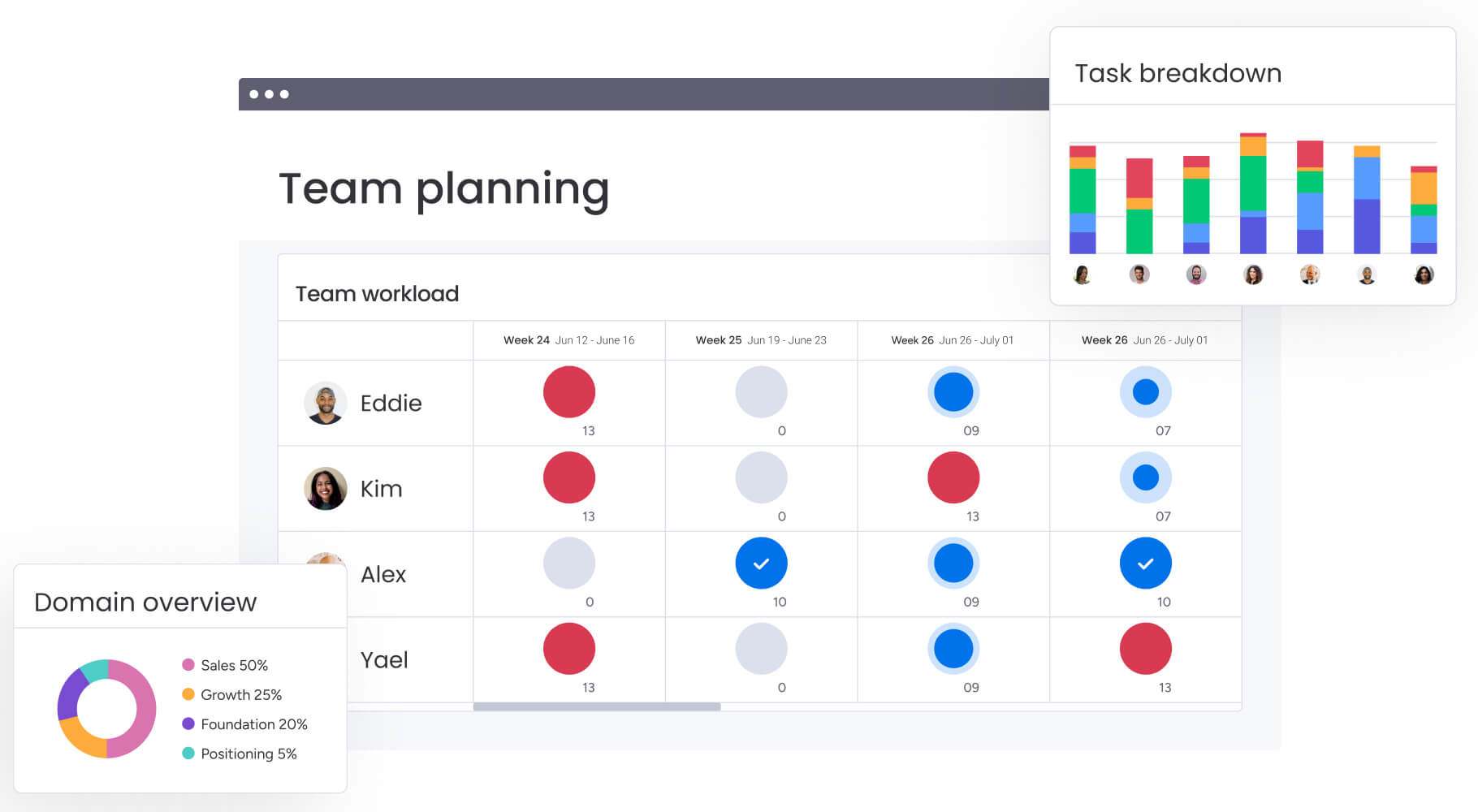
How do scope baselines prevent scope creep?
Scope creep (the uncontrolled expansion of project scope) remains a primary cause of project failure. Federal IT programs demonstrate this challenge, with 12 of 24 major DoD programs reporting cost increases ranging from $6.1 million to $815.5 million since 2023.
Baselines give you ways to spot and manage this risk before it becomes a problem. These prevention strategies help you stay focused and deliver what you promised.
Early warning systems for scope changes
Baselines enable teams to detect potential scope creep before it impacts success. By monitoring performance against the baseline, variances become visible immediately.
Effective detection systems help you:
- Categorize requests: distinguish between clarifications, enhancements, or true scope changes.
- Trigger evaluation processes: deviations from baseline automatically prompt assessment.
- Alert stakeholders: notifications when scope boundaries are approached.
- Analyze trends: reveal patterns indicating potential drift.
- Monitor resources: flag unauthorized work through excess consumption.
Structured change control process
The baseline enables formal change control that balances flexibility with discipline. Every change becomes a deliberate choice, not something that just happens.
The process follows these essential steps:
- Recognize when a request affects the baseline: identify whether the proposed change modifies approved scope, deliverables, or boundaries.
- Assess impact on time, cost, and quality: analyze how the change affects project schedule, budget, and deliverable standards.
- Evaluate business value of the proposed change: determine whether the modification justifies its implementation costs and resource requirements.
- Make a formal approval decision: secure documented authorization from appropriate stakeholders before proceeding.
- Update baseline documents for approved changes: revise scope statement, WBS, and dictionary to reflect the new baseline version.
- Communicate new plans to all stakeholders: distribute updated documentation and ensure all team members understand the modifications.
Visual progress tracking
Visualizing scope progress against the baseline makes status immediately apparent. It removes the ambiguity where scope creep likes to hide. Teams using platforms like monday work management convert static baseline data into dynamic dashboards displaying live insights on budgets, goals, schedules, and resources.
Visual tracking provides several advantages:
- Real-time completion views: see progress against plans instantly.
- Change impact visualization: understand how modifications alter original scope.
- Resource utilization charts: compare planned versus actual effort.
- Timeline indicators: track delivery status against baseline schedules.
- Risk identification: spot areas prone to expansion early.
Scope baseline management for Agile and hybrid projects
Scope baselines started in Waterfall, but they’re just as important in Agile and hybrid environments. The approach shifts from rigid upfront planning to flexible, iterative control. Modern projects need baseline strategies that keep control without killing innovation.
Adaptive baselines for iterative delivery
Agile contexts employ a rolling wave approach to baseline management. High-level scope is baselined for the overall initiative, while detailed scope is baselined iteratively for each sprint or release.
This approach provides structure while maintaining flexibility:
- Epic-level baselines: define high-level boundaries for the product.
- Sprint-level refinement: lock detailed scope for immediate iterations.
- Progressive elaboration: add detail as work approaches execution.
- Regular reviews: evaluate and adjust boundaries at scheduled intervals.
- Change velocity tracking: monitor rate of change to identify stability trends.
Balancing flexibility with control
Hybrid projects require equilibrium between governance stability and agile flexibility. Baselines provide guardrails within which teams can innovate.
Successful balance comes from these practices:
- Scope change budgets: pre-approved allowances for minor adjustments.
- Tiered approval thresholds: different processes based on change magnitude.
- Regular stakeholder engagement: continuous validation of scope direction.
- Retrospective reviews: evaluate baseline effectiveness after each cycle.
- Governance checkpoints: scheduled reviews ensuring business alignment.
Sprint-to-sprint scope evolution
Scope evolution in Agile follows a managed process through planning, execution, and review cycles. The baseline evolves through structured refinement.
Each sprint follows this pattern:
- Sprint planning: refine baseline for the upcoming cycle.
- Sprint execution: deliver against committed scope.
- Sprint review: validate deliverables against criteria.
- Sprint retrospective: improve process for next cycle.
- Backlog refinement: update future scope based on learning.
Advanced scope monitoring techniques
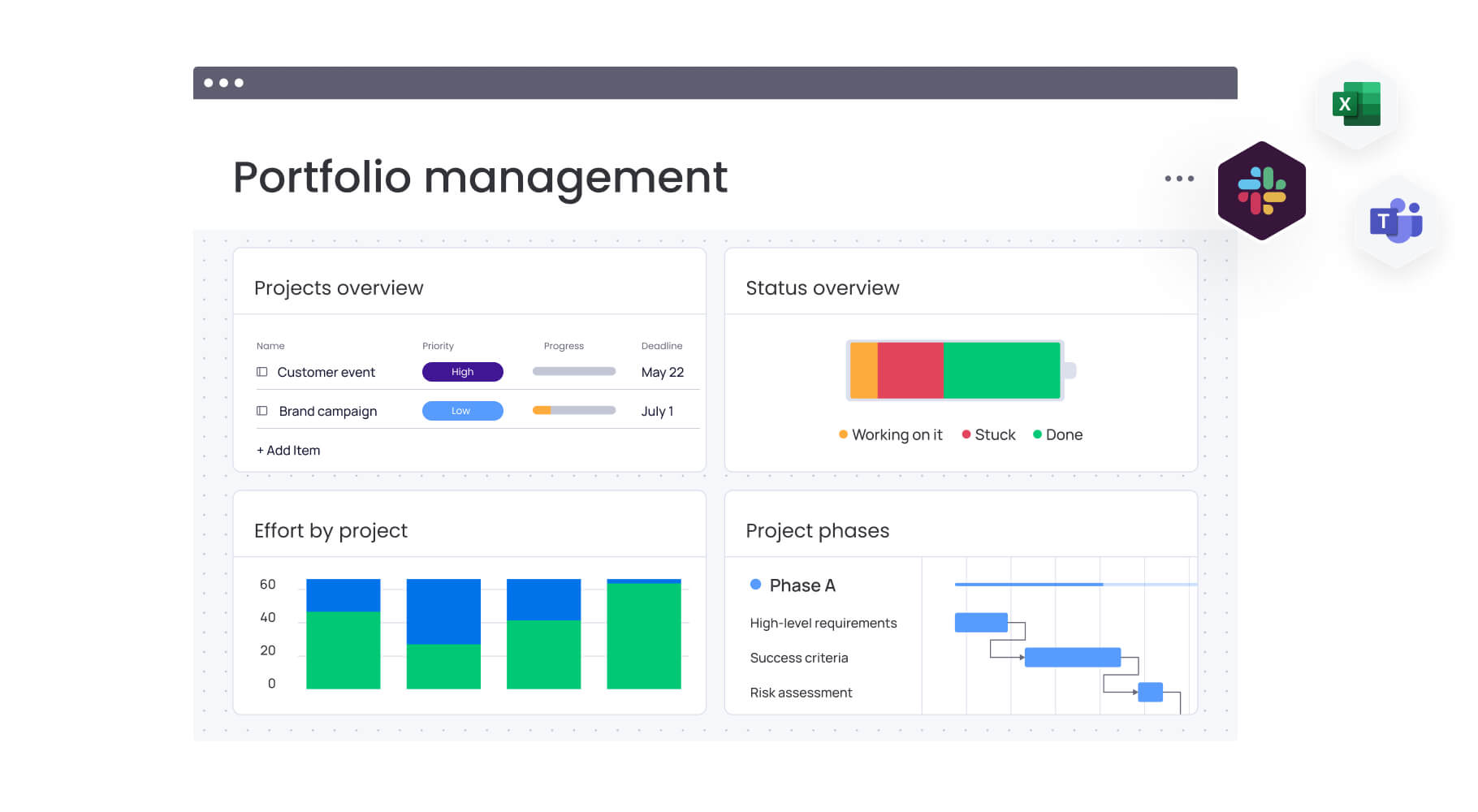
Technology turns scope management from manual paperwork into automated, intelligent processes. Organizations using data and AI get better control and visibility across portfolios. These modern approaches give you deeper insight into project health and performance trends.
AI-powered risk detection
Artificial intelligence analyzes project data to identify patterns humans might miss. This moves you from reacting to problems to predicting them. Teams using modern solutions like monday work management access Portfolio Risk Insights that scan project boards, flagging potential risks by severity without manual review.
AI enhances scope monitoring through:
- Pattern recognition: identify trends signaling drift.
- Risk prediction: use historical data to forecast challenges.
- Resource optimization: suggest allocation adjustments.
- Timeline analysis: assess schedule impact automatically.
- Sentiment monitoring: detect misalignment in communications.
Portfolio-wide scope analytics
Organizations managing multiple concurrent projects need scope analysis across the entire portfolio. This provides executives with strategic insights into performance.
Portfolio analytics deliver critical insights:
- Change trend identification: spot patterns across projects.
- Resource impact analysis: see organizational effects of scope changes.
- Risk correlation: identify common risks across initiatives.
- Best practice identification: highlight successful management strategies.
- Predictive modeling: use historical data for future planning.
Automated deviation alerts
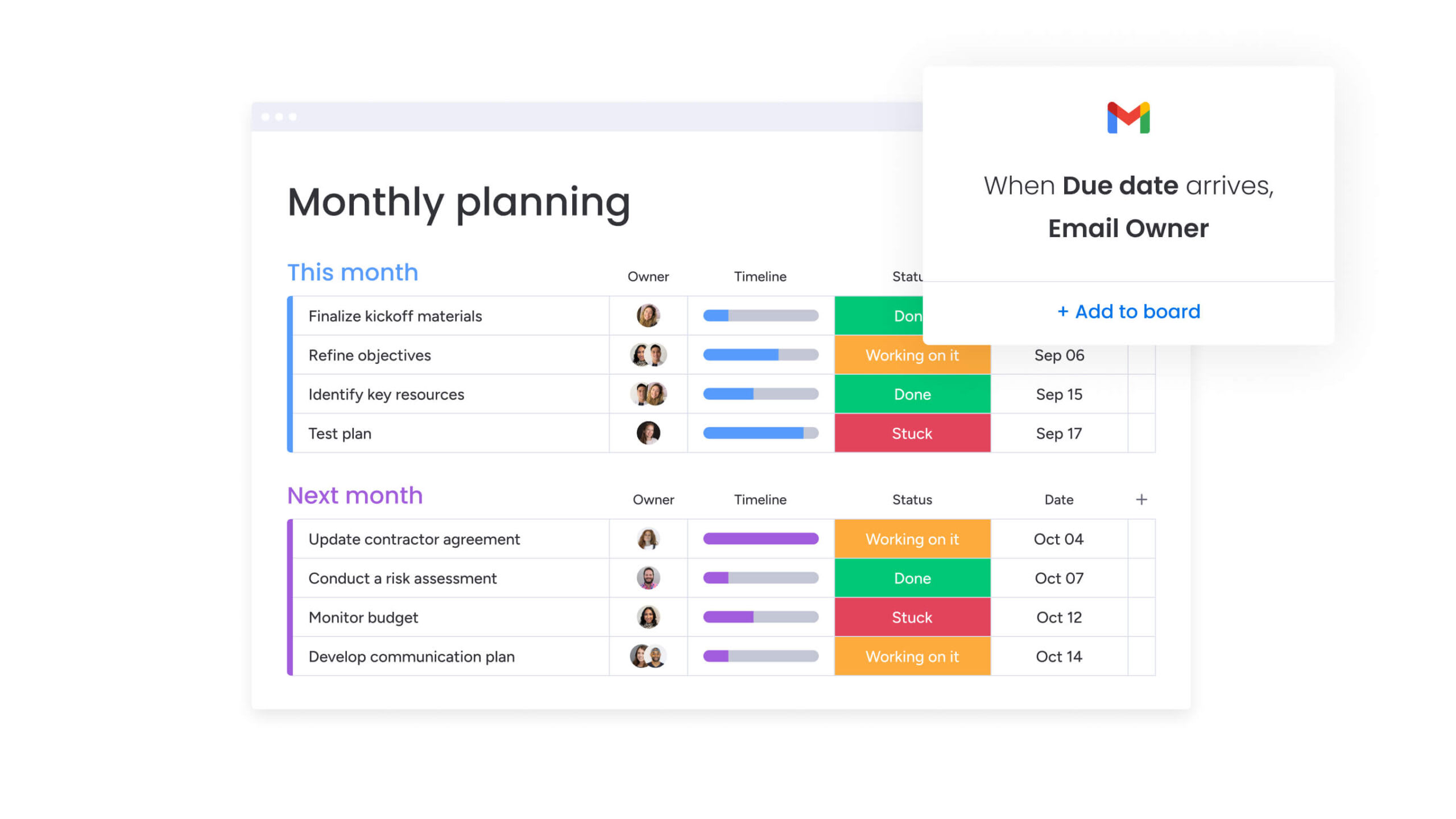
Automated monitoring tracks baseline adherence in real time, alerting managers to issues immediately. With platforms like monday work management, teams receive instant updates as risks emerge, with the platform generating summaries and linking relevant items for quick action.
Automation improves response through:
- Work package tracking: monitor progress against WBS.
- Resource consumption alerts: flag effort variances.
- Timeline deviation notices: identify schedule drift.
- Change request monitoring: highlight unusual request volumes.
- Engagement tracking: alert on stakeholder participation gaps.

“monday.com has been a life-changer. It gives us transparency, accountability, and a centralized place to manage projects across the globe".
Kendra Seier | Project Manager
“monday.com is the link that holds our business together — connecting our support office and stores with the visibility to move fast, stay consistent, and understand the impact on revenue.”
Duncan McHugh | Chief Operations OfficerScope baseline templates and resources
Good scope management needs the right structure. Templates keep things consistent and complete, while digital platforms connect everything you need for execution. Standardized approaches speed up project setup and help you avoid missing critical pieces.
Essential template elements
Good scope baseline templates make sure you don’t miss anything. Consequently, no matter the format, some elements are non-negotiable.
Therefore, your templates should include these components:
- Scope statement template: project overview, deliverables, acceptance criteria, exclusions, assumptions, constraints, and approval signatures.
- WBS structure template: hierarchical format, numbering system, deliverable descriptions, consistent decomposition, and appropriate sizing.
- WBS dictionary template: unique identifiers, detailed descriptions, deliverables, acceptance criteria, resource requirements, duration estimates, dependencies, and risk factors.
Digital documentation advantages
Digital platforms beat static documents in several ways. Teams using monday work management collaborate in real time on scope documentation through Workdocs, with live boards, dashboards, and videos embedded directly into documents.
Digital benefits include:
- Real-time collaboration: multiple users edit simultaneously with version control.
- Automated updates: changes flow through connected systems instantly.
- Enhanced accessibility: access from any device with search functionality.
- Visual formatting: interactive elements improve comprehension.
Integration strategies
Connecting scope documentation with your other project tools prevents silos and keeps everything relevant. However, good integration takes careful planning.
Consider these integration approaches:
- Platform selection: choose systems with robust scope capabilities and integration options.
- Data flow design: connect scope to schedules, resources, budgets, and risks automatically.
- Single source strategy: maintain one authoritative version accessible to all stakeholders.
Elevate your scope management approach
Scope baselines turn project chaos into controlled execution. They give teams the structure to deliver consistently while staying flexible when business needs change. Organizations that master baseline management fail less, control scope better, and build stronger stakeholder confidence.
The key is treating baselines as living documents that guide decisions while empowering teams to innovate within clear boundaries. Done right, they become the foundation for predictable project success and organizational growth.
With monday work management, you can move scope baseline management beyond static documents and into dynamic, visual workflows. It connects scope definition directly to execution, providing teams with real-time visibility, AI-powered insights, and collaborative control mechanisms that make scope management both powerful and practical.
Frequently asked questions
What is the difference between a scope baseline and a scope statement?
A scope statement describes what your project will deliver and its boundaries, it's a single document outlining objectives, deliverables, and constraints. A scope baseline is the complete, approved package that includes three elements: the scope statement, WBS, and WBS dictionary. Think of the scope statement as one piece of the puzzle, while the baseline is your full control mechanism for execution.
Can a scope baseline be changed after approval?
Yes, but only through formal change control. Every change requires impact analysis on schedule, budget, and resources. Stakeholders review and approve modifications in writing before you update the baseline. Once approved, you update all three components (scope statement, WBS, and dictionary) creating a new baseline version.
Who is responsible for creating the scope baseline?
Project managers lead the creation, but it's a team effort. The PM gathers requirements and coordinates reviews. Your project team provides technical input on work breakdown and estimates. Stakeholders validate deliverables and approve the baseline. Subject matter experts contribute specialized knowledge. This collaboration ensures the baseline reflects reality and creates buy-in across everyone using it.
How often should a scope baseline be reviewed?
Review your baseline at trigger points, not on a fixed schedule. Conduct reviews when change requests are approved, at major milestones, and during phase transitions. For longer projects, quarterly reviews help catch drift early. Agile and hybrid projects review baselines at the end of each sprint or release cycle.
What happens if a project does not have a scope baseline?
Projects without baselines lack control, leading to constant scope creep and unclear deliverables. You can't measure progress objectively or evaluate change requests properly. Teams work from different assumptions, causing disputes and inefficiencies. The result? Missed deadlines, budget overruns, and frustrated stakeholders.
Is a scope baseline necessary for Agile projects?
Yes, but Agile teams use them differently. You establish high-level boundaries for the overall product while keeping sprint-level flexibility. Baseline your epic-level scope for strategic direction, then refine details iteratively each sprint. This rolling wave approach gives you control: clear boundaries, change management, progress tracking, while maintaining the flexibility agile teams need.

 Get started