

You’re three weeks into a critical project when someone asks for a status update. You pull together the usual suspects: fragmented spreadsheets, buried email threads, and perhaps a quick Slack poll. Twenty minutes later, you realize you are still not entirely sure if you’re actually on track or heading toward a deadline disaster.
Project monitoring fixes this by providing real-time visibility into how work is actually progressing. By tracking your project against the original plan, you can spot issues early and make smarter, data-backed calls. It’s an early warning system that turns messy updates into actionable next steps.
As this article explores, mastering oversight in 2026 requires shifting from reactive tracking to predictive intelligence. By establishing firm baselines and leveraging AI to flag risks early, you can transform monitoring into a strategic advantage. This ensures every activity drives business value, allowing your team to focus on delivery rather than manual documentation.
Key takeaways
- Shift from reactive tracking to predictive intelligence: Use AI monitoring provided by modern platforms like monday work management to catch risks early,before they blow a timeline or budget.
- Connect every project activity to business value: Track how daily work connects to your big goals so you can focus resources where they matter most.
- Build monitoring on four essential baselines: Set your schedule, cost, scope, and quality standards before work starts. Without them, you can’t measure real progress.
- Leverage automated insights: Use digital assistants to scan portfolios for bottlenecks and receive automated alerts.
- Create stakeholder-specific communication frameworks: Give executives high-level dashboards, project managers detailed metrics, and team members progress updates. Everyone sees what matters for their role.
What is project monitoring?
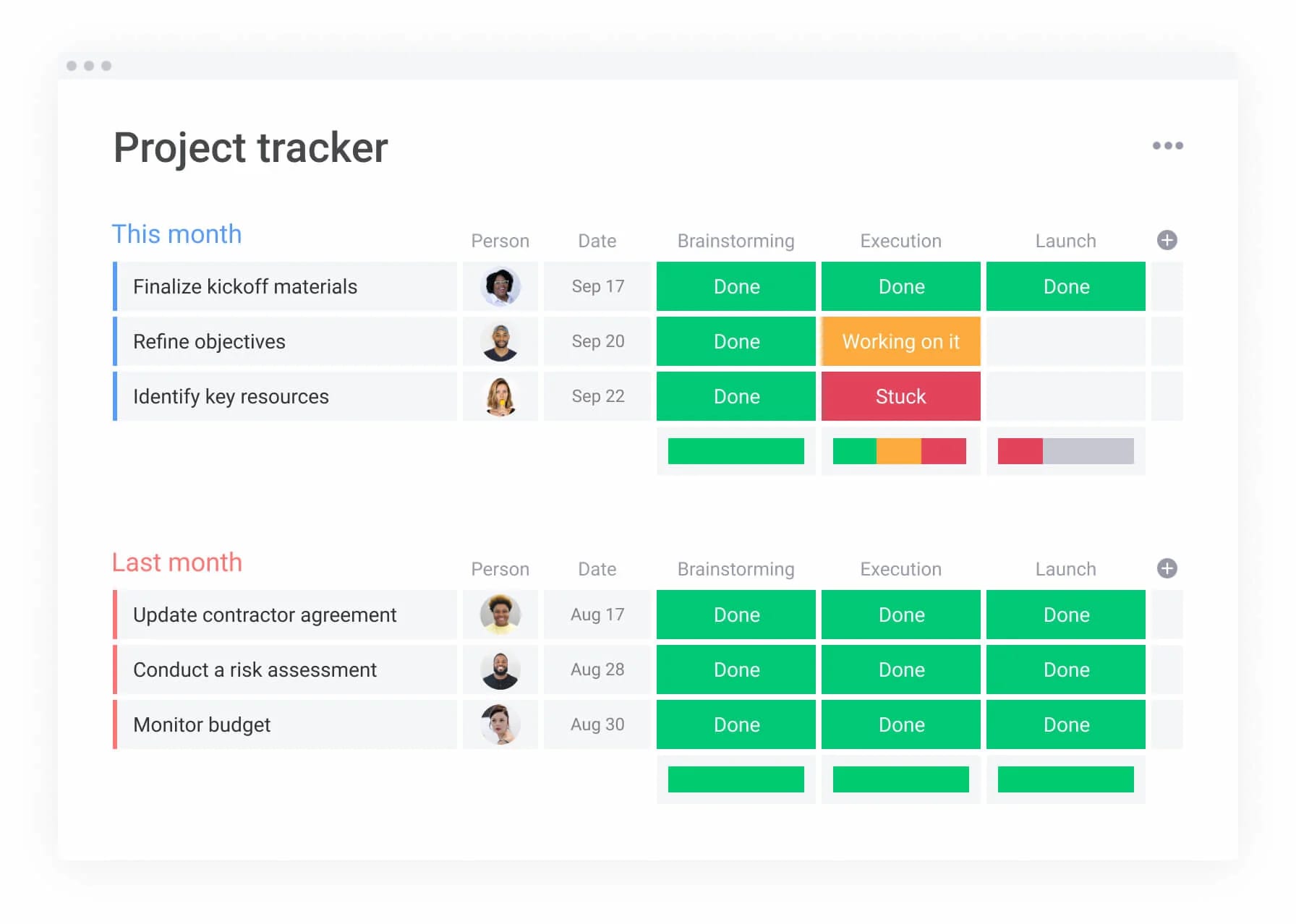
Project monitoring tracks progress, resources, and performance against baseline plans to keep delivery on track. It’s the ongoing check-in that keeps projects aligned with your goals and catches issues before they wreck a timeline or budget.
Just like GPS reroutes you around traffic, project monitoring shows you where you are and helps you adjust when problems pop up. This process transforms raw project data into actionable insights that drive smarter decisions.
It isn’t a single action but a continuous cycle of improvement. It comes down to three connected activities that transform raw data into strategic advantages, helping you stay ahead of challenges.
- Real-time data collection: Pull current info from multiple sources so you’re deciding based on facts, not guesses.
- Performance analysis: Turn raw data into patterns that show whether you’re on track or headed for trouble.
- Proactive response: Act on what you learn to stop small problems from becoming big ones.
Core definition and purpose
Project monitoring systematically tracks key variables — schedule, budget, scope, quality, and risks — against the original plan. It’s more than status updates. You get predictions, smarter resource use, and everyone stays aligned.
The goal is to keep projects on track and deliver the value you promised. When monitoring reveals a schedule slipping or budget trending over, teams intervene before small problems become expensive failures.
How project monitoring drives business outcomes
Good project monitoring boosts success rates, cuts costs, and speeds up delivery. Research shows that average cost overruns were approximately 80% and schedule delays about 50% across more than 300 billion-dollar megaprojects, demonstrating the execution risk that robust monitoring seeks to detect early.
By connecting daily work to strategic outcomes, robust monitoring delivers tangible business value. Teams with a mature monitoring process see significant benefits across the board.
- Risk mitigation: Early warnings catch issues while you still have time to fix them.
- Resource optimization: Real-time visibility enables smart allocation of talent and budget where they’ll have the most impact through resource optimization.
- Stakeholder confidence: Transparent reporting builds trust with executives and clients through accurate, timely updates and effective stakeholder communication.
- Strategic alignment: Continuous monitoring verifies that projects stay connected to business goals even as priorities shift.
The evolution from reactive tracking to proactive intelligence
Old-school project tracking meant pulling together weekly reports and finding out about problems too late. Project managers would gather updates manually, often learning about issues too late to prevent delays or budget overruns.
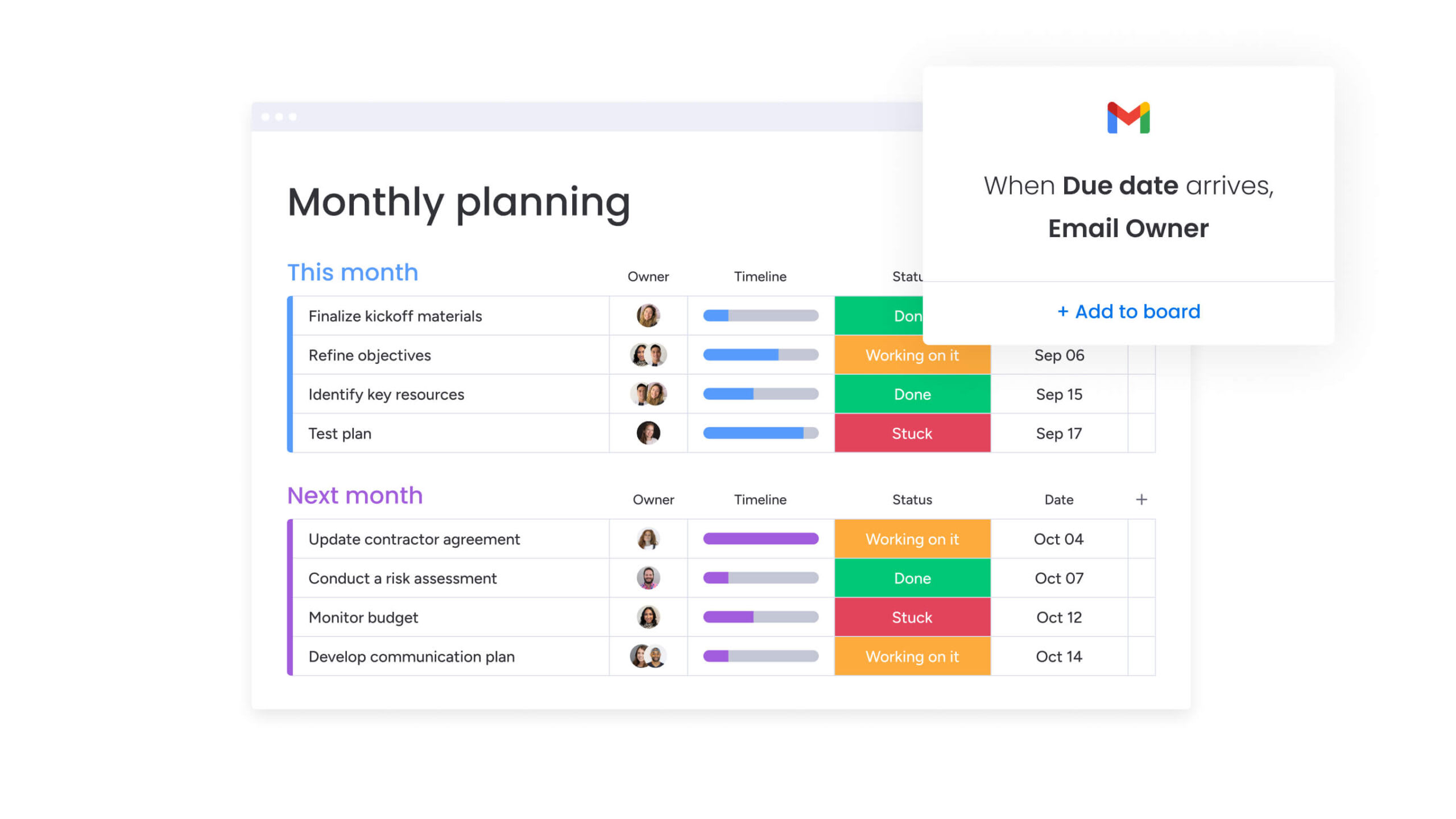
Modern monitoring flips this completely, as AI-powered platforms now identify complex patterns and predict risks that human analysis might miss. By using a Work OS, teams can also forecast outcomes and receive optimization suggestions in real time. As a result, monitoring becomes less about reporting and more about preventing problems.
This process transforms raw project data into actionable insights that drive smarter decisions.
Why does project monitoring transform business performance?
Project monitoring measurably improves project success, risk management, and competitive edge. Decision-makers see value in higher delivery rates, tighter cost control, and faster organizational response. Know these benefits and you’ll invest smarter in monitoring while building stronger project skills.
Connect every project to strategic value
Monitoring connects individual tasks directly to bigger business goals. This helps you prioritize resources and make sure every project drives your strategy forward.
For instance, when monitoring shows a project’s off track with priorities, leaders can shift resources to what matters more. You avoid wasting time on low-impact work and stay focused on what gets results.
Reduce risk through early detection
In addition to strategic alignment, strong monitoring protects your budget and operations by catching warning signs early. Recent government assessments show that even well-managed portfolios can experience significant variances, with NASA’s major projects reporting overruns totaling more than $500 million in a single year.
Catch problems early and you can make smaller, cheaper fixes that protect your timeline and budget.
| Risk category | Key indicators | Business impact |
|---|---|---|
| Budget variance | Spending trends, cost-to-date vs. baseline | Prevents overruns while time remains to adjust |
| Schedule compression | Velocity decline, milestone delays | Avoids quality compromises from rushed delivery |
| Resource conflicts | Allocation overlap, capacity constraints | Prevents bottlenecks affecting multiple projects |
| Scope creep | Deliverable changes, uncontrolled additions | Protects budget and timeline adherence |
Enable faster data-driven decisions
Real-time data speeds up decisions by giving executives and project managers current, accurate info. Organizations that treat the integrated master schedule as a live, monitored operational backbone report timeline reductions of 10–15%. Teams with real-time insights beat competitors stuck using old reports.
Faster decisions mean quicker market moves, less waste, and more productive teams. It means, leaders can fix blockers and jump on opportunities without waiting for the next report.
Monitoring connects individual tasks directly to bigger business goals. This helps you prioritize resources and make sure every project drives your strategy forward.
Project monitoring vs control vs evaluation
These terms get mixed up, but monitoring, control, and evaluation do different things. Know the difference and you’ll use each one when it matters most.
| Aspect | Project monitoring | Project control | Project evaluation |
|---|---|---|---|
| Timing | Continuous, real-time | Triggered by monitoring alerts | Periodic milestones/completion |
| Purpose | Track performance against baselines | Correct deviations and issues | Assess overall success and lessons |
| Frequency | Daily/weekly | As needed based on issues | Monthly/quarterly/post-project |
| Key question | "How are you doing?" | "What should you do?" | "What did you learn?" |
| Primary output | Status reports and dashboards | Corrective action plans | Performance assessments |
Understanding project monitoring
At its core, project monitoring is the continuous process of tracking performance against your baseline plan. This activity occurs throughout the entire project lifecycle, focusing on data collection and status assessment to answer the fundamental question: “How are you doing right now?”
How project control differs
While monitoring observes, project control acts on the insights discovered. When monitoring identifies a potential issue, control mechanisms are triggered to fix it, whether by adjusting schedules, reallocating resources, or refining the scope to get the project back on track. In essence, if monitoring is the radar, control is the steering.
Where project evaluation fits
In contrast to ongoing tracking, evaluation assesses performance at specific milestones or once the project concludes. This process is broader than monitoring, focusing on “big picture” success and lessons learned to improve the execution of future projects.
It moves the focus from immediate status to long-term organizational growth.
Making all three work together
Together, these elements function as a unified system: monitoring provides the data, control resolves the immediate issues, and evaluation extracts the strategic intelligence needed for the next initiative.
By integrating all three, the highest-performing teams ensure they are not just finishing projects, but constantly improving how they deliver value.
5 core components of effective project monitoring
Effective monitoring needs connected parts working together to give you full project visibility. These five elements create the foundation for oversight, helping teams capture the right data and turn it into insights that drive success.
1. Performance baselines and success metrics
Baselines are like a reference point for measuring project performance. Without documented plans, you can’t track progress or spot when things go off course.
Every project needs four baseline categories established before work begins:
- Schedule baseline: Planned start and finish dates set your time benchmarks.
- Cost baseline: Your approved budget across phases is the financial baseline for tracking changes.
- Scope baseline: Documented deliverables and boundaries stop scope creep.
- Quality baseline: Acceptance criteria and performance standards keep deliverables on target.
2. Real-time data collection systems
Reliable monitoring needs systems that gather project data automatically and continuously. Manual collection leads to errors and delays that hurt performance.
Teams using a unified work platform track progress, resource use, and finances through dashboards that update in real time. No more gap between what’s happening and what gets reported.
3. Automated alert and response mechanisms
Smart alerts tell the difference between normal changes and real problems that need attention. They make sure the right people see critical issues right away.
Effective alert systems include:
- Threshold alerts: Get notified when metrics cross set limits like budget caps.
- Trend alerts: Spot worrying patterns before they turn critical.
- Dependency alerts: Get flagged when issues might affect other projects or teams.
- Stakeholder alerts: People get alerts based on their role.
4. Stakeholder communication frameworks
Different stakeholders need different monitoring info. Communication frameworks give everyone the right data in the right format.
Key stakeholder groups require distinct information:
- Executives: High-level dashboards that show portfolio health, not operational details.
- Project managers: Detailed metrics and resource views for daily management.
- Team members: Progress updates and upcoming dependencies to stay aligned.
- Clients: Milestone progress and deliverable status for transparency.
5. Continuous improvement feedback loops
Your monitoring system isn’t static — it should evolve as your team learns what works and what doesn’t. Schedule regular retrospectives to identify blind spots in a current setup, then use stakeholder feedback to refine dashboards, adjust alert thresholds, and improve reporting cadences.
This continuous refinement ensures your monitoring stays relevant as project complexity and organizational needs shift over time.
How AI changes project monitoring
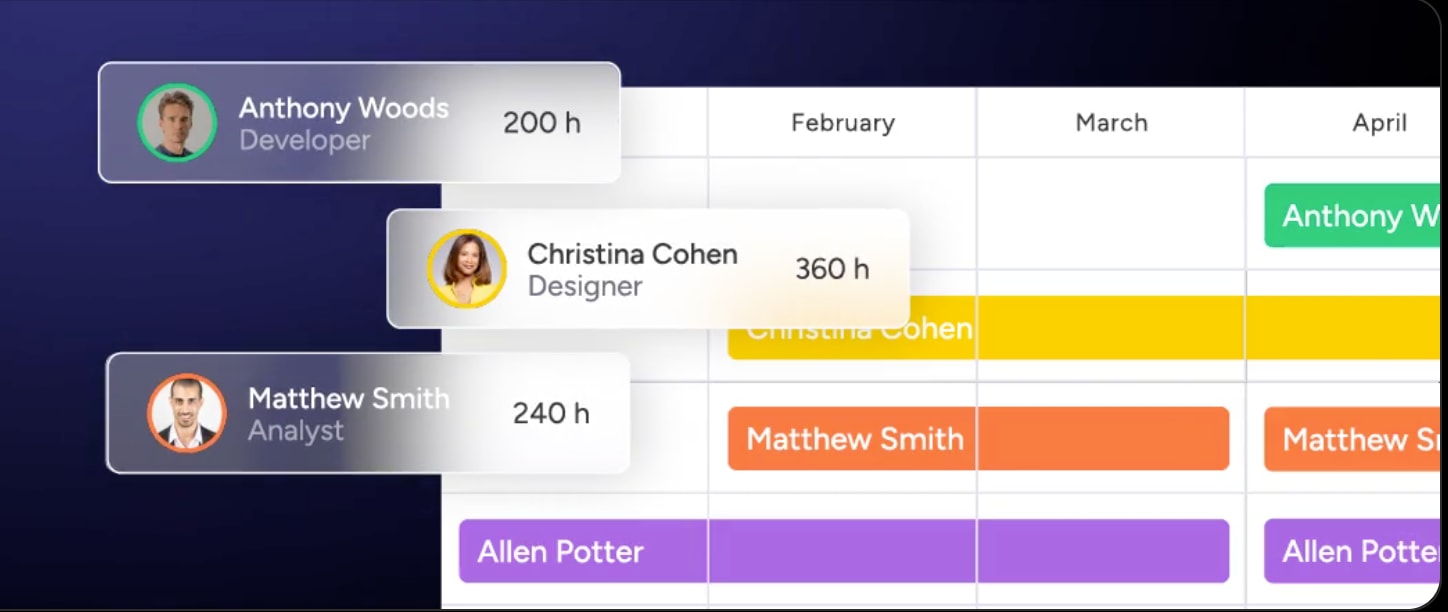
AI shifts monitoring from reacting to problems to predicting them. It automates analysis and forecasts outcomes so teams can prevent problems instead of just reporting them. This fundamentally changes how teams handle project oversight and risk.
Predictive analytics for risk prevention
AI analyzes past data and current trends to predict issues before they happen. This shifts monitoring from problem-solving to problem prevention.
Teams leveraging AI-powered risk insights can scan project boards to flag potential risks by severity. This allows spotting critical issues at a glance without manually reviewing data.
Pattern recognition across portfolios
It also identifies patterns and correlations across multiple projects that manual analysis would miss. This portfolio-level intelligence enables superior resource allocation and risk management by revealing:
- Resource bottlenecks: Teams or skills that consistently become constraints.
- Success characteristics: Factors correlating with high performance.
- Risk indicators: Early warning signs that predict difficulties.
- Optimization opportunities: Areas where improvements yield highest impact.
Intelligent resource optimization
AI analyzes utilization across projects to recommend optimal allocation strategies. This goes beyond simple capacity planning to consider skills, availability, and strategic priorities.
The platform’s resource management capabilities let AI assign the right people to projects based on effort, level, availability, and skills — ensuring teams work at sustainable capacity while maximizing productivity.
Automated insights and recommendations
Furthermore, AI generates insights and recommendations from monitoring data automatically, reducing analytical burden on leadership. This enables faster decision-making through:
- Performance summaries: Key trends synthesized instantly.
- Risk assessments: Probability and impact analysis for identified threats.
- Optimization recommendations: Specific actions to improve performance.
- Stakeholder alerts: Customized notifications ensuring relevant updates reach the right people.
Optimize oversight with monday work management

monday work management unifies project monitoring across your organization by combining intuitive oversight, AI-powered intelligence, and native integration. By transforming monitoring from a passive tracking activity into a strategic driver, the platform helps organizations achieve clarity while reducing the complexity typically found in enterprise environments.
Visual monitoring across your portfolio
Comprehensive visual capabilities enable both portfolio oversight and project-specific tracking. Teams visualize data through 15+ board views including Kanban and Gantt charts, while customizable dashboards display real-time project health tailored to stakeholder needs.
AI-powered risk detection at scale
Built-in AI capabilities bring predictive intelligence to monitoring. The Project Analyzer Digital Worker monitors projects continuously, flagging bottlenecks and providing proactive insights to keep everything on track. Portfolio Risk Insights identifies risks across portfolios while pattern recognition surfaces optimization opportunities automatically.
Unified cross-department integration
Integrated monitoring eliminates silos and creates comprehensive visibility. With 200+ integrations connecting Microsoft Teams, Gmail, Slack, Jira, and Salesforce, monday work management creates unified visibility without switching tabs. Cross-functional workflows span departments while shared workspaces bring stakeholders together around single sources of truth.
From real-time insights to strategic action
Operational monitoring connects directly to strategic outcomes. Executives gain full visibility into decision-making data while teams connect every activity to strategic objectives. The platform enables business outcome tracking, resource optimization through AI recommendations, and performance analytics that connect to business objectives.

“monday.com has been a life-changer. It gives us transparency, accountability, and a centralized place to manage projects across the globe".
Kendra Seier | Project Manager
“monday.com is the link that holds our business together — connecting our support office and stores with the visibility to move fast, stay consistent, and understand the impact on revenue.”
Duncan McHugh | Chief Operations OfficerBuild monitoring that drives results
Effective project monitoring creates competitive advantages through improved delivery rates, reduced risks, and stronger stakeholder confidence. Organizations that invest in comprehensive monitoring capabilities see measurable improvements in project success and resource utilization.
The shift from manual tracking to AI-powered intelligence represents more than technological advancement — it’s a strategic transformation that enables teams to focus on value creation rather than data compilation. Teams using monday work management experience this transformation firsthand, moving from reactive problem-solving to proactive optimization.
Start building monitoring capabilities that scale with your organization’s growth and complexity. Focus on establishing strong baselines, implementing automated data collection, and creating stakeholder communication frameworks that keep everyone aligned around shared objectives.
Frequently asked questions
What is project monitoring and why is it important?
Project monitoring is the continuous process of tracking project variables against baselines to identify deviations early and enable proactive decision-making. It is important because it reduces risk, optimizes resources, and ensures projects deliver intended business value.
How do you monitor a project effectively?
Effective monitoring requires establishing clear baselines, implementing automated data collection, configuring real-time dashboards, setting intelligent alerts, and creating regular stakeholder communication rhythms that keep everyone aligned.
What is the difference between project monitoring and project control?
Project monitoring observes and collects data about performance continuously, while project control takes corrective actions when monitoring reveals deviations from the plan.
What metrics should you track during project monitoring?
Track schedule variance, budget consumption, resource utilization, quality indicators, risk status, and business value realization based on your project objectives and stakeholder needs.
How does AI improve project monitoring?
AI improves monitoring by predicting issues through historical analysis, identifying patterns across portfolios, automating routine analysis, and generating actionable recommendations for project managers.
What are the most common project monitoring mistakes?
Common mistakes include measuring activity instead of progress, relying on manual updates, working in departmental silos, and missing stakeholder signals — avoided through automation, integration, and outcome-focused metrics.

 Get started