


Projects rarely stall because people aren’t putting in the effort. They stall because progress isn’t clearly defined. Tasks get ticked off. Meetings happen. Files get shared. Yet the uncomfortable question still hangs in the air: are we actually closer to the outcome?
That’s where project milestones change the game. They mark the moments that genuinely move a project forward — a phase signed off, a release approved, a decision made that unlocks the next stage. Done well, milestones cut through task noise and make progress visible. They help teams stay aligned, give leaders confidence in the trajectory, and expose risks before they spiral.
This article takes a practical look at what milestones really are and how they differ from tasks and deliverables. It outlines the five essential milestone types every project should include, shares real examples across industries, and walks through how to define, schedule, and track them so they drive execution instead of just decorating a timeline.
Key takeaways
- Milestones mark significant achievements, not tasks: Unlike regular work items, milestones are zero-duration events that signal the completion of critical phases, approvals, or decision points.
- Effective milestones are specific, measurable, and time-bound: Each milestone should have clear criteria for success, a target date, and a meaningful impact on the project or business outcome.
- Five types of milestones cover the project lifecycle: Initiation, stakeholder approval, execution, delivery, and benefits review. Milestones ensure visibility and alignment from start to finish.
- Milestones help manage risks and dependencies: By segmenting projects into checkpoints, teams can identify delays, resource conflicts, and critical dependencies before they escalate into larger problems.
- Platforms like monday work management enhance milestone tracking: Visual timelines, AI insights, and automated alerts transform milestones into actionable indicators of project health and strategic progress.
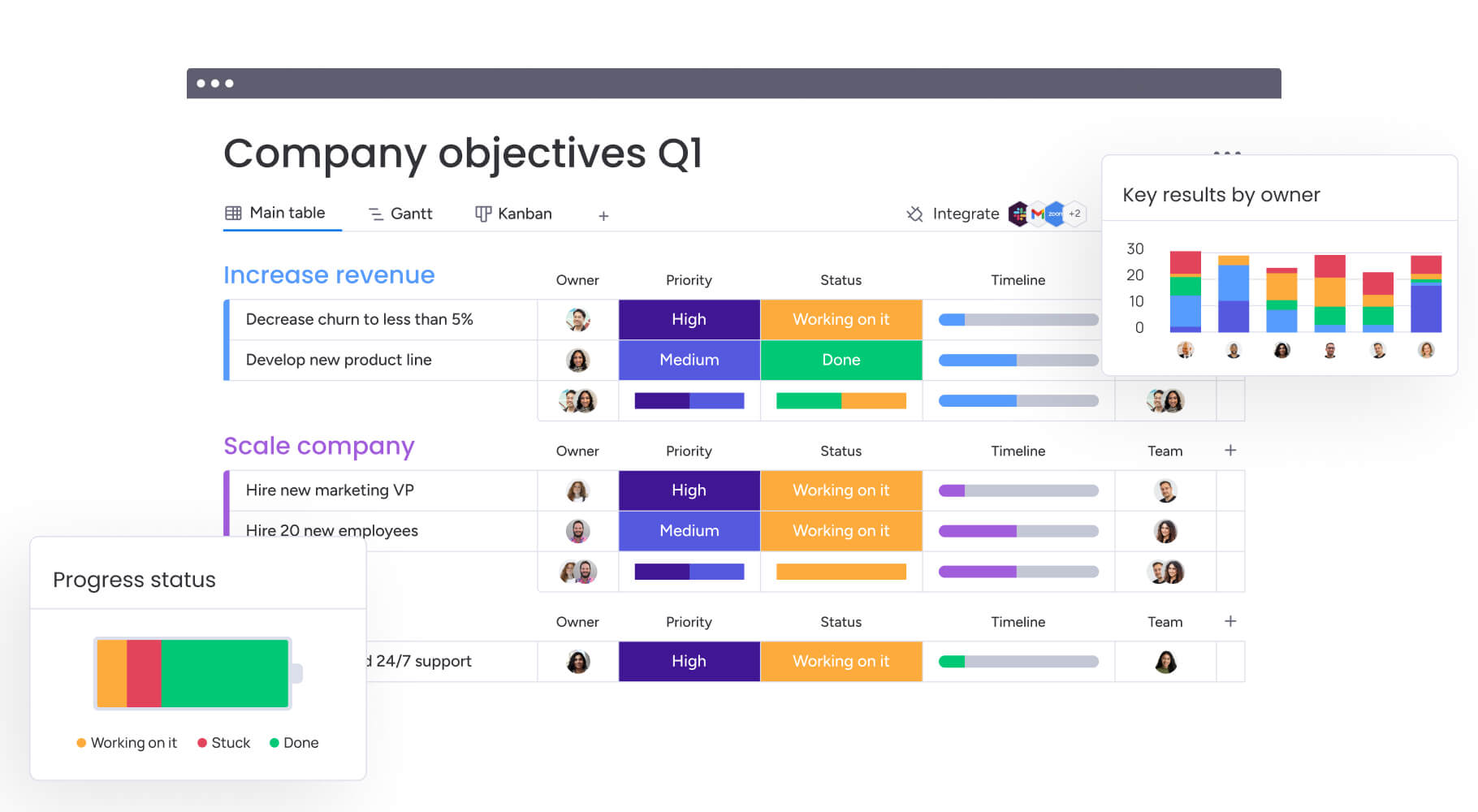
What are project milestones in project management?
A milestone is a specific moment in a project that signals tangible progress toward completion. Unlike tasks, which require effort and have a set duration, milestones are zero-duration events representing major achievements, decision points, or the conclusion of critical phases.
In complex, cross-functional environments, milestones provide a shared language for progress. For example, a developer might focus on code commits and a marketer focuses on campaign assets, the milestone “Beta Launch Ready” unifies these distinct workflows under a single, measurable objective.
Modern platforms like monday work management can even elevate milestones beyond task-level noise, offering executives clear portfolio visibility while teams focus on execution.
The strategic value of milestones for business outcomes
Milestones turn vague timelines into real business data you can actually act on. By forcing teams to define what ‘done’ looks like at various intervals, organizations shift from activity-based management to outcome-based execution.
They also force you to pause and check your direction before small problems turn into expensive disasters. For perspective, a six-month launch delay on a $2 billion product investment can erode more than $750 million in NPV, demonstrating why holding to time-bound milestones materially protects value.
Here’s why milestones matter:
- Strategic alignment: Milestones act as forcing functions that require teams to validate that current work still supports the original business case, preventing scope creep and strategic drift.
- Proactive risk management: By breaking long projects into smaller segments, milestones expose delays and dependencies early, allowing leadership to intervene while recovery is still possible.
- Resource optimization: Milestone schedules allow functional managers to predict when specific skills will be needed or released, smoothing resource utilization peaks and valleys across the organization.
- Executive visibility: Milestones let leadership check project health without digging into every task, so they can make faster, smarter decisions.
Essential characteristics of effective milestones
Effective milestones differ from regular tasks. They are binary: achieved or not achieved, with no gray areas in between. They also measure value delivered, not just work completed.
Key traits include:
- Specific and measurable: Define precise criteria to know when a milestone is achieved. For example, “Performance audit completed and approved” is a milestone, while “Improve performance” is a vague goal.
- Time-bound: Assign a target date to every milestone to create accountability and identify scheduling issues.
- Significant impact: Milestones mark major progress points, such as phase completions or key decisions, not routine administrative duties.
- Stakeholder visibility: Milestones should matter to people outside your immediate team; they’re natural moments to update a wider audience.
Milestones turn vague timelines into real business data you can actually act on. By forcing teams to define what ‘done’ looks like at various intervals, organizations shift from activity-based management to outcome-based execution.
Milestones vs tasks and deliverables: understanding key differences
Blending milestones, tasks, and deliverables into one long list is how schedules lose meaning. When every item looks equally important, it becomes harder for teams to prioritize and nearly impossible for executives to see where real progress stands.
Clear separation matters. In fact, 95% of life sciences capital projects exceed their authorized cost and schedule, a reminder of how easily initiatives drift when governance checkpoints aren’t explicit. Milestones act as those checkpoints, making delays and decision bottlenecks visible before they spiral.
The table below clarifies how milestones differ from tasks and deliverables in purpose, duration, and stakeholder focus.
| Feature | Milestone | Task | Deliverable |
|---|---|---|---|
| Duration | Zero duration (a point in time) | Variable duration (hours, days, weeks) | N/A (it is a physical/digital asset) |
| Primary purpose | To track progress and align strategy | To execute work and create value | To provide evidence of work completion |
| Measurement | Binary (achieved/not achieved) | Progress % or hours spent | Quality/acceptance criteria |
| Example | "Website launch approved" | "Write code for homepage" | The live homepage URL |
| Stakeholder focus | High (executives and sponsors) | Low (project team) | Medium (client and users) |
Distinguishing milestones from deliverables
Deliverables are tangible outputs: a prototype, a marketing brief, a compliance report, a constructed foundation. They represent work completed.
Milestones, by contrast, mark the acceptance or approval of those outputs. A “Completed Risk Assessment” is a deliverable. “Risk Assessment Approved by Steering Committee” is the milestone. The difference is critical. Approval is what allows the project to move forward. Without it, the deliverable is simply unfinished work awaiting validation.
When tasks transform into milestone events
Most tasks should remain tasks. They involve effort and duration. However, a task crosses into milestone territory when its completion changes the state of the project.
If finishing a task unlocks funding, triggers payment, releases resources, or initiates a new phase, it functions as a milestone. “Draft architecture” is a task. “Architecture Sign-off” becomes a milestone because it authorizes development to begin and commits organizational resources.
Connecting project phases to milestone planning
Phases provide structure. Milestones mark the transitions between them. Whether following Waterfall or Agile, projects move through states: planning to execution, development to testing, build to launch.
Phase-gate milestones formalize these transitions. They act as decision points where leadership evaluates readiness and confirms whether to proceed. Instead of drifting from phase to phase, the project advances intentionally, with visibility and accountability built into the timeline.
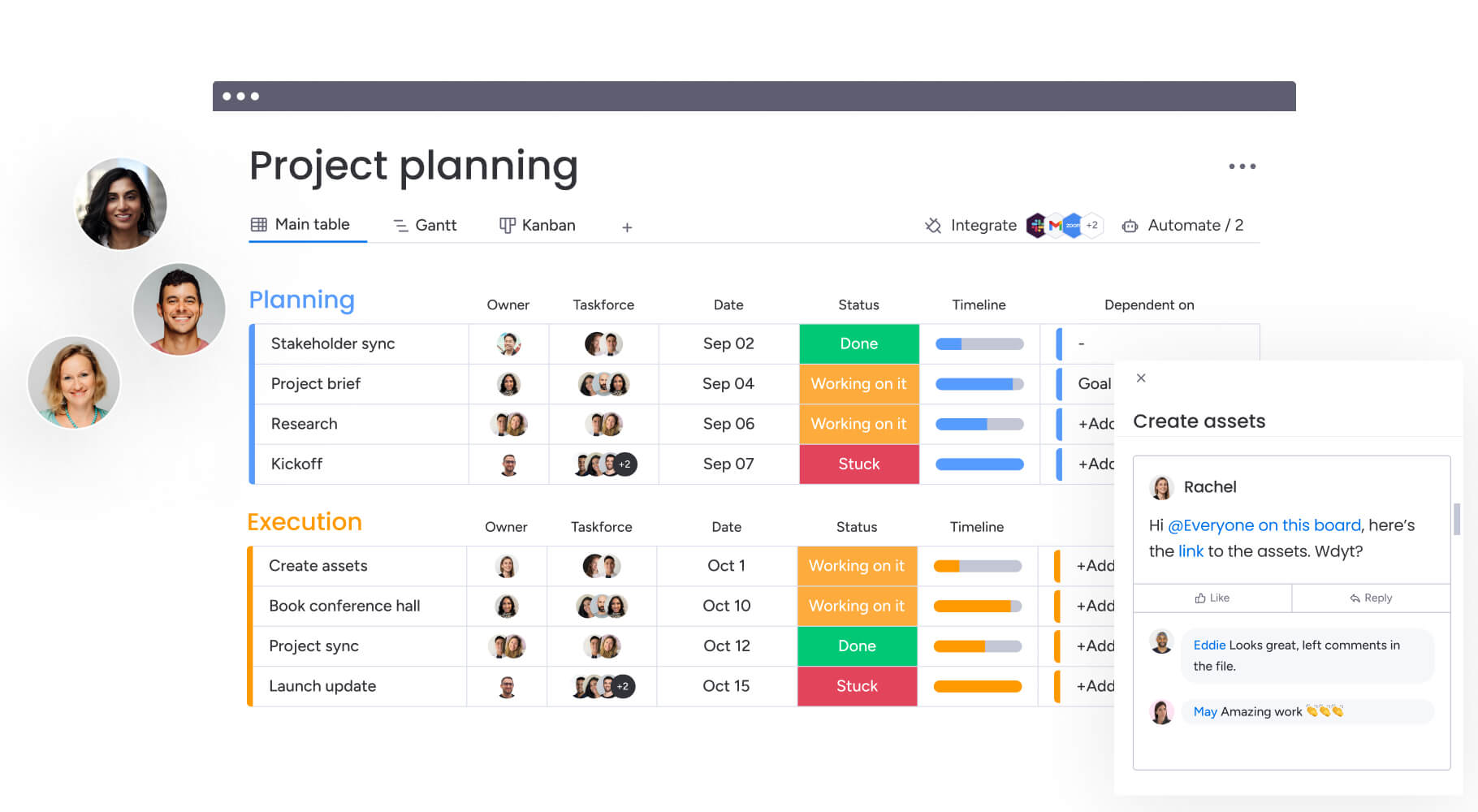
5 critical types of milestones every project needs
While milestone specifics vary by industry, successful projects generally include five categories to ensure alignment and momentum:
Project initiation milestones
Initiation milestones mark the formal authorization and setup of the project. These checkpoints ensure that the project starts with a solid foundation, governance structure, and aligned expectations.
Key initiation milestones include:
- Project charter approval: The official authorization that releases resources and budget.
- Core team assembly: The point at which all key roles are filled, and onboarding is complete.
- Kickoff meeting completion: The event confirming that stakeholders and the team are aligned on scope and goals.
Stakeholder approval milestones
These milestones represent external dependencies where progress halts pending a decision or validation from outside the immediate team. They are critical for managing expectations and preventing unauthorized work.
Common approval milestones include:
- Requirements sign-off: Agreement on exactly what will be built or delivered.
- Budget authorization: Approval of financial estimates or release of tranche funding.
- Vendor selection finalization: The point where external partners are contractually engaged.
Execution phase milestones
Execution milestones track the core work of the project, breaking down long production cycles into manageable, trackable segments. These keep momentum high and provide regular visibility into progress.
Critical execution milestones include:
- Prototype/beta completion: The first tangible version of the solution is ready for review.
- Integration testing success: Confirmation that different components work together as intended.
- Quality gate passage: Verification that the output meets defined quality standards before release.
Delivery and handoff milestones
These events mark the transition of the project’s output into operational use. They focus on the transfer of ownership and the readiness of the receiving environment.
Essential delivery milestones include:
- User acceptance testing (UAT) sign-off: Confirmation from end-users that the solution works for them.
- Go-live/launch event: The official deployment of the product or service.
- Operational handoff: Formal transfer of documentation and responsibility to the support team.
Benefits review milestones
Often overlooked, these post-project milestones measure whether the project achieved its intended business value. They connect the project output back to the original strategic business case.
Key benefits milestones include:
- Three-month performance review: Assessment of adoption rates or system stability post-launch.
- ROI assessment: Calculation of financial returns against the initial investment.
- Lessons learned workshop: Formal capture of knowledge to improve future project execution.

“monday.com has been a life-changer. It gives us transparency, accountability, and a centralized place to manage projects across the globe".
Kendra Seier | Project Manager
“monday.com is the link that holds our business together — connecting our support office and stores with the visibility to move fast, stay consistent, and understand the impact on revenue.”
Duncan McHugh | Chief Operations OfficerReal project milestone examples across industries and teams
Milestones look different depending on the functional area, but the underlying principle of marking significant progress remains the same. The following helpful examples demonstrate how milestones apply to diverse workflows across marketing, software development, construction, HR, finance, and operations.
Marketing campaign milestones
Marketing teams use milestones to track campaign progress from strategy through execution:
- Campaign strategy approval: The point where the creative concept, budget, and channel mix are formally approved by leadership.
- Creative asset finalization: All copy, design, and video assets are completed, reviewed, and ready for distribution.
- Campaign launch: The specific moment ads go live, and emails are deployed.
- Mid-campaign performance review: A scheduled checkpoint to analyze metrics and adjust spend or targeting.
Software development release milestones
Development teams structure releases around critical technical milestones:
- Feature code freeze: The deadline after which no new features can be added to the current release candidate.
- QA testing completion: Confirmation that all critical bugs have been identified and resolved.
- Staging environment deployment: The release is successfully pushed to a pre-production environment for final validation.
- Production go-live: The software is available to end-users.
Construction project phase milestones
Construction projects use physical completion milestones to track progress:
- Permit acquisition: Receipt of all necessary legal approvals to begin building.
- Foundation poured: Completion of the structural base, allowing vertical construction to start.
- Enclosure/”dried in”: The building is weather-tight, allowing interior work to proceed protected from elements.
- Certificate of occupancy: Regulatory approval that the building is safe for use.
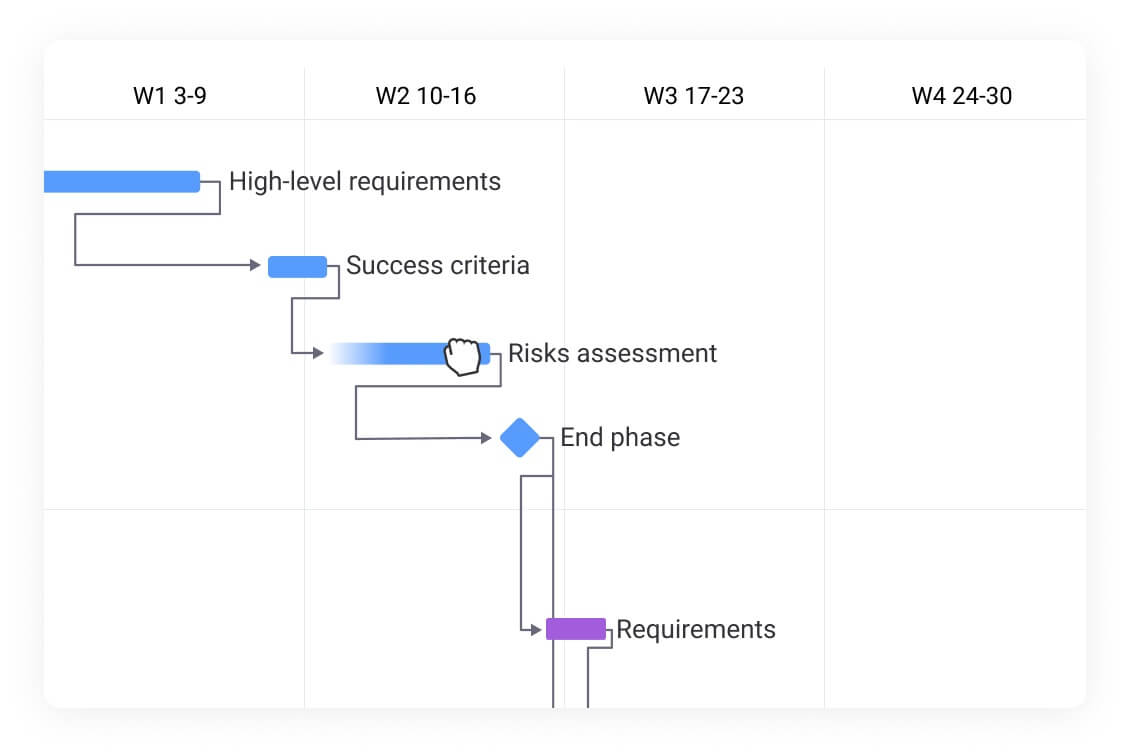
How to identify and define the right project milestones
Choosing milestones requires balancing granularity with visibility. Too many create administrative noise; too few leave risks hidden. Follow this structured five-step approach to ensure strategic placement.
Step 1: Align milestones with strategic business goals
Every milestone should map back to a broader organizational objective. If a milestone does not represent progress toward a strategic goal, such as revenue growth, customer satisfaction, or compliance, it may be unnecessary. Teams evaluate milestone candidates by asking if the achievement validates the business case.
Step 2: Map critical path dependencies
Milestones naturally occur at points of convergence where multiple streams of work meet. By analyzing the critical path, project managers identify the tasks that dictate the project’s duration. Points where these critical tasks conclude or hand off to other teams are prime candidates for milestones.
Step 3: Define measurable success criteria
A milestone is only effective if its achievement is indisputable. Next, teams must define the specific acceptance criteria for each milestone upfront. Instead of a milestone labeled “Testing,” use “Testing Complete with Zero Critical Defects.”
This precision prevents the “99% done” syndrome, where a milestone is marked complete while significant cleanup work remains.
Step 4: Identify stakeholder decision points
Milestones serve as the primary interface between the project team and external stakeholders. Points in the timeline that require executive approval, client review, or steering committee guidance should be designated as milestones. This ensures that the schedule accounts for the time required for these decisions.
Step 5: Balance milestone frequency with impact
Finally, get the rhythm right. The spacing of milestones shapes how a project feels. Too far apart, and momentum fades. Too close together, and they lose meaning.
On longer projects, aiming for a meaningful milestone every four to six weeks helps maintain visibility and engagement. But resist the urge to create filler checkpoints just to hit a cadence. Milestones should mark real progress. If they don’t represent something significant, they dilute the power of the ones that do
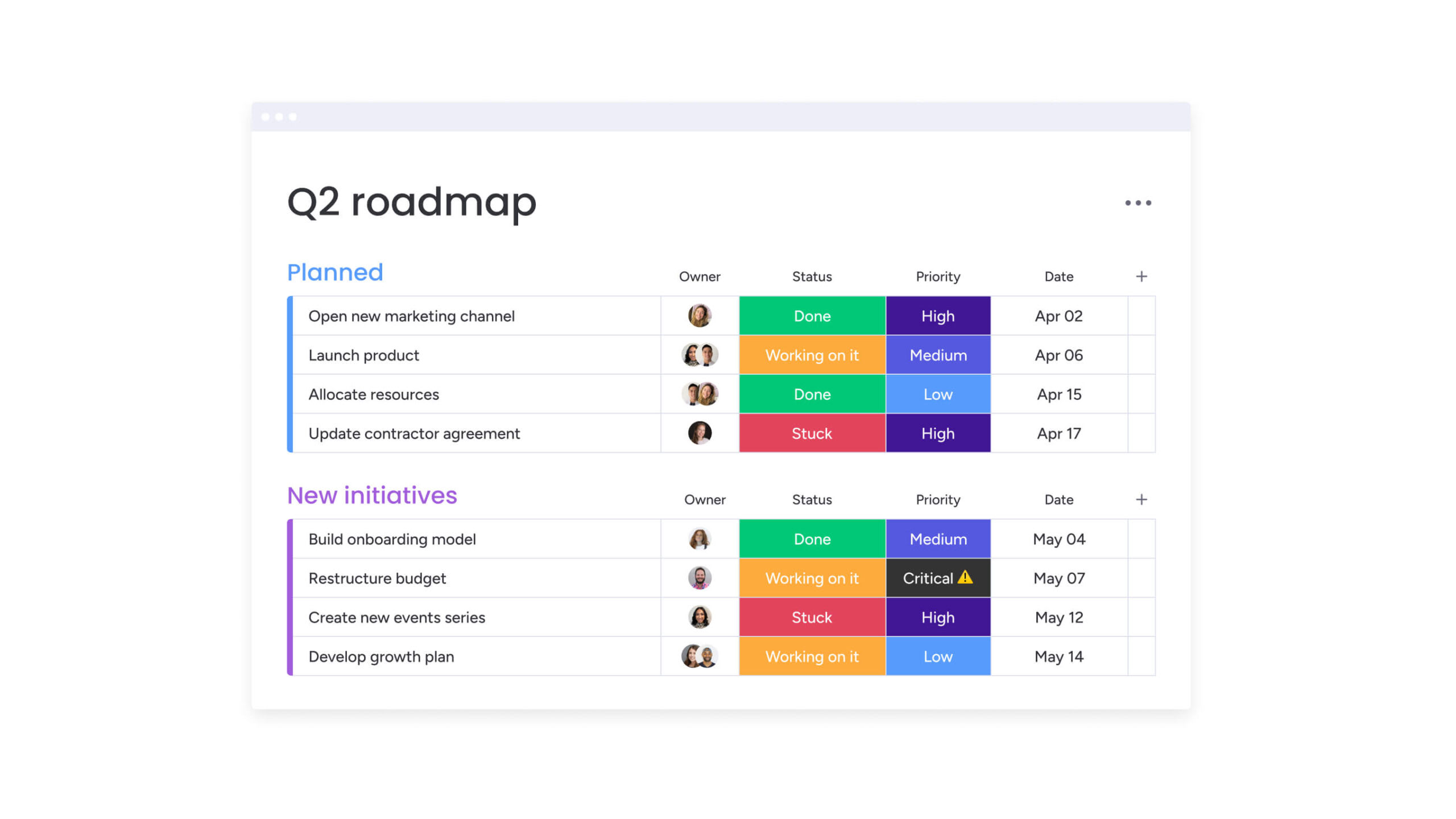
Creating your project milestone schedule and timeline
Milestones only become powerful when they’re anchored to time and sequence. On their own, they’re just important moments. Mapped onto a timeline, they become a structured path from kickoff to value delivery.
Keep in mind that a well-built milestone schedule makes dependencies visible, highlights critical transitions, and shows whether the plan is realistic before execution begins.
Building visual milestone roadmaps
Visual roadmaps translate complex project data into a narrative that stakeholders can understand at a glance. By plotting milestones on a timeline, teams highlight the sequence of value delivery.
Effective roadmaps distinguish milestones from standard tasks using different shapes or colors (often diamonds), making the critical path immediately obvious.
Setting achievable milestone target dates
Setting milestone dates requires a realistic assessment of effort, resource availability, and risk. Rather than using best-case scenarios, teams incorporate buffers for known risks and unknown variables. Backward scheduling, starting from the fixed deadline and working backward, helps identify if the desired timeline is feasible.
Managing cross-functional milestone dependencies
In complex organizations, one team’s milestone is often another team’s starting gun. Managing these cross-functional dependencies requires explicit linking of milestones across different project boards. When the design team moves the “Design Approved” milestone, the engineering team’s “Start Development” milestone must automatically reflect that shift.
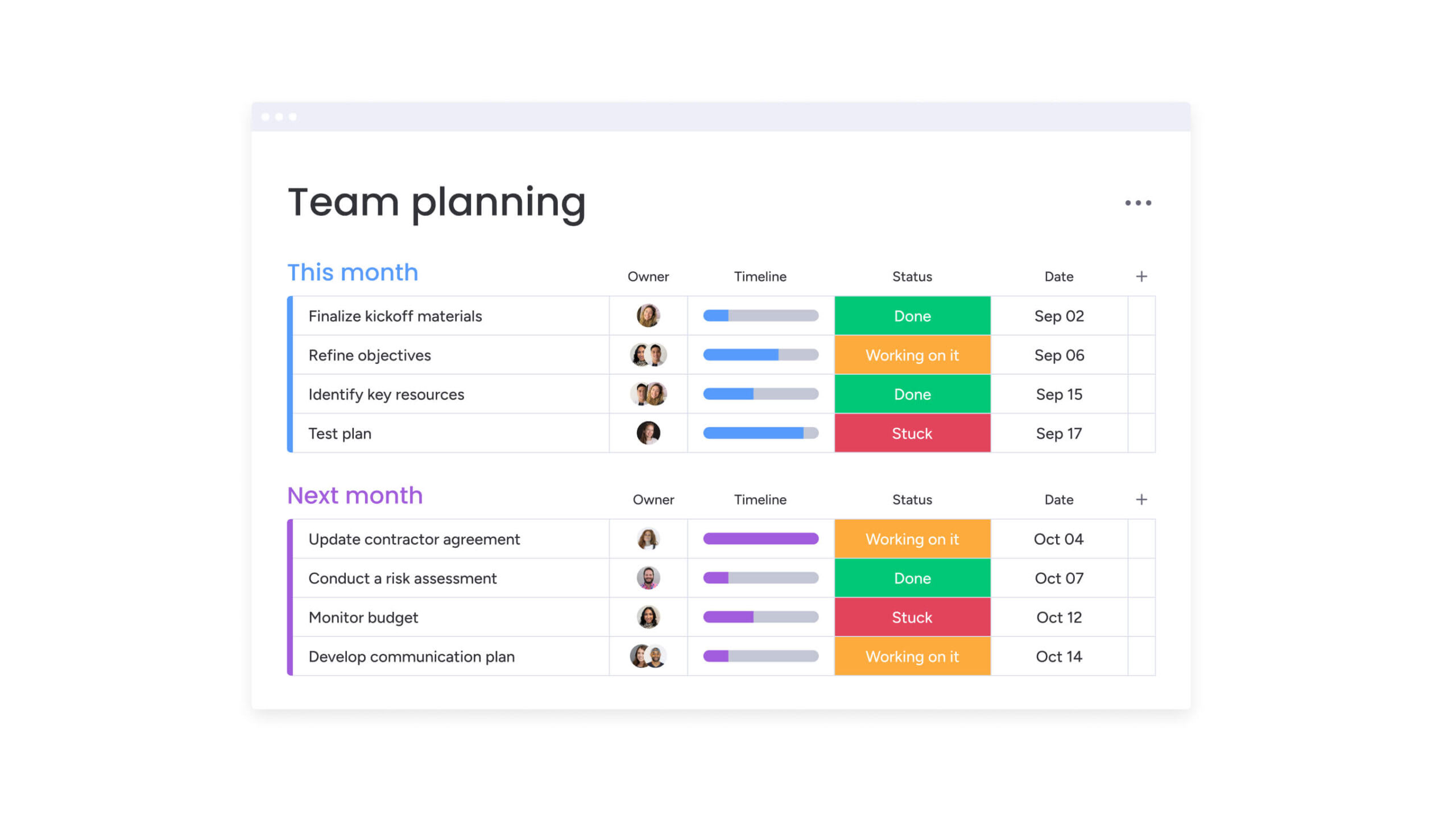
Tracking and monitoring milestones for project success
Planning milestones is a great first step but you need rigorous tracking to ensure they are actually met. Continuous monitoring transforms milestones from static plan elements into dynamic indicators of project health.
Here’s a list of important tracking features you need:
Real-time milestone progress dashboards
Dashboards provide a centralized view of milestone status across the project or portfolio. Effective dashboards use simple visual indicators to communicate status instantly:
- Red: At-risk milestones requiring immediate attention.
- Yellow: Delayed but recoverable milestones.
- Green: On-track milestones proceeding as planned.
These views aggregate data from underlying task lists, giving leadership a high-level summary of which key dates are slipping.
Automated milestone status updates and alerts
Automation replaces the need for manual status emails. When a task linked to a milestone is delayed, the system triggers an automatic notification to the project manager and relevant stakeholders. Conversely, when a milestone is achieved, automated alerts can notify the next team in the chain to begin their work.
Enterprise portfolio milestone visibility
For executives managing dozens of projects, portfolio-level visibility is essential. By rolling up milestones from individual project boards into a master portfolio view, leaders can see the alignment of major initiatives across the enterprise.
This perspective highlights resource bottlenecks where multiple projects have conflicting milestones, and allows for strategic reprioritization.
Dashboards provide a centralized view of milestone status across the project or portfolio. Effective dashboards use simple visual indicators to communicate status instantly.
Connecting project milestones to business benefits and value
Ultimately, milestones are a mechanism for value delivery. The most mature organizations use milestones to track not just project progress, but the realization of business benefits. This approach shifts the conversation from “Is the project on time?” to “Is the business capturing the intended value?”
Using milestones as benefits realization checkpoints
Milestones should be structured to validate value incrementally. Instead of waiting for the end of a project to measure success, teams place milestones at points where interim value is delivered. For a software rollout, a milestone might be “Pilot Team 50% Efficiency Gain,” validating the benefit hypothesis early.
Measuring ROI through strategic milestone achievement
Milestones provide the data points necessary to calculate ROI over time. By associating costs with specific phases and measuring them against the value delivered at key milestones, organizations can track the burn rate against value accrual. This financial visibility helps in validating the business case continuously.
Aligning milestone completion with value delivery
Smart project planning sequences milestones to front-load value. By prioritizing features or components that deliver the highest business impact, teams ensure that even if the project is cut short, significant value has already been captured. This “value-first” sequencing protects the organization’s investment and builds stakeholder confidence early.
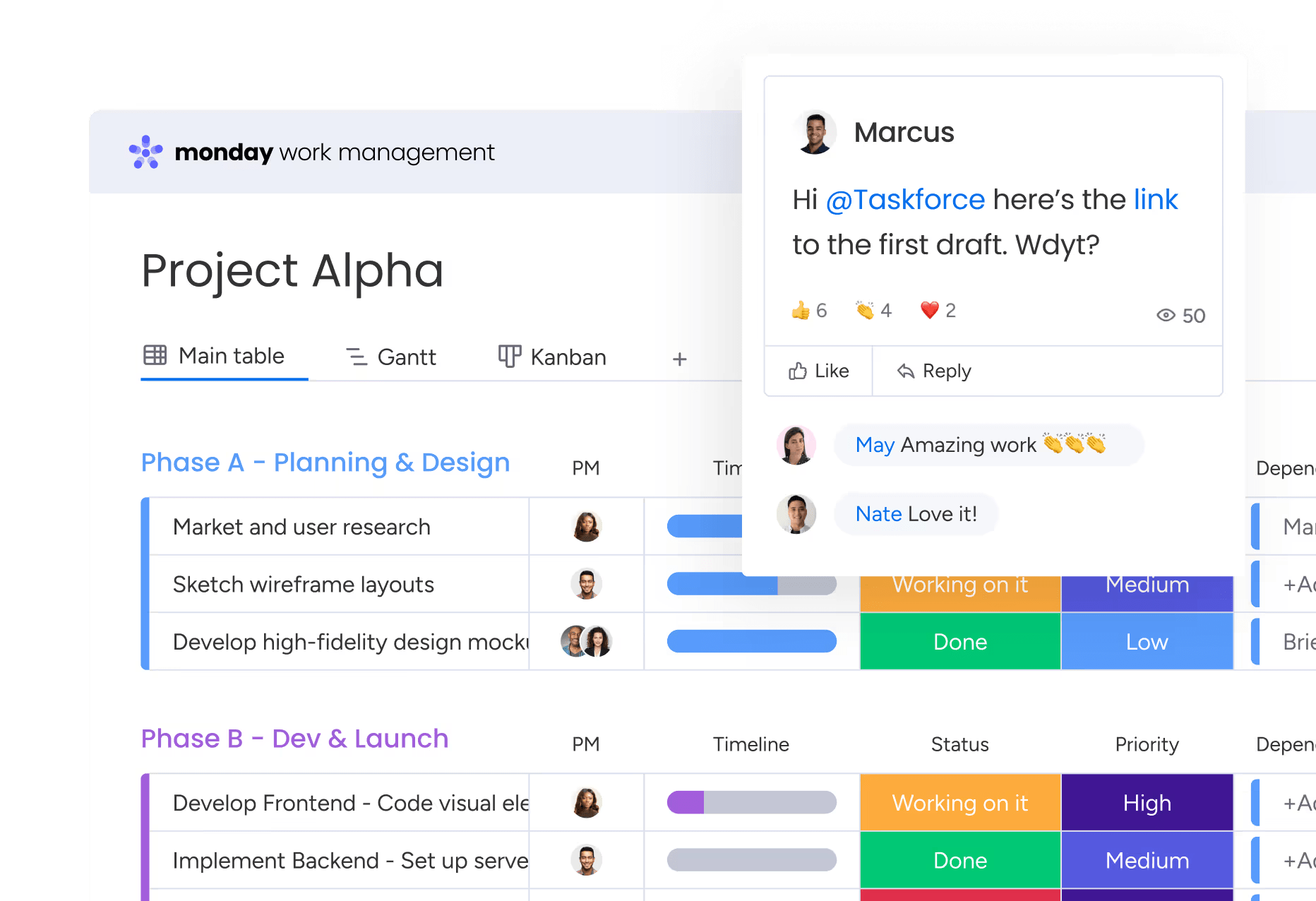
AI-powered milestone management for predictive project success
Milestone tracking used to be reactive. Teams marked dates on a plan, waited for updates, and responded when something slipped. AI changes that dynamic. Instead of simply reporting progress, intelligent systems analyze patterns, compare historical performance, and surface risks early, turning milestone management into a forward-looking discipline.
Automated milestone planning and optimization
AI can evaluate historical project data to recommend more realistic milestone timelines. If similar initiatives consistently required six months to reach a key checkpoint, setting a three-month target immediately raises a flag. This shift from optimistic estimation to data-backed planning strengthens credibility and reduces avoidable rework.
Within platforms like monday work management, AI Blocks help structure unorganized project data, categorize historical outcomes, and suggest smarter milestone placement based on previous performance patterns.
Predictive risk analysis for critical milestones
AI becomes even more powerful when applied to risk detection. For example, on monday work management the Project Analyzer Digital Worker continuously scans live project boards to detect early warning signals that often precede missed milestones.
These signals can include:
- High volumes of task changes, indicating scope instability.
- Communication slowdowns, suggesting alignment breakdowns.
- Resource overallocation, pointing to burnout risk or delivery bottlenecks.
By identifying these patterns weeks before a milestone is due, the system gives project managers time to intervene, rebalance resources, or adjust timelines before delays become public setbacks.
AI-driven milestone recommendations and insights
Beyond detection, AI helps translate complexity into clarity. It can summarize milestone progress across threads, documents, and updates, highlighting blockers, achievements, and next steps for executive reporting.
This reduces manual status compilation and ensures leadership sees a concise, accurate snapshot of milestone health. Instead of chasing updates, teams focus on resolving issues and moving projects forward
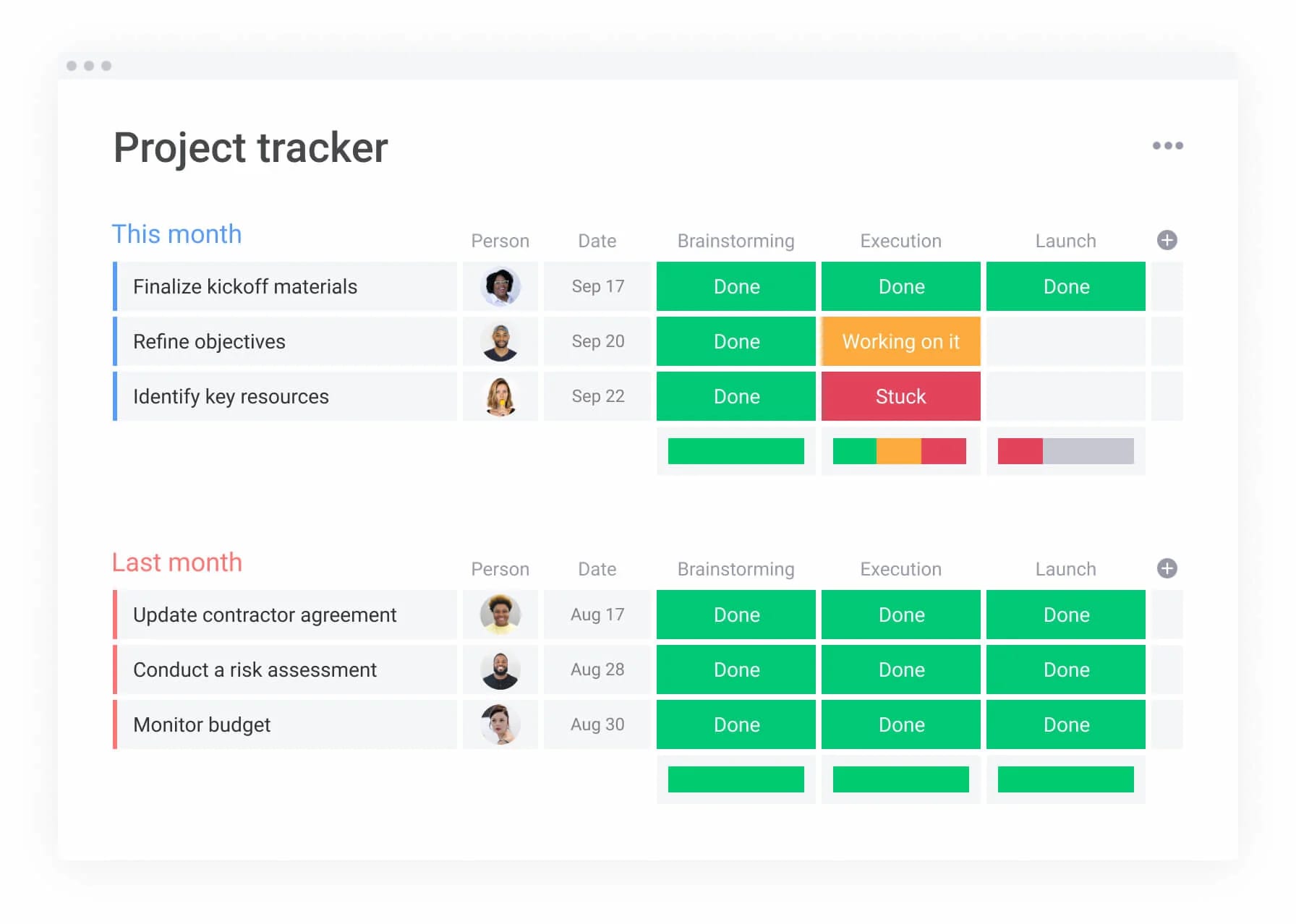
Elevate your project standards with monday work management
monday work management evolves milestone tracking from a static spreadsheet exercise into a dynamic, integrated component of business strategy. The intuitive platform unifies high-level portfolio planning with granular task execution, ensuring that every milestone is directly connected to the work required to achieve it.
The following capabilities demonstrate how organizations gain visibility and control over milestones at every level:
- Visual Gantt and timeline views: Users create interactive roadmaps that visualize milestones, dependencies, and critical paths, making schedule impacts immediately apparent.
- Portfolio management: The platform aggregates milestones from multiple project boards into a single executive dashboard, providing a real-time view of organizational health.
- Resource alignment: Workload views allow managers to see how milestone targets impact team capacity, enabling proactive resource balancing.
- Strategic goal mapping: Milestones can be linked directly to high-level OKRs, ensuring that project execution remains tightly coupled with company strategy.
| Feature | Traditional project tools | monday work management |
|---|---|---|
| Milestone visualization | Static Gantt charts | Interactive, drag-and-drop Gantt and timeline views |
| Cross-project tracking | Manual updates across sheets | Automated rollup to portfolio dashboards |
| Notifications | Email-based, often delayed | Real-time, contextual automation triggers |
| AI insights | None or limited | AI Blocks for data summary and risk prediction |
| Stakeholder communications | Static PDF exports | Live, read-only dashboard access for stakeholders |
| Goal alignment | Disconnected from strategy | Native integration with strategy and OKR features |
| Customization | Rigid, predefined fields | Fully flexible columns and workflows for any industry |
When milestone data lives in one connected system, reporting becomes instant, dependencies stay visible, and decision-making speeds up. Instead of chasing updates across emails and spreadsheets, leaders see exactly which checkpoints are on track, which require intervention, and how each initiative contributes to broader objectives.
By centralizing milestone visibility, automating routine updates, and layering in AI-driven risk detection, monday work management also turns milestones into active drivers of performance. Projects move forward with greater clarity, accountability strengthens across teams, and strategic execution becomes measurable, not just assumed.
Frequently asked questions
What's the difference between a milestone and a deliverable?
The difference between a milestone and a deliverable is that a milestone is a significant point in time marking progress (e.g., "Design Approved"), while a deliverable is the tangible product produced (e.g., "The Design Document"). Milestones capture the approval and finality necessary to move forward, whereas deliverables are simply the artifacts.
How many milestones should a typical project include?
A project should have enough milestones to track progress without creating administrative burden. Space milestones 4 to 6 weeks apart to maintain momentum while ensuring each milestone remains significant and meaningful.
Can project milestones change after project initiation?
Yes, milestones can and should change if project scope, resources, or business priorities shift. Changes should go through a formal change control process to maintain project integrity and stakeholder alignment.
Who owns responsibility for tracking project milestones?
The project manager is primarily responsible for monitoring and reporting on milestone status. The specific functional owner is accountable for delivering the work required to achieve each milestone.
What happens when teams miss critical project milestones?
Missing a critical milestone triggers an immediate impact analysis to determine if the final project deadline is jeopardized. Teams then develop a recovery plan that may include resource reallocation, scope adjustment, or timeline extension.
How do milestones connect to overall project phases?
Milestones typically act as phase gates that mark the conclusion of one project phase and the beginning of the next. They serve as formal review points where organizations assess progress and decide whether to continue investment.
How do you handle milestone dependencies across multiple teams?
Cross-functional milestone dependencies require explicit coordination and communication protocols. Teams should establish formal handoff procedures, use shared tracking systems, and maintain regular check-ins to ensure upstream milestones enable downstream work to begin on schedule.
What role does executive leadership play in milestone management?
Executive leadership provides strategic oversight by reviewing milestone progress, making go/no-go decisions at key checkpoints, and ensuring milestones remain aligned with business objectives. They should focus on milestone outcomes rather than task-level details.

 Get started