


Pipeline management is how revenue teams track deals, forecast revenue, and identify what needs attention — from first contact to closed sale. When done right, pipeline management gives you visibility into deal health, accurate revenue predictions, and a consistent process across your team.
AI takes pipeline management further by automating the repetitive work that slows teams down. It scores leads using real engagement signals, flags deals losing momentum, and delivers forecasts revenue leaders can trust. The result is a pipeline that runs with less friction and more precision, without requiring your team to work longer hours or hire more people.
In this guide, you’ll learn what pipeline management is, why it matters, and how AI enhances every stage of the sales cycle. We’ll break down the core capabilities that deliver the most value, show you how AI agents fit in, and give you a practical 5-step framework to get started.
Key takeaways
- Pipeline management helps revenue teams track deals, forecast revenue, prioritize opportunities, and identify bottlenecks throughout the sales cycle.
- Common pipeline challenges include manual updates, stalled deals, inconsistent follow-up, poor forecasting, and incomplete CRM data.
- AI improves pipeline management by automating repetitive tasks, scoring leads, detecting deal risks, and providing more accurate forecasting insights.
- Successful AI adoption starts with clean pipeline data and a small number of high-impact workflows before expanding automation across the revenue operation.
- AI-powered platforms like monday CRM combine pipeline visibility, automation, and cross-functional collaboration to help teams close deals more efficiently.
What is pipeline management?
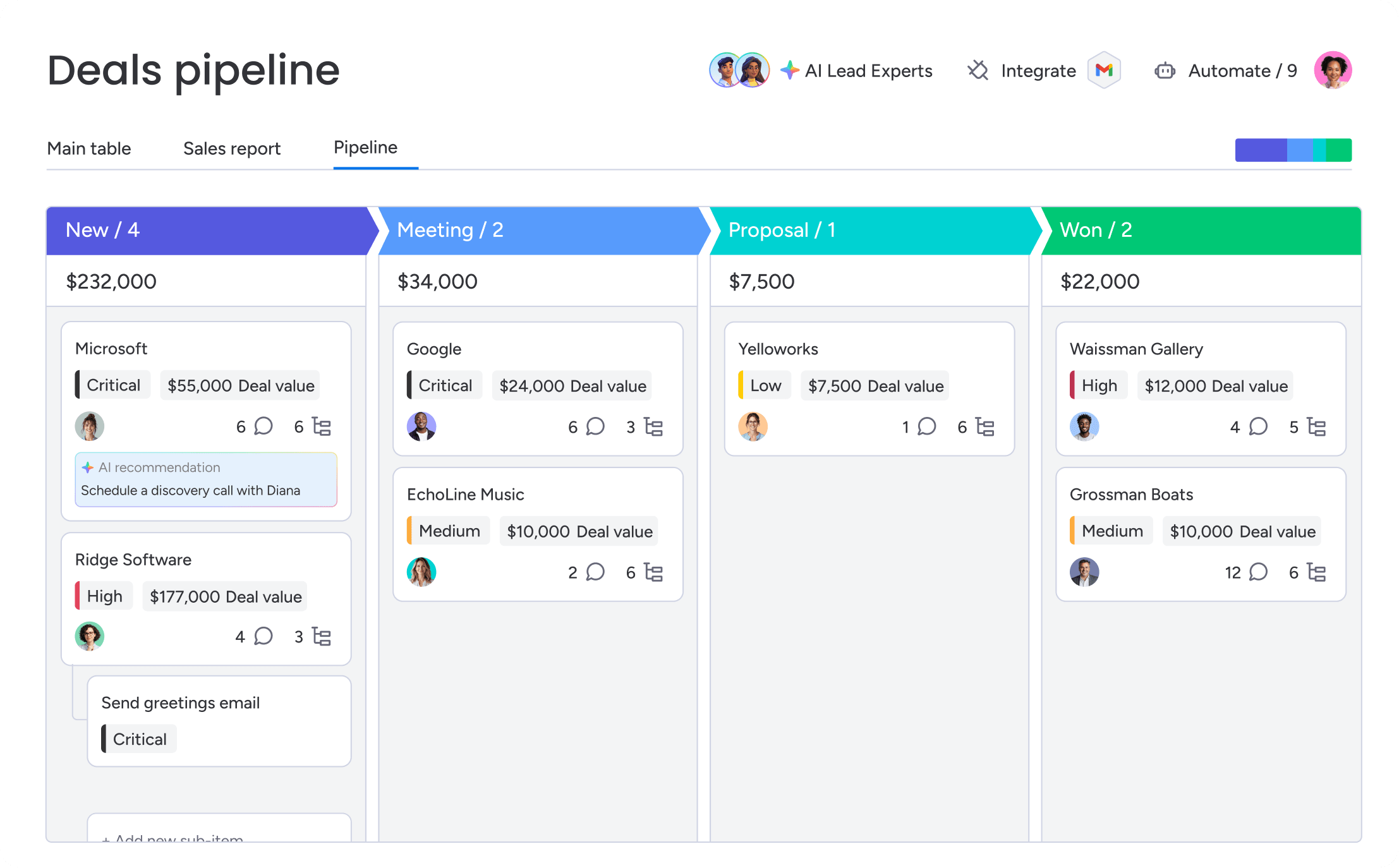
Pipeline management is how revenue teams track deals, move opportunities through stages, forecast revenue, and identify bottlenecks. It’s the system that shows where every deal stands — from first contact to closed sale — and helps teams prioritize what needs attention.
At its core, pipeline management means organizing opportunities across defined stages, tracking progress through each phase, and using that data to predict what’s coming. Sales pipeline stages like “qualified,” “discovery,” “proposal,” and “negotiation” give teams a shared language for deal progression and make it clear what needs to happen next.
Today, many teams use AI-powered CRM tools to automate parts of pipeline management, improve forecasting accuracy, and reduce manual work.
Why pipeline management matters
Effective pipeline management gives revenue teams 4 critical advantages:
- Visibility: See where every deal stands and what’s blocking progress
- Forecasting: Predict revenue based on pipeline coverage and deal velocity
- Prioritization: Focus time and resources on the highest-value opportunities
- Consistency: Ensure every rep follows the same process and standards
Without strong pipeline management, deals stall, forecasts miss, and revenue becomes unpredictable. With it, teams execute faster and hit targets more consistently.
| What pipeline management delivers | What happens without it |
|---|---|
| Clear view of deal health and progression | Deals slip through cracks unnoticed |
| Data-backed revenue forecasts | Forecasts based on guesswork and optimism |
| Reps focus on high-value opportunities | Time wasted on low-probability deals |
| Consistent process across the team | Every rep operates differently |
Common sales pipeline stages
Most sales pipelines follow a similar structure, though the exact stages vary by industry and sales motion. Here are the core stages that define how deals move from prospect to customer:
| Stage | Purpose | Typical outcome |
|---|---|---|
| Lead | Initial inquiry or prospect | Opportunity enters pipeline |
| Qualified | Fit and intent confirmed | Ready for discovery |
| Discovery | Understand needs and challenges | Solution alignment |
| Proposal | Present pricing or solution | Buyer evaluation |
| Negotiation | Finalize terms and conditions | Verbal commitment |
| Closed won | Deal completed | Revenue generated |
| Closed lost | Opportunity not pursued | Removed from pipeline |
AI-powered CRM systems can automatically score leads, update stages based on activity, and identify stalled opportunities throughout the pipeline.
Common pipeline management challenges and how AI helps
Even well-defined pipelines can break down when teams rely on manual processes. AI helps revenue teams address many of the most common pipeline management challenges by automating repetitive work, improving visibility, and surfacing actionable insights. Here’s a look at how AI-powered pipeline management helps:
| Challenge | Impact | How AI helps |
|---|---|---|
| Manual updates | Reps spend hours updating records and logging activity | Automatically captures activities, updates records, and triggers workflows |
| Poor forecasting | Revenue projections rely on incomplete or outdated data | Analyzes historical performance, deal velocity, and engagement patterns to improve forecast accuracy |
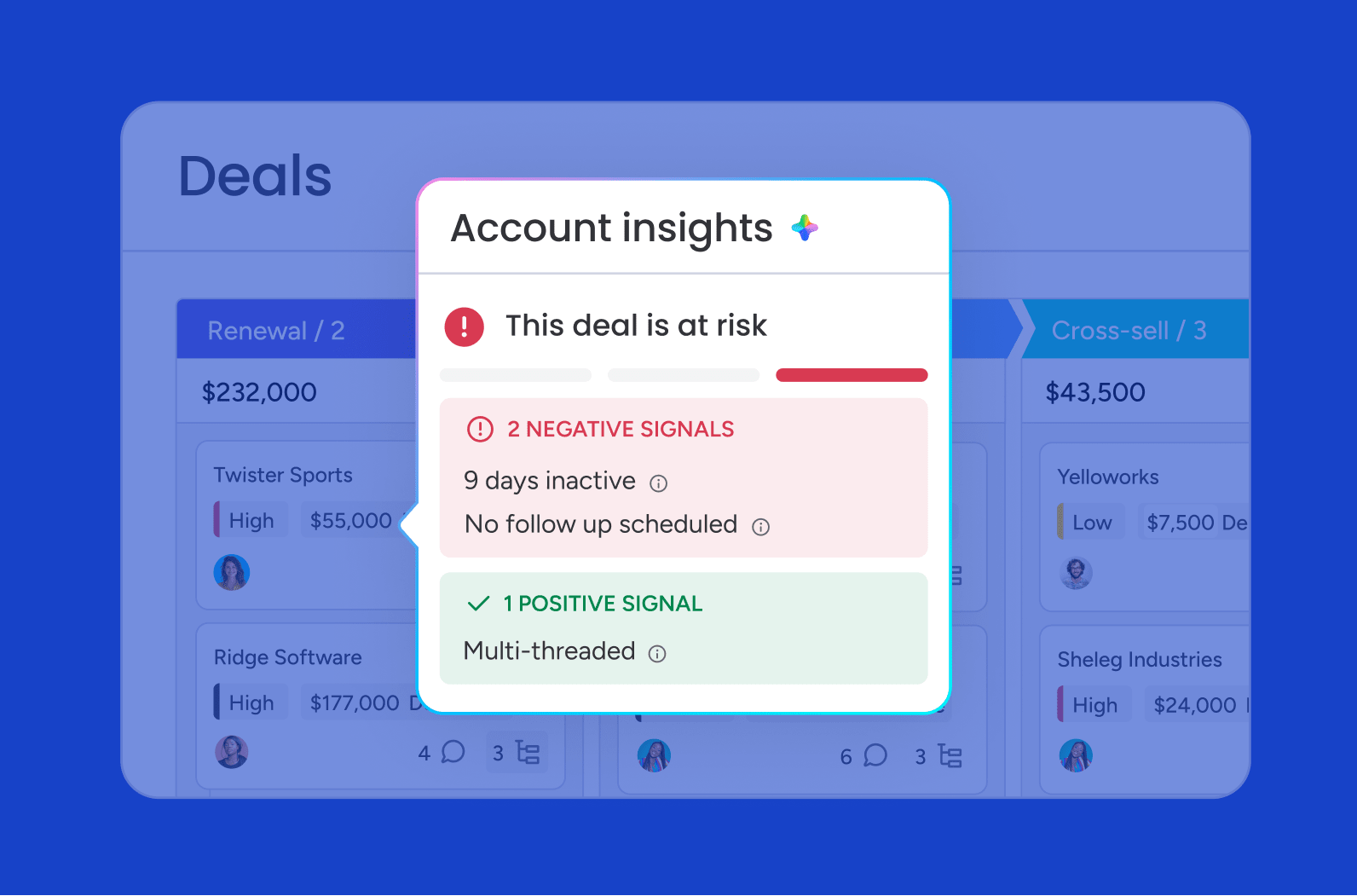
| Stalled deals | Opportunities sit in one stage without progress | Identifies at-risk deals and alerts teams when momentum drops |
| Inconsistent follow-up | Leads and opportunities fall through the cracks | Automates reminders, outreach sequences, and next-step recommendations |
| Bad data | Incomplete CRM records reduce visibility and trust | Enriches records, extracts information automatically, and keeps data current |
By addressing these challenges, AI helps teams spend less time maintaining their pipeline and more time moving deals forward.
What an AI-powered sales pipeline looks like
AI supports every stage of the sales pipeline, from lead generation through customer onboarding. Here’s how AI contributes at each phase of the revenue cycle:
Lead generation and qualification
AI can identify and prioritize high-quality leads by analyzing intent signals, engagement activity, and historical conversion patterns. AI prioritizes based on fit and engagement, analyzing website behavior, content downloads, and third-party intent data to find prospects actively researching. These signals show marketing and sales teams which leads are most likely to convert.
Finally, AI scores and qualifies leads using firmographic data, engagement behavior, and historical win patterns. A lead from a target industry with high engagement scores higher than a cold inbound. AI-driven lead scoring shows reps which leads are ready for outreach.
Outreach and follow-up
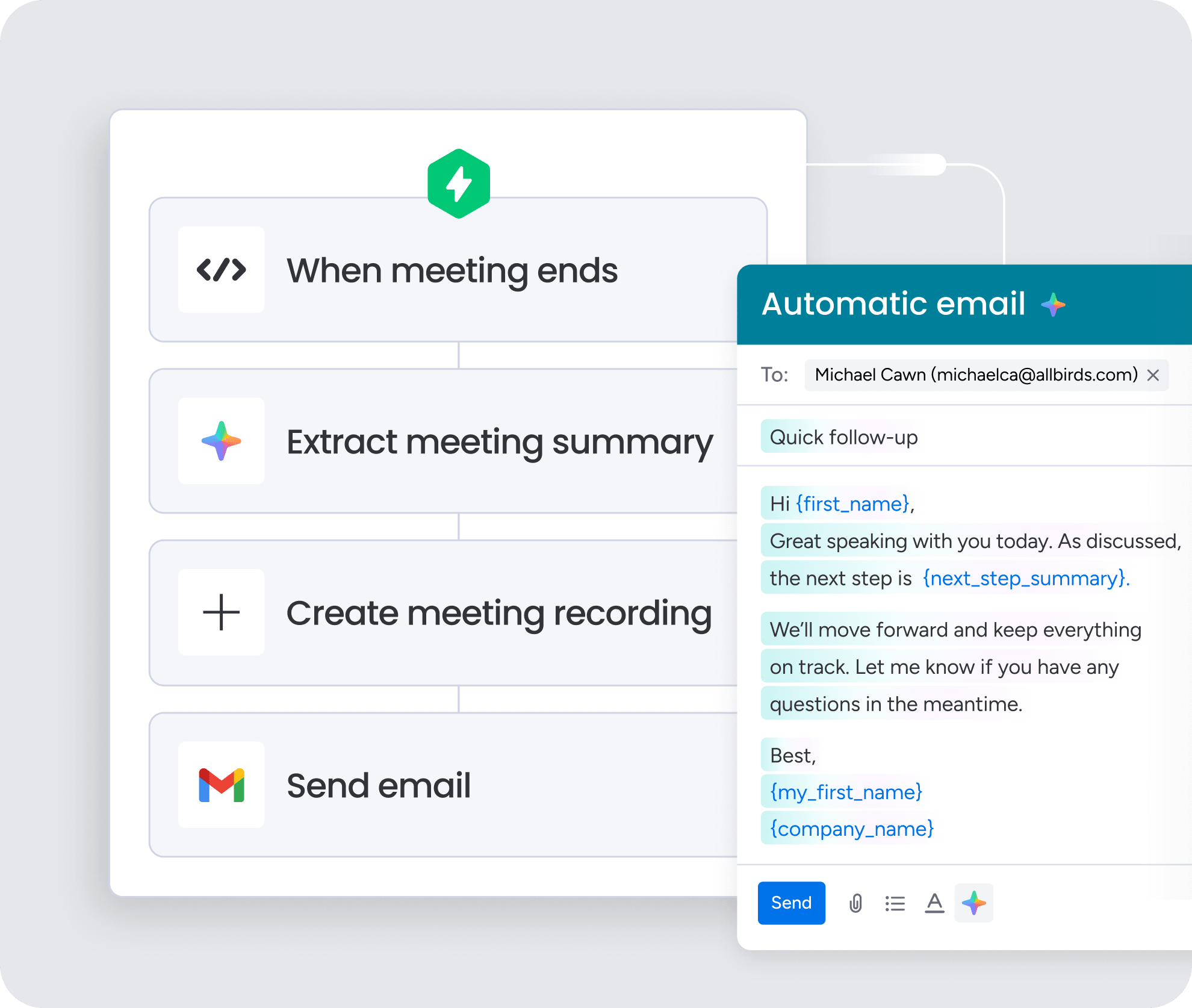
AI outreach agents automate outreach sequences, follow-up emails, and meeting scheduling. When a lead enters the pipeline, AI sends personalized email sequences based on behavior and segment. For example:
- A prospect who downloaded a pricing guide gets different messaging than one who attended a webinar.
- Sequences adjust automatically as engagement signals change.
- Follow-up timing is based on deal activity, not manual reminders.
Proposal and negotiation
AI supports proposal and negotiation by flagging deal risks, suggesting pricing strategies, and tracking stakeholder engagement. It flags deals missing key decision-makers or losing engagement. AI analyzes past deals to recommend what works and spot potential objections.
Approval and closing the deal
AI helps reps close deals. It flags at-risk opportunities, suggests next steps, and makes sure all required tasks get done on time. AI tracks contract review, approvals, and legal sign-offs automatically.
AI predicts close likelihood based on deal behavior and engagement patterns.
- Declining engagement: Deals get flagged for manager review
- Strong signals: Deals get prioritized for a final push
- Missing steps: AI surfaces incomplete tasks before they delay closing
Post-sale handoffs
AI makes handoffs from sales to customer success seamless. It automates data transfer, flags key account details, and triggers onboarding workflows. Customer success teams get the context they need from day one.

5 benefits of AI pipeline management for revenue teams
AI pipeline management helps revenue teams close more deals, improve forecast accuracy, and scale without adding headcount. These benefits are what matter most to revenue leaders and their teams: faster qualification and tighter cross-functional alignment.
1. Faster lead qualification
AI speeds up lead qualification by automatically scoring leads based on fit, intent, and engagement signals. Instead of spending 30 minutes researching each lead, reps get instant scores showing where to focus.
Reps spend less time on low-quality prospects and more time selling to high-value opportunities. The pipeline moves faster, and conversion rates improve.
2. More reliable sales forecasting
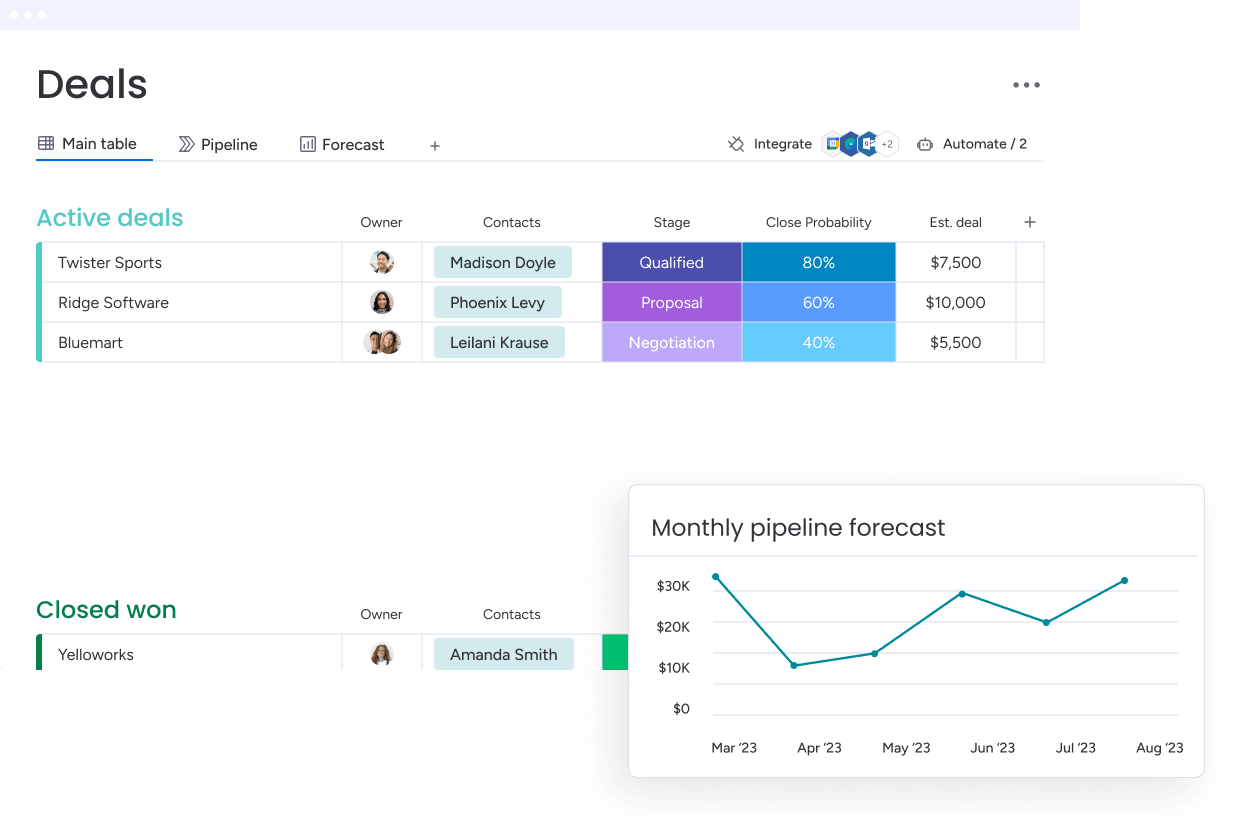
AI improves forecast accuracy. It analyzes historical data, deal velocity, and engagement patterns. It shows which deals will likely close, which are at risk, and where the pipeline has gaps. Reliable forecasting helps revenue leaders allocate resources, set realistic targets, and act on issues early, giving them time to adjust well ahead of quarter-end.
3. More time for active selling
AI automates repetitive pipeline tasks: data entry, follow-up reminders, and activity logging. Reps can focus on high-value activities like discovery calls, demos, and deal negotiation. Less admin work means higher rep productivity and stronger job satisfaction. Reps who spend more time selling close more deals.
4. Stronger pipeline prioritization
AI helps reps and managers prioritize deals. It shows which opportunities need attention, which are at risk, and which are most likely to close. It filters out the noise and shows what matters. Better prioritization keeps teams focused on what matters most. Reps focus their time on deals most likely to close, and managers can coach where it counts.
5. More connected revenue orchestration
AI connects sales, marketing, and customer success teams with shared visibility into pipeline health, customer engagement, and revenue performance. Everyone works from the same data.
Connected revenue orchestration reduces silos, improves handoffs, and ensures alignment across the revenue organization:
- Marketing knows which leads convert
- Sales knows which accounts need attention
- Customer success knows what was promised
7key AI capabilities to look for in pipeline management software
Not all pipeline management platforms deliver the same value. The right software should give your team visibility into deal health, automate repetitive work, and surface insights that drive revenue outcomes.
Here are the core features that matter most when evaluating pipeline management solutions:
1. Lead scoring that prioritizes your best opportunities
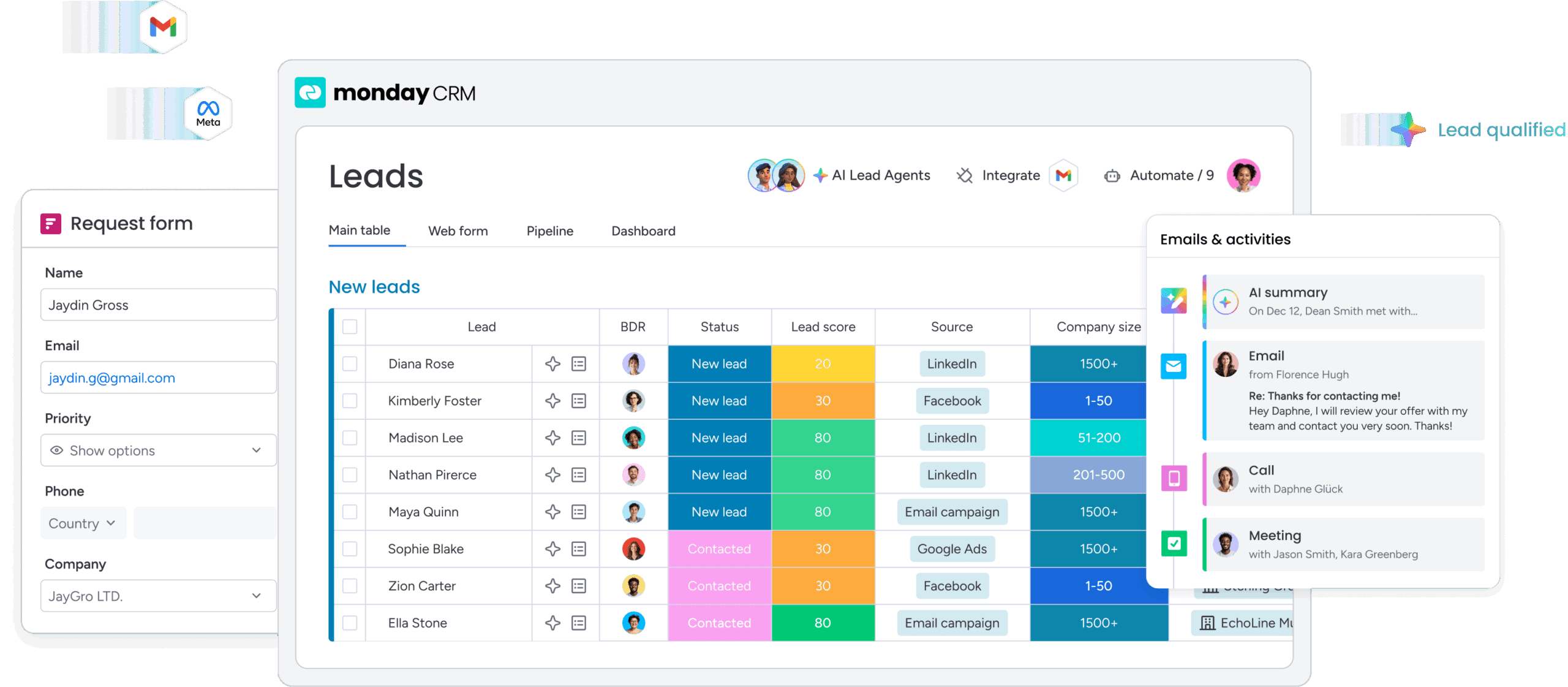
Lead scoring automatically evaluates leads based on fit, intent, and engagement signals. The best systems analyze firmographic data, website behavior, email engagement, and third-party intent signals to assign scores reflecting true buying potential.
Look for lead scoring that updates in real time as engagement changes, so reps always know which prospects deserve attention first. Scores should be visible directly in your pipeline view without requiring reps to dig through reports.
2. Forecasting that goes beyond averages
Forecasting capabilities should analyze historical data, deal velocity, and engagement patterns to predict revenue outcomes. The best platforms go beyond simple averages to identify the specific factors driving wins and losses in your pipeline.
Strong forecasting tools give real-time visibility into pipeline health and forecast performance. They surface risks and opportunities automatically, so revenue leaders can act before problems escalate.
3. Deal risk detection before deals slip
Deal risk detection flags opportunities at risk of slipping or stalling based on engagement patterns, deal velocity, and historical data. It identifies warning signs like declining engagement or missing stakeholders before deals are lost.
The best platforms analyze email and activity tone, flag at-risk deals automatically, and alert managers for intervention. This proactive approach keeps deals moving instead of letting them die quietly in your pipeline.
4. Automation that eliminates manual pipeline work
Pipeline automation handles repetitive tasks like activity logging, follow-up reminders, and deal stage updates. Look for platforms that can automatically capture email and meeting activity, route leads to the right reps, and trigger workflows based on deal behavior.
Strong automation capabilities reduce manual data entry and keep pipeline data current without requiring reps to log every action. The result is cleaner data and more time for actual selling.
5. Communication tracking across email and meetings
Communication tracking captures every customer interaction across email, calls, and meetings. The best platforms automatically log activity, transcribe conversations, identify important moments, and create summaries of key discussions.
Look for systems that integrate with your email and calendar to sync activity automatically. Communication tracking should surface insights like sentiment shifts, action items, and deal risks without requiring manual note-taking.
6. Pipeline health dashboards with real-time visibility
Pipeline health dashboards provide real-time visibility into deal progression, forecast accuracy, and pipeline coverage. They show what’s happening across the pipeline by stage, by rep, and by segment in a single view.
The best dashboards are customizable with sales-specific widgets that help you spot where your pipeline is strongest and where it needs attention. Look for platforms that let you build dashboards tailored to your team’s needs without requiring technical expertise.
7. AI assistance that surfaces insights and recommendations
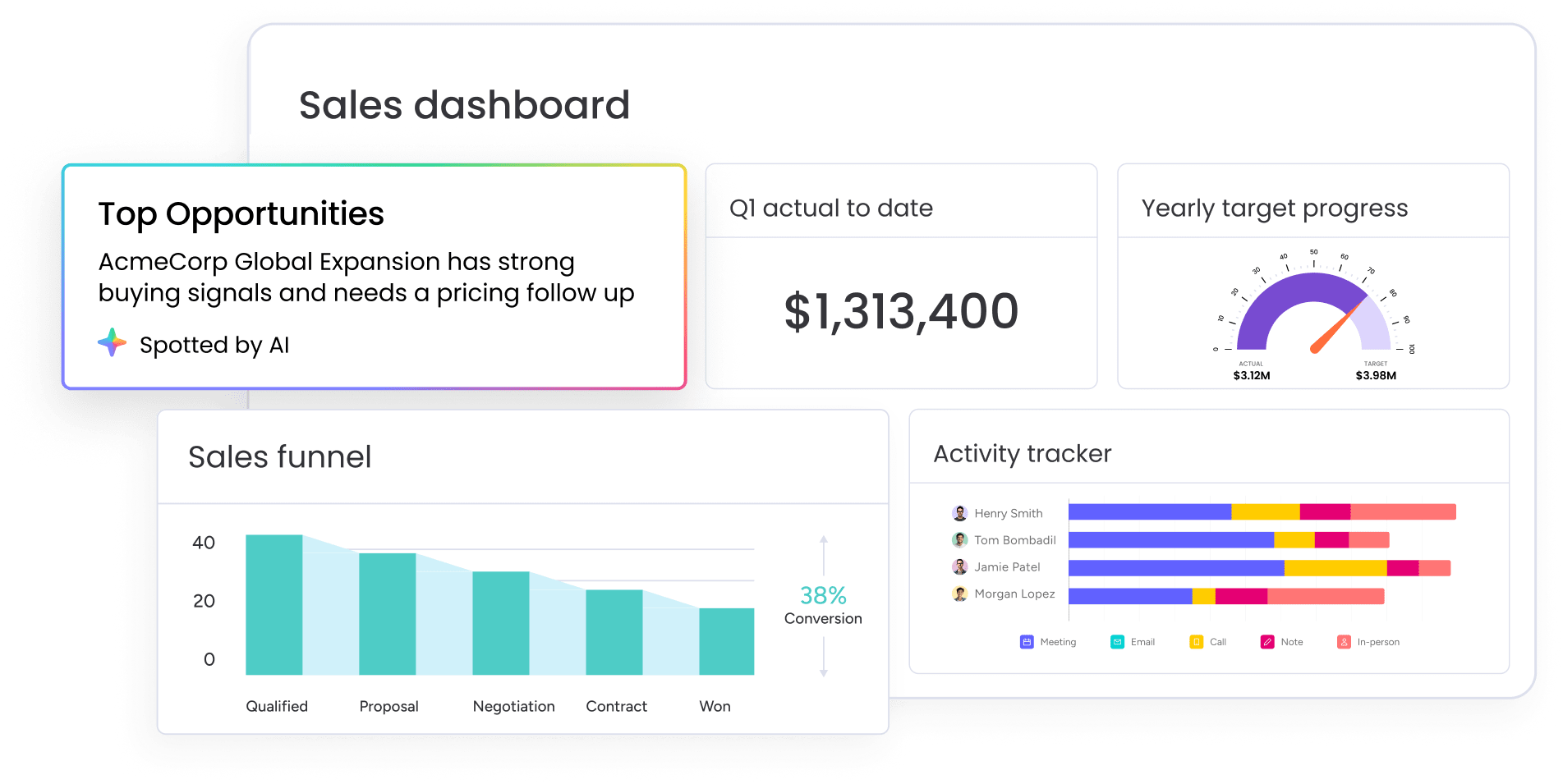
AI capabilities enhance every other feature by surfacing insights from data patterns and recommending next steps. AI can suggest the most effective action for each deal based on historical win patterns, draft personalized outreach emails, and predict which deals will likely close.
Look for AI that assists reps with recommendations before moving to full automation. The best platforms let you start with AI-assisted workflows, validate accuracy, then scale to autonomous actions as trust builds.
Try monday CRMPipeline management best practices
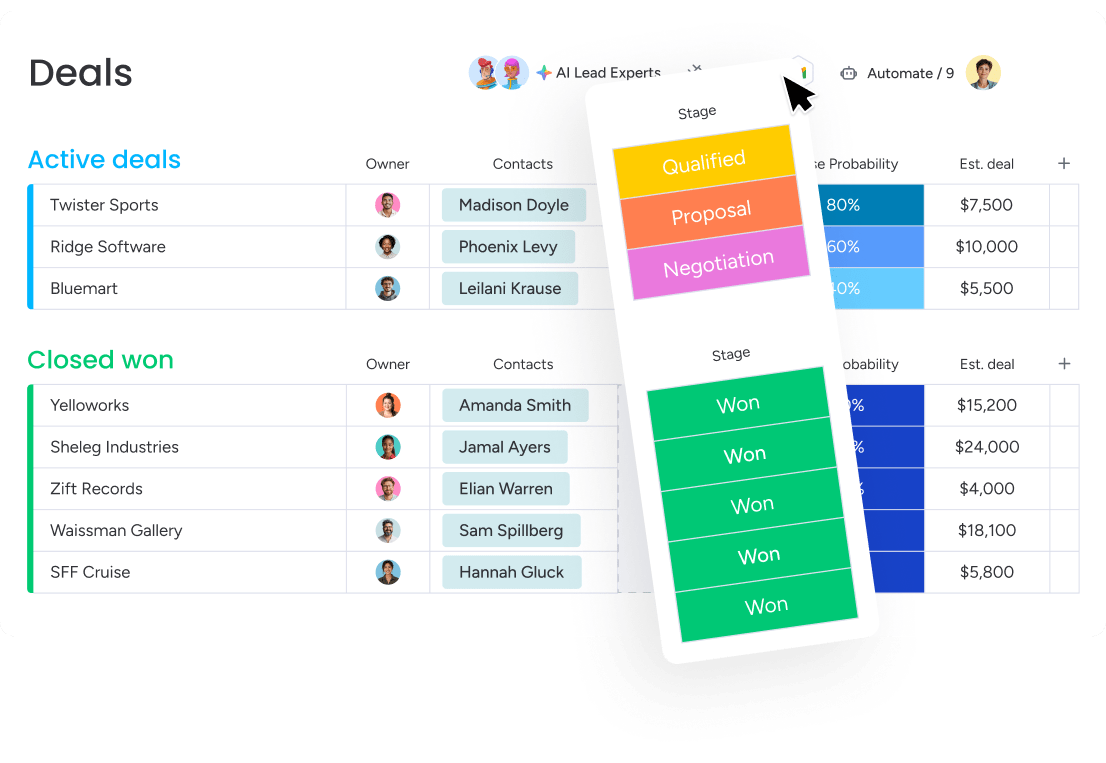
Strong pipeline management is about following consistent practices that keep deals moving and data accurate. These best practices help revenue teams maintain pipeline health, improve forecast accuracy, and close more deals without adding complexity.
- Define clear stages with specific exit criteria: Every pipeline stage should have defined entry and exit criteria so reps know exactly what needs to happen before a deal advances. Vague stages like “in progress” create confusion. Clear stages like “discovery call completed” or “proposal sent” give teams a shared language and make pipeline reports meaningful.
- Keep CRM data current with automated capture: Stale data kills pipeline visibility. Use automation to capture email, calendar, and meeting activity automatically so reps don’t have to log every action manually. Current data gives AI the foundation it needs to surface accurate insights and recommendations.
- Review pipeline health weekly with your team: Schedule weekly pipeline reviews to identify at-risk deals, spot bottlenecks, and reallocate resources. Use these sessions to coach reps on specific opportunities and ensure everyone knows which deals need attention. Consistent reviews keep problems from festering.
- Focus on pipeline velocity, not just volume: A full pipeline means nothing if deals don’t move. Track how long deals spend in each stage and identify where they stall. Faster velocity means more closed deals and more predictable revenue.
- Standardize qualification criteria across the team: Every rep should use the same criteria to qualify leads and advance deals. Standardized qualification reduces pipeline bloat from low-quality opportunities and ensures forecast accuracy. Document your criteria and train new reps on them from day one.
These practices work together to create a pipeline that’s predictable, efficient, and built for scale. When combined with AI capabilities, they help revenue teams execute faster and hit targets more consistently.
5 steps to implement AI pipeline management
Implementing AI pipeline management doesn’t require a complete overhaul. Teams can start small, prove value, and scale over time. Follow these steps to get AI working in your pipeline without disrupting what’s already working.
Step 1: Audit your pipeline data for gaps and inconsistencies
Assess the quality and completeness of your CRM data. Ask:
- Are deal stages defined consistently?
- Is activity data being captured across email and calendar?
- Are there gaps or inconsistencies in key fields?
AI is only as good as the data it’s trained on. Consistent deal stages and complete activity logging give AI the foundation it needs to deliver real value. Clean, complete data is the foundation everything else builds on.
Step 2: Choose 2–3 high-impact sales workflows to start
Identify 2–3 high-impact workflows where AI can deliver immediate value. Lead scoring, deal risk detection, and follow-up automation are common starting points because they address universal pain points.
Starting with high-impact workflows ensures quick wins and builds momentum for broader AI adoption. When reps see AI saving them time on day one, adoption accelerates.
Step 3: Add AI assistance before moving to full automation
Start with AI-assisted workflows where AI surfaces insights and recommendations before moving to full automation where AI takes action autonomously. This builds trust and allows teams to validate AI accuracy.

Step 4: Connect revenue data across sales, marketing, and customer success
AI pipeline management works best when sales, marketing, and customer success data are connected in one system. Siloed data limits AI’s ability to surface accurate insights.
Step 5: Review AI performance regularly and expand what works
Regularly review AI performance across these key metrics:
- Forecast accuracy: Are predictions getting closer to actual outcomes?
- Lead conversion rates: Are scored leads converting at higher rates?
- Time saved: Are reps spending less time on admin work?
Expand successful workflows and adjust what isn’t delivering. AI implementation is iterative, not one-and-done. What works today may need refinement as your pipeline evolves.
How monday CRM supports AI pipeline management
For revenue teams that want to automate pipeline work, improve forecast accuracy, and scale execution without adding headcount, monday CRM offers an AI-first CRM built for the job. It combines intuitive design with powerful AI capabilities that teams can adopt quickly and customize to their needs.
AI automations that handle repetitive pipeline tasks
monday CRM offers AI-powered automations called AI Blocks that handle repetitive pipeline tasks. These pre-built AI functions can be added to workflows without writing code, making AI accessible to every revenue team.
AI Blocks support pipeline workflows that directly reduce manual work:
- Automated lead scoring that analyzes fit, intent, and engagement signals to prioritize leads
- Deal stage updates that moves deals to the next stage based on activity or triggers
- Follow-up reminders that send notifications when deals go stale
- Activity logging that captures email, call, and meeting activity automatically
- Data enrichment that extracts information from emails, documents, and forms
Sales AI agents for autonomous lead scoring and deal follow-up
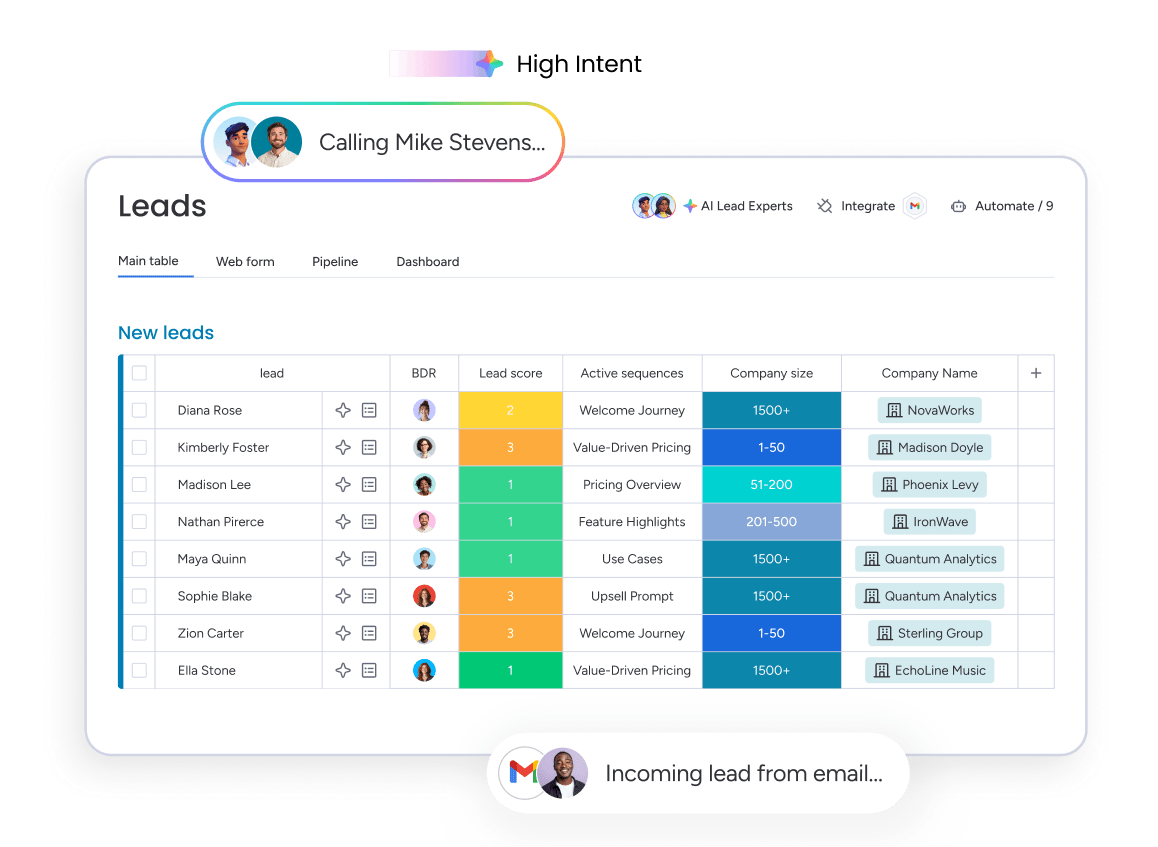
monday CRM offers AI agents that autonomously execute pipeline tasks. These agents analyze pipeline data in real time, identify opportunities or risks, and take action based on predefined rules.
AI agents handle workflows that would otherwise require constant human attention:
- Lead qualification agents: Automatically score and route inbound leads to the right reps
- Deal follow-up agents: Proactively follow up on stalled deals and schedule meetings
- Pipeline health agents: Flag at-risk deals and recommend next steps
Custom dashboards for real-time forecasting and pipeline health
monday CRM offers AI-powered dashboards that provide real-time visibility into pipeline health, forecast accuracy, and deal progression. Users build dashboards tailored to their needs using drag-and-drop widgets. Common dashboard configurations include forecast accuracy, pipeline health, and rep performance dashboards.
monday MCP for secure, permission-respecting AI CRM integration
monday CRM supports the Model Context Protocol (MCP), an open standard that allows AI tools like Claude, ChatGPT, Cursor, and Copilot Studio to securely access CRM data. MCP enables AI-powered workflows that extend beyond the monday CRM interface.
Team members authorize AI platforms to access their monday CRM data via OAuth. AI platforms can then read, analyze, and act on CRM data while respecting team member permissions. All actions are logged for transparency.
monday vibe for building custom pipeline apps without code
monday CRM includes monday vibe, a vibe coding capability that allows teams to build custom pipeline apps using natural language prompts. No coding required — teams describe what they want, and AI generates a fully functional app.
Revenue teams build custom apps for deal flow analyzers, forecast calculators, and lead scoring tools. monday vibe apps are built on the secure infrastructure of monday CRM, inheriting the same permissions, integrations, and governance controls as the rest of the platform.
Optimize your pipeline management with AI
AI pipeline management automates lead scoring, forecasting, and deal risk detection so revenue teams can act proactively instead of reactively. It eliminates manual data entry, surfaces at-risk deals before they slip, and delivers forecast accuracy that leaders can trust — all without adding headcount or disrupting existing workflows. Put AI to work on your pipeline with monday CRM and start with high-impact workflows like lead scoring or deal follow-up, then scale as you prove ROI.
Try monday CRM for AI pipeline managementFAQs
What is AI pipeline management in a sales and revenue context?
AI pipeline management in sales and revenue uses artificial intelligence to automate, analyze, and optimize the sales pipeline from lead capture to closed deal. It includes automated lead scoring, deal risk detection, AI-driven forecasting, and intelligent follow-up automation.
How is AI pipeline management different from traditional pipeline management?
AI pipeline management differs from traditional methods by automating repetitive tasks, surfacing insights from data patterns, and enabling proactive decision-making. Traditional methods rely on manual data entry and reactive problem-solving.
What can AI actually do across the pipeline?
AI updates records automatically, summarizes activity history, assigns owners based on skills, drafts personalized outreach, extracts deal data from contracts, scores leads, detects risks, and generates forecasts based on historical patterns.
How does AI pipeline management improve forecast confidence?
AI improves forecast confidence by analyzing historical win rates, deal velocity, and engagement patterns to predict revenue outcomes. It identifies which deals will likely close and where the pipeline has gaps, giving leaders data-backed projections.
What data and setup are needed to implement AI pipeline management?
Implementing AI pipeline management requires clean CRM data with consistent deal stages, activity logging across email and calendar, and integration with communication tools. Teams should audit data quality, choose high-impact workflows, and connect revenue data across systems.
Will AI replace sales reps and managers?
AI won't replace sales reps and managers. AI handles data-heavy work like activity logging and lead scoring, freeing reps to focus on relationship-building. Managers still provide coaching and strategy; AI amplifies their effectiveness by surfacing the right information.
