

Strategic initiatives rarely fail because they lack ambition. They fail because they compete.
Marketing launches a rebrand. IT modernizes infrastructure. Product accelerates innovation. Operations drives efficiency. Each initiative makes sense on its own. Together, they strain the same people, budget, and executive attention.
That’s where friction sets in. Teams plan in parallel but not together. Priorities collide. Progress is measured by activity instead of impact. Work gets delivered, yet strategy feels increasingly disconnected from execution.
Organizational project management strategy closes that gap. It aligns portfolios, programs, and projects into a coordinated system so the organization executes as a whole, not in silos.
The sections that follow explain how OPM strategy works, how it differs from traditional project management, and how to build a framework that scales without losing alignment.
Key takeaways
- Shift from project delivery to strategic value creation: Success is measured by business impact and outcomes, not just whether individual projects finish on time and within budget.
- Align portfolios, programs, and projects to shared objectives: Organizational project management strategy ensures every initiative supports defined business goals and can be evaluated against them.
- Reduce resource conflict through centralized visibility: Cross-functional planning and portfolio-level oversight prevent teams from competing for the same people, budget, and skills.
- Strengthen governance without slowing execution: Clear decision rights and prioritization frameworks help organizations adapt quickly as strategy or market conditions change.
- Use integrated work management platforms to operationalize strategy: Solutions like monday work management enable real-time portfolio visibility, risk detection, and alignment between daily work and strategic priorities.
What is organizational project management strategy?
Organizational project management (OPM) strategy is the framework that aligns portfolio, program, and project management with your company’s strategic goals.
Unlike traditional project management, which focuses on the “how” of individual delivery, OPM strategy focuses on the “what” and “why” of collective execution. It ensures that the organization works on the right projects at the right time with the right resources.
Here’s what separates OPM strategy from everyday business project management, with these elements working together to create a single approach to execution:
- Organizational project management: The integration of knowledge, skills, and techniques to organizational and project activities to achieve strategic objectives.
- Strategic alignment: The continuous process of ensuring all active work supports high-level business goals.
- Portfolio governance: The framework for decision-making regarding which initiatives are funded, prioritized, or deprioritized.
In practice, this might look like a manufacturing company coordinating R&D, supply chain, and marketing around a single product launch rather than running three disconnected initiatives. Decisions about timelines, funding, and staffing are made based on collective impact, not departmental convenience.
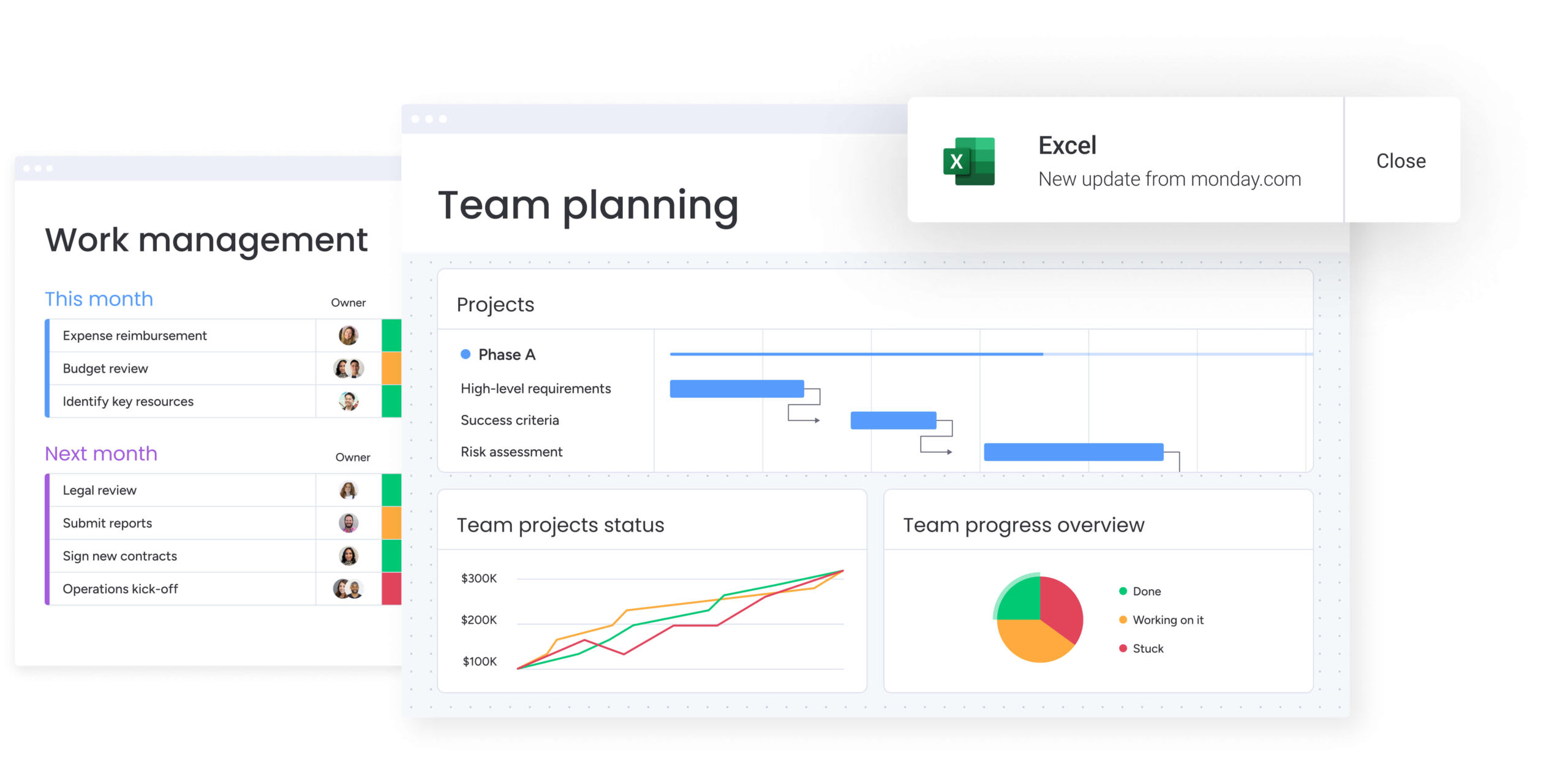
Achieving that level of coordination requires shared visibility, structured governance, and real-time insight into how work connects to strategy — capabilities that platforms like monday work management support by bringing portfolios, programs, and projects into one unified workspace.
The strategic evolution of project management
Project management no longer sits at the edge of the business, focused purely on scope, time, and cost. As organizations navigate digital transformation, hybrid teams, and constant market shifts, execution has become a strategic capability, not just an operational function.
That shift changes what success looks like. It’s no longer enough to deliver a project on time and on budget. Leaders expect initiatives to drive measurable business outcomes, support long-term objectives, and adapt as priorities evolve.
The comparison below highlights how this evolution reshapes governance, resource allocation, and success metrics — moving from isolated project delivery to coordinated organizational value creation.
| Dimension | Traditional project management | Organizational project management strategy |
|---|---|---|
| Scope | Single project delivery | Enterprise-wide value creation |
| Governance | Project-level focus | Portfolio and strategy focus |
| Success metrics | On time, on budget, within scope | ROI, strategic alignment, business impact |
| Resource allocation | Siloed by department or project | Dynamic, cross-functional optimization |
| Stakeholder involvement | Limited to immediate project team | Executive leadership and cross-functional partners |
The 4 pillars of organizational project management strategy
Effective OPM strategy relies on four pillars that create competitive advantage. These components work as a system, not isolated practices, creating a feedback loop between strategy and execution. Each pillar reinforces the others to coordinate work and create value across your company.
1. Portfolio management for strategic alignment
Portfolio management filters which projects get funded and prioritized. It’s the centralized selection, prioritization, and oversight of projects and programs to keep them aligned with business objectives. Unlike program management, which coordinates related projects, portfolio management focuses on the total investment mix.
Here’s how portfolio management operates within an OPM framework. Each activity helps your organization invest in work that creates real value:
- Selection criteria: Establishing objective standards for approving new initiatives based on strategic fit and ROI.
- Resource allocation: Distributing financial and human capital across the portfolio to maximize value.
- Performance monitoring: Tracking the health of the entire portfolio against strategic KPIs using executive dashboards.
For example, a portfolio manager might deprioritize a legacy software update to move developers to a new AI initiative that supports the company’s five-year growth strategy. Modern solutions like monday work management support these initiatives with dashboards that automatically display live project data on budget, goals, schedules, and resources.
2. Program management coordination
Program management coordinates related projects to achieve benefits you can’t get when managing them separately. Program managers bridge high-level strategy and execution, handling interdependencies and shared risks.
Program managers handle several key activities that keep multiple projects moving toward shared outcomes. These responsibilities require seeing across project boundaries and resolving conflicts quickly:
- Dependency mapping: Identifying and managing critical path links between separate projects.
- Resource coordination: Resolving conflicts when multiple projects within the program require the same specialized talent.
- Risk management: Mitigating risks that span across project boundaries.
- Stakeholder communication: Maintaining alignment across different functional leaders involved in the program.
3. Project management execution
Project management execution is where strategic intent becomes operational reality. In an OPM context, individual projects are managed with constant awareness of how they support company goals. Project managers shift from task coordinators to strategic contributors who understand how their deliverables impact the bottom line.
Strong execution supports strategy through several key practices. These keep individual project work connected to company goals:
- Strategic alignment reviews: Regular check-ins to ensure the project scope hasn’t drifted from the original business case.
- Cross-functional collaboration: Protocols that break down silos between departments working on the same deliverable.
- Outcome-focused metrics: Measuring success by value delivered, not just work completed.
4. Resource management across departments
Cross-departmental resource management means allocating and optimizing people, budget, and technology across your company. The challenge is resolving conflicts and competing priorities when projects span multiple functions. Effective management requires real-time insight into capacity, skills, and availability.
You need specific practices to manage resources across departmental boundaries. These practices put the right people on the right projects at the right time:
- Capacity planning: Forecasting future resource needs against current availability to prevent bottlenecks.
- Skills mapping: Creating a database of employee capabilities to match the right people to the right work.
- Allocation protocols: Standardized rules for prioritizing resource requests based on strategic importance.
- Performance tracking: Monitoring utilization rates to prevent burnout and underutilization.
How does OPM strategy differs from traditional project management?
Many organizations attempt to scale using the same project management habits that worked when they were smaller. The problem isn’t execution discipline. It’s perspective.
Traditional project management optimizes individual initiatives. Organizational project management strategy optimizes the system as a whole. That difference reshapes how decisions get made, how resources move, and how success is defined.
The table below breaks down the structural shifts that occur when organizations move from project-level thinking to enterprise-wide coordination.
| Dimension | Traditional project management | Organizational project management strategy |
|---|---|---|
| Focus | Individual project success | Collective organizational value |
| Success metrics | Outputs (deliverables) | Outcomes (business impact) |
| Resource approach | Dedicated/hoarded resources | Shared/optimized resources |
| Stakeholder role | Inform/consult | Partner/collaborate |
| Governance | Rigid, phase-gate | Adaptive, continuous |
| Risk management | Project-specific risks | Portfolio-wide systemic risks |
| Technology | Disconnected applications | Integrated Work OS |
Enterprise-wide vs individual project focus
Traditional project management focuses on the success of a single initiative, often at the expense of others. A project manager might hoard resources to ensure their specific deadline is met, causing delays elsewhere.
OPM strategy takes a company-wide perspective, focusing on collective success. Decisions about timeline adjustments, scope changes, or resource reallocation are based on what creates the most value for the organization, not just what turns a project status indicator green.
Strategic alignment vs task completion
Traditional approaches focus on “finishing the job,” delivering the specified output on time and budget. OPM strategy focuses on “delivering the value.”
If a project is on time and on budget but market conditions change, an OMP approach might cancel the project to save resources, whereas a traditional approach would push to finish it. This shift changes everything from project selection to how you communicate success to stakeholders.
Cross-functional integration requirements
OPM strategy demands more integration than traditional project management. Organizational strategy means breaking down silos and creating integrated workflows across marketing, sales, product, and IT.
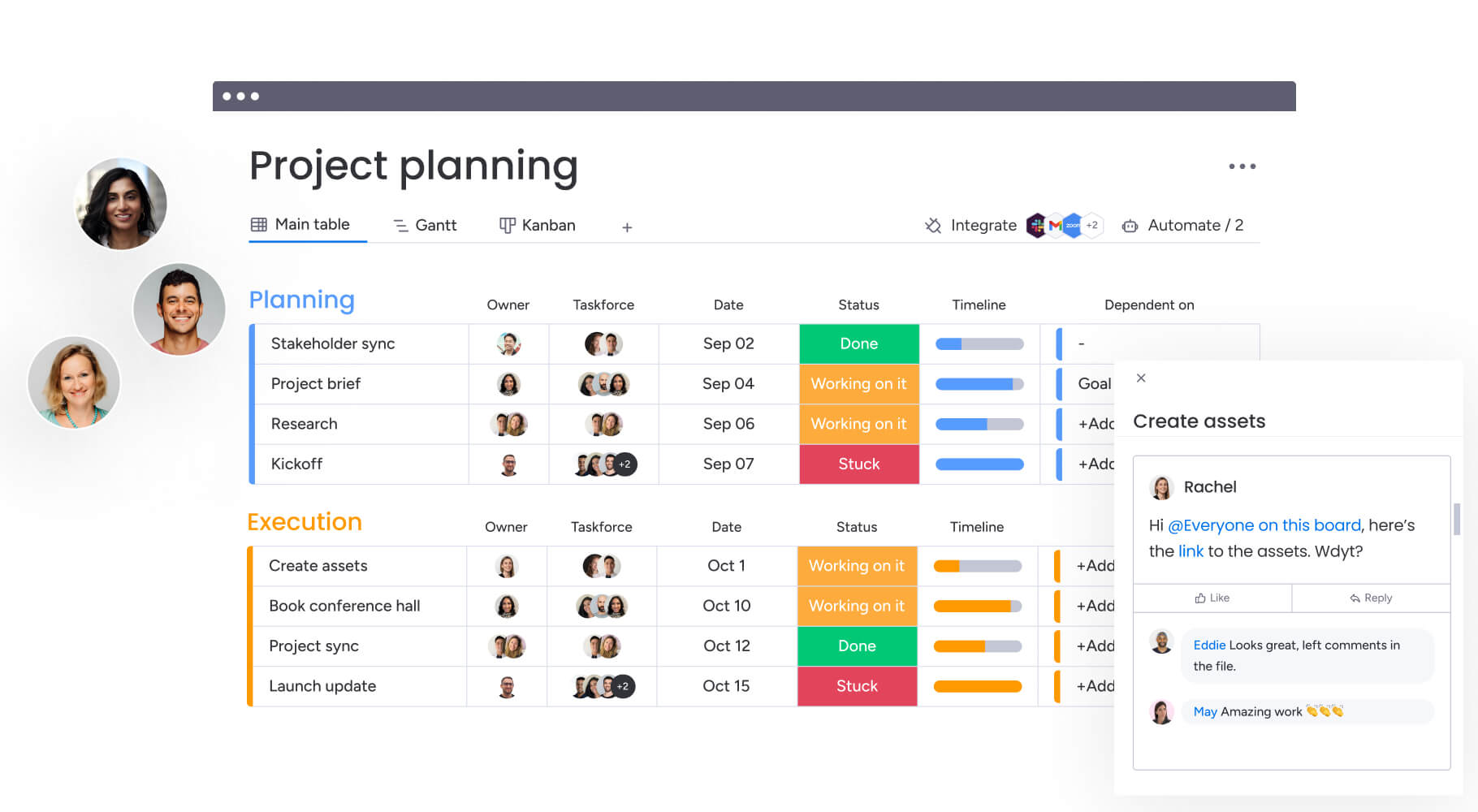
This requires strong governance structures, communication protocols, and technology infrastructure that supports cross-departmental visibility. Platforms that provide a “single pane of glass” view become essential, as email and spreadsheets cannot handle the complexity of synchronized cross-functional execution.
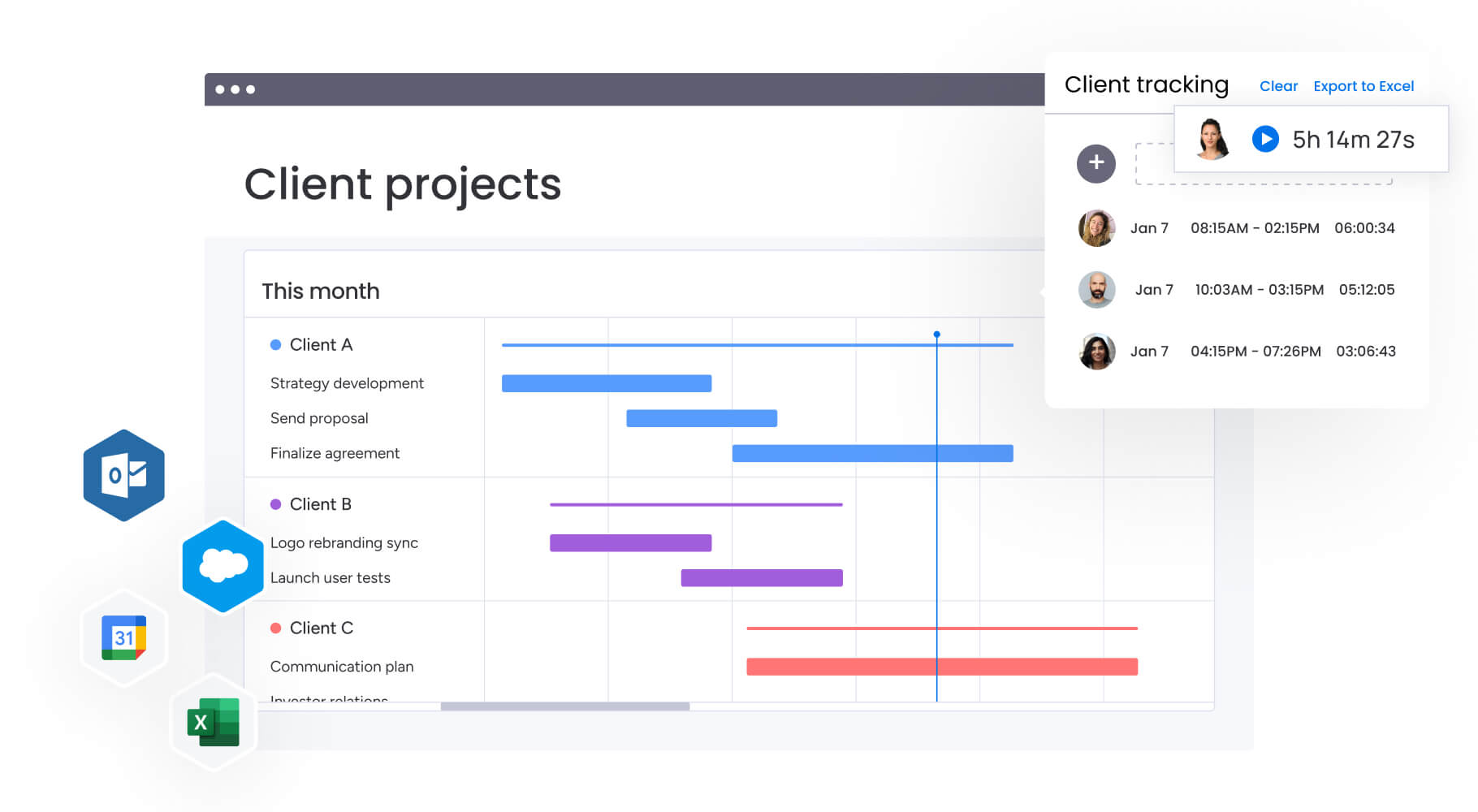
monday work management connects all the applications teams already use, including Microsoft Teams, Gmail, Slack, Jira, and Salesforce, so you can run projects without switching tabs.
OPM strategy takes a company-wide perspective, focusing on collective success. Decisions about timeline adjustments, scope changes, or resource reallocation are based on what creates the most value for the organization, not just what turns a project status indicator green.
5 types of projects that require organizational PM strategy
Not every initiative demands organizational project management strategy. Routine projects can succeed within traditional structures. But once work becomes cross-functional, resource-intensive, and tightly connected to long-term business direction, the stakes change.
These initiatives don’t fail because teams lack capability. They fail because coordination breaks down, competing priorities surface, and dependencies go unmanaged. Departments optimize locally instead of collectively.
The following types of projects are where OPM strategy becomes less of an enhancement and more of an actual necessity.
1. Digital transformation initiatives
Digital transformation projects fundamentally change how organizations operate and deliver value. These are not isolated IT upgrades; they span every department, require significant cultural change, and directly impact strategic capabilities.
Without OPM strategy, these initiatives fracture into disconnected tech implementations that fail to create real business value. A successful transformation requires coordinated change management, technology deployment, and process re-engineering across your company.
2. Cross-departmental programs
Cross-departmental programs need coordination and resources from multiple departments to achieve shared objectives. These programs face unique challenges regarding competing priorities, resource conflicts, and accountability gaps.
OPM strategy addresses these by establishing governance structures and shared success metrics that override departmental KPIs. Common examples include company-wide rebranding efforts or the integration of newly acquired companies.
3. Strategic business transformations
Strategic business transformations mean major changes to business models, market positioning, or operational approaches. These initiatives need sustained executive commitment and careful sequencing to minimize disruption to ongoing operations.
Portfolio management plays a critical role here, coordinating the timing of various initiatives so the organization can absorb the change while maintaining performance.
4. Innovation and product development portfolios
Innovation portfolios include research, development, and commercialization projects that advance company capabilities. These projects have high uncertainty and need iterative development.
OPM strategy manages innovation differently than standard operations, utilizing portfolio-level risk management and “stage-gate” processes that allow for rapid experimentation and failure without jeopardizing the broader strategy.
5. Operational excellence projects
Operational excellence projects improve efficiency, quality, and performance across company processes. These projects often require standardizing processes across disparate departments, which can trigger resistance.

Designing the operating model for OPM success
Strategy only delivers results when the organization is built to support it. As initiatives multiply and dependencies grow, coordination can’t rely on informal alignment or heroic project managers. It requires a structure that makes visibility automatic, decision-making clear, and accountability shared across functions.
That structure usually evolves across three fronts: how the PMO operates, how leadership roles are defined, and how technology reduces coordination overhead. Together, these elements turn OPM from a framework on paper into a system that actually drives execution.
The strategic evolution of the PMO
The Project Management Office (PMO) is the unit responsible for standardizing practices and ensuring alignment. Modern PMOs have evolved from administrative “police” to strategic enablers that drive business value through improved project coordination.
Organizations typically choose from three common PMO models based on their needs and culture. Each model offers different levels of control and support:
- Supportive: Provides templates, best practices, and training with low control.
- Controlling: Requires compliance with specific frameworks and applications.
- Directive: Directly manages projects and resources with high control.
Modern PMOs use technology platforms to provide real-time visibility, automating the reporting functions that used to consume valuable time.
Portfolio and program leadership roles
Effective OPM needs specific leadership roles with distinct responsibilities that connect strategy and execution. These roles work together to make sure projects create business value, not just outputs.
| Role | Focus | Success metrics |
|---|---|---|
| Portfolio manager | Strategic value | ROI, strategic alignment, balance |
| Program manager | Benefits realization | Program outcomes, synergy, stakeholder satisfaction |
| Project manager | Deliverable execution | Quality, schedule, budget, scope |
Organizations typically add Portfolio Managers as they scale and resource allocation becomes too complex for individual department heads.
AI and digital workforce integration
Artificial intelligence and digital workers are changing organizational structures by automating routine coordination. AI applications can now handle risk detection, resource optimization, and performance prediction, freeing human managers to focus on strategy.
Digital Workers, software bots configured to perform specific roles, can monitor project health, flag potential issues, and update status reports.
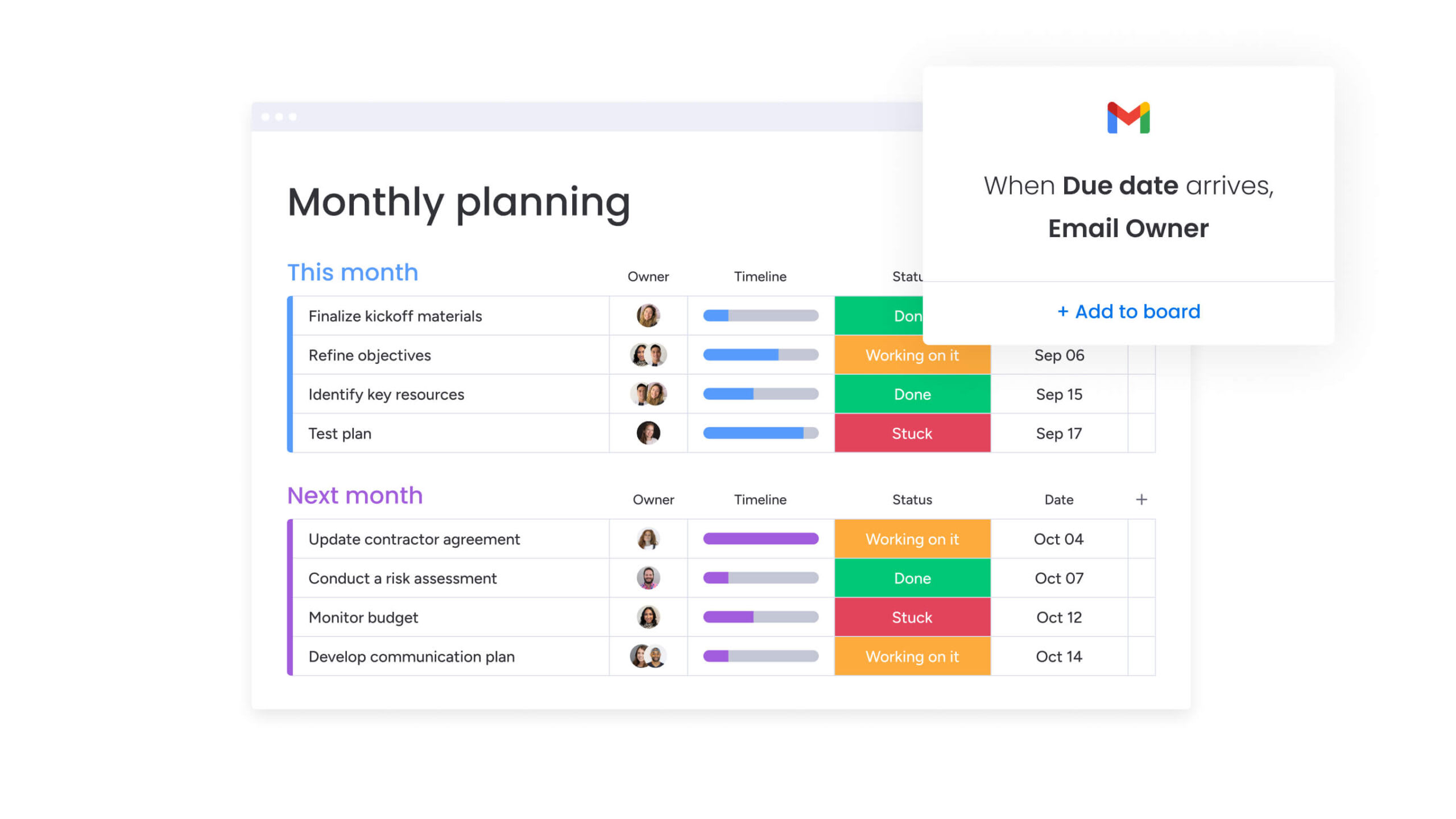
With intelligent platforms such as monday work management, Portfolio Risk Insights scan all project boards, quickly flagging potential risks by severity so teams can spot critical issues at a glance without manually combing through data. This integration allows human project managers to focus on high-value activities like stakeholder negotiation, strategy refinement, and team leadership.
How to develop your organizational project management framework
OPM capability doesn’t emerge by accident. It develops when leadership makes deliberate decisions about how work is prioritized, governed, and measured across the organization.
Scaling that capability requires more than new templates or reporting dashboards. It requires clarity: where the organization stands today, what success should look like, and how structure, technology, and accountability will evolve together.
The steps below outline how mature organizations build OPM intentionally — strengthening alignment, improving decision-making, and embedding strategy into day-to-day execution.
Step 1: Assess project management maturity
The foundation of development is an honest assessment of current capabilities. This involves evaluating governance structures, resource management practices, technology stacks, and strategic alignment processes.
A simple maturity framework typically progresses from “Ad-hoc” (chaotic, hero-based) to “defined” (standardized processes) to “optimized” (continuous improvement). Assessment results directly inform the design of the new framework.
Step 2: define strategic objectives and success metrics
Strategic objectives act as the North Star for the OPM framework. Organizations must translate high-level business strategy into specific, measurable project management objectives that guide daily decisions.
The following metric categories help organizations track progress toward their OPM goals. Each category addresses a different dimension of organizational project management success:
- Strategic alignment: Percentage of projects linked to corporate goals.
- Resource utilization: Billable vs. non-billable hours, capacity vs. demand.
- Delivery performance: Cycle time, on-time delivery rate.
- Business impact: Revenue generated, costs saved, customer satisfaction.
Step 3: Establish governance and decision rights
Governance creates alignment and ensures accountability. It defines who has the authority to approve projects, reallocate resources, and handle escalations across the organization.
A governance framework balances control with agility, ensuring that decisions are made at the appropriate level. Strategic decisions go to the steering committee; operational decisions stay with the project team. These frameworks must be documented and transparent to all stakeholders.
Step 4: Create project prioritization criteria
Prioritization is the systematic process of ranking projects based on strategic value. Given limited resources, organizations cannot do everything and must make objective decisions about where to invest.
The following criteria help organizations make objective decisions about which projects to pursue. A weighted scoring model helps objectify these decisions, reducing political influence on project selection:
- Strategic alignment: how strongly does this support our top three goals?
- Financial return: what is the projected ROI or NPV?
- Risk level: what is the probability of technical or market failure?
- Urgency: is there a compliance deadline or market window?
Step 5: implement OPM technology and automation
Technology provides the infrastructure for visibility and coordination that makes OPM possible at scale. Modern OPM requires a platform that supports portfolio dashboards, resource management, and workflow automation in a single environment.
Organizations can achieve these integrated capabilities through monday work management, avoiding the data silos created by using separate applications for planning, tracking, and reporting. AI capabilities for risk detection and predictive analytics are increasingly critical selection criteria.
Step 6: Build cross-functional project workflows
Standardized cross-functional project workflows coordinate work across organizational boundaries and ensure consistency while reducing coordination overhead. They enable scalability by creating repeatable processes that work regardless of team composition.
Effective workflows include several key components that define how work moves between teams. Automation plays a key role here too, triggering notifications and assignments automatically as work progresses through the value chain:
- Handoff points: Definitions of when ownership transfers between teams.
- Approval processes: Automated gates for budget or scope changes.
- Communication protocols: Standardized updates and reporting cadences.
Step 7: Deploy continuous monitoring and optimization
Finally, remember that the framework is not static: it requires ongoing monitoring and optimization to remain effective. Effective monitoring involves real-time dashboards that track project health, resource utilization, and strategic alignment across the entire portfolio.
Scaling that capability requires more than new templates or reporting dashboards. It requires clarity: where the organization stands today, what success should look like, and how structure, technology, and accountability will evolve together.
Aligning projects with organizational strategy
Strategic alignment is not a one-time setup activity but a continuous process of calibration that ensures projects remain connected to business objectives. This ongoing alignment prevents organizations from drifting into tactical execution without strategic purpose.
Creating project-to-strategy linkages
Every project must have a traceable connection to a strategic objective that justifies its existence and resource consumption. Explicit linkages are crucial for decision-making; if a strategic goal changes, the organization instantly knows which projects are affected.
Methods like strategy mapping and objective hierarchies visualize these connections, helping stakeholders understand how a specific coding task or marketing campaign contributes to the company’s annual revenue target.
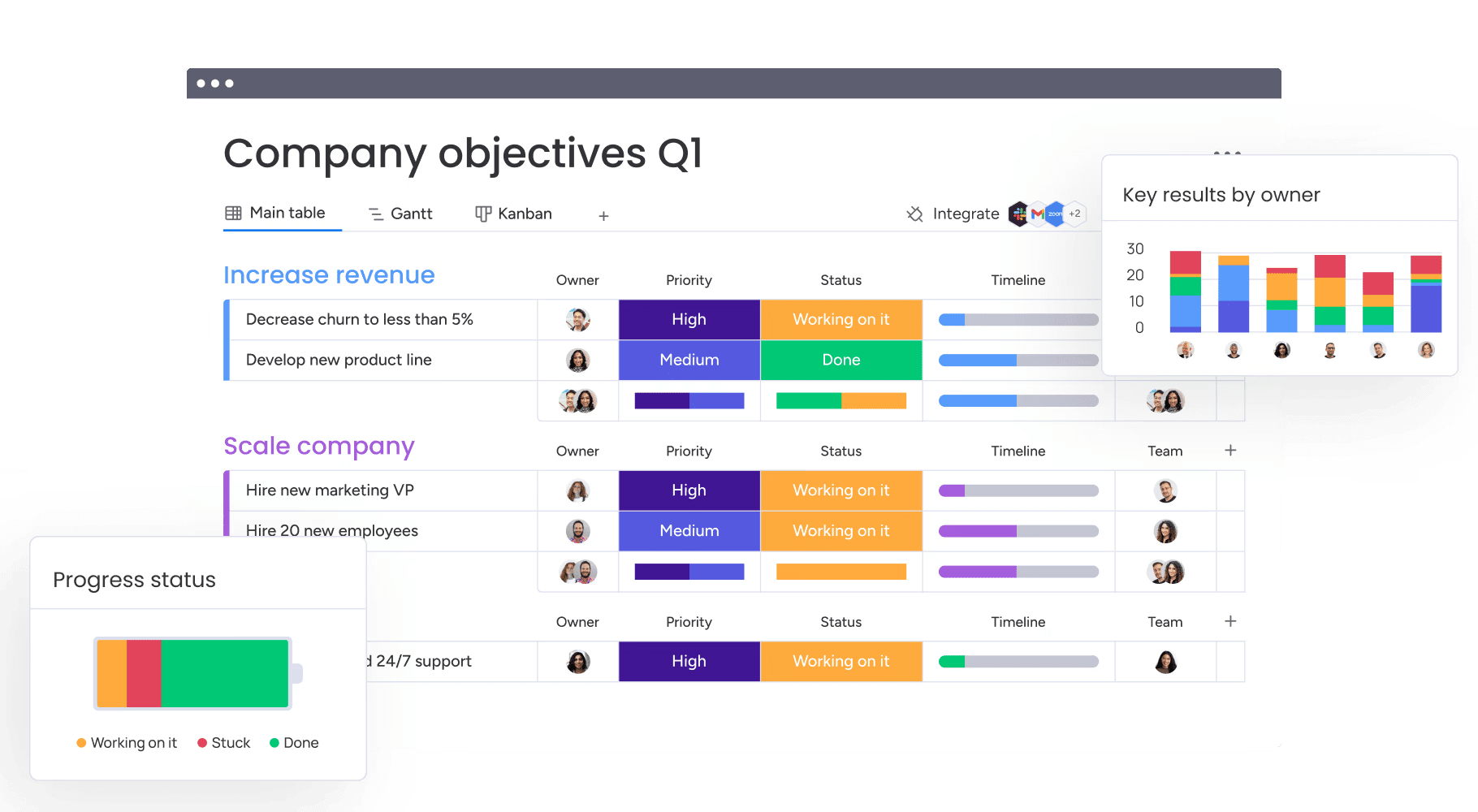
Organizations can streamline this through monday work management’s Goals & OKRs capabilities, which help identify and strategize company and team-level goals, and create a detailed action plan to achieve them.
Building real-time alignment dashboards
Alignment dashboards provide a visual, real-time view of how the portfolio supports strategy. Rather than relying on static quarterly reports, these dashboards show live data on strategic objective progress, project health, and resource allocation.
Effective alignment dashboards include several key components that give leaders the information they need to make decisions. Teams can customize monday work management dashboards based on specific needs with over ten plus drag and drop widgets, allowing different audiences to view data the way they need to make sharper, faster decisions:
- Strategic progress: Status of high-level goals (e.g., “expand into APAC”).
- Portfolio health: Aggregate status of all projects linked to that goal.
- Risk alerts: Early warnings for initiatives that are off-track.
Conducting strategic review cycles
Strategic review cycles are structured processes for evaluating the portfolio against changing business conditions. Regular reviews, typically monthly or quarterly, allow leadership to pivot quickly when market conditions or strategic priorities shift.
Outcomes of these cycles include decisions to continue, modify, or terminate projects based on performance and continued strategic relevance. Data-driven reviews, supported by real-time dashboards, replace gut-feel decision-making with evidence-based strategy.
Key benefits of organizational project management
When organizational project management strategy is working, the impact shows up quickly. Decisions move faster. Resources stop colliding. Leaders gain clarity into what’s driving real progress and what isn’t.
The benefits extend far beyond individual projects too: OPM changes how the organization executes strategy, turning coordination into a competitive advantage rather than a constant bottleneck.
Accelerated strategic execution
OPM strategy significantly shortens the time between strategic decision and execution. Improved coordination, reduced resource conflicts, and focused allocation mechanisms remove the friction that typically slows down large organizations.
Companies with mature OPM capabilities consistently achieve faster time-to-market and higher rates of strategic initiative completion.
Optimized resource utilization
Resource optimization ensures that the organization gets the most value from its talent and budget. OPM strategy provides the visibility needed to identify underutilized resources and overburdened teams before problems escalate.
The following outcomes result from effective resource optimization. Each contributes to maximizing the value organizations extract from their investments:
- Reduced conflicts: Fewer delays caused by fighting over shared staff.
- Improved capacity: Matching of supply and demand.
- Skills matching: Assigning the right expertise to the right work.
Enhanced portfolio visibility
Portfolio visibility eliminates blind spots that plague traditional project management approaches. It provides a comprehensive, real-time understanding of status, risks, and progress across the entire enterprise.
This transparency enables faster issue resolution and builds trust with stakeholders. Executives no longer need to ask for status updates; they can see the health of the business at a glance.
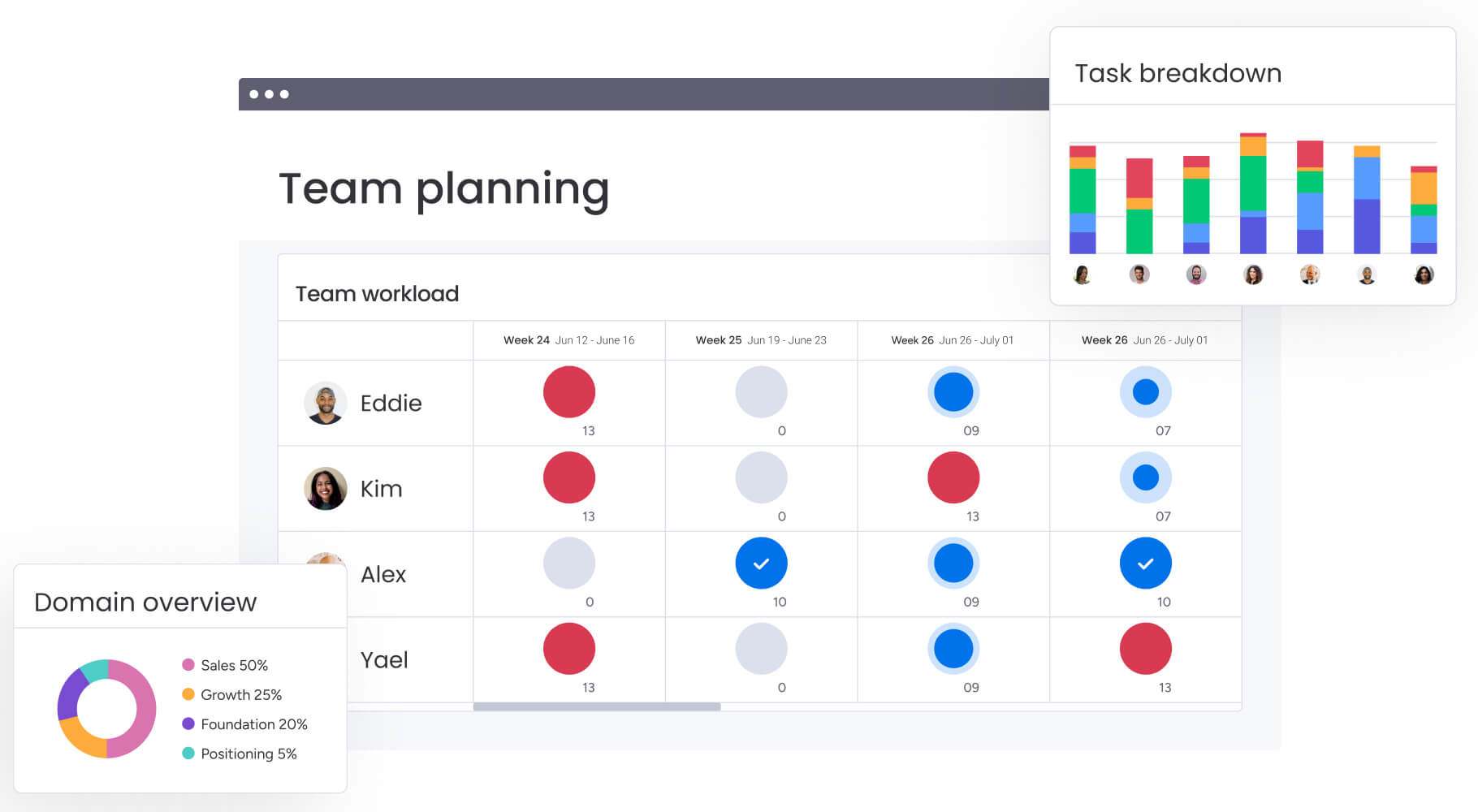
Organizations leverage monday work management’s portfolio management capabilities to see the big picture and easily detect bottlenecks and problems by pulling data from all projects across different programs into one high-level view.
Reduced project failure rates
OPM strategy reduces failure rates by killing bad projects early and supporting good projects effectively. Improved project selection prevents the organization from starting doomed initiatives that waste resources.

“monday.com has been a life-changer. It gives us transparency, accountability, and a centralized place to manage projects across the globe".
Kendra Seier | Project Manager
“monday.com is the link that holds our business together — connecting our support office and stores with the visibility to move fast, stay consistent, and understand the impact on revenue.”
Duncan McHugh | Chief Operations OfficerMeasuring OPM success through strategic KPIs
Effective measurement systems provide both operational insights and strategic indicators, connecting daily activities to business outcomes. These metrics below help companies understand whether their OPM strategy is delivering the intended value and where adjustments are needed.
Portfolio performance metrics
Portfolio metrics evaluate the collective success of the investment mix rather than individual project performance. Unlike project metrics, these focus on aggregate health and strategic contribution.
The following metrics help organizations assess how well their portfolio delivers value:
- Strategic objective achievement rate: The percentage of strategic goals met through project delivery.
- Portfolio ROI: The total financial return against the total portfolio investment.
- Delivery predictability: The consistency of on-time, on-budget delivery across the portfolio.
Strategic alignment indicators
Alignment indicators measure how well the portfolio reflects the organization’s priorities. These metrics reveal whether resources flow toward strategic objectives or get consumed by lower-priority work that doesn’t advance business goals.
Key alignment metrics include:
- Resource allocation by strategy: What percentage of people are working on top-tier goals vs. “keep the lights on” work?
- Traceability score: The percentage of active projects linked to a strategic objective
Resource efficiency measurements
Resource efficiency metrics track how effectively the organization utilizes its capacity. These measurements help identify waste and optimization opportunities that can improve overall performance.
Critical efficiency metrics include:
- Utilization rate: The ratio of billable/productive time to total available time.
- Cost per outcome: The efficiency of converting budget into business value.
- Capacity planning accuracy: The variance between forecasted and actual resource needs.
Teams using monday work management’s time tracking capabilities monitor how long a project takes to plan for the future and make sure your team’s time is spent efficiently.
Business value delivered
Business value metrics are the ultimate test of OPM effectiveness. These connect project work directly to organizational outcomes and demonstrate the return on investment in project management capabilities.
Essential value metrics include:
- Revenue impact: Direct financial contribution of completed projects.
- Cost savings: Operational efficiencies realized.
- Market position: Improvements in market share or brand equity attributable to strategic initiatives.

AI and automation in organizational project management
AI and automation have become operational necessities in organizational project management. As portfolios grow and dependencies multiply, manual coordination simply can’t keep up. Leaders need real-time insight, smarter resource decisions, and earlier warning signals than spreadsheets and status meetings can provide.
That’s where AI changes the equation — not by replacing project leadership, but by removing the noise that slows it down.
AI-powered portfolio risk detection
AI analyzes vast amounts of project data to identify risks across portfolios before they become critical. It detects patterns such as schedule slippage trends, resource bottlenecks, or dependency conflicts that a human manager might miss in a sea of data.
Organizations leverage monday work management’s Portfolio Risk Insights to scan hundreds of project boards simultaneously, flagging potential issues by severity level for immediate attention. With just a click, teams can notify the right person about an emerging risk, with the platform generating a summary and linking relevant work.
Automated resource allocation and skills matching
AI optimizes resource allocation by processing multiple variables simultaneously: skills, availability, time zones, and project priority. It can suggest the optimal team configuration for a new project instantly, removing guesswork from resource planning.
This automation improves utilization rates and reduces the administrative burden on resource managers, while ensuring that the best-fit talent is assigned to the most critical work. Teams enable organizations to plan, schedule, and allocate resources through monday work management to adapt to changing priorities, assigning the right people based on skill and availability.
Predictive analytics for project success
Predictive analytics uses historical performance data to forecast future outcomes with increasing accuracy. AI can predict completion dates, budget variance, and quality risks based on current project patterns and historical data.
This shifts management from reactive firefighting to proactive adjustment. Project managers receive insights that allow them to intervene months in advance rather than scrambling when deadlines approach.
Human-machine collaboration in PM
The future of OPM is collaborative, with AI augmenting human capabilities rather than replacing judgment. AI handles routine data gathering, status aggregation, and pattern recognition, while humans focus on strategic decisions.
Digital Workers manage the administrative coordination. This frees human leaders to focus on complex decision-making, stakeholder negotiation, and team motivation, the “human” elements of management that algorithms cannot replicate.
Turn strategy into coordinated execution with monday work management
As organizations scale, leaders face a familiar set of challenges: initiatives multiply, resources stretch thin, and teams execute work in silos with limited visibility into how daily activity supports strategic priorities. Without a structured approach, even well-funded projects compete for attention, governance slows decision-making, and progress is measured by output rather than impact.
monday work management helps organizations address these challenges by turning organizational project management strategy into an operational reality. It connects portfolios, programs, and projects in a single system, ensuring strategy flows directly into execution while maintaining flexibility as priorities change.
- Centralized portfolio visibility: enables leaders to see how all initiatives align with strategic objectives in real time.
- Cross-functional resource management: balances capacity, skills, and demand across departments to reduce conflict and burnout.
- Automated governance and workflows: standardizes approvals, escalations, and reporting without adding process overhead.
- AI-powered risk and performance insights: surfaces issues early and supports proactive decision-making at scale.
- Strategy-to-execution alignment: links goals, projects, and outcomes so daily work consistently supports business priorities.
With monday work management, teams gain clarity without complexity, alignment without rigidity, and execution speed without sacrificing control. The result is measurable strategic impact, faster decision-making, and an organization that consistently delivers the right work at the right time.
Frequently asked questions
What are the four types of organizational strategy?
The four types of organizational strategy are corporate strategy (defining the overall direction), business strategy (determining competitive positioning), functional strategy (aligning departmental actions), and operational strategy (guiding execution approaches). Organizational project management strategy acts as the connective tissue that ensures execution at the operational level supports the corporate and business strategies.
What are the seven strategies of project management?
While frameworks vary, the seven common strategies include scope management, time management, cost management, quality management, resource management, communication management, and risk management. OPM strategy coordinates these disciplines across multiple projects simultaneously to ensure consistent delivery and strategic alignment.
What are the Four p's of PMO?
The 4 P's of a Project Management Office are People (developing talent and skills), Process (establishing standardized methods), Projects (managing the portfolio execution), and Performance (measuring results and driving improvement). These elements work together within an OPM strategy to create a sustainable environment for project success.
How long does it take to implement organizational project management?
Full implementation typically takes three to twelve months, depending on the organization's size and complexity. Platforms like monday work management accelerate this timeline significantly by providing pre-built templates and intuitive interfaces that allow teams to adopt OPM practices in weeks rather than months.
What's the difference between project management and organizational project management?
Project management focuses on the successful delivery of individual projects (outputs), while organizational project management strategy focuses on coordinating the entire portfolio of projects to achieve strategic business objectives (outcomes). OPM ensures the organization is doing the "right" projects, while PM ensures those projects are done "right."
Can small organizations benefit from OPM strategy?
Small organizations benefit significantly from OPM principles. As they grow, the need for coordination across departments and projects increases. Implementing OPM strategy early establishes the governance and alignment habits necessary to scale efficiently without losing strategic focus.

 Get started