


Customer journeys don’t follow a straight line anymore. People discover products on TikTok during their morning commute, research reviews on their laptop at lunch, abandon their cart that evening, then show up in your physical store three days later asking about that exact item. The problem? Your sales team has zero visibility into any of it and your marketers are busy firing off emails about products they’ve already purchased in person.
Omnichannel marketing is the solution. It connects every touchpoint into one unified experience, where each interaction builds on the last instead of competing with it.
This guide explores how omnichannel marketing differs from simply broadcasting across multiple channels, and the operational components that make coordination possible. You’ll learn how to build an omnichannel strategy, set up automation workflows that scale, and use monday work management to execute seamless campaigns across all touchpoints.
Try monday work managementKey takeaways
- Omnichannel marketing connects every customer touchpoint into one unified system, so interactions on one platform automatically inform experiences everywhere else.
- Success requires unified customer data that updates in real-time across all systems, giving every team instant visibility into customer behavior.
- Mapping complete customer journeys helps you identify friction points and create smoother transitions between channels.
- You can measure performance through journey-based metrics like cross-channel conversion rates and customer lifetime value rather than isolated channel statistics.
- monday work management provides the infrastructure to coordinate these complex workflows, using visual workspaces and AI-powered automation to eliminate delays and ensure consistent messaging across all channels.
What is omnichannel marketing?
Think of omnichannel marketing as a way to create connected customer experiences across every touchpoint — from your website and mobile app to social media, email, and physical stores. Unlike traditional approaches where each channel operates independently, omnichannel marketing connects the dots. When a customer interacts with your brand on one platform, that experience influences what happens next everywhere else.
Example: A customer is browsing products on their phone during lunch. With omnichannel marketing, their browsing history immediately informs:
- the email they receive that evening
- the social ads they see the next day
- the recommendations they get when visiting your store.
Every interaction builds on the last, creating a seamless journey that feels personalized and intentional across all marketing channels.
Omnichannel vs. multichannel marketing
The difference between omnichannel and multichannel marketing comes down to one thing: coordination. Both approaches use multiple platforms to reach customers, but they operate in fundamentally different ways.
| Aspect | Multichannel approach | Omnichannel approach |
|---|---|---|
| Campaign planning | Channel-specific strategies planned separately by individual teams | Unified architecture planned centrally with cross-functional input |
| Data management | Information trapped in platform silos; teams can't see activity across other channels | Integrated customer profiles that update in real time and are accessible to all teams |
| Team structure | Independent teams with separate KPIs competing for the same audience | Cross-functional collaboration with shared goals and journey-based objectives |
| Performance metrics | Channel-specific metrics like email open rates or social engagement | Journey-focused metrics like cross-channel conversion rates and customer lifetime value |
| Resource allocation | Fixed budgets per channel regardless of performance | Dynamic allocation that shifts resources based on real-time performance |
| Customer experience | Disconnected interactions; customers may receive irrelevant or duplicate messaging | Seamless journey where each interaction reflects previous behaviour across touchpoints |
| Workflow coordination | Separate calendars and systems; campaigns can overlap or conflict | Synchronized workflows with shared timing and logic to prevent conflicting messages |
| Technology infrastructure | Disconnected platforms that don't communicate with each other | Integrated systems where data flows automatically between platforms |
Why omnichannel marketing drives revenue growth
Omnichannel strategies boost revenue by removing friction from the buying process and making every interaction more relevant. When customers experience consistent, connected engagement across channels, they buy more frequently, spend more per transaction, and stay loyal longer. Here’s how that translates into measurable business impact.
Increased customer lifetime value
Connected touchpoints create experiences that build trust and encourage repeat purchases.
A customer who receives a personalized video message after a high-value purchase feels recognized and valued. When that same customer later sees product recommendations based on their purchase history, they’re more likely to buy again, either online or in-store.
Higher ROI through channel synergy
When channels work together, they amplify each other’s effectiveness. Social media content primes audiences for email campaigns. Email drives traffic to landing pages. Web behavior triggers personalized retargeting.
Each touchpoint reinforces the others, reducing the cost of customer acquisition and increasing conversion rates. This teamwork between channels also solves attribution challenges. Instead of arguing about which channel deserves credit for a sale, you’ll see how different touchpoints work together throughout the customer journey.
Optimized resource allocation across channels
Omnichannel coordination lets you move resources where they’ll have the biggest impact. For example:
- When a social campaign suddenly performs well, you can shift budget from slower channels to amplify what’s working.
- If email engagement drops, redirect that effort to channels delivering better results.
This agility extends to team resources, too. With monday work management, effective resource management becomes part of your operational fabric. Visual workload management helps you see which team members are overwhelmed and who has capacity, allowing you to balance assignments based on actual availability rather than assumptions.
Try monday work management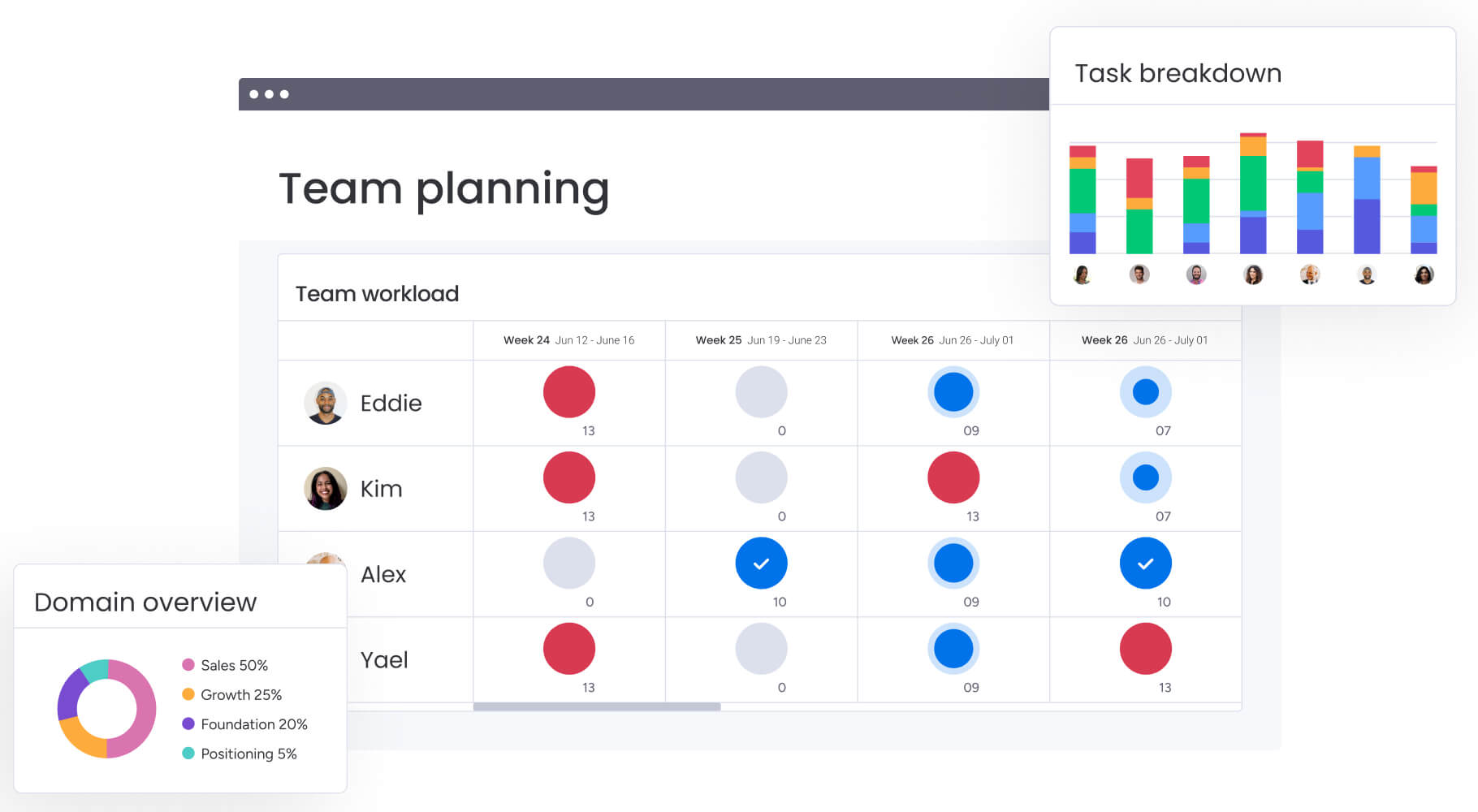
5 core components of omnichannel marketing success
Building effective omnichannel marketing requires specific components that work together to create seamless experiences. These are the foundation that makes coordination possible at scale.
1. Unified customer data platform
A single source of truth for customer information forms the backbone of omnichannel execution. This means integrating data from your CRM, point-of-sale system, website analytics, and social platforms into unified profiles that update in real-time.
The main challenge is maintaining quality and accessibility. When customer information flows into your system, it needs to be automatically categorized, cleaned, and made available to every team that needs it. AI-powered tools help by extracting relevant information from various sources and organizing it without manual data entry.
2. Cross-channel campaign orchestration
Orchestration means coordinating the timing, messaging, and logic of campaigns across all channels. This requires a central system where teams can map out triggers, sequences, and dependencies for every campaign element.
For example, when a customer abandons their cart, orchestration makes sure that:
- They receive a push notification within an hour
- They receive email the next morning if they haven’t returned
- They see retargeting ads featuring those exact products over the following days.
Each message builds on the previous one, creating a coherent narrative rather than random touchpoints.
3. Consistent brand experience delivery
Brand consistency across channels requires more than just using the same logo and colors. It means maintaining your brand voice, values, and quality standards whether customers interact through social, email, or in-store.
This consistency depends on rigorous workflows for content creation and approval:
- Every asset needs to pass through standardized workflows
- Clear ownership and accountability at each stage
- Centralized content management repositories ensure teams always access the latest, approved versions of creative assets
4. Integrated marketing technology stack
Your technology infrastructure must support seamless data flow between systems that all need to communicate without manual intervention. These include:
- Marketing automation platforms
- Content management systems
- Analytics tools
- Customer databases
Choose platforms that integrate naturally instead of forcing connections through complex workarounds. When your email system automatically pulls data from your CRM, and your CRM updates based on web behavior, you eliminate the manual work that slows down coordination and introduces errors.
5. Collaborative team structure
Omnichannel success requires you to break down the walls between channel-specific teams. Instead of separate email, social, and web teams competing for attention, you need collaborative structures where everyone works toward shared goals.
This often means reorganizing from channel-based teams to objective-based squads. For instance, a “customer retention squad” might include members from email, social, content, and analytics, all focused on keeping customers engaged rather than just executing channel-specific tactics.

7 steps to build your omnichannel marketing strategy
Creating an effective omnichannel strategy takes systematic planning and execution. These 7 steps guide you from assessment through implementation and scaling.
Step 1: Audit current channel performance
Start by evaluating your existing capabilities across all channels. This audit should examine performance metrics and whether you’re operationally ready for omnichannel coordination.
Focus on these areas:
- Data consistency: How aligned is customer information across platforms?
- Channel effectiveness: Which channels drive the most valuable engagement?
- System integration: Do your current tools communicate automatically?
- Team readiness: How quickly can teams pivot and coordinate?
- Content alignment: Is your brand voice consistent everywhere?
Step 2: Map complete customer journeys
Document how customers typically move through your channels from first contact to purchase and beyond. This mapping should capture entry points, transition patterns, and drop-off locations.
Involve teams from every channel in mapping sessions to check you’re capturing the real customer experience, not just what you assume happens. Pay special attention to channel switching — understanding why customers move between touchpoints helps you optimize those transitions.
Step 3: Define channel roles and objectives
Each channel needs a specific purpose within your ecosystem. Email might excel at nurturing leads, while social media builds awareness and your website drives conversions. Defining these roles prevents channels from competing and makes sure they complement each other.
Once roles are clear, build accountability around them:
- The social team should be measured on driving quality traffic to the website, not just follower counts
- Email success might focus on moving leads through the funnel rather than just open rates
Step 4: Create coordination frameworks
Success depends on clear rules for how teams work together. Coordination frameworks should define communication protocols, decision-making processes, and conflict resolution methods.
These frameworks include standardized campaign brief templates, clear asset-sharing procedures, and governance models for data usage. They add structure without the red tape that slows you down.
Step 5: Implement integrated technology
When implementing technology, prioritize connectivity over features. Choose systems with robust APIs and native integrations that allow data to flow freely between platforms.
A work management platform serves as the coordination layer, connecting disparate systems and providing a unified interface for planning and execution. This prevents the creation of new technology silos that would otherwise undermine your omnichannel efforts.
Step 6: Establish governance processes
Governance delivers consistency and compliance across all channels. This includes approval workflows for creative assets, data privacy protocols, and regular performance reviews.
Good governance balances control with speed:
- Define clear decision-making authority so teams can move quickly on routine adjustments
- Require higher approval for major strategic changes
- Multi-level permissions ensure the right people have access to make decisions without creating bottlenecks
Step 7: Launch, monitor, and scale
Implementation should be phased, starting with pilot campaigns that test coordination workflows and data flows. Monitor these pilots closely through unified dashboards that show performance across all involved channels.
As pilots prove successful, gradually expand the approach. Add new channels, increase automation complexity, and scale successful workflows across more campaigns. As you scale, keep the coordination frameworks that made your initial success possible.
Try monday work managementHow to coordinate omnichannel marketing campaigns
Once your omnichannel strategy is in place, coordination is what keeps everything running smoothly day to day. You need workflows and processes that connect teams consistently, and systems that adapt as conditions change.
Break down channel silos
Eliminating silos starts with changing how teams communicate and share information. Instead of scattered email threads and channel-specific meetings, teams need shared workspaces where campaign planning, assets, and discussions live together.
Break down silos with:
- Unified campaign calendars: A master view showing all channel activities prevents conflicts and reveals cross-promotion opportunities
- Integrated reporting structures: All teams report into shared dashboards, defining success by overall campaign performance rather than channel metrics
- Cross-team approval workflows: Content for one channel gets reviewed by stakeholders from others, with automated routing so nothing gets stuck
Build cross-team workflows
How you design workflows determines how fast and how well you execute. You need processes standardized enough for consistency but flexible enough for channel-specific optimization.
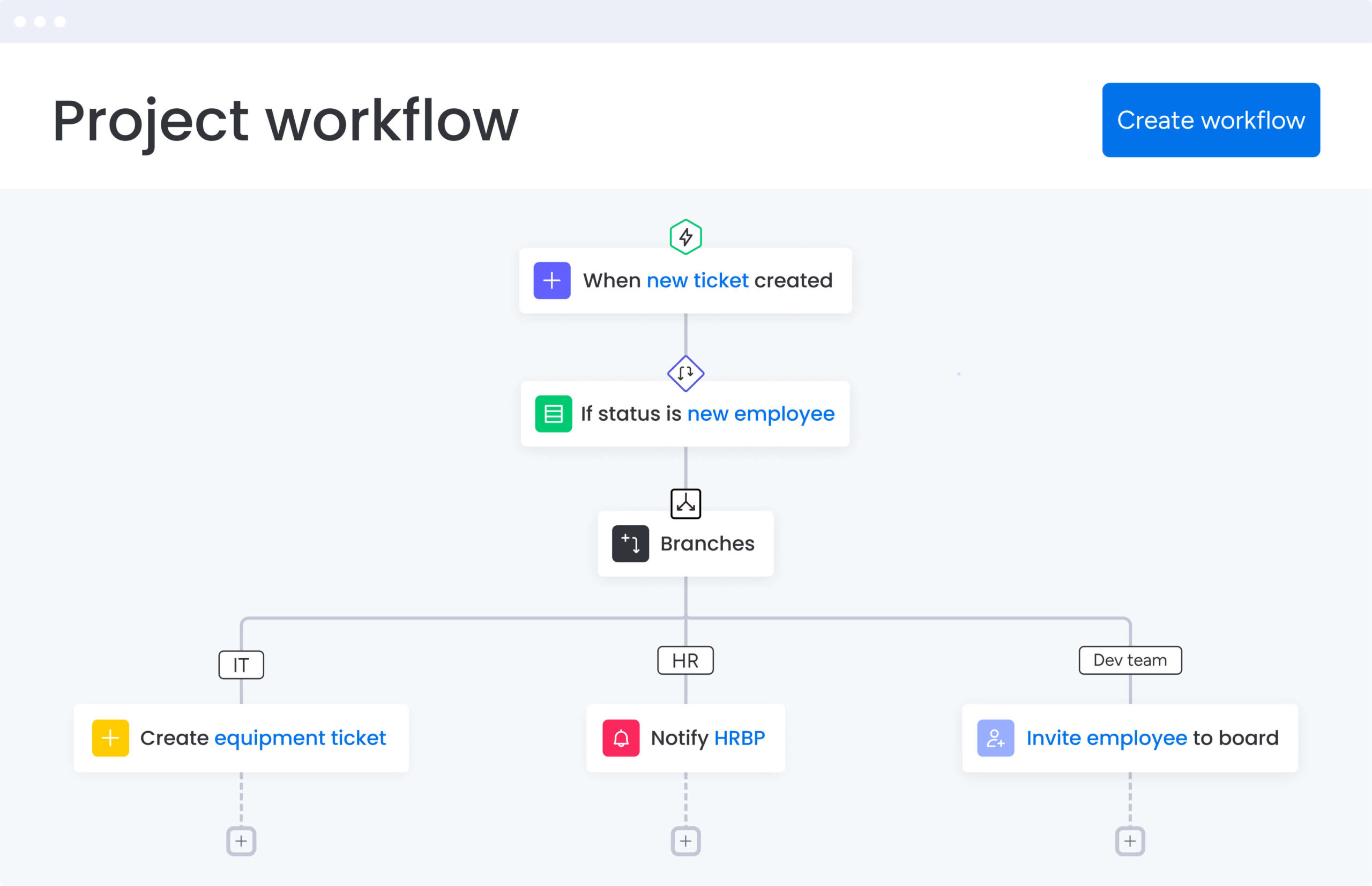
Start by mapping out hand-off points between teams. When strategy hands off to creative, creative to channel managers, and channel managers to analysts, each transition needs clear ownership and automated notifications. This eliminates the delays caused by people waiting for updates or not knowing work is ready for them.
Sync campaigns in real time
Synchronization means maintaining alignment even as campaigns evolve. Your team needs to spot issues immediately, like when an ad promotes an out-of-stock product or when messaging conflicts arise between channels.
Real-time dashboards that aggregate performance data help teams identify problems quickly. Automated alerts notify stakeholders of critical issues, while AI-powered monitoring can flag unusual patterns and suggest adjustments to keep campaigns running smoothly.
Omnichannel campaign workflows and automation
Effective omnichannel marketing depends on workflows that can scale without breaking down. Automation removes the manual friction that slows coordination and delivers consistent execution across every channel. Here’s how to build workflows that keep campaigns synchronized as complexity grows.
Campaign planning and approval processes
Coordinated planning brings all stakeholders together from the start. A typical omnichannel campaign workflow moves through these stages:
- Strategic brief creation: Centralized documentation accessible to all teams
- Parallel asset development: Copy and design work simultaneously with clear dependencies
- Stakeholder approval: Automated routing based on asset type and channel
- Channel preparation: Assets distributed to platform-specific systems
- Coordinated launch: Synchronized release across all channels
Each stage has clear owners, timelines, and hand-off points. Automation handles the routine aspects: notifying teams when their work is ready, escalating delays, and tracking progress against deadlines.
Automated content distribution
Distribution automation makes sure that content reaches the right channels at the right time. Instead of manually uploading assets to each platform, automated workflows push approved content to multiple endpoints simultaneously.
AI capabilities enhance distribution by automatically extracting key information for captions, categorizing content by type and channel, and even suggesting optimal posting times based on audience engagement patterns.
Performance-triggered campaign adjustments
Automated response systems help campaigns adapt based on real-time performance. Set up triggers that pause underperforming ads, increase budget for successful campaigns, or alert teams when metrics fall outside acceptable ranges.
These automated adjustments create a system that optimizes itself, so campaigns improve continuously without constant manual tweaking. Teams can focus on strategy and creative development while automation handles routine optimization tasks.
Measuring omnichannel marketing performance
Measuring omnichannel marketing means looking beyond individual channel metrics to understand how channels work together to drive results. This complete view shows the real impact of your coordinated efforts.
Essential omnichannel KPIs to track
Focus your measurement on metrics that capture the interconnected nature of omnichannel marketing:
- Cross-channel conversion rate: Percentage of customers who interact with multiple channels before purchasing
- Journey completion rate: How often customers successfully navigate your intended path across touchpoints
- Channel synergy score: The performance uplift when channels work together versus in isolation
- Coordination efficiency: Time saved through improved workflows and automation
- Customer lifetime value: Total value generated across all channels over time
- Journey-based ROAS: Revenue relative to total spend across all touchpoints in a customer journey
Multi-touch attribution models
Attribution in omnichannel marketing must account for how different touchpoints contribute to conversions. Simple last-click models miss the influence of earlier interactions that primed the customer for purchase.
Implement multi-touch attribution that weighs every interaction’s impact. This requires consistent tracking across channels, with standardized UTM parameters and unified customer identifiers that connect interactions across platforms.
Real-time performance dashboards
Dashboards serve as your omnichannel command center, integrating data from all marketing systems into a single view. They should provide both high-level executive summaries and detailed channel-specific insights.
Effective dashboards update automatically, pulling live data from connected systems to:
- Highlight trends
- Flag anomalies
- Drill down from overall campaign performance to specific channel contributions.
AI-powered omnichannel marketing
AI transforms omnichannel marketing from complex to manageable. AI handles coordination complexity that’s impossible to manage manually, especially as you scale across more channels and campaigns.
Automated campaign optimization
AI continuously analyzes performance across thousands of variables to identify optimization opportunities. Without human intervention, it can:
- Adjust bid strategies
- Swap creative elements
- Refine audience targeting
These systems learn from every interaction and get better over time. They excel at identifying patterns humans might miss, like subtle correlations between weather patterns and product preferences or optimal message timing for different customer segments.
Predictive resource management
AI anticipates resource needs before bottlenecks occur. Analyzing historical patterns and current trends lets you forecast:
- When you’ll need additional creative assets
- Which campaigns will require more budget
- When team capacity will be stretched.
This predictive capability also covers risk management. AI can scan project portfolios to flag potential issues early, giving you time to adjust before problems impact campaign delivery.
Dynamic content personalization at scale
Delivering personalized content to millions of customers requires AI automation. Machine learning models generate content variations tailored to individual preferences, so every customer receives relevant messaging regardless of channel.
AI also handles the operational aspects of personalization, like:
- Translating content for global markets
- Analyzing sentiment in customer feedback
- Extracting insights from engagement data to inform future content creation.
Transform omnichannel marketing execution with monday work management
monday work management is your foundation for managing work at scale, making it the perfect home to plan, execute, and track omnichannel campaigns across your entire organization. The platform provides visual workspaces where marketing teams can coordinate cross-functional projects, automate repetitive workflows, and connect your entire marketing stack through native integrations and APIs. Here’s where it offers the most value.
Coordinate campaigns seamlessly with visual workspaces
monday work management acts as the digital workspace for omnichannel campaigns. It replaces disconnected spreadsheets and email threads with visual workspaces where strategy connects directly to execution. Marketing leaders gain portfolio-level visibility through customizable dashboards, while automations handle routine hand-offs between teams.
The platform’s integration capabilities connect your entire marketing stack. When creative approves an asset, channel teams receive automatic notifications. When campaign performance shifts, stakeholders see updates instantly. This connectivity eliminates the delays and miscommunication that derail omnichannel coordination.
Break down silos with cross-functional collaboration tools
Breaking down silos requires more than good intentions. It needs infrastructure that makes collaboration natural. monday work management brings creative, digital, content, and strategy teams into shared environments where everyone has context.
Key features include:
- Workload View: See team capacity in real-time to balance assignments effectively
- Automated workflows: Trigger notifications and task assignments based on campaign progress
- Shared dashboards: Give all stakeholders visibility into campaign health and performance
- Integrated forms: Streamline campaign requests and approvals across departments
Optimize performance automatically with AI-powered capabilities
monday work management brings AI directly into marketing workflows through three capabilities:
- AI Blocks handle routine tasks at scale — categorizing campaign requests by priority, summarizing lengthy briefs into actionable tasks, and extracting key information from performance reports. This frees your team from manual activities so they can focus on strategy and creativity.
- Product Power-ups address complex challenges like risk management and resource allocation. They can identify at-risk campaigns across your entire portfolio and automatically suggest resource adjustments to keep projects on track.
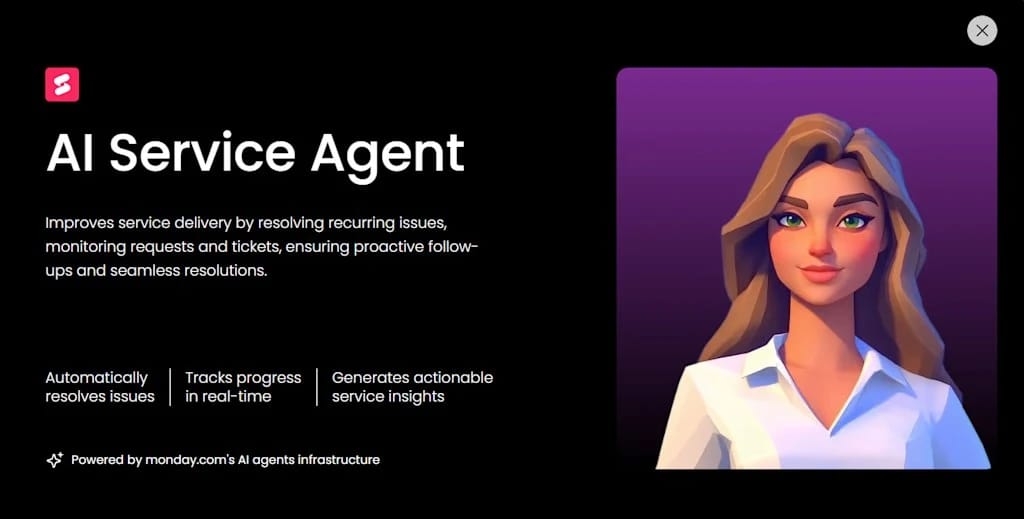
- Digital Workers act as always-on assistants that monitor campaign health, flag bottlenecks, and provide optimization recommendations. They work continuously in the background, freeing your human team to take on more complex campaign work.
Scale your omnichannel marketing impact
Customers want, need, and expect buying experiences that feel personal and intentional. And that’s what you get with omnichannel marketing.
monday work management gives you the infrastructure to seamlessly execute an omnichannel strategy that scales with your business. Start your free trial of monday work management today and transform how your team coordinates campaigns across every channel.
Try monday work managementFrequently asked questions
What is the difference between omnichannel and multichannel marketing?
Omnichannel marketing connects all channels into a unified system where customer interactions on one platform influence experiences on others. Multichannel marketing uses multiple channels that operate independently without coordination or shared data.
How long does it take to implement omnichannel marketing?
Basic channel alignment typically takes 3 to 6 months. Full coordination with integrated data and automated workflows usually requires 6 to 12 months, depending on how complex your organization is.
What tools are essential for omnichannel marketing?
You'll need a customer data platform for unified profiles, marketing automation for campaigns, analytics for tracking performance, a content management system, and a work management platform to coordinate everything.
Can small businesses implement omnichannel marketing effectively?
Small businesses can implement omnichannel marketing by starting with a few key channels, using integrated platforms that make coordination easier, and gradually expanding as they build capabilities.
How do you measure the success of omnichannel marketing?
Measure success through cross-channel conversion rates, customer lifetime value, journey completion rates, and metrics that show how channels work together to drive results.
What are the biggest challenges in omnichannel marketing implementation?
The biggest challenges? Unifying fragmented customer data, breaking down silos between teams, managing complex technology integrations, and measuring performance across all touchpoints.

 Get started