


Organizations can have strong strategies, capable teams, and clear goals, yet still struggle with alignment in everyday work. Priorities shift, decisions take longer than expected, and new initiatives compete for attention. When teams lack a shared sense of purpose, even well-planned strategies can feel disconnected from daily execution.
A clear mission statement provides that anchor. It defines why the organization exists and helps teams understand how their work contributes to something meaningful. Instead of adding complexity, it simplifies decision-making by giving leaders and employees a consistent reference point when evaluating priorities, tradeoffs, and opportunities.
An effective mission statement does more than describe ambition too. It shapes direction, reinforces identity, and keeps strategy grounded in purpose as organizations grow and evolve. The sections below explain what a mission statement is, why it matters, and how to create one in 2026 that actively guides decisions rather than sitting unused in a document.
Key takeaways
- Define purpose with clarity and focus: A strong mission statement clearly explains what your organization does, who it serves, and why it matters, creating a practical guide for everyday decisions.
- Use the mission as a decision filter: Teams can reduce confusion and improve prioritization by evaluating projects, initiatives, and tradeoffs against the mission.
- Keep it concise and memorable: Effective mission statements stay under 50 words, making them easy for employees to recall and apply in daily work.
- Integrate the mission into operations: Embedding the mission into onboarding, performance reviews, and workflows ensures it shapes behavior rather than sitting unused.
- Connect strategy to execution with tools: Platforms like monday work management help translate mission into measurable goals and visible progress, linking high level purpose to daily tasks.
What is a mission statement?
A mission statement is a clear, focused explanation of why your organization exists. It defines your purpose, what you do, and who you serve, in a way that supports everyday decisions. While your business plan explains how the business operates, your mission keeps your direction clear and your purpose consistent.
You can think of it as a steady point of reference. Even when strategies change or market conditions shift, your mission stays in place. Because of this, it helps you stay focused and makes sure your choices reflect your core purpose.
Mission statement definition
A mission statement is more than a memorable line. It is a formal summary of your goals, values, and direction. Unlike a slogan, it has a practical job, because it helps shape decisions, guide teams, and clarify priorities across the organization.
To work well, it should include three essential ideas that clearly define your organization. Each one plays a different role, yet together they create a statement that is useful, clear, and grounded in real purpose.
- What the organization does: The specific activities, services, or products it delivers.
- Who it serves: The target audience, customers, or beneficiaries it supports.
- Why it matters: The value, outcome, or impact the organization creates.
Together, these parts create a statement that feels meaningful while still staying practical.
Why organizations need mission statements
A strong mission gives your organization stability. It keeps decisions connected to long term goals and helps growth stay aligned with your core identity. When priorities compete for attention, your mission helps you decide what matters most and what deserves your time.
This becomes even more useful during uncertain periods. Leaders and teams can rely on the mission to make consistent choices when conditions change. At the same time, during growth, transition, or pressure, it reminds everyone what should remain true.
How mission statements guide daily work
A mission only matters when it shows up in daily work. It helps teams decide what to prioritize and gives people a clearer sense of why their work matters. When employees see how their role connects to a larger purpose, they often feel more engaged and more invested. Research shows that employees who report their agency has a well-defined and compelling common purpose are 2.1 times more likely to say their organization is healthy.
It also supports better goal setting. For example, teams can use it to judge whether a project, initiative, or request aligns with the organization’s purpose. As a result, strategy and execution stay connected, and day to day work feels more intentional.
A mission statement is more than a memorable line. It is a formal summary of your goals, values, and direction. Unlike a slogan, it has a practical job, because it helps shape decisions, guide teams, and clarify priorities across the organization.
Benefits of strong mission statements
A strong mission statement creates real value because it brings focus to operations and gives strategy a clear direction. It is not just a line on a website or a document stored away. Instead, it works as an active guide that helps your organization stay focused over time.
Here’s why organizations spend real time developing and refining their mission statements:
- Unite teams around shared purpose: A defined mission creates common understanding across departments and reduces confusion. When sales, product, and customer success teams clearly see the same goal, collaboration becomes smoother and more consistent.
- Drive strategic decision making: A mission statement helps you choose where to invest time, money, and attention. When budgets are tight or priorities compete, the work that best supports the mission becomes easier to identify.
- Attract mission-aligned talent: In a competitive labor market where 36% of employees are not satisfied with their current employer, top talent seeks meaning, not just a paycheck. A compelling mission statement attracts candidates who share your organization’s values.
- Build lasting company culture: Culture grows through daily actions, habits, and decisions. A mission statement helps define the values behind those behaviors, so your identity remains clear even as leadership or market conditions change.
3 essential elements of mission statements
An effective mission statement is built on three essential elements that create focus and alignment. When all three are included, your statement becomes clearer, more useful, and easier to apply in everyday work. Together, they give people a fuller picture of who you are and what guides your decisions.
1. Purpose statement
The purpose statement explains the what and the why. It goes beyond listing products or services, because it highlights the value your organization creates. For instance, a software company does not simply write code, it helps teams work with more speed, clarity, and coordination.
A strong purpose statement should feel specific enough to matter, yet broad enough to support future growth. That balance matters, because your purpose should stay relevant even as your offerings, market, or strategy continue to evolve.
2. Target audience definition
A mission statement should clearly identify who you serve. That could be a specific customer group, a broader community, shareholders, or even the planet. Once your audience is clearly defined, product development, communication, and decision making become much more focused.
This also keeps you from trying to serve everyone at once. Instead, you can direct your time, energy, and resources toward the people and groups that matter most to your organization and its long term success.
3. Unique value proposition
This part explains what sets you apart. It answers a simple but important question, why should people choose you instead of someone else. Your unique value might come from your approach, your expertise, your philosophy, or the way you deliver results.
It also keeps the mission grounded in reality. Rather than sounding vague or overly idealistic, the statement reflects the real strengths that help your organization deliver on its purpose in a clear and distinctive way.

“monday.com has been a life-changer. It gives us transparency, accountability, and a centralized place to manage projects across the globe".
Kendra Seier | Project Manager
“monday.com is the link that holds our business together — connecting our support office and stores with the visibility to move fast, stay consistent, and understand the impact on revenue.”
Duncan McHugh | Chief Operations OfficerMission statement vs vision statement and core values
Mission, vision, and values are closely connected, but each one serves a different role. Understanding those differences helps you shape each element with more clarity, so they work together instead of overlapping or repeating the same idea.
The table below outlines how mission statements, vision statements, and core values differ in purpose, timeframe, and function.
| Feature | Mission statement | Vision statement | Core values |
|---|---|---|---|
| Primary question | Why do we exist today? | Where are we going tomorrow? | How do we behave? |
| Timeframe | Present tense; focuses on current operations | Future tense; focuses on 5-10 year aspirations | Timeless; applies to past, present, and future |
| Function | Defines the business, objectives, and approach | Inspires and motivates; sets a destination | Guides culture, ethics, and decision-making |
| Change frequency | Evolves rarely; only with major business pivots | Updates as milestones are achieved | Remains constant; fundamental beliefs |
| Length | Concise paragraph or single sentence | Short, punchy, inspirational sentence | List of 3-7 key principles or words |
What makes vision statements different?
A vision statement is naturally aspirational. It describes a future that does not exist yet, but one your organization wants to help create. While a mission explains the work you are doing now, a vision shows the larger result that work is meant to produce.
Because of this, a vision statement gives people something to aim toward. It provides direction and momentum, while the mission keeps daily work connected to that bigger destination in a practical and consistent way.
Understanding core values
Core values are the beliefs that guide how your organization works. They shape behavior, influence decisions, and set the standard for how people are expected to act. In that sense, they support the mission by making sure the work is done in a way that reflects your principles.
For example, if your mission focuses on fast delivery, a value such as safety first makes sure speed does not come at the expense of employee well being. Values keep your approach consistent, even when pressure, growth, or change create new demands.
Creating alignment between all three
These three elements are strongest when they support one another. Your mission explains the work you do, your vision points to the future you want to reach, and your values shape how you get there. When they are aligned, they create a clear and believable story.
That clarity matters across the organization. Employees, leaders, customers, and other stakeholders can more easily understand what you stand for, where you are heading, and what kind of decisions guide your progress along the way.
How well do your mission, vision, and values work together?
Try monday work management
5 steps to write your mission statement
Creating a mission statement is a thoughtful process that takes both reflection and refinement. It helps you turn an abstract idea of purpose into clear, practical language that teams can use every day. While input from across the organization is valuable, leadership should shape the final version to keep direction consistent.
At the same time, this approach ensures your mission reflects who you are and how you operate. When done well, it becomes something people can understand, use, and apply in daily decisions without confusion.
Step 1: identify your core purpose
Start by clearly defining why your organization exists beyond profit. Ask a simple but revealing question, if the company disappeared today, what would truly be lost? This helps strip away surface level thinking and brings your real purpose into focus.
To guide this step, focus on a few key activities:
- Examine organizational history: Review the founders’ original intent and early decisions to understand what shaped the company.
- Analyze problem solving patterns: Look at the types of challenges your organization consistently works to solve.
- Assess unique capabilities: Identify what your organization does better than others and where it stands out.
Step 2: define your stakeholders
Next, map out everyone affected by your work. This includes customers, employees, investors, partners, and even the wider community. When you clearly understand who benefits from your work, it becomes easier to shape language that connects with them.
Because of this, your mission becomes more than internal messaging. Instead, it turns into something that speaks directly to the people you serve and reflects what they value.
Step 3: articulate your impact
This step bridges the gap between activity and value, similar to how a problem statement connects challenges to solutions. It defines the specific change you create for stakeholders. Instead of listing features or services, focus on outcomes.
For instance, a logistics company does more than move goods, it supports global trade and connection. That simple shift in wording turns the mission into something people can understand and support.
Step 4: craft your statement
Once your ideas are clear, begin shaping them into a mission statement template. A simple structure that combines purpose, audience, and impact works well here. Keep the wording clear and easy to remember instead of trying to sound clever.
To strengthen your draft, use a few practical approaches:
- Create multiple versions: Write different versions that focus on emotion, logic, and brevity to see what works best.
- Test for memorability: Make sure the statement is easy to remember and repeat in everyday conversations.
- Balance aspiration with reality: Keep it inspiring, but also grounded in what your organization can realistically achieve.
Step 5: validate and refine
Finally, test your mission in real situations. Compare it against current projects and priorities to see if it reflects what the organization actually does. If there is a gap, adjust the wording until it feels accurate.
It is also important to gather feedback from across the organization. When people doing the work feel connected to the mission, it becomes easier to adopt and use. Over time, refine it until it feels both ambitious and true.
When you clearly understand who benefits from your work, it becomes easier to shape language that connects with them.
Mission statement examples that drive results
Looking at real examples helps you see how different organizations shape their mission. While industries vary, effective mission statements share one trait, they guide action, not just ideas. Each example shows how purpose can be expressed in a way that supports daily decisions.
Technology industry leaders
Technology companies often focus on enabling access, simplifying complexity, and helping users achieve more. Their value is not just in the product, but in what the product allows people to do.
Google’s approach clearly centers on organizing information and making it accessible and useful. Microsoft, on the other hand, focuses on empowering people and organizations, highlighting both reach and impact.
Healthcare organizations
Healthcare missions tend to focus on patient outcomes, quality care, and ongoing research. These organizations balance emotional impact with practical delivery, which makes clarity especially important.
For example, Mayo Clinic combines hope with integrated care, education, and research. This connection helps guide how teams work together and keeps patient care at the center of every decision.
Retail and consumer brands
Retail brands often focus on experience, value, and lifestyle. The strongest mission statements go beyond selling products and connect to how customers live and what they care about.
Patagonia offers a strong example by focusing on environmental responsibility. This direction influences everything from product design to supply chain decisions, showing how a mission can shape real business choices.
Purpose driven nonprofits
Nonprofit organizations usually state their mission in a very direct way. Since their purpose is central to everything they do, clarity becomes essential.
The American Red Cross clearly defines what it does, when it acts, and how it operates. This level of detail removes confusion and helps teams stay aligned during critical situations.
How to activate mission statements organization-wide
A mission only works when it becomes part of everyday operations. This means connecting it to how your organization runs and reinforcing it across teams. Without this step, even a strong mission can lose its impact.
Build into onboarding programs
Start early by introducing the mission during onboarding. New hires should understand not just their role, but how it connects to the organization’s purpose. This helps build alignment from day one.
In addition, early assignments should reflect that purpose. When people see how their work contributes to something larger, they build stronger habits and stay more engaged.
Connect to team objectives
Your mission should guide how goals are set across teams. When defining quarterly or annual targets, leaders should clearly link them back to the mission. This keeps efforts aligned and focused.
Performance reviews can also reflect this connection. Evaluating both results and alignment ensures that work supports the broader direction.
Design mission-driven processes
Processes and workflows should reflect your mission in practice. For example, if speed matters, simplify approvals. If quality is key, build stronger review steps into workflows.
Adding a simple mission check during decision making can also help. This ensures that projects move forward only when they align with your purpose.
Establish accountability
Leadership plays a key role in keeping the mission active. Managers and executives should take responsibility for how well their teams align with it. This can include setting clear expectations or assigning ownership within teams.
Regular communication also matters. When the mission is consistently referenced, it becomes part of how people think and act.

Transform mission statements into operational excellence
When mission statements stay disconnected from daily work, teams lose focus, priorities compete, and progress becomes harder to measure. The challenge is not defining purpose, it is making that purpose visible and actionable across the organization.
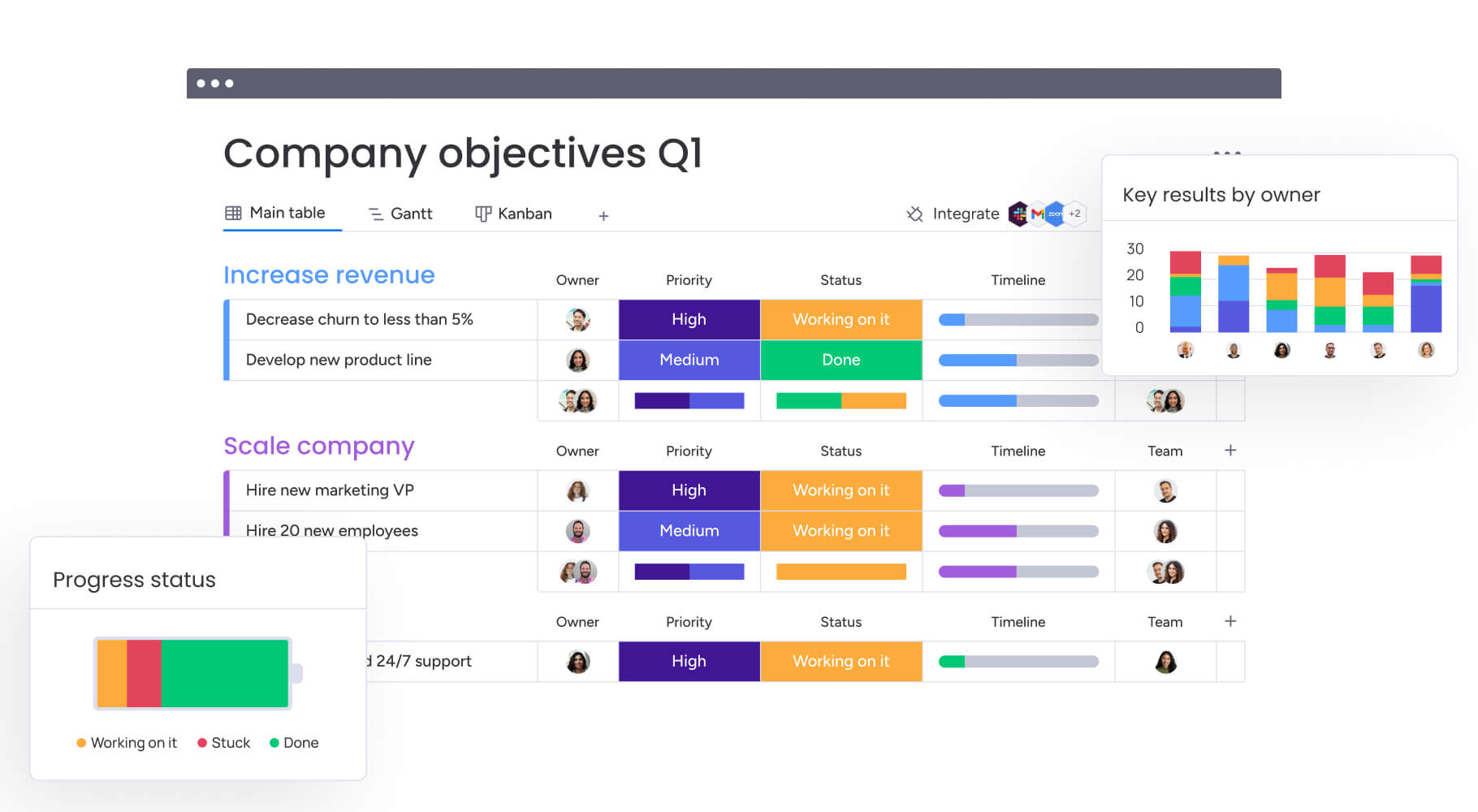
Solutions like monday work management help close this gap by linking high level direction to everyday execution, so teams can stay aligned without adding friction.
- Limited visibility across work and priorities: Teams struggle to see how tasks connect to broader goals, leading to misalignment and duplicated effort.
- Difficulty translating strategy into action: High level objectives remain abstract, making it harder for teams to prioritize effectively.
- Inconsistent processes across teams: Workflows vary, which creates inefficiencies and reduces clarity in execution.
- Lack of accountability and progress tracking: Without clear ownership and real time insights, it becomes harder to measure impact and stay on track.
By centralizing work, aligning goals, and creating clear connections between strategy and execution, teams gain a more consistent way of operating. The result is improved focus, better coordination, and measurable progress toward what matters most, all without increasing complexity.
Try monday work managementFrequently asked questions
How long should a mission statement be?
A mission statement should be short enough to remember easily. In most cases, one to three sentences is ideal. The goal is to clearly express purpose, audience, and value without adding unnecessary detail.
When should you update your mission statement?
You should revisit your mission when there is a major shift in your business model, a merger, or a significant market change. Regular reviews every three to five years can also help keep it relevant.
Can individual departments create mission statements?
Yes, departments can create their own mission statements as long as they align with the overall mission. These should explain how each team contributes to the broader purpose.
What's the difference between a mission statement and a tagline?
A mission statement guides decisions and strategy across the organization. A tagline, on the other hand, is a short marketing phrase designed to capture attention and support brand recall.
Who should lead mission statement development?
Leadership is responsible for final approval, but input should come from across the organization. This ensures the mission reflects real experiences and gains wider support.
How do you ensure mission statement adoption?
To make the mission stick, integrate it into hiring, onboarding, performance reviews, and decision making. When it becomes part of daily work, it is more likely to guide behavior consistently.

 Get started