


Marketing teams today don’t struggle with a lack of ideas, channels, or tools. They struggle with coordination. Campaigns span email, social media, content, paid ads, and events — often all at once. But when approvals stall, content sits in drafts, and launches slip week after week, the issue isn’t creativity or budget: it’s the invisible operational friction between people, processes, and timelines.
That friction compounds really fast. Writers wait on feedback. Designers juggle conflicting priorities. Managers chase updates across email threads and chat messages. The result? Slower launches, burned-out teams, and campaigns that never quite reach their potential. This is where marketing workflows come in.
A marketing workflow maps out exactly who does what, when it happens, and what triggers the next step — turning scattered activity into a clear path from concept to completion. Instead of relying on memory, inboxes, or status meetings, workflows create repeatable systems that keep work moving without sacrificing quality or creativity.
This easy-to-follow guide explores the must-have marketing workflows that modern teams need to master — from content creation and email campaigns to multi-channel orchestration and AI-enhanced decision-making. You’ll learn how these workflows work, where automation actually adds value, and how to build systems that scale with your strategy instead of slowing it down.
Key takeaways
- Marketing workflows reduce coordination friction: Structured workflows replace email threads and manual follow ups with clear ownership triggers and handoffs that keep campaigns moving from idea to launch.
- Well designed workflows balance automation and human input: Automation handles repetitive rule based actions while people remain responsible for strategy approvals and creative decisions.
- Standard workflows improve speed quality and consistency: Defining repeatable processes for content email social and paid campaigns shortens launch timelines and reduces errors across teams.
- Workflow performance should be measured like campaign performance: Tracking cycle time bottlenecks and error rates helps teams continuously optimize how work gets done not just what gets delivered.
- Centralized workflow management enables scale: Using a work management system like monday work management helps teams visualize dependencies manage approvals and apply AI enhanced automation without adding operational complexity.
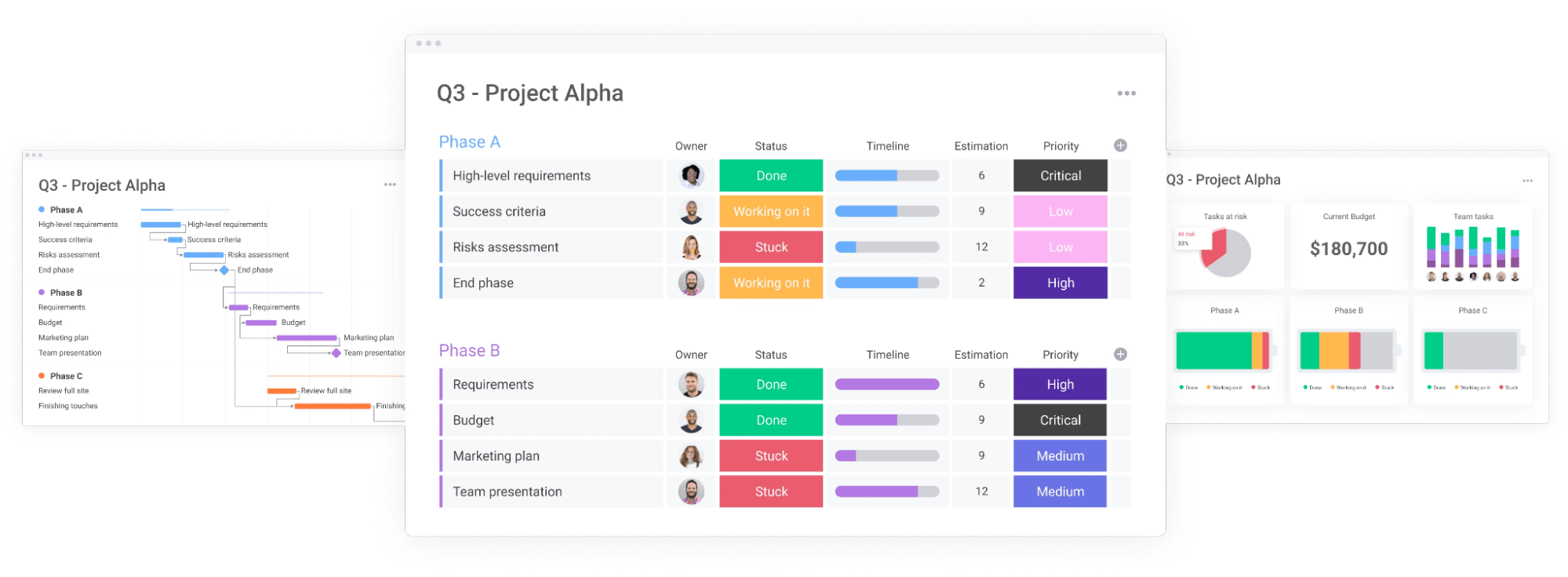
What is a marketing workflow?
A marketing workflow is a structured sequence of steps, approvals, and automated actions that move marketing work from initial concept through execution, measurement, and optimization. It defines who is responsible for each action, when it happens, and what triggers the next step, creating repeatable processes that protect quality while reducing execution time and mental overhead.
Consider a common content approval process: a writer drafts, a manager reviews, revisions follow, SEO updates are applied, and final approval is granted. Without a defined workflow, this process often lives across email threads and chat messages.
Workflows can support nearly every marketing activity, including:
- Welcome email series: Triggered when a subscriber joins a newsletter.
- Content calendar: Automatically assigns topics to writers based on expertise.
- Lead scoring system: Routes high-value prospects to sales teams.
By replacing ad hoc processes with structured workflows, marketing operations become scalable, predictable, and easier to manage as teams grow.
Key components of marketing workflows
Effective marketing workflows are built around four core components that work together to support execution and measurement. When these elements are clearly defined, workflows move from theoretical diagrams to practical systems that deliver consistent results.
| Component | Definition | Example |
|---|---|---|
| Triggers | The event that initiates the workflow | A form submission, specific date, or status change |
| Actions | The specific work that happens at each stage | Writing copy, sending an email, updating a database |
| Conditions | Decision points that determine which path follows | If lead opens email, send follow-up; if not, send re-engagement |
| Outcomes | The measurable results the workflow achieves | Published content, qualified leads, completed campaigns |
Keep in mind that triggers start the process, actions represent the work, and conditions introduce logic that adapts the workflow based on real-time inputs. Finally, outcomes provide the benchmarks teams use to evaluate performance and identify opportunities for improvement.
Marketing workflows vs marketing automation
Marketing workflows and marketing automation are closely connected, but they are not interchangeable. A workflow is the strategic blueprint that defines what happens, when it happens, and why. Automation is the technology that executes specific steps within that blueprint without manual intervention.
Modern platforms like monday work management support the full workflow, coordinating automated actions alongside human-driven work. This distinction matters, because not every step in marketing can or should be automated.
A content marketing workflow typically includes:
- Ideation: Human-driven planning and strategy.
- Drafting: Human-driven content creation.
- SEO optimization: Automated checks and recommendations.
- Approval: Human-driven review and decision-making.
- Scheduling: Automated publishing actions.
- Performance tracking: Automated data collection and reporting.
The workflow defines the end-to-end process, while automation accelerates the steps that do not require human judgment. Workflow management systems ensure both elements operate together as a single, connected process.
Why every marketing team needs structured workflows
Teams that operate without structured workflows lose significant time to coordination and manual follow-ups. Research from McKinsey’s 2025 analysis shows that up to 22% of a brand marketer’s current activities can be automated within five years, with productivity gains of roughly 40% for campaign monitoring and performance analysis. Without workflows, this potential remains unrealized.
Structured workflows reduce this friction by creating clear paths from strategy to execution. Instead of chasing approvals or clarifying next steps, teams can focus on creative and strategic work that drives impact.
Faster campaign execution
Workflows reduce launch timelines by eliminating unnecessary back-and-forth. When roles, responsibilities, and handoffs are predefined, campaigns move forward without stalling in review cycles.
In a structured content approval workflow:
- Draft submission: The system notifies the reviewer automatically.
- Approval decision: Reviewers approve or request changes in one place.
- Next stage progression: Approved content advances immediately.
What once took weeks can often be completed in days. This speed advantage compounds across campaigns, with early adopters, including Fortune 250 companies, reporting campaign creation and execution speed up 15-fold after integrating AI agents across growth workflows.
Visual workflow management further supports execution by making bottlenecks visible. When work stalls, teams can respond quickly and reallocate resources before delays escalate.
Improved resource management
Workflows provide visibility into who is working on what across all active initiatives. With this clarity, marketing leaders can balance workloads and assign projects based on capacity rather than urgency alone.
For teams running multiple campaigns simultaneously, workflows help prevent common operational issues, including:
- Burnout: Caused by uneven workload distribution.
- Missed deadlines: Resulting from overcommitment.
- Quality issues: Driven by rushed execution.
By centralizing work in a shared system, teams can plan proactively and maintain sustainable performance over time.
ROI measurement that connects to business outcomes
Structured workflows create measurable touchpoints at every stage of a campaign, enabling more accurate ROI analysis beyond last-click attribution. When interactions are tracked consistently, teams gain a clearer picture of how marketing contributes to revenue.
A lead nurturing workflow can capture:
- Email engagement: Indicators of interest.
- Content downloads: Signals of intent.
- Event participation: Qualification milestones.
- Sales interactions: Conversion touchpoints.
While this end-to-end data trail helps teams understand which activities drive results and which need refinement, only 30% of CMOs say their organizations have a well-defined view of what constitutes marketing ROI (highlighting the critical need for outcome-tied workflows).
Try monday work management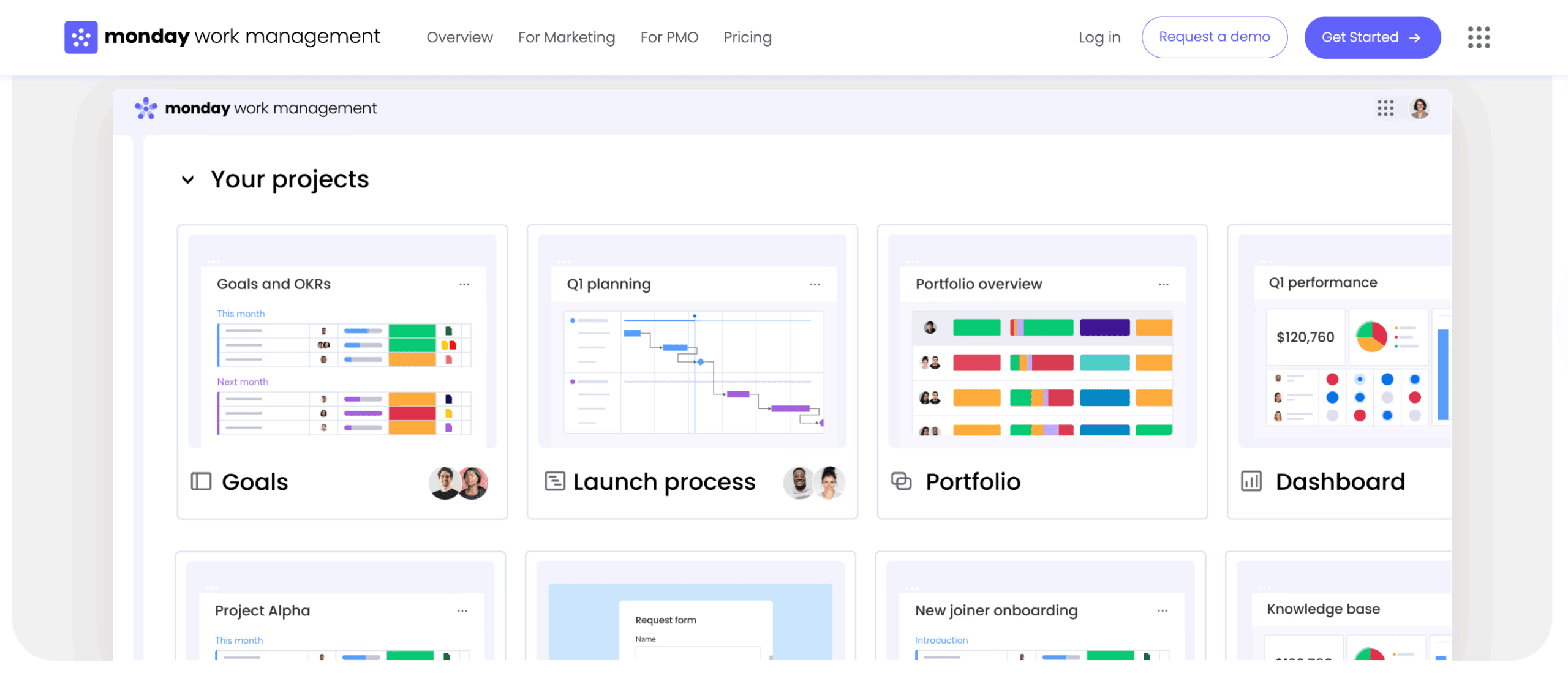
8 essential marketing workflows for 2026
These eight workflows represent the core processes every marketing team should have systematized. While specific tactics and platforms vary by organization, these foundational workflow types address universal marketing challenges.
Together, they provide a really reliable structure that supports consistency, efficiency, and scalable marketing operations over time.
1. Content marketing workflow
A content marketing workflow systematizes how teams plan, create, review, and publish content across formats and channels. This approach supports consistent quality, protects brand voice, and reduces bottlenecks that delay publication and distribution.
The typical content workflow includes five stages:
- Ideation: Generating and prioritizing topics based on SEO research and audience needs.
- Creation: Drafting content according to briefs, messaging frameworks, and brand guidelines.
- Review and approval: Gathering feedback from editors and subject matter experts before final sign-off.
- Optimization: Adding metadata, internal links, and technical improvements to support search visibility.
- Distribution: Publishing content and promoting it across relevant channels and audiences.
2. Email marketing campaign workflow
An email marketing campaign workflow automates how messages are delivered based on triggers and subscriber behavior. These workflows guide contacts through the funnel in a structured way, delivering timely, relevant messages without manual effort.
A welcome email series illustrates this workflow:
- Trigger fires: When someone subscribes.
- First email: Arrives within minutes.
- Branching logic: Three days later, behavior determines next step.
- If subscriber opened: Send educational content.
- If subscriber didn’t open: Send re-engagement message with different subject line.
This branching logic ensures every subscriber receives relevant content based on their actual behavior.
3. Social media marketing workflow
A social media marketing workflow coordinates planning, creation, scheduling, and engagement across platforms. This structure supports consistent brand presence, timely audience responses, and intentional content distribution.
The workflow typically includes:
- Content calendar planning: Mapping posts strategically across channels.
- Asset creation: Developing platform-specific visuals and copy.
- Approval processes: Ensuring quality control and brand consistency.
- Scheduling: Automating publishing at optimal times.
- Community management: Monitoring engagement and responding in real time.
For a product launch campaign, the social media manager builds a coordinated calendar across LinkedIn, Twitter, and Instagram. Designers prepare tailored assets. Content is reviewed and approved before automated publishing begins, while engagement is monitored continuously.
4. SEO marketing workflow
An SEO marketing workflow systematizes how teams improve search visibility through research, optimization, and performance tracking. This approach ensures consistent SEO practices and enables data-driven updates across all content.
The key stages include:
- Keyword research: Identifying opportunities and understanding search intent.
- Content planning: Aligning topics with the broader keyword strategy.
- On-page optimization: Improving technical elements and content depth.
- Ranking analysis: Monitoring performance and refining priorities.
When a page ranks on the second results page for a high-value keyword, the workflow triggers an assignment to update the article. Additional sections are added to better address intent and improve visibility.
5. Paid advertising campaign workflow
A paid advertising campaign workflow structures how campaigns are planned, launched, and optimized across channels. This framework helps teams manage budgets, meet launch timelines, and continuously improve performance.
The workflow includes:
- Audience research: Defining target segments and personas.
- Creative development: Producing ad copy and visual assets.
- Campaign setup: Configuring platforms and allocating budgets.
- Monitoring: Tracking performance in real time.
- Optimization: Testing variations and refining based on data.
Weekly reviews guide decisions such as pausing underperforming ads, increasing bids on high-converting keywords, and introducing new creative variations for testing.
6. Lead nurturing automation workflow
A lead nurturing workflow moves prospects through the funnel using targeted content and engagement signals. This system ensures consistent follow-up while adapting outreach based on readiness to buy.
When a prospect downloads a whitepaper, they enter the lead nurturing workflow with an initial lead score:
- 30-day email series: Progressively deeper content delivery.
- Scoring system: Points added for each interaction.
- Email open: +5 points.
- Link click: +10 points.
- Pricing page visit: +25 points.
- Sales handoff: Automatic notification when threshold is reached.
7. Marketing analytics and reporting workflow
A marketing analytics workflow establishes a repeatable process for collecting, analyzing, and sharing performance data. This structure ensures consistent reporting and supports faster, more informed decision-making.
Monthly reporting cycle:
- Day 1: Workflow automatically pulls data from all marketing platforms.
- Days 2-4: Marketing analyst reviews data and identifies significant changes.
- Day 5: Present findings to leadership team with specific recommendations.
8. Integrated multi-channel campaign workflow
An integrated multi-channel campaign workflow coordinates efforts across email, social, content, and paid channels. This structure aligns messaging and timing to create a cohesive experience that amplifies overall impact.
A product launch campaign spanning multiple channels gives a good illustration of this workflow:
- Day -3: Teaser email to existing customers.
- Launch day 9:00 a.m.: Blog post publishes.
- Launch day 10:00 a.m.: Social media posts go live across all platforms.
- Launch day 10:00 a.m.: Paid advertising campaign begins targeting new prospects.
The workflow coordinates timing across all these touchpoints and tracks engagement across channels.
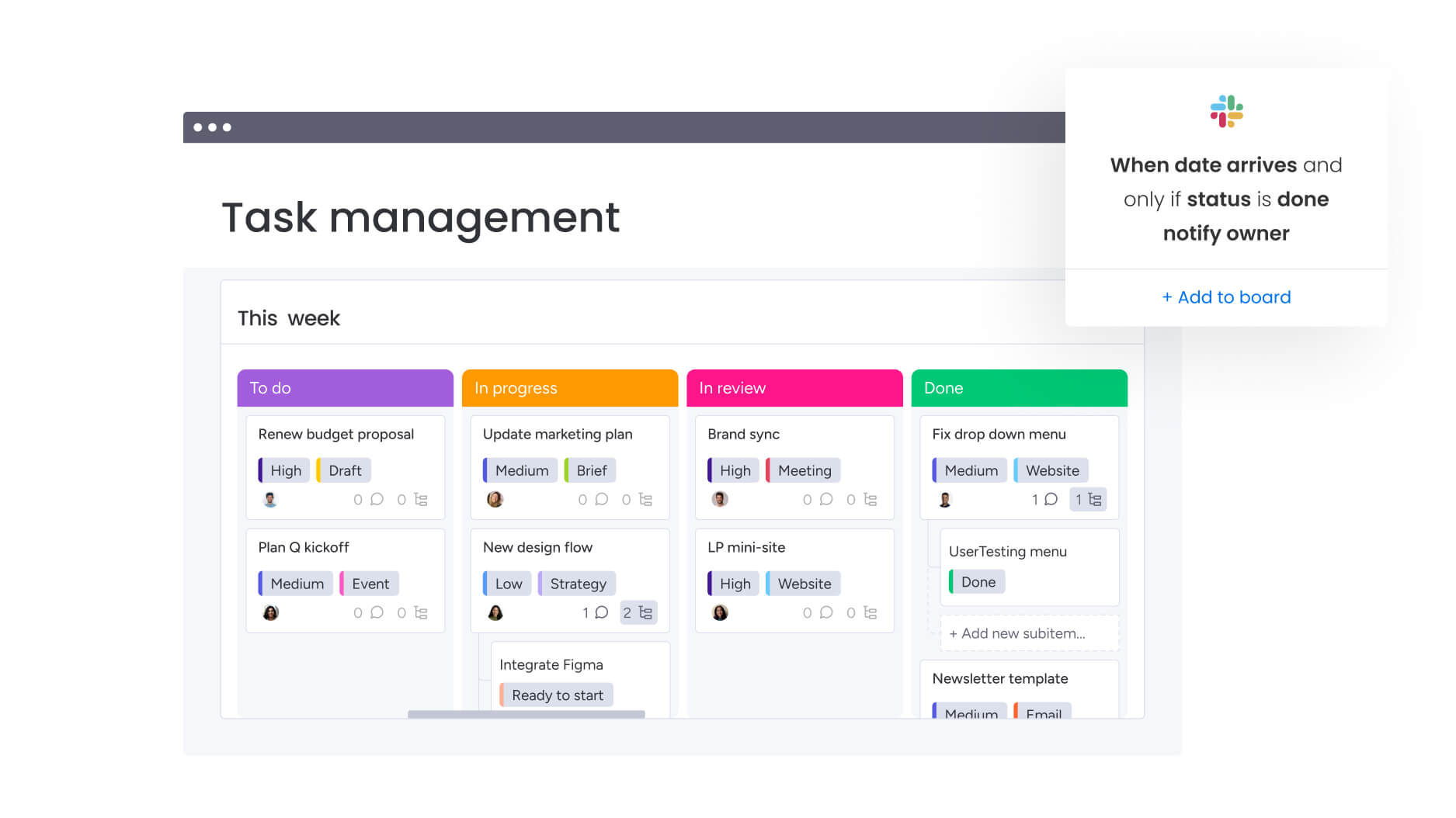
How to create marketing workflows in 7 steps
Creating marketing workflows that actually deliver results requires balancing structure with flexibility. The following seven steps help teams build systems that streamline work instead of adding unnecessary complexity, no matter the team size.
Step 1: Document your current marketing process
Start with reality, not assumptions. Gather your team and map how work actually happens — skip outdated process documents that no one follows.
Focus on one specific marketing activity, such as publishing a blog post, and identify every stage from initiation to completion:
- Who does what: Specific role assignments.
- Information requirements: What each person needs to complete their work.
- Handoff points: Where work transfers between team members.
- Decision points: what approvals or choices occur along the way.
Documenting workflows visually can help uncover inefficiencies and clarify responsibilities across the team.
Step 2: Identify automation opportunities
With workflows documented, evaluate which activities are good candidates for workflow automation. The best automation opportunities share three characteristics: they’re repetitive, they follow decision rules, and they’re high-volume.
Common marketing activities that benefit from automation include:
- Email sequences: Triggered by specific actions.
- Social media scheduling: Posts published at optimal times.
- Lead scoring: Based on engagement metrics.
- Notification systems: Alert team members when input is needed.
Automation not only reduces manual work but also improves consistency and frees the team to focus on strategic priorities.
Step 3: Define team roles and responsibilities
Each stage of a workflow should have a clear owner. Defining roles prevents overlapping tasks and gaps in accountability.
A responsibility matrix can clarify team responsibilities:
- Executor: Person who completes the work.
- Approver: Person who signs off on quality.
- Monitor: Person who tracks progress.
- Owner: Person accountable for results.
Clear ownership improves efficiency, reduces confusion, and ensures that every step of the workflow moves forward as planned.
Step 4: Establish approval workflows
Approval processes maintain quality without creating bottlenecks. Choose the approval model that suits the task: single approver, parallel approval (multiple approvers review simultaneously), or sequential approval (approvals occur in a specific order).
Set timeframes and escalation rules to keep projects on track:
- Standard approval: 24–48 hours for routine content.
- Escalation trigger: If approval sits for 48 hours without action.
- Backup approver: Automatic escalation to prevent delays.
Structured approval workflows ensure timely sign-offs and prevent delays while maintaining high-quality outputs.
Step 5: Select your marketing workflow software
Evaluate workflow software based on ease of use, integration capabilities, automation features, and scalability. Even the most powerful platform is ineffective if the team avoids using it.
Integration matters because marketing workflows span multiple systems, such as email platforms, social media schedulers, CRM tools, and analytics. Modern platforms like monday work management connect with over 200 apps, including Microsoft Teams, Gmail, Slack, Jira, and Salesforce, helping teams run projects efficiently without switching between tabs.
Step 6: Test your marketing workflow templates
Pilot workflows before full implementation to prevent frustration from discovering issues too late. Select a small team or limited campaign to validate the process.
During testing, track these key metrics:
- Completion times: How long each workflow stage takes.
- Error rates: Frequency of mistakes or rework.
- User satisfaction: Team member feedback on usability.
Collect feedback systematically through short surveys or structured interviews to refine the workflow before full rollout.
Step 7: Optimize marketing department workflow process
Finally, always remember that workflow optimization is ongoing. Establish regular review cycles — quarterly for most workflows, monthly for high-volume or rapidly changing processes.
Key performance metrics include:
- Cycle time: How long workflows take from start to finish.
- Bottleneck frequency: Where delays most commonly occur.
- Error rates: Quality issues requiring rework.
- Resource utilization: How efficiently team capacity is used.
Monitoring these metrics identifies the areas where optimization will have the greatest impact, ensuring workflows continue to evolve with team needs.
Try monday work managementAI-enhanced marketing workflows that deliver results
AI is transforming basic marketing workflows into systems that become more effective with continued use. Teams are fortunately no longer limited to automating repetitive actions — they are designing workflows that analyze data, surface insights, and support better decision-making across campaigns and channels.
These intelligent workflows help marketing teams move faster while maintaining clarity and control. By combining automation with learning capabilities, AI creates processes that evolve alongside business needs rather than remaining static over time.
Smart automation for marketing teams
AI-powered automation extends beyond simple if-then rules to introduce context-aware decision-making into everyday workflows. These systems analyze performance patterns to optimize timing, personalize content delivery, and recommend next actions based on real data.
With monday work management, AI Blocks are ready-made actions designed to bring AI capabilities directly into marketing workflows: they help teams apply intelligence without adding technical complexity or manual effort.
- Content categorization: Automatically tags articles by topic, audience segment, and funnel stage.
- Sentiment analysis: Evaluates tone to ensure content aligns with brand guidelines.
- Content summarization: Generates social media posts and email snippets from long-form content.
- Data extraction: Pulls key information from forms, surveys, and documents without manual data entry.
Predictive analytics in campaign workflows
Predictive analytics adds a forward-looking layer to marketing operations. By analyzing historical campaign data, AI models forecast expected performance and highlight optimization opportunities before campaigns launch.
Portfolio Risk Insights on monday work management scan project boards to flag potential risks by severity. Teams gain immediate visibility into issues that could affect timelines or outcomes, without manually reviewing every board. With a single action, the platform notifies the right stakeholder, generates a clear summary, and links relevant work for fast resolution.
This proactive approach reduces surprises and supports more confident decision-making throughout the campaign life cycle.
Maintaining brand authenticity with AI
Concerns about AI-generated content sounding generic are valid, but they are also solvable. When trained on brand guidelines and high-performing content, AI can reinforce a consistent voice rather than dilute it.
AI-powered brand consistency checks help teams maintain alignment across channels by identifying content that drifts from established standards.
- Tone analysis: Evaluates voice against defined brand expectations.
- Vocabulary monitoring: Ensures consistent terminology usage across assets.
- Style verification: Checks formatting and presentation for visual consistency.
Human oversight remains essential. AI highlights potential issues and provides recommendations, while people retain control over creative direction and strategic messaging.
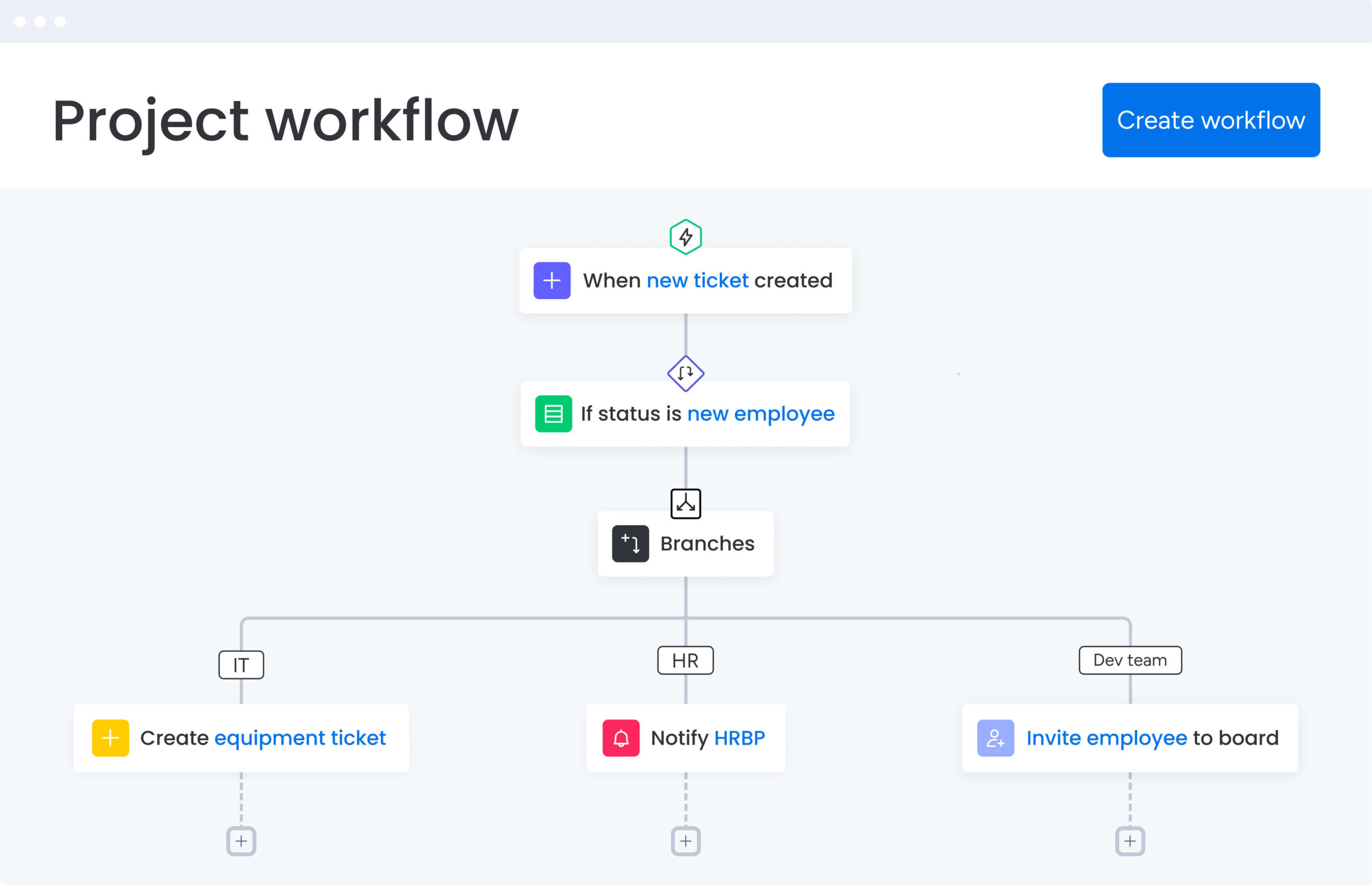
Level up your marketing operations with monday work management
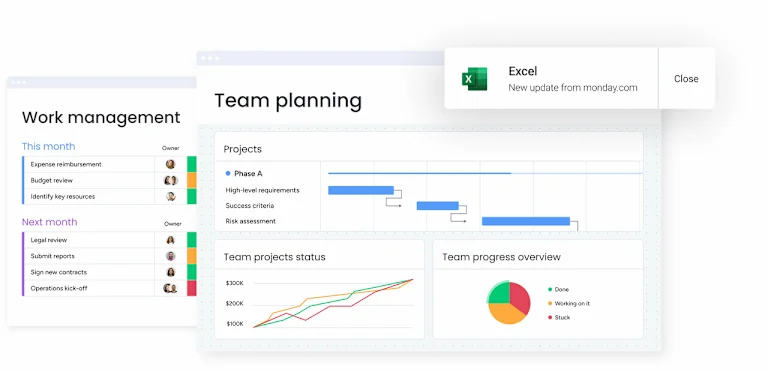
As marketing workflows become more complex, teams need structure that supports intelligence, visibility, and collaboration. Modern platforms like monday work management provide the visual foundation that makes advanced marketing operations accessible without technical expertise.
The sophisticated solution combines intuitive workflow design, automation, and AI-enhanced intelligence in a system built for how marketing teams actually work today.
Visual marketing workflow builder
A visual interface allows marketers to design workflows without relying on IT or writing code. Drag-and-drop functionality makes it easy to arrange work, set dependencies, and define automations in a clear, intuitive way.
Pre-built marketing workflow templates offer practical starting points for common processes.
- Content calendars: Editorial planning and execution.
- Campaign management: Coordination across multiple channels.
- Social media scheduling: Platform-specific content distribution.
- Email marketing: Automated sequence management.
Teams can activate these templates immediately and adapt them to match existing processes and approval structures.
Marketing workflow automation at scale
Automation and templates reduce setup time and eliminate manual coordination across projects. Teams can automatically create standardized boards, send approval reminders, and manage dependencies between functions with minimal effort.
AI Blocks extend automation into areas that previously required human judgment. The Custom Block enables teams to describe requirements in plain language, generating precise actions that fit directly into existing workflows.
This approach supports scale without sacrificing flexibility or oversight.
Enterprise marketing workflow management
Large marketing organizations often manage interconnected workflows across departments, regions, and product lines. Supporting this level of complexity requires more than basic project tracking.
| Capability | monday work management | Traditional project management | Marketing automation platforms |
|---|---|---|---|
| Visual workflow design | Intuitive drag-and-drop interface | Complex interfaces designed for technical users | Limited workflow visualization |
| AI integration | Built-in AI Blocks for categorization, sentiment analysis, summarization | Limited or no AI capabilities | AI focused narrowly on email optimization |
| Cross-departmental collaboration | Designed for marketing teams working with sales, product, and other departments | Generic collaboration features | Siloed within marketing |
| Marketing-specific templates | Pre-built workflows for content marketing, campaigns, social media | Generic templates requiring extensive customization | Templates limited to email and lead nurturing |
monday work management supports enterprise-scale operations through portfolio-level visibility, cross-team resource management, and integrations with existing marketing technology stacks. Advanced permissions enable governance, compliance, and standardization, while security controls align with stringent enterprise requirements.
Build marketing workflows that drive real results today
Effective marketing workflows turn operational complexity into a system that supports growth. When designed thoughtfully, they reduce coordination overhead, accelerate launches, and make performance visible across teams.
The most successful marketing organizations move beyond task automation. They build intelligent workflows that adapt to changing conditions and learn from performance data. AI-enhanced workflows represent this next stage, combining human creativity with machine intelligence to deliver stronger results.
A practical way to begin is by focusing on one workflow tied to a clear operational challenge. Document the current process, identify opportunities for automation, and launch a pilot that demonstrates measurable value.
Once teams experience the benefits of structured, intelligent workflows, expanding to additional processes becomes a natural next step rather than a forced change.
Try monday work managementFrequently asked questions
What is the difference between a marketing workflow and a marketing process?
A marketing workflow is an automated or systematized version of a marketing process, built around defined triggers, actions, and outcomes that run consistently. A marketing process refers to a broader, often manual sequence of activities that can vary depending on who executes them and how they are managed.
How long does it take to implement marketing workflows?
Implementation usually takes two to eight weeks, depending on complexity, team size, existing processes, and the selected platform. Simple workflows, such as email sequences, can be live in days, while complex multichannel campaigns require deeper planning and coordination.
Can small marketing teams benefit from marketing workflow software?
Workflow software is especially valuable for small teams because it expands capacity and ensures consistency without adding headcount. With the right workflows in place, small teams can deliver marketing strategies that typically require much larger teams.
What KPIs should I track for marketing workflow success?
Key metrics include workflow completion time, error rates, campaign launch speed, team productivity, adoption rates, and satisfaction scores. Tracking these indicators helps determine whether workflows are delivering the expected efficiency and performance gains.
How often should marketing workflows be reviewed and updated?
Most workflows should be reviewed quarterly, with closer monitoring for high-volume or fast-changing campaigns. Annual reviews provide an opportunity to confirm that workflows still support overall marketing strategy and business priorities.
Do marketing workflows support agile marketing methodology?
Workflow platforms align well with agile marketing by enabling iterative development, rapid testing, and flexible updates. They can support sprint-based cycles, fast feedback loops, and timely pivots based on performance insights.

 Get started